Merzouga to Fes: 9 Clever Tips for a Comfortable Journey
Travel from Merzouga to Fes covers roughly 450 to 500 kilometres of mountain, plateau and cedar forest, and it takes more planning than a typical city-to-city transfer. Merzouga sits at the far edge of the Sahara, well away from the main rail network. The road north crosses the High Atlas foothills and the Middle Atlas before it reaches the imperial city. Few services run on this leg, and even fewer run on a fixed, predictable schedule.
That makes the choice of transport more important than it first appears. A bus is the cheapest option, a private transfer is the most convenient, and a rental car gives you control over the pace. Each affects not just the price but also the journey time, the comfort of the ride and the hour you arrive in Fes.
This guide covers transport options, realistic durations, costs and whether an overnight stop is worth including. Exact schedules and travel times depend on the operator, the departure point and the season, so confirm every detail with the provider before you commit to a plan. There is no railway to Merzouga, so this leg is always made by road.
1. Choose the Transport Option That Fits Your Trip
Three options cover almost every traveler. The best one depends on your budget, your tolerance for long hours on the road and how much flexibility you want along the way.
Bus: Often the Budget-Friendly Choice
Bus travel is usually the cheapest way to cover the distance. Supratours has listed a direct service between Merzouga and Fes, and CTM serves the area from nearby Rissani, so both are worth checking. Journey times quoted by booking aggregators are around ten hours, and in the past the direct coach has operated overnight. Treat those details as a starting point and confirm them with the operator.
The advantages are the low fare and the absence of any driving. The drawbacks are fixed timings, limited departures and the need to reach the correct departure point. If you can sleep on a coach, an overnight service may save you a night of accommodation, but you arrive tired.
Private Transfer: More Flexible, Usually More Expensive
A private transfer picks you up at your accommodation or camp meeting point and drives you to Fes on your schedule. You can ask for breaks, a lunch stop or a short detour. The driver handles the road, which matters on a long day.
The price is set per vehicle, so it works best for couples, families and small groups. Solo travelers will find it expensive. Ask exactly what the price covers, including waiting time, luggage and the Fes drop-off point.
Rental Car: Freedom to Stop Along the Way
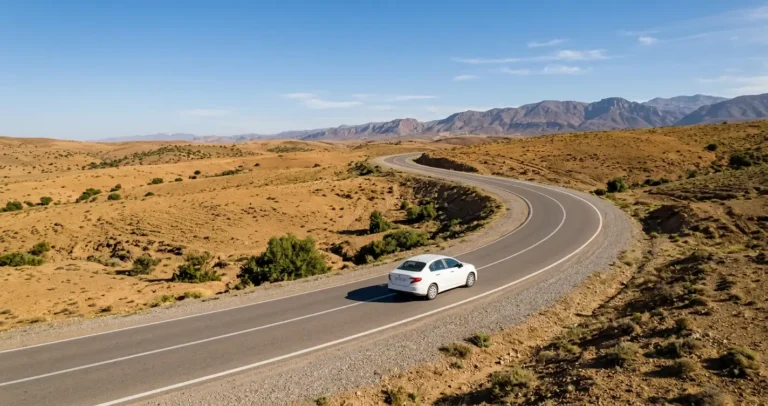
A rental car suits confident drivers who want to stop at their own pace. You choose the departure time, decide when to take breaks and can add a stop if the day goes well. The journey also gives you scenery that a night bus would hide.
The trade-offs are fatigue, fuel, insurance and the need to return or drop the car. One-way rentals between Merzouga and Fes may carry extra fees, and not every company offers them, so ask before you book.
2. Understand the Distance and Realistic Journey Time for Merzouga to Fes
The road distance is about 450 to 500 kilometres, depending on where in the Merzouga area you start. Without stops, driving takes roughly seven to seven and a half hours. In practice, the day is longer.
Driving time and bus time are not the same. A bus stops in towns, changes drivers and may take a slower route, so the scheduled duration is usually closer to ten hours. Door-to-door time is longer still, because it includes the trip from your camp to the departure point and from the Fes arrival point to your hotel.
Plan for these additions:
- Rest and meal breaks, which can add an hour or more
- Slow sections through mountain passes and village crossings
- Weather changes in the Middle Atlas, where winter fog, rain and occasional snow can slow traffic
- Transfers at either end, including the ride from your camp to Merzouga
Treat the journey as an all-day commitment, whichever option you choose. If you need to be somewhere specific in Fes by a set hour, build in a generous margin.
3. Check Bus Departures and Booking Details Early
If you take the bus, do your checking in advance. Schedules in southern Morocco change, and a service you read about on a blog may not run on the day you need it.
Confirm the Departure Point in the Merzouga Area
Merzouga is a spread of villages and auberges, not a single compact town, and buses do not always depart from the place you expect. Ask the operator exactly where your coach leaves from, and confirm whether you can board at a closer stop. Some operators have their own offices away from the main bus stations.
If you are staying in a desert camp, you will need a separate transfer to the departure point. Ask your camp host early.
Check Arrival Times and the Fes Drop-Off Location
Find out when the bus is due in Fes and where it stops. An early-morning arrival may mean reaching a quiet station before hotel check-in opens, so decide in advance where you will go. Check how far the drop-off point is from the medina and whether a petit taxi is easy to find nearby.
Verify Current Schedules, Fares and Luggage Rules
Look up the current timetable and price directly with Supratours or CTM. Ask about luggage allowances, since large bags may need to go in the hold and some operators charge extra for oversized items. Check whether you can buy tickets online, at the station or only in person, and book early in busy seasons.
4. Compare the Total Cost of Merzouga to Fes Transport, Not Just the Ticket Price
A bus fare looks cheapest, but comparing only the ticket hides the full picture. Add up what each option costs from start to finish.
Bus. The fare is the main cost, plus the transfer from your camp to the departure point and any food on the way. If the schedule forces an extra night in Merzouga or Fes, include that as well.
Private transfer. The price is a single payment per vehicle. Confirm what is included, such as tolls, waiting time for stops and luggage.
Rental car. Add the daily rate, insurance, fuel, tolls on the motorway sections near Fes and any one-way fee. Fuel for a journey of this length is a real expense, so factor it in.
Group size changes the value of a private transfer. One traveler pays the whole fare alone. Four travelers share it, and the cost per person may come close to bus fares once you include the camp transfer and the time saved. For two people, it is worth getting a quote and comparing it with two bus tickets.
Ask for a written price and a clear list of inclusions before you accept any offer.
5. Decide Whether to Travel Directly or Stop Overnight
When a Direct Journey Makes Sense
A direct journey suits travelers with a tight schedule, a booked flight or train in Fes, or a limited number of days in Morocco. An overnight coach can also work well as a direct option, because it lets you travel while you sleep and arrive in the morning.
It is the right choice if your main priority is to reach Fes without wasting a day.
When to Consider an Overnight Stop
An overnight stop makes sense if you do not want to spend an entire day on the road, if you are traveling with children, or if you want to see something along the way. Splitting the trip also reduces driver fatigue and gives you a better chance of arriving in daylight.
Possible stops depend on your route. Around Erfoud and Rissani, in the Tafilalt region, you can visit markets and palm groves before leaving the desert fringe. Further north, towns on the road toward the Middle Atlas can serve as a rest point. The Dades Valley lies west of the direct route, so include it only if you are also traveling from the Ouarzazate side of the south.
Avoid detours that add hours of driving without a clear reward. A stop should make the journey better, not longer for its own sake.
6. Plan Your Sahara Camp Departure Carefully
Your departure from the dunes is part of the journey, and it is where many plans go wrong. Camps sit off the main road, often across sand or rough tracks, so leaving takes longer than people expect.
Confirm these points with your camp before you book the onward journey:
- How you get from the Sahara camp to Merzouga or the departure point. This may be by 4×4, by camel and then vehicle, or on foot to a nearby road.
- Pickup timing. Ask when the vehicle leaves the camp and how long the transfer takes, then add a buffer.
- Luggage arrangements. Find out whether bags travel separately and where you collect them.
Be careful if you plan a sunrise camel trek on the morning of your departure. A sunrise activity, breakfast and the transfer back to Merzouga can use up several hours, which leaves little time to catch a bus or meet a driver. Choose a departure time that leaves a comfortable gap, or skip the sunrise trek on travel days.
7. Prepare for a Long Day on the Road
A journey of this length is tiring even when it goes smoothly. A few simple preparations make it easier.
- Carry water and snacks. Services thin out between towns, and bus breaks may be short.
- Pack essentials. Keep medication, a phone charger and a light layer within reach, not in the luggage hold.
- Keep valuables and documents accessible. Your passport, tickets and booking confirmations should be in a small bag you keep with you.
- Download maps and booking details. Save offline maps and screenshots of confirmations, as mobile coverage can drop in remote stretches.
- Dress comfortably. Temperatures change between the desert and the Middle Atlas, so bring a jumper or jacket, even in warm months.
If you are driving, plan regular breaks, avoid driving after dark and share the wheel if possible. Fatigue is the main risk on long rural roads.
8. Avoid Common Merzouga to Fes Travel Mistakes
Most problems come from assumptions rather than the road itself. These are the mistakes travelers make most often.
- Underestimating the length of the journey. Even a direct drive takes the best part of a day, and public transport takes longer.
- Assuming a direct bus is available on the desired date without checking. Confirm the day, time and departure point with the operator.
- Confusing a desert camp pickup point with the actual departure location. The camp, the village and the bus stop are often different places.
- Booking onward activities too soon after arrival. A late or delayed arrival can ruin a tour or dinner booking that is scheduled too tightly.
- Choosing the cheapest option without checking what it includes. A low price may exclude luggage, transfers or comfort that you actually need.
A short list of questions sent to the operator before you book can prevent most of these problems.
9. Choose the Best Option for Your Itinerary
There is no single best option, only the one that suits your priorities.
Budget travelers: Compare verified bus services and their arrival times. Check that the schedule fits your plan before you rely on it.
Couples and small groups: Get a quote for a private transfer and compare the total cost with bus tickets and transfers. Shared between several people, the price may be closer than you expect.
Independent travelers: Think carefully before renting a car. Assess driving conditions, your own fatigue and whether an overnight stop would make the trip safer and more enjoyable.
Travelers with limited time: Prioritize reliable connections and avoid unnecessary detours. A direct service or a private transfer is usually the safest choice.
Frequently Asked Questions
How do you get from Merzouga to Fes?
You can go by bus, private transfer or rental car. There is no railway to Merzouga, so the journey is always by road. Supratours has listed a direct coach, and CTM runs a service from nearby Rissani, so check both operators for current details. A private transfer is more flexible and can collect you from a specific meeting point, while a rental car gives you control over timing and stops. Which one suits you depends on budget, group size and how much time you have. Whatever you choose, confirm the departure point and schedule in advance, since services around Merzouga can change.
Is there a direct bus from Merzouga to Fes?
Supratours has listed a direct service between Merzouga and Fes, and booking sites often describe it as running once a day. Historically, it has operated as an overnight coach. However, timetables can change and older schedules may be out of date, so verify the current service directly with the operator before you plan around it. Also confirm the departure point in the Merzouga area and the drop-off location in Fes. If the direct bus does not run on your date, you may need to travel via another town or use a private transfer instead.
How long does the journey from Merzouga to Fes take?
By car or private transfer, driving alone takes roughly seven to seven and a half hours without stops. Once you add meals, fuel and breaks, plan on an eight to nine hour day. Buses are slower because they make stops, and published durations are usually around ten hours. Your own journey also depends on the departure point, road conditions, weather in the Middle Atlas and the time you spend transferring from your camp. Allow extra time at both ends, and avoid booking anything tight on the day of arrival in Fes.
How much does it cost to travel from Merzouga to Fes?
Costs vary by option. A bus is typically the cheapest, a private transfer costs more because you pay per vehicle, and a rental car adds fuel, insurance and possible one-way fees. Prices change with the season and operator, so check current fares directly with Supratours or CTM, and ask for written quotes from transfer providers. Compare the total cost, not just the ticket price, by including your camp transfer, meals and any extra night. For groups, a private transfer may offer better value per person than it first seems.
Is it better to drive or take a bus?
It depends on your priorities. A bus is cheaper and means you do not drive, but you follow fixed timings and may need to arrange transfers at both ends. Driving gives you flexibility and the chance to stop, but it is tiring over a long distance and adds fuel, insurance and rental costs. If you are comfortable on long roads and want to see the scenery, a rental car works. If you want to relax or are traveling alone, the bus is simpler. A private transfer sits between the two, with a driver but flexible timing.
Can you travel from Merzouga to Fes in one day?
Yes, it is possible, especially by car or private transfer with an early start. The drive takes most of the day, so plan to leave in the morning and keep stops short. By public transport, a daytime journey is harder to guarantee because connections and departure times may not line up. An overnight coach, if it is running on your date, lets you travel during the night and arrive in the morning. If you would rather not spend the whole day on the road, an overnight stop along the way makes the trip more comfortable.
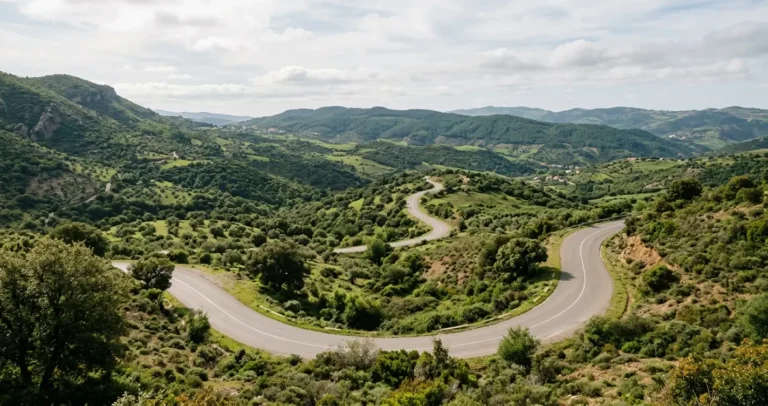
Is the journey from Merzouga to Fes scenic?
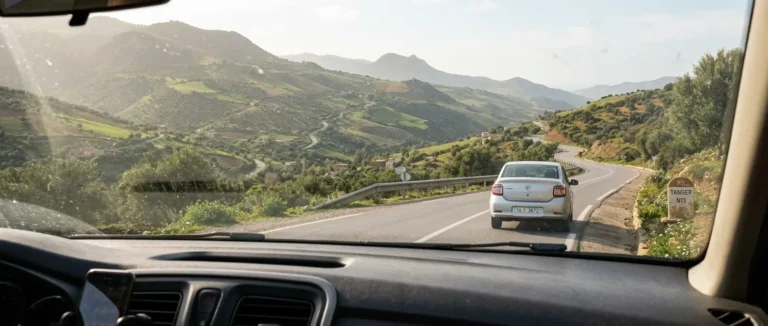
Yes, particularly if you travel by day. The route leaves the desert fringe and crosses rocky plateaus, river valleys and high passes before entering the cedar forests of the Middle Atlas. The change in landscape is striking, and the road gives you a sense of how much variety Morocco packs into a single day. If you travel overnight, you will miss most of it, so it is worth considering a daytime journey by car or private transfer if scenery matters to you. Bring a jacket, as temperatures drop noticeably at higher elevations.
Conclusion
The trip from Merzouga to Fes comes down to a trade-off between price, flexibility and comfort. A bus is cheapest but least flexible, a private transfer is the most comfortable but costs more, and a rental car sits in between with the added work of driving. None of these is wrong, and the best choice depends on your budget, your group and how much of the day you are happy to spend on the road.
Whichever route you choose, confirm schedules, departure points and transfer arrangements before you book. Schedules in the south change, and a message to the operator or your camp host takes a few minutes. The most useful single step is to ask your camp to confirm your pickup time and meeting point in writing the day before you leave, so the journey begins without surprises.