
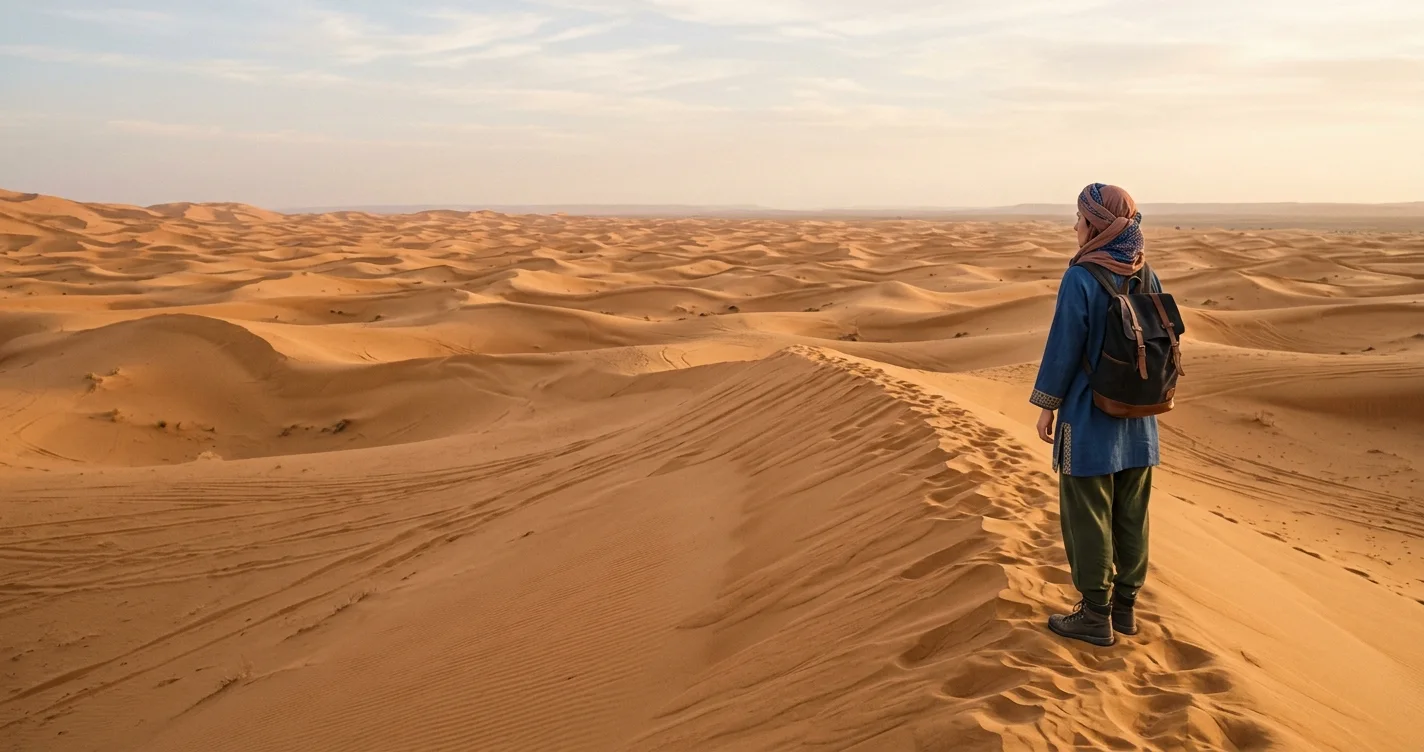
Ouarzazate to Merzouga: 9 Tips for Planning Your Sahara Journey
What to Know Before Traveling from Ouarzazate to Merzouga
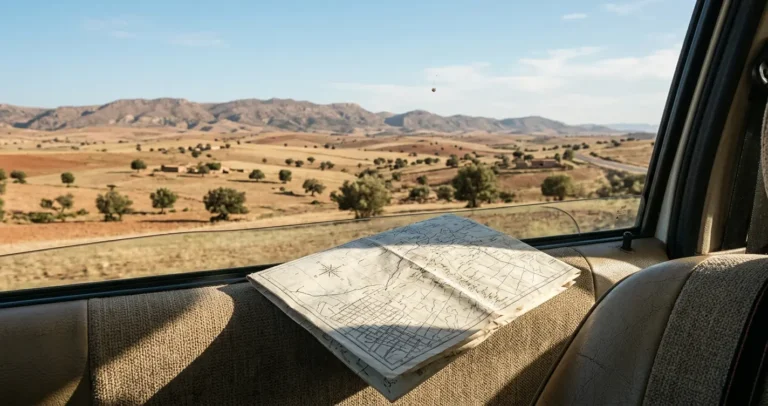
The trip from Ouarzazate to Merzouga takes you from the edge of the Draa Valley to the Erg Chebbi dunes, along one of the most varied overland routes in southern Morocco. In a single day you pass palm groves, kasbahs, canyon mouths and stony plains before the first orange dunes appear on the horizon. Most travelers make the journey as part of a wider loop that links Marrakech, the Atlas crossing, the desert and a return north through Fes or the coast.
Road distance is roughly 350 to 370 kilometres, depending on the exact start and end points. Most of it follows the main road east through Skoura, Boumalne Dades and Tinghir, then continues through Tinejdad towards Erfoud and Rissani before the final approach to Merzouga. The route is straightforward on a map and surprisingly long in practice.
Three options cover nearly every traveler: a scheduled bus with connections, a rental car, or a private transfer or guided tour. Each suits a different budget and appetite for responsibility. None of them has a single fixed journey time, because the real duration depends on the vehicle, how often you stop, the weather and the state of the road on the day.
The nine tips below cover the decisions that matter most, from choosing transport to arranging the last stretch to your camp.
1. Choose the Best Way to Travel to Merzouga
The right choice depends on three things: how much time you have, who is traveling with you, and how comfortable you are on long rural roads. Here is how the three main options compare.
Taking a bus
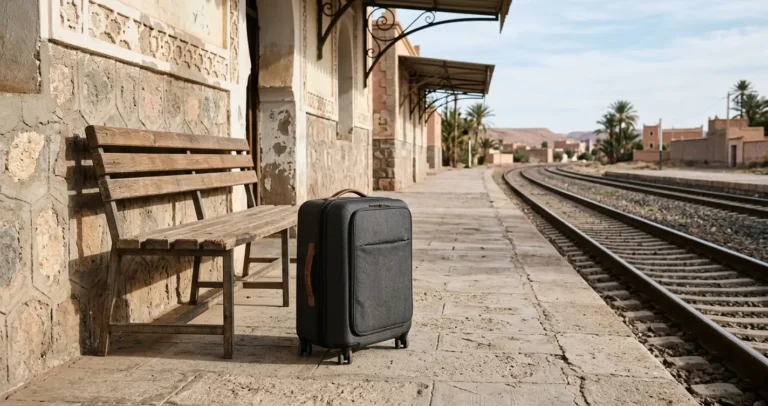
Buses are the cheapest way to cover the distance, and they suit solo travelers with flexible schedules. CTM and Supratours are the main national operators, and both publish routes on their websites. Direct service between Ouarzazate and Merzouga should not be assumed. Depending on the day, you may need to change at a larger town on the route and finish with a shared taxi.
The trade-off is time. Waiting between connections can add hours, and some services run at inconvenient times, including overnight. Buses also drop you in a town centre or at a station rather than at your camp, so you still need to organize the last leg. This works well if you enjoy independent travel and have a spare day in your itinerary.
Driving yourself
A rental car gives you control over timing and stops, which matters on a route full of photogenic detours. Driving makes the most sense for confident drivers, groups of three or four sharing costs, and travelers who want to explore the valleys between Ouarzazate and the dunes.
It is less suited to anyone nervous about long distances, narrow mountain roads or unmarked dust tracks near Merzouga. Check your rental agreement as well, since many contracts restrict driving on unpaved pistes. Section 4 covers the practical side in more detail.
Booking a private transfer or guided tour
A private transfer is the simplest option. A driver collects you in Ouarzazate, handles the road and the stops, and often coordinates directly with your desert camp. Guided tours usually build the same journey into a multi-day itinerary with overnight stays in the valleys.
You pay more than you would for a bus, but you gain predictability and local knowledge. For couples, families and small groups, the cost per person can become reasonable once it is shared. Section 6 looks at that calculation.
2. Allow Enough Time for the Ouarzazate to Merzouga Journey
Aggregator sites and map apps typically estimate the drive at about five and a half to six hours without stops. Treat that as a floor, not a plan. Add time for fuel, coffee, photos, a proper lunch, police checkpoints and the occasional slow truck on a single-lane stretch.
A realistic door-to-door estimate by car or private transfer is seven to nine hours with ordinary breaks. By public transport the total can be much longer, particularly when a connection is involved. A late departure compounds the problem, because winter daylight ends early in the south and you will not want to be negotiating the last desert stretch in the dark.
Several things make the journey slower than expected:
- Road works or narrow sections that force traffic to crawl
- Flocks of goats or sheep, and occasionally camels, on the carriageway
- Strong wind and blowing sand near Erfoud and Merzouga
- Heat in summer, when you will want to stop more often and drive slowly
- Roadside stops that turn from ten minutes into an hour
If you want to arrive for sunset at the dunes, which is the usual goal, plan to leave Ouarzazate in the morning. A midday start gives you little margin if anything goes wrong.
3. Check Ouarzazate to Merzouga Bus Routes and Connections Before You Leave
If you are taking public transport, do the research before you reach the station. The two operators to check are CTM and Supratours. Both list departure points, destinations and timetables on their official websites, and their ticket offices can confirm what runs on the day you want to travel.
Look at four things before committing to a plan:
- Operator and departure point. In Moroccan cities, different companies often use different stations. Confirm which one your bus leaves from, because they are not always next to each other.
- Schedule. Do not assume a service runs every day or at the same time throughout the year. Timetables change.
- Availability and price. Fares vary by operator and route. Check the current price rather than relying on figures from older blog posts.
- Connections. If your route involves a change, find out where it happens and how long the wait is. Tight connections on long-distance routes can fail without warning.
Then solve the last leg. The bus will not take you into the dunes, and Merzouga is a spread-out area of villages and camps rather than a single town. Before you travel, message your accommodation or camp and ask how to get from the drop-off point to their door. Many hosts will arrange a pickup, often for a fee. Do this in advance, since an evening arrival in an unfamiliar place is not the moment to start negotiating.
4. Understand What Driving Across Southern Morocco Involves
The main road east from Ouarzazate is paved and generally in reasonable condition, though quality varies by section and by season. Expect a mix of open stretches, village crossings with speed limits and the occasional narrow or patched section. Roadside police checkpoints are routine, and speed controls are common, so keep to the posted limits.
Fuel. Fill up in the larger towns on the route, such as Ouarzazate, Tinghir or Erfoud, rather than waiting until the tank is low. Petrol stations become less frequent as you approach the desert fringe, and you do not want to rely on a small station that may be closed or out of fuel.
Rest stops. Cafés and roadside restaurants are common in the valleys and in the larger towns, and they make natural breaks. Carry water and snacks anyway.
Navigation. A map app works for the main road, but download offline maps before you leave, since mobile coverage can drop in remote stretches. Near Merzouga, the final approach to a camp may involve unsigned tracks, so ask your host for a pin location or a meeting point.
Daylight. Avoid driving after dark if you can. Livestock, unlit vehicles and pedestrians make night driving riskier.
Renting a car makes sense if you are comfortable driving abroad, want to stop at several places, or are traveling in a group that can share the cost. It makes less sense if you plan a single long push, dislike unfamiliar roads, or have a tight arrival window. In those cases, a driver removes most of the stress.
Check the current UK Foreign Office travel advice for Morocco and your own government’s guidance for any road-safety or regional notices before you set off.
5. Decide Whether to Stop Along the Way
The Ouarzazate to Merzouga route passes some of the finest scenery in the country, and many travelers regret rushing through it. Stops make the most sense on a multi-day itinerary, where you can spend time rather than just photograph from a car window. If you are on a direct one-day transfer, choose one short stop at most.
Skoura and its palm groves
Skoura lies a short drive east of Ouarzazate and is known for its dense palm grove and its mud-brick kasbahs. It is a gentle first stop, and the walk through the oasis paths is easy and shaded. Kasbah Amridil is the best-known building in the area. Allow an hour or two.
The Dades Valley
The Dades Valley begins around Boumalne Dades and runs north into the High Atlas, where the gorges and rock formations make dramatic photographs. The scenery here rewards a slower pace, and many travelers spend a night in the valley. The winding gorge road is slower than the main highway, so a visit adds significant time.
Todra Gorge and the Tafilalt region
Todra Gorge sits a short drive from Tinghir, where steep limestone walls close in around a narrow riverbed. It is one of the most popular stops on the route and quieter in the early morning. Further east, the Tafilalt region around Erfoud and Rissani marks the transition into true desert country. Rissani has a traditional market and a place in Moroccan dynastic history, which makes it worth a pause if you are not rushing.
A sensible rule is to pick one valley and do it properly rather than trying to see all three. Trying to see everything in one day usually means seeing nothing well.
6. Compare the Real Cost of Each Transport Option
Cost is not simply the ticket or the daily rate. Compare the full price of each option, including the extras that tend to be forgotten.
Bus. The base fare is the lowest of the three options, but add the cost of any connecting shared taxi, a last-mile transfer to your camp and, if the schedule forces it, an extra night of accommodation. Check current fares directly with the operator.
Rental car. Add the daily rate, insurance, fuel, parking and any one-way drop-off fee if you are not returning the car to Ouarzazate. Car rental prices change with the season and with availability, so compare several quotes.
Private transfer. The price is fixed per vehicle, not per person, so it covers the journey in one payment. Ask exactly what is included, such as waiting time, stops, luggage and drop-off at the camp.
Group size changes the math. A solo traveler will usually find a private transfer expensive. A family of four or a group of friends splitting a vehicle often pays little more per head than for several bus tickets plus connections, and gets far more comfort and flexibility.
Do not forget the extras that apply to every option: meals on the road, entrance fees at kasbahs or gorges, tips for drivers and guides, and accommodation if you break the trip. Add these to your budget before you decide.
7. Choose Between a Direct Journey and an Overnight Stop
A direct journey is possible, and some travelers prefer to get to the dunes in one day. But an overnight stop usually improves the trip, for three reasons. It breaks a long drive into manageable pieces. It lets you see the valleys in good light rather than through a windscreen. And it means you arrive in Merzouga rested rather than exhausted.
An overnight stop suits:
- Travelers with at least an extra night in their itinerary
- Anyone interested in photography, hiking or kasbah architecture
- Families with children, for whom eight hours in a vehicle is long
- Drivers who prefer shorter days at the wheel
A direct journey suits travelers on a tight schedule, or those who plan to spend most of their time in the dunes and want to maximize it.
Whichever you choose, avoid the common trap of squeezing too many attractions into one day. Skoura, the Dades Valley and Todra Gorge are each worth a visit, and together they can consume an entire day without leaving time for the drive. Pick fewer stops and give them time.
8. Plan Your Arrival in Merzouga and Your Desert Camp Transfer
Merzouga is the name for a spread of villages and auberges at the foot of the dunes, and the last few kilometres are often the most confusing. Get the details sorted before you travel.
Confirm the meeting point. Ask your camp or tour operator exactly where they will meet you, whether in the village, at a specific auberge or at a roadside landmark. Get a phone number and a pin location, and save both offline.
Ask what is included. Does the operator provide pickup from the village? Is there parking for a rental car, and is it secure? Can they transfer your luggage separately by 4×4 while you arrive by camel? These answers vary between camps.
Prepare for the final stretch. Beyond the main road, the way to many camps is across sand or rough track. Standard rental cars are often unsuitable, and many travelers leave the car at an auberge and continue by 4×4 or camel. Pack a small overnight bag for the camp and leave the larger luggage behind if the operator offers storage.
Time your arrival. Aim to reach the meeting point well before the planned departure into the dunes. Camel treks are usually timed around sunset, and a late arrival can shorten or cancel the experience.
If you are staying a Merzouga desert camp for more than one night, ask about the return transfer as well, since leaving the camp has the same logistics in reverse.
9. Avoid Common Mistakes on the Ouarzazate to Merzouga Route
Most problems on this journey come from assumptions, not from the road itself. These are the ones that catch travelers out most often.
- Assuming bus schedules are daily or direct without checking. Confirm the day, the time and the connection with the operator before you build your plan around it.
- Underestimating driving time. Map estimates rarely include stops, slow vehicles or weather. Add a generous buffer.
- Arriving after a planned camp transfer. If your camp expects you at a set time, a delay can cost you the sunset trek or a night’s booking.
- Forgetting fuel, food or rest breaks. Services thin out in places. Carry water, snacks and a full tank.
- Booking a desert experience without confirming its meeting point. Merzouga is not a single address. Get the exact location in writing.
Weather deserves a mention too. Strong wind can reduce visibility near the dunes, and heavy rain can briefly flood dry riverbeds, so check the forecast with Morocco’s national weather service before you set off.
The best practical step is simple: confirm your transport, your timings and your camp’s meeting point in writing at least a day before you travel. A short message now can save a stressful evening later, and it means your journey from Ouarzazate to Merzouga ends where it should, with the dunes turning gold at sunset.
Frequently Asked Questions
How far is Ouarzazate from Merzouga?
The road distance is roughly 350 to 370 kilometres, depending on your exact starting and ending points. Most of the route follows the main road east through Skoura, Boumalne Dades and Tinghir, then continues via Tinejdad towards Erfoud and Rissani before reaching Merzouga. The straight-line distance is considerably shorter, but the road bends around mountain ranges and valleys, so the driving distance is what counts for planning. Your own figure may differ slightly if you detour to a gorge, a kasbah or a specific camp. Always check your route in a map app before you leave, and add extra distance if you plan to visit places such as Todra Gorge or the Dades Valley on the way.
How long does it take to travel from Ouarzazate to Merzouga?
By car or private transfer, expect about five and a half to six hours of pure driving, and seven to nine hours once you add breaks, fuel, meals and photo stops. Public transport takes longer, particularly if your route involves a connection and a wait between services. Road conditions, traffic, weather and the time of year all affect the total, so treat any single figure as an estimate. If you want to arrive in Merzouga before sunset, plan to leave Ouarzazate in the morning, and build in a buffer rather than assuming everything will run on time.
Is there a direct bus from Ouarzazate to Merzouga?
Do not assume there is one. Bus services in southern Morocco change, and routes that exist in one season or year may not run in the next. CTM and Supratours are the main operators, so check their websites or ticket offices for the current situation on your travel date. If there is no direct service, you may need to change at a larger town and finish with a shared taxi. That makes the journey longer and less predictable, so build extra time into your plan, and arrange your last-mile transfer with your accommodation or camp before you arrive.
Is it better to drive or book a private transfer?
It depends on your confidence, budget and group size. Driving gives you flexibility and is cost-effective for groups, but it requires comfort with long distances and unfamiliar roads, and you are responsible for fuel, navigation and parking. A private transfer costs more for solo travelers, though the price is shared between passengers, so for two to four people the gap narrows. A driver also knows the road, the best stops and the meeting points near Merzouga. If you are nervous about driving, short on time or traveling with children, a private transfer usually offers the more relaxed journey.
Can you visit the Dades Valley or Todra Gorge along the way?
Yes, both lie close enough to the main route to work as stops, though they add time. The Dades Valley starts near Boumalne Dades, and Todra Gorge is a short drive from Tinghir. A quick visit to either is possible in a long day, but they are better enjoyed with an overnight stop so you are not racing the light. If you only have time for one, choose based on your interests: the Dades Valley for winding scenery and dramatic rock formations, Todra Gorge for towering canyon walls and an easy walk along the riverbed. Both are quieter early in the morning.
Is it possible to travel from Ouarzazate to Merzouga in one day?
Yes, it is possible, particularly by car or private transfer with an early start. Plan to leave in the morning, keep stops short and aim to arrive before dark. It is a long day, and any delay from road works, weather or a slow departure can cut into your margin. By public transport the same trip is harder to guarantee, because connections and schedules may not line up. If your itinerary allows, an overnight stop in the Dades Valley, Tinghir or Skoura makes the journey more comfortable, and it lets you see the scenery properly instead of passing through it.
One Comment
Comments are closed.