Best Time to Visit Fes (2026): When to Go for Perfect Weather, Fewer Crowds & More
Fes sits inland, ringed by hills, which gives it a more dramatic swing between seasons than coastal Essaouira or even Marrakech genuinely hot, dry summers and cool, occasionally damp winters. Timing a visit well makes a real difference here, since the medina’s narrow, shaded alleys are far more enjoyable to explore at 22°C than at 38°C.
This guide breaks down Fes’s climate month by month, plus the festivals, crowd patterns, and practical timing questions worth knowing before you book enough detail to plan around the weather rather than be surprised by it. Whether you’re chasing the mildest possible days, the lowest prices, or a specific cultural event, the right window for your trip depends on which of those priorities matters most to you.
What Is the Best Time to Visit Fes?
Spring (March–May) and autumn (September–November) are consistently the best windows, combining warm, comfortable days with cool evenings, making them ideal for walking the medina’s steep, shaded lanes without the extremes of summer heat or winter chill. If forced to pick a single best stretch, late April through May and October stand out most consistently across sources for reliably dry, mild conditions. Fes rewards travelers who plan around its weather more than most Moroccan cities, since the medina’s uphill, stair-heavy layout makes both extreme heat and heavy rain genuinely more tiring to navigate than in a flatter city like Marrakech.
Fes Weather at a Glance
Fes has a Mediterranean climate with continental influences: hot, dry summers reaching well into the mid-to-high 30s°C, and cool, wetter winters that occasionally dip close to freezing overnight, with rare light snow in January. Rainfall concentrates in the winter months, while July and August stay almost entirely dry. Sitting at around 420 metres above sea level in the hills north of the Atlas Mountains, Fes runs slightly cooler than the southern desert routes but noticeably hotter and drier than coastal towns like Essaouira during summer. Humidity also stays relatively low year-round compared to coastal Morocco, which makes even the hottest summer days feel somewhat more manageable than the raw temperature figures might suggest.
Best Time to Visit Fes by Season
Spring in Fes: March to May
Spring brings steadily warming days from the low 20s°C in March to the high 20s by May with cool nights and occasional April showers. It’s widely considered the most comfortable season for extended walking through the medina’s souks and monuments, and it also sets up nicely for the Fes Festival of World Sacred Music in late May or early June if your dates align. Gardens across the city, including Jnan Sbil near the Royal Palace, are at their greenest during this stretch, and the surrounding countryside on the way to Meknès and Volubilis turns a vivid green that fades by summer.
Summer in Fes: June to August
Summer is hot and dry, with daytime highs regularly in the mid-30s°C and August occasionally pushing past 40°C. Mornings and evenings stay more bearable, and the medina’s covered, narrow alleys offer welcome shade during the hottest hours, though outdoor terraces and rooftop cafés can feel genuinely uncomfortable at midday. Locals tend to shift their own schedules around the heat too, with shops opening earlier and closing for a longer midday lull before reopening in the cooler evening hours.
Autumn in Fes: September to November
Autumn mirrors spring closely, with September still warm, cooling steadily through October into a mild November. It’s a strong alternative to spring, particularly for travelers hoping to avoid the year’s busiest tourist months, and the light in October and November tends to be especially flattering for photography in the medina. The olive harvest also falls within this window in the surrounding countryside, adding an extra layer of seasonal interest to any day trip outside the city.
Winter in Fes: December to February
Winter is cool rather than cold, with daytime highs typically 15–18°C but nights dropping to 4–6°C, occasionally lower. Rain is most frequent during this season, and light snow is possible, if rare, in January. Riads built around open courtyards can feel considerably colder indoors than the daytime temperature suggests, so checking heating arrangements before booking is worthwhile. On clear winter days, the Middle Atlas foothills visible from parts of the city can carry a dusting of snow, a striking contrast to the medina’s warm sandstone tones.
Fes Weather Month by Month
January
The coldest month, with highs around 16°C and lows near 4–5°C. Rain is fairly common and this is the one month where light snow is occasionally recorded, though accumulation is minimal and it rarely settles for long. Sunshine hours are also at their lowest for the year, and this is typically one of the cheapest months to find riad availability, particularly for travelers with flexible dates who can wait out a rainy day or two.
February
Similar to January but slowly warming, with highs around 17–18°C. This remains one of the wetter months of the year, and layered clothing is still worth packing for cooler mornings and evenings. Ramadan often falls at least partly within this month, which can shift restaurant hours and street activity noticeably.
March
Highs climb to around 20–21°C with lows near 8°C, marking the clear start of spring, though rain showers are still relatively common. This is a good month to begin planning a spring visit, as the medina starts to feel noticeably more comfortable for walking, and almond and fruit trees in the surrounding countryside begin to blossom.
April
Highs reach roughly 23°C, and this is typically the rainiest month by number of rainy days, even though total rainfall stays moderate. Showers tend to be brief rather than prolonged, so they rarely disrupt a full day of sightseeing, and the surrounding hills are at their greenest for the year.
May
A genuinely pleasant month, with highs around 26–27°C and lows in the low-to-mid teens, and rain becoming much less frequent. It’s widely considered one of the best months of the year to visit, both for weather and for the lead-up to the Fes Festival of World Sacred Music, which typically opens in the final days of the month or the first week of June.
June
Summer heat sets in, with highs around 31–32°C and very low rainfall often just one or two rainy days for the entire month. Early June still offers relatively comfortable evenings before the peak of summer arrives, and this is also when the Fes Festival of World Sacred Music usually takes place, adding a cultural draw to an otherwise transitional month.
July
The driest month of the year and among the sunniest, with highs regularly around 35–36°C and rain almost entirely absent. Sightseeing is best scheduled for the morning, before the midday heat becomes genuinely difficult to manage outdoors, and many riads adjust their own rhythms with longer breakfast service and later dinner seatings.
August
The hottest month overall, with highs frequently in the mid-to-high 30s°C and occasional spikes above 40°C during heatwaves. Nights offer little relief compared to other months, so accommodation with reliable air conditioning is worth prioritizing, and this is generally considered the most physically demanding month for extended medina walking, particularly for travelers not used to dry desert-adjacent heat.
September
Still hot, with highs around 31–32°C, but the first real signs of cooling begin toward the end of the month. It’s a transitional month, often more comfortable than July or August without yet reaching autumn’s milder conditions, and it tends to see a noticeable uptick in visitor numbers as the peak summer heat starts to ease.
October
A widely recommended month, with highs around 26–27°C, comfortable evenings, and rain still relatively limited. It’s also one of the busier months for tourism, so booking accommodation ahead is worth considering, particularly for riads inside the medina with limited room counts, since the combination of pleasant weather and post-summer relief draws a large share of the year’s visitors.
November
Highs drop to around 20°C, and this is typically the wettest month of the year by total rainfall, with the most rainy days. Despite the rain, temperatures remain mild and comfortable for walking between showers, and this month also tends to bring some of the best value on accommodation as the autumn peak winds down, making it a favorite among travelers willing to pack an umbrella in exchange for lower prices and thinner crowds.
December
Cool and mild, with highs around 17°C and lows around 6°C, rain fairly common but rarely heavy. The month also brings noticeably shorter daylight hours than the rest of the year, so building extra time into any day trip itinerary is worth considering to avoid finishing after dark, and the medina’s souks take on a particularly cozy atmosphere as shops light braziers and stalls sell roasted chestnuts in the cooler evening air.
Best Months to Visit Fes for Comfortable Weather
March through May and September through November consistently offer the most comfortable combination of warm days and cool nights, avoiding both summer’s intense heat and winter’s damp chill. Within these windows, late April through May and October tend to edge out the rest for the most reliably dry, mild conditions. Travelers with flexible dates often find the very start or end of these windows late March or mid-November offer a useful middle ground between good weather and lower demand.
Best Time to Explore the Fes Medina
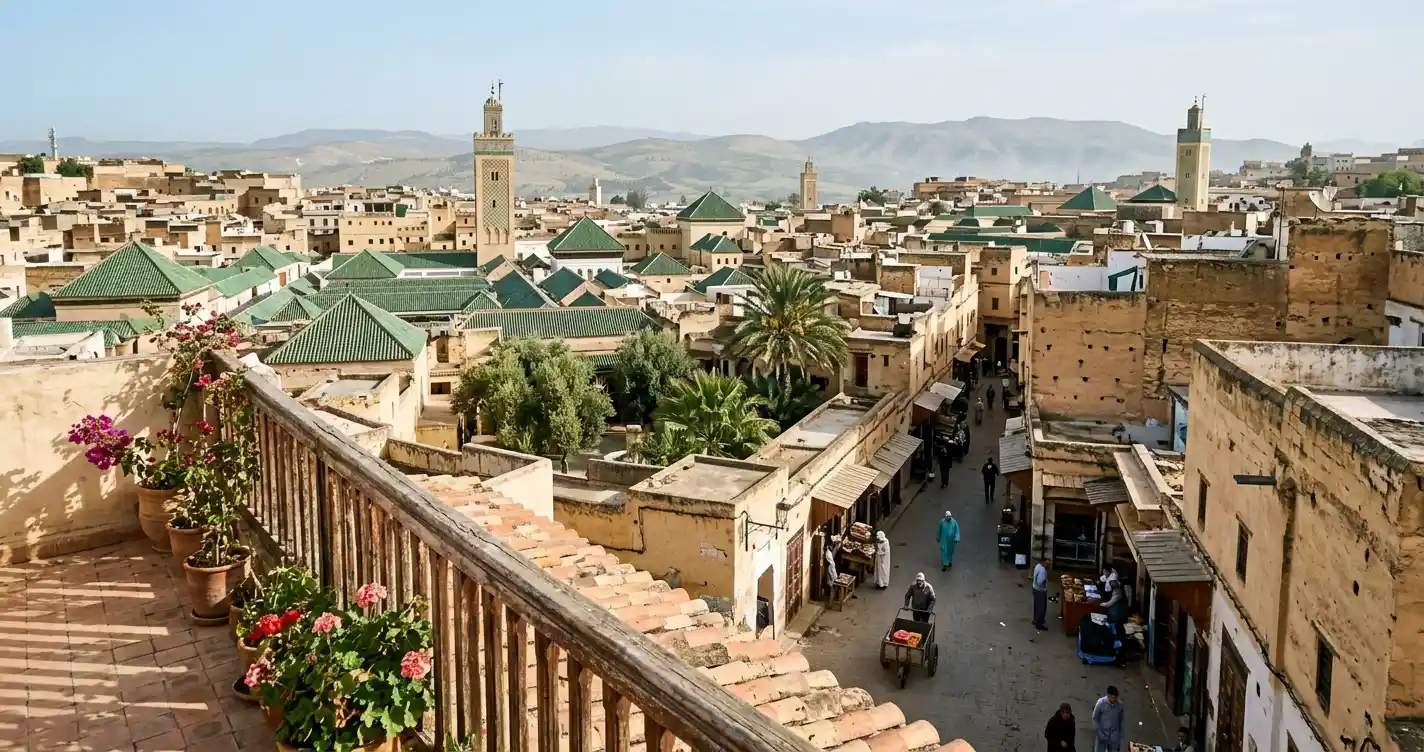
Early morning, before the heat builds and before the medina’s narrow lanes fill with both locals and tour groups, is the best window year-round, particularly from May through September when afternoon temperatures climb quickly. Aiming to be inside the medina walls by 8 or 9am makes a genuine difference to how comfortable the walk feels, and it also means having key sites like the Bou Inania Madrasa or the tanneries largely to yourself before the day’s tour groups arrive. Late afternoon, once the harshest sun has passed, offers a second good window, particularly for photographing the medina’s rooftops and gates in softer light.
Best Time to Visit Fes for Smaller Crowds
Late November through February, excluding the days immediately around major holidays, sees noticeably fewer visitors than the busy spring and autumn shoulder seasons, making it a good option for travelers prioritizing a quieter medina over ideal weather. The trade-off is shorter daylight hours and a real chance of rain on any given day, so building flexibility into a winter itinerary is worth it.
Cheapest Time to Visit Fes
Late autumn and winter, particularly November and January, tend to bring the lowest hotel and riad rates, since demand drops off outside the peak spring and autumn travel windows. Flights can follow a similar pattern, making this a genuinely good stretch for budget-conscious travel despite the cooler weather. Booking during these months also tends to open up availability at riads that are fully booked months in advance during the Fes Festival of World Sacred Music, giving budget travelers access to properties that would otherwise be out of reach during peak season.
Best Time to Visit Fes for Festivals and Cultural Events
The Fes Festival of World Sacred Music, one of Morocco’s most significant cultural events, typically runs in late May or early June, with the 2026 edition scheduled for June 4–7 across venues including Bab Makina and the Jnan Sbil Gardens. Timing a visit around it means booking medina riads well in advance, since availability tightens considerably during festival week. The festival’s ten days of concerts and cultural programming, spanning Sufi chants, gospel, and other spiritual music traditions, draw an international audience and give the medina a genuinely festive atmosphere that’s hard to find outside this window. Beyond the sacred music festival, smaller local moussems and craft fairs occur throughout the year in and around Fes, though these tend to have less fixed, publicly advertised scheduling than the main festival.
Is Fes Too Hot in Summer?
For many travelers, yes July and August regularly bring highs in the mid-to-high 30s°C, occasionally exceeding 40°C during heatwaves, which can make extended outdoor sightseeing genuinely uncomfortable. Visiting is still possible with an adjusted schedule: sightseeing in the early morning and late afternoon, resting indoors during the peak midday heat, and staying well hydrated throughout the day. Riads with a pool or a shaded courtyard become particularly valuable during this stretch, offering a place to retreat between sightseeing sessions, and some travelers deliberately plan a slower, more indulgent pace during these months rather than trying to pack in the same volume of sightseeing as a spring or autumn trip.
Is Fes Worth Visiting in Winter?
Yes, and it suits travelers who prioritize smaller crowds and lower prices over warm weather. Days stay mild enough for comfortable sightseeing, though evenings turn genuinely cold, and packing warm layers for riad courtyards many of which aren’t heavily heated is worth planning for. The softer winter light also gives the medina’s sandstone buildings a warmer, more golden cast than the harsher light of summer, and the shorter queues at major monuments make it easier to properly appreciate details like the carved plasterwork at the Bou Inania Madrasa without jostling through crowds.
Fes During Ramadan and Eid
Ramadan in 2026 runs from roughly February 17 to March 19, with Eid al-Fitr following around March 20. Tourist restaurants, hotels, and tours continue operating normally throughout, though the city’s rhythm shifts noticeably: quieter streets by day, and a livelier atmosphere after sunset as families gather to break the fast. Visitors are welcome to eat and drink as usual in tourist-facing establishments, though discretion in public spaces during daylight hours is appreciated. Evenings during Ramadan can be a particularly memorable time to be in the medina, with food stalls and streets coming alive shortly after sunset, and the call to prayer marking iftar carrying a distinct energy through the old city’s narrow lanes.
How Many Days Do You Need in Fes?
Two to three full days is generally enough to see the medina’s major sites the tanneries, the Bou Inania and Al Attarine madrasas, the Nejjarine Museum without rushing, with a fourth day useful for a slower pace or a nearby day trip. Travelers combining Fes with a wider Morocco itinerary often use it as a two-night stop between Chefchaouen and Marrakech or the desert routes further south, though history-focused travelers sometimes extend to four or five nights to properly explore the medina’s thousands of alleys at a relaxed pace, since Fes el-Bali alone is considered one of the largest car-free urban areas in the world.
What to Pack for Fes by Season
For spring and autumn, light layers with a warmer jacket for evenings cover most needs. Summer calls for breathable, loose clothing, sun protection, and a refillable water bottle, along with a hat for the hottest midday stretches. Winter requires genuinely warm layers, since riad courtyards and stone interiors can feel considerably colder than the daytime temperature suggests a scarf and a proper jacket, not just a light sweater, are worth packing. Comfortable, sturdy walking shoes matter in every season, since the medina’s uneven, sloped stone lanes are considerably more demanding underfoot than a flat city street, and a small daypack with water and sun protection is worth carrying regardless of season, given how easy it is to lose track of time wandering between souks.
Best Time to Visit Fes for Day Trips
Spring and autumn again stand out, offering comfortable conditions for day trips to nearby destinations like Meknès, Volubilis, or the Middle Atlas towns of Ifrane and Azrou, all of which involve some time outdoors walking between sites. Volubilis in particular, an exposed Roman archaeological site with little shade, is considerably more comfortable to explore outside the peak summer heat. Winter day trips toward Ifrane can also reward visitors with snow-dusted cedar forests, a striking contrast to Fes itself, and this route is popular with travelers curious to see Morocco’s more alpine, European-feeling side in a single afternoon.
Best Time to Visit Fes: Quick Month-by-Month Comparison
Spring (March–May) and autumn (September–November) offer the best overall balance of weather and crowds. Summer (June–August) brings the most heat and the longest sunny days, better suited to travelers who don’t mind adjusting their schedule around the midday sun. Winter (December–February) brings the lowest prices and quietest streets, alongside the coolest temperatures and highest chance of rain, making it the pick for travelers who value solitude and savings over guaranteed sunshine. For a quick reference, spring and autumn suit first-time visitors most, summer suits budget-flexible travelers building a trip around fixed dates, and winter suits those chasing the lowest prices and calmest medina experience.
Final Verdict: When Should You Visit Fes?
For most travelers, late March through May or late September through November delivers the best version of Fes warm enough for comfortable exploring, cool enough at night for a good night’s sleep, and without the extremes that define both summer and deep winter. Travelers prioritizing budget or solitude over ideal weather should look to November or January instead, while those built around a specific event the Fes Festival of World Sacred Music, in particular should plan their visit around its early June dates and book accommodation well ahead of time. Ultimately, there’s no single wrong time to visit Fes; each season simply trades one advantage for another, and matching that trade-off to your own priorities matters more than chasing a single “perfect” month.
Best Time to Visit Fes FAQs
What is the best month to visit Fes?
April, May, October, and November are the most consistently recommended months, combining comfortable temperatures with manageable crowds and generally dry weather, though each has its own slight trade-off between price, crowds, and rain risk.
Is spring or autumn better for Fes?
Both are excellent and very similar in temperature; autumn tends to see slightly fewer crowds than spring, which overlaps with Morocco’s busiest tourist season and festival calendar, while spring offers slightly greener countryside for day trips.
How hot does Fes get in summer?
Daytime highs regularly reach the mid-30s°C in July and August, with occasional spikes above 40°C during heatwaves, though evenings offer some relief and the medina’s shaded alleys help make midday walking more bearable.
Does it rain in Fes?
Yes, mainly between November and March, with April also seeing a relatively high number of rainy days; summer is almost entirely dry from June through September, making it the safest bet for guaranteed sunshine.
Is Fes cold in winter?
Daytime temperatures stay mild, typically 15–18°C, but nights regularly drop to 4–6°C, with occasional light snow possible in January, so warm layers are worth packing even for a short winter visit.
What is the cheapest month to visit Fes?
November and January tend to offer the lowest accommodation rates, falling outside the busier spring and autumn travel windows and major festival dates, though both months carry some risk of rain.
When is Fes least crowded?
Late November through February, apart from major holiday periods, sees the fewest visitors of the year, offering a quieter, more contemplative version of the medina without the queues at major sites.
How many days should you spend in Fes?
Two to three full days covers the medina’s major sites comfortably, with a fourth day useful for a slower pace or a day trip to nearby Meknès or Volubilis, and history enthusiasts may want to extend further still.
Is Fes worth visiting in July and August?
Yes, with adjustments plan sightseeing for early morning and late afternoon, rest during the hottest midday hours, and stay well hydrated throughout the day, choosing accommodation with reliable air conditioning.
Is Fes worth visiting during Ramadan?
Yes tourist services operate normally, and the shift in daily rhythm, quiet by day and lively after sunset, offers a genuinely different, culturally rich way to experience the city, particularly around iftar time in the medina.