Atlas Mountains Day Trip from Marrakech (2026): 10 Amazing Ways to Explore the High Atlas
The High Atlas rises so close to Marrakech that snow-capped peaks are sometimes visible from the city’s rooftops on a clear winter morning, yet the mountains themselves feel like an entirely different country. An Atlas Mountains day trip from Marrakech trades the medina’s heat and crowds for river valleys, Berber villages, and switchback roads climbing toward peaks over 4,000 metres all without an overnight stay.
This guide covers 10 ways to experience the High Atlas in a single day, from the easiest, most accessible valleys to more active, hands-on itineraries, along with the practical details distance, cost, timing, and what to pack to help you plan one.
Is an Atlas Mountains Day Trip from Marrakech Worth It?
Yes, and it’s consistently one of the most recommended excursions from the city. Within about an hour’s drive, the scenery shifts from flat, dry plains to green river valleys and terraced villages, offering a genuinely different side of Morocco than anything the medina shows. Even travelers with only a few days in Marrakech tend to rank it among their most memorable outings, precisely because the contrast with the city is so immediate cooler air, running water, and a much slower pace of life within an hour of the souks.
The 10 Best Atlas Mountains Day Trip Experiences
From easy scenic drives to genuinely active mountain days, these 10 options cover the full range of what’s possible within a single day from Marrakech.
Imlil and the Toubkal Valley
Imlil, the gateway village for Mount Toubkal, sits around 1,740m up in the High Atlas, roughly an hour and a half from Marrakech via Asni. It offers the most serious mountain atmosphere on this list narrow lanes, mule trains, and trailheads leading toward North Africa’s highest peak, even though summiting Toubkal itself requires an overnight stay rather than a single day. A day visit still allows time for a shorter walk into the surrounding Ait Mizane Valley, with views up toward the peak itself, and the village’s small cafés make a natural stop for mint tea before heading back down.
Ourika Valley and Setti Fatma
About 60 km southeast of the city, Ourika Valley is the most popular and accessible mountain day trip, built around riverside restaurants, Berber hamlets, and the walk up to the waterfalls near Setti Fatma. It’s also one of the quickest to reach, requiring only around an hour of driving each way, which is why it remains the default choice for travelers with limited time or an early return flight. The valley follows the Ourika River upstream, so the scenery gradually shifts from open farmland near the entrance to steeper, greener terrain the further you travel toward Setti Fatma.
Three Valleys Experience
A well-established tour format combines Ourika, Asni (often with a stop at Oukaimeden or the Kik Plateau), and Imlil into a single full day, typically departing Marrakech around 8:30–9am and returning by early evening. It’s the most efficient way to see several distinct valleys without committing to multiple separate trips, though it also means less time lingering at any single stop compared to a trip focused on just one valley. Some versions of this tour swap in Amizmiz or Lalla Takerkoust instead of Oukaimeden, so it’s worth checking the exact stops before booking if a particular valley matters most to you.
Ouirgane Valley
Around 60 km from Marrakech on the road toward Taroudant, Ouirgane sits near elevations reaching 2,300m and is known for its natural reserves, home to gazelles and Atlas sheep. It’s a quieter alternative to the busier Ourika Valley for travelers who want mountain scenery without the crowds, and its handful of countryside guesthouses make it a favorite for a longer, more relaxed lunch stop. The valley also offers gentle, low-key walking trails through olive groves and almond orchards, better suited to a leisurely afternoon than a strenuous hike.
Asni and the Mountain Countryside
A working Berber town at the base of Jebel Toubkal, about 45 minutes from Marrakech, Asni serves as the administrative and commercial hub for the surrounding villages, with a large Saturday souk and orchards of apple, walnut, and almond trees lining the approach. It’s less a single attraction than a genuine working town, which is part of its appeal for travelers wanting something less curated than the busier tourist stops. Timing a visit for Saturday, when the weekly souk fills the town, adds a genuinely local dimension most day trips otherwise skip.
Kik Plateau
Reached via the road toward Amizmiz and Lalla Takerkoust, the Kik Plateau sits above Asni and offers sweeping views over the reservoir and the Berber villages scattered across the surrounding foothills a favorite stop for photographers on the Three Valleys route, particularly in spring when the plateau turns briefly green after the winter rains. The plateau’s open, treeless terrain also makes it one of the better spots on this list for a quick picnic stop with a view.
Amazigh Village Walk
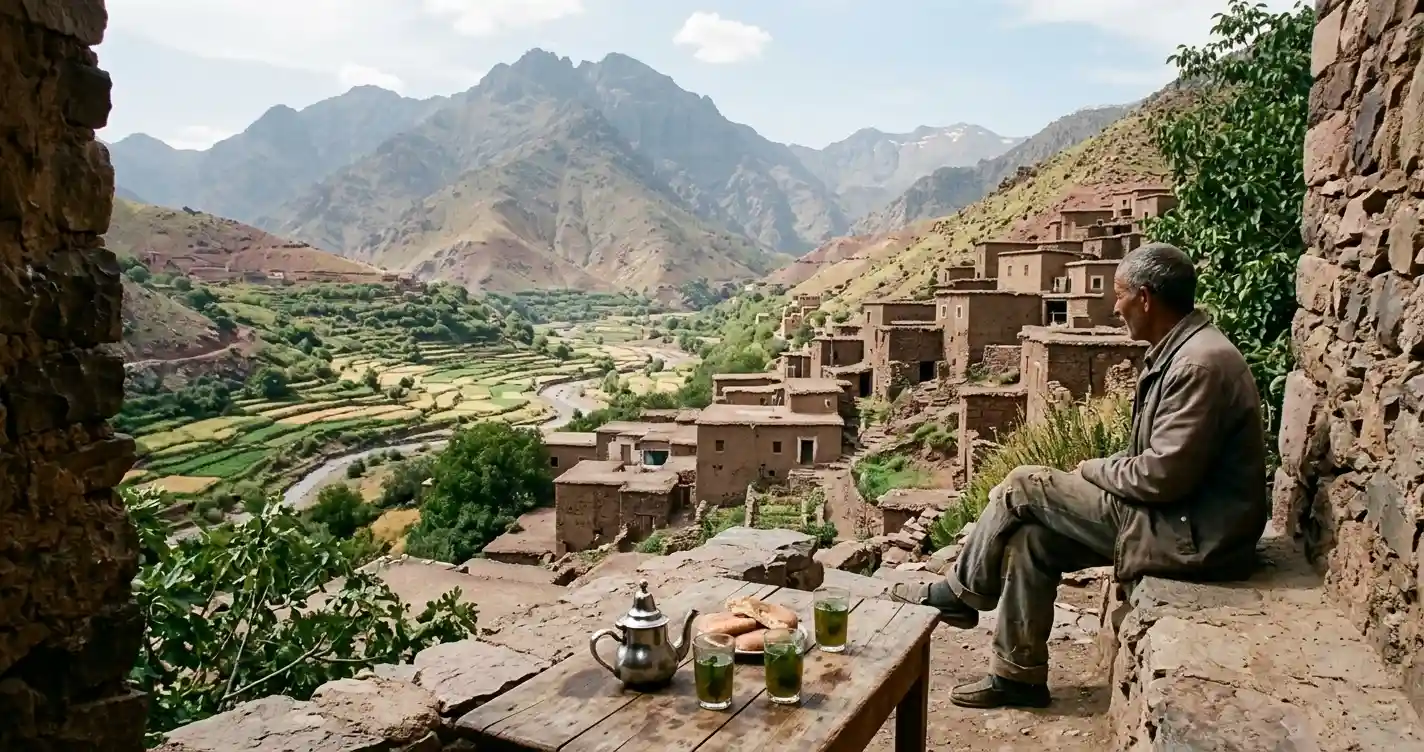
Nearly every Atlas Mountains day trip includes a stop in a Berber (Amazigh) village, often with a short guided walk between hamlets and an invitation into a family home for mint tea and a look at daily mountain life, including bread-baking and, in some villages, traditional argan oil production. These stops tend to be the part of the day travelers remember most, since they offer direct contact with mountain life rather than just scenery from a car window. Many families welcome visitors as part of an informal arrangement with local guides, so a small purchase or tip is generally appreciated rather than expected.
Waterfall Hiking
Setti Fatma’s seven waterfalls in the Ourika Valley are the most popular hiking destination, reached via a moderate uphill trail with several river crossings, while the smaller Azroul waterfalls near Imlil offer a similar experience with a quieter, less crowded trail. Both are manageable in trainers or light hiking shoes, though the rocks near the water can be slippery, especially after rain. Local guides at the trailhead often offer to lead the way for a small fee, which is worth considering on busier days when the path can be hard to follow through the crowds.
Traditional Mountain Lunch
Most day trips build in a stop for a home-cooked or restaurant lunch tagine, salads, and bread often on a riverside terrace in Ourika or in a Berber family’s home along the Imlil or Asni routes, giving the day a slower, more personal rhythm than a typical sightseeing stop. In Ourika in particular, several restaurants position their tables directly over the river on wooden platforms, adding a genuine sense of place to the meal.
A More Adventurous High Atlas Day
For travelers wanting more than a scenic drive, combining a mule ride up to a high village, a two-hour guided hike between hamlets, and a stop at a women’s cooperative producing argan oil turns a standard day trip into a genuinely active, hands-on day in the mountains. This kind of itinerary suits travelers with at least moderate fitness and a full day to spare, since the extra activities add real time on top of the driving.
Which Atlas Mountains Day Trip Is Best for You?
Ourika Valley suits travelers who want an easy, well-trodden introduction with minimal driving. Imlil suits anyone after real hiking and mountain atmosphere, particularly those hoping to catch a glimpse of Toubkal itself. The Three Valleys format suits travelers who want the broadest possible overview in a single day, while Ouirgane suits those specifically trying to avoid the busier routes and prefer a slower, quieter pace. Families with young children often do best sticking to Ourika or the gentler stretches of the Three Valleys route, while more independent travelers tend to gravitate toward Imlil or Ouirgane for a quieter, more self-directed day.
How Far Are the Atlas Mountains from Marrakech?
The foothills begin within about 30–40 km of the city, with most popular day-trip villages Asni, Ourika, Ouirgane sitting 45 to 90 minutes away by road. Imlil, further up at higher elevation, generally takes closer to an hour and a half. The drive itself is part of the appeal, climbing steadily out of the flat Haouz plain into increasingly dramatic terrain within a remarkably short distance, with the transition from farmland to genuine mountain scenery often happening in the span of just a few kilometres.
How to Get to the Atlas Mountains from Marrakech
Four main options cover nearly every budget and comfort level, from a fully independent rental car to a fixed-itinerary group tour.
Private Driver
A private driver offers the most flexibility on timing and stops, making it easy to linger longer at a favorite village or skip a stop that doesn’t appeal, generally at a higher cost than a shared tour. This option works particularly well for families or anyone with specific hiking or photography priorities that a fixed group itinerary wouldn’t accommodate.
Organized Group Tour
Shared group tours run daily to nearly every route on this list and remain the simplest, most affordable option for travelers without their own transport, though the itinerary and pace are fixed. Most depart from central Marrakech pickup points between 8 and 9am and return by early evening.
Grand Taxi
Shared grand taxis run from designated stands in Marrakech to towns like Asni and Ourika, offering a cheaper but less predictable alternative for travelers comfortable navigating independently. This option demands more flexibility and basic French or Arabic, since schedules aren’t fixed in advance.
Rental Car
Self-driving offers full independence and is manageable on the main routes toward Asni and Ourika, though mountain roads can be narrow and winding, so it suits confident drivers more than first-timers. Fuel stops become sparser the further into the mountains you go, so it’s worth filling up before leaving Marrakech.
How Much Does an Atlas Mountains Day Trip Cost?
Pricing depends mainly on transport type and how many extra activities are added to the standard itinerary.
Shared group tours to Ourika or the Three Valleys route are generally the most budget-friendly option, often including transport and a guide but not lunch. Private drivers cost more but offer a personalized pace, and multi-activity days that add mule rides, cooking demonstrations, or longer guided hikes generally sit at the higher end of the price range. It’s worth checking in advance whether entrance fees, lunch, and any optional camel or mule rides are included in the quoted price, since these are commonly charged separately once you arrive.
What to Do in the Atlas Mountains
Beyond the standard scenic drive, options include hiking to waterfalls, riding a mule up to a high village, visiting a women’s argan oil cooperative, having tea in a Berber family home, and, for the more ambitious, starting a multi-day trek toward Mount Toubkal’s summit from Imlil. Some routes also pass through Oukaimeden, home to Morocco’s highest ski resort, worth a stop for the novelty alone even outside the winter season. Photography is also a strong draw in its own right, with the Kik Plateau and the approach to Imlil offering some of the most dramatic viewpoints reachable in a single day from Marrakech.
Best Time for an Atlas Mountains Day Trip
The Atlas Mountains are a year-round destination, but each season brings a distinctly different character to the landscape.
Spring
March through May brings green valleys, wildflowers in the foothills, and comfortable hiking temperatures, making it one of the best windows for an Atlas Mountains day trip. Waterfalls also tend to run fuller during this period thanks to snowmelt from higher elevations.
Summer
Lower valleys can get warm, but the higher elevations around Imlil and Oukaimeden stay noticeably cooler than Marrakech, making them a popular summer escape from the city heat. Starting early in the day helps avoid the strongest midday sun on any hiking sections.
Autumn
September through November mirrors spring’s mild weather, with the added benefit of fewer crowds at popular stops like Setti Fatma, making it a strong choice for travelers who prefer a quieter pace.
Winter
Winter brings cooler, clearer air and occasional snow at higher elevations, particularly around Oukaimeden and Toubkal, making for dramatic scenery, though warm layers are essential. Some higher routes may close briefly after heavy snowfall, so it’s worth checking conditions with your operator during this season.
What to Wear and Pack for the Atlas Mountains
Comfortable walking shoes, layers for changing temperatures with altitude, sunscreen, and a hat cover most of the year, with a warmer jacket worth adding for anything above 1,500m even in warmer months. A reusable water bottle and small daypack are useful for anyone planning to hike, and cash in small denominations is worth carrying for village purchases or tips, since card payments are rare outside Marrakech itself.
Are Atlas Mountains Day Trips Difficult?
Most standard day trips involve only light walking between villages and viewpoints, suitable for travelers of average fitness. The Setti Fatma waterfall hike and similar routes involve a moderate uphill climb with some uneven terrain, but neither requires prior hiking experience. Only a genuine Toubkal ascent demands serious fitness and, as noted, can’t be completed within a single day most operators are upfront about this distinction when booking. Anyone with concerns about a specific route’s difficulty can usually ask the operator directly, since most guides are happy to describe the terrain and pace in advance.
How to Choose a Good Atlas Mountains Tour
Look for a clear itinerary with named villages and stops rather than a vague “mountain excursion,” confirmation of whether lunch and activities are included, and a reasonable group size smaller groups generally allow more flexibility and a better guide experience than a large bus tour. Recent reviews mentioning a specific guide by name are usually a good sign that the operator maintains consistent quality rather than rotating drivers unpredictably. It’s also worth confirming the vehicle type in advance, since some of the higher, rougher roads toward Imlil are more comfortable in a 4×4 than a standard minivan.
A Perfect Atlas Mountains Day Trip from Marrakech
A well-balanced day typically departs Marrakech by 8 or 9am, drives into the Ourika or Imlil valley, includes a short guided walk or hike to a waterfall or village, stops for a traditional lunch, and returns to the city by early evening long enough to feel immersive without an exhausting return drive after dark. Building in at least one unhurried stop, rather than treating the day as a checklist, tends to make the difference between a rushed excursion and a genuinely memorable one.
Atlas Mountains vs Other Marrakech Day Trips
Compared to Agafay’s rocky desert or Essaouira’s coastal town, the Atlas Mountains offer the most varied single-day landscape shift river valleys, forest, and high-altitude scenery within a relatively short drive. Aït Ben Haddou and Essaouira both require considerably longer travel times for a different kind of experience, historical and coastal respectively, rather than the greener, more active day the Atlas Mountains deliver. For travelers deciding between multiple day trips, the Atlas Mountains generally offer the best balance of short travel time and genuine scenic payoff.
Final Verdict
An Atlas Mountains day trip from Marrakech delivers some of the best value scenery-to-travel-time ratio of any excursion from the city, whether you choose the easy accessibility of Ourika, the serious mountain atmosphere of Imlil, or the broader overview of the Three Valleys route. For most first-time visitors, it’s worth building at least one Atlas Mountains day into a Marrakech itinerary, even a short one, simply because so little travel time is required for such a complete change of scenery.
Atlas Mountains Day Trip FAQs
How far are the Atlas Mountains from Marrakech?
The foothills begin within 30–40 km of the city, with most popular villages 45 minutes to an hour and a half away, making the mountains one of the closest major landscape changes accessible from Marrakech.
Can you visit the Atlas Mountains in one day?
Yes nearly every destination on this list is designed as a single-day excursion, with only a genuine Toubkal summit attempt requiring an overnight stay in the mountains.
Is an Atlas Mountains day trip worth it?
Yes, it’s consistently rated among the best short trips from Marrakech for the contrast in scenery and pace compared to the city, and it suits nearly any travel style from relaxed sightseeing to active hiking.
What is the best Atlas Mountains day trip from Marrakech?
Ourika Valley is the best all-around choice for its accessibility, while Imlil suits travelers specifically wanting hiking and mountain atmosphere, and the Three Valleys format suits those who want to see as much as possible in one day.
Can beginners hike in the Atlas Mountains?
Yes routes like the Setti Fatma waterfall walk are moderate and suitable for beginners, while more serious multi-day treks toward Toubkal require greater fitness and preparation.
Do you need a guide?
A guide isn’t strictly required for the main villages, but one adds real value for waterfall hikes, mule rides, and navigating less obvious trails, and is generally included in organized tours at no extra cost.
What should you wear?
Comfortable walking shoes and layers, since temperatures can shift noticeably with altitude even on a warm day in Marrakech, with a warmer layer recommended for anywhere above 1,500m.
Can you see Mount Toubkal on a day trip?
Yes Toubkal is visible from Imlil and several viewpoints along the way, though reaching its summit requires a multi-day trek rather than a single day trip.
Is the Atlas Mountains day trip suitable for children?
Yes, particularly Ourika Valley and the gentler stretches of the Three Valleys route, though longer hikes may be more suited to older children who can manage a couple of hours of walking.
How much does an Atlas Mountains day trip cost?
Shared group tours are the most affordable option, with private drivers and multi-activity days costing more depending on what’s included, so it’s worth comparing a few operators before booking.