Hidden Gems in Marrakech (2026): 15 Amazing Places Tourists Rarely Discover
Most visitors to Marrakech see the same handful of sights: Jemaa el-Fnaa, Bahia Palace, Jardin Majorelle, and not much else. But behind an unmarked door a few streets over, there’s often a restored 19th-century garden, a small museum nobody’s heard of, or a quiet residential quarter where the medina still functions the way it always has.
This guide covers 15 hidden gems in Marrakech worth seeking out, from restored palaces to working craft districts most tour buses never reach, organized by the kind of morning or afternoon you’re after.
Hidden Gems in Marrakech: The Short Answer
Le Jardin Secret offers the single best combination of hidden-gem quiet and genuine historical depth, tucked behind an unassuming medina door. For something smaller and more personal, Musée Tiskiwin’s cluttered rooms of Saharan trading artifacts reward the curious far more than its modest entrance fee suggests. And for a genuinely local experience, the quiet streets of Sidi Bel Abbès or the area around Bab Doukkala show a Marrakech that has nothing to do with souvenir shopping.
What Counts as a Hidden Gem in Marrakech?
A hidden gem here generally means a place with real historical or cultural substance that most itineraries simply skip not because it’s obscure, but because guidebooks default to the same five or six landmarks. Several of the places on this list sit within a five-minute walk of those landmarks.
Are There Still Secret Places to Discover?
Yes. Marrakech’s medina is dense enough that even well-traveled visitors regularly stumble onto museums, fountains, and gardens they’d never heard of, often within a few minutes’ walk of a major attraction.
How to Explore Marrakech Beyond the Main Attractions?
Slowing down and allowing time to wander without a fixed itinerary is the simplest approach; nearly every hidden gem on this list sits within walking distance of a well-known landmark, just one or two turns off the obvious route.
15 Hidden Gems in Marrakech
1. Le Jardin Secret – A Peaceful Escape in the Medina
Behind an unassuming door in the Mouassine quarter, Le Jardin Secret occupies a site that’s held a riad garden since the 16th-century Saadian dynasty, rebuilt into its current form in the mid-19th century by a caïd and later owner obsessed with clocks. Left to decay for decades, it was fully restored and reopened in 2016, and now holds two distinct gardens Islamic and exotic plus a 17-metre tower with one of the medina’s few legal rooftop views. The restoration also uncovered the historic khettara channel that still feeds the garden, one of the only places in the city where this underground water system is visible and explained.
2. Dar El Bacha Museum – A Beautiful Palace Away From the Crowds
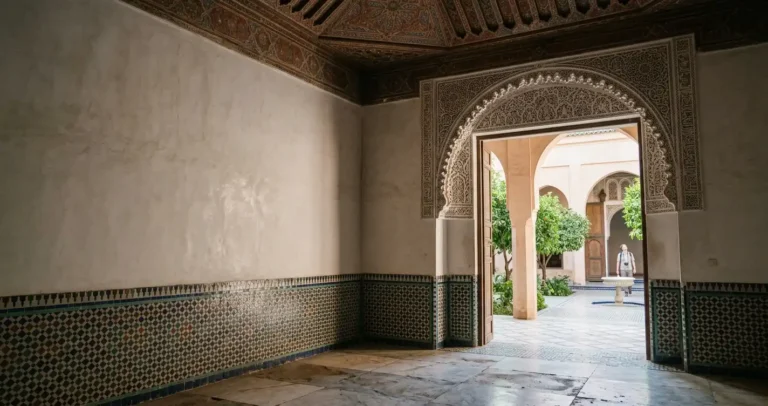
Once the residence of the powerful Pasha Thami El Glaoui, Dar El Bacha is now home to the Museum of Confluences, a rotating collection of Moroccan and international art set inside an 18th-century palace of carved cedar ceilings and elaborate zellige tilework. Every room and courtyard doubles as a showcase of traditional craftsmanship in its own right, independent of whatever exhibition happens to be on display. The on-site Bacha Coffee, dating to 1910 and now sourcing beans from over 35 countries, is worth a stop even if you skip the exhibitions.
3. Maison de la Photographie – Marrakech Through Old Photographs
Tucked near the Ben Youssef Madrasa, this small museum holds a private collection of Moroccan photographs spanning nearly a century, documenting daily life, dress, and landscape well before mass tourism reshaped the city. It sits close enough to Le Jardin Secret and the Mouassine museum to combine easily into the same walk. The rooftop café is a genuinely good reason to visit on its own.
4. Musée de Mouassine – A Hidden Cultural Treasure
Housed in a restored 16th-to-17th-century douiria a small guest apartment between the Mouassine mosque and fountain, this museum’s real draw is the space itself: original, centuries-old wall paintings in vivid verdigris and apricot, preserved beneath layers of whitewash until a lengthy restoration uncovered them. The building was created by a noble family after the Saadians relocated the neighborhood’s Jewish residents to the Mellah, giving it a specific and telling place in the medina’s history.
5. The Mellah’s Quiet Streets – A Different Side of the Medina
Marrakech’s former Jewish quarter, southeast of the main souks, moves at a noticeably slower pace than the tourist-heavy streets near Jemaa el-Fnaa. Its own spice market, a handful of remaining synagogues, and narrower, quieter lanes offer a genuinely different texture from the rest of the medina.
6. Tiskiwin Museum – A Fascinating Journey Across Morocco
Housed in two connected riads and built from Dutch anthropologist Bert Flint’s personal collection, Tiskiwin traces the old caravan route from Marrakech to Timbuktu, with each room dedicated to a different trading post along the way Tuareg camel saddles, High Atlas carpets, and basketwork from communities along the route. The captions are eccentric and only partly translated, which somehow adds to rather than detracts from the charm, and the mandarin-shaded courtyard is worth lingering in on its own.
7. The Mouassine Fountain – One of the Medina’s Forgotten Landmarks
Part of the same 16th-century Saadian complex as the Mouassine mosque and museum, this fountain once supplied water to the surrounding neighborhood and its now-vanished public bath. Most visitors walk straight past it, unaware it’s one of the last functioning pieces of the medina’s original Saadian infrastructure.
8. Koutoubia’s Lesser-Known Surroundings – Beyond the Famous Mosque
Beyond the mosque itself, the gardens and ruins scattered around the Koutoubia rarely get more than a glance from visitors rushing toward Jemaa el-Fnaa. Slowing down here, particularly in the early morning before the square fills up, reveals a quieter, more contemplative side of one of the city’s most photographed landmarks.
9. Sidi Bel Abbès – A Local Side of Marrakech
Home to one of Marrakech’s most important zaouias (a shrine to a revered Sufi saint), the Sidi Bel Abbès neighborhood sits well north of the usual tourist routes and functions largely as an ordinary residential quarter, with a mosque dating to the same Saadian building campaign as Mouassine and Ben Youssef. Non-Muslims can’t enter the zaouia itself, but the surrounding streets offer a genuine, unhurried look at daily medina life.
10. The Tanneries of Marrakech – A Glimpse Into Traditional Craft
At the medina’s northeastern edge, artisans still soak, treat, and dry animal hides in open-air stone pits using techniques largely unchanged since the 11th century. Morning, between roughly 8 and 11am, is the best time to visit, when the vats are full and the work is at its most active, before the day’s heat slows everything down. Visitors are typically handed a sprig of mint to hold under their nose, since the ammonia used to soften the hides is genuinely pungent.
11. Bab Debbagh – An Atmospheric Medina Gateway
The historic gate marking the entrance to the tanners’ quarter, Bab Debbagh has controlled access to this working craft district for centuries. Some nearby rooftops offer a bird’s-eye view over the tanning pits, though it’s worth agreeing on any fee upfront and feeling no obligation to buy anything from the shop it usually leads through. Arriving by taxi directly to the gate, rather than walking in from the central souks, avoids most of the persistent unofficial guides along the way.
12. Cyber Park Arsat Moulay Abdeslam – A Quiet Green Retreat
An eight-hectare garden a short walk from Jemaa el-Fnaa, this park began as an 18th-century royal food garden before falling into disrepair and being restored in 2003 with a modern layer of free Wi-Fi hotspots and a small telecommunications museum. Archaeological surveys during the restoration uncovered two distinct historic layers, which the foundation chose to preserve side by side rather than erase a historic Arsat garden of olive and citrus trees alongside a more modern lawn-and-fountain layout. It’s popular with local families on weekend afternoons and remains one of the best-maintained green spaces in the city.
13. The Palmeraie Backroads – Beyond the Resort Experience
Beyond the golf courses and luxury villas that have reshaped much of the Palmeraie, the older backroads through the palm groves still show the agricultural landscape that gave the district its name, with small farms and quieter, unpaved tracks a world away from the resorts nearby.
14. Sidi Ghanem’s Creative Workshops – Marrakech’s Contemporary Side
A converted industrial zone about 20 minutes from the medina, Sidi Ghanem hosts dozens of designer ateliers and showrooms working in rugs, lighting, ceramics, and fashion. It draws a fraction of the medina’s foot traffic despite showcasing some of the city’s most interesting contemporary design.
15. The Secret Corners of the Medina – Discovering Marrakech on Foot
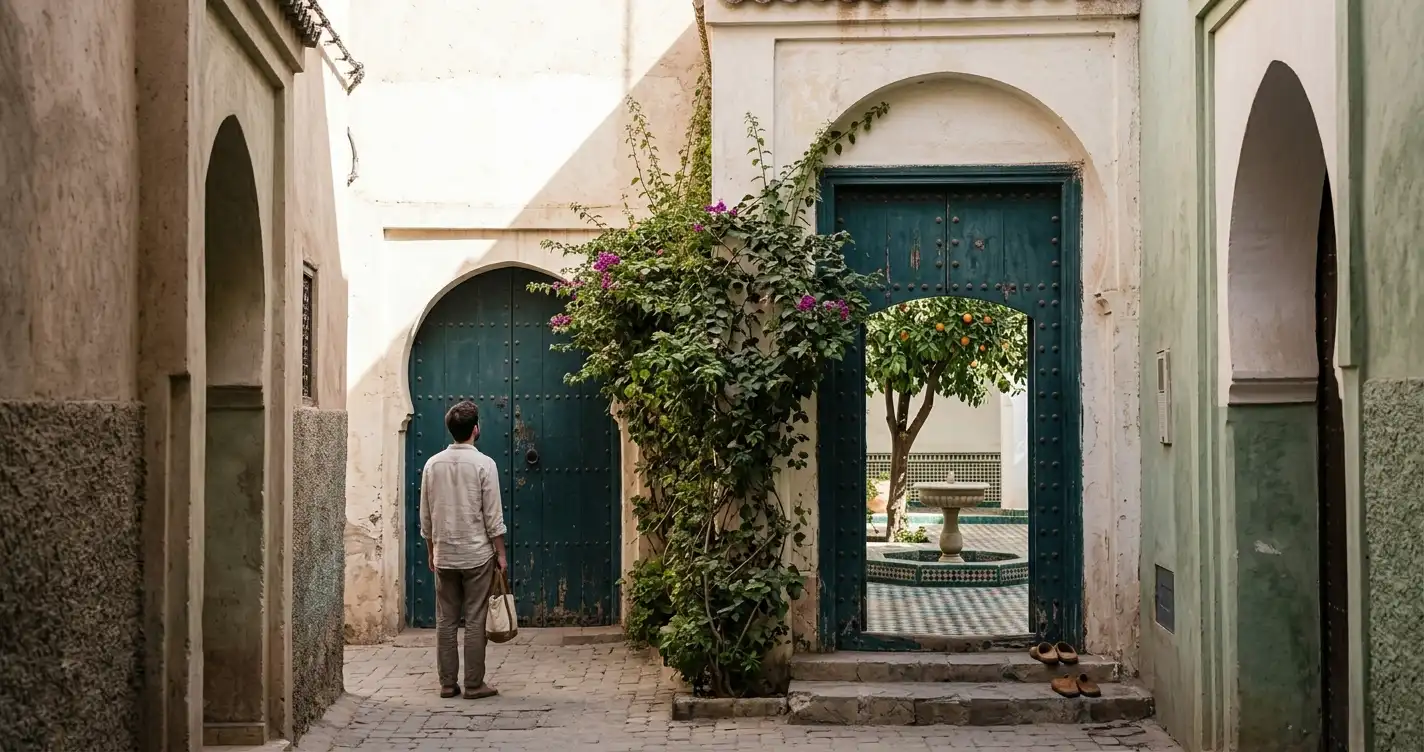
Beyond any single address, the medina itself rewards aimless walking quiet fountains, unmarked doorways, small workshops in a way no fixed itinerary can fully capture. Some of the best “hidden gems” in Marrakech are simply whatever you happen to find on a street with no particular destination in mind.
Hidden Gems in Marrakech Beyond the Famous Sights
What to See After Jemaa el-Fnaa
Once you’ve seen the square, the quieter Koutoubia gardens and the nearby Cyber Park both offer an easy, walkable contrast to the crowds.
Quiet Places Near the Medina
Le Jardin Secret and Musée de Mouassine both sit within a few minutes of the busiest souk streets, making them easy to fold into a regular medina walk.
Attractions Worth Exploring After Bahia Palace
Musée Tiskiwin, a short walk from Bahia Palace toward the Mellah, offers a much smaller but arguably richer collection for travelers not yet ready to head back to the square.
Places to Visit After Majorelle Garden
Sidi Ghanem’s design ateliers, a short taxi ride from Majorelle Garden, extend the same contemporary Moroccan design sensibility into a working creative district.
Hidden Gems in Marrakech for Culture Lovers
Forgotten History in the Medina
The Mouassine Fountain and the Sidi Bel Abbès zaouia both represent surviving pieces of Marrakech’s Saadian-era infrastructure and religious life, largely overlooked by visitors focused on the bigger monuments.
Small Museums With Big Stories
Tiskiwin and Musée de Mouassine both pack unusually rich history into modest, easily overlooked spaces, rewarding visitors willing to linger rather than rush through.
Traditional Architecture Most Visitors Walk Past
Dar El Bacha’s carved cedar ceilings and zellige tilework, and Musée de Mouassine’s restored original wall paintings, both showcase craftsmanship that’s easy to miss from the street.
Discovering Marrakech Through Local Heritage
The Mellah’s quieter streets and remaining synagogues tell a part of Marrakech’s history that the main souks don’t touch on at all.
Hidden Gems in Marrakech for a Peaceful Escape
Quiet Gardens
Le Jardin Secret and Cyber Park Arsat Moulay Abdeslam both offer genuine quiet, one inside the medina walls and one just outside them.
Peaceful Courtyards
Musée Tiskiwin’s mandarin-shaded courtyard remains one of the calmest corners in the medina, largely because so few visitors know to look for it.
Less Crowded Places to Sit and Slow Down
The Koutoubia’s surrounding gardens, particularly early in the morning, offer a rare quiet moment near one of the city’s most visited landmarks.
Where to Escape the Medina’s Energy
Cyber Park’s eight hectares of shaded walkways, a short walk from Jemaa el-Fnaa, remain popular with local families precisely because tour groups rarely stop there.
Hidden Gems in Marrakech for Authentic Local Experiences
Explore Residential Neighborhoods
Sidi Bel Abbès and the streets around Bab Doukkala both function as genuine residential quarters, offering a much slower, more ordinary side of the medina.
Visit Local Artisan Workshops
The tanneries near Bab Debbagh remain a working craft district rather than a staged display, with artisans processing hides the same way their predecessors have for centuries.
Discover Everyday Marrakech
The Mellah’s spice market and the Cyber Park on a Sunday afternoon both show how residents actually use the city, distinct from the tourist-facing version around Jemaa el-Fnaa.
How to Experience the City Without Following a Tourist Route
Picking one neighborhood and wandering without a fixed list of stops, rather than checking off landmarks, tends to surface more interesting finds than a rigid itinerary ever will.
Hidden Gems in Marrakech for Photography
Atmospheric Medina Streets
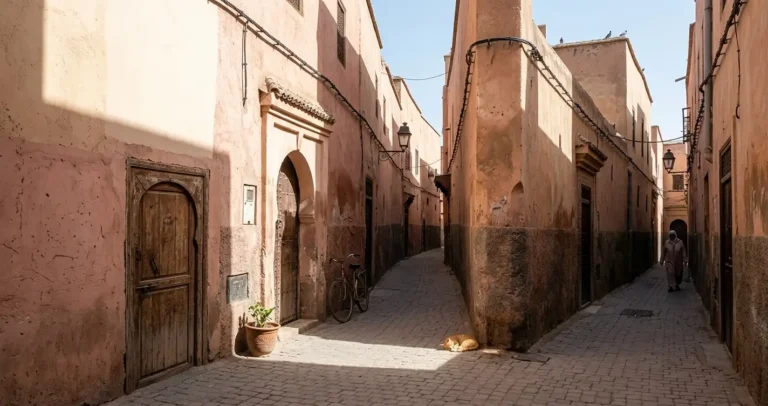
The narrow lanes around Sidi Bel Abbès and the approach to Bab Debbagh both offer the kind of unposed, everyday medina scenes that busier tourist streets rarely allow.
Traditional Doors and Architecture
Le Jardin Secret’s restored pavilions and Dar El Bacha’s carved details both make for striking architectural photography without the crowds found at bigger palaces.
Quiet Courtyards and Riads
Musée de Mouassine’s small, sunlit douiria and Tiskiwin’s shaded courtyard both photograph beautifully precisely because they’re rarely crowded.
Unexpected Marrakech Views
The tower at Le Jardin Secret offers one of the only legal elevated views over the medina rooftops, taking in the Mouassine mosque’s minaret and, on clear days, the Atlas Mountains beyond.
How to Discover Hidden Gems in Marrakech
Walk Without a Strict Itinerary
Building in unscheduled time between planned stops is often how travelers stumble onto the medina’s smaller museums and fountains in the first place.
Explore Early in the Morning
Arriving before the main sights get crowded, particularly around the Koutoubia and the tanneries, reveals a noticeably calmer version of the same places.
Look Beyond the Main Streets
Many of the medina’s smaller attractions sit down side lanes just off the busiest routes, close enough to reach easily but far enough to see almost no other tourists.
Ask Locals for Recommendations
Riad owners and shopkeepers often know about smaller museums, gardens, or workshops that don’t appear in most guidebooks.
Use Offline Maps
GPS can drift inside the covered medina, so having an offline map loaded in advance makes it easier to actually find these lesser-known spots once you’re looking for them.
Respect Residential Areas
Quarters like Sidi Bel Abbès are genuine neighborhoods rather than attractions, so keeping noise down and being mindful of privacy matters more here than in the main tourist zones.
Best Time to Explore Hidden Gems in Marrakech
Early Morning
Before 9am offers the calmest version of nearly every hidden gem on this list, particularly the tanneries and the Koutoubia surroundings.
Late Afternoon
Once the midday heat eases, late afternoon is a good second window, especially for gardens like Le Jardin Secret and Cyber Park.
Spring and Autumn
March through May and September through November offer the most comfortable weather for extended walking between lesser-known sites.
Summer
In peak summer heat, an early start matters even more, since several of these spots the tanneries especially involve standing outdoors without much shade.
During Ramadan
Some smaller museums and gardens adjust their hours during Ramadan, so it’s worth checking ahead if visiting during this period.
Hidden Gems in Marrakech: Practical Tips
Wear Comfortable Shoes
Uneven cobblestone and long stretches of walking make comfortable, closed shoes more important here than almost anywhere else in the city.
Carry Water
Several hidden gems, particularly the tanneries and Palmeraie backroads, involve time outdoors without easy access to cafés or shops.
Bring Cash
Small museums and independent sites often don’t accept cards, so having cash on hand avoids being turned away at the entrance.
Check Opening Hours
Smaller museums keep more limited hours than major landmarks, so it’s worth confirming before making a special trip.
Dress Respectfully
Covering shoulders and knees remains appropriate throughout the medina, including in residential quarters like Sidi Bel Abbès.
Don’t Photograph People Without Permission
Especially in residential neighborhoods and working craft districts, asking before photographing someone is both respectful and generally well received.
Be Prepared for Unexpected Closures
Restoration work and irregular hours are common at smaller sites, so having a backup plan for the day helps avoid disappointment.
Hidden Gems in Marrakech: Frequently Asked Questions
What Are the Best Hidden Gems in Marrakech?
Le Jardin Secret, Musée Tiskiwin, and the Mellah’s quieter streets are consistently among the most rewarding lesser-known stops in the city.
Where Can I Go in Marrakech Without Tourists?
Sidi Bel Abbès and the area around Bab Doukkala both function as genuine residential neighborhoods well outside the main tourist routes.
What Is the Most Underrated Place in Marrakech?
Musée Tiskiwin is frequently cited as the city’s most underrated museum, offering a rich, unusual collection to a fraction of the visitors larger museums receive.
Are Marrakech’s Hidden Gems Safe?
Generally yes, with the same everyday precautions you’d take anywhere in the medina staying aware of your surroundings and being cautious with unsolicited “guides.”
Can I Explore Marrakech’s Hidden Gems Without a Guide?
Yes, most of these sites are easy to visit independently, though a guide can help navigate trickier spots like the tanneries, where unofficial touts are common.
How Many Days Do I Need to Discover Marrakech?
A week allows time to see the major landmarks and still have several unhurried days for wandering and discovering lesser-known spots.
What Should I See Beyond Jemaa el-Fnaa?
The Koutoubia’s surrounding gardens, Le Jardin Secret, and the Mellah all offer an easy next step once you’ve seen the square.
Are There Secret Gardens in Marrakech?
Yes Le Jardin Secret is the best known, but Cyber Park Arsat Moulay Abdeslam offers a similarly peaceful, far less crowded alternative just outside the medina.
What Is the Best Way to Explore the Medina?
On foot, with time built in for wrong turns; nearly every hidden gem in this guide was, at some point, something a traveler simply stumbled onto.
Final Thoughts on the Hidden Gems in Marrakech
The hidden gems in Marrakech reward exactly the kind of unhurried curiosity that a checklist itinerary tends to squeeze out. Spend at least one morning without a fixed plan, follow a quiet street simply because it looks interesting, and treat a wrong turn as an opportunity rather than a mistake. None of these places require special access or a private guide most are a short walk from somewhere already on your itinerary, which is exactly why they’re so easy to miss.
Whatever you find that way will likely stay with you longer than anything on the main tourist route.