How Much Does a Trip to Morocco Cost? (2026): The Ultimate Budget Guide
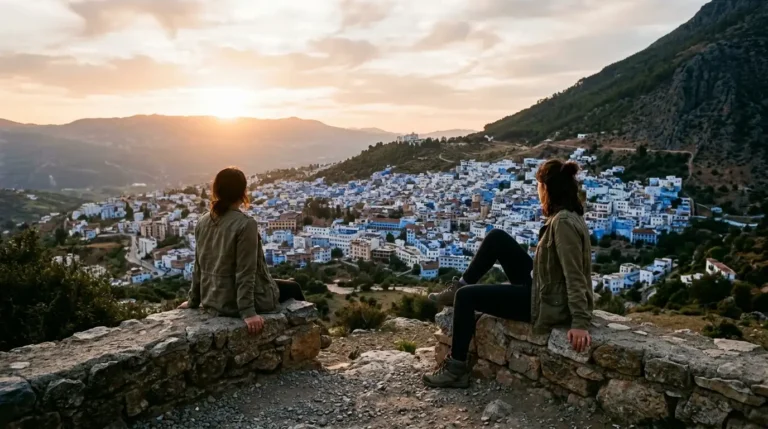
Morocco remains one of the better-value destinations reachable from Europe, and one of the more affordable options globally for the experience it delivers — riads with courtyard fountains, Sahara camps under genuinely dark skies, and food that rarely disappoints, all at prices that would buy considerably less in Southern Europe. But “affordable” still spans a wide range depending on how you travel.
This guide breaks down real 2026 costs across every category — accommodation, food, transport, attractions — and builds them into sample 7-day and 10-day budgets, so you can plan a number that actually matches your trip rather than guessing. Every figure here excludes international flights, since those vary enormously by origin city and season; what’s included is everything you’ll actually spend once you land.
One thing that sets Morocco apart from many budget destinations is how little the experience itself changes across price tiers. A backpacker and a luxury traveler both end up eating extraordinary tagines, walking the same medina streets, and watching the same sunset over the dunes — the difference is mostly in comfort and convenience layered on top, not in access to the country’s best moments. That’s worth keeping in mind while working through the numbers below.
How Much Does a Trip to Morocco Cost for Different Travelers?
Budget Traveler
Budget travelers relying on hostels or simple guesthouses, street food, and local buses or shared taxis typically spend $30 to $50 per day (roughly 300-450 MAD). At this level, a hostel bed or budget guesthouse room runs 150-300 MAD a night, street food meals cost 20-40 MAD, and getting around means CTM buses, shared grand taxis, and second-class trains. This tier requires more flexibility and a willingness to skip the occasional guided tour or upscale meal, but it doesn’t mean missing out on Morocco’s core experiences — the medinas, the souks, and even a basic Sahara camp are all still within reach.
Mid-Range Traveler
Mid-range travelers mixing private riad rooms, a blend of local and sit-down restaurants, first-class trains or occasional private transport, and guided tours or attraction entries generally land around $80 to $150 per day (roughly 800-1,400 MAD). This is the range most first-time visitors gravitate toward, since it comfortably covers a well-located riad, restaurant meals, and a couple of guided experiences without constant budget-tracking. It’s also the tier where the gap between “budget” and “comfortable” closes fastest — a relatively modest increase in daily spend buys noticeably more character and convenience.
Luxury Traveler
Luxury travelers staying in high-end riads and five-star hotels, dining at top restaurants, booking private drivers or domestic flights, and taking premium desert camp experiences typically spend $200 to $400 or more per day. Even at this tier, Morocco stays noticeably better value than comparable luxury in Southern Europe — a five-star desert camp with a private plunge pool costs a fraction of what similar exclusivity would run in the Mediterranean, which is part of why Morocco has become such a sought-after luxury destination in its own right over the past several years.
How Much Does a Trip to Morocco Cost for Accommodation?
Hostels
Hostel dorm beds in Marrakech, Fes, or Chefchaouen typically run 80-150 MAD ($8-15) per night, making them the cheapest way to sleep in Morocco’s main tourist cities. Private rooms in hostels, where available, usually add another 100-200 MAD on top of the dorm rate. Many hostels also double as informal social hubs, with rooftop terraces and communal dinners that make them a genuinely good fit for solo travelers on a budget, not just a fallback option.
Riads
Riads — traditional courtyard houses converted into guesthouses — are Morocco’s signature accommodation, and prices vary enormously by location and finish. A simple riad with a courtyard and breakfast runs 300-800 MAD ($30-80) a night for a double room in Marrakech’s medina, while riads in Fes el-Bali with rooftop terraces and hammam access can charge 800-1,500 MAD ($80-150). Booking directly with smaller riads, rather than through a large platform, occasionally shaves a further 10-15% off the listed rate, and often comes with a warmer, more personal welcome than a platform booking would.
Hotels
Standard three-star hotels, more common outside the old medinas in areas like Marrakech’s Gueliz district, typically run 400-900 MAD ($40-90) a night, offering a more conventional hotel layout — private bathroom, elevator, sometimes a pool — for travelers who prefer that over a riad’s courtyard character. This category tends to appeal most to travelers prioritizing predictability and easy street access over the atmosphere of staying inside a historic medina.
Luxury Resorts
Five-star hotels and resort properties, particularly around Marrakech, Agadir, and the coast, generally start around 1,500 MAD ($150) a night and climb well past 3,000-5,000 MAD ($300-500) for the country’s most exclusive addresses. Desert camps at the luxury end — private tents, en-suite bathrooms, personal service — sit in a similar range, and often price per person rather than per room, so a couple should expect to roughly double the quoted per-person rate when budgeting for a luxury camp night.
How Much Does a Trip to Morocco Cost for Food?
Street Food
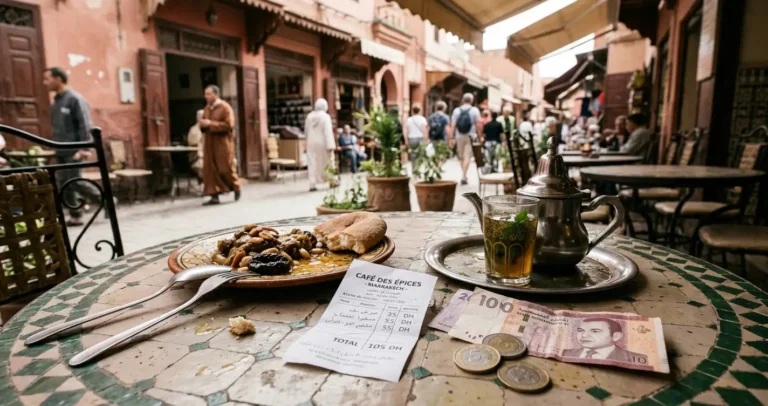
Street food is Morocco’s best value category by a wide margin. A bowl of harira soup, a msemen pancake, or a simple tagine from a street stall or small local eatery costs roughly 20-40 MAD ($2-4), and Jemaa el-Fnaa’s food stalls in Marrakech — while more tourist-facing — still land in a similar range for a full plate. A day of eating almost entirely from street stalls can easily keep total food spending under $10, without sacrificing much in the way of flavor or variety.
Local Restaurants
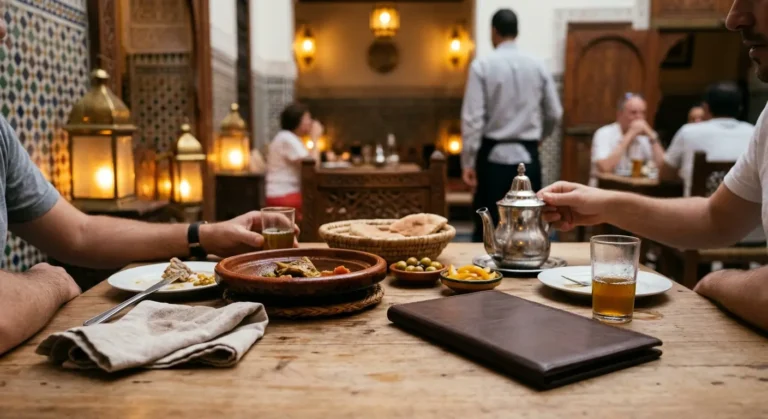
Sit-down local restaurants, the kind serving a tagine, couscous, or grilled meat with bread and salad, generally run 80-150 MAD ($8-15) per person for a full meal, sometimes including a drink. This tier delivers some of the best value-for-quality in the entire budget, since Moroccan home-style cooking rarely requires an upscale setting to be excellent — some of the most memorable meals travelers report come from unassuming local spots rather than the restaurants aimed squarely at tourists.
Mid-Range Restaurants
Restaurants aimed more squarely at tourists, or offering a nicer setting — a riad courtyard dinner, a rooftop terrace with a view — typically run 250-500 MAD ($25-50) per person, including starters, a main, and often a dessert or mint tea to finish. This tier is where atmosphere and setting start to factor meaningfully into the price, alongside the food itself.
Fine Dining
Morocco’s higher-end dining scene, concentrated mainly in Marrakech, Casablanca, and a handful of destination restaurants elsewhere, runs 600-1,500 MAD ($60-150) or more per person for a full multi-course experience, sometimes with wine pairings pushing the total higher still. Even at this level, it typically costs less than an equivalent fine-dining meal in Paris, Madrid, or Rome, which is part of why Morocco has increasingly drawn attention as a culinary destination in its own right, not just an affordable one.
How Much Does a Trip to Morocco Cost for Transportation?
Trains
ONCF’s Al Atlas trains connect the major cities affordably and comfortably. Casablanca to Marrakech runs roughly 98-155 MAD depending on class and booking timing, while the longer Fes to Marrakech route (via a transfer at Casablanca) costs 230-460 MAD for a journey of six to seven hours.
The high-speed Al Boraq line between Tangier and Casablanca starts from around 50 MAD for shorter segments, with first class generally running 40-50% more than second class across all routes — a worthwhile upgrade on the longer hauls for the reserved seating and air conditioning. Booking online through ONCF’s official site up to three months ahead generally secures the best fares, though tickets remain available at station counters on the day of travel for most routes.
Buseshttps://ctm.ma/
CTM and Supratours are Morocco’s two premium intercity bus operators, reaching destinations the train network doesn’t, including Chefchaouen, Essaouira, Ouarzazate, and the desert gateway towns. Typical fares run 80-250 MAD ($8-25) depending on distance — a Marrakech to Essaouira run costs around 80-120 MAD, while the long haul from Marrakech to Merzouga runs 140-250 MAD depending on the operator. Local, non-premium bus companies serve the same routes for less, though with less comfort and reliability, and are generally worth avoiding for longer overnight journeys where comfort matters more.
Domestic Flights
For longer hops — Marrakech to Fes, or Casablanca to Agadir, for instance — domestic flights on Royal Air Maroc are the fastest option and can be genuinely affordable if booked ahead, though prices swing widely with demand. They’re most worth considering when a long train or bus journey would otherwise eat most of a travel day, freeing up an extra day at your destination rather than in transit.
Rental Cars
A standard economy car typically rents for 200-400 MAD ($20-40) per day from local agencies, rising to 500-800 MAD ($50-80) per day for a 4×4 SUV suited to mountain or desert roads. Add roughly 200-300 MAD for toll charges on a longer autoroute journey, and factor in that driving inside medinas isn’t possible or necessary — a rental car earns its cost mainly for reaching the Atlas Mountains, the Sahara routes, or coastal towns at your own pace, not for city-to-city travel where trains are often more relaxing. An international driving permit is technically required alongside your home license, though enforcement varies, and it’s a small enough cost to arrange before travel regardless.
Taxis
Petit taxis, used for short trips within a single city, are metered in larger cities and typically cost $1-5 for an in-town journey — always confirm the meter is running, or agree a price upfront if it isn’t. Grand taxis, shared vehicles running fixed routes between towns, cost roughly $2-5 per seat and are one of the cheapest ways to cover short intercity distances, while chartering the whole vehicle privately costs proportionally more, and is a reasonable option for a small group wanting more control over departure timing.
How Much Does a Trip to Morocco Cost for Attractions?
Museums
Entry to Marrakech’s major historic sites is inexpensive by international standards: Bahia Palace and the Saadian Tombs each run around 70 MAD ($7), Dar El Bacha’s Museum of Confluences is similarly priced, and Jardin Majorelle costs about 70-170 MAD depending on the source and season, with a combined ticket including the Berber Museum inside typically running slightly more. A single day of sightseeing across two or three major sites, including transport between them, typically totals $50-75. Buying combined tickets where offered, and visiting in the morning or late afternoon rather than midday, is a simple way to save both money and time in the queue.
Desert Tours
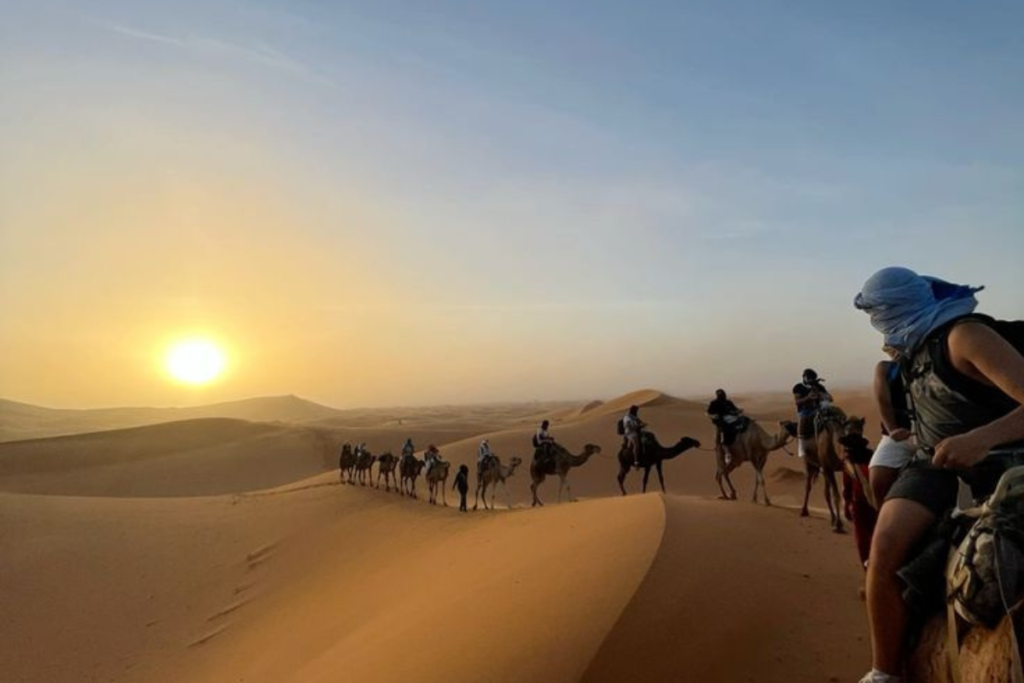
Multi-day Sahara tours from Marrakech or Fes vary widely by comfort level. Budget group tours with shared transport and simple camps start around $100-150 per person for two to three days, mid-range private tours with more comfortable camps run $200-350 per person, and luxury private tours with premium camps, dedicated drivers, and higher-end meals run $300-500 or more per person for a three-day itinerary. The single biggest cost driver within this range is whether the tour is shared with a group or fully private, followed by the quality of the desert camp itself.
Guided Tours
A private half-day or full-day city tour — Marrakech’s medina, Fes’s tanneries and madrasas, or a Rabat highlights walk — typically runs $30-60 per person for a small group, or more for a fully private guide. Multi-day private tours combining several cities, the Atlas Mountains, and the Sahara run considerably higher, often $1,200-2,500 per person for a full week, depending on group size and accommodation level. For cities like Fes, where the medina’s layout genuinely benefits from local knowledge, a guide is one of the better-value additions to a trip rather than an optional extra.
Adventure Activities
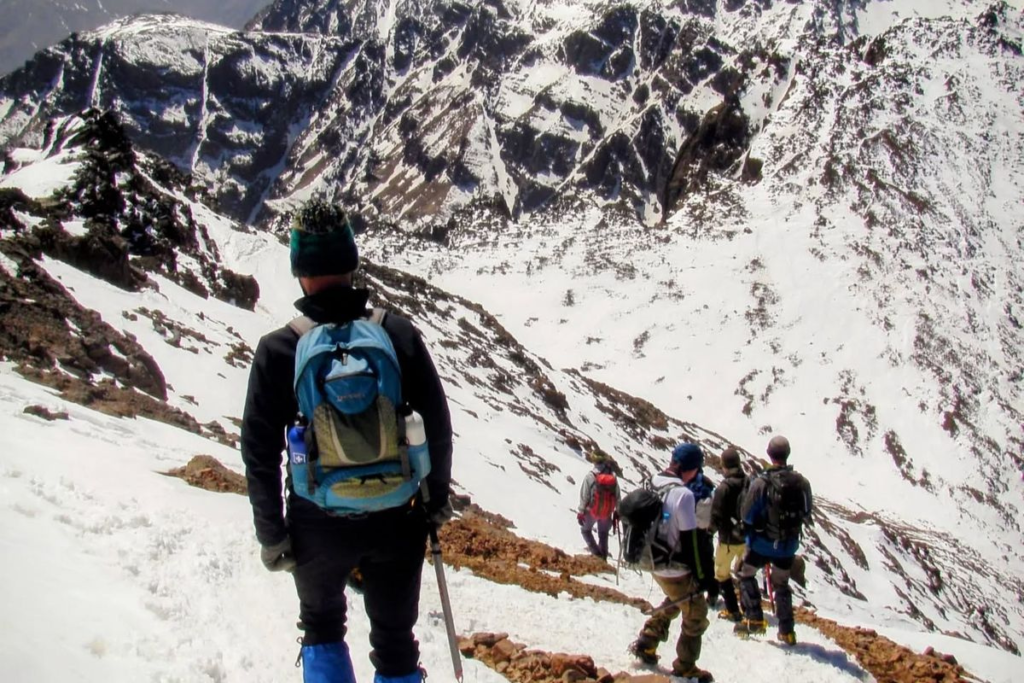
Camel treks in the Sahara typically run 100-300 MAD ($10-30) per hour, though this is often bundled into desert tour packages rather than charged separately. Hot air balloon rides over Marrakech at sunrise cost 2,000-2,500 MAD ($200-250) per person, usually including a champagne breakfast. Atlas Mountains trekking, including Mount Toubkal ascents, typically runs $50-150 per day depending on whether it’s a group or private trip and whether porters and mules are included — a detail worth clarifying upfront, since it materially changes both the price and the physical demands of the trek.
How Much Does a Trip to Morocco Cost for a 7-Day Trip?
Sample Budget Breakdown
A 7-day mid-range trip covering Marrakech, a two-day Sahara excursion, and one additional stop typically totals $700-1,200 per person, excluding international flights. Here’s roughly how that breaks down:
- Accommodation (riads plus one desert camp night): $350-560 for the week
- Food: $175-280 ($25-40/day)
- Desert tour (two days, including transport and camp): $150-250
- Intercity transport (train plus desert tour transfer): $50-100
- Attraction entries and one or two guided city tours: $80-150
Budget travelers covering the same rough itinerary can land closer to $350-550 for the week by staying in hostels or basic guesthouses, eating mostly street food, and joining group rather than private desert tours. Luxury travelers on the same route can easily reach $2,000-4,000 for the week with five-star riads, a private desert camp, and private guided transport throughout.
One detail worth noting for a first Morocco trip: the desert excursion is almost always the single biggest line item after accommodation, so deciding upfront whether you want a shared group tour or a fully private one has more impact on the final total than any other single choice in a 7-day itinerary.
How Much Does a Trip to Morocco Cost for a 10-Day Trip?
Sample Budget Breakdown
A 10-day mid-range trip with room for a third city or an extra day in the Atlas Mountains typically totals $1,000-1,800 per person, excluding flights. Here’s the rough breakdown:
- Accommodation (riads plus one desert camp night): $500-800
- Food: $250-400
- Sahara excursion: $150-350
- Intercity transport (a mix of trains and one bus or private transfer): $100-200
- Guided tours and attraction entries: $150-250
Budget travelers can cover the same extended itinerary for roughly $500-800 by leaning harder on public transport, street food, and group tours. A 10-day luxury version — private drivers throughout, five-star accommodation, and a premium desert camp — commonly runs $3,000-5,000 or more per person, particularly once domestic flights and multiple private guides enter the picture.
The extra three days over a 7-day trip open up meaningfully more of the country without a proportional jump in cost, since the biggest single expenses — international flights and the desert excursion — stay fixed regardless of trip length. That makes 10 days one of the better value windows for a first-time visitor trying to balance covering more ground against overall budget.
How Much Does a Trip to Morocco Cost Compared With Other Destinations?
Morocco vs Spain
Morocco runs meaningfully cheaper than Spain across nearly every category — accommodation, restaurant meals, and guided experiences all cost noticeably less for a comparable standard, particularly outside Spain’s smaller towns. A rooftop dinner or riad stay that would cost $150-200 in Barcelona or Seville often runs $60-100 for an equivalent experience in Marrakech or Fes. Flight costs between the two can be similar depending on origin, but once on the ground, Morocco’s daily budget stretches considerably further.
Morocco vs Portugal
Portugal has become one of Europe’s better-value destinations in its own right, which narrows the gap somewhat, but Morocco still tends to come out cheaper on food and guided tours, with accommodation costs landing closer together at the mid-range and luxury tiers, particularly in Lisbon or Porto’s more popular neighborhoods. Where Morocco pulls further ahead is in guided experiences and multi-day tours — a private desert excursion has no real Portuguese equivalent at a comparable price point.
Morocco vs Turkey
Morocco and Turkey sit in a similar overall price bracket, both offering strong value relative to Western Europe. Turkey often edges ahead on transport infrastructure and cheap domestic flights, while Morocco tends to offer better value on riad-style accommodation and guided desert or mountain excursions specifically, given how developed that side of Moroccan tourism has become. Travelers choosing between the two on cost alone will find the difference is usually a matter of itinerary rather than a clear overall winner.
How Much Does a Trip to Morocco Cost? Money-Saving Tips
Travel During the Low Season
January, February, and parts of November and December are Morocco’s clearest low season, with noticeably lower accommodation rates and more flexible tour availability across the board. Riads and desert camps that command premium pricing in April, May, and October often have same-week availability at a discount during these quieter months, and flights into Marrakech or Casablanca can be meaningfully cheaper outside the spring and autumn peaks as well.
Use Public Transportation
Trains and CTM or Supratours buses cost a fraction of private transport or car rental, and the ONCF rail network in particular is comfortable enough that the savings don’t come at much cost to the experience. Reserving car rental or private drivers specifically for the legs public transport doesn’t reach — the Atlas Mountains, remote desert routes — rather than the whole trip keeps this cost proportionate, while still giving you the flexibility where it actually matters.
Stay in Traditional Riads
Riads consistently offer more character and often better value than standard hotels at the same price point, and booking directly with smaller, independently run riads rather than through a large booking platform can shave a further 10-15% off the listed rate, sometimes with breakfast or airport pickup thrown in as a direct-booking incentive. Many riad owners are also happy to negotiate slightly on multi-night stays booked directly, something rarely possible through a third-party platform.
Eat Like a Local
Street food and small local restaurants deliver Morocco’s best food-to-price ratio by a wide margin, and eating this way for most meals, saving the mid-range or fine-dining splurge for one or two nights, can cut a trip’s food budget by more than half without meaningfully lowering the quality of what you eat. This approach also tends to lead to more memorable meals overall, since some of Morocco’s best cooking happens in unassuming, family-run spots rather than restaurants built around the tourist market.
How Much Does a Trip to Morocco Cost? Frequently Asked Questions
Is Morocco Cheap to Visit?
Yes, relative to Western Europe and North America. Morocco offers genuine value at every tier, from $30-a-day backpacking to five-star luxury that still costs less than equivalent experiences in Southern Europe, which is a large part of why it’s become such a popular destination in recent years. The value holds up particularly well in categories like food, accommodation character, and guided experiences — areas where many destinations force a trade-off between price and quality that Morocco largely avoids.
How Much Money Should I Bring?
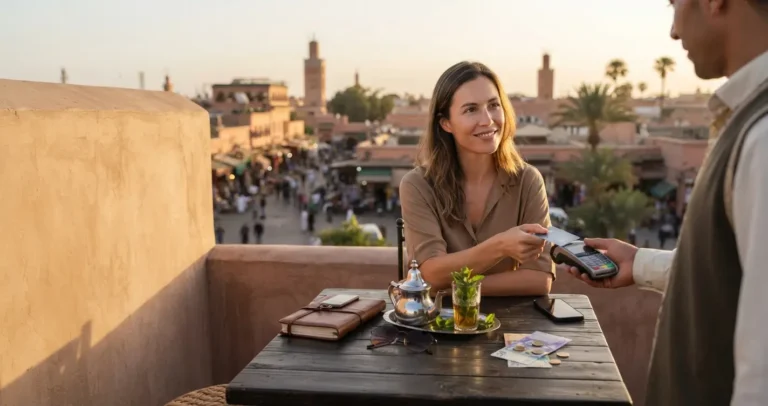
For a mid-range week-long trip, budgeting roughly $700-1,200 per person excluding flights is a reasonable starting point, adjusted up or down based on your accommodation and tour choices. It’s worth bringing a mix of cash reserves and a card with low foreign-transaction fees, since cash still dominates for taxis, souks, and rural areas, while cards cover accommodation and larger restaurant bills comfortably in the cities.
Is Morocco Expensive for Americans?
No — with the dollar generally buying around 9 dirhams through 2026, American travelers tend to find Morocco meaningfully cheaper than domestic US travel for a comparable standard of accommodation and dining, particularly outside the most exclusive luxury tier. A riad room, a full restaurant meal, and a guided tour together often cost less in Morocco than a single night in a mid-range US hotel.
Can You Travel Morocco on a Budget?
Comfortably. A backpacker sticking to hostels or basic guesthouses, street food, and public transport can manage a full trip on $30-50 a day, and Morocco’s affordability at this tier holds up well even in its most popular cities, unlike some destinations where budget travel means sacrificing the main attractions. The Sahara, the imperial cities, and the Atlas Mountains are all still reachable on a tight budget — it just takes joining group tours and public transport rather than private, door-to-door arrangements.
Final Thoughts: How Much Does a Trip to Morocco Cost?
The honest answer is that Morocco can cost almost anything you want it to — a genuinely comfortable week for under $500, or a five-star, private-guide, plunge-pool version of the same itinerary for ten times that. What doesn’t change much between tiers is the quality of the experience at the base: even budget travelers eat extraordinarily well and sleep in riads with real character, which is exactly why Morocco keeps outperforming its price tag against nearly every comparable destination.
The most useful step before booking anything is picking which tier genuinely fits how you like to travel, then building the categories above — accommodation, food, transport, and tours — around that number rather than pricing each piece in isolation. A trip assembled that way, with a clear budget in mind from the start, tends to feel considerably more relaxed once you’re actually there.