Morocco Budget Guide
This Morocco Budget Guide is for every kind of traveler — from backpackers counting dirhams to visitors booking five-star riads. What you spend depends far more on travel style than on the country itself. Here's a realistic, detailed breakdown for 2026.
How Much Does a Trip to Morocco Cost? A Practical Morocco Budget Guide
Morocco can suit almost any budget. A backpacker moving slowly between cities spends far less per day than a traveler booking boutique riads and private drivers throughout. This Morocco Budget Guide gives a rough starting point for each style.
$25 – $40 / day — Hostels, street food, shared transport and self-guided sightseeing keep daily costs low without sacrificing the experience.
$70 – $120 / day — Comfortable riads, trains between cities, a mix of local and sit-down restaurants, and the occasional guided activity.
$200+ / day — Five-star riads and hotels, private drivers throughout, curated experiences and fine dining at every stop.
Costs shift with season, region and how far in advance you book — treat every figure in this Morocco Budget Guide as a planning range, not a fixed price.
Average Daily Budget
This section of our Morocco Budget Guide gives a per-person daily estimate covering accommodation, food, local transport and one activity.
Budget Travel
- Hostel or budget guesthouse
- Street food and local cafés
- CTM buses and shared taxis
- Free or low-cost sightseeing
Mid-Range Travel
- Comfortable riad with breakfast
- Local and sit-down restaurants
- ONCF trains between cities
- One paid activity or guided visit
Luxury Travel
- Boutique or five-star riad
- Fine dining and curated menus
- Private driver throughout
- Exclusive tours and experiences
Accommodation Prices in Morocco
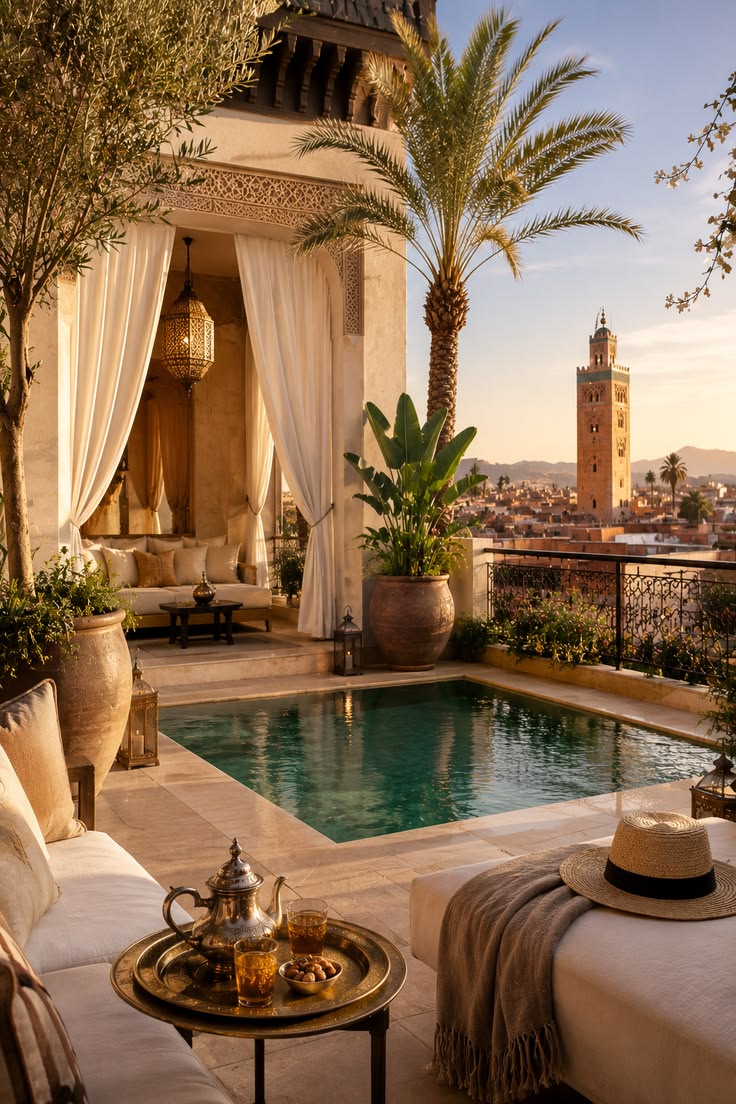
This part of our Morocco Budget Guide covers accommodation options spanning the full range, from simple hostel dorms to some of North Africa's most celebrated riads. Prices below are per room, per night.
- Hostels (dorm bed) — $8 – $15 per night; common in Marrakech, Fes and Chefchaouen
- Budget hotels — $25 – $45 per night; simple private rooms with basic amenities
- Riads — $50 – $150 per night; traditional courtyard guesthouses with breakfast included
- Boutique riads — $150 – $300 per night; elevated design, rooftop terraces, curated service
- Luxury hotels — $300 – $600+ per night; five-star resorts and restored palaces
- Desert camps — $40 – $250 per night; ranges from simple shared tents to private luxury camps in Merzouga
Riads are the most distinctive Moroccan accommodation and often the best value at mid-range. Breakfast is almost always included. For more on where to base yourself, see our destination guides.
Food Prices in Morocco
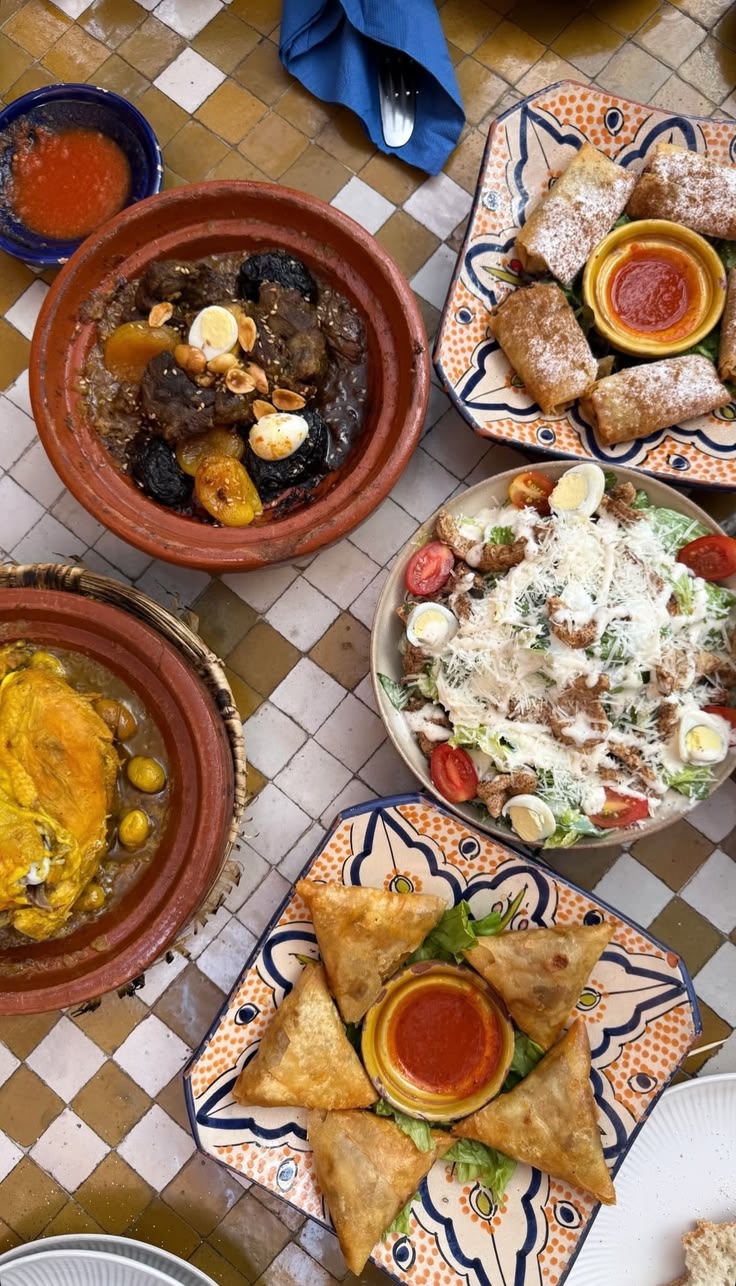
Eating locally is one of the easiest ways to stretch a Morocco budget — and often the most memorable way to experience the country. Prices per person per meal.
- Street food — $1 – $4; msemen, brochettes, msemen wraps and fresh orange juice
- Local restaurants — $4 – $10; hearty tagines, couscous and set menus
- Mid-range restaurants — $10 – $25; sit-down dining with table service and drinks
- Fine dining — $30 – $60+; riad dinners and chef-driven tasting menus
- Coffee & tea — $1 – $3; mint tea is nearly free at local cafés
- Breakfast — Often included with riad or hotel stays
Moroccan food is a highlight of any trip. Explore the full picture in our Moroccan Food hub, tagine guide, couscous guide, and street food guide.
Transportation Costs
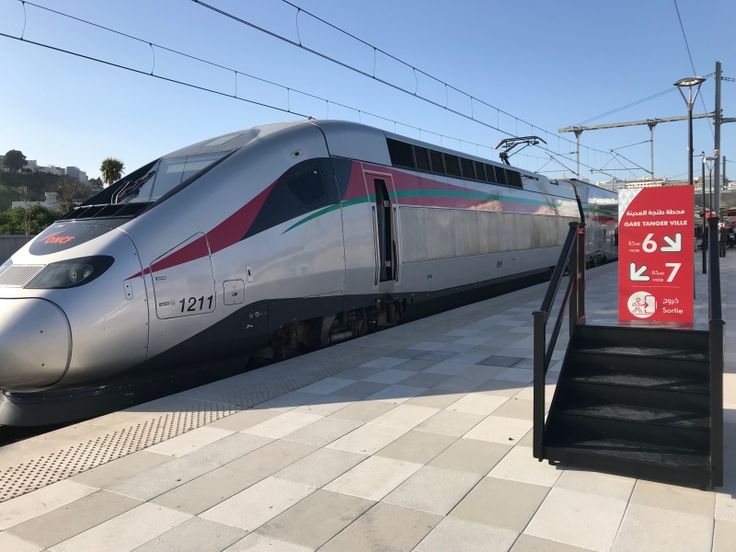
Transportation costs vary widely depending on comfort and flexibility — from a few dollars on a shared taxi to a meaningful daily expense for a private driver. This section of our Morocco Budget Guide breaks down each option.
- ONCF trains — $5 – $35 between major cities; comfortable and affordable
- CTM / Supratours buses — $3 – $20; reach smaller towns cheaply
- Grand taxis (shared) — $3 – $15 per seat on intercity routes
- Petit taxis (city) — $1 – $5 per trip; metered within town
- Rental cars — $25 – $60 per day plus fuel and tolls
- Private drivers – $80 – $200 per day; ideal for the Sahara and Atlas
- Domestic flights — $50 – $150 one-way; worth it for long distances
Attraction & Activity Costs
Prices vary by operator and group size, but here's what this Morocco Budget Guide finds most travelers spend per person.
Medina Walking Tours
$15 – $40 per person for a half-day guided walk through the old city with a licensed local guide.
Historic Monuments
$3 – $15 entry for palaces, kasbahs and museums — inexpensive nearly everywhere.
Sahara Desert Trips
$120 – $400+ for a 2- or 3-day trip including transport, accommodation and camel trek.
Camel Trekking
$15 – $30 for a short ride; $50 – $100 for a sunset or overnight desert trek.
Cooking Classes
$30 – $70 for a half-day class, usually including a market visit and shared meal.
Hammam Experience
$5 – $10 at a local hammam; $40 – $100 at a spa hammam with treatments.
Surf Lessons
$25 – $50 per lesson on the Atlantic coast; multi-day packages reduce the daily rate.
Atlas Mountain Day Trips
$40 – $80 from Marrakech; private trips cost more but allow flexible pacing.
For deeper guides to Morocco's landscapes and cities, explore our desert experiences, mountain adventures, and medina explorations.
Regional Budget Differences
Not all Moroccan cities cost the same. This part of our Morocco Budget Guide shows how where you go changes what you spend on food, transport and accommodation.
Marrakech
Higher EndTourist demand pushes riad and restaurant prices higher than most other cities. Souk bargaining is essential. Budget travelers can still find value in Gueliz and the outer medina.
Fes
Mid-RangeGenerally cheaper than Marrakech for food and accommodation. Riads in the medina offer exceptional value, and local restaurants are among Morocco's most affordable.
Chefchaouen
Budget FriendlyOne of Morocco's most affordable destinations. Budget guesthouses, cheap local food and free wandering make it ideal for longer, slower stays.
Casablanca
Higher EndMorocco's business capital is pricier for dining and hotels. Less of a tourist economy means less bargaining but higher fixed prices at restaurants and shops.
Essaouira
Mid-RangeA compact, walkable coastal town. Accommodation is fairly priced, fresh seafood is a bargain, and most activities are free or low-cost.
Sahara & Atlas
VariesRemote locations mean transport is the biggest cost. Once there, desert camps and mountain gîtes can be surprisingly affordable — but getting there requires planning.
Compare destinations in detail with our Marrakech guide, Fes guide, Chefchaouen guide, and Essaouira guide.
Budget by Trip Length
Estimated per-person total costs for different trip durations, based on mid-range travel and this Morocco Budget Guide's daily figures. Actual costs shift with season, pace and destinations.
Weekend
$150 – $600 total5 Days
$300 – $1,200 total7 Days
$350 – $1,400 total10 Days
$500 – $2,000+ total14 Days
$700 – $2,800+ totalReady to plan? See our 7-day itinerary and 10-day itinerary for paced routes that balance cost and experience.
Money in Morocco
This Morocco Budget Guide recommends carrying both cash and a card, since smaller businesses often can't process card payments.
- Moroccan Dirham (MAD) is the only accepted currency for day-to-day spending
- Cash is essential for souks, small restaurants, grand taxis and rural areas
- Credit cards work at larger hotels, riads and shops in Marrakech, Fes and Casablanca
- ATMs are widely available in cities; the most reliable source of dirhams
- Currency exchange at banks or official bureaus beats airport counters every time
- Tipping in dirhams is preferred; small change makes daily interactions smoother
Should You Tip in Morocco?
- Restaurants — rounding up or 10% is appreciated, not required
- Local guides — $10 – $20 for a half-day; more for full-day or specialized tours
- Drivers — $5 – $10 per day on multi-day private routes
- Hotel staff — 10 – 20 MAD for porters or housekeeping is welcomed
- Cafés — leaving small change is common but optional
- Hammam attendants — 20 – 30 MAD for help with scrubbing is customary
Money-Saving Tips
Small habits from this Morocco Budget Guide that add up significantly over a multi-day trip.
Travel during shoulder season (March – May or September – November) for lower rates and fewer crowds.
Book trains and buses a day or two ahead through ONCF or CTM to lock in the best fares.
Stay in riads instead of international hotel chains — better value and a more authentic experience.
Eat where locals eat, and pack light using our packing guide to avoid extra luggage fees. Restaurants near the main square are priced for tourists; walk two streets deeper for half the cost.
Walk medinas on foot. Short taxi rides add up, and the best discoveries happen on foot.
Combine nearby destinations efficiently — Fes and Chefchaouen, or Marrakech and Essaouira — to cut transport costs.
Use trains instead of flights on well-connected routes; the ONCF network is comfortable and affordable.
Split private drivers or desert tours with other travelers to halve the per-person cost.
Common Budget Mistakes
Easy to avoid once you know they're coming — this Morocco Budget Guide covers the most common ones.
Underestimating travel distances
Morocco is larger than it looks on a map — mountain and desert routes take significantly longer than expected.
Booking too late
Popular trains, riads and desert tours sell out or rise sharply in price close to the date.
Ignoring luggage policies
Some bus and shared-taxi operators charge extra for large bags — pack light to save.
Carrying too little cash
Many souks, small eateries and grand taxis don't accept cards. Keep dirhams on hand.
Overpacking the itinerary
Trying to see too many cities in too little time adds transport costs and travel fatigue.
Skipping fare negotiation
Unmetered taxis and souk purchases usually expect some negotiation — it's part of the culture.
Related Destinations
Related Travel Guides
Plan What to Do
What to Eat in Morocco
Frequently Asked Questions
What does this Morocco Budget Guide cover?
This Morocco Budget Guide covers accommodation, food, transportation, activities and money-saving tips across every travel style, from backpacker to luxury.
Is Morocco expensive for tourists?
Not generally. As this Morocco Budget Guide shows, Morocco is one of the more affordable travel destinations in North Africa. Budget travelers can spend as little as $25 per day, while mid-range travelers typically spend $70 – $120 per day. Luxury trips can reach $200+ per day depending on the level of service.
How much money should I bring to Morocco?
For a 7-day mid-range trip, this Morocco Budget Guide suggests planning on $500 – $1,400 per person excluding flights. Bring enough cash for the first few days and withdraw dirhams from ATMs on arrival — they're widely available in cities.
What currency is used in Morocco?
The Moroccan Dirham (MAD). As of 2026, roughly 10 MAD = $1 USD. Dirhams cannot be purchased outside Morocco, so withdraw or exchange on arrival.
Can I use credit cards in Morocco?
Yes at larger hotels, riads, restaurants and shops in major cities. Cash is essential for souks, small eateries, grand taxis and rural areas. Always carry some dirhams.
Is it cheaper to travel in a group or solo?
Groups save significantly on private drivers, desert tours and riad rooms. Solo travelers spend more per person on transport but can save by choosing hostels and shared options.
How much does a Sahara desert trip cost?
A 2- or 3-day Sahara trip from Marrakech or Fes typically costs $120 – $400 per person, including transport, accommodation in a desert camp, camel trekking and meals. Luxury camps cost considerably more.
Are riads expensive in Morocco?
Riads range from $50 to $300+ per night. Many include breakfast and offer exceptional value compared to international hotels at the same price point. Budget riads start around $50 in cities like Fes and Chefchaouen.
How much should I budget for food per day?
Budget travelers spend $8 – $15 per day eating street food and local restaurants. Mid-range travelers spend $20 – $40 per day mixing local spots with sit-down restaurants. Fine dining adds $30 – $60 per meal.
Do I need to tip in Morocco?
Tipping is appreciated but not always required. Round up restaurant bills, tip guides $10 – $20 for half-day tours, and leave 10 – 20 MAD for hotel porters. See our tipping guide above for details.
What is the cheapest way to travel around Morocco?
Shared grand taxis and CTM buses are the cheapest intercity options, and this Morocco Budget Guide recommends both for cost-conscious travel. Within cities, petit taxis are affordable. For more, read our full Getting Around Morocco guide.
Is Morocco safe for budget travelers?
Yes. Morocco is generally safe for all types of travelers. Stick to well-traveled areas, keep valuables secure and use registered guides for desert and mountain trips.
When is the cheapest time to visit Morocco?
Shoulder season (March – May, September – November) offers the best balance of good weather and lower prices. Winter months can be cheaper but cooler, especially in the mountains and desert.
Can I haggle for prices in Morocco?
Yes — in souks, with grand taxi drivers and at small shops, negotiation is expected. Fixed prices apply in restaurants, supermarkets and most riads. See our street food guide for souk tips.
How much does a train ticket cost in Morocco?
ONCF train tickets range from about $5 for short routes to $35 for longer journeys like Marrakech to Tangier. Book online in advance for the best availability.
Do I need travel insurance for Morocco?
While not legally required, travel insurance is strongly recommended — especially for desert trips, mountain hiking and adventure activities. It provides essential protection against unexpected costs.
How much does a cooking class cost?
Expect $30 – $70 for a half-day class that includes a market visit and shared meal. Marrakech and Fes have the widest selection. See our cuisine experience guide for more.
Is it cheaper to eat in the medina or the new town?
Generally the medina has more budget-friendly local options, but tourist-facing medina restaurants can be pricey. Walk a few streets away from the main squares for the best local prices.
What should I pack to save money in Morocco?
Pack light to avoid extra luggage fees on buses and taxis. Bring a reusable water bottle, comfortable walking shoes for medinas, and layers for temperature changes between regions.
Morocco Is Closer Than You Think
Whether you're planning a quick weekend in Marrakech or a two-week loop through the desert and coast, this Morocco Budget Guide shows that the country rewards every budget. The hardest part is choosing where to start.