Best Things to Do in Fes (2026): 15 Unforgettable Experiences in Morocco’s Ancient City
Fes rewards patience more than any other Moroccan city. Its medina, Fes el-Bali, is one of the largest car-free urban areas in the world, a genuine living museum where donkeys still haul goods through alleys built centuries before cars existed.
This guide covers the best things to do in Fes, from world-famous monuments to the quieter corners most visitors miss, along with practical advice on timing, guides, and day trips beyond the city walls.
Best Things to Do in Fes
Fes packs an extraordinary density of history, craft, and architecture into a single walkable old city, and the list below moves roughly from the medina’s most essential landmarks toward its quieter, more specialized corners.
Explore Fes el-Bali Medina
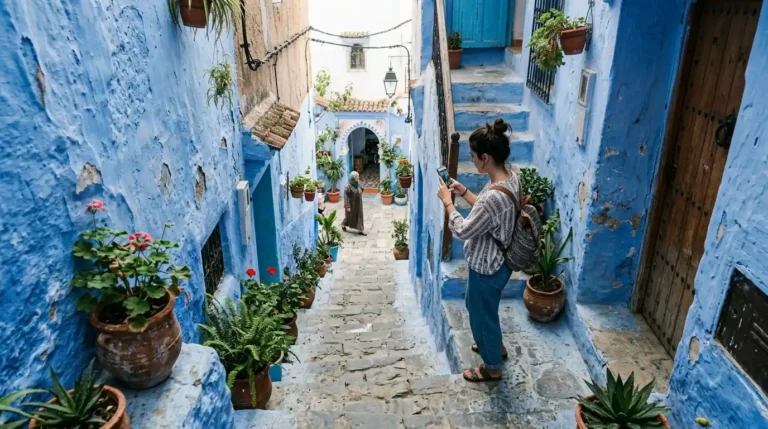
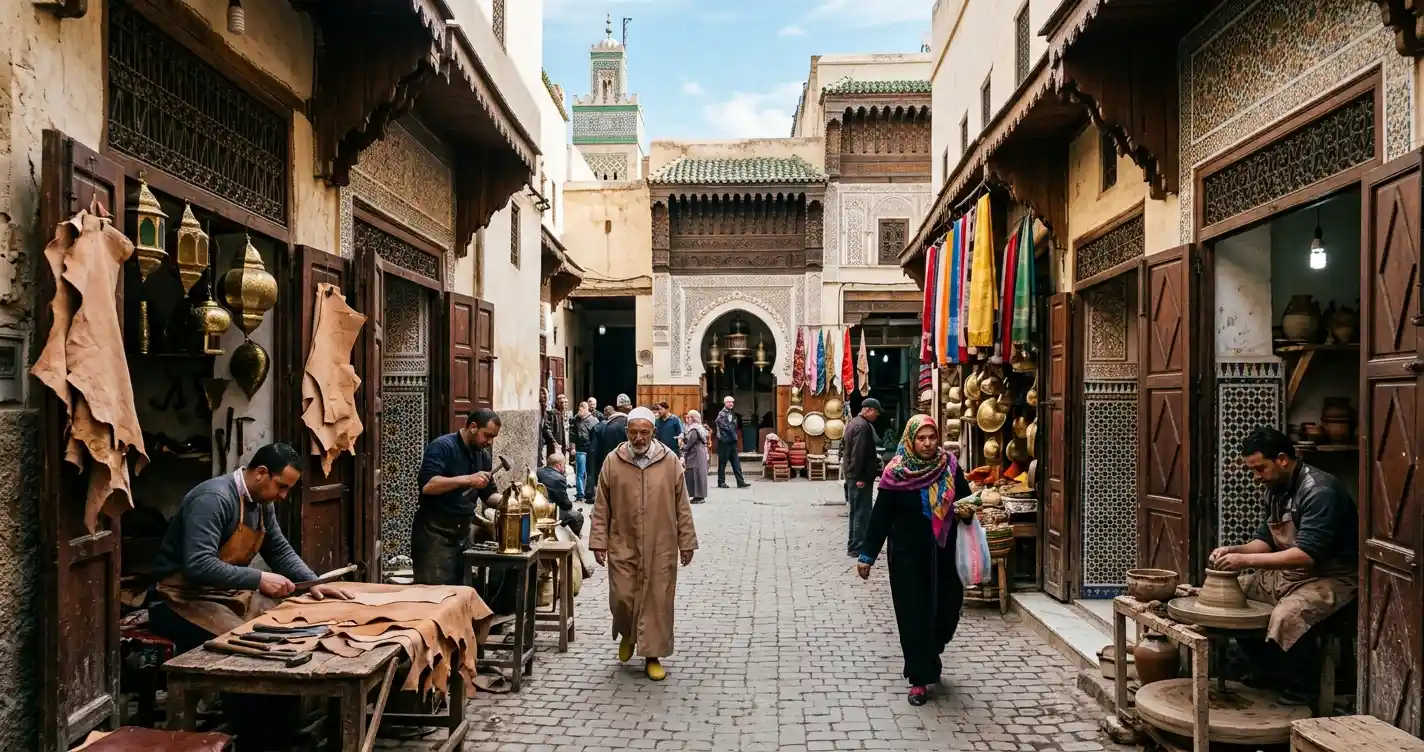
The historic medina is Fes’s single essential experience a UNESCO World Heritage Site and one of the best-preserved medieval urban centers in the Arab world. Entering through the ornate blue-and-green Bab Bou Jeloud gate, you’ll find a genuine working city rather than a museum piece, with tanners, weavers, and metalworkers still practicing trades largely unchanged for generations. Getting pleasantly lost here is part of the experience, and most visitors find a licensed guide invaluable for their first day inside. The medina’s roughly 9,000 alleys are entirely closed to motor vehicles, so donkeys and handcarts remain the primary way goods move between souks, adding to the sense of stepping back in time. Historians and architects often describe Fes el-Bali as the best-preserved example of a medieval Arab-Islamic city anywhere in the world, a claim its sheer density of surviving monuments does much to support.
See the Chouara Tanneries
Operating since the 11th century, the Chouara Tanneries remain Fes’s most photographed sight a maze of stone vats filled with dye made from natural pigments like saffron and poppy, where workers still treat and color leather by hand. Most visitors view the scene from a leather shop terrace overlooking the pits, and a sprig of mint, handed out at the entrance, helps offset the tanneries’ famously strong smell. The process itself hasn’t changed dramatically in centuries: hides are first soaked in a mixture that includes pigeon droppings and cow urine to soften them before dyeing, a detail guides are usually happy to explain in full.
Visit Bou Inania Madrasa
Built in the 1350s for Sultan Abu Inan Faris, Bou Inania is one of the few Marinid-era madrasas that also functioned as a mosque, and its combination of emerald-green tiles, carved cedar, and marble fountains represents the high point of Marinid architectural ambition. Directly across from its entrance stands Dar al-Magana, a medieval water clock that still puzzles historians today, its original hydraulic mechanism largely undocumented and long since silent.
Visit Al-Attarine Madrasa
A smaller but arguably more intricate 14th-century school near the Al-Qarawiyyin mosque, Al-Attarine Madrasa covers nearly every surface floor to ceiling in carved plaster, detailed zellige tilework, and cedar woodwork, some of it incorporating verses from the Quran directly into the geometric patterns. Its name comes from the neighboring spice and perfume market, Souk Al-Attarine, which still trades today, and its compact courtyard makes it one of the more peaceful stops on a medina walking route.
Discover Al-Qarawiyyin
Founded in 859 AD by Fatima al-Fihriya, Al-Qarawiyyin is recognized as the oldest continuously operating educational institution in the world, predating both Oxford and Al-Azhar. Non-Muslim visitors cannot enter the mosque itself, but even a glimpse through its doors into the vast prayer hall, or a look at the exterior of its historic library, gives a real sense of its scale and significance. The fact that it was founded by a woman, using an inheritance from her father, is a detail many guides take particular pride in sharing, and the institution’s continuous nine-century operation makes it a genuine rival to any claim of “oldest university” made elsewhere in the world.
Wander Through the Fes Souks
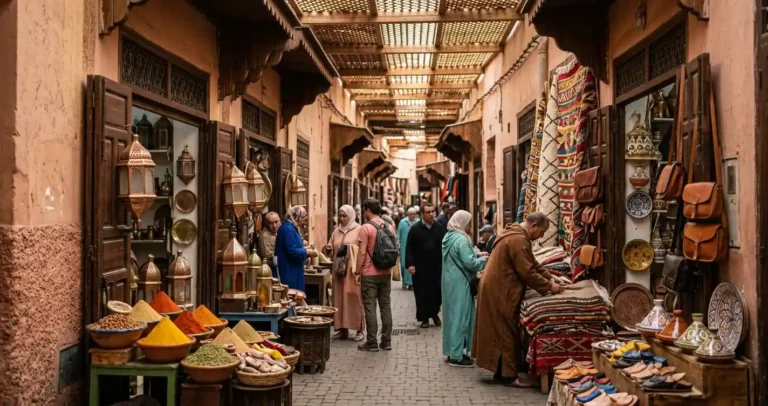
Beyond the spice-scented Souk Al-Attarine, the medina holds dozens of specialized markets Seffarine Square for hammered brass and copper, the Henna Souk for traditional cosmetics, and countless smaller alleys for textiles, ceramics, and carpets. Bargaining is expected almost everywhere, and simply following the sound of hammering metal or the scent of fresh bread often leads to the most memorable finds. Unlike Marrakech’s souks, which see heavy tourist traffic throughout, several of Fes’s specialized markets still trade primarily with local residents, giving them a noticeably more authentic feel, and prices here tend to run somewhat lower than in the more tourist-saturated corners of Marrakech’s medina.
Visit Nejjarine Museum of Wooden Arts and Crafts
Housed in a beautifully restored 18th-century funduq, or caravanserai, this small museum is worth visiting for the building alone, with its collection of traditional Moroccan woodworking tools and furniture offering a deeper look at a craft still practiced throughout the medina today. The rooftop café here also doubles as one of the better vantage points for photographing the surrounding souk from above.
Explore Dar Batha Museum
Originally a late-19th-century summer palace built by Sultan Moulay Hassan I, Dar Batha now houses one of Morocco’s finest collections of traditional Fassi arts blue pottery, carved cedar panels, Berber silver jewelry, and antique astrolabes set around a genuinely tranquil Andalusian garden courtyard. The building itself, constructed in a Hispano-Moorish style and later expanded by Sultan Moulay Abdelaziz, is almost as much a draw as the collection it houses.
Walk Through Jnan Sbil Gardens
A rare patch of green space between the old and new cities, Jnan Sbil combines Moorish and French garden design with a peaceful lake, mature trees, and shaded benches. Once allowed to fall into disrepair, it was fully replanted in the 2000s and now offers a genuine break from the medina’s intensity, just steps from the Bab Dekkakin gate. Locals use it much the way residents of any city use a favorite park for a morning walk, an afternoon read, or simply a quiet bench away from the crowds. The garden’s origins trace back to the 18th century, when it was laid out as part of the royal grounds connecting the old and new cities.
See the Royal Palace Gates in Fes el-Jdid
The Royal Palace, or Dar el-Makhzen, is not open to the public, but its exterior is a destination in its own right: seven monumental brass doors, symbolizing the seven days of the week, set into an intricately tiled and carved facade. It’s one of the most photographed spots in the newer part of the city, and the surrounding Fes el-Jdid quarter, built by the Marinids as a fortified royal city separate from the older medina, is worth a slower wander in its own right.
Explore the Mellah
Fes’s historic Jewish quarter, established in the 14th century, has a distinct architectural character within the wider medina taller buildings, ornate balconies, and a different street layout entirely. The Ibn Danan Synagogue, with its traditional ritual bath in the basement, and the nearby Jewish cemetery, with its sea of whitewashed tombs, both offer a window into a community whose history in the city runs deep, though exploring with a guide is recommended given the quarter’s maze-like layout. At its height, the Mellah was home to a significant share of Morocco’s Jewish population, and its synagogues, cemetery, and distinctive balconied houses remain some of the best-preserved Jewish heritage sites anywhere in North Africa. Unlike the older medina’s inward-facing homes with no street-level windows, Mellah houses traditionally faced outward, a visible architectural difference reflecting a distinct approach to daily life and community.
Watch Artisans at Work in the Medina
Beyond the tanneries, Seffarine Square is where coppersmiths still hand-hammer fountains and cookware in full view of passersby, while smaller workshops throughout the medina turn out ceramics, woven textiles, and inlaid woodwork using techniques passed down through generations. Stopping to genuinely watch, rather than just photograph, tends to be welcomed by the craftsmen themselves, and many are happy to explain their process to an interested visitor, even across a language barrier.
Visit the Marinid Tombs at Sunset
Perched on a hill above the medina, the ruined 14th-century Marinid Tombs offer the single best panoramic view over Fes el-Bali, taking in the minaret of Al-Qarawiyyin and the Royal Palace beyond the rooftops. Sunset is the classic time to visit, when the light turns the medina’s sandstone buildings a warm gold, and a simple picnic here makes for a memorable, low-key evening. The identities of those originally buried here have been lost to history, but the surviving fragments of horseshoe arches and carved stucco still hint at the wealth once devoted to the site.
Experience Traditional Fassi Cuisine
Fes is considered the birthplace of much of Morocco’s refined culinary tradition, and dishes like pastilla (a sweet-savory pigeon or chicken pie) and mrouzia (lamb with honey and almonds) are still done best here. Family-run restaurants throughout the medina, often set inside converted riads, offer some of the most authentic versions of these dishes in the country, frequently using recipes passed down within the same family for generations. Fassi cuisine is generally considered the most refined and technically demanding regional style in Morocco, historically shaped by the city’s wealthy merchant families and their household kitchens.
Take a Moroccan Cooking Class
A hands-on cooking class, often beginning with a guided walk through the souks to shop for ingredients, is one of the most rewarding ways to understand Fassi cuisine from the inside. Several riads and dedicated cooking schools in the medina offer half-day classes that end with sitting down to eat what you’ve made, and the market walk beforehand often proves just as memorable as the cooking itself. Many classes also cover the spice blends unique to Fassi cooking, giving participants a genuine takeaway skill rather than just a meal.
Best Things to Do in Fes at Night
The medina quiets considerably after dark, but several riad restaurants host live Andalusian or Gnaoua music alongside dinner, and rooftop cafés near Bab Bou Jeloud offer a peaceful spot to watch the city’s lights come on. The newer Ville Nouvelle district, with its cafés and restaurants along Avenue Hassan II, offers a livelier evening scene for those wanting more than a quiet dinner, with a wider range of bars and international dining than the medina itself typically provides.
Best Things to Do in Fes for First-Time Visitors
A guided walking tour covering Bou Inania Madrasa, the exterior of Al-Qarawiyyin, and the Chouara Tanneries gives newcomers a solid overview of the medina’s highlights without the disorientation of navigating it alone. Pairing this with an afternoon at Dar Batha Museum and a sunset visit to the Marinid Tombs makes for a well-rounded first day, and most licensed guides can adjust the pace depending on how much detail you want on any given stop. Many first-time visitors also appreciate booking their guide through their riad, since recommendations from accommodation staff tend to be more consistently reliable than approaching a guide directly on the street.
Best Things to Do in Fes for Couples
A candlelit dinner in a traditional riad, a sunset visit to the Marinid Tombs, and a slow wander through Jnan Sbil Gardens all suit a romantic pace, offering quieter, more intimate corners of the city away from the busiest souk stretches. Several riads also arrange private rooftop dinners on request, a worthwhile splurge for a special evening.
Best Things to Do in Fes for Families
The Nejjarine Museum’s manageable size, the open space of Jnan Sbil Gardens, and watching artisans at work in Seffarine Square all tend to hold children’s attention better than a long museum visit. Cooking classes also work well for older children genuinely interested in getting hands-on, and the sensory overload of the souks sights, sounds, and smells all at once is often exactly what makes the medina memorable for younger visitors.
Best Free Things to Do in Fes
Wandering the medina itself costs nothing, and several of its best sights the exterior of the Royal Palace gates, the view from the Marinid Tombs, Seffarine Square’s coppersmiths, and the Mellah’s distinctive architecture can all be seen without an entrance fee, making Fes a rewarding destination even on a tight budget. Window shopping through the souks, even without buying anything, is itself a genuinely engaging way to spend an afternoon.
How Many Days Do You Need in Fes?
Two to three full days is generally enough to see the medina’s major sites without rushing, with a third or fourth day useful for a slower pace, a cooking class, or a day trip beyond the city. Travelers combining Fes with a wider Morocco itinerary often treat it as a two-night stop, while those with a genuine interest in Islamic architecture and craft history sometimes extend their stay to four or five nights.
How to Explore Fes Without Missing the Highlights
Hiring a licensed guide for at least your first day is the most reliable way to see the medina’s key sites efficiently, since the layout defeats most first-time visitors navigating alone. After that initial orientation, many travelers find it rewarding to spend a second day simply wandering without a fixed itinerary, returning to favorite spots or discovering smaller workshops missed the first time around. Landmarks like the tanneries, the spice market, and the main gates make useful mental anchors for getting your bearings even without a guide on subsequent days, and locals are generally happy to point lost visitors back toward a familiar landmark if asked.
Best Day Trips from Fes
Fes’s position in north-central Morocco makes it a strong base for exploring in several directions west toward the Roman ruins and imperial cities, south into the cool cedar forests of the Middle Atlas.
Volubilis
Roughly 80 km west of Fes, Volubilis is one of the best-preserved Roman archaeological sites in North Africa, with detailed floor mosaics, a triumphal arch, and the remains of a basilica dating back around 2,000 years. It was once the capital of the ancient kingdom of Mauretania before later becoming an early center of the Idrisid dynasty that founded Morocco itself. The site was gradually abandoned as residents relocated to nearby Moulay Idriss Zerhoun, and it wasn’t formally excavated until the French colonial period, eventually earning UNESCO World Heritage status in 1997. Many of its excavated townhouses are named for the mosaics found within them, depicting subjects from Bacchus to acrobats and mythological scenes.
Moulay Idriss Zerhoun
Just a few kilometers from Volubilis, Moulay Idriss is considered Morocco’s holiest town, home to the tomb of the man who brought Islam to the country in 789 AD. Spread dramatically across two green hills, it was closed to non-Muslim visitors until 1912 and today offers sweeping panoramic views and a genuinely peaceful atmosphere, with green-tiled pyramid roofs marking the zaouia at its heart. Several rooftop restaurants in town make a good lunch or sunset stop, offering views back across the surrounding olive groves toward Volubilis itself.
Meknes
Around 60 km southwest of Fes, Meknes is one of Morocco’s four imperial cities, sometimes called the “Versailles of Morocco” for its grand 17th-century architecture under Sultan Moulay Ismail. Highlights include the monumental Bab Mansour gate, the vast Heri es-Souani granaries, and a medina with a notably different character from Fes’s own, generally calmer and less commercially intense. Many day trips also stop at the Mausoleum of Moulay Ismail, one of the few religious sites in Morocco that non-Muslim visitors are permitted to enter.
Ifrane and the Middle Atlas
About an hour south of Fes, Ifrane feels distinctly un-Moroccan at first glance, with its steep-roofed chalets and cool mountain air earning it the nickname “Little Switzerland.” Nearby Azrou’s cedar forests are home to Barbary macaques that often approach visitors directly, making this a popular half-day escape from the city’s heat, particularly in summer, and a striking contrast to the medina’s dense, historic streets. Ifrane also hosts one of Morocco’s leading universities, giving the town a youthful, distinctly modern energy that feels worlds away from Fes el-Bali.
Practical Tips for Visiting Fes
Wear sturdy, comfortable shoes, since the medina’s uneven cobblestones and steep sections are considerably more demanding than a flat city street. Carry cash, as most souk vendors and smaller restaurants don’t accept cards. Dress modestly, particularly near mosques and madrasas. Hiring a licensed guide, at least for the first day, is genuinely worth the cost given how easy it is to lose all sense of direction inside the medina walls. It’s also worth downloading an offline map before you arrive, since GPS signal can drift unpredictably beneath the medina’s covered passageways, and confirming your riad’s exact location relative to the nearest gate before setting out for the day makes finding your way back considerably easier.
Best Things to Do in Fes FAQs
What is Fes best known for?
Fes is best known for its UNESCO-listed medina, the world’s oldest continuously operating university at Al-Qarawiyyin, and the centuries-old Chouara Tanneries, making it Morocco’s foremost center for traditional craft and Islamic architecture.
How many days do you need in Fes?
Two to three full days covers the medina’s major sites comfortably, with an additional day useful for a slower pace or a day trip to Meknes and Volubilis.
Is Fes worth visiting?
Yes Fes offers the most authentic and best-preserved medieval medina in Morocco, along with a depth of craftsmanship and history that few other cities in the country can match, even compared to Marrakech’s more famous souks.
What should you not miss in Fes?
The Chouara Tanneries, Bou Inania and Al-Attarine Madrasas, the exterior of Al-Qarawiyyin, and a sunset visit to the Marinid Tombs are the sites most consistently recommended.
Is the Fes Medina free to enter?
Yes, walking through the medina is free, though individual monuments like the madrasas typically charge a modest entrance fee, usually well under what similar sites cost in Marrakech.
Do you need a guide in Fes?
It isn’t strictly required, but a licensed guide is strongly recommended for at least your first day, given how easy it is to get disoriented in the medina’s thousands of narrow alleys.
What is the best time to visit the Fes Medina?
Early morning, before the heat builds and before the day’s tour groups arrive, offers the most comfortable and least crowded experience of the medina’s major sites.
Are the Chouara Tanneries worth visiting?
Yes, they remain one of the most striking and photographed sights in Fes, though the strong smell means many visitors prefer a brief visit from an overlooking terrace rather than walking directly among the vats.
What are the best free things to do in Fes?
Wandering the medina, viewing the Royal Palace gates, watching artisans in Seffarine Square, and hiking up to the Marinid Tombs for the sunset view all cost nothing to enjoy.
What can you do in Fes at night?
Dinner with live music at a riad restaurant, a rooftop café near Bab Bou Jeloud, or a quieter evening in the Ville Nouvelle’s cafés and restaurants are all good options once the medina itself has quieted down