Free Things to Do in Marrakech (2026): 21 Amazing Experiences That Cost Nothing
Many travelers arrive in Marrakech expecting to spend a fortune. Between the luxurious riads, rooftop restaurants, bustling souks, and famous palaces, the city often carries the reputation of being Morocco’s most expensive destination. While it’s certainly possible to enjoy a luxury holiday here, the truth is that some of Marrakech’s greatest experiences don’t cost anything at all. In fact, many visitors leave realizing that their favorite memories weren’t made inside ticketed attractions but while wandering through ancient alleyways, watching the sunset behind historic monuments, or simply sitting in a lively square observing everyday life unfold around them.
The beauty of Marrakech lies in its atmosphere. Unlike destinations where sightseeing revolves around museums and admission tickets, this is a city best experienced slowly. The rhythm of daily life, the scent of freshly baked bread drifting from neighborhood bakeries, the sound of craftsmen shaping brass by hand, and the maze of centuries-old streets all become attractions in their own right. Every walk reveals something unexpected, whether it’s an ornate wooden doorway hidden behind an unassuming wall, a quiet courtyard where locals gather for mint tea, or a market where traditions that have existed for generations continue uninterrupted.
If you’re traveling on a budget, Marrakech is surprisingly generous. A single day can be filled with fascinating experiences without spending more than the cost of lunch, and even travelers staying for several days will discover that many of the city’s highlights are completely free. This guide explores the best free things to do in Marrakech, along with practical local advice to help you enjoy each place at the right time, avoid the busiest crowds, and experience the city beyond the typical tourist trail.
Free Things to Do in Marrakech: The Short Answer
Yes, Marrakech is one of the easiest cities in Morocco to explore without spending much money. Although famous attractions such as Bahia Palace, Jardin Majorelle, and Le Jardin Secret require entrance tickets, the soul of the city exists outside their walls. Walking through the UNESCO-listed medina, exploring its colorful souks, admiring centuries-old architecture, relaxing in public gardens, and watching the spectacle of Jemaa el-Fnaa cost absolutely nothing. These are the experiences that define Marrakech, and they remain accessible to every traveler regardless of budget.
Rather than measuring your visit by the number of tickets you purchase, think of Marrakech as a city that rewards curiosity. The simple act of wandering without a strict itinerary often leads to the most memorable discoveries. One narrow alley may reveal an artisan carefully carving cedar wood by hand, while another opens into a peaceful square where neighborhood children play football beneath ancient walls. The city’s greatest attraction isn’t a single monument, it’s the living culture that surrounds you everywhere you go.
Is Marrakech Expensive to Visit?
Whether Marrakech feels expensive depends almost entirely on your travel style. Luxury travelers can easily spend several hundred dollars per day staying in five-star riads, booking private desert excursions, enjoying spa treatments, and dining at the city’s finest restaurants. Budget-conscious travelers, however, often discover that Marrakech offers remarkable value. Affordable guesthouses, inexpensive local cafés, reliable public transportation, and countless free attractions make it entirely possible to experience the city comfortably without stretching your budget.
Perhaps more importantly, spending more doesn’t necessarily lead to a better experience. Some of Marrakech’s most unforgettable moments, watching the evening call to prayer echo across the rooftops, getting lost among the winding streets of the medina, or sitting quietly in a shaded garden while everyday life unfolds around you, can’t be purchased at all.
Can You Enjoy Marrakech Without Spending Much?
Absolutely. In many ways, Marrakech is designed for slow exploration rather than expensive sightseeing. Visitors who spend their entire day moving from one paid attraction to another often miss the city’s true character. Those who allow themselves time to wander, observe, and absorb the atmosphere frequently leave with richer memories despite spending far less.
The city constantly rewards curiosity. A stroll through the medina becomes an opportunity to watch blacksmiths shape glowing metal using techniques passed down through generations. A quiet residential street reveals beautifully decorated wooden doors and intricately carved plasterwork that many tourists walk past without noticing. Even something as simple as finding a rooftop café overlooking Jemaa el-Fnaa at sunset can become one of the defining moments of a trip. Marrakech proves that unforgettable travel experiences aren’t always the ones that come with an entrance ticket.
Why Free Things to Do in Marrakech Are Perfect for Budget Travelers
Few cities in the world offer such a rewarding combination of history, architecture, culture, and everyday life without demanding a large budget. Founded nearly a thousand years ago, Marrakech has grown into one of North Africa’s most celebrated destinations while preserving much of its original character. Behind the city’s famous red walls lies a living medieval medina where daily life continues much as it has for centuries. Merchants open their shops each morning, craftsmen work in tiny workshops hidden down narrow alleys, and neighborhood cafés fill with locals sharing glasses of sweet mint tea.
Unlike destinations where attractions are carefully separated from ordinary life, Marrakech blends the two together. Simply walking from one neighborhood to another becomes an experience filled with unexpected discoveries. Every district has its own personality, every market specializes in different crafts, and every corner seems to tell another chapter of the city’s long history. Because so much of this can be enjoyed freely, Marrakech is an exceptional destination for travelers hoping to experience authentic Moroccan culture without constantly paying admission fees.
History Around Every Corner
One of Marrakech’s greatest strengths is that history isn’t confined to museums or protected monuments. It forms part of the city’s everyday landscape. Massive sandstone walls continue to surround much of the old medina just as they did centuries ago, while monumental gates still welcome residents and visitors into neighborhoods that have remained remarkably unchanged over time. Hidden behind simple wooden doors are traditional riads with peaceful courtyards, intricate tilework, carved cedar ceilings, and lush gardens that preserve architectural traditions dating back hundreds of years.
As you explore, you’ll notice that history reveals itself gradually rather than all at once. An old public fountain tucked into a quiet street, an ancient mosque standing beside modern cafés, or the sound of craftsmen working in workshops where the same skills have been practiced for generations all contribute to a sense that Marrakech isn’t simply preserving its heritage, it continues to live it. Even without entering a single museum, visitors spend the entire day immersed in the city’s remarkable past.
Markets, Streets, and Culture Are the Main Attractions
Many first-time visitors arrive with a checklist of famous landmarks, expecting those monuments to become the highlights of their journey. While places like Bahia Palace and the Majorelle Garden certainly deserve their reputation, countless travelers later discover that what they remember most isn’t a particular building but the atmosphere surrounding it. The smell of freshly ground spices drifting through the souks, the rhythmic sound of hammers striking brass, the calls of merchants greeting familiar customers, and the changing colors of the city’s rose-colored walls throughout the day all become lasting memories.
Marrakech invites you to slow down. Instead of rushing from attraction to attraction, take time to sit in a quiet square, watch local life unfold, or wander through streets without worrying about where they lead. Some of the city’s most rewarding experiences happen entirely by chance, and they’re often the moments that never appear in guidebooks.
21 Best Free Things to Do in Marrakech
1. Wander Through Jemaa el-Fnaa Square
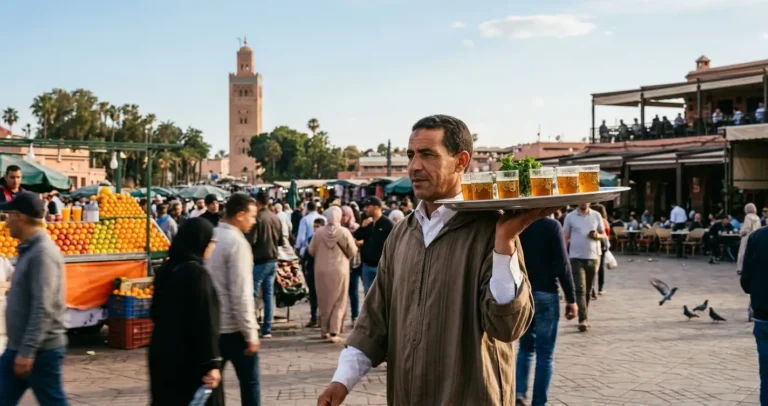
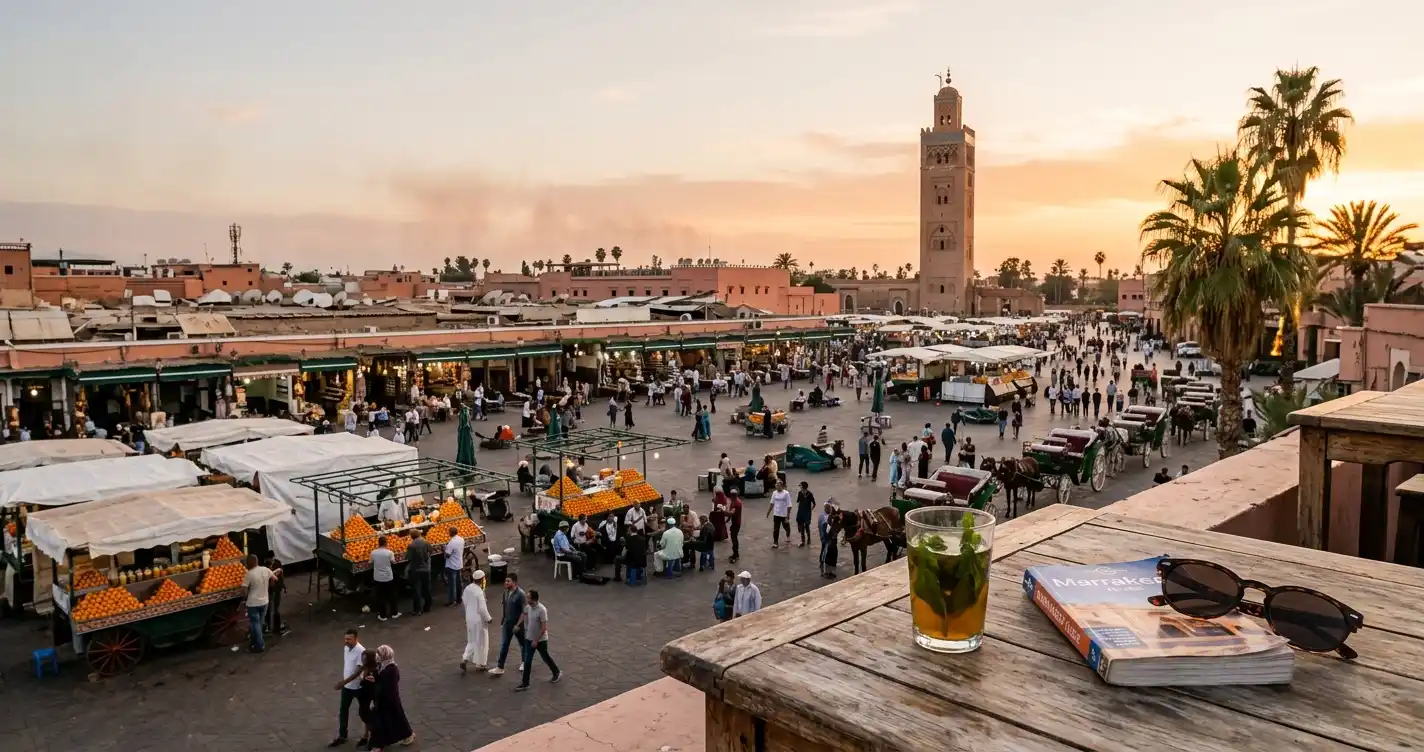
No visit to Marrakech feels complete without spending time in Jemaa el-Fnaa, the city’s famous central square and one of the most fascinating public spaces in North Africa. Throughout the day, the square changes continuously, offering an entirely different atmosphere from morning to night. Early in the day, it feels surprisingly calm, with orange juice vendors arranging their stalls, local residents crossing the square on their way to work, and the first performers beginning to gather. As the afternoon progresses, the pace gradually quickens until, by sunset, Jemaa el-Fnaa transforms into a vibrant open-air theatre filled with food stalls, musicians, storytellers, entertainers, and thousands of visitors.
The beauty of Jemaa el-Fnaa is that simply being present is the experience. You don’t need to purchase anything or join a guided tour. Find a place to sit on one of the surrounding terraces or simply wander through the square as it evolves throughout the evening. Watching the city come alive after sunset is one of the most memorable experiences Marrakech has to offer, and it remains completely free.
2. Get Lost in the Marrakech Medina
The best way to experience Marrakech isn’t by following a strict itinerary, it’s by allowing yourself to get pleasantly lost inside the medina. Enclosed by ancient red walls and recognized as a UNESCO World Heritage Site, the old city is a maze of narrow alleyways, hidden courtyards, bustling workshops, and quiet residential streets that have changed remarkably little over the centuries. Every turn reveals another layer of Marrakech’s history, whether it’s a beautifully carved wooden doorway, an old fountain where locals still collect water, or a tiny neighborhood bakery filling the air with the smell of freshly baked bread.
Unlike many historic districts that feel preserved for tourists, the medina remains the heart of everyday life. Shopkeepers greet regular customers by name, children weave through the streets on their way home from school, and artisans continue practicing traditional crafts that have been passed down through generations. Walking here without rushing allows you to notice details that organized tours often miss. The deeper you explore, the more authentic the experience becomes, making the medina one of Marrakech’s greatest attractions, and one that costs absolutely nothing.
3. Browse the Souks Without Buying Anything
Many visitors assume the souks are only worth visiting if they plan to shop, but wandering through Marrakech’s famous markets is an attraction in its own right. Stretching across much of the medina, the souks form a fascinating network of specialized streets where generations of craftsmen continue producing everything from leather slippers and brass lanterns to carpets, pottery, spices, and handmade jewelry.
The experience is far richer than simply browsing merchandise. As you move from one section of the market to another, you’ll hear the rhythmic tapping of metalworkers shaping brass, smell cedar wood drifting from carpentry workshops, and watch artisans dye leather using methods that have remained largely unchanged for centuries. Even if you leave empty-handed, you’ve witnessed one of Morocco’s oldest living traditions.
Rather than trying to visit every corner in a single afternoon, allow yourself time to explore naturally. Some of the most interesting workshops are tucked away down side alleys where relatively few tourists venture. You’ll often find craftsmen happy to demonstrate their work, especially when approached respectfully without any expectation of making a purchase.
4. Admire the Koutoubia Mosque and Its Gardens
Standing proudly above Marrakech’s skyline, the Koutoubia Mosque is perhaps the city’s most recognizable landmark. Built during the 12th century, its elegant minaret rises nearly 80 meters above the surrounding rooftops and has served as an architectural inspiration for famous monuments including Seville’s Giralda and Rabat’s Hassan Tower. Although non-Muslims cannot enter the mosque itself, the surrounding gardens and public walkways provide excellent viewpoints from which to admire one of Morocco’s finest examples of Almohad architecture.
Early morning offers particularly beautiful light for photography, while the late afternoon bathes the sandstone walls in warm golden colors that perfectly complement Marrakech’s famous red buildings. The gardens surrounding the mosque also provide welcome shade after hours spent exploring the busy medina. Palm trees, rose bushes, and carefully maintained paths create a peaceful atmosphere where both locals and visitors pause to relax before continuing their day.
Simply sitting beneath the trees while watching daily life unfold around one of Morocco’s most important religious monuments is one of the city’s simplest, and most rewarding, free experiences.
5. Watch the Sunset Behind the Koutoubia
As daylight begins to fade, Marrakech slows almost imperceptibly. The intense afternoon heat softens, long shadows stretch across the city, and the warm sandstone buildings gradually change from dusty pink to deep shades of orange and gold. Few places capture this transformation better than the area surrounding the Koutoubia Mosque, where the setting sun creates one of the city’s most memorable views.
Locals gather in nearby parks, travelers stop to photograph the skyline, and the evening call to prayer echoes across rooftops, momentarily quieting the city’s constant energy. It’s a scene that feels timeless, connecting modern Marrakech with centuries of history. Unlike many destinations where sunset viewpoints require entrance fees or organized tours, one of Marrakech’s finest evening spectacles is completely free.
If you’re visiting during spring or autumn, arrive around thirty minutes before sunset. You’ll have time to find a comfortable spot, enjoy the changing light, and watch the city gradually transition into its lively nighttime atmosphere.
6. Escape the Crowds at the Menara Gardens
Only a short distance from the busy streets of the medina lies one of Marrakech’s oldest and most peaceful public spaces. The Menara Gardens date back to the 12th century and were originally created as an agricultural estate supplying water to nearby olive groves through an ingenious irrigation system that still functions today. At the center of the gardens sits a large reflective basin overlooked by an elegant pavilion, with the snow-capped Atlas Mountains often visible in the distance during clear weather.
Unlike the city’s famous botanical gardens, entry to the Menara Gardens is free, making them an excellent choice for travelers seeking a quieter side of Marrakech. Families come here for afternoon picnics, couples stroll beneath the olive trees, and local residents often gather in the evenings after the day’s heat has subsided.
Although the gardens themselves are relatively simple compared with more elaborate attractions, that’s precisely part of their appeal. They offer space to breathe, slow down, and appreciate Marrakech at a gentler pace before returning to the energy of the old city.
7. Relax in Cyber Park Arsat Moulay Abdeslam
Despite its modern name, Cyber Park Arsat Moulay Abdeslam is far more than a city park with internet access. Originally established during the 18th century before later being redesigned as a public garden, it combines beautifully maintained green spaces with traditional Moroccan landscaping to create one of the most pleasant places to escape the bustle of central Marrakech. Shaded pathways lined with palm trees, fountains, flowering plants, and open lawns provide a refreshing contrast to the narrow streets of the nearby medina.
Throughout the day you’ll see students studying beneath the trees, office workers enjoying their lunch break, families taking evening walks, and travelers pausing to rest before continuing their sightseeing. Because the park sits within walking distance of both the Koutoubia Mosque and Jemaa el-Fnaa, it fits naturally into almost any itinerary without requiring extra transportation. While it rarely appears on lists of Marrakech’s must-see attractions, that’s exactly what makes it so enjoyable. It remains largely free from large tour groups, allowing visitors to experience a more relaxed side of daily life in the city.
8. Explore the Historic Mellah
The Mellah, Marrakech’s historic Jewish Quarter, offers a completely different atmosphere from the bustling heart of the medina. Established during the 16th century, it became home to one of Morocco’s largest Jewish communities and still preserves many architectural and cultural features that distinguish it from surrounding neighborhoods. The streets here are noticeably wider, many buildings feature distinctive wooden balconies overlooking the road, and the pace of daily life feels calmer than in the nearby tourist districts.
Walking through the Mellah reveals another chapter of Marrakech’s multicultural history. Local markets continue serving neighborhood residents, spice shops overflow with colorful herbs and seasonings, and traditional bakeries fill the air with the smell of freshly baked bread. While attractions such as the Lazama Synagogue require admission, simply exploring the neighborhood itself costs nothing and offers valuable insight into a community that played an important role in Marrakech’s development for centuries.
Because relatively fewer visitors spend time here, the Mellah also provides an opportunity to experience a quieter, more authentic side of the city away from the busiest sections of the souks.
9. Walk Through Bab Agnaou
Among Marrakech’s nineteen historic gates, Bab Agnaou is widely regarded as the most beautiful. Built during the 12th century by the Almohad dynasty, it once served as the ceremonial entrance to the royal district known as the Kasbah. Unlike many city gates that simply functioned as defensive structures, Bab Agnaou was designed to impress. Its elaborate stone carvings, intricate geometric patterns, and distinctive horseshoe arch remain remarkably well preserved after more than eight centuries.
Standing beneath the gate offers a reminder of Marrakech’s importance as one of the great imperial cities of Morocco. The surrounding Kasbah district is noticeably quieter than Jemaa el-Fnaa, making it an enjoyable place to wander while admiring traditional architecture and discovering small cafés frequented by locals. Visiting Bab Agnaou costs nothing, yet it provides one of the city’s finest opportunities to appreciate the craftsmanship of medieval Moroccan architecture without the crowds found at more famous attractions.
10. Walk Along Marrakech’s Ancient City Walls
Stretching for nearly 19 kilometers around the old city, Marrakech’s famous red walls have protected the medina since the early 12th century. Constructed using traditional rammed earth techniques, these impressive fortifications continue to define the city’s distinctive appearance and have earned Marrakech its nickname, the “Red City.”
Walking alongside the walls offers a completely different perspective from exploring the narrow streets inside the medina. Here, the pace is slower, traffic is lighter, and it’s easier to appreciate the sheer scale of the city’s historic defenses. Early morning and late afternoon are particularly rewarding times to visit, when the soft sunlight highlights the warm reddish tones of the walls and creates excellent photography conditions.
Following sections of the walls also allows visitors to discover lesser-known neighborhoods, local markets, and quiet residential areas that many tourists overlook entirely.
11. Visit the Artisan Districts
Beyond the main tourist routes, Marrakech remains a city where traditional craftsmanship continues to flourish. Several neighborhoods within the medina are dedicated to specific trades, and wandering through these artisan districts is one of the most fascinating free experiences available.
Depending on where you explore, you may watch leatherworkers cutting hides by hand, blacksmiths shaping glowing metal into decorative lanterns, carpenters carving cedar wood into intricate furniture, or weavers producing colorful textiles on traditional looms. Unlike museums, these workshops are living spaces where centuries-old techniques remain part of everyday life rather than historical demonstrations.
Even if you have no intention of shopping, taking time to observe these artisans offers valuable insight into Morocco’s rich cultural heritage. A polite greeting and genuine interest are often met with warm smiles, and many craftsmen are proud to explain their work to curious visitors.
12. Discover Hidden Riad Streets
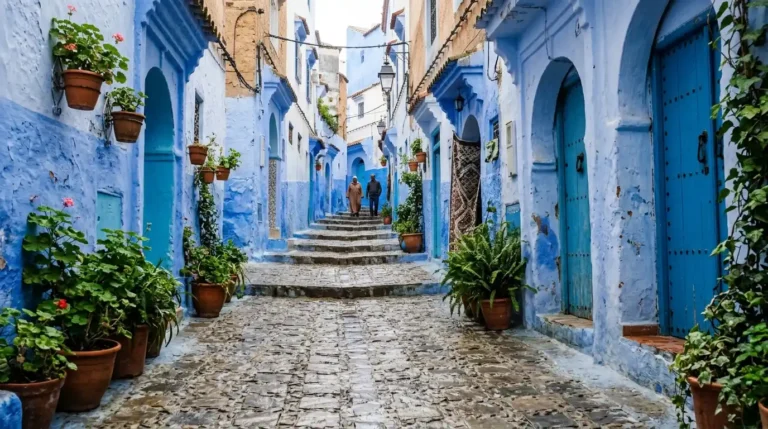
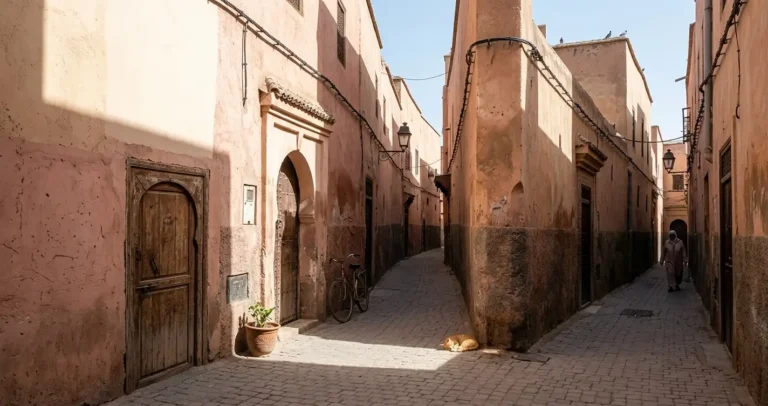
One of the greatest pleasures of exploring Marrakech is discovering streets that rarely appear in guidebooks. Behind the busy commercial areas of the medina lie peaceful residential lanes lined with beautifully restored riads, elegant wooden doors, flowering bougainvillea, and traditional Moroccan architecture.
These quiet neighborhoods reveal a side of Marrakech that many visitors never experience. Cats sleep in sunny doorways, neighbors chat across narrow streets, and the only sounds are birdsong and the occasional bicycle passing by. It’s difficult to believe that bustling Jemaa el-Fnaa may be only a few minutes away.
Rather than constantly searching for famous landmarks, allow yourself time to wander through these quieter areas. They offer some of Marrakech’s most authentic photography opportunities while reminding visitors that the medina remains a living community rather than simply a historic attraction.
13. Enjoy a Rooftop View
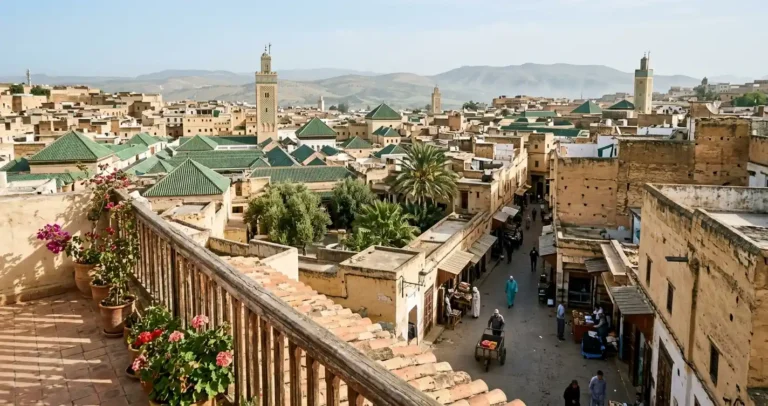
One of Marrakech’s defining features is its skyline of flat rooftops, mosque minarets, and distant mountain peaks. Fortunately, you don’t need to book an expensive rooftop restaurant to enjoy these views. Many cafés welcome visitors who purchase a simple mint tea or coffee while relaxing on their terraces.
Although technically you’ll spend a small amount on a drink, the spectacular panoramic views easily justify the modest expense. Looking across the medina from above reveals the remarkable size of the old city, while the Atlas Mountains often appear on the horizon during clear weather.
Sunset is naturally the most popular time to visit, but mid-morning can be equally rewarding if you prefer quieter terraces and softer crowds.
14. Watch the Evening Performers in Jemaa el-Fnaa
As darkness falls, Jemaa el-Fnaa transforms into one of the world’s great outdoor stages. Musicians perform traditional Moroccan rhythms, storytellers attract attentive circles of listeners, acrobats entertain passing crowds, and the square fills with an energy unlike anywhere else in the country.
While certain performers may request a tip if you photograph them closely, simply walking through the square and enjoying the atmosphere costs nothing. The constant movement, colorful lights, and lively conversations create an unforgettable experience that perfectly captures Marrakech’s personality.
Instead of rushing through the square on your way to dinner, spend time observing the performances and watching how locals and visitors interact. It’s one of those places where the atmosphere itself becomes the attraction.
15. Explore Local Food Markets
While many visitors focus on the tourist-oriented sections of the souks, Marrakech is also home to neighborhood food markets where residents buy fresh fruit, vegetables, herbs, spices, olives, and bread each day. These markets offer a fascinating glimpse into daily Moroccan life and provide an entirely different atmosphere from the souvenir stalls found elsewhere in the medina.
Walking through these markets allows you to appreciate the incredible variety of local produce while observing how residents shop, bargain, and interact with familiar vendors. Even if you don’t purchase anything, it’s an enjoyable cultural experience that highlights the importance of food within Moroccan society.
16. Wander Around Gueliz
Often described as Marrakech’s modern district, Gueliz offers a refreshing contrast to the historic medina. Wide boulevards, contemporary cafés, public art, boutique shops, and French-inspired architecture create an atmosphere that feels distinctly different from the city’s older neighborhoods.
Walking through Gueliz is free and provides insight into Marrakech’s more contemporary identity. Tree-lined streets, public squares, and relaxed outdoor cafés encourage slower exploration, making it an excellent destination after spending several hours navigating the busy souks.
17. Explore Hivernage
Located just southwest of the medina, Hivernage is known for its luxury hotels and elegant avenues, but exploring the neighborhood itself costs nothing. Beautiful landscaping, quiet streets, modern architecture, and numerous public spaces make it one of Marrakech’s most pleasant districts for an evening stroll.
The area feels noticeably calmer than the medina while offering attractive views of palm-lined boulevards and some of the city’s finest hotels. Even travelers staying elsewhere often enjoy visiting simply to experience another side of Marrakech.
18. Photograph Marrakech’s Architecture
Marrakech is one of the most photogenic cities in North Africa, and many of its finest subjects are freely accessible. Ornately carved wooden doors, colorful zellige tilework, decorative archways, historic fountains, and beautifully restored riads provide endless opportunities for photography enthusiasts.
Rather than focusing solely on famous landmarks, look for smaller details that tell the story of the city. The texture of centuries-old walls, sunlight filtering into narrow alleyways, and vibrant market displays often produce more memorable photographs than crowded tourist attractions.
Remember to ask permission before photographing local people, particularly in residential neighborhoods or traditional markets.
19. Watch Sunrise Over the Medina
While sunset attracts most visitors, sunrise remains one of Marrakech’s best-kept secrets. The medina is remarkably peaceful during the early morning hours. Shopkeepers prepare for the day ahead, delivery carts quietly navigate the streets, and the first rays of sunlight gradually illuminate the city’s famous red buildings.
Early risers are rewarded with cooler temperatures, quieter streets, and photography conditions that are almost impossible to find later in the day. It’s also one of the best times to appreciate Marrakech before tourism reaches its daily peak.
20. Visit Local Parks
In addition to the Menara Gardens and Cyber Park, Marrakech contains numerous smaller public parks where residents gather throughout the day. These green spaces offer opportunities to relax beneath palm trees, watch local families enjoying the outdoors, or simply escape the noise of the medina for a while.
Although they rarely appear in travel itineraries, these neighborhood parks provide an authentic glimpse into everyday life and remind visitors that Marrakech is first and foremost a city where people live, work, and socialize.
21. Create Your Own Walking Tour
Perhaps the best free activity in Marrakech is designing your own walking route through the city. Start at the Koutoubia Mosque before heading into Jemaa el-Fnaa, lose yourself among the winding souks, explore the quieter streets of the Mellah, admire Bab Agnaou, and finish the day watching the sunset from a rooftop terrace.
This flexible approach allows you to move at your own pace, spend longer in places that interest you, and discover hidden corners that organized tours often overlook. No two walks through Marrakech are ever exactly the same, and that’s part of what makes the city so captivating.
Money-Saving Tips for Marrakech
Exploring Marrakech on a budget doesn’t mean sacrificing quality. Walking between attractions whenever possible not only saves money but also reveals hidden corners that taxis would simply pass by. Visiting popular sites early in the morning helps avoid both crowds and the midday heat, while eating at local cafés just a few streets away from the main squares often provides better food at lower prices. Keeping a reusable water bottle, carrying small denominations of Moroccan dirhams, and resisting the temptation to buy souvenirs from the very first shop you visit can also make a noticeable difference to your daily budget.
Frequently Asked Questions
Is Marrakech worth visiting on a budget?
Absolutely. Many of the city’s most memorable experiences, including wandering through the medina, visiting Jemaa el-Fnaa, exploring the souks, and relaxing in public gardens, are completely free.
Is Jemaa el-Fnaa free?
Yes. Walking through the square costs nothing, although food, drinks, and some performers may charge if you choose to participate or take close-up photographs.
Can you visit the souks without buying anything?
Certainly. Browsing the souks is one of Marrakech’s most enjoyable free activities, and many visitors spend hours simply admiring the craftsmanship and lively atmosphere.
What’s the best free attraction in Marrakech?
Jemaa el-Fnaa remains the city’s most iconic free attraction, closely followed by the medina itself, the Koutoubia Mosque gardens, and the Menara Gardens.