Best Instagram Spots in Chefchaouen (2026): 15 Blue Streets, Hidden Corners & Epic Views
Chefchaouen didn’t become one of the most photographed towns in Morocco by accident its blue-washed walls, flower-pot staircases, and mountain backdrop genuinely photograph as well as they look on a feed. But the most famous spots also draw the biggest queues, and a handful of the town’s best corners barely show up in most guides at all.
This guide covers 15 of the best Instagram spots in Chefchaouen, when to shoot each one, and how to get a good photo without waiting behind a dozen other visitors doing the same thing along with a practical walking route that strings the best of them together into a single day. Unlike a lot of “most photogenic town” claims, Chefchaouen genuinely earns the label: the blue isn’t a filter or a marketing gimmick, it’s the actual paint on the actual walls, repainted by residents year after year, which is part of why the town keeps drawing photographers back even after the initial novelty of the color has worn off.
15 Best Instagram Spots in Chefchaouen
These 15 spots move roughly from the most famous, most photographed corners toward the quieter alternatives most visitors never find, so pace your day accordingly if you want a mix of both.
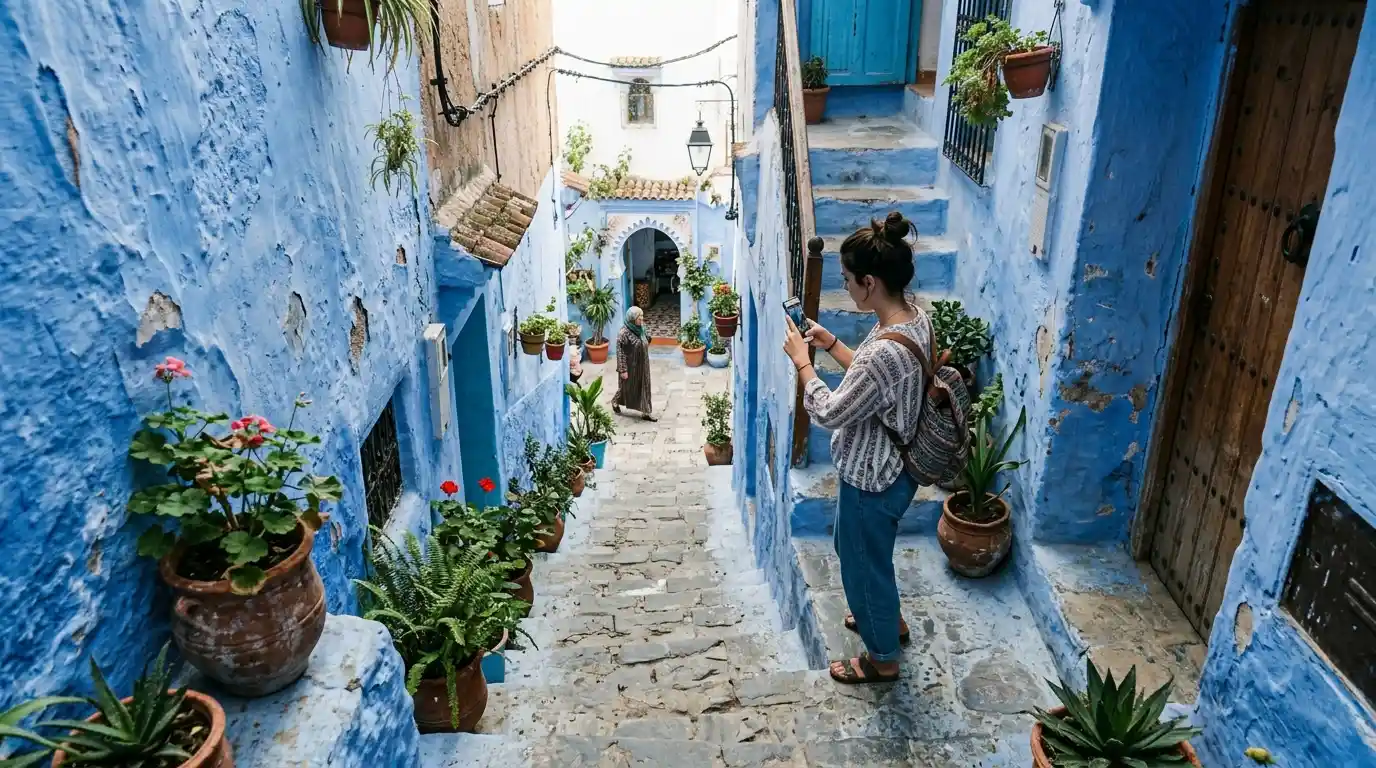
Derb El Assri’s Famous Blue Stairway
Also known as Callejon El Asri, this narrow staircase lined with flower pots and deep blue walls is Chefchaouen’s single most photographed spot, reportedly the location of a well-known Lonely Planet cover shot. Arrive right around 10am, when shops open but before the biggest crowds and harshest midday light arrive, for the best combination of soft light and fewer people in frame. By early afternoon, expect a genuine queue of photographers waiting their turn on the stairs, and some visitors find the polished, almost staged feel of the spot at its busiest slightly at odds with the rest of the town’s more relaxed character.
The Bluest Alleys of the Upper Medina
Beyond the well-known named staircases, the upper medina’s residential lanes hold countless equally striking corners with a fraction of the visitors. Wandering with a wide-angle lens and no fixed destination tends to turn up better, quieter shots than chasing the same handful of geotagged spots everyone else is photographing. The higher you climb toward Bab el-Ain and the streets beyond it, the more the blue tones vary from house to house, giving each corner a slightly different mood rather than the uniform look of the more famous, heavily painted stretches.
Place El Haouta
A quiet square built around a small fountain, Place El Haouta feels noticeably calmer than the main tourist routes, especially in the early morning before the medina wakes up. The blue-and-white doorways ringing the square, and the narrow blue stairway just around the corner, are both worth building a few minutes into any photo walk, and it doubles as a pleasant rest stop with a nearby café for fresh orange juice. Because it sees a fraction of the foot traffic of the more famous spots nearby, it’s also one of the better places to attempt a longer, more considered composition without feeling rushed by other photographers waiting their turn.
Bab El Ain
One of the medina’s main gates, Bab El Ain offers a striking frame where the deep blue walls meet the stone archway, and its role as a natural entry point means it’s easy to work into the start or end of a photo route without much detour. The gate also catches good light for much of the morning, making it a reliable early stop, and its proximity to both the lower medina and the climb toward the upper streets makes it a genuinely useful landmark to navigate by, not just a photo opportunity.
Derb Ben Driss and the White Mosque
This quieter street offers a distinctive view of a whitewashed mosque rising above the blue rooftops, a color contrast that reads differently in photos than the more uniform blue found elsewhere in the medina. It’s one of the less crowded compositions on this list, largely because it requires knowing to look for it, so it’s worth asking a local shopkeeper for directions if the exact viewpoint isn’t obvious. The combination of white against blue also tends to photograph particularly well under the flatter light of an overcast morning, when the more saturated blue streets elsewhere can look comparatively dull.
Place Outa el-Hammam
The medina’s lively central square, ringed by cafés, the Kasbah, and the Grand Mosque‘s unusual octagonal minaret, offers a wider, more architectural shot than the narrow alleyways elsewhere in town. It’s at its most photogenic in the evening, once the Kasbah is lit and the square fills with both locals and visitors, and it doubles as a genuinely good spot to simply sit with a camera and capture candid daily life. Because the square is so open compared to the surrounding lanes, it’s also one of the few places in the medina where a tripod is genuinely practical for a longer exposure once the light starts to fade.
The Kasbah and Its Rooftop Views
Beyond being a photogenic building in its own right, the Kasbah’s Portuguese Tower offers one of the few elevated, legal vantage points over the medina’s blue rooftops, worth the modest entrance fee for photographers specifically chasing an overhead composition. The small ethnographic museum inside also offers a handful of interior shots worth including alongside the rooftop view, and the interior Andalusian garden gives a quieter, more intimate composition to balance out the wider panorama from the ramparts above.
Spanish Mosque at Sunset
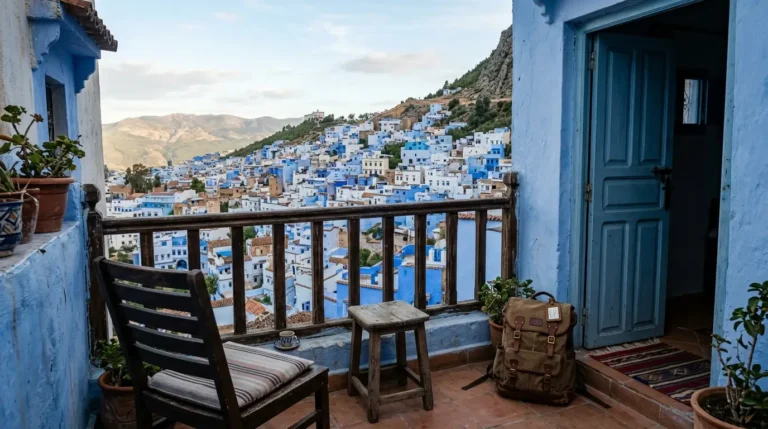
A roughly 20-minute uphill walk from the medina, this hillside viewpoint delivers the classic wide shot of Chefchaouen’s blue rooftops against the Rif Mountains, best photographed in the last hour before sunset when the light turns warm and the color contrast peaks. The walk up, past small orange juice stalls, is itself worth photographing along the way, and the viewpoint’s popularity means arriving thirty minutes before the light peaks is a reasonable way to claim a good spot along the low wall facing the view.
Ras El Maa
Where fresh mountain water cascades down at the medina’s eastern edge, Ras El Maa offers a different kind of shot entirely moving water, stone, and greenery rather than blue walls and works well as a change of pace partway through a longer photo walk. Locals washing clothes or cooling off here add genuine, unposed life to the scene, and the slightly lower, less enclosed setting also lets more natural light in than the deeper medina alleys, which can otherwise sit in shadow for much of the day.
Bab Onsar
Near Ras El Maa, this gate area is home to one of Chefchaouen’s most famous orange juice stands, its artificial orange tree and yellow bench set dramatically against blue walls. Buying a juice is generally expected before photographing the setup, and it’s worth the small cost for one of the town’s more distinctive compositions, with the resident cat sometimes willing to join the shot. The stand has become popular enough that a short wait is common during peak hours, so building in a few minutes of patience is worth planning for.
Blue Archways and Hidden Passages
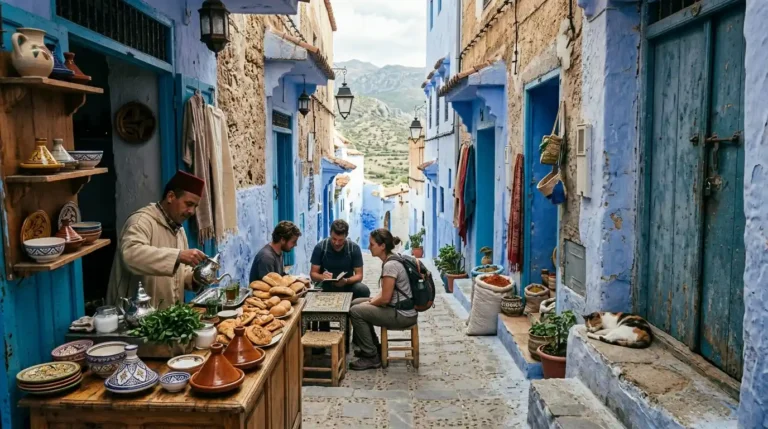
Scattered throughout the medina, covered blue archways connecting one alley to the next create a natural, frame-within-a-frame composition that reads well both as a straight architectural shot and as a backdrop for a portrait. These passages also offer welcome shade during the hotter parts of the day, making them a practical stop as much as a photogenic one, and the way light filters through a narrow archway opening tends to produce a natural spotlight effect on anyone standing beneath it.
Flowerpot-Lined Staircases
Beyond Derb El Assri, numerous smaller staircases throughout the medina are decorated with the same combination of terracotta pots and trailing plants against blue walls, offering similar shots with far less competition for the frame. Wandering the upper medina specifically in search of these turns up new ones on nearly every visit.
Blue Doors and Painted Doorways
Chefchaouen’s doors range from simple blue paint to elaborate hand-painted patterns, and a short walk through almost any residential lane turns up several worth photographing. Many of these doors belong to private homes, so a quick, polite check that no one’s stepping out is good practice before shooting, and a doorway with fresh flowers or a decorated step is usually a sign the resident takes visible pride in it.
Rooftop Terraces Over the Medina
Several riads and cafés open their rooftop terraces to non-guests for the price of a drink, offering a genuinely different perspective over the blue rooftops than any street-level shot can provide, particularly useful during the crowded midday hours when the streets themselves are at their busiest.
Chefchaouen’s Cats and Everyday Street Scenes
The town’s resident cats, dozing on doorsteps or wandering the blue alleys, have become an unofficial photography subject in their own right, and candid shots of daily life bread being carried to the communal oven, a shopkeeper opening for the day often end up more memorable than the posed, empty-street compositions that dominate most Instagram feeds of the town.
Best Time to Take Photos in Chefchaouen
Sunrise for Empty Blue Streets
The hour after sunrise offers the emptiest version of nearly every spot on this list, before day-trippers arrive and while the medina’s residents are only just beginning their day. This is genuinely the only reliable window to photograph Derb El Assri without other people in frame.
Midday for Deep Blue Colors
Counterintuitively, the harsher, more direct light around midday can make the blue walls read as more saturated and vivid in photos, even though it’s also the least comfortable and most crowded time to be out shooting. A polarizing filter helps manage the harsher contrast if shooting during this window.
Golden Hour for the Spanish Mosque
The hour before sunset is specifically the best window for the Spanish Mosque viewpoint, when the warm light contrasts dramatically against the blue rooftops below, and this spot draws its own crowd of photographers timing the same shot.
Blue Hour Over the Medina
The short window just after sunset, when the sky still holds color but street lights have come on, offers a striking, less commonly captured version of Place Outa el-Hammam and the illuminated Kasbah, worth staying out for if you don’t mind shooting in fading light.
How to Get Better Instagram Photos in Chefchaouen
Best Colors to Wear Against the Blue Walls
Warm tones mustard yellow, burnt orange, deep red create the strongest contrast against Chefchaouen’s blue walls, while white and pale blue tend to blend in rather than stand out in photos. A single bold accent piece, like a scarf, often works better than an entire outfit in a loud color.
Portraits, Architecture or Street Photography?
Chefchaouen genuinely rewards all three, but the medina’s narrow lanes suit portraits and architecture more naturally than wide street photography, simply because there’s rarely enough distance to capture a full street scene without a very wide lens. A 24–35mm equivalent focal length covers most situations well.
How to Avoid Crowds in the Most Famous Spots
Visiting the well-known staircases and squares at sunrise, or seeking out the quieter alternatives listed above, are both more reliable than hoping a famous spot will be empty at a normal hour. Weekday mornings also tend to be noticeably quieter than weekends, when domestic Moroccan visitors add to the international crowd.
Respecting Residents While Taking Photos
Many of Chefchaouen’s most photogenic doors and staircases are still private homes, so asking before photographing a doorway with someone visible, and leaving a small tip where locals have specifically decorated a spot for photos, are both genuinely appreciated. A polite greeting first goes a long way in a town this size, where the same families often live in the same houses for generations.
A Walking Route for Chefchaouen’s Best Instagram Spots
A logical morning route starts at Bab El Ain, moves through Place El Haouta and its nearby blue stairway, continues to Derb El Assri before the crowds build, loops past Derb Ben Driss for the White Mosque view, and finishes at Place Outa el-Hammam and the Kasbah. Saving Ras El Maa, Bab Onsar, and the Spanish Mosque for the afternoon and evening spreads the walk naturally across a full day without backtracking, and building in a rooftop café stop somewhere around midday gives both your feet and your camera a break during the harshest light.
FAQs About Instagram Spots in Chefchaouen
What Is the Most Instagrammable Spot in Chefchaouen?
Derb El Assri’s blue stairway is most consistently cited as the single most photographed spot in Chefchaouen, though it’s also the busiest, so arriving early matters more here than anywhere else on this list.
Where Is the Famous Blue Staircase in Chefchaouen?
Derb El Assri, also known as Callejon El Asri, near Place El Haouta, is the staircase most guides and photographers refer to as Chefchaouen’s iconic blue stairway, easy to find by asking any nearby shopkeeper.
What Is the Best Time to Take Photos in Chefchaouen?
Early morning offers the emptiest streets and softest light, while golden hour before sunset is specifically best for the Spanish Mosque’s panoramic view over the medina, and midday works surprisingly well for saturated blue-wall colors despite the crowds.
Where Can You Photograph Chefchaouen From Above?
The Kasbah’s Portuguese Tower and the Spanish Mosque viewpoint both offer elevated views over the blue medina, with the Spanish Mosque delivering the wider, more panoramic shot and the Kasbah offering a closer, more detailed look at the rooftops themselves.
Is Chefchaouen Good for Instagram Photography?
Yes, consistently ranked among Morocco’s most photogenic towns, offering both the famous, heavily photographed staircases and squares and a much wider range of quieter, equally striking corners for anyone willing to wander beyond the main routes and spend more than a single rushed afternoon there.