Best Blue Streets in Chefchaouen (2026): 12 Mesmerizing Lanes You’ll Want to Get Lost In
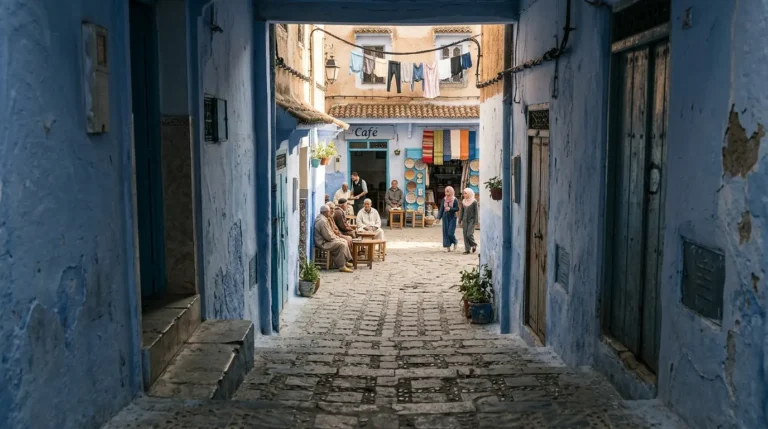
No two blue streets in Chefchaouen look quite the same. Some lean toward deep cobalt, others toward a soft, washed-out sky blue, and the shade shifts again depending on the hour and the light.
Best Blue Streets in Chefchaouen guide walks through 12 of the town’s best blue streets and corners, a practical walking route connecting them, and what to look for beyond the color itself including the genuine, still-debated history behind why the town looks the way it does in the first place.
Why Chefchaouen’s Streets Are So Blue
There’s no single, universally agreed explanation, and locals themselves will often give you several different answers. The most commonly cited theory traces the tradition to Sephardic Jewish refugees, some arriving after the 1492 expulsion from Spain and a larger wave fleeing persecution in Europe during the 1930s and 1940s, who painted buildings blue as a reference to tekhelet, the sacred blue of Jewish tradition symbolizing the sky and the divine. Photographs from the 1920s show a largely white town, suggesting the blue became widespread specifically during the peak of that 20th-century Jewish settlement rather than centuries earlier.
Other explanations exist alongside it that the color helped repel mosquitoes, that it kept the streets cooler in summer, or simply that it became a point of civic pride once residents saw how it looked. Most likely, the truth is layered: a tradition that began with one community, was adopted more broadly, and has since been actively maintained, partly for its own sake and partly because tourism now depends on it. Painting continues once or twice a year, largely by hand, keeping the color as vivid today as in any photo you’ll have seen online.
12 Best Blue Streets and Corners in Chefchaouen
Rue Targui and Its Blue Stairways
Climbing gently from the lower medina, Rue Targui is lined with a series of small blue stairways connecting one level of the town to the next, each landing offering a slightly different framing of the walls around it. It’s a good early stop precisely because it isn’t one of the town’s most famous names, meaning far fewer other visitors competing for the same shot, and the modest scale of each staircase makes it easy to pause and compose a photo without holding up other pedestrians.
Derb El Assri
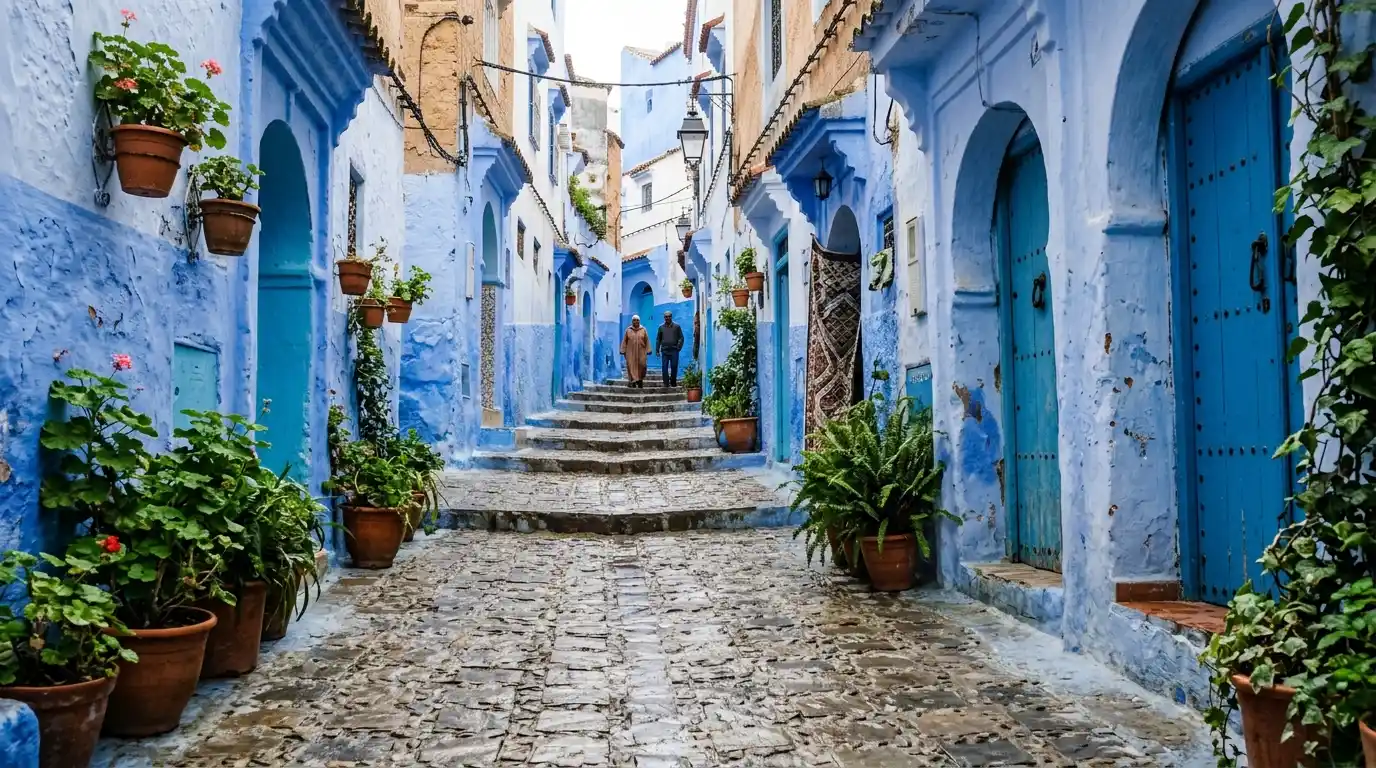
Also known as Callejon El Asri, this is Chefchaouen’s single most photographed staircase, its flower-pot-lined steps and deep blue walls reportedly the setting for a well-known Lonely Planet cover photo. Visit around mid-morning for the best light before the inevitable queue of photographers builds through the afternoon, and expect to wait your turn once the crowd arrives, since this remains the one spot on this list where a truly empty frame is genuinely hard to get past 11am.
Rue Bin Souaki
A quieter residential lane in the lower medina, Rue Bin Souaki offers a more everyday version of the town’s blue palette laundry lines, doorstep cats, and less uniformly painted walls that show the color’s natural variation from house to house. It’s a useful reminder that Chefchaouen’s blue isn’t a single uniform shade applied by decree, but the accumulated result of individual households repainting on their own schedule.
The Lanes Around Bab El Ain
Radiating out from one of the medina’s principal gates, the streets around Bab El Ain combine the practical business of a functioning entry point with genuinely striking blue walls, making it an easy, natural stop to fold into either the start or end of a longer walk. The gate itself catches good light for much of the morning, which helps if you’re building a route that starts here.
The Blue Alleys Behind the Grand Mosque
Tucked just behind the Grand Mosque’s distinctive octagonal minaret, this cluster of narrower lanes offers a quieter contrast to the activity of Plaza Uta el-Hammam just around the corner, with the whitewashed minaret occasionally visible above the blue rooftops. The color contrast between the white tower and the surrounding blue walls makes this one of the more visually distinctive corners on this list.
Rue Sidi Bouchouka
Named for a local religious figure, as many streets throughout the medina are, this lane holds a mix of private homes and small workshops, giving it a more lived-in character than some of the town’s more purely decorative corners. It’s worth a slower walk-through rather than a quick photo stop, since much of its appeal comes from the everyday activity happening along it.
Rue Moulay Ali Ben Rachid
Named after Chefchaouen’s founder, this street sits within the older core of the medina and reflects the deeper blue tones more commonly found in the town’s original, longest-inhabited quarters. Its age shows in subtle architectural details that newer, more recently painted stretches of the medina don’t share.
The Upper Medina Around Hay El Andalous
Named for the Andalusian heritage that shaped much of Chefchaouen’s early population, this upper residential district offers some of the quietest, most authentically lived-in blue streets in town, well worth the climb for travelers willing to go beyond the main tourist routes. The extra elevation also means better views back down over the medina’s rooftops as you climb.
The Lanes Between Uta el-Hammam and Ras El Maa
This stretch connects the medina’s lively central square to the spring at its eastern edge, passing through a mix of shops, cafés, and blue-washed walls that gradually give way to greener, more open surroundings as you approach the water. It’s a natural connector route rather than a single destination, worth walking slowly rather than rushing through.
The Blue Passages Around Bab Onsar
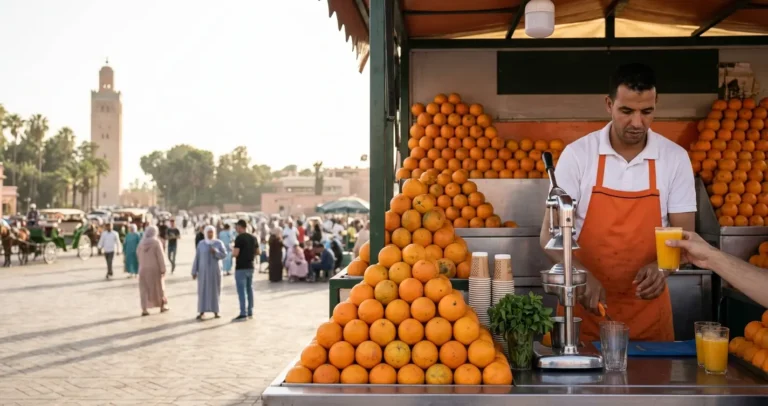
Near the medina’s eastern gate, this area is home to one of Chefchaouen’s most photographed spots a small orange juice stand set against blue walls and the surrounding lanes carry the same vivid color right up to the edge of town. Buying a juice before photographing the stand is generally expected courtesy rather than an obligation.
Rue Hassan I and the Surrounding Blue Lanes
One of the medina’s more established through-routes, this street and its side lanes offer a good stretch for simply walking with a camera, since the blue here tends to stay consistent over a longer, easier-to-follow distance than some of the more fragmented upper alleys. It’s a practical option when time is limited, since it covers a lot of photogenic ground without much doubling back.
The Quiet Stairways Above the Main Medina
Scattered through the highest reaches of the medina, these lesser-known stairways see a fraction of the foot traffic of Derb El Assri while offering a very similar combination of flower pots, blue walls, and steep, photogenic steps. Finding them generally means simply continuing to climb past where most day-trippers turn back.
A Walking Route Through Chefchaouen’s Blue Streets
Start at Bab El Ain
Begin at this central gate, both for its own photogenic archway and its convenience as a landmark to navigate by for the rest of the walk. Most riads can point you here easily, making it a reliable, low-stress starting point even on your first morning in town.
Continue Toward Uta el-Hammam
Move through the surrounding lanes toward the medina’s main square, taking in the Grand Mosque’s blue-adjacent alleys and the general bustle of the town’s commercial heart along the way. This stretch also offers the first realistic coffee stop of the walk.
Climb Through the Upper Medina
Head uphill toward Hay El Andalous and the quieter stairways above the main medina, where crowds thin out considerably and the blue takes on a more residential, lived-in character. This is the most physically demanding stretch of the route, so pacing yourself here pays off later.
Finish at Ras El Maa
End the walk at the spring on the medina’s eastern edge, passing through the lanes near Bab Onsar along the way for one last classic blue composition before resting by the water. The sound of moving water makes a genuinely pleasant note to end on after a morning of stone lanes.
When to Walk Chefchaouen’s Blue Streets
Early Morning for Quiet Lanes
The hour or so after sunrise offers the emptiest version of nearly every street on this list, before day-trippers arrive and while the medina’s own residents are only just beginning their day. This is genuinely the only reliable window to photograph Derb El Assri without other people in frame.
Late Afternoon for Softer Light
As the harsh midday sun eases, the light turns warmer and more flattering, particularly in the hour or two before sunset, making this a strong second window for photography, especially for the town’s higher, more open stairways.
What to Expect Around Midday
Between roughly 10am and 4pm, the most famous streets Derb El Assri chief among them can feel genuinely crowded, with a real wait for an unobstructed shot at the busiest spots. This is the best window instead for exploring the quieter alternatives further from the main routes.
What to Look For Beyond the Blue Walls
Painted Doors and Arches
Chefchaouen’s doors range from simple painted blue to elaborate hand-painted patterns, and the covered archways connecting one alley to the next create a natural frame within a frame worth watching for throughout any walk.
Staircases, Pots and Plants
Terracotta pots trailing greenery against blue walls are one of the medina’s defining visual motifs, appearing on staircases throughout the town well beyond the famous, heavily photographed examples.
Everyday Medina Life
Cats dozing on doorsteps, bread being carried to the communal oven, a shopkeeper opening for the day these unplanned, candid moments often end up more memorable than the posed, empty-street shots that dominate most photos of the town.
Practical Tips for Exploring the Blue Streets
Wear Shoes With Good Grip
The medina’s cobbled lanes are steep and can be genuinely slippery, particularly after rain, so sturdy, well-gripped footwear matters more here than in a flatter city.
Let Residents Pass
Many of these streets are still working residential lanes, so giving way to locals carrying goods or moving through on daily business is both practical and courteous.
Ask Before Photographing People
If a resident is visible in a shot you want, a quick, friendly ask before photographing is both respectful and generally well received.
Do Not Treat Residential Lanes Like a Photo Set
Avoid rearranging pots, sitting on private doorsteps, or lingering too long directly in front of someone’s home for a photo, since these streets are lived-in spaces first and photo backdrops second.
Best Blue Streets in Chefchaouen FAQ
Where is the bluest street in Chefchaouen?
Derb El Assri is most consistently cited as the town’s most vividly and uniformly blue street, though the upper medina’s quieter lanes offer similarly deep tones with far fewer visitors.
What is the most famous blue street in Chefchaouen?
Derb El Assri, also known as Callejon El Asri, is the single most photographed and widely recognized blue street in the medina.
Can you walk all the blue streets in one day?
Yes, comfortably the medina is compact enough that a full day, or even a well-paced half day, covers the main highlights listed here.
What is the best time to explore Chefchaouen’s blue streets?
Early morning offers the quietest lanes and softest light, with late afternoon as a strong second option before the streets fill again toward evening.
Are Chefchaouen’s blue streets free to visit?
Yes walking and photographing the medina’s streets costs nothing, though buying something small, like a juice or a coffee, from vendors at popular spots is a welcome courtesy.