Using Cards in Morocco: 9 Crucial Tips to Avoid Payment Problems
Using cards in Morocco works well in some places and not at all in others, and that mismatch is where most payment problems begin. A hotel front desk or a modern restaurant will usually take your Visa or Mastercard without fuss. A spice stall in the souk, a petit taxi or a guesthouse in the mountains may only want cash. Travellers who arrive with a card and no backup can find themselves stuck with a declined payment and a long walk to a cash machine.
This guide explains where cards are accepted, where you will need cash, how fees and currency conversion work, and what to do when a payment fails. Card acceptance varies by merchant, location and payment provider, so treat this as a practical guide rather than a guarantee, and always carry a backup.
Can You Use Credit and Debit Cards in Morocco?
Yes, in the right places. Foreign credit and debit cards are accepted widely in cities, tourist areas and larger businesses. Cash remains important for small purchases and for anywhere outside the main routes.
Are Visa and Mastercard Widely Accepted?
Visa and Mastercard are the most widely accepted networks. Hotels, restaurants in tourist areas, larger shops, supermarkets and many tour operators take them. Acceptance is less reliable in small independent businesses, where the card terminal may be missing, broken or not connected.
Can You Use American Express in Morocco?
Sometimes. American Express is accepted at some hotels, larger restaurants and shops, but it is less common than Visa or Mastercard, and some merchants decline it because of higher processing costs. Treat an Amex card as a secondary option, and carry a Visa or Mastercard as well.
Do You Need to Carry Cash as Well as Cards?
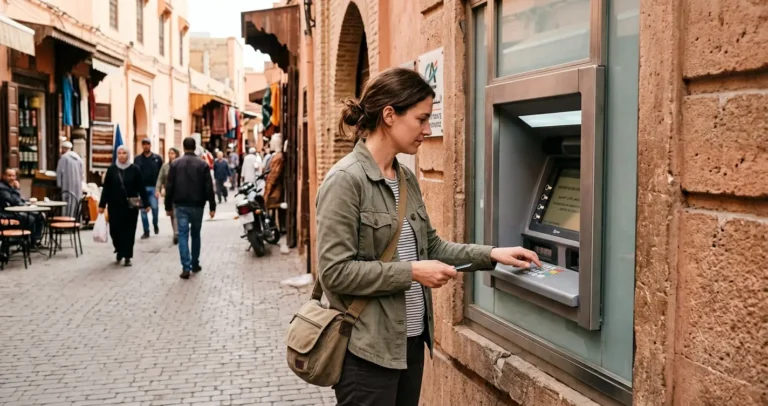
Yes. Even in cities, you will want cash for taxis, markets, tips and small meals. A balanced approach works best: cards for hotels, larger meals, shopping and tours, and cash for everyday small expenses. Our guide to ATMs in Morocco explains how to get dirhams.
Are Contactless and Mobile Payments Available?
Contactless payments are increasingly common in Moroccan cities, especially in supermarkets, modern cafés and larger shops. Apple Pay has been available in Morocco since 2023, but it launched through selected Moroccan banks, and a foreign wallet working at a given terminal is not guaranteed. Keep a physical card with you.
Where Credit and Debit Cards Work in Morocco
The pattern is simple. The more formal and established the business, the more likely it takes cards.
Hotels, Riads and Larger Accommodation Providers
Hotels and many riads accept cards, particularly mid-range and higher-end properties. Smaller guesthouses may ask for cash, or add a surcharge for card payments. Confirm the payment method when you book, and ask whether a deposit is taken by card.
Restaurants, Cafés and Modern Shopping Centres
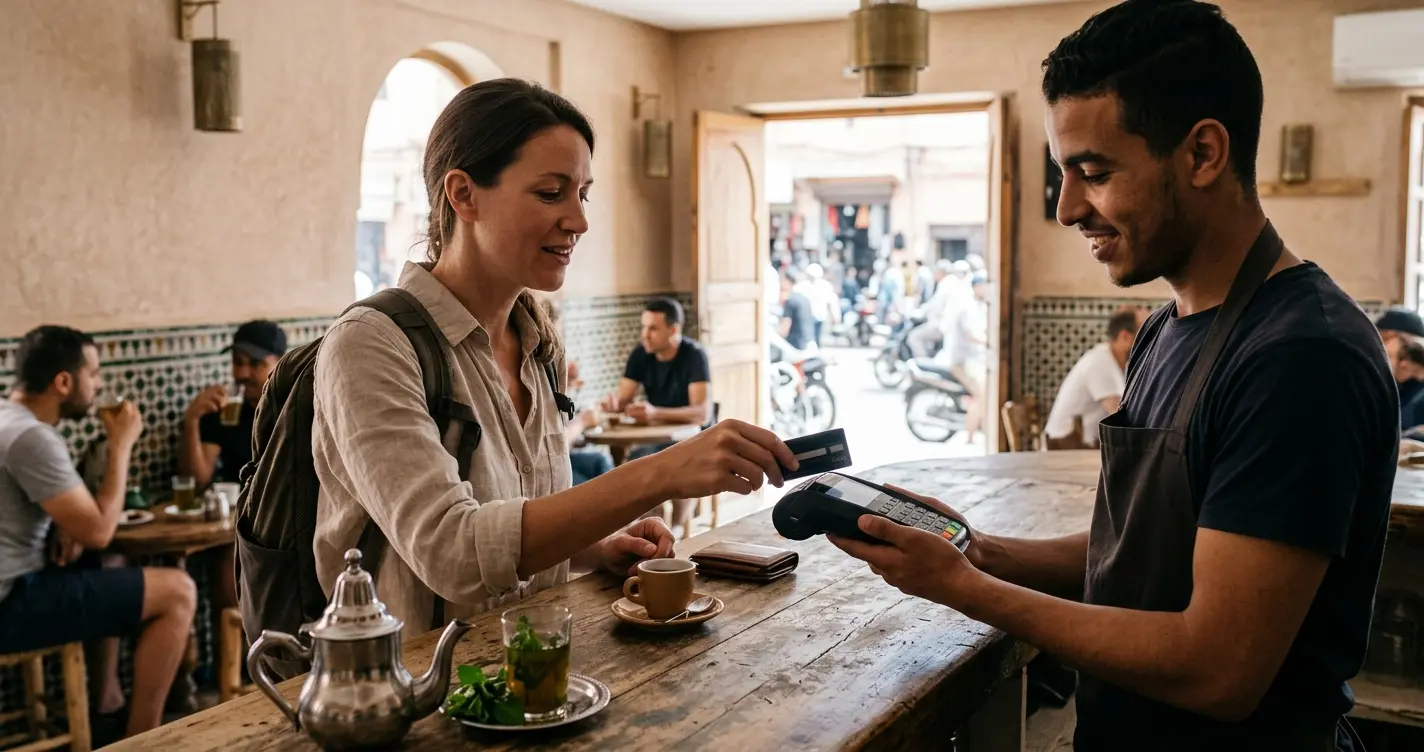
Restaurants in tourist areas and modern districts commonly accept cards, as do cafés in larger cities and shopping centres. Many small local eateries do not. Ask before you order if you are unsure, since terminals can be offline.
Supermarkets, Shops and Established Businesses
Supermarkets, pharmacies, fuel stations in cities and established shops usually take cards. Some small shops set a minimum purchase for card payments. Keep some cash for small items.
Tour Operators and Travel Agencies
Many tour operators and travel agencies accept cards, sometimes with a surcharge, and some require a cash deposit or balance. For desert tours and treks, confirm in advance how and when you need to pay, and whether card payments are accepted at the point of booking or on the day.
Car Rental Companies and Larger Transport Providers
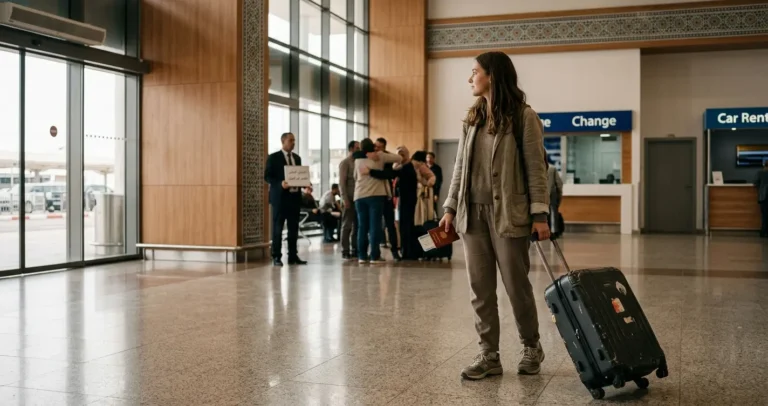
Car rental companies generally require a credit card for the deposit, and they often prefer it to a debit card. Check the card requirements in advance, since some companies place a hold on the card for the duration of the rental. Trains can usually be paid for by card at stations and online, though small queues and machines can be unreliable.
Where You May Need Cash Instead of a Card
Plan for cash wherever the business is small, informal or remote.
Traditional Souks and Small Independent Shops
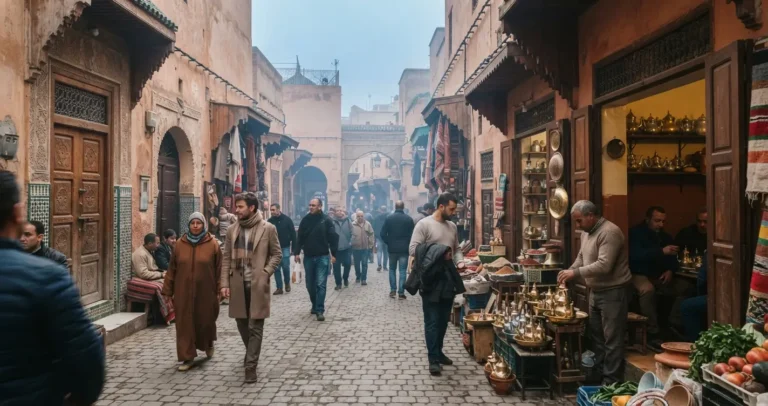
Most souk stalls and small independent shops prefer cash, and bargaining is part of the experience. Some larger shops in tourist areas accept cards, but prices may be higher, and a surcharge may apply.
Street Food Stalls and Local Eateries
Street food and small local restaurants are almost always cash-only. This is one of the best reasons to carry small notes and coins.
Petit Taxis and Some Local Transport Services
Petit taxis in cities are paid for in cash, and drivers often have limited change. Carry small notes. Some ride-hailing apps can take cards, but availability varies by city.
Rural Villages and Remote Destinations
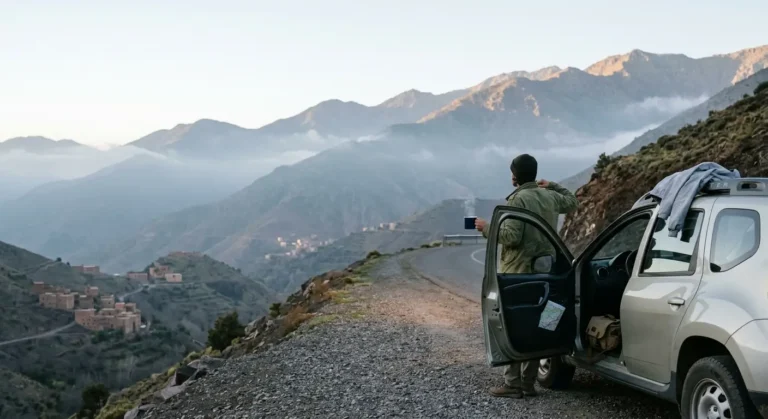
In villages, mountain areas and desert regions, cash is the norm. Guesthouses, guides and local shops may not have card terminals, and connectivity can be unreliable.
Tips, Small Purchases and Everyday Expenses
Tips for guides, drivers, porters and staff are given in cash, as are many small purchases. Keep a stock of small denominations.
Credit Cards vs. Debit Cards in Morocco
Both can work. The best choice depends on the purpose.
Which Card Is Better for Everyday Spending?
For everyday spending, a card with no foreign transaction fee is usually best, whether it is credit or debit. Check your card’s terms. If you use a debit card, remember that purchases come directly from your account, so keep an eye on the balance.
Which Card Should You Use for Hotels and Car Rentals?
A credit card is often better for hotels and car rentals, since the deposit is a temporary hold on credit rather than money taken from your account. Car rental companies often require a credit card in the driver’s name. Confirm the requirements before you travel.
Why Carrying a Backup Card Matters
Cards get blocked, lost or declined. A second card, kept separately from the first, means a single problem does not leave you without payment options.
Should You Bring Cards From Different Networks?
If you can, yes. A Visa and a Mastercard cover the two most widely accepted networks, and a different network can help if one is declined or unsupported. Keep them in different places.
Foreign Transaction Fees and Currency Conversion
Fees can add a meaningful amount over a trip, so it pays to understand them before you leave.
What Your Home Bank May Charge
Many banks charge a foreign transaction fee, often a percentage of each payment, and some add a fixed fee. Some cards waive these fees, and travel-focused accounts often do. Check your card’s international terms, since a few percent on every purchase adds up.
Paying in Moroccan Dirhams Instead of Your Home Currency
When a terminal asks which currency you want to pay in, choose Moroccan dirhams. The conversion is then handled by your card network and your bank, which usually gives a better rate than the merchant’s.
Understanding Dynamic Currency Conversion
Dynamic currency conversion, or DCC, is the offer to pay in your home currency at the terminal. It looks helpful, but the merchant or its payment provider sets the exchange rate, and it is often less favourable than your bank’s.
How to Avoid Unnecessary Conversion Fees
Choose dirhams every time, use a card with no foreign transaction fee if you have one, and avoid cash advances on credit cards, which usually carry extra charges. Compare a couple of transactions against your statement to see how your card behaves.
Checking Your Card’s International Spending Terms
Before you travel, read your card’s terms on foreign transactions, ATM use, daily limits and international blocks. If anything is unclear, ask your bank. A few minutes of checking avoids a lot of confusion later.
How to Pay by Card in Morocco Without Problems
A few habits make card payments smooth.
Check Whether Your Card Is Enabled for International Payments
Some cards have international use switched off by default. Check your banking app or call your bank to confirm that overseas payments are enabled and that your limits suit your plans.
Choose the Correct Currency at the Payment Terminal
When the terminal shows a choice of currency, pick Moroccan dirhams. If the staff set the currency for you, ask them to change it before you enter your PIN.
Keep Your Card in Sight During Transactions
Keep your card in view, and ask for the terminal to be brought to you where you can. Avoid letting your card leave your sight, particularly in busy areas.
Check the Amount Before Entering Your PIN
Read the amount and currency on the screen before you confirm. A small mistake is far easier to fix before the payment goes through than after.
Keep Receipts for Important Purchases
Keep receipts for hotels, car rentals, tours and larger purchases. They help if you need to dispute a charge, and they make it easier to check your statement later.
Can You Use Apple Pay, Google Pay or Other Digital Wallets?
Sometimes. Digital wallets are a convenient backup, but they should not be your only way to pay.
How Mobile Wallet Acceptance Depends on the Merchant
Wallet payments work only where the merchant has a contactless terminal that accepts them. In cities, supermarkets, modern cafés and larger shops are more likely to support contactless, while small independent businesses may not.
What to Check Before Leaving Home
Make sure your wallet is set up, your cards are added and your phone is charged. Check your bank’s support for international wallet payments, and test a contactless payment at home so you know it works.
Why You Should Still Carry a Physical Card
Phones run out of battery, terminals fail and some merchants take only a physical card. A physical card in your wallet is a simple safeguard.
What to Do if Your Card Is Declined in Morocco
A declined card is annoying but usually fixable.
Check Your Bank’s Security Alerts
Your bank may have blocked the payment as a security precaution, since payments in a new country can look unusual. Check your app, text messages and email for a prompt to confirm the transaction.
Try Another Card or Payment Method
If the card is declined, try another card or pay in cash. The problem may be the terminal rather than your card, so try again or ask another merchant.
Contact Your Bank if the Problem Continues
If the problem continues, call your bank. Save its international number before you travel, since the toll-free number on the card may not work from abroad.
What to Do if Your Card Is Lost or Stolen
Block the card immediately through your app or by phone. Ask about an emergency replacement and emergency cash, and review your recent transactions for anything unfamiliar.
Keep an Emergency Cash Reserve
Keep an emergency reserve of cash in a separate place from your cards. It lets you cover a night’s accommodation, a meal and a taxi while a card problem is resolved.
How Much Cash Should You Carry if You Use Cards in Morocco?
This section is a short summary. For a fuller budget guide, see our article on how much cash to carry in Morocco.
Cash for Everyday Purchases
Carry enough cash for daily small purchases, such as drinks, snacks, small shops and entry fees. A modest amount, replenished as needed, is usually enough in cities.
Cash for Taxis, Markets and Tips
Taxis, markets and tips are cash-based, so keep small notes handy. Break larger notes at a hotel, supermarket or café when you can.
Preparing for Trips to Rural Areas and the Sahara
Before you travel to the mountains, the coast or the desert, withdraw enough for the whole stay, including guides, meals and tips. Card terminals are unreliable in remote areas.
Balancing Convenience With Card Security
Using cards in Morocco reduces the amount of cash you carry, which can be safer, but it does not remove the need for care. Keep your cards in a secure place, use a hotel safe for spares and check your statements regularly.
Common Card Payment Mistakes to Avoid in Morocco
Most problems come from the same few mistakes.
Assuming Every Business Accepts Cards
Many small businesses are cash-only, and even businesses with terminals can have connection problems. Ask before you order or agree a price.
Forgetting to Notify or Enable International Use With Your Bank
Some banks block overseas payments unless you enable them or tell the bank about your trip. Check this before you leave home, not after a payment is declined.
Accepting an Unfavourable Currency Conversion
Accepting a conversion into your home currency at the terminal can cost you more. Choose dirhams, and check the screen before you confirm.
Relying on a Single Card
A single card is a single point of failure. Bring a second card, and keep it separate from the first.
Waiting Until You Need Cash to Find an ATM
Do not wait until you are almost out of cash. Machines can be out of order or out of cash, and in remote areas there may be none. Withdraw before you need to.
Frequently Asked Questions About Using Cards in Morocco
Should I Bring Cash or a Card to Morocco?
Bring both. Using cards in Morocco is convenient in hotels, larger restaurants, shops and tour agencies, but cash is still needed for taxis, markets, small eateries, tips and rural areas. Carry a card or two for larger payments, and withdraw dirhams from an ATM for everyday expenses.
Can I Use My Visa or Mastercard in Morocco?
Yes, in most cities and tourist areas. Visa and Mastercard are the most widely accepted networks, but acceptance varies by merchant. Make sure your card is enabled for international use, and carry a backup.
Can I Use My Debit Card in Moroccan Shops?
Often, yes, in larger shops and supermarkets that have card terminals. Small independent shops may not accept cards. A debit card also works at ATMs, which is how most visitors get cash.
Do Moroccan Restaurants Accept Credit Cards?
Many restaurants in tourist areas and modern districts do, but small local eateries often do not. Ask before you order, and keep cash for places that do not take cards.
Can I Pay by Card in Moroccan Souks?
Rarely. Most souk stalls prefer cash, and bargaining is part of the experience. Some larger shops in tourist areas take cards, sometimes with a surcharge.
Is It Better to Pay in Dirhams or Euros?
When paying by card, choose dirhams if the terminal offers a choice of currency. Paying in your home currency means the merchant sets the exchange rate, which is usually less favourable. For more on currencies, see our guide to paying in euros or dollars in Morocco.
Can I Use Apple Pay or Google Pay in Morocco?
Sometimes. Contactless payments are common in cities, but wallet acceptance depends on the merchant’s terminal, and foreign wallets are not guaranteed to work everywhere. Carry a physical card as a backup.
Will My Bank Charge Me for Using My Card in Morocco?
Possibly. Many banks charge foreign transaction fees, and some cards waive them. Check your card’s terms before you travel, and choose dirhams at the terminal to avoid extra conversion costs.
What Should I Do if My Card Is Declined?
Check for a security alert from your bank, try another card or pay in cash, and contact your bank if the problem continues. Keep an emergency cash reserve, and block the card at once if it is lost or stolen.
Final Tips for Paying by Card in Morocco
Using cards in Morocco is easy once you know where they work and where they do not. Use them for hotels, larger meals, shopping and tours, and rely on cash for taxis, markets, street food, tips and anywhere remote. These nine tips cover the essentials:
- Carry both cards and cash. Treat cards as your main tool in cities and cash as your backup everywhere.
- Bring two cards on different networks, and store them separately.
- Enable international use with your bank, and save its overseas phone number.
- Choose dirhams at the terminal whenever you are offered a choice of currency.
- Check your card’s foreign transaction fees, and consider a card that waives them.
- Use a credit card for deposits, such as hotels and car rentals, where the card is accepted.
- Check the amount and currency before you enter your PIN, and keep your card in sight.
- Keep receipts for larger purchases, and review your statements regularly.
- Hold an emergency cash reserve, kept apart from your cards, and withdraw before remote trips.
With these habits in place, paying in Morocco stays simple, and a declined card becomes a small inconvenience instead of a problem. Check your bank’s current terms before you travel, and keep a backup.