Morocco in February: 10 Amazing Weather & Travel Tips for a Fantastic Trip
Morocco in February is the moment winter starts to loosen its grip: Marrakech climbs towards 20°C, almond trees bloom in the Anti-Atlas, snow still caps the High Atlas, and the Sahara is comfortable by day. It is also a month with a few things worth planning around, from cold evenings to rain in the north and, in 2027, the start of Ramadan. This guide covers the weather region by region, what to wear and pack, where to go, how crowds and prices behave, and the practical details that make a winter trip smooth.
Is February a Good Time to Visit Morocco?
Yes, for most travellers. Morocco in February offers mild, mostly sunny days in the south and centre, fewer crowds than spring, and a landscape that is greener than at almost any other time of year. The trade-offs are cool nights, a higher chance of rain on the Atlantic coast and in the north, and the fact that early-to-mid February can still feel properly wintry.
One timing point matters for 2027: Ramadan is expected to begin around 8 February, subject to the official moon sighting. Morocco keeps running during the month, and many travellers enjoy the atmosphere, but daily rhythms change, so it is worth knowing before you book.
Morocco Weather in February
Average Temperatures in Morocco in February
February is slightly warmer than January, usually by a degree or two. Marrakech averages highs of about 20–21°C and lows of around 7–8°C. Casablanca is mild at roughly 18°C by day and 10°C at night. Fes is a little cooler, with highs near 17°C and lows around 5°C. Merzouga in the Sahara reaches about 20°C by day. Temperatures tend to rise gradually through the month.
Daytime vs. Nighttime Temperatures
The daily swing is the key feature, especially inland. A sunny afternoon in Marrakech can feel almost spring-like, but the temperature can fall by 12–15°C after sunset. On the coast the gap is smaller, though wind and damp air can make evenings feel colder than the numbers suggest.
Rainfall and Sunshine
Rain is moderate and uneven. Marrakech typically receives around 35–40 mm on six to eight days, and gets about seven hours of sunshine daily. Casablanca and Fes are wetter, with figures around 55 mm on six or seven days. The north is the wettest part of the country: Chefchaouen can see well over 100 mm in some estimates. The Sahara is almost dry.
Snow in Morocco in February
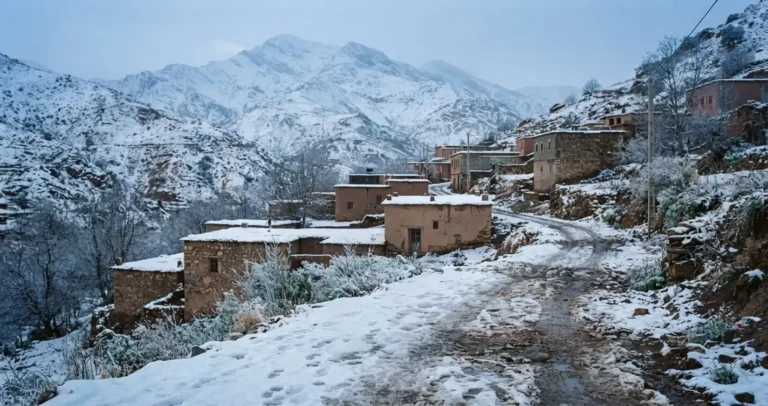
Snow remains likely in the High Atlas above roughly 2,000 metres, and it can fall in the Middle Atlas around Ifrane. Oukaïmeden often still has snow in February, but conditions vary from year to year. The main tourist cities, including Marrakech, Fes and Casablanca, do not normally see snow.
Morocco in February: Weather by Region
Marrakech and Central Morocco
This is the sunniest and warmest part of the main tourist circuit. Expect clear skies, highs around 20–21°C, and about eleven hours of daylight. Evenings fall to single digits, so a jacket is needed after dark.
Fes and Northern Morocco
Fes, Meknes and the north are cooler and wetter. Highs hover around 17°C, nights can approach 5°C, and cloud is common. Chefchaouen and Tangier are among the rainiest places, so a waterproof layer is worth carrying.
Casablanca and the Atlantic Coast
Casablanca and Rabat have a mild maritime winter, with highs around 18°C and lows near 10°C. Rain falls on about a week of the month, usually in short bursts rather than all-day downpours.
Essaouira and the Coastal Regions
Essaouira is breezy and mild. Agadir and the southern coast are usually warmer by day, often reaching about 20°C, which is why they attract winter-sun visitors. The Atlantic is cold, around 15–17°C, so beach days are more about walking than swimming.
The Atlas Mountains
The High Atlas is full winter. Days can be bright and crisp, nights fall below freezing at altitude, and snow is common on higher ground. Conditions can change quickly, so mountain plans need flexibility.
The Sahara Desert
The desert is warmer than in January. Merzouga reaches about 20°C by day under dry, clear skies, while nights fall to around 4–8°C depending on the source. Wind can lift sand, so a scarf is useful.
Best Places to Visit in Morocco in February
Marrakech
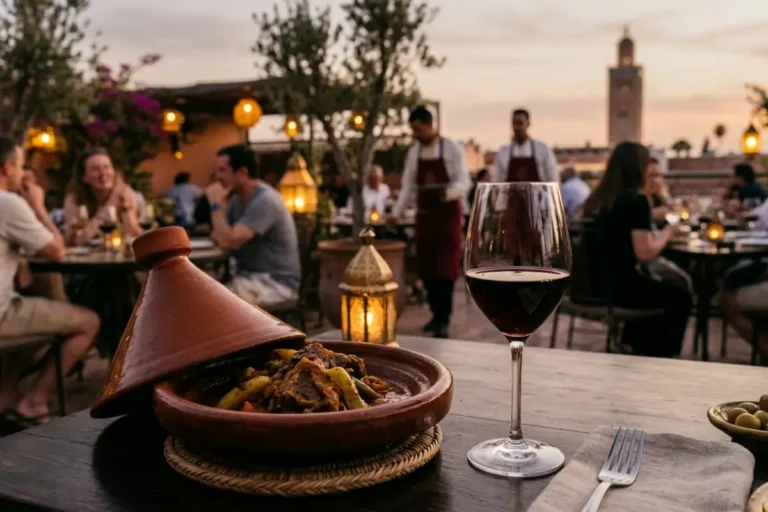
The best all-round choice. Warm afternoons suit the medina, gardens and palaces, and cool evenings suit a rooftop dinner with a layer on.
Fes
Fes is atmospheric and uncrowded in winter. Cool air makes long days in the medina more comfortable, and the madrasas and workshops are good shelter on wet days.
Chefchaouen
The blue-washed town is quieter in February. Bring waterproofs and treat any sunny spell as a bonus, since the north is often cloudy.
Essaouira
Best for slow walks along the ramparts and the beach, wrapped up against the wind, followed by grilled fish at the port.
The Atlas Mountains
The High Atlas offers snow-capped scenery and crisp walking in the lower valleys. For higher routes, winter equipment and a qualified guide are essential.
The Sahara Desert
February is a very good month for the dunes: warm days, clear skies and fewer visitors than in spring. Plan at least two nights in the region.
Best Things to Do in Morocco in February
Explore Morocco’s Imperial Cities
Marrakech, Fes, Meknes and Rabat are comfortable for walking in February. Pair outdoor sights with indoor ones such as museums and madrasas to cover rainy spells.
Visit the Desert
Spend a night in a camp near Merzouga for dune walks, camel rides and stargazing. Nights are still cold, so confirm bedding and heating before you book.
Hike in the Atlas Mountains
Valleys around Imlil offer cold, bright walking below the snowline. Higher routes are winter mountaineering and need proper gear and local guidance.
Explore the Medinas and Souks
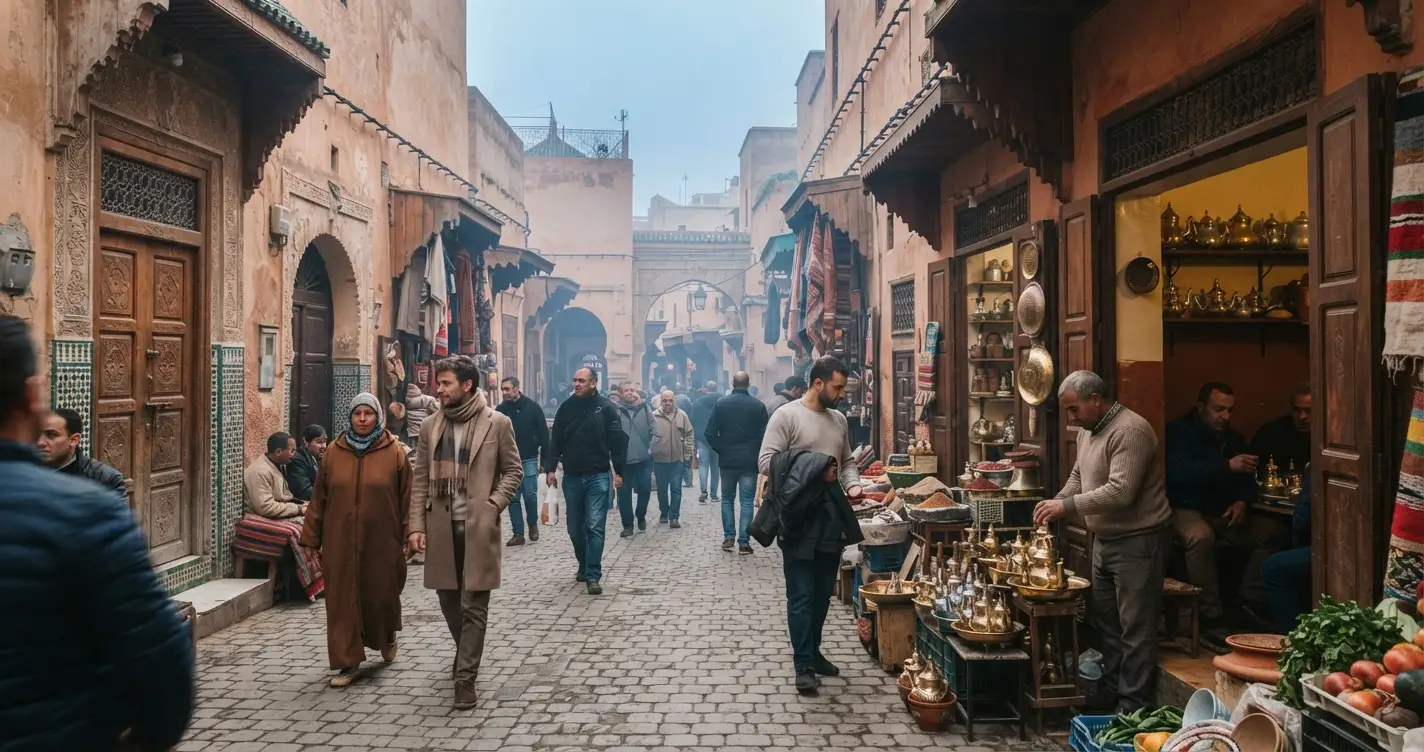
Winter makes long hours in the medinas more pleasant, and shopping for ceramics, leather and spices is easier without summer heat.
Enjoy Morocco’s Winter Landscapes
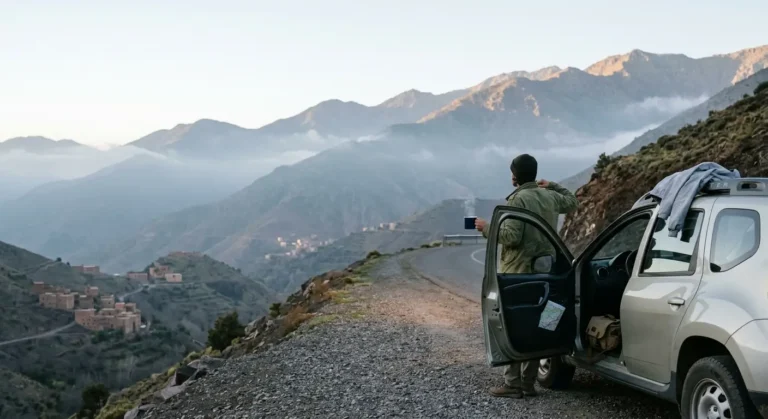
Between snow-capped peaks, green hillsides after winter rain and almond blossom in the Anti-Atlas, February is one of the most scenic months for a road trip.
What to Wear in Morocco in February
Clothes for Warm Days
Afternoons in the south and centre reach about 20°C, so light long-sleeved tops, T-shirts and trousers work well. Loose, modest clothing suits the medinas and keeps you comfortable in the sun.
Clothes for Cold Evenings
Add a sweater or fleece and a warm jacket for evenings, when temperatures can drop to single digits. A scarf is useful and easy to carry.
What to Wear in the Mountains and Desert
In the Atlas and at desert camps, add thermal layers, a hat and gloves. The desert can be warm at noon and cold at night, so layers you can remove matter more than one heavy item.
Footwear for February Travel
Comfortable closed shoes with good grip suit cobbled medina lanes, which can be slippery after rain. Waterproof boots help in the mountains and in the wetter north.
What to Pack for Morocco in February
Essential Clothing Layers
Pack thermal base layers, long-sleeved tops, a sweater or fleece, trousers, and a warm jacket. Think in layers rather than in outfits, because a single day can span mild sunshine and a cold night.
Rain Protection
A light waterproof jacket or compact umbrella is worth carrying, especially for Fes, Casablanca and the north.
Sun Protection
February sunshine is stronger than many visitors expect. Pack sunscreen, sunglasses and a hat, particularly for the desert and mountains.
Travel Essentials
Bring a plug adapter for Moroccan sockets, a power bank, a reusable water bottle, some Moroccan dirhams for small purchases and a day bag for layers you will take off and on.
Is Morocco Cold in February?
It is cool rather than cold in most places. Days are mild, from about 17°C in Fes to 20–21°C in Marrakech, and often sunny. Nights are the cold part, falling to roughly 5–10°C in the cities and lower in the desert and mountains. Houses and riads can feel cooler than the outside air, so ask about heating when you book.
Does It Rain in Morocco in February?
Yes, but not constantly. Rain is most likely on the Atlantic coast and in the north, and January and February are among the wetter months there. Marrakech sees roughly six to eight rainy days. Showers tend to be short, and sunshine usually returns. Pack a light waterproof and keep a flexible plan for the north.
Is the Sahara Desert Worth Visiting in February?
Yes. February is one of the better months for the Sahara, with warmer days than January, clear skies and fewer visitors than in spring. The main factor to plan around is the cold at night.
Desert Temperatures at Night
Nights near Merzouga typically fall to around 4–8°C, with some sources suggesting lower. Dry air lets heat escape quickly once the sun goes down.
What to Expect From a February Desert Camp
Expect a camel or 4×4 ride, a sunset on the dunes, dinner around a fire and stargazing. Comfort varies between camps, so ask about thick blankets, heated tents and whether a room is available if the night turns out too cold.
What to Pack for a Sahara Trip
Pack a warm jacket, thermal layers, a hat and gloves, a scarf for wind and sand, sunscreen, sunglasses and a headlamp.
Morocco in February: Crowds and Prices
Is February a Busy Month in Morocco?
February is generally quieter than spring and autumn. Popular medinas and sights are comfortable to visit, and tour groups are smaller. Crowds can rise during European school half-term weeks and around festivals.
Accommodation Prices
Rates are often lower than in peak seasons, and it can be easier to negotiate. Prices vary a lot by city and property, so compare before booking.
Tour and Activity Prices
Operators often have more availability and flexibility. For desert and mountain tours, check what is included, such as heated tents, blankets and winter equipment.
When February Can Be More Expensive
Prices can rise in small towns during festivals such as the almond blossom celebration, and around European school holidays. Accommodation in Tafraout can fill up quickly at that time.
February Festivals and Events in Morocco
Seasonal Cultural Events
In 2027, Ramadan is expected to begin around 8 February and run for about a month, with the exact start confirmed by moon sighting. Hotels, riads, monuments and tours generally continue to operate. Some local restaurants in smaller towns close or reduce hours during the day, and evenings are lively once the fast is broken. Because the Islamic calendar moves about ten days earlier each year, Ramadan falls in different parts of the winter in different years.
Amazigh and Regional Celebrations
The Almond Blossom Festival in Tafraout, in the Anti-Atlas, usually takes place in February and celebrates the blooming of the almond trees with music, dance and local products. Tafraout sits at about 1,200 metres and is a long drive from Agadir, so allow time to get there. Amazigh New Year, Yennayer, is celebrated in mid-January, so February visitors miss it.
How to Check Festival Dates Before Traveling
Festival dates can move, since some follow the bloom or the lunar calendar. Check with local tourist offices, official announcements and your accommodation shortly before travelling. For Ramadan, wait for the official start date announced by Morocco’s Ministry of Endowments and Islamic Affairs.
Practical Travel Tips for Morocco in February
Plan for Different Temperatures
A single trip can mix warm Marrakech afternoons with cold desert nights and wet northern days. Pack layers and check forecasts for each stop.
Book Mountain and Desert Trips Carefully
Choose operators who can explain what winter conditions mean for camps, vehicles and equipment, and confirm what is included before paying.
Check Weather Conditions Before Long Journeys
Check the forecast from Morocco’s national weather service before mountain or long inland drives. Rain and snow can slow routes quickly.
Allow Extra Time for Mountain Routes
Passes such as Tizi n’Tichka climb above 2,000 metres and can be affected by snow or ice. Avoid tight flight or train connections right after a mountain drive.
Plan Indoor and Outdoor Activities
Keep a mix of indoor options such as museums, madrasas, hammams and cafés, and swap them with outdoor sights depending on the weather that day.
Frequently Asked Questions About Morocco in February
Is February a good time to visit Morocco?
Yes. Morocco in February offers mild days in the south and centre, quieter medinas, snow in the Atlas and warm, clear days in the Sahara. The main trade-offs are cool nights, rain in the north and, in 2027, the start of Ramadan around 8 February. With layers, a rain jacket and a flexible plan, it is a rewarding month.
Is Morocco warm in February?
Days are mild and often sunny, around 17–21°C in the main cities and about 20°C in the Sahara, but it is not warm in the summer sense. Evenings and nights are cool to cold, so layers and a warm jacket are needed. Mornings can feel crisp before the sun warms the air.
What is the weather like in Marrakech in February?
Marrakech is one of the warmest and sunniest places in Morocco in February. Highs are around 20–21°C, nights fall to roughly 7–8°C, and there are about seven hours of sunshine a day. Rain is limited, around 35–40 mm on six to eight days. Bring a jacket for the evening.
Does it snow in Morocco in February?
Yes, in the High Atlas and sometimes around Ifrane in the Middle Atlas, especially above about 2,000 metres. Oukaïmeden often still has snow, though conditions vary. The main cities, including Marrakech, Fes and Casablanca, do not normally get snow.
Is February a good time to visit the Sahara Desert?
Yes. Daytime temperatures near Merzouga are around 20°C with clear skies, and there are fewer visitors than in spring. Nights are cold, around 4–8°C, so confirm bedding or heating at your camp and pack warm layers.
Is February rainy in Morocco?
It can be, mainly in the north and on the Atlantic coast. Casablanca and Fes receive around 55 mm over six to seven days, while Marrakech receives less and the Sahara is almost dry. Showers are usually short, and a light waterproof is enough for most trips.
What should I wear in Morocco in February?
Wear layers: a base layer, a sweater or fleece, and a warm jacket for evenings. Add a light waterproof, comfortable closed shoes with good grip, and a hat and gloves for the desert and mountains. Loose, modest clothing suits the medinas.
Is Morocco expensive in February?
February is generally one of the better-value months, with lower demand than spring and autumn. Prices can rise during festivals, European school holidays and for winter-ready desert camps, so compare options and book popular places early.
Can you swim in Morocco in February?
Most visitors will find the sea too cold. The Atlantic is around 15–17°C, and the wind adds to the chill. Some hotels have heated pools, and Agadir and the south are the warmest places, but February is better for walking beaches than swimming.
How many days do you need in Morocco in February?
Seven to ten days is a comfortable length for a first trip, allowing time for Marrakech, one other imperial city and a desert or mountain stop. A shorter trip of four to five days works well if you focus on Marrakech and one region. Add buffer time for mountain roads and weather.
Final Thoughts on Visiting Morocco in February
Morocco in February rewards travellers who value quiet streets, mild sunny days and landscapes that range from snow to dunes to almond blossom. It is not a beach month, and the nights are cold, but with layers, a rain jacket and a flexible itinerary it is one of the most comfortable times to see the country. If your dates overlap with Ramadan, check the official start date shortly before you travel and plan your days around it.