Camel Trek in Morocco (2026): Complete Guide to Camel Rides, Desert Camps & What to Expect
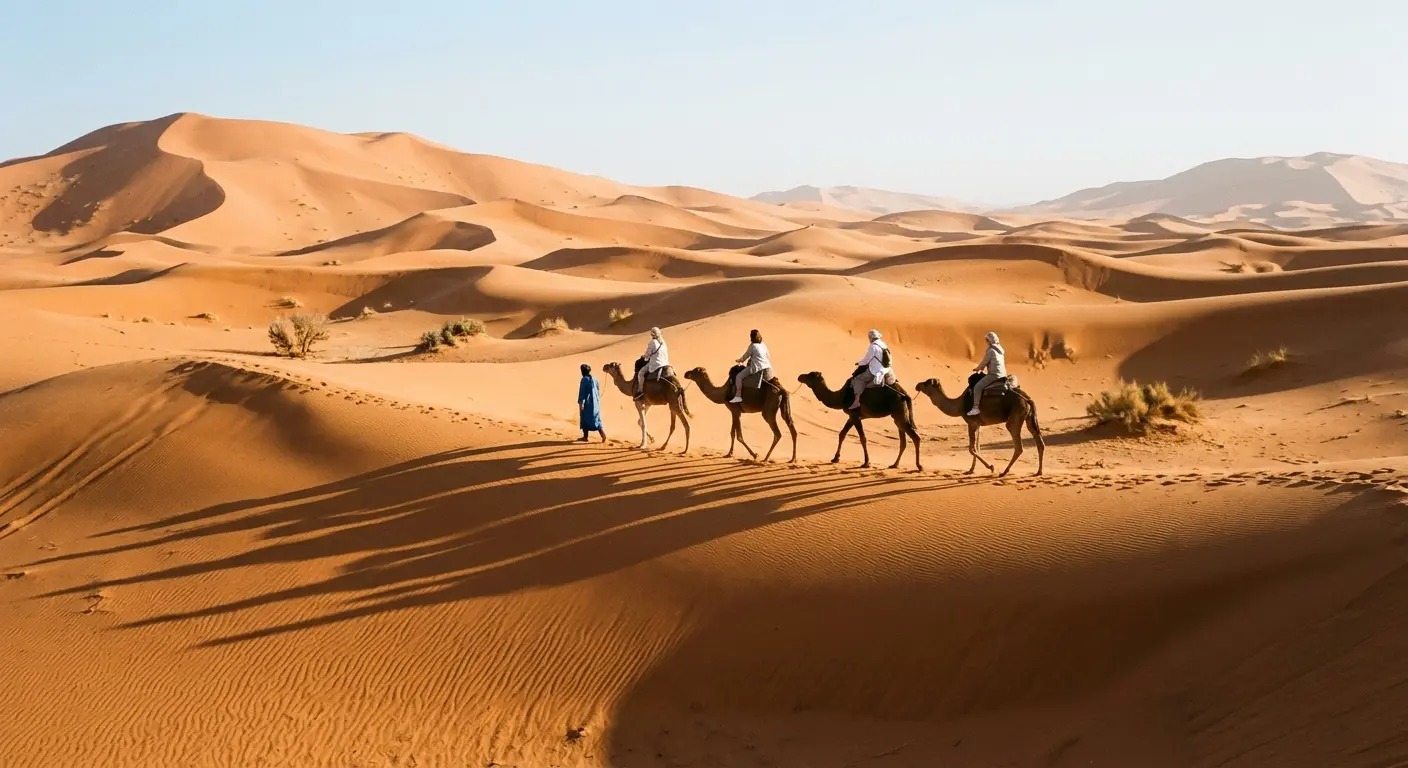
A camel trek in Morocco is one of the most recognizable ways to experience the country’s desert landscapes. In the Sahara, you can ride a dromedary across the dunes at sunset, reach a desert camp, spend the night under a dark sky, and return the following morning as the sun rises. But camel trekking is not one single experience. A short sunset ride near a desert camp is very different from a longer trek, and Merzouga offers a different setting from Zagora or the more remote Erg Chigaga area.
This guide explains what a camel trek in Morocco is really like, where to go, how long to ride, what it costs, what to wear, what to pack, how comfortable it is, and how to choose a responsible desert experience.
Camel Trek in Morocco at a Glance
How Camel Treks Work
A typical camel trek begins near the edge of the desert or at a meeting point close to your camp or accommodation. You meet the camel caravan, receive basic instructions, and mount the dromedary one at a time. The camel normally kneels while you get on. Once everyone is seated, the animal stands up, usually raising its rear legs first and then its front legs.Once the caravan starts moving, the pace is slow. You generally do not control the camel yourself. A camel handler or guide leads the group along a planned route through the dunes.
How Long Does a Camel Trek Take?
The length depends on the experience you book. A short camel ride can last around 30 minutes to an hour. A classic Sahara experience usually involves approximately one to one and a half hours on the camel each way, particularly when the ride is being used to reach an overnight camp.
Where Camel Treks Take Place in Morocco
- Merzouga and Erg Chebbi : the classic choice for large Sahara dunes and overnight desert camps.
- Zagora and the Draa Valley : useful for travelers following a southern Morocco route and looking for a desert experience closer to Ouarzazate.
- Erg Chigaga : a more remote desert setting reached from the M’Hamid area.
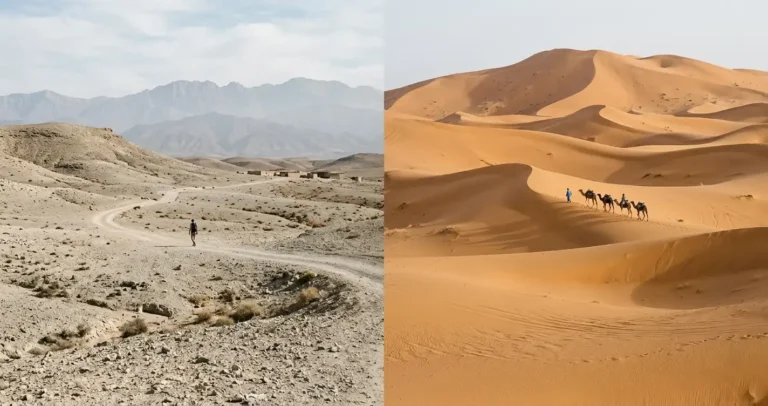
- Agafay : a rocky desert landscape near Marrakech rather than the Sahara’s great sand-dune environment.
The distinction matters. If your main goal is to ride a camel through large sand dunes, Merzouga is the more direct match.
Where to Go for a Camel Trek in Morocco
Merzouga and the Erg Chebbi Dunes
Merzouga is the destination most travelers have in mind when they picture a camel trek in Morocco. The village sits beside Erg Chebbi, a major dune field in southeastern Morocco. From the desert edge, camel caravans head into the dunes toward camps located deeper in the sandy landscape.
Zagora and the Draa Valley
Zagora provides another option, particularly for travelers exploring southern Morocco from Marrakech through Ouarzazate and the Draa Valley. The landscape around Zagora is different from the large dune environment associated with Erg Chebbi. The region combines desert landscapes with the palm-filled Draa Valley and surrounding rocky terrain. Camel rides and overnight desert experiences are available in the area.
Erg Chigaga and the More Remote Desert
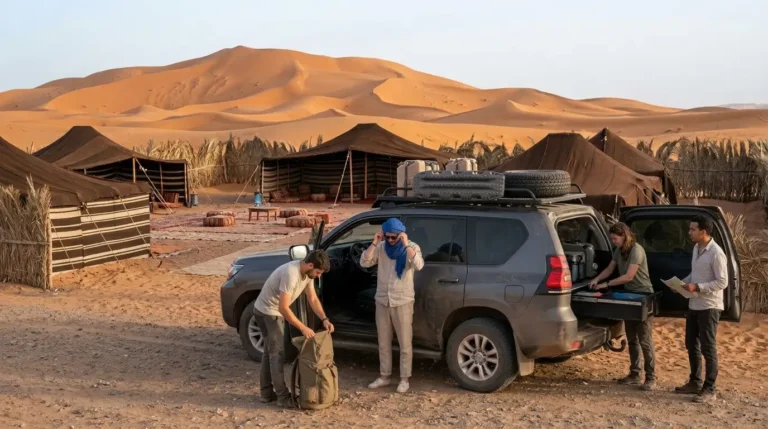
Erg Chigaga, reached from the M’Hamid area, is another option for travelers interested in a more remote desert setting. The logistics are different from Merzouga, and the journey itself becomes part of the experience. Desert excursions in this area can involve 4×4 transport, camel trekking and overnight camps. This option is better suited to travelers deliberately building a southern desert adventure rather than simply adding a quick camel ride to a Morocco itinerary.
What to Expect During a Moroccan Camel Trek
Meeting the Camel Caravan
Your guide will normally introduce you to the camels before the ride begins. The animals used in Morocco are dromedaries, meaning they have one hump.You may be asked to wait while the caravan is organized. This is normal. The group needs to be arranged before everyone leaves, especially when several travelers are riding together.
Getting on and Off the Camel
Mounting is usually more intimidating than the actual ride. The camel kneels down, allowing you to climb onto the saddle. When it stands, its body rises sharply, which can make you feel as though you are going to slide forward or backward. Hold on firmly and follow the guide’s instructions. The same applies when getting off. Wait until the camel has completely knelt before attempting to dismount.
Riding Across the Dunes
Once the caravan starts moving, the experience becomes much calmer. A camel’s walking motion is a steady rocking movement. You will feel your body move with every step, particularly when traveling over uneven sand. The pace is deliberately slow. The purpose is not to cover large distances quickly but to experience the landscape.
Reaching the Desert Camp
If you have booked an overnight trek, the caravan normally arrives at camp around sunset. Depending on the camp, you may have time to climb a nearby dune, take photographs, have tea and settle into your accommodation before dinner. Camp standards vary considerably. Some camps are simple and traditional, while others offer private tents, proper beds, electricity and private bathrooms. Do not assume that every “desert camp” provides the same facilities. Check what is actually included before booking.
Sunset and Evening in the Desert
Sunset is usually one of the main reasons people choose a camel trek. Once you arrive at camp, you can watch the light change across the dunes rather than viewing the desert through a vehicle window. After dark, the experience changes completely. Dinner, tea, conversation and music may form part of the evening, depending on the camp. The surroundings are usually much quieter than Morocco’s cities, which is one of the most distinctive parts of staying overnight.
Sunrise and the Journey Back
The next morning, the desert changes again. The dunes become more defined as the sun rises, and the cooler early hours are generally more comfortable for walking or riding. If your package includes a return camel trek, you will usually leave camp after sunrise and head back toward the desert edge. You do not necessarily need another camel ride if you know you will find it uncomfortable. Some desert packages can arrange alternative transport, so ask before booking rather than assuming.
How Long Should Your Camel Trek Be?
Short Camel Rides
Short rides are useful if you are curious about the experience but do not want to spend a long time on a camel. They are also practical for families or travelers with limited time. A shorter ride gives you the basic experience of mounting, riding through the landscape and getting off without committing to an overnight stay.
Sunset Camel Treks
A sunset camel trek is one of the simplest ways to experience the desert. The timing gives you the changing light of late afternoon and avoids the strongest heat of the middle of the day. This format works particularly well if you are already staying near the desert and only want a few hours of activity.
Overnight Camel Treks
The overnight trek is the classic Sahara experience. You ride into the dunes, spend the evening at a desert camp and return the following morning. For a first visit to Merzouga, this format gives you considerably more than the camel ride itself. You experience the dunes at sunset, spend several hours in the desert after dark and see them again at sunrise.
How Much Does a Camel Trek in Morocco Cost?
What Determines the Price?
There is no single nationwide price for camel trekking. Cost depends on the location, ride duration, group size, season, accommodation and whether the camel ride is sold independently or as part of a complete desert package. Treat online price ranges as reference points rather than fixed tariffs.
Shared Camel Treks
Shared rides are normally the simplest option for solo travelers and couples who do not need a private experience. You ride as part of a group, usually following the same route and schedule. The advantage is straightforward: the cost is shared among several travelers. The trade-off is less flexibility. You may have limited control over departure times, stops and the pace of the group.
Private Camel Treks
A private trek gives you more control over the experience. This can be useful for couples, families or travelers with specific timing requirements. It may also make sense if you want to spend more time photographing the landscape or prefer not to join a large group.
What Is Usually Included?
Ask exactly what your price covers. Depending on the package, it may include:
- Camel ride
- Guide or camel handler
- Desert camp
- Dinner
- Breakfast
- Mint tea
- Transportation to or from the camp
- Luggage storage
- Sandboarding equipment
Not every package includes all of these.
A low advertised price can become much less attractive if transportation, meals or accommodation are charged separately.
Extra Costs to Watch For
Before paying, ask about anything that is not included. This is particularly important with private transfers, upgraded camps and activities added after arrival. A clear written description of the package is preferable to relying on a verbal promise.
What to Wear for a Camel Trek
Clothing for the Desert
Wear comfortable, loose-fitting clothing that protects you from the sun. Long trousers are generally more practical than shorts because your legs can rub against the saddle. A lightweight long-sleeved shirt can also provide useful protection during the daytime.
Shoes and Footwear
Comfortable closed shoes are usually the easiest option. You will probably walk on sand at some point, particularly around the camp or when climbing a dune. Heavy hiking boots are not always necessary for a standard camel trek. Lightweight shoes that you can comfortably walk in are often enough.
Sun Protection
Bring sunglasses, sunscreen and a hat or head covering. The desert offers little natural shade, and reflected sunlight from the sand can make exposure feel stronger than expected. A scarf can also be useful for protection from sun and blowing sand.
What to Wear When Temperatures Drop
Do not dress only for the afternoon. Desert temperatures can change significantly after sunset, particularly outside the warmer months. Bring an extra layer even if the afternoon feels hot. In winter, proper warm clothing becomes much more important, especially if you are sleeping in a tent.
What to Pack for a Camel Trek
Water and Hydration
Carry drinking water unless your tour explicitly provides it. Camel trekking is slow, but that does not mean you will not become dehydrated. Drink regularly rather than waiting until you feel extremely thirsty.
Camera and Phone
A camel trek is an excellent opportunity for desert photography, but sand is the enemy of electronics. Keep your phone or camera protected when you are not using it. A small sealed pouch or protective bag can help prevent sand from getting into ports and moving parts.
Power Bank
A power bank is useful for overnight desert camps. Some camps provide electricity, while others have limited charging facilities. Do not assume that you will have a convenient socket beside your bed.
Small Overnight Bag
If your trek includes a camp, take only what you need for the night. A small backpack is easier to manage than a large suitcase. Your main luggage can often remain at your hotel, riad or tour operator’s base, depending on your itinerary.
Is a Camel Trek Comfortable?
What the Ride Feels Like
Camel riding is not completely effortless. The animal’s movement creates a repetitive rocking motion, and the saddle puts pressure on areas of your body that may not be accustomed to it. For a first-time rider, the experience is usually more physically noticeable than expected.
Getting Used to the Camel
The first few minutes can feel strange. Once you understand the rhythm of the camel’s movement, the ride generally becomes easier. Relax your body rather than trying to remain completely rigid.
Soreness After the Ride
Some soreness after a longer ride is normal, especially if you rarely ride horses or camels. This is another reason not to assume that a longer trek is automatically a better experience. If you are concerned about comfort, a shorter ride may be more enjoyable.
Who May Find Camel Trekking Difficult?
People with significant back, hip, knee or balance problems should think carefully before booking. The mounting and dismounting movements are particularly important to consider. If you are unsure whether you can safely ride, discuss your situation with the operator before the trek rather than waiting until the camel is already kneeling in front of you.
Camel Trekking With Children
Is Camel Trekking Suitable for Children?
Children can participate in camel experiences, but suitability depends on the child’s age, size, confidence and ability to follow instructions. There is no universal rule that makes every camel trek appropriate for every child. Ask the specific operator about its age and safety requirements before booking.
Age and Size Considerations
Younger children may need closer supervision. The important moments are mounting, dismounting and remaining stable while the camel moves. Parents should also consider the length of the ride and the weather.
Private vs. Shared Treks for Families
A private trek can provide greater flexibility for families. If a child becomes tired or uncomfortable, the group does not necessarily have to follow a fixed shared schedule.
Keeping Children Comfortable in the Desert
Bring water, sun protection, suitable clothing and a warm layer for the evening. Do not underestimate how quickly conditions can change after sunset.
Camel Trekking Without Riding a Camel
Walking Through the Dunes
You do not have to ride a camel to experience the Sahara. Walking through the dunes can be a much more comfortable alternative for travelers who dislike riding. You can still watch sunset, explore the surroundings and reach a desert camp on foot where appropriate.
4×4 Desert Experiences
4×4 excursions provide another way to explore desert landscapes. They are particularly useful for longer distances or for travelers who want to visit areas that are not practical to reach on foot.
Desert Camps Without Camel Rides
Some desert packages allow guests to reach the camp by vehicle. This can be a good option for anyone who wants the overnight desert experience but does not want to ride an animal.
How to Ask for an Alternative
Tell the operator before booking that you do not want to ride. Do not wait until the day of departure. The operator can then explain which transport options are available for your particular camp and itinerary.
Choosing a Camel Trek and Desert Camp
Check the Group Size
Ask how many people will be riding together. A small group can make the experience feel less rushed and may make it easier to communicate with the guide.
Check the Camel Ride Duration
Do not book based only on the phrase “camel trek.” Ask how long you will actually spend on the camel. A package described as a desert trek could involve a relatively short ride combined with a long overnight stay.
Understand the Camp Location
Ask where the camp is located and how you reach it.
The location affects the experience, particularly if you want to spend time surrounded by dunes rather than close to roads or built-up areas.
Compare Standard and Luxury Camps
Standard camps generally focus on the basic desert experience. Luxury camps may provide private tents, proper beds, private bathrooms and additional facilities. Neither automatically provides a better desert landscape. The important difference is the level of accommodation and service.
Best Time for a Camel Trek in Morocco
Spring
Spring generally offers more comfortable conditions than the hottest part of summer. The desert can still become hot during the day, so morning and evening rides remain preferable.
Summer
Summer can be extremely hot in Morocco’s desert regions. Long daytime camel rides are not ideal in intense heat. If traveling during summer, carefully consider the timing of the ride and prioritize early morning or late afternoon experiences.
Autumn
Autumn is another attractive period for desert travel.
Temperatures generally become more manageable as summer ends, although conditions vary throughout the season.
Winter
Winter can provide pleasant daytime conditions but cold desert nights. Do not make the mistake of packing only lightweight summer clothing because you are visiting the Sahara. A winter overnight camp requires warm layers.
Best Time of Day for a Camel Ride
For most travelers, early morning and late afternoon are the most comfortable times. Sunset rides are particularly popular because the changing light transforms the dunes. Morning rides provide cooler conditions and the opportunity to see the desert around sunrise.
Camel Trek Photography Tips
Photographing the Caravan
Avoid taking every photograph from the same position. Wait for the caravan to move across a dune ridge, then use the shapes of the dunes to create depth. A line of camels against the horizon can produce a stronger image than a close-up photograph of the animal.
Sunset and Sunrise
The strongest light is usually around the beginning and end of the day. Keep your camera ready before sunset rather than waiting until the sun is already disappearing. The same applies in the morning.
Protecting Your Camera From Sand
Keep lenses and cameras covered when you are not photographing. Do not change lenses unnecessarily in windy conditions. A small cleaning cloth and protective pouch are useful additions to your packing list.
Getting Photos Without Interrupting the Trek
Tell your guide if you want to stop for photographs. Do not wander away from the group without telling anyone. The desert can look simple from a distance, but once you move between dunes, it is easy to lose your bearings.
Camel Trek in Morocco: Common Mistakes to Avoid
Booking the Cheapest Tour Without Checking the Details
The cheapest option may not include the same accommodation, transport or ride duration as another package. Compare inclusions rather than prices alone.
Wearing the Wrong Clothes
Shorts, uncomfortable shoes and insufficient sun protection can make an otherwise enjoyable ride unpleasant. Dress for both the ride and the evening.
Bringing Too Much Luggage
A camel trek is not the time to carry a large suitcase. Keep the items you need for the desert in a small bag.
Underestimating the Desert Temperature
The Sahara is not permanently hot. Days can be very warm while nights can become surprisingly cold, particularly during winter.
Expecting the Camel Ride to Be Completely Comfortable
A camel is not a padded tour vehicle. The movement and saddle can cause discomfort, especially on longer rides. Go into the experience knowing this.
Forgetting to Ask What the Price Includes
Always clarify what is included before paying. A complete desert package and a one-hour camel ride are completely different products.
Frequently Asked Questions About Camel Treks in Morocco
Is camel trekking in Morocco worth doing?
A camel trek can be a memorable way to experience Morocco’s desert landscapes, particularly when combined with sunset, an overnight camp and sunrise. The ride itself is only one part of the experience. If you are mainly interested in the landscape and desert atmosphere, you can also consider walking or 4×4 excursions.
How long is a camel ride in the Sahara?
A standard ride to a desert camp often takes around one to one and a half hours, although shorter and longer experiences are available.
Is camel trekking difficult?
The ride does not require advanced skills, but it can be physically uncomfortable. The hardest moments for many first-time riders are mounting, dismounting and adjusting to the camel’s rocking movement.
Is camel trekking safe?
Camel trekking is a guided activity, but it still involves an animal and uneven terrain. Follow your guide’s instructions, hold on when the camel stands or kneels, stay hydrated and tell the guide immediately if you feel unwell or uncomfortable.
Can I do a camel trek without staying overnight?
Yes. Short and sunset camel rides are available, depending on the destination and operator. An overnight trek is not required if you simply want to experience riding through the dunes.
Can I visit the Sahara without riding a camel?
Yes. You can explore desert landscapes on foot, by 4×4 or through other activities. A camel ride is an option, not a requirement for experiencing the desert.
Which is better for camel trekking: Merzouga or Zagora?
They serve different travel plans. Merzouga is associated with Erg Chebbi’s large dunes and is particularly suitable if the classic Sahara dune experience is your priority. Zagora is useful for travelers following a southern Morocco route through Ouarzazate and the Draa Valley.
Do I need to book a camel trek in advance?
For a basic short ride, availability may be easier to find, but booking ahead is sensible for overnight experiences, private groups and specific camps. It also allows you to confirm exactly what is included.
One Comment
Comments are closed.