Best Time to Visit Marrakech (2026): 12 Essential Tips for the Perfect Trip
Figuring out the best time to visit Marrakech comes down to one simple tension: the city’s most comfortable weather lines up almost exactly with its busiest, priciest weeks. Get the timing right, though, and Marrakech rewards you with warm days, cool evenings, and a medina that’s genuinely pleasant to explore on foot rather than something to survive.
This guide breaks the year down season by season and month by month, with real temperatures, crowd patterns, and the festivals worth planning around, so you can pick dates that actually suit your trip rather than defaulting to whichever month everyone else recommends.
Best Time to Visit Marrakech: The Short Answer
When Is the Overall Best Time?
March through May and late September through November are Marrakech’s sweet spot, with daytime highs generally between 22-28°C (72-82°F), cool evenings, and manageable rainfall. These shoulder-season windows deliver the city at its most walkable, though they’re also when prices and crowds both climb, so booking ahead matters more here than in any other stretch of the year.
When Should You Avoid Visiting?
July and August are the toughest months, with daytime highs regularly reaching 36-40°C (97-104°F) and occasional spikes well beyond that. It’s not an impossible time to visit, but it demands a different pace, early mornings, shaded afternoons, and air-conditioned breaks, rather than the leisurely all-day wandering that spring and autumn allow. Travelers with flexible dates and no strong reason to visit in peak summer are generally better served picking almost any other month instead.
Understanding Marrakech’s Climate
Does Marrakech Have Four Seasons?
Marrakech has a semi-arid climate with genuinely distinct seasons, though they lean more toward “hot and dry” versus “mild and occasionally wet” than the four crisp seasons found further north in Europe. Summers are long, intense, and almost rain-free, while winters stay mild by day but turn surprisingly cool after dark. The transition between seasons is also gradual rather than sharp, meaning late spring often feels like early summer, and late summer can still carry real heat well into September.
Average Temperatures Throughout the Year
Daytime highs range from around 19°C (66°F) in January to 36°C (97°F) in July, the city’s hottest month, while nighttime lows swing from roughly 5-6°C (41-43°F) in January to 20°C (68°F) in July and August. Rainfall is modest year-round, with November typically the wettest month and July the driest, and total annual rainfall sits around 250-280mm, a fraction of what most European cities receive.
Spring (March–May)
Weather
Spring warms steadily from a comfortable 23°C (73°F) in March to 28°C (82°F) by May, with evenings staying cool enough for a light jacket throughout the season. Rainfall is generally light and brief, with the occasional shower rarely disrupting a full day of sightseeing.
Crowds
Spring is Marrakech’s busiest shoulder season, particularly April, as European school holidays and generally excellent weather converge on the same few weeks. Riads and popular restaurants can book up well ahead during this stretch.
What to Pack
Breathable layers, a light jacket for evenings, comfortable walking shoes for the medina, and sun protection, since even mild spring days carry strong midday sun. A scarf doubles as sun cover and a quick layer for cooler mornings.
Best Activities
Full days of medina and souk exploring, rooftop dinners, and day trips into the Atlas foothills, all comfortable without the summer’s need for a midday retreat. Spring is also a strong window for combining Marrakech with an early desert excursion before the Sahara’s heat builds.
Summer (June–August)
How Hot Does Marrakech Get?
July is the hottest month, averaging 36°C (97°F) by day, with genuine extremes occasionally pushing past 42-44°C (108-111°F). Nights offer real relief, cooling to around 20°C (68°F), which makes early morning and late evening the most comfortable windows for anything active.
Is Summer Too Hot?
Not unworkable, but it demands a different rhythm, sightseeing in the early morning or after 5pm, air-conditioned breaks at midday, and treating the heat as a genuine planning factor rather than an inconvenience. Staying well hydrated and pacing outdoor time carefully makes the difference between an exhausting day and a genuinely enjoyable one.
Who Should Visit in Summer?
Heat-tolerant travelers, those prioritizing lower prices and thinner crowds at major sites, and anyone splitting their trip with a coastal add-on like Essaouira, which stays noticeably cooler than Marrakech throughout summer. Summer also suits travelers whose schedule simply doesn’t allow for another season, since with the right pacing, the city remains genuinely rewarding even at its hottest.
Autumn (September–November)
Weather
September still carries late-summer warmth (31°C/88°F average), easing through October (28°C/82°F) into a comfortable 23°C (73°F) by November, alongside the year’s highest rainfall. Even November’s rain tends to arrive as scattered showers rather than sustained downpours.
Best Outdoor Activities
Atlas Mountains day trips, extended medina walks, and rooftop evenings all suit autumn’s mild, stable conditions particularly well. It’s also a strong season for a Sahara excursion, since desert temperatures cool into a genuinely comfortable range by October and November.
Why Many Travelers Prefer Autumn
Autumn mirrors spring’s comfort without quite matching its crowd levels or prices, making October and November a favorite among repeat visitors and anyone prioritizing value alongside good weather. The soft, warm light in late autumn afternoons is also a draw for photographers specifically.
Winter (December–February)
Is Marrakech Warm in Winter?
Daytime temperatures stay mild, generally 19-20°C (66-68°F), but evenings turn genuinely cold, often dropping to 5-8°C (41-46°F), and riads with open courtyards can feel considerably colder indoors than the daytime forecast suggests. Packing a proper warm layer for winter evenings is worth doing regardless of how mild the days look on paper.
Can You Swim?
Outdoor pools are workable on warm, sunny winter afternoons but chilly by evening, most hotels don’t heat their pools, so a winter dip is a fair-weather-dependent activity rather than a daily certainty. Riads with smaller, sheltered courtyard pools tend to hold warmth slightly better than larger open-air hotel pools.
Visiting During Christmas & New Year
Late December is a genuine peak period for Marrakech, with European holidaymakers filling riads well in advance, booking several months ahead is worth it for this specific window. Prices during this stretch can rival or exceed spring’s peak rates, despite winter’s cooler evenings.
Best Time to Visit Marrakech for…
Sightseeing
Spring and autumn both deliver ideal walking conditions for the medina, palaces, and gardens without summer’s heat forcing a midday pause, making either season the safest default for a first-time, sightseeing-heavy visit.
Budget Travelers
January, February, and parts of summer offer the lowest accommodation rates and thinnest crowds, trading some weather comfort for genuine savings on riads and guided tours alike.
Luxury Travelers
Winter’s mild days and quiet riads suit a relaxed luxury stay well, particularly for travelers prioritizing a peaceful medina over the busiest festival weeks, when even five-star properties feel more crowded.
Couples
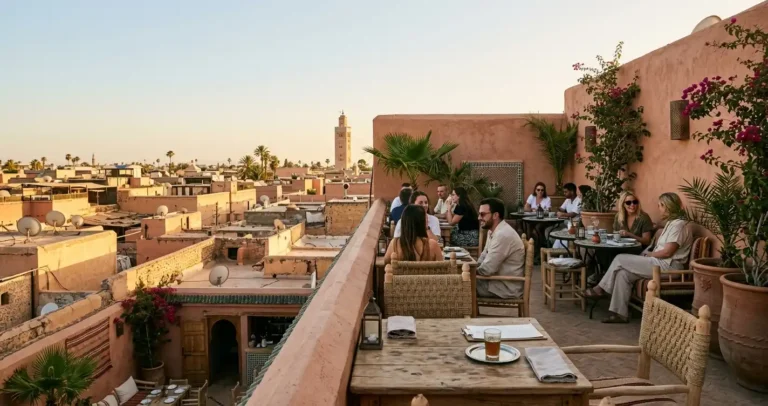
Spring and autumn evenings, warm enough for a rooftop dinner, cool enough to be comfortable, suit romantic itineraries especially well, and both seasons pair nicely with a short Atlas or desert add-on.
Families
Spring and early autumn balance manageable heat with enough daylight for full days out, avoiding both summer’s intensity and winter’s chilly evenings, which can be harder to manage with young children.
Solo Travelers
Autumn’s steady weather and active riad social scene make it a natural choice for solo visitors looking to meet other travelers easily, particularly around the busier October weeks.
Photography
Golden-hour light is particularly striking in winter and early spring, when the sun sits lower and the air is generally clearer after rain, giving the medina’s terracotta walls a especially warm glow in photos.
Festivals
Late spring and early summer cluster several of Marrakech’s biggest cultural moments, making late May through June worth prioritizing for festival-focused trips, alongside the Marrakech Marathon’s late-January window for a different kind of event entirely.
Desert Tours
October through April is the reliable window for a comfortable Sahara excursion from Marrakech, avoiding the punishing summer heat of the Erg Chebbi dunes, with October and April offering the best balance of warm days and mild nights.
Month-by-Month Breakdown
January
Weather: cool, 19°C (66°F) days, 6°C (43°F) nights. Crowds: moderate, boosted by the Marrakech Marathon. Prices: low outside the marathon weekend. Best activities: medina walking, day trips to snow-dusted Atlas viewpoints. Overall: ⭐⭐⭐⭐
February
Weather: mild, 20°C (68°F) days, still-cool nights. Crowds: low-to-moderate, one of the quieter months before spring’s rush. Prices: low. Best activities: garden visits, art fairs, comfortable full-day sightseeing. Overall: ⭐⭐⭐⭐⭐
March
Weather: warming, 23°C (73°F) days, still cool nights. Crowds: rising steadily through the month. Prices: rising. Best activities: medina exploring, early Atlas hikes; note Ramadan may fall in March. Overall: ⭐⭐⭐⭐⭐
April
Weather: warm and dry, 25°C (77°F) days, minimal rain. Crowds: high, Europe’s peak spring travel window. Prices: high, among the year’s priciest weeks for riads. Best activities: full-day sightseeing, rooftop dining. Overall: ⭐⭐⭐⭐⭐
May
Weather: hot approaching, 28°C (82°F) days. Crowds: high early, easing late-month. Prices: high. Best activities: gardens, early desert excursions before summer heat sets in. Overall: ⭐⭐⭐⭐
June
Weather: hot, 32°C (90°F) days. Crowds: moderate. Prices: moderate. Best activities: early-morning medina visits, pool afternoons. Overall: ⭐⭐⭐
July
Weather: very hot, 36°C (97°F) days, occasional extremes. Crowds: lower for inland Marrakech specifically. Prices: lower. Best activities: early sightseeing, coastal day trips to Essaouira. Overall: ⭐⭐
August
Weather: very hot, 35°C (95°F) days. Crowds: low for the city center, high for pool resorts. Prices: mixed. Best activities: shaded gardens, air-conditioned museums, evening souks. Overall: ⭐⭐
September
Weather: still warm, 31°C (88°F) days, cooling by month’s end. Crowds: rising. Prices: rising. Best activities: late-summer festivals, early autumn walks. Overall: ⭐⭐⭐⭐
October
Weather: comfortable, 28°C (82°F) days, minimal rain. Crowds: high, one of the year’s most popular months. Prices: high. Best activities: full sightseeing days, Atlas and desert trips. Overall: ⭐⭐⭐⭐⭐
November
Weather: mild, 23°C (73°F) days, year’s wettest month though showers are typically brief. Crowds: moderate-to-high early, easing later. Prices: moderate-to-high. Best activities: medina walks between showers, film festival season. Overall: ⭐⭐⭐⭐⭐
December
Weather: mild days (20°C/68°F), cold nights. Crowds: high around the holidays. Prices: high late-month. Best activities: rooftop mint tea, holiday markets, day trips. Overall: ⭐⭐⭐⭐
Marrakech Weather Comparison
| Season | Temperature | Crowds | Prices | Overall |
|---|---|---|---|---|
| Spring (Mar–May) | 23-28°C (73-82°F) | High | High | Excellent |
| Summer (Jun–Aug) | 32-36°C (90-97°F) | Moderate | Moderate-Low | Challenging |
| Autumn (Sep–Nov) | 23-31°C (73-88°F) | Moderate-High | Moderate-High | Excellent |
| Winter (Dec–Feb) | 19-20°C (66-68°F) | Moderate-High | Moderate-High | Very Good |
Festivals & Events
Marrakech Popular Arts Festival
A celebration of Morocco’s folk traditions, acrobats, storytellers, snake charmers, and musicians from across the country, typically held during the warmer months, though exact dates shift from year to year, so confirming the current schedule closer to your trip is worth doing before building an itinerary around it. The festival draws performers from across Morocco’s diverse regions, offering a condensed introduction to the country’s traditional arts in a single event.
Marathon de Marrakech
Held in late January since 1987, this flat, scenic marathon draws thousands of runners through Gueliz and past the city’s historic ramparts, and it’s a genuinely good period to visit for the cool weather alone, marathon or not. Accommodation near the route can book up during marathon weekend specifically, so it’s worth checking the exact date if your trip lands in late January.
Eid Holidays
Eid al-Fitr and Eid al-Adha both bring the city to a livelier, more festive rhythm, though many shops and restaurants adjust their hours, and exact dates shift roughly eleven days earlier each year on the lunar calendar, worth checking current dates rather than relying on a previous year’s timing. Eid al-Adha in particular is a major family holiday, and some businesses close entirely for a day or two around it.
Ramadan Travel Tips
Ramadan is entirely possible to travel through, and many visitors find the evening iftar atmosphere genuinely special, but daytime hours change meaningfully, with some restaurants closed until sundown. In 2026, Ramadan is expected to run from roughly mid-February to mid-to-late March, so checking current projected dates before booking a spring trip is worth the extra step, particularly if daytime dining flexibility matters to your itinerary.
Common Mistakes When Choosing Travel Dates
Visiting During Extreme Heat
Booking a July or August trip without adjusting the itinerary’s pace is the most common planning mistake, treating summer Marrakech like a spring itinerary leads to exhausted, overheated afternoons that a little schedule flexibility easily avoids. Shifting the day’s structure around the heat, rather than fighting it, is the single biggest lever for a comfortable summer visit.
Booking Too Late
Waiting to book accommodation for April, October, or the December holidays often means paying considerably more, or losing out on well-located riads entirely, since these are Marrakech’s most consistently popular weeks. Booking three to four months ahead for these specific windows is a sensible habit rather than an overcautious one.
Ignoring Ramadan
Building an itinerary without checking whether it overlaps with Ramadan can mean arriving to find favorite restaurants closed during the day, not a reason to avoid visiting, but worth planning around with adjusted meal timing and a bit more flexibility on when and where you eat.
Forgetting Temperature Swings
Packing only for daytime warmth and forgetting how cold Marrakech evenings get, particularly in winter, is a common and easily avoidable oversight, a warm layer belongs in every season’s packing list, not just winter’s, since even a warm spring or autumn day can end with a genuinely chilly evening on a rooftop terrace.
Best Time to Visit Marrakech: Frequently Asked Questions
What Is the Best Month to Visit Marrakech?
October is generally considered the single best month, combining comfortable daytime temperatures around 28°C (82°F), manageable rainfall, and enough daylight for full sightseeing days without the intensity of summer heat. March and April run a close second, offering similarly pleasant conditions with the added draw of spring blossoms in the surrounding countryside, though both come with higher prices and busier riads than the shoulder edges of the season. Ultimately, the “best” month depends on whether you’re prioritizing weather alone or weighing it against crowds and cost, since October, like April, sits firmly in Marrakech’s peak season for exactly the reasons that make it appealing.
Is Marrakech Too Hot in Summer?
For some travelers, yes, particularly those unaccustomed to extreme dry heat or planning a packed sightseeing itinerary. July and August regularly see daytime highs of 36-40°C (97-104°F), with occasional spikes higher still, making midday medina walks genuinely uncomfortable without careful pacing. That said, summer isn’t unworkable, mornings and evenings stay pleasant, pools and air-conditioned spaces offer relief, and prices drop meaningfully compared to spring or autumn. Travelers who adjust their schedule around the heat, rather than fighting it, can still have a rewarding summer trip, particularly if they pair Marrakech with a cooler coastal stop like Essaouira.
Is Winter a Good Time?
Yes, winter is a genuinely underrated season for Marrakech, offering mild, sunny days around 19-20°C (66-68°F) and considerably thinner crowds outside the December holiday peak. The trade-off is colder evenings, often dropping to 5-8°C (41-46°F), which catches some visitors off guard in riads with open courtyards and limited heating. Winter also pairs well with a day trip to the snow-dusted High Atlas, a striking contrast most visitors don’t expect from a North African desert city. For travelers prioritizing value and quiet over guaranteed warm evenings, winter is one of the better-kept secrets on Marrakech’s calendar.
What Is the Cheapest Month?
January and February, along with parts of summer excluding major holiday weeks, consistently offer the lowest accommodation rates and the most negotiating room with riads and tour operators. These months trade some weather comfort, cooler winter evenings or intense summer heat, for genuine savings, and January in particular combines low prices with still-pleasant daytime temperatures, making it one of the better value windows on the calendar rather than a pure compromise.
How Many Days Should You Stay?
Three to four days is enough to see Marrakech’s core sights comfortably, the medina, the major palaces and gardens, and a day trip into the Atlas foothills or toward the desert. Travelers combining Marrakech with the rest of Morocco often use it as a two-to-three-day anchor within a longer trip, while those focused purely on the city itself sometimes extend to five or six days to include a proper day trip to Essaouira or a multi-day Sahara excursion without feeling rushed.
Final Thoughts: Best Time to Visit Marrakech
There’s no single perfect month for Marrakech, only the trade-off that fits your priorities best: October and April deliver the most comfortable weather at the highest prices, while January and summer trade some comfort for genuine value and quiet. Whatever month you land on, pack for evening cold regardless of season, check the current Ramadan and Eid dates against your travel window, and book early if your dates fall anywhere near the city’s busiest stretches.
Get those basics right, and Marrakech delivers one of its best versions almost any time of year, the trick isn’t finding a single flawless month, it’s matching your own priorities to the trade-offs each season actually offers.