10 Common Mistakes Tourists Make in Morocco (2026): Avoid These Costly Travel Errors
10 Common Mistakes Tourists Make in Morocco can easily turn an unforgettable vacation into a frustrating experience if you’re not prepared. Fortunately, most of these mistakes are simple to avoid with a little planning. Whether you’re visiting Marrakech, exploring the Sahara Desert, or wandering through the medinas of Fes, understanding these common travel pitfalls will help you save money, respect local customs, and enjoy a much smoother trip. This guide explains the 10 Common Mistakes Tourists Make in Morocco and how to avoid each one.
10 Common Mistakes Tourists Make in Morocco: Why First-Time Visitors Struggle
Understanding Morocco’s Culture and Travel Style
Morocco sits at a genuine crossroads Arab, Amazigh (Berber), African, and Mediterranean influences all shape daily life, and the travel style that works well here doesn’t map cleanly onto a typical European city break or a beach resort holiday. Bargaining is expected in the souks but not at a supermarket; cash still dominates many transactions even as cards become more common; and the pace of a Moroccan day, especially in the medinas, rewards patience over efficiency.
Most tourist mistakes in Morocco come down to applying assumptions from other trips to a place that runs on slightly different rules, rather than any lack of preparation on the traveler’s part. A traveler who’s navigated a dozen European cities without incident can still find Marrakech’s medina disorienting on day one, simply because the underlying logic , no straight streets, no fixed prices, a different rhythm to commerce and hospitality takes a short adjustment period that has nothing to do with experience level.
1. Trying to See Too Much in One Trip
Morocco looks compact on a map, but its cities, desert, coast, and mountains are genuinely far apart by road, and cramming Marrakech, Fes, Chefchaouen, the Sahara, and the Atlas into a single week routinely means spending more time in transit than actually experiencing any one place. This is arguably the single most common planning mistake, and it tends to snowball into several of the other mistakes on this list, since rushed days leave far less room for careful decisions.
It’s a particularly easy trap to fall into precisely because Morocco’s highlights are genuinely spread across such varied terrain , the appeal of seeing everything is real, and social media itineraries showing a whirlwind week rarely mention how exhausting the pace actually was to live through.
Plan a Realistic Itinerary
A well-paced week typically covers two or three destinations rather than five or six , Marrakech plus a Sahara excursion, for instance, or Fes and Chefchaouen together in the north. Building in at least two full, unrushed days in each major stop, rather than a single overnight before moving on, consistently produces a more satisfying trip than an itinerary optimized purely for checking off destinations. A useful planning rule: count the actual travel days in your itinerary first, then see how many full sightseeing days remain , if travel outnumbers time on the ground, the itinerary is trying to cover too much.
For a first trip specifically, it’s often more rewarding to go deep on one or two regions and save the rest for a return visit than to skim the surface of everything Morocco offers in a single rushed loop. Morocco tends to reward travelers who linger — a second or third day in the same medina often reveals far more than the first ever could, once the initial disorientation wears off and a real sense of the place starts to settle in.
2. Ignoring Local Dress Customs
Morocco is a majority-Muslim country where modest dress , covering shoulders and knees, avoiding particularly tight or revealing clothing , is the everyday cultural norm, and tourists who dress very casually in medinas and rural areas tend to draw more attention, comments, and persistent vendor attention than those who dress with the setting in mind. This isn’t a legal requirement anywhere in the country, but it noticeably shapes how smoothly a day of sightseeing goes.
This mistake most often catches out travelers arriving straight from a beach holiday or a warm-weather city break elsewhere, where minimal clothing draws no notice at all , the adjustment for Morocco isn’t difficult, it’s just easy to overlook while packing if the trip is part of a longer, multi-country itinerary.
Dress Comfortably and Respectfully
Loose, breathable clothing in natural fabrics like cotton and linen handles Morocco’s heat better than tight or minimal clothing anyway, so dressing modestly and dressing comfortably tend to point in the same direction. Resort pools, beach towns, and modern city districts are considerably more relaxed than medinas, souks, and rural villages, so packing a mix and reading the setting as you go works better than a single dress strategy for the whole trip. A light scarf is worth carrying regardless of gender or itinerary, since it doubles as sun protection, a modesty layer, and quick coverage for the occasional religious site that requests it.
The upside of getting this right is more than just avoiding unwanted attention , dressing with the setting in mind tends to genuinely change how warmly vendors, guides, and locals engage with a visitor, since it reads as a small, visible sign of respect for the place being visited rather than just another rule to follow.
3. Accepting the First Price in the Souks
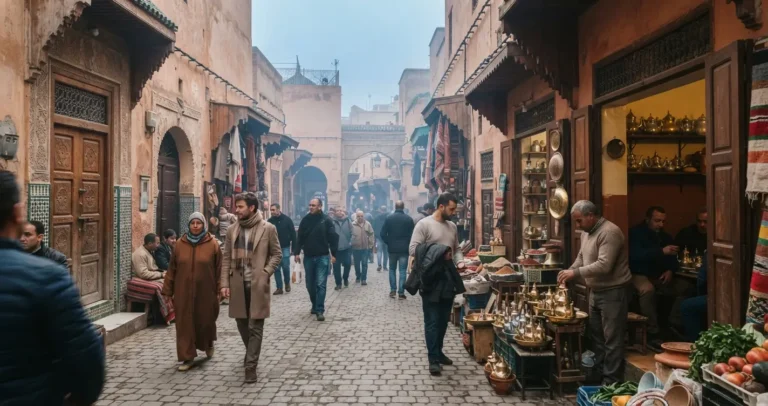
Prices in Morocco’s souks and markets are almost never fixed, and vendors expect , and often prefer , a round of friendly back-and-forth before settling on a final number. Tourists who pay the first price quoted routinely pay two to five times what a settled local price would be, and unknowingly set a higher expectation for the next tourist who visits the same stall.
How to Bargain Politely
Good-natured bargaining starts with a counteroffer well below the asking price, moves in a few rounds toward a number both sides are comfortable with, and stays friendly and unhurried throughout , treating it as a normal, expected part of the transaction rather than a confrontation. Walking away, even just a few steps, is a genuine and commonly used negotiating tool, and it’s entirely fine to decline and move on if a price doesn’t feel right, without any obligation to buy simply because a conversation started.
A quick bit of window-shopping across two or three stalls before committing to a purchase, comparing what similar items are quoted at, also helps calibrate a fair starting point before negotiations even begin.
4. Taking a Taxi Without Agreeing on the Fare
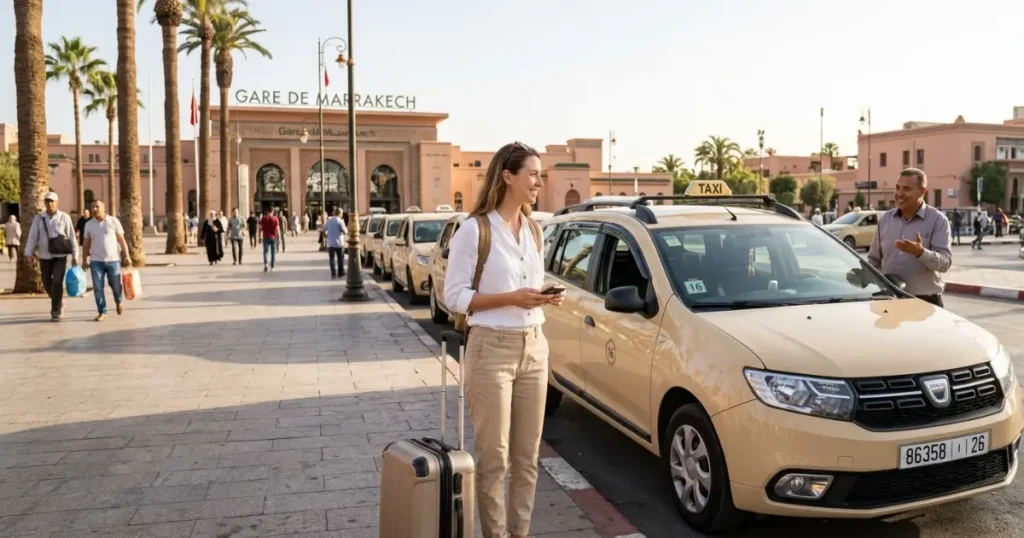
Morocco’s petit taxis are legally required to run on a meter within city limits, but not every driver turns it on for tourists unless asked, and a taxi ride without a metered fare or an upfront agreed price is one of the most common ways visitors end up overpaying for a short trip.
Use the Meter or Confirm the Price
Asking the driver to start the meter (“compteur, s’il vous plaît”) as soon as you get in solves this in most cases, and if a driver refuses or claims the meter is broken, it’s usually worth finding another taxi rather than negotiating from a weaker position mid-ride. For airport transfers, longer trips, or grand taxis running fixed routes between towns, agreeing on the fare before the ride begins avoids any confusion or dispute on arrival. Having a rough sense of what a typical in-town fare should cost — often just a few dollars for most short hops — makes it easy to spot an unreasonable quote before the ride even starts.
5. Carrying Too Little Cash
Morocco’s dirham is a closed currency that can’t be bought or sold outside the country, and while cards are increasingly accepted in cities, taxis, souk vendors, small cafés, and rural areas still run largely on cash. Tourists who assume cards will cover most of a trip frequently find themselves stuck without a way to pay in exactly the situations where it matters most , a taxi ride, a small purchase, a tip.
When Cash Is Better Than Cards
Cash remains the more reliable choice for taxis, souk shopping, tipping, street food, and anything in a rural area or small town, while cards work well for accommodation, larger restaurants, and bigger retailers in cities. Keeping a stock of smaller notes , 10, 20, and 50 MAD bills , solves a second common frustration, since exact change is often hard to come by and large bills can be genuinely difficult for a small vendor or taxi driver to break. Withdrawing cash from ATMs attached to bank branches, rather than standalone machines, is worth the extra effort for the added security and easier recovery if a card gets stuck.
A useful middle-ground habit is withdrawing a few days’ worth of cash at a time from a city ATM, rather than either carrying a large lump sum for the whole trip or running dangerously low between withdrawal opportunities in more remote areas where machines are scarce.
6. Drinking Tap Water Without Checking
Tap water in Morocco’s major cities is generally treated, but water quality and infrastructure vary meaningfully by region, and travelers who drink tap water indiscriminately particularly in rural areas or smaller towns , sometimes end up with a stomach upset that’s entirely avoidable with a small amount of caution.
Stay Hydrated Safely
Bottled or filtered water is the safer default outside major cities, and even within cities, many travelers prefer it simply to avoid any risk during a short trip. A reusable bottle with a built-in filter cuts down on single-use plastic while giving genuine peace of mind, and it’s worth staying deliberately well-hydrated throughout the trip regardless of the water source, given how intense Morocco’s sun and heat can be across most regions and seasons. This matters even more in the Sahara and during Atlas Mountain hikes, where dehydration can set in faster than travelers expect, particularly during the warmer months.
Ice in drinks at established restaurants and hotels catering to tourists is generally fine, since it’s typically made from filtered or bottled water, but it’s a reasonable thing to ask about at smaller, more local establishments if there’s any doubt.
7. Following Unofficial Guides
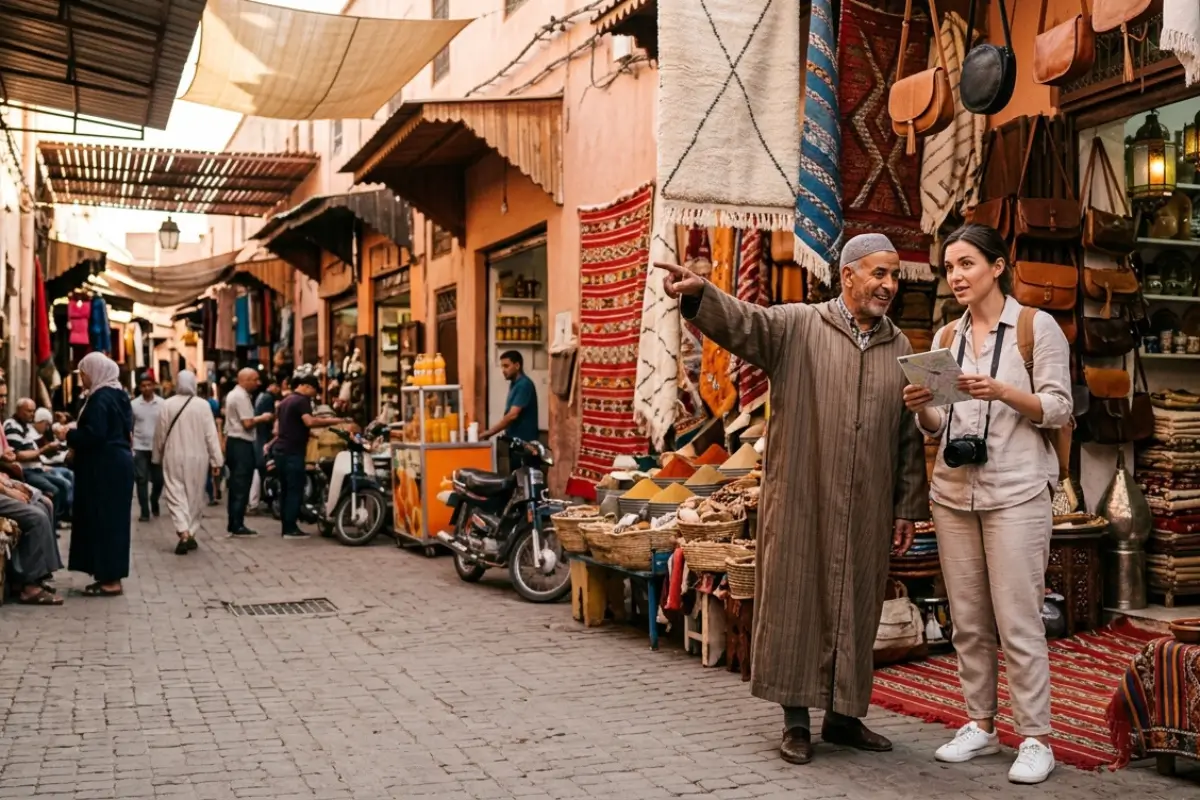
Morocco’s more touristed cities, particularly Marrakech and Fes, have a well-known pattern where unofficial “guides” approach visitors near major sites offering to lead them somewhere, often ending in a detour to a shop paying the guide a commission, or a firmly worded request for payment at the end of a tour nobody actually asked for. This pattern is well-documented enough that most riad staff and official tourism resources mention it directly to arriving guests.
How to Avoid Tourist Scams
Booking guides in advance through your riad, a reputable tour operator, or an official tourism office avoids this pattern entirely, and official guides in Morocco carry a badge that’s worth asking to see if there’s ever doubt. A polite but firm “no, thank you” to unsolicited offers of directions or guidance, repeated if necessary, is generally enough to end the interaction without unnecessary confrontation, and it’s rarely rude in a city that sees this pattern constantly. It’s also worth knowing that asking a stranger for directions in a medina sometimes invites exactly this kind of unsolicited escort , using a downloaded offline map instead sidesteps the situation before it starts.
None of this should overshadow the fact that the overwhelming majority of Moroccans a traveler interacts with , riad staff, shopkeepers, drivers, official guides , are genuinely hospitable and have no interest in scamming anyone. The unofficial-guide pattern is a specific, well-documented situation concentrated around a handful of tourist hotspots, not a reflection of how most encounters in the country actually go.
8. Underestimating Travel Distances
Morocco’s cities look close together on a small map, but the actual road distances and travel times are considerably longer than first-time visitors expect , Marrakech to Fes, for instance, is a genuine six-to-seven-hour journey by train or road, not the quick hop it might appear to be. This misjudgment is especially common among travelers arriving from smaller European countries, where a similar map distance might realistically be a two-hour drive.
Morocco Is Bigger Than It Looks
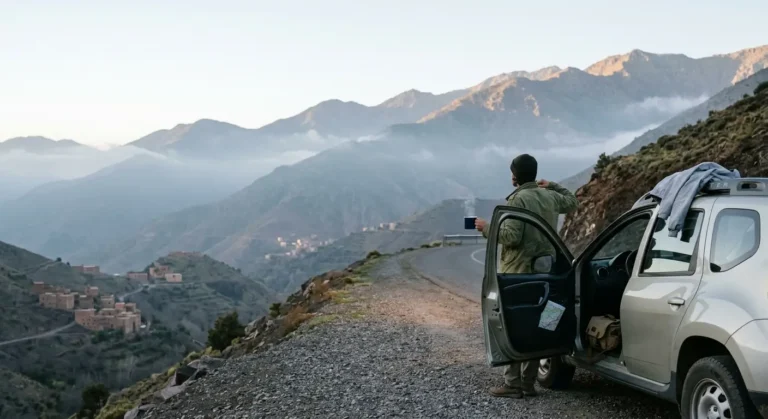
Checking actual travel times before building an itinerary, rather than estimating from map distance alone, prevents the single most common scheduling mistake in Morocco trip planning. Mountain and desert routes in particular often involve winding roads that take considerably longer than a straight-line distance would suggest, so building extra time into any day involving the Atlas passes or a long desert transfer avoids a rushed, exhausting travel day.
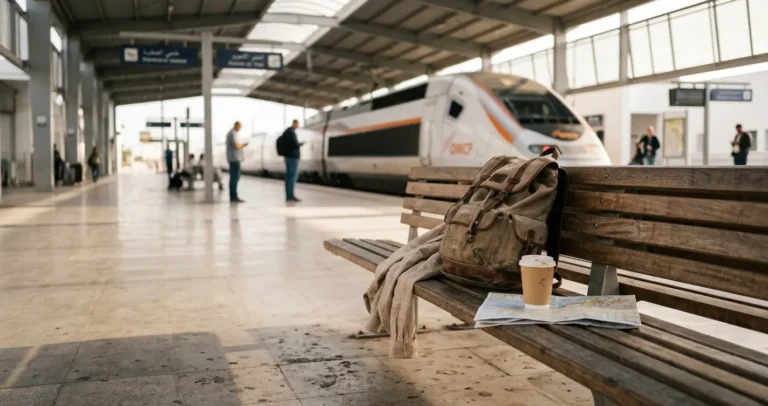
It’s also worth checking whether a route is realistically doable by train, where Morocco’s ONCF network is comfortable and reliable, versus one that genuinely requires a longer bus or private transfer, since assuming train coverage everywhere is itself a common planning mistake.
9. Forgetting to Pack for Temperature Changes
Morocco’s daily and regional temperature swings are wider than most first-time visitors plan for , a warm Marrakech afternoon can give way to a genuinely cool evening, and the swing becomes dramatic the moment an itinerary touches the desert or the mountains, where a hot day can turn into a near-freezing night.
Warm Days, Cool Nights
Packing in layers rather than for a single expected temperature solves this reliably: a breathable base layer for daytime warmth, plus a genuinely warm layer for evenings, the Sahara, or the Atlas, covers nearly every scenario a Morocco itinerary can throw at a traveler. This matters most for anyone including an overnight desert camp, where temperatures can swing more than 20°C between afternoon heat and pre-dawn cold, and it’s a mistake that specifically catches out travelers visiting in what feels like a warm-weather season on paper ,spring and even parts of autumn included.
Riads and older buildings in Morocco are also generally not centrally heated the way many travelers expect from a warm-climate destination, so a warm layer earns its place in the suitcase even for indoor evenings, not just outdoor excursions into the desert or mountains.
10. Taking Photos Without Asking Permission
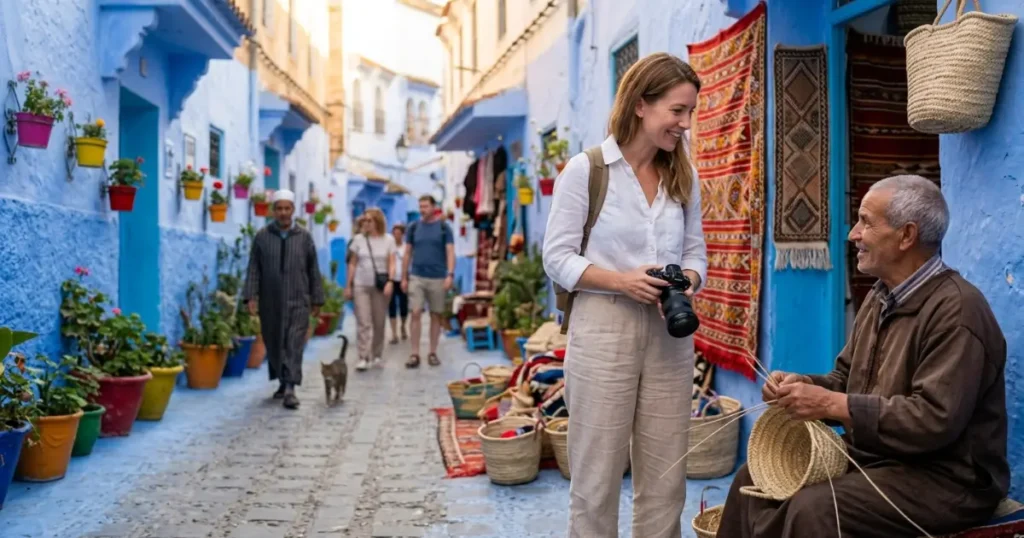
Morocco is an unusually photogenic country, and it’s tempting to photograph everything , but photographing individuals, particularly women, without asking first is a common source of genuine discomfort and occasional confrontation, and it’s a mistake that’s entirely avoidable with a moment’s courtesy.
Respect Local Customs
A quick, friendly request before photographing someone, and accepting a “no” gracefully, goes a long way, and it’s also common practice for vendors selling crafts or performers in public squares to expect a small tip in exchange for a photo, since their livelihood is tied to visitors passing through. Photographing landscapes, architecture, and public scenes generally carries none of this concern, so the caution really applies specifically to identifiable individuals rather than photography in general.
Jemaa el-Fnaa’s performers and snake charmers in Marrakech are a well-known example where a spontaneous photo, taken without first agreeing on a tip, frequently leads to an awkward and sometimes tense exchange afterward.
10 Common Mistakes Tourists Make in Morocco: Frequently Asked Questions
Is Morocco Easy for First-Time Visitors?
Yes, genuinely ,Morocco is one of the more accessible destinations in North Africa for a first-time visitor, with a well-developed tourism infrastructure in its main cities, widely spoken French and increasingly English in tourist areas, and a culture that’s generally warm and welcoming toward international visitors. The mistakes covered in this guide are common precisely because Morocco is popular with first-timers, not because the country is especially difficult to navigate. Millions of visitors have entirely smooth trips every year without ever encountering most of the situations described above.
What Is the Biggest Tourist Mistake in Morocco?
Overpacking the itinerary is arguably the most consequential mistake, since it compounds nearly every other issue on this list , rushed travel days leave less room to research fair prices, confirm taxi fares calmly, or simply enjoy a destination rather than checking it off before racing to the next one. Slowing down the itinerary itself tends to reduce the frequency of most of the other mistakes almost as a side effect, since a traveler with time to spare makes calmer, better-informed decisions throughout the day.
How Can You Avoid Tourist Scams?
Booking guides and tours through reputable, established operators, agreeing on taxi fares or insisting on the meter before a ride begins, declining unsolicited offers of help or guidance politely but firmly, and taking a moment to research fair prices before a significant purchase all address the most common scam patterns tourists encounter in Morocco.
None of these precautions require suspicion of every interaction , they’re specific, targeted habits for the specific situations where issues most often arise, and the vast majority of interactions with vendors, drivers, and guides in Morocco are entirely genuine and friendly.
Is Morocco Safe for Independent Travelers?
Yes, Morocco is a popular and generally safe destination for independent travelers, including solo travelers, with millions of international visitors touring the country each year without incident. As with travel to any unfamiliar destination, ordinary precautions , being aware of surroundings in crowded areas, agreeing on prices upfront, keeping valuables secure in busy markets , go a long way, and none of the common mistakes covered in this guide involve any real safety risk so much as the risk of overpaying or having a more frustrating day than necessary.
Solo travelers in particular tend to find Morocco’s hospitality culture, and the ease of meeting other travelers through riads and guided tours, makes independent travel here considerably more social than it might first appear.
Final Thoughts on the 10 Common Mistakes Tourists Make in Morocco
Every one of these common mistakes tourists make in Morocco shares the same underlying fix: a small amount of preparation and a willingness to slow down. Build a realistic itinerary, carry cash alongside your cards, bargain without stress, and dress with the setting in mind, and Morocco tends to deliver exactly the trip most travelers come here hoping for , vibrant, warm, and considerably easier to navigate than the more dramatic scam stories occasionally suggest.
The travelers who come back saying Morocco exceeded their expectations are almost never the ones who avoided every possible pitfall; they’re the ones who prepared for the common ones and let the rest of the trip unfold at its own pace. Read through this list once before you go, keep the highlights in the back of your mind once you land, and you’ll likely find that most days pass without ever needing to think about any of it consciously at all.