Can You Wear Shorts in Morocco? (2026): The Ultimate Dress Code Guide
It’s one of the most common questions first-time visitors ask before a Morocco trip, and the honest answer is more nuanced than a flat yes or no. Shorts aren’t illegal or forbidden anywhere in the country, but where you wear them changes how comfortably the rest of your day goes.
This guide breaks down exactly when shorts work, when they don’t, and what to pack instead, by gender, by location, and by season, so you can pack with confidence rather than guessing. The short version, for anyone in a hurry: shorts are fine at the pool and on the coast, and a longer, looser alternative pays off almost everywhere else.
Can You Wear Shorts in Morocco? The Short Answer
Is There a Dress Code for Tourists?
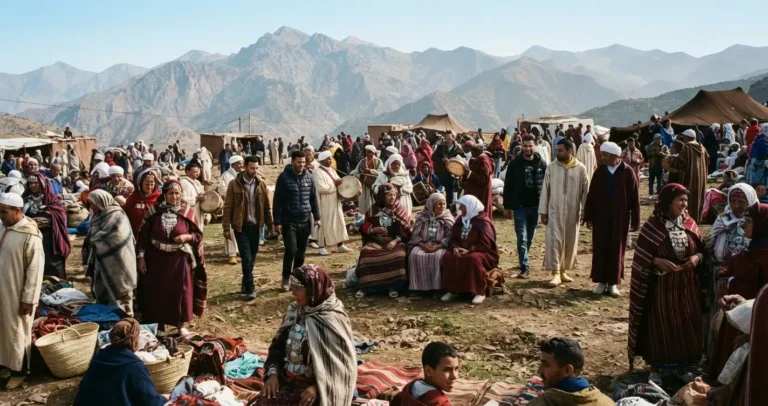
There’s no legal dress code for tourists in Morocco no law requires covered shoulders or knees, and no one will stop you at the airport for wearing shorts. What exists instead is a strong cultural norm: Morocco is a majority-Muslim country where modest dress, particularly covering the knees and shoulders, is the everyday standard most Moroccan women and many Moroccan men themselves follow. Tourists aren’t held to that standard by force, but matching it, at least loosely, tends to make daily life noticeably smoother.
This distinction matters because a lot of pre-trip anxiety about Morocco’s dress code comes from conflating “cultural norm” with “legal requirement.” Nobody enforces a shorts ban, and you won’t be turned away from the country or fined for wearing them. What actually changes based on your clothing is the texture of day-to-day interactions how vendors approach you, how much attention you draw walking through a crowded souk, and how comfortably you blend into a given neighborhood.
It’s worth adding that Morocco receives millions of international visitors every year, and locals in tourist-heavy areas are thoroughly used to seeing a wide range of dress. The guidance in this article is about optimizing for a smoother, more comfortable trip not a warning that shorts will cause a problem, since in the vast majority of everyday situations, they simply won’t.
Why Clothing Matters in Morocco
Clothing in Morocco isn’t purely a legal or religious question — it’s also practical and social. Modest, looser clothing genuinely handles the country’s intense sun and heat better than tight or minimal coverage, and dressing with reasonable modesty in medinas, markets, and rural towns tends to draw less unwanted attention, whether that’s stares, comments, or more assertive selling in the souks. None of this means shorts are inappropriate everywhere it means the setting matters more in Morocco than it does in many other travel destinations.
It’s also worth remembering that Morocco itself contains a wide range of settings, from genuinely cosmopolitan city districts to small, traditional villages, and the “right” choice of clothing shifts depending on which version of Morocco you’re currently standing in. A single packing list built around “what’s appropriate in Morocco” oversimplifies a country where the answer changes block by block in some cities.
None of this is about judgment or strict enforcement it’s closer to the same instinct that guides clothing choices when visiting a place of worship or a formal family gathering back home. Moroccan hosts, guides, and vendors are generally warm and welcoming to visitors regardless of what they’re wearing; dressing with the setting in mind is simply one more way of showing up as a considerate guest rather than a strict requirement to meet.
Can You Wear Shorts in Morocco as a Woman?
In Tourist Areas
In hotel grounds, resort complexes, and international-feeling neighborhoods like Marrakech’s Gueliz or Casablanca’s newer districts, shorts draw little to no attention and are a perfectly normal sight, particularly in the warmer months. These areas are used to a wide range of visitor dress and function much like any cosmopolitan city district elsewhere, with cafés, boutiques, and restaurants that see international visitors dressed in every style imaginable.
This is also where many first-time visitors form their initial impression of Morocco’s dress norms, often based on the airport, the hotel, or the first taxi ride through a modern district and then feel genuinely surprised by the shift once they step into an older medina for the first time. Knowing that shift is coming, rather than being caught off guard by it, makes the transition considerably easier to navigate.
In Traditional Medinas
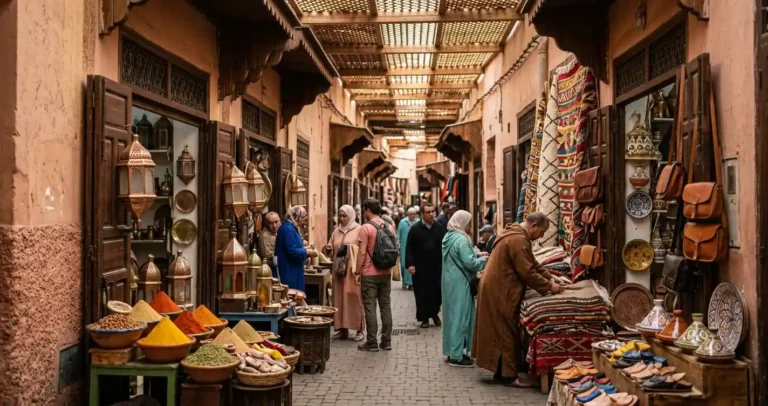
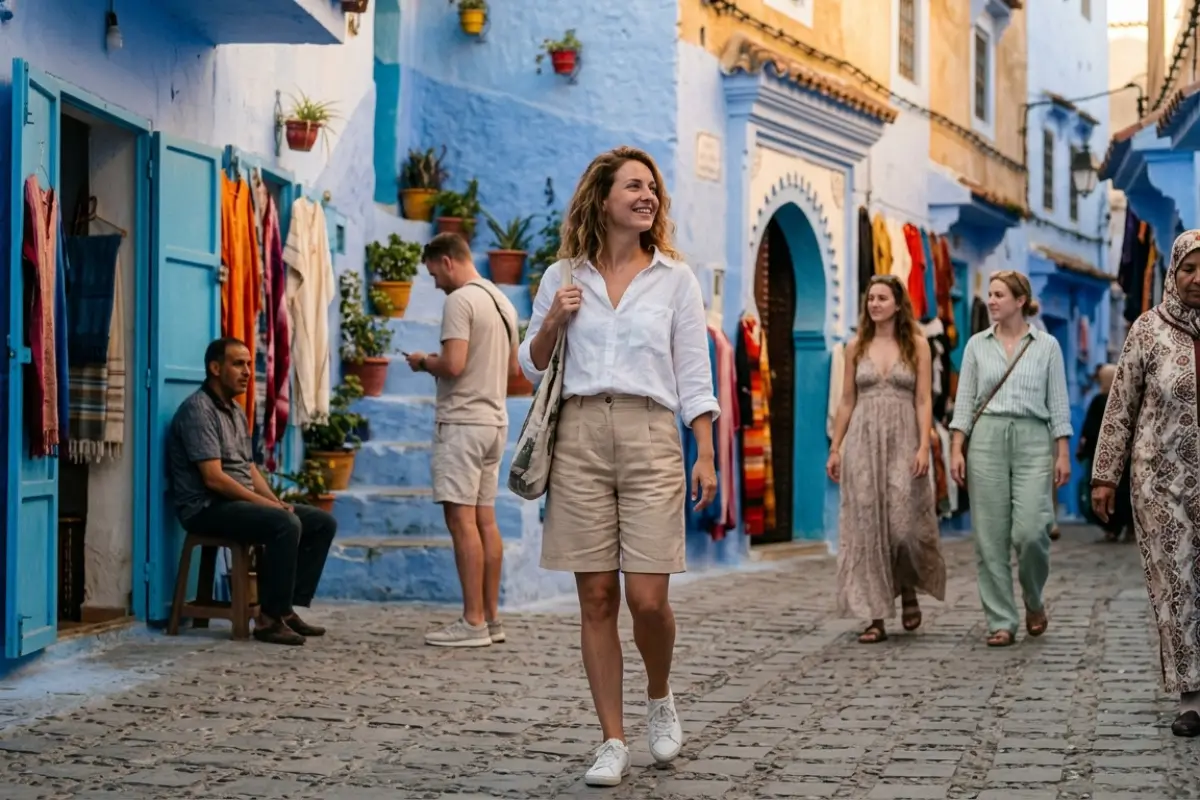
Inside the older medinas Marrakech’s souks, Fes el-Bali, the narrow lanes of Chefchaouen’s old town shorts are more likely to draw stares, occasional comments, or more persistent attention from vendors than knee-length or longer bottoms would. Nothing about wearing them there is illegal or dangerous, but most women who’ve traveled Morocco report a noticeably smoother, calmer experience in longer, looser clothing while navigating these areas specifically.
Fes el-Bali in particular is one of the largest car-free urban areas in the world, meaning a full day here often means hours of walking through narrow, crowded lanes lined with shops — exactly the kind of extended, close-contact environment where clothing choice has the most noticeable effect on how the day feels.
At Religious and Cultural Sites
Mosques, historic religious buildings, and cultural sites like mausoleums generally expect modest dress from any visitor, and shorts particularly short ones are one of the more common reasons a visitor might be asked to cover up or, in stricter cases, declined entry. Since Morocco’s mosques are largely closed to non-Muslim visitors already (with a small number of exceptions like Casablanca’s Hassan II Mosque), this mainly comes up at open religious sites, mausoleums, and certain historic buildings where modest dress is requested regardless of the visitor’s faith.
Carrying a lightweight scarf or shawl in your daybag solves this scenario easily it can be wrapped around the waist over shorts as an impromptu covering, or draped over shoulders, without needing to change clothes entirely or skip a site you’d otherwise want to see.
Can You Wear Shorts in Morocco as a Man?
Where Shorts Are Acceptable
Men generally have more flexibility with shorts than women do, and knee-length shorts are broadly acceptable in tourist-facing areas, modern city neighborhoods, resort and pool settings, and increasingly in Marrakech’s and Casablanca’s more cosmopolitan districts. Athletic or cargo-style shorts of a reasonable length rarely draw much notice in these contexts, and it’s genuinely common to see both local and visiting men in shorts throughout these areas, especially during the hottest months.
When Long Trousers Are a Better Choice
In older medinas, rural towns, mosques and religious sites, and more conservative regions generally, long trousers are the more comfortable and lower-friction choice for men too. Very short shorts specifically tend to read as more casual or out of place than knee-length ones in these settings, and swapping to trousers for a day of medina exploring is a small adjustment that noticeably smooths interactions with vendors and locals.
Men traveling to smaller towns or rural areas outside the main tourist circuit, in particular, often find that trousers earn a warmer, more respectful welcome than shorts do a small gesture that’s frequently noticed and appreciated, even if never explicitly commented on.
Where Can You Wear Shorts in Morocco?
Beach Towns and Coastal Resorts
Essaouira, Agadir, Taghazout, and similar coastal towns are used to a beach-town dress code, and shorts, swimwear, and generally more relaxed clothing are entirely normal on the sand, the boardwalk, and in most restaurants catering to visitors. Moving a few streets inland toward the town’s own medina or market area is where the norm shifts back toward more modest dress, so it’s worth thinking of these towns as having two distinct zones rather than one uniform dress code across the whole place.
Essaouira in particular has a fairly compact medina that sits right next to its beach and port, so the transition between “beach dress is fine” and “cover up a bit more” can happen within a few minutes’ walk worth keeping a light layer or wrap in your bag if your day includes both.
Hotels and Swimming Pools
Riad courtyards, hotel pool decks, and resort grounds operate under their own relaxed dress code, where shorts, swimwear, and casual resort wear are the expected norm rather than the exception. This is one of the clearest “shorts are fine here” zones in the entire country, and it applies consistently whether you’re at a budget guesthouse or a five-star resort.
The one exception worth knowing is that walking from the pool area out onto the public street in just a swimsuit or very short shorts isn’t the norm even at hotels in more traditional cities a cover-up or a change of clothes for the walk between the pool and your room, or out the front door, is a small habit most experienced travelers pick up quickly.
Modern City Neighborhoods
Newer, more cosmopolitan districts Casablanca’s business districts, Rabat’s Agdal neighborhood, Marrakech’s Gueliz see a genuinely wide range of dress among both locals and visitors, including shorts, and blend in without drawing particular attention. These neighborhoods tend to have more of the country’s international restaurants, shopping malls, and nightlife, and their dress norms reflect that more cosmopolitan character.
Casablanca specifically, as Morocco’s largest and most commercially oriented city, tends to have the most relaxed overall dress norms of any major Moroccan city, closer in feel to a large European or Mediterranean city than to Marrakech’s medina-centered tourist experience.
Where Should You Avoid Wearing Shorts?
Traditional Medinas
The old, historic cores of cities like Fes, Marrakech, and Chefchaouen are the settings where modest dress pays off the most, given how much time a typical sightseeing day spends navigating narrow lanes, souks, and historic monuments in these areas. Longer trousers or a maxi dress consistently make for a smoother day here than shorts do, particularly across a multi-hour visit where you’re stopping frequently to browse shops, ask directions, or interact with vendors.
Fes’s medina alone spans thousands of narrow alleyways, and a typical guided tour easily covers several hours on foot long enough that clothing comfort and social ease both compound meaningfully over the course of the visit.
Rural Villages
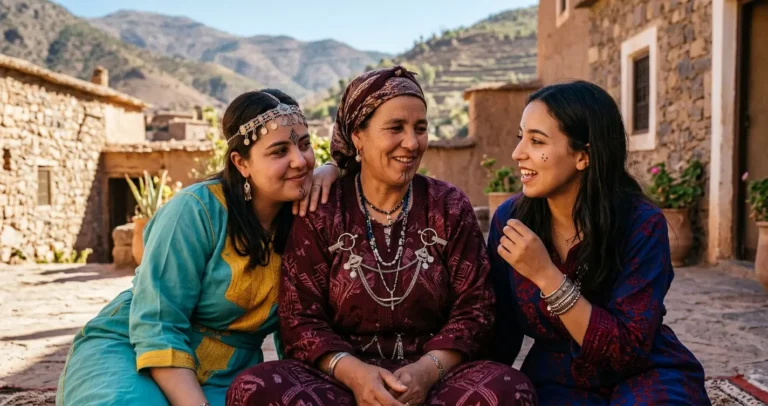
Small towns and villages away from the main tourist circuit tend to hold more traditional norms than the big cities, and dressing modestly here isn’t just about avoiding attention it’s a genuine mark of respect that’s often noticed and appreciated by local residents in a way it might not be in a busier, more visitor-accustomed city center. Villages in the Atlas foothills, the Dades Valley, or smaller Berber communities along desert routes fall into this category.
Travelers on multi-day tours that stop in these smaller communities, whether for a home-cooked meal, a cooperative visit, or simply a rest stop, generally find that a bit of extra modesty here goes further toward a warm reception than it would in a place more accustomed to a constant flow of visitors.
Mosques and Religious Sites
Beyond the general point that most mosques in Morocco don’t admit non-Muslim visitors, any religious or historically sacred site that is open to tourists — mausoleums, certain madrasas, shrine complexes — generally expects modest dress from every visitor regardless of faith, and shorts are one of the items most likely to draw a request to cover up. Some larger sites keep wraps or scarves on hand for visitors who arrive underdressed, but this isn’t guaranteed everywhere, so it’s better to plan ahead than rely on it.
The Bou Inania Madrasa in Fes and the Ben Youssef Madrasa in Marrakech, both popular tourist stops with genuine religious and historic significance, are good examples of sites where modest dress is expected even though they function partly as museums today.
What to Wear Instead of Shorts in Morocco
Lightweight Trousers
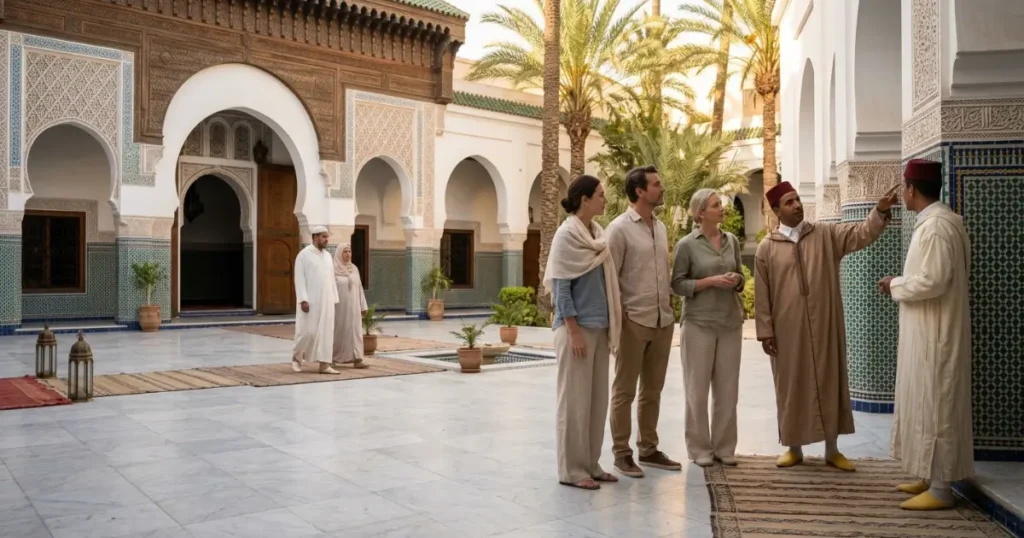
Loose-fitting cotton or linen trousers are the most versatile substitute for shorts across nearly every Morocco setting cool enough for the heat, appropriate for medinas and rural areas, and easy to dress up or down depending on the occasion. Wide-leg or palazzo-style cuts in particular offer noticeably more airflow around the legs than a fitted pant would, closing much of the comfort gap that makes shorts tempting in the first place.
Packing two or three pairs in different lightweight colors gives enough rotation for a week-long trip without requiring laundry mid-way, and they layer easily under a longer top or tunic if you want extra coverage for a particular site or setting.
Linen Pants
Linen specifically deserves its own mention, since it handles Morocco’s dry heat particularly well, wrinkles less distractingly than cotton over a long travel day, and dries quickly if you’re washing clothes mid-trip. Wide-leg linen pants in particular offer close to the same airflow as shorts while staying within the modest range that works everywhere, making them one of the highest-value single items in a Morocco packing list for exactly this reason.
Linen’s natural wrinkle character also tends to read as intentionally relaxed rather than unkempt, which suits Morocco’s generally casual-but-put-together travel aesthetic better than a stiffer, more structured fabric would.
Midi and Maxi Dresses
For women specifically, midi and maxi dresses are arguably the single best substitute on this list cooler than trousers in serious heat, appropriate for nearly every setting from medina wandering to a riad dinner, and considerably simpler to pack and coordinate than separate tops and bottoms. A handful of versatile dresses can realistically anchor an entire week’s wardrobe on their own.
The best-performing dresses for Morocco tend to be ones with some structure or a defined waist rather than a completely shapeless silhouette, since they photograph and layer well while still delivering the coverage and airflow that make this category work so well for the country’s climate and cultural norms simultaneously.
Breathable Fabrics
Whatever the garment, breathable natural fabrics cotton, linen, and lightweight rayon blends matter more than the specific cut. These materials handle Morocco’s sun and heat noticeably better than synthetics, which tend to trap warmth, meaning a well-chosen pair of loose trousers can end up more comfortable in practice than shorts would have been anyway.
Avoiding dark, heat-absorbing colors for daytime wear, and leaning toward lighter shades where possible, adds a further layer of comfort on top of the fabric choice itself, particularly for the hottest stretches of a Marrakech or desert day.
Dress Code Tips for Different Seasons
Spring and Autumn
Spring (March-May) and autumn (September-November) bring Morocco’s most comfortable temperatures, generally in the 20-28°C (68-82°F) range during the day, which makes modest lightweight clothing entirely comfortable without needing to reach for shorts even in the warmer stretches of either season. Evenings cool down enough in both seasons that a light layer is worth having regardless of what you wear during the day, and these two shoulder seasons are generally when the temptation to reach for shorts is lowest anyway, since long trousers or a maxi dress rarely feel like a real sacrifice in this temperature range.
These seasons also happen to be Morocco’s most popular for tourism, meaning more time spent in crowded medinas and souks exactly the settings where dressing modestly pays off the most in terms of a smoother day.
Summer
Summer (June-August) is where the temptation to wear shorts peaks, given genuinely intense heat inland Marrakech and Fes regularly exceed 38°C (100°F). Even here, loose, breathable trousers or a maxi dress often prove more comfortable than shorts in direct sun, since they protect skin from sunburn and reflected heat while still allowing airflow; shorts remain the practical choice specifically for beach towns and pool time.
A useful mental model for a summer Morocco trip is packing two distinct wardrobes: one lightweight, modest set for cities and medinas, and one beach-and-pool set including shorts and swimwear for the coastal or resort stretches of the itinerary, switching between them as the day’s plans shift.
Winter
Winter (December-February) rarely raises the shorts question at all, since daytime temperatures, while milder than many visitors expect, still sit in a range often 18-22°C (64-72°F) in Marrakech where light trousers or a warmer layer are simply more comfortable than shorts, and evenings turn genuinely cold nearly everywhere in the country. A winter Morocco trip is really the one season where the shorts-versus-modesty debate mostly resolves itself on pure comfort grounds, regardless of the cultural considerations discussed above.
Can You Wear Shorts in Morocco? Frequently Asked Questions
Can Female Tourists Wear Shorts?
Yes, without any legal issue, and they’re entirely normal in resort areas, hotel pools, and beach towns. In medinas, markets, and more conservative or rural settings, though, shorts draw more attention than knee-length or longer bottoms, and most women travelers report an easier, calmer experience dressing more modestly in those specific contexts. The practical approach most travelers land on is packing both shorts for the pool and coast, longer options for everything else rather than choosing one style for the entire trip.
Are Shorts Allowed in Marrakech?
Yes, shorts are allowed throughout Marrakech, including the medina there’s no rule against it. In practice, though, they draw more notice in the souks and old city than in Gueliz or a hotel pool area, so many visitors reserve shorts for the modern districts and poolside time while opting for trousers or a longer skirt for medina days. Marrakech’s medina in particular sees an enormous volume of daily foot traffic and vendor interaction, which is part of why clothing choice tends to matter more there than in quieter parts of the city.
Can You Wear Shorts in the Sahara Desert?
Shorts are allowed in the Sahara, but they’re rarely the most practical choice regardless of the dress code question daytime sun exposure and dust make long, breathable trousers or a scarf-covered outfit more comfortable during the day, while overnight camps in most of the year call for warm layers entirely unrelated to the shorts question. The desert is a case where practical comfort and cultural norms happen to point in the same direction: loose, breathable, fully covering clothing simply works better than shorts do, independent of any modesty consideration.
Do You Need to Cover Your Hair?
No covering your hair isn’t required for female tourists in Morocco, except when entering a mosque as a Muslim worshipper or at certain religious sites that specifically request it. A light scarf is still worth carrying as a versatile item for sun protection and the occasional site where covering up is appropriate, and it doubles conveniently as the same accessory that solves the shorts-at-a-religious-site problem discussed earlier in this guide.
Final Thoughts: Can You Wear Shorts in Morocco?
Shorts are never illegal or truly forbidden anywhere in Morocco, but the honest, practical answer is that where you wear them matters more here than in most destinations. Resort pools, beach towns, and modern city districts are genuinely shorts-friendly; medinas, rural towns, and religious sites reward a longer, looser alternative.
Packing a few versatile trousers or dresses alongside your shorts, and switching between them based on where the day is taking you, is the simplest way to stay comfortable and travel with the grain of local norms rather than against them. Most returning travelers land on roughly the same conclusion: shorts absolutely have a place in a Morocco suitcase, they’re just not the only thing that belongs in it, and knowing when to reach for the alternative is what actually makes the difference between a slightly awkward day and a genuinely smooth one.