Renting a Car in Morocco (2026): Everything You Need to Know for a Stress-Free Trip
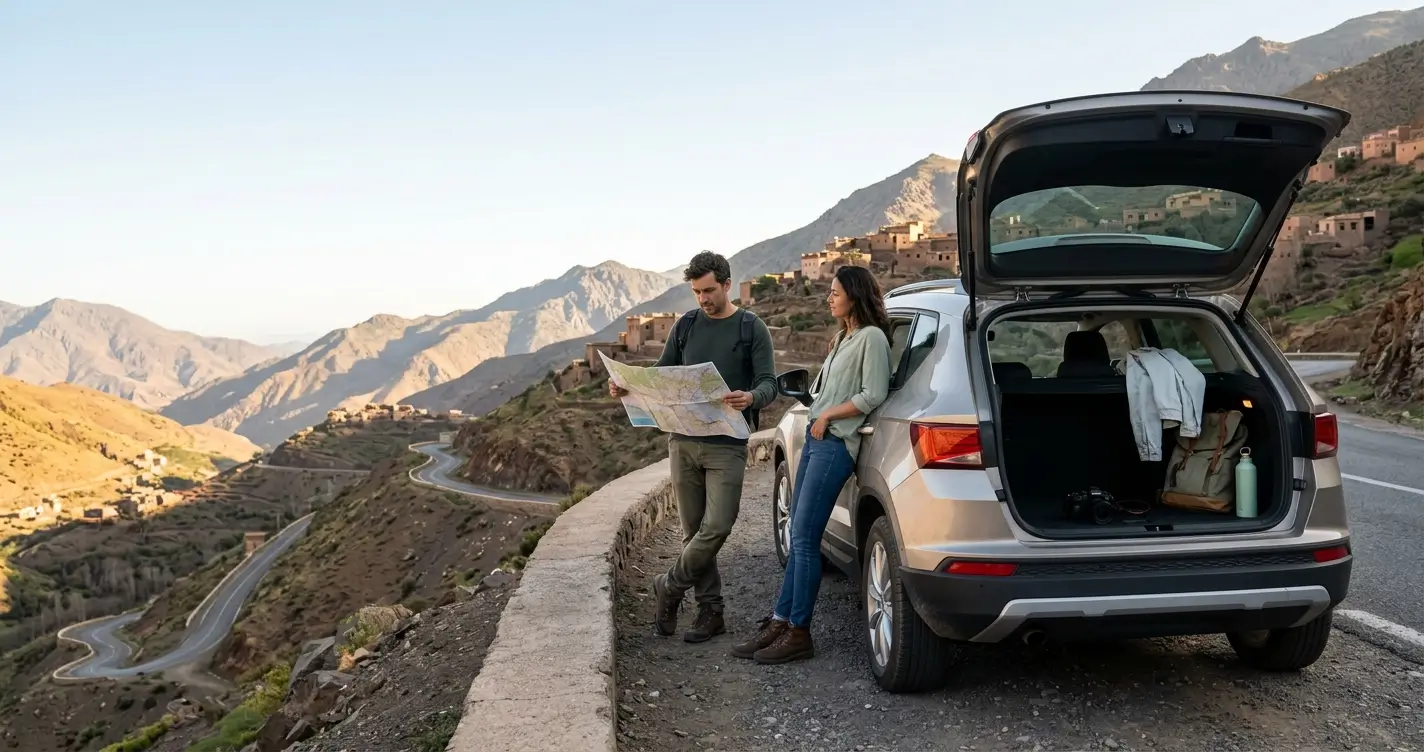
Renting a car in Morocco opens up a version of the country that trains and buses simply can’t reach, kasbahs down forgotten side roads, a sunset stop wherever the light happens to be good, a detour to a village nobody put on the itinerary. It also comes with genuine adjustments: driving styles that feel more assertive than back home, mountain passes that demand real concentration, and a paperwork checklist worth getting right before you ever touch the wheel.
This guide covers everything renting a car in Morocco actually involves in 2026, requirements, costs, insurance, road conditions, and the mistakes that catch out first-time renters most often.
Renting a Car in Morocco: The Quick Answer
Is Renting a Car in Morocco Worth It?
For the right itinerary, yes. A rental car earns its cost the moment your route includes the Atlas Mountains, the Draa or Dades valleys, or a coastal drive between towns with no direct bus or train, Morocco’s most memorable landscapes tend to sit exactly where public transport doesn’t reach. For a trip confined to Marrakech, Fes, Casablanca, and similar cities, a car adds cost and stress without adding much, since trains and taxis already cover that ground comfortably.
Who Should Rent a Car?
Renting suits travelers who want to set their own pace, stop wherever the scenery calls for it, and reach smaller towns and villages that sit off the main bus and train routes. It suits families and small groups particularly well, since a private vehicle means no station waits, easy breaks, and the flexibility to carry luggage and children’s gear without the constraints of public transport schedules.
Requirements for Renting a Car in Morocco
Minimum Age Requirements
Most rental agencies require drivers to be at least 23 years old and to have held a valid license for at least two years, though this varies by company and vehicle category, some agencies set the bar slightly higher for larger SUVs or premium vehicles.
Driver’s License Rules
A valid driving license from your home country is generally accepted for a tourist stay in Morocco. If your license isn’t printed in French, English, or Arabic, or uses a non-Latin script, carrying an International Driving Permit alongside it becomes considerably more important, both for the rental company and for any police checkpoint along the way.
Do You Need an International Driving Permit?
Legally, an International Driving Permit (IDP) isn’t strictly required for most nationalities on a short tourist visit, but many rental companies request or strongly recommend one regardless, particularly if your home license doesn’t clearly match the details on your passport or isn’t in a script Moroccan officials can easily read. An IDP costs roughly $20-30, remains valid for a year, and is worth arranging through your home country’s automobile association before you travel simply to remove any doubt at pickup or a checkpoint.
Required Documents
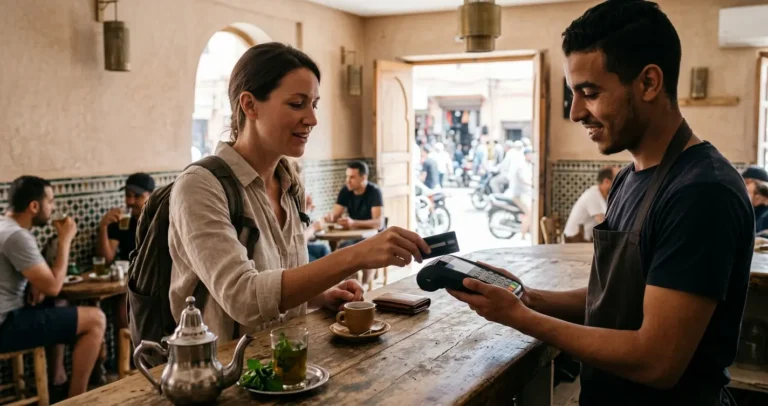
Bring your passport, your driving license, your IDP if you have one, and a credit card in the primary driver’s name for the security deposit. The rental company will also provide a contract and insurance documents that are worth keeping accessible in the car, alongside your passport, in case a checkpoint asks to see them.
Choosing the Right Rental Car
Economy Cars
A standard economy car is entirely sufficient for city driving and the country’s well-paved main roads, including popular routes like Marrakech to Essaouira or the Casablanca-Rabat corridor. It’s the most cost-effective choice for any trip that doesn’t involve mountain passes or unpaved desert tracks.
SUVs for Mountain and Desert Roads
An SUV or 4×4 is worth the upgrade for routes crossing the High Atlas, heading toward the desert gateway towns, or exploring rural roads off the main highway network. Ground clearance and better handling matter more on these routes than raw horsepower, particularly on the hairpin turns of passes like the Tizi n’Tichka.
Automatic vs. Manual Transmission
Manual transmission is still the more common and often cheaper option across Moroccan rental fleets, though automatics are increasingly available, particularly from international chains. If you’re not confident with a manual gearbox on steep mountain descents, it’s worth requesting an automatic specifically and confirming availability before you arrive, since the selection can be more limited outside major cities.
Picking Up at the Airport or City Center
Airport pickup is the most convenient option for most visitors, letting you drive straight from the terminal rather than arranging a taxi into the city first. City-center pickup can sometimes offer slightly better rates and a wider selection of local agencies, though it adds the extra step of getting yourself there with your luggage.
How Much Does Renting a Car in Morocco Cost?
Daily Rental Prices
Economy cars typically start around 200-250 MAD ($20-25) per day from local agencies, rising to 500-800 MAD ($50-80) per day for a 4×4 SUV suited to mountain or desert routes. Prices swing considerably by season, climbing 30-50% during July-August and the Christmas holidays, so booking two to four weeks ahead, or six or more weeks out for peak summer, helps secure both a better rate and actual vehicle availability.
Fuel Costs
As of 2026, gasoline in Morocco runs roughly 14-16 MAD per liter and diesel slightly less, at around 13-14 MAD per liter, both broadly in line with global averages. It’s essential to confirm which fuel your specific rental takes before driving away, economy and compact cars are often petrol, while many sedans, SUVs, and larger vehicles run on diesel, and guessing wrong is a genuinely costly mistake.
Toll Roads
Morocco’s toll autoroutes are paid in cash at booths marked with a green arrow or cross, with distance-based pricing, a Casablanca-to-Marrakech run costs roughly 70-90 MAD one way. Lanes marked with a “J” are reserved for a prepaid electronic tag and should be avoided unless your rental specifically includes one.
Security Deposits
Rental companies place a hold on your credit card as a security deposit, and this can run considerably higher than you might expect, deposits equivalent to €1,000 or more aren’t unusual, particularly for larger vehicles. Check your card’s available credit limit before pickup to make sure it can absorb the hold without issue.
Car Rental Insurance
Basic Insurance
A base level of liability insurance is typically included in any rental agreement by law, covering damage to third parties. This baseline rarely covers damage to the rental vehicle itself, which is where additional coverage becomes worth considering.
Collision Damage Waiver (CDW)
A Collision Damage Waiver reduces your financial liability if the rental car itself is damaged, usually down to a set excess amount rather than the full vehicle value. Given Morocco’s mix of assertive city traffic, narrow medina approach roads, and occasional rough surfaces on rural routes, CDW is worth adding for most first-time visitors rather than risking the full deposit on a minor scrape.
Theft Protection
Theft protection covers the vehicle itself if it’s stolen during your rental period, separate from collision coverage. It’s a reasonable addition given Morocco’s mix of secure hotel parking and less formal street parking in some cities, where a parked car overnight isn’t always in a fully monitored location.
Should You Buy Extra Insurance?
For most travelers, yes, the relatively small daily cost of comprehensive coverage is worth it against the risk of a large security deposit being partially or fully claimed for damage that’s easy to pick up on unfamiliar roads. Comparing what your rental agreement includes by default against a credit card’s own rental coverage, if you have one, helps avoid paying twice for the same protection.
Driving Conditions in Morocco
Road Quality
Road quality in Morocco varies considerably by category. Toll autoroutes are excellent, genuinely comparable to European motorways, while road conditions decline progressively on national roads, rural routes, and unpaved tracks further from the main cities.
Highways
Morocco’s motorway network connects the major cities efficiently, with speed limits generally around 120 km/h and increasingly common speed cameras, particularly on the busy Casablanca-Rabat-Marrakech corridor. Fines for speeding are issued on the spot by Gendarmerie officers and typically run 300-600 MAD depending on severity.
Mountain Roads
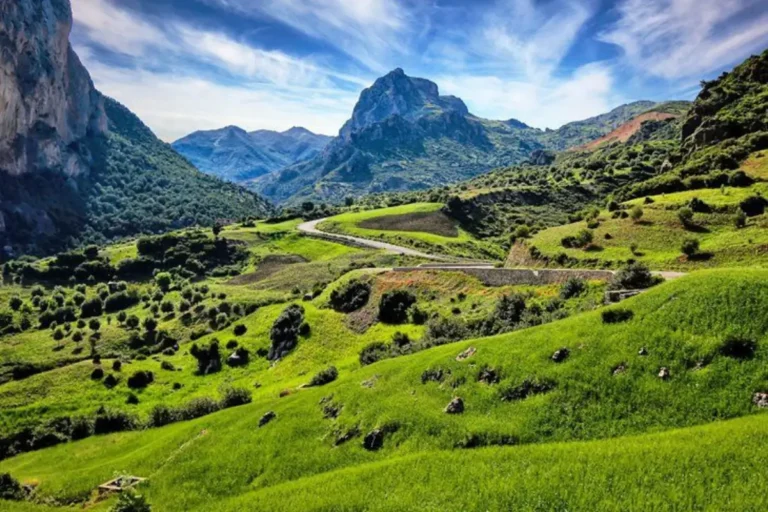
Mountain routes like the Tizi n’Tichka pass on the N9 are paved and well-maintained for most of the year, but they’re narrow, wind through tight hairpin turns, and often lack guardrails. These roads demand real concentration, a lower gear on descents, and patience with slower trucks and buses, which have practical priority on the narrowest sections. Winter travel over higher passes occasionally means snow, so checking conditions before setting out between November and March is a sensible habit.
Driving in Moroccan Cities
City driving in Casablanca, Marrakech, and Fes can feel considerably more assertive than many Western visitors are used to, with closer following distances, frequent horn use as routine communication rather than aggression, and roundabout priority rules that shift depending on whether you’re in an urban or rural setting. Medina approach roads in particular are not built for cars, narrow, crowded, and often one-way in ways that aren’t obvious from a map, so parking outside the medina and walking in is almost always the better choice than attempting to drive through one.
Parking in Morocco
Street Parking
Street parking in most Moroccan cities is informally managed by parking attendants, often identifiable by an orange or red vest, who’ll direct you into a space and expect a small tip of 5-10 MAD when you return to a car that’s been kept an eye on in your absence.
Paid Parking Lots
Formal paid parking lots exist near major attractions and in busier commercial districts, offering a more secure and hands-off alternative to informal street parking, generally for a modest hourly or daily fee.
Hotel Parking
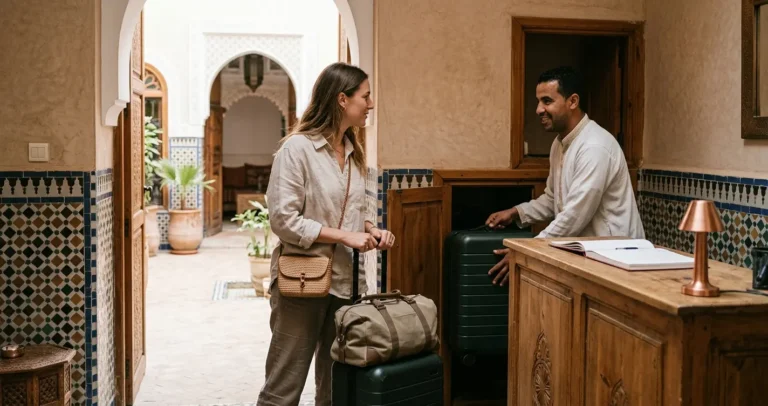
Most riads and hotels either offer parking directly or can point you to a secure nearby lot, and it’s worth confirming this before booking if you’re arriving by car, since parking directly outside a medina riad usually isn’t physically possible given the narrow surrounding streets.
Police Checkpoints
Why You’ll See Them
Police and Gendarmerie checkpoints are a routine part of driving in Morocco, particularly on highways, near city entrances, and around border-adjacent regions. They’re a standard feature of road safety and administrative control rather than a sign of any particular concern, and tourists are very often simply waved through without further questions.
What Documents to Carry
Keep your passport, driving license, IDP if you have one, and the rental company’s contract and insurance papers within easy reach in the car. Officers may ask to see any combination of these, and having them ready rather than searching through luggage keeps a routine stop brief.
Fuel Stations in Morocco
Petrol vs. Diesel
Confirm your specific rental’s fuel type before leaving the pickup location, checking the rental agreement, asking the agent directly, or looking inside the fuel cap all work, since guessing based on the car’s size or engine sound is unreliable. Petrol cars need unleaded fuel and diesel cars need diesel/gasoil; premium fuel generally isn’t necessary unless the rental company specifically advises it.
Payment Methods
Most fuel stations in cities and along main routes accept cards, though carrying cash remains a sensible backup, particularly at smaller or more rural stations where card readers aren’t always reliable.
Availability in Rural Areas
Stations are plentiful in cities and along motorways but can thin out considerably on routes toward the Atlas, Ouarzazate, or Merzouga. Starting a rural or mountain travel day with at least half a tank, and refueling before a long stretch rather than after, avoids the stress of running low somewhere remote.
Common Mistakes When Renting a Car in Morocco
Not Inspecting the Vehicle
Skipping a thorough inspection at pickup, checking for existing dents, scratches, and confirming they’re all noted on the contract, is one of the most common and costly mistakes, since disputing damage after the fact is far harder than documenting it with photos before you drive away.
Ignoring Insurance Details
Assuming the default insurance included in your rate covers everything is a frequent and expensive misunderstanding. Reading exactly what’s included, what the excess amount is, and what additional coverage costs before signing avoids an unpleasant surprise if something happens to the car.
Driving at Night in Rural Areas
Night driving outside cities carries real, well-documented risk in Morocco: poorly lit roads, unmarked speed bumps, pedestrians and cyclists without reflective gear, and the occasional livestock crossing. Planning routes to arrive at your destination before sunset is a habit nearly every experienced Morocco driver recommends.
Forgetting Cash for Tolls
Toll booths and many rural fuel stations expect cash, and running short of small notes mid-journey is an avoidable frustration, keeping a stock of smaller bills specifically for tolls and incidental costs solves this before it becomes a problem.
Renting a Car in Morocco vs. Public Transportation
When a Rental Car Is the Better Choice
A rental car wins for routes and regions public transport doesn’t reach well, the Atlas Mountains, the Draa and Dades valleys, coastal drives between smaller towns — and for any trip prioritizing flexibility over cost. Families and small groups traveling together often find the per-person cost compares reasonably against public transport once the convenience is factored in.
When Trains or Buses Make More Sense
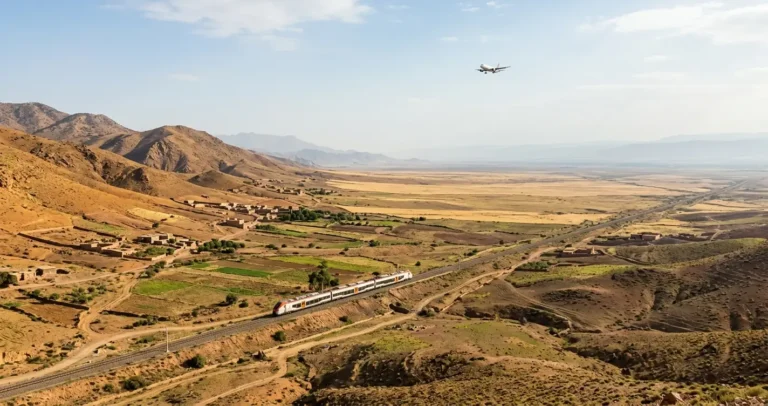
For the Tangier-Casablanca-Rabat-Fes-Marrakech corridor specifically, the train is faster, cheaper, and free of the traffic and parking concerns that come with driving yourself. For travelers uneasy about assertive city traffic or unfamiliar mountain roads, buses and trains remove that entire category of stress in exchange for a fixed schedule.
Best Road Trips in Morocco
Marrakech to Merzouga
This classic route crosses the Tizi n’Tichka pass, passes Ait Benhaddou’s kasbah and the Ouarzazate film studios, and continues through the Dades and Draa valleys before reaching the Erg Chebbi dunes, a spectacular multi-day drive best broken into stops rather than attempted in one long push.
Casablanca to Chefchaouen
Heading north from Casablanca toward Chefchaouen’s blue medina takes you through varied landscape into the Rif Mountains, a route well-suited to a rental car given Chefchaouen’s lack of direct rail service and the scenic value of the drive itself.
Agadir to Essaouira
A well-surfaced, relatively light-traffic coastal drive with strong ocean views throughout, popular for its ease and scenery in roughly equal measure.
Fes to Ifrane
A shorter drive into the Middle Atlas, passing cedar forests and a noticeably cooler, greener landscape than most visitors expect from Morocco, with Ifrane’s distinctive alpine-style architecture as a memorable contrast to the medinas further south.
Renting a Car in Morocco: Frequently Asked Questions
Is It Safe to Rent a Car in Morocco?
Yes, renting and driving a car in Morocco is considered safe for tourists, provided you drive with appropriate caution given the local conditions. The main risks come from more assertive city traffic, mountain roads that demand real attention, and reduced visibility hazards on rural roads after dark, rather than from any specific danger tied to the rental process itself.
Choosing a reputable agency, inspecting the vehicle carefully before driving away, and avoiding night driving outside cities addresses most of the genuine risk. Millions of tourists rent and drive in Morocco each year without serious incident, and the country’s toll motorways in particular are genuinely excellent and safe by any standard.
Can Tourists Rent a Car?
Yes, tourists can rent a car in Morocco with a valid driving license from their home country, generally alongside a passport and a credit card for the security deposit. Most agencies require drivers to be at least 23 years old with at least two years of driving experience, and while an International Driving Permit isn’t always strictly mandatory, it’s recommended and sometimes required depending on your license’s language and the specific rental company. The process itself, from booking to driving away, typically takes well under an hour once you’re at the counter with the right documents in hand.
Is Driving in Morocco Difficult?
It depends heavily on where you’re driving. Toll motorways are straightforward and well-signed, comparable to driving in Southern Europe. City driving is more assertive than many tourists expect, with closer following distances and frequent horn use, though it becomes manageable with a bit of patience and defensive habits. Mountain roads like the Tizi n’Tichka are the most demanding category, with narrow lanes, hairpin turns, and a lack of guardrails in places, requiring genuine concentration rather than casual driving. First-time visitors uneasy about any of these conditions often choose a private driver for the more challenging legs of a trip rather than self-driving the entire route.
Which Rental Company Is Best?
Both international chains (Hertz, Europcar, Sixt, and similar) and well-established local Moroccan agencies operate throughout the country, and the choice generally comes down to a trade-off between brand familiarity and price. International chains tend to offer more consistent standardized processes and easier customer service if something goes wrong, while local agencies often undercut them meaningfully on price and can offer helpful local road knowledge.
Comparing rates across a few aggregators and reading recent reviews for any specific agency before booking is a sensible step regardless of which category you lean toward. If you’re arriving by ferry from Spain with a European rental car, note that nearly all major European agencies explicitly forbid taking their vehicles into Morocco, so renting locally after crossing is the standard workaround.
Can You Cross Into Western Sahara?
This is worth checking directly with your specific rental company rather than assuming either way, since standard rental agreements from many agencies explicitly exclude travel into Western Sahara, a territory whose status remains a subject of international dispute, along with Algeria and Mauritania. Some rental agencies do permit travel toward destinations like Dakhla with prior written authorization, but doing so without confirming this in advance can void your insurance coverage entirely if anything goes wrong.
If a Western Sahara route is part of your plan, raise it explicitly when booking and get any permission in writing rather than assuming a standard rental contract covers it.
Final Thoughts: Renting a Car in Morocco
A rental car gives you access to a version of Morocco that trains and buses can’t quite reach, the mountain passes, the valley kasbahs, the coastal stretches where the best view is wherever you decide to pull over. The trade-off is real too: more assertive city traffic, mountain roads that demand your full attention, and a paperwork checklist worth getting right before you drive away from the counter.
Match the car to the route, buy the insurance that makes sense for how far off the highway you’re actually heading, and keep cash on hand for tolls and fuel, get those basics right, and a Morocco road trip becomes one of the most rewarding ways to see the country rather than a source of stress.

One Comment
Comments are closed.