Jemaa el-Fnaa (2026): The Ultimate Guide to Marrakech’s Famous Square
No single square in Africa changes character as completely between noon and midnight as Jemaa el-Fnaa. By day it’s a market and meeting point with a scattering of juice stalls and henna artists; by night it becomes an open-air theater of food, music, and storytelling that has drawn visitors and locals alike for nearly a thousand years.
This Jemaa el-Fnaa visitor guide covers exactly what to expect, when to go, and how to experience it the way it’s meant to be experienced, not as a single photo stop, but as a place that rewards genuinely coming back more than once during your stay.
Jemaa el-Fnaa Visitor Guide: The Short Answer
Why Is Jemaa el-Fnaa So Famous?
Jemaa el-Fnaa earned its global reputation as one of the few places on earth where centuries-old oral traditions, storytelling, Gnawa music, traditional medicine. still play out daily in a living public square rather than a museum. UNESCO recognized it in 2001 as a Masterpiece of the Oral and Intangible Heritage of Humanity, one of the first sites anywhere to receive that specific distinction.
Is Jemaa el-Fnaa Worth Visiting?
Unquestionably. It’s free to enter, changes dramatically depending on the hour, and offers a genuinely rare kind of experience, a living cultural tradition unfolding in real time rather than a static monument. Most visitors return to the square more than once during a Marrakech trip precisely because its daytime and nighttime personalities feel like two different places.
What Is Jemaa el-Fnaa?
A UNESCO Cultural Heritage Site
Jemaa el-Fnaa holds UNESCO recognition not for its physical architecture but for its intangible cultural traditions, the storytellers, musicians, and traditional practices that continue to operate here much as they have for generations, a distinction that protects the living practice rather than any single building.
The Beating Heart of Marrakech
Sitting at the entrance to the medina, the square functions as Marrakech’s central meeting point, where locals and tourists genuinely mix rather than occupying separate spaces, making it as much a functioning piece of city life as it is a tourist attraction.
A Square That Changes Throughout the Day
Morning brings a relatively quiet market atmosphere; afternoon sees the first performers and juice stalls set up; by evening, the square transforms almost entirely into a food market and open-air stage, making the time of day the single biggest factor in what kind of visit you’ll actually have.
The History of Jemaa el-Fnaa
Origins in the 11th Century
The square’s roots trace back to the founding of Marrakech itself around 1070 under the Almoravid dynasty, when an open area beside the city’s original fortress served as a space for markets, royal proclamations, and public gatherings. This early open space, known as Rahbat al-Ksar, set the template for everything the square would become a natural stage for trading, ceremony, and public life all happening in the same open ground.
From Marketplace to Cultural Icon
The name itself carries genuinely disputed origins most commonly translated as “Assembly of the Dead,” a likely reference to public executions once held there, though other interpretations point to “mosque” or “gathering place” instead, tied to an unfinished mosque planned for the site centuries later by the Saadian sultan Ahmad al-Mansur. Whatever its darker etymology, the square gradually evolved into the trading and gathering hub that defines it today, its distinctive irregular, triangular shape emerging organically as surrounding buildings rose and fell across successive dynasties rather than through any planned design.
UNESCO Recognition
Proclaimed a Masterpiece of the Oral and Intangible Heritage of Humanity in 2001 and formally inscribed in 2008, Jemaa el-Fnaa’s UNESCO status specifically protects its living traditions storytelling, traditional medicine, musical performance rather than any single structure, an unusual and fitting distinction for a place defined more by what happens there than by what’s built on it. It remains one of relatively few places worldwide to receive this specific category of recognition, which speaks to just how rare a living, continuously practiced cultural tradition of this scale actually is.
What to See in Jemaa el-Fnaa During the Day
Orange Juice Stalls
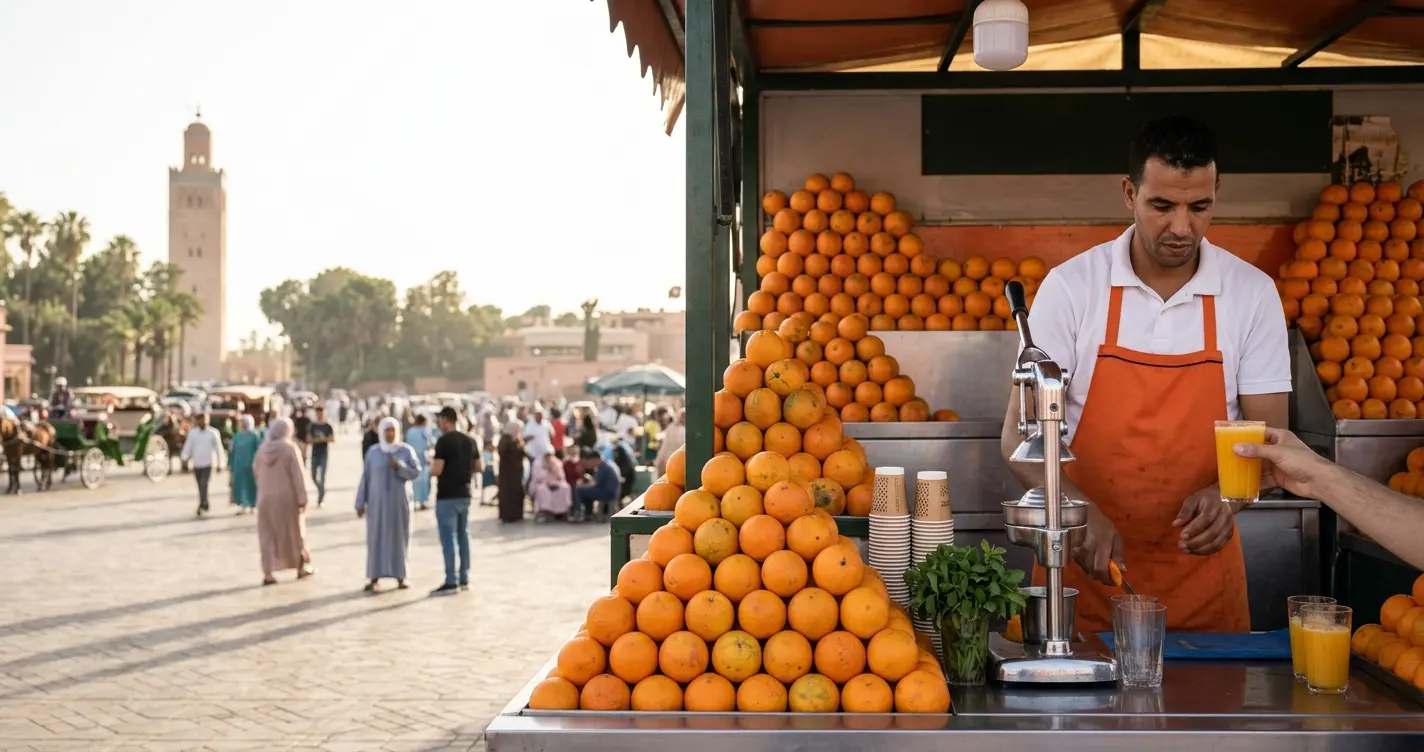
Rows of numbered juice carts sell freshly squeezed orange juice for a few dirhams a glass, a genuinely refreshing and inexpensive stop that’s been a square fixture for decades. Each cart is independently run, and it’s worth a quick glance at the price posted before ordering, since informal competition between neighboring stalls keeps prices honest.
Water Sellers
Traditional water sellers, dressed in colorful fringed hats and brass cups, pose for photos in exchange for a small tip a costume and tradition dating back to a time when they provided a genuine public service rather than a photo opportunity. Their elaborate outfits, complete with tasseled hats and decorated leather water bags, are among the most recognizable and photographed figures in the square.
Snake Charmers
Snake charmers remain one of the square’s most photographed daytime sights, though it’s worth knowing animal welfare organizations have raised documented concerns about how the snakes are handled and kept, which some travelers weigh before deciding whether to stop, photograph, or tip. The accompanying rhythmic pipe music has become closely associated with the square’s overall soundscape, even for visitors who choose not to engage directly with the performance itself.
Henna Artists
Women offering henna application sit along the square’s edges, and while the designs are often genuinely skilled, it’s worth agreeing on a price beforehand rather than discovering the cost only after the design is complete. Designs typically last one to two weeks, and it’s worth asking specifically about the henna’s ingredients if you have sensitive skin, since some mixtures used for a darker, faster stain can cause irritation.
Traditional Herbalists
Stalls selling traditional remedies, spices, and natural cosmetics line parts of the square, offering a glimpse into Morocco’s long tradition of herbal medicine, though claims made about specific remedies are worth taking as cultural tradition rather than medical advice. Many of these stalls also sell genuinely useful, non-medicinal items like natural soaps, argan oil, and spice blends worth bringing home as souvenirs.
What Happens at Jemaa el-Fnaa at Night?
Street Food Market
As afternoon turns to evening, dozens of numbered food stalls assemble in the square’s center, typically running from around 6pm until midnight or later, with the liveliest atmosphere generally between 8 and 11pm. Each stall specializes in a particular category grilled meats, soups, snails, sweets and vendors often call out to passersby, so a bit of browsing before committing to a seat helps you find the stall that best matches what you’re craving.
Storytellers and Musicians
Traditional hakawati storytellers, though fewer in number than in past decades, still occasionally perform in Darija for gathered crowds, alongside musicians playing everything from traditional instruments to more contemporary sets. Even without understanding the language, watching a hakawati hold a crowd’s attention through voice and gesture alone offers a genuine sense of the oral tradition UNESCO specifically recognized the square for preserving.
Gnawa Performances
Gnawa musicians, descendants of a centuries-old spiritual and musical tradition with roots in West Africa, perform hypnotic, rhythm-driven sets using traditional string and percussion instruments, among the square’s most distinctive cultural offerings. Their music, originally tied to spiritual healing ceremonies, has since become one of Morocco’s most internationally recognized musical exports, with its own dedicated festival held annually in Essaouira.
Rooftop Sunset Views
Numerous cafés ringing the square offer rooftop terraces where the cost of a mint tea or coffee buys an extended view over the transforming square below, particularly striking as the sun sets behind the Koutoubia Mosque. Arriving thirty minutes or so before sunset generally secures a decent table before the terraces fill with other visitors chasing the same view.
What to Eat at Jemaa el-Fnaa
Grilled Meats
Stalls specializing in grilled skewers, sausages, and other meats fill much of the square’s food market, generally sold by weight or in set portions, and among the most popular stops for a full dinner. Many stalls display their raw ingredients openly before cooking, letting you see exactly what you’re ordering before committing.
Harira
This hearty tomato-based soup with lentils and chickpeas, traditionally associated with breaking the Ramadan fast, is available year-round at food stalls and makes for an affordable, warming meal, particularly welcome on a cooler evening.
Snails (Babbouche)
Served in a spiced broth from dedicated snail stalls, this is one of the square’s more distinctly local specialties, worth trying at least once for an authentic taste of Marrakchi street food culture that few visitors expect to find here.
Fresh Orange Juice
Beyond a daytime refreshment, the numbered juice stalls remain active well into the evening, offering a cheap, reliable palate cleanser between other food stops, and a genuinely pleasant way to stay hydrated through a long evening of walking and eating.
Moroccan Sweets
Stalls selling dried fruits, nuts, and traditional sweets like chebakia offer a lighter alternative to the square’s heartier savory options, and make for an easy, portable snack while wandering between the square’s other attractions.
Best Things to Do at Jemaa el-Fnaa
Watch the Sunset
Timing your visit to catch the transition from day to night, ideally from a rooftop café, captures the square’s most dramatic single moment the shift from a relatively quiet market to its full evening spectacle.
Explore the Souks
The square sits directly at the entrance to Marrakech’s souks, making it a natural starting or ending point for an afternoon of market browsing.
Visit the Koutoubia Mosque
The mosque’s 12th-century minaret, visible from parts of the square, is worth the short walk over for a closer look, even though its interior remains reserved for Muslim worshippers.
Photograph the Square
Both the daytime market activity and the nighttime food stalls and crowds offer genuinely different photographic subjects, so returning at both times of day rewards anyone serious about capturing the square properly.
Experience the Atmosphere
Sometimes the best approach is simply sitting at a food stall or rooftop café and letting the square’s constant motion unfold around you rather than treating it as a checklist of sights to tick off.
Practical Tips for Visiting Jemaa el-Fnaa
Best Time to Visit
Late afternoon into evening delivers the fullest experience, letting you witness the transformation from daytime market to nighttime spectacle in a single visit, though an early morning visit offers a genuinely different, much quieter perspective worth experiencing separately. Visiting at both ends of the day, even briefly, gives a far more complete sense of the square than a single evening stop ever could.
How Much Time Do You Need?
An hour is enough for a first pass, but two to three hours, split across a meal and some wandering, lets the square’s full character unfold rather than feeling like a quick photo stop. Building in unstructured time, rather than a tightly scheduled visit, tends to produce the most memorable experience here specifically.
Safety Tips
Jemaa el-Fnaa is generally safe, heavily trafficked, and well-lit at night, though standard big-crowd precautions watching your belongings, staying aware in dense areas apply here as they would at any major public gathering space. The square’s constant activity and visible presence of both locals and tourists throughout the evening contribute to its generally safe, well-monitored atmosphere.
Avoiding Tourist Scams
Agreeing on a price before accepting any service a henna design, a photo with a costumed water seller, a snake charmer interaction avoids the most common source of friction in the square, since costs are rarely posted and are expected to be negotiated upfront. A polite but firm decline is entirely acceptable if a price feels unreasonable or if you simply weren’t interested in the first place.
Photography Etiquette
Photographing performers, henna artists, or anyone posed for tips is generally expected to come with a small payment, and it’s worth asking or at least acknowledging this before taking the shot rather than after, to avoid an awkward exchange. Photographing the square’s general atmosphere, food stalls, and crowds from a distance carries none of this expectation, so the courtesy really applies specifically to close-up shots of an individual performer or vendor.
Attractions Near Jemaa el-Fnaa
Bahia Palace
A short walk from the square, this 19th-century palace’s intricate tilework and gardens make it one of the most popular paid attractions in the medina, and its scale and craftsmanship make it a natural follow-up stop after a Jemaa el-Fnaa visit.
Le Jardin Secret
A restored historic garden riad near the square offering a quiet, green counterpoint to the square’s energy, with two distinct garden styles across its grounds one modeled on traditional Islamic design, the other more exotic and contemporary.
Ben Youssef Madrasa
Once North Africa’s largest Islamic college, this beautifully restored madrasa sits within easy walking distance and showcases some of the medina’s finest carved plasterwork and zellige tilework, offering a quieter, more contemplative contrast to the square’s constant motion.
Koutoubia Mosque
Marrakech’s most iconic mosque and minaret sits just southwest of the square, free to view from outside and a natural next stop after visiting Jemaa el-Fnaa, particularly at sunset when its silhouette becomes one of the city’s most photographed sights.
The Souks
The maze of souks extending north from the square offers hours of browsing across spice, leather, lantern, and textile markets, all directly accessible from Jemaa el-Fnaa’s edges, making it easy to combine a square visit with an afternoon or evening of market wandering.
Jemaa el-Fnaa Visitor Guide: Frequently Asked Questions
Is Jemaa el-Fnaa Safe?
Yes, generally. The square is heavily trafficked, well-lit at night, and closely monitored given its status as Marrakech’s most visited public space, and violent crime against tourists here is rare. The more common issues are minor and financial rather than dangerous overcharging for a photo or henna design, or a persistent sales pitch and these are easily avoided by agreeing on prices upfront and politely but firmly declining unwanted offers. As in any dense, crowded public space, keeping an eye on personal belongings is a sensible precaution rather than a specific warning about the square itself.
Is It Free to Visit?
Yes, entering and walking through Jemaa el-Fnaa costs nothing. The only expenses that arise are optional buying food from a stall, tipping a performer or musician you’ve stopped to watch, sitting down at a rooftop café for a drink with a view, or paying for a henna design or a photo with a costumed water seller. Simply walking through and absorbing the atmosphere, at any hour, carries no admission fee at all, which is part of why it remains one of the most recommended free experiences in the entire city.
Can You Eat Street Food?
Yes, and it’s one of the square’s genuine highlights. The food stalls that assemble each evening are popular with locals as well as tourists, a reasonably good sign of food safety and quality, though as with street food anywhere, choosing stalls with a visible, steady stream of customers and freshly cooked food reduces any risk further. Many travelers find the communal bench seating and the direct, cook-to-plate visibility part of the appeal rather than a concern, and eating here is widely considered one of the most authentic culinary experiences Marrakech has to offer.
What Time Is Best?
Late afternoon into the evening, roughly from 5pm onward, captures the square at its most dynamic, letting you witness the shift from daytime market to full nighttime food market and performance space. That said, an early morning visit, before the crowds and heat build, offers a genuinely different and much quieter perspective on the same space, worth experiencing at least once if your schedule allows a second visit. Midday, particularly in summer, tends to be the least rewarding time, with much of the square’s performative activity not yet underway and the sun at its most intense.
Can You Visit with Children?
Yes, Jemaa el-Fnaa is generally a family-friendly destination, and the sensory experience music, food, performers tends to genuinely captivate children as much as adults. That said, the square gets crowded and loud, particularly in the evening, so keeping a close hand on younger children in the denser areas is sensible, and some of the animal-related attractions, including snake charmers, are worth discussing with children beforehand given the animal welfare considerations some parents prefer to address directly rather than let a child witness without context.
Final Thoughts on the Jemaa el-Fnaa Visitor Guide
Jemaa el-Fnaa rewards more than a single quick visit its daytime market rhythm and nighttime theatrical energy are genuinely different experiences worth seeing separately if your schedule allows it. Come with small cash for food and tips, agree on prices before any photo or service, and give yourself at least a couple of unhurried hours to simply let the square’s constant motion happen around you. Few places in the world offer this particular combination of living history and everyday city life playing out in the same open space, which is exactly why it remains, after nearly a thousand years, Marrakech’s most essential stop.