Flying to Morocco? how to Choose the Right Airport and Avoid Costly Mistakes
Flying to Morocco is the easy part. The harder decision comes before you book: which of the country’s airports should be your way in? The answer shapes your first night, your route, your budget and how much of your holiday you spend on the road. Morocco is a long country, and the distance between Tangier in the north and Agadir on the Atlantic coast is considerable. An airport that looks perfect on a booking page can leave you five hours from your first hotel.
This guide walks through the main gateways one by one, explains who each suits and how to reach the city from the terminal, and then helps you match the airport to your itinerary. It closes with the mistakes that cost travellers the most time and money.
Which Airport Should You Choose When Flying to Morocco?
Morocco has several international airports, but five handle most visitors: Casablanca (CMN), Marrakech (RAK), Fes (FEZ), Tangier (TNG) and Agadir (AGA). Rabat-Salé (RBA) and a few smaller airports add options, though with thinner schedules.
A simple rule works well. Choose the airport closest to where your trip actually begins, not the one with the lowest fare. A flight that saves you €40 but forces a four-hour transfer rarely stays cheap once you count the train ticket, the taxi and the lost half day.
Three questions narrow the choice quickly:
- Where will you spend your first two nights?
- Are you travelling in a line (north to south, or the reverse) or returning to your starting point?
- Do you arrive in daylight, or late at night when public transport thins out?
1. Casablanca Airport (CMN): Best for International Connections
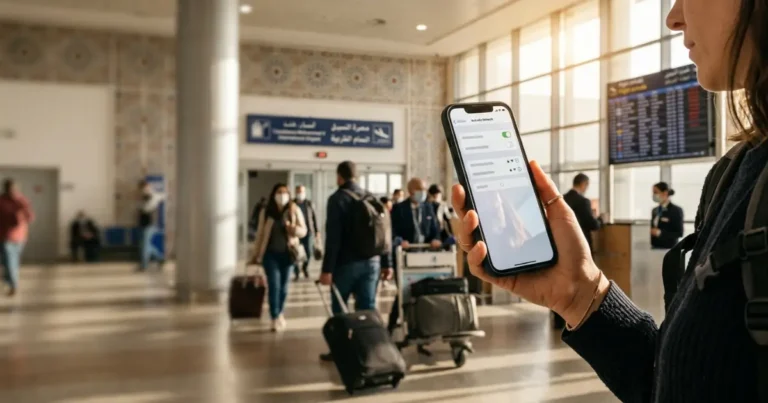
Mohammed V International Airport is Morocco’s main hub and the home base of Royal Air Maroc. It sits about 30 km south of Casablanca and receives the widest spread of routes, including many long-haul and connecting services. If you are flying from outside Europe, or from a smaller European city without direct flights elsewhere in Morocco, Casablanca is often the most practical door in.
Who Should Fly Into Casablanca?
Casablanca suits travellers who need a flexible connection, who are building a route along Morocco’s train network, or who want to see the capital region first. It also works well as a fallback when direct flights to other cities are expensive or unavailable on your dates.
It is less convincing if your whole holiday is in Marrakech or the Sahara. In that case you add a train or road journey of roughly three hours or more before you have even started.
Best Destinations to Reach from Casablanca
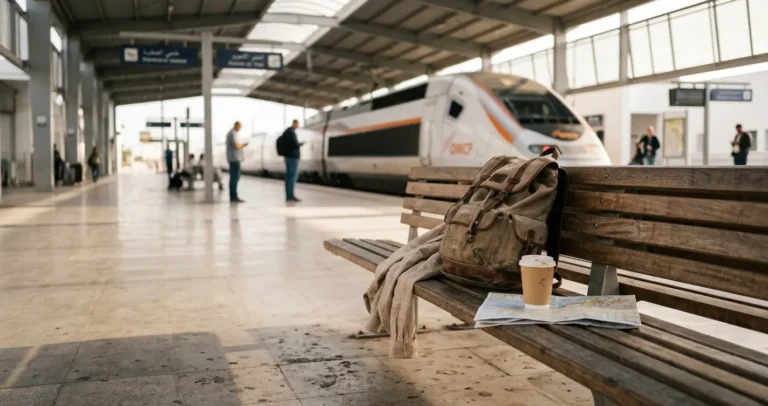
Rabat, the capital, is the closest major city and an easy first stop. The high-speed Al Boraq line runs north through Rabat to Tangier, which makes Casablanca a natural start for a northern itinerary. Marrakech is about three hours away by conventional train, and Fes is reachable by rail as well.
Casablanca itself rewards a night, mainly for the Hassan II Mosque, one of the largest in the world and open to visitors on guided tours.
Getting from Casablanca Airport to the City and Train Station
Casablanca has a real advantage here: a railway station in the basement of Terminal 1. According to the national airports authority, ONDA, trains run directly to Casa-Voyageurs and Casa-Port, with a journey time of around 30 minutes to Casa-Voyageurs. Fares are published at 50 MAD in second class and 70 MAD in first. Services generally run from early morning to late evening, so check the ONCF timetable before you rely on a late arrival.
For Marrakech and most long-distance destinations, you change at Casa-Voyageurs. Taxis are available outside the terminal for arrivals outside train hours or with heavy luggage. Agree the fare before you get in.
2. Marrakech Airport (RAK): Best for Marrakech and Southern Morocco
Marrakech Menara is the airport most first-time visitors picture when they imagine arriving in Morocco. It lies only a few kilometres from the city, and it serves a heavy schedule of European routes, including many low-cost carriers.
Who Should Fly Into Marrakech?
Marrakech is the right choice if you are spending your first days in the Red City, heading to the Atlas Mountains, or building a route toward the desert and the south. It also suits short city breaks, since you can be in a riad within an hour of landing.
It is a poor choice if your trip is mostly in the north. Fes and Tangier are a long way from here.
Best Destinations to Reach from Marrakech
From Marrakech you can reach the High Atlas villages in a day trip, the coastal town of Essaouira in around three hours by road, and the Draa Valley and desert fringes via the Tizi n’Tichka pass. Ouarzazate, often used as a base for kasbahs and film-set landscapes, is roughly four hours away.
The big Saharan dunes at Merzouga are a much longer journey. Plan an overnight stop rather than a single push.
Getting from Marrakech Airport to Your Accommodation
Marrakech airport relies on buses and taxis. The ALSA Line 19 shuttle connects the airport with the city, including the Jemaa el-Fna area and the train station, at around 30 MAD one way and with services roughly every 20 to 30 minutes. Taxis from the airport are widely used and fares to the centre are typically in the range of 70 to 100 MAD, with a night supplement. Confirm the price first.
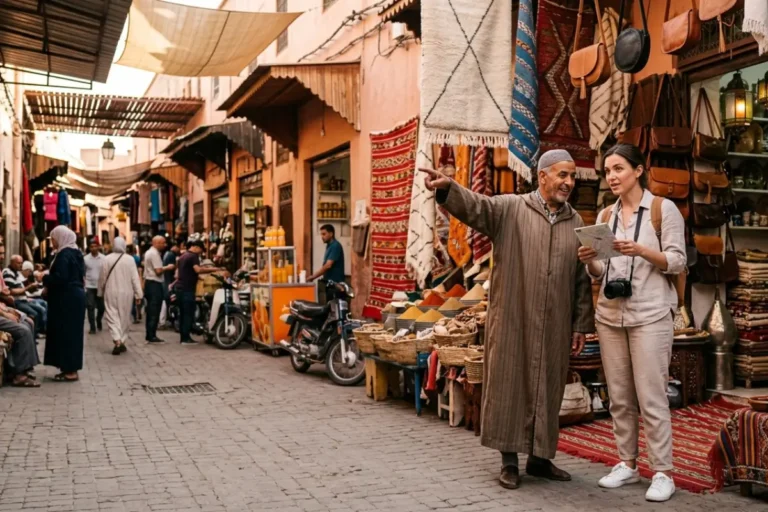
Medina riads often cannot be reached by car. Ask your host where the driver can stop, and whether someone can meet you at the nearest gate.
3. Fes Airport (FEZ): Best for Fes and Cultural Trips
Fes-Saïss Airport is smaller than Casablanca or Marrakech and offers fewer routes. For the right traveller, it removes a long transfer.
Who Should Fly Into Fes?
Fes suits travellers whose priority is the imperial cities, the old medina and the Middle Atlas. It also works for a one-way trip that flows south from Fes to Marrakech, or north towards Chefchaouen. Check that your home airport has a direct or one-stop connection first.
Visiting Meknes and Volubilis from Fes
Meknes lies roughly an hour from Fes by road, and the Roman site of Volubilis, a UNESCO World Heritage Site, is a short drive beyond it. Many visitors combine both in a single day, with a stop in the village of Moulay Idriss. An early start helps, particularly in summer when the ruins have little shade.
Getting from Fes Airport to the Medina
Fes airport has no rail link, so you will use a bus or a taxi. A local bus, usually line 16, runs between the airport and the city for a few dirhams, though schedules are limited and it is not suited to heavy luggage or late arrivals. Taxis are the standard option, and fares vary with time of day and negotiating skill. Agree the price before departure.
The medina of Fes el-Bali is largely pedestrian, so expect a final walk from the gate to your riad. A pre-arranged pickup from your accommodation can save a lot of confusion on the first evening.
4. Tangier Airport (TNG): Best for Northern Morocco
Tangier’s Ibn Battouta Airport is the best gateway for the north. It handles a growing number of European routes and is closer to the Mediterranean coast than any other major airport.
Who Should Fly Into Tangier?
Tangier is ideal if your trip focuses on the blue city of Chefchaouen, the Rif Mountains and the northern coast. It also suits travellers combining Morocco with southern Spain, since Tangier connects to Europe by ferry as well as by air.
Reaching Chefchaouen, Tetouan and Asilah
Asilah, a whitewashed seaside town, is about 45 minutes south of Tangier. Tetouan is roughly an hour away to the east, and Chefchaouen is around two to two and a half hours by road. Shared grand taxis and buses connect these towns, and the high-speed train to Rabat and Casablanca starts from Tangier.
Getting from Tangier Airport to the City
The airport is about 15 km from central Tangier, and public transport from the terminal is limited. Taxis are the practical choice, with fares varying by time of day. Agree the price first, or check whether the meter will be used. Pre-arranged transfers are a sensible option for late arrivals. If you are heading straight to the railway, ask for the station you need, since Tangier has more than one.
5. Agadir Airport (AGA): Best for Beach Holidays
Agadir Al Massira Airport serves Morocco’s best-known Atlantic resort. It is the natural choice for a relaxed beach stay, a surf trip or a family holiday with a single base.
Who Should Fly Into Agadir?
Agadir suits travellers who want sun, long beaches and a resort setting, and those who plan to explore the Souss region and the Anti-Atlas. It is not a convenient start for Marrakech or the north, so match it to a coastal itinerary.
Reaching Taghazout and the Southern Atlantic Coast
Taghazout, the surf village north of Agadir, is roughly 45 km from the airport by road, which most transfer providers cover in about an hour. Further up the coast you reach Imsouane and, eventually, Essaouira. South of Agadir lie Taroudant and the Anti-Atlas villages.
Getting from Agadir Airport to Your Accommodation
Agadir airport has taxis and pre-booked transfers, and many resorts arrange shuttles. Costs vary by distance, group size and time, so compare a quoted transfer with the airport taxi rank. If you are staying outside Agadir city, a fixed-price transfer avoids haggling after a long flight.
6. Rabat Airport (RBA) and Other Airports Worth Considering
Beyond the five main gateways, a few smaller airports can occasionally save you time. Their schedules are narrower and more seasonal, so treat them as options to verify rather than assume.
When Rabat-Salé Airport Makes Sense
Rabat-Salé Airport serves the capital region. It makes sense when you want to start in Rabat, or when a fare is competitive and your itinerary runs along the Rabat–Casablanca–Tangier corridor. The city has train links, so onward travel is straightforward once you arrive.
Should You Consider Essaouira or Ouarzazate Airport?
Essaouira-Mogador and Ouarzazate airports can place you close to the coast or the desert gateway without a long drive. Flight options are often limited, and the airlines and routes change with the season.
Check Flight Availability Before Choosing a Smaller Airport
Before you build an itinerary around a small airport, confirm that flights operate on your dates and that the schedule suits your arrival and departure plans. A single weekly service leaves little room for change.
How to Choose the Right Airport for Flying to Morocco and Your Itinerary
The best airport depends on the trip you are planning. These matches cover the most common routes.
Best Airport for a First Trip to Morocco
Marrakech is the usual answer for a first visit, since it offers frequent flights and a compact base for day trips. Casablanca is a strong alternative if your flight is a connection, or if you plan to take the train north.
Best Airport for Marrakech and the Sahara Desert
Marrakech, without hesitation. It positions you for the Atlas, the Draa Valley and the long road toward the dunes. Allow at least two nights on the way to Merzouga rather than a single marathon drive.
Best Airport for Fes and Chefchaouen
Fes is the most direct option if flights suit you. Tangier is the other choice, particularly if you are continuing along the north, since Chefchaouen is closer to it.
Best Airport for a Northern Morocco Road Trip
Tangier. It starts your route at the top of the country and avoids backtracking.
Best Airport for a Beach Holiday
Agadir, for a resort and surf-focused stay. Essaouira’s character is different, and is better reached from Marrakech or Agadir by road.
Best Airport for a Short Trip
For a long weekend, pick the airport nearest your accommodation and do not try to cover multiple regions. Marrakech or Fes with direct flights usually works best.
7 Costly Mistakes to Avoid When Flying to Morocco
Flying to Morocco goes smoothly when you plan for the ground as well as the air. These are the errors that cost travellers the most.
Choosing the Cheapest Flight Without Calculating Transfer Costs
A low fare into a distant airport can cancel out its own saving once you add a train, a taxi and possibly a night’s accommodation. Compare the total journey, not only the ticket.
Flying into an Airport Far from Your First Destination
Morocco’s distances catch people out. A flight that lands you in Casablanca for a Fes trip is fine if you plan the train, but it is a poor fit if you assumed a short drive.
Ignoring Arrival Times and Late-Night Transfers
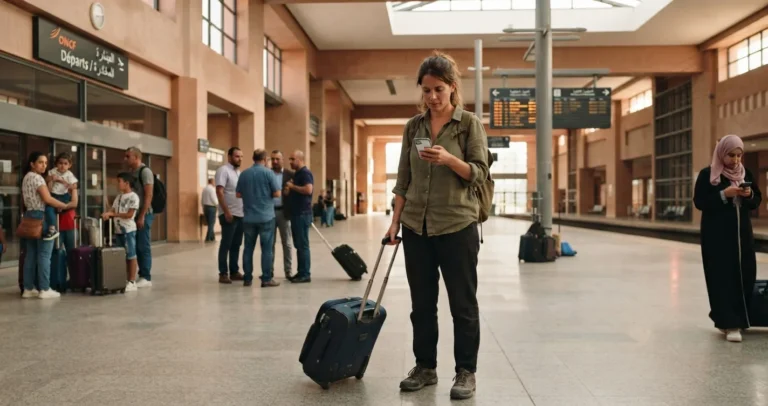
Trains and buses do not run all night. A late landing can leave you with taxis only, and some fares rise after dark. Check last departures from the airport before you book.
Booking Separate Flights Without Enough Connection Time
If you combine two separate tickets, a delay on the first flight is your problem, not the airline’s. Leave generous time, and avoid tight connections at Casablanca.
Forgetting Baggage Fees and Other Airline Charges
Low-cost airlines often charge for cabin bags, checked luggage and seat selection. Add these to the fare before you compare options.
Assuming Every Airport Has Convenient Public Transport
Casablanca has a train. Most other airports rely on buses and taxis, and some of those have limited hours. Plan the transfer in advance.
Booking a Return Flight That Forces You to Backtrack
A return flight from your arrival airport can mean a long final day on the road. If your route runs in one direction, look at flying home from a different city.
Casablanca vs Marrakech: Which Airport Is Better?
Most travellers end up choosing between these two. Neither is better in absolute terms, and the right answer depends on where you are going.
Flight Availability and Connections
Casablanca is the stronger hub for connections and long-haul routes, thanks to Royal Air Maroc. Marrakech has a large network of direct European flights, many of them low-cost. If your home airport has a direct flight to Marrakech, that is usually the simplest option.
Travel Time to Popular Destinations
From Marrakech, the city, the Atlas and the south are close. From Casablanca, Rabat and the north are closer, and Marrakech is about three hours away by train. If your plans include both regions, Casablanca arrival and Marrakech departure (or the reverse) can work well.
Ground Transport Costs and Convenience
Casablanca’s airport train is cheap and easy. Marrakech is close to the city, so a taxi or bus costs little, but you will still need to manage the final stretch into the medina. For a Marrakech-only trip, Casablanca adds a train fare and a few hours of travel.
Should You Fly Into One City and Leave from Another?
Flying into one airport and out of another is called an open-jaw ticket, and it suits Morocco better than most countries.
When an Open-Jaw Flight Saves Time and Money
If your route is linear, for example Tangier to Marrakech or Fes to Agadir, an open-jaw ticket removes a day of backtracking. It often costs about the same as a return flight, and sometimes less.
When a Return Flight from the Same Airport Makes Sense
If you are basing yourself in one region, or if the price difference is significant, a return from the same airport keeps things simple. It also helps if you are hiring a car and want to avoid one-way drop-off fees.
How to Plan Your Route Around Your Flights
Start by listing the places you want to see, then arrange them in a line. Put your arrival and departure airports at the two ends, and add buffer time before your flight home so that a delayed train does not cost you the trip.
What to Check Before Flying to Morocco
A short checklist before you pay saves most of the common problems.
Compare the Total Cost, Not Just the Airfare
Add transfers, baggage, airport taxes and any extra night. The cheapest fare is not always the cheapest trip.
Check Airport Codes and Seasonal Routes
Confirm the airport codes (CMN, RAK, FEZ, TNG, AGA, RBA), since similar city names can lead to the wrong booking. Some routes run only in certain seasons, so check the schedule for your dates.
Plan Your Airport Transfer
Decide how you will reach your hotel before you land. Pre-book a transfer for late arrivals, or note the last train or bus time. Keep some cash in dirhams for taxis.
Check Passport, Visa and Entry Requirements
Many nationalities can enter Morocco for tourism without a visa for up to 90 days, while others need an e-visa or a consular visa. Passport validity rules differ between sources, with six months beyond your entry date commonly advised, so confirm with official guidance for your passport before you book. Make sure the entry stamp is placed in your passport on arrival.
Confirm Your First Night’s Accommodation
Border officers and airlines may ask where you are staying. Have the address of your first night saved, along with a contact number, and tell your host your arrival time.
Frequently Asked Questions About Flying to Morocco
What Is the Best Airport for Flying to Morocco?
Flying to Morocco works best through the airport nearest your first destination. For most first-time visitors that is Marrakech, thanks to its direct flights and its position for day trips. Casablanca is the best choice for connections and for trips that follow the train network, while Tangier and Fes suit the north and the imperial cities. Agadir is the beach option. The best airport is the one that puts you closest to where you will spend your first two nights, and that is rarely the cheapest one.
Is It Better to Fly Into Casablanca or Marrakech?
It depends on your route. Marrakech is better if you are staying in the south or want a short, direct trip. Casablanca is better if you need a connecting flight, plan to travel north by train or want to avoid a point-to-point route. Casablanca adds a train journey of about three hours to reach Marrakech, so for a Marrakech-focused holiday the direct flight is usually the better value in time.
Which Airport Is Best for First-Time Visitors?
Marrakech is the most common choice, since it has frequent flights and is close to the city. First-time visitors who want to see several cities can also start in Casablanca and follow the train line. Choose the airport that matches your first base, and keep your first transfer simple.
Which Airport Is Best for the Sahara Desert?
Marrakech is the most practical airport for the desert, and it is also the usual starting point for routes through the Atlas and Draa Valley. Fes is a good alternative if you prefer to approach Merzouga from the north. Either way, the desert is a long drive from any airport, so allow overnight stops and avoid trying to do it in a single day.
Which Airport Is Best for Chefchaouen?
Tangier is the closest of the major airports, with a road journey of roughly two to two and a half hours. Fes is another option, though the drive is longer. Chefchaouen has no airport of its own, so a bus, shared taxi or private transfer completes the trip.
Is It Worth Flying Into One City and Out of Another?
Often, yes. If your route runs in one direction, an open-jaw ticket removes backtracking and saves a day. Compare the price against a standard return, and check that your itinerary has enough buffer before the flight home. If you are renting a car, ask about one-way fees before committing.
Are Smaller Airports in Morocco Cheaper to Fly Into?
Not necessarily. Smaller airports have fewer routes and sometimes fewer flights per week, so fares and dates can be less flexible. A lower fare can also be offset by longer transfers. Compare the full cost, including ground transport, and confirm that the airline operates on the days you want.
How Do You Get from a Moroccan Airport to Your Hotel?
Options depend on the airport. Casablanca has a train. Marrakech has a bus line and taxis. Fes, Tangier and Agadir rely mainly on taxis and pre-booked transfers, with limited bus services. In all cases, agree taxi fares before you set off and arrange a pickup if you arrive late. Many riads can arrange a driver, which is especially useful for medina addresses.
Final Tips for Flying to Morocco: Choosing the Right Airport
Flying to Morocco becomes simple once you stop thinking about airports as arrival points and start thinking about them as the first leg of your route. Pick the airport that sits closest to your first base, then build the trip outward from there. If your itinerary runs in a line, consider an open-jaw ticket so that you never retrace your steps.
Before you pay, add up the real cost, including the transfer, bags and the first night’s accommodation. Check that your flight lands at a time when your onward transport is running, and confirm entry requirements for your passport.
One practical tip to finish: save the address of your first accommodation, the airport code of your return flight and the phone number of your host in your phone before you leave home. Those three details prevent most of the small problems that spoil a first day.