Best Souks in Marrakech (2026): 15 Amazing Markets You Need to Explore
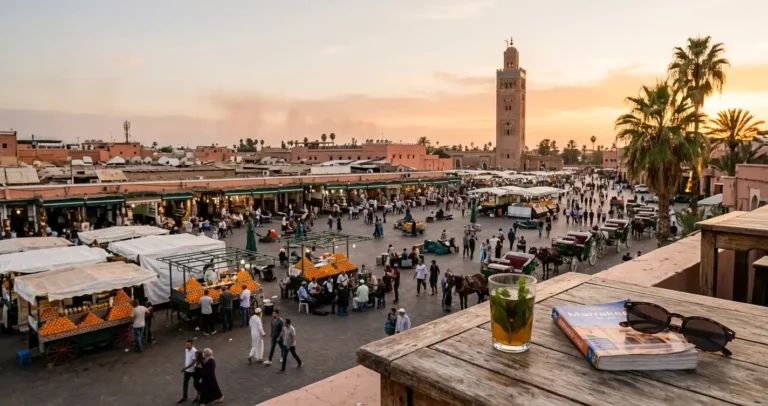
The best souks in Marrakech aren’t a single market but a maze of dozens, each named for what’s traditionally sold there leather here, lanterns there, spices around the next corner. Dating back to the 11th century, when the Almoravids founded Marrakech on trade routes linking sub-Saharan Africa with the Mediterranean, the souks have functioned as the city’s commercial heart for nearly a thousand years.
That history is still legible today in how the souks are named and organized, even as the goods on sale have shifted with the times. This guide covers 15 of the best souks in Marrakech, from the busy main arteries to the quieter artisan alleys most visitors walk straight past.
Best Souks in Marrakech: The Short Answer
For a first visit, start with Souk Semmarine, the main artery running north from Jemaa el-Fnaa. For spices, head to Rahba Kedima. For colorful photos, Souk des Teinturiers and its hanging dyed yarns are hard to beat. If you want to watch real craftsmanship rather than just shop, Souk Haddadine’s blacksmiths and Souk Cherratine’s leatherworkers reward the walk north, away from the busiest tourist stretch.
What Makes Marrakech’s Souks So Special?
Unlike a modern market, each souk in Marrakech historically specialized in one trade leather, metal, dyes, spices a structure that survives largely intact today. That specialization means wandering from one souk into the next tells a story about the city’s craft history, not just its shopping options, and it’s part of why the souks reward slow exploration over a rushed checklist visit.
How Are the Souks Organized?
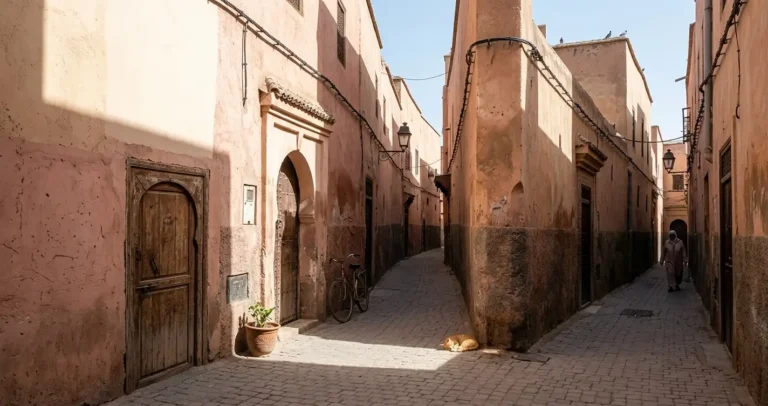
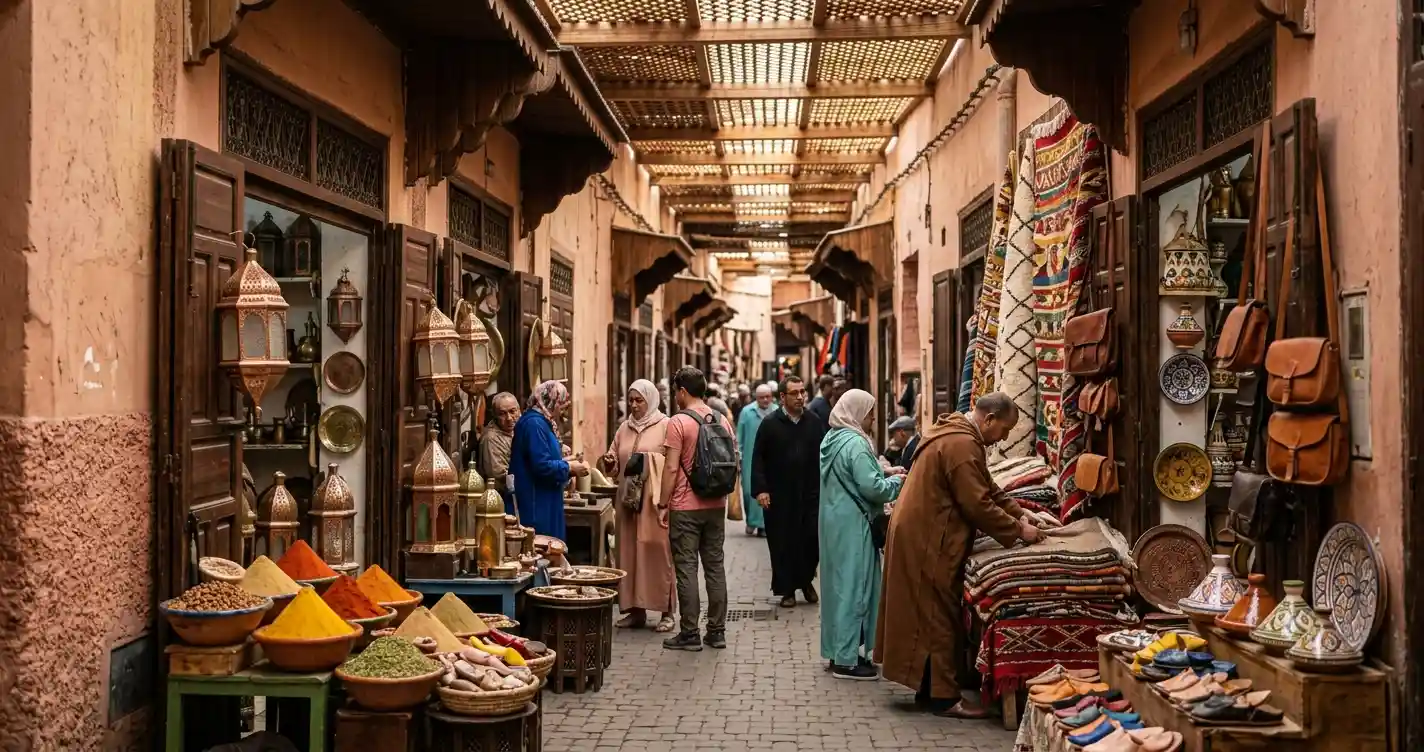
The souks radiate north from Jemaa el-Fnaa along a handful of main streets chiefly Souk Semmarine, which forks into Souk el Attarine and Souk el Kebir with smaller, trade-specific souks branching off in every direction. There’s no single official map, and even locals sometimes call the same alley by two different names, so getting a little lost is part of the experience rather than a sign you’ve gone wrong.
15 Best Souks in Marrakech
1. Souk Semmarine – Best for a First Visit
The main artery of the souks, Souk Semmarine runs north from Jemaa el-Fnaa under a long iron trellis, splitting further along into Souk Nejjarine and Souk el-Kebir. It’s the busiest and most tourist-facing stretch, packed with textiles, pastries, pottery, and souvenirs, which makes it the natural starting point even though prices here tend to run higher than in the quieter souks further north. Most visitors pass through it more than once, since nearly every smaller souk in this guide branches off it eventually.
2. Souk des Teinturiers – Best for Colorful Displays
In the Mouassine quarter, Souk des Teinturiers is where dyers plunge fabric and wool by hand into vats of vivid color, then hang the finished skeins overhead to dry in the sun. It’s one of the most photogenic corners of the medina, and it’s possible to watch the whole dyeing process in progress rather than just browse finished pieces.
3. Souk Haddadine – Best for Metalwork
Tucked in the Bab Doukkala quarter at the northern edge of the souks, Souk Haddadine is the blacksmiths’ souk, filled with hanging lanterns and the constant clang of hammers on iron. It sees far fewer tourists than Souk Semmarine, and craftsmen here forge everything from ornate lanterns to coat hangers, grilles, and keys in full view of passersby. The heat from the furnaces is noticeable even from the street, which adds to the sense of walking into a working forge rather than a shop.
4. Souk Cherratine – Best for Leather Goods
Just beyond Souk el Kebir, Souk Cherratine is where Marrakech’s leatherworkers turn tanned hides into bags, belts, wallets, and purses, often finished with Berber-inspired geometric patterns or inlaid metal and fabric. Since the raw leather is processed separately at the nearby tanneries, this is where the finishing craftsmanship actually happens.
5. Souk Sebbaghine – Best for Traditional Textiles
Close to the Mouassine fountain, Souk Sebbaghine is another of the medina’s dyers’ souks, where artisans dip fabric by hand into large dyeing vats before laying the finished, vividly colored textiles out in the sun to dry. It’s smaller and quieter than Souk des Teinturiers but shows the same generations-old process.
6. Souk Smata – Best for Moroccan Slippers
Near the Ben Youssef Madrasa, Souk Smata is dedicated entirely to babouches pointed-toe leather slippers sold in every color, from plain everyday styles to versions embroidered with sequins. Some shops here let you watch the slippers being cut and stitched on the spot, and it’s worth buying a size smaller than usual since the leather stretches with wear. A separate pair for indoor and outdoor use is traditional, so don’t be surprised if a vendor suggests two pairs rather than one.
7. Souk des Bijoutiers – Best for Jewelry
Marked by signs reading “Bijouterie Tegmoutiene” to the right of rue Souk el-Kebir, Souk des Bijoutiers specializes in silver and gold pieces, often set with turquoise, amber, or coral in traditional Berber designs. For more affordable, colorful costume jewelry, nearby Souk Siyyaghin offers a cheaper alternative with tribal-inspired designs.
8. Souk Ableuh – Best for Spices and Olives
Usually the first souk encountered coming from Jemaa el-Fnaa, Souk Ableuh is a small, atmospheric market of olives, lemons, chilis, and pickles, with mounds of green, red, and black olives forming its signature display. Most shoppers here are locals rather than tourists, despite its central location.
9. Souk Kimakhine – Best for Musical Instruments
Known as the musicians’ souk, Souk Kimakhine gathers artisans crafting traditional Maghrebi instruments the guembri (a three-stringed Gnawa bass lute), the bendir frame drum, the darbouka goblet drum, and the oud. It’s a genuinely interesting stop even for non-musicians, since many instruments are made and repaired on-site.
10. Souk Attarine – Best for Spices and Perfumes
Once purely a spice and perfume market, Souk Attarine today leans more toward copper pots, silver teapots, and brass lanterns, though a handful of spice and perfume stalls remain, keeping the air fragrant. The pyramid-stacked spice displays that survive here are some of the most photographed sights in the souks.
11. Souk Kchacha – Best for Dried Fruits and Nuts
Near Souk Ableuh, Souk Kchacha specializes in dried fruits and nuts dates, figs, apricots, almonds, and cashews sold loose by weight. It pairs naturally with a stop at the neighboring olive souk if you’re assembling a picnic or gifts to take home.
12. Souk Lakbir – Best for Traditional Clothing
“Lakbir” is simply another transliteration of “el Kebir” (meaning “the big one”), and this stretch of the souk where it runs into covered kissarias is known for fabrics, traditional djellabas, and clothing rather than the leatherwork and crafts found further along the same artery.
13. Souk El Kebir – Best for Moroccan Crafts
Continuing along the same main route as Souk Lakbir, Souk el Kebir is also home to leatherworkers, carpets, and wood wares, making it one of the broadest single stretches in the souks for browsing handmade Moroccan crafts under one roof.
14. Souk Rahba Kedima – Best for Souvenirs and Local Products
Also called Place des Épices, this small open square is lined with apothecary stalls sometimes called Berber chemists selling traditional cosmetics, herbal remedies, dried roses, kohl, and ghassoul clay, alongside straw baskets and wool hats. It was also the site of Marrakech’s slave market until the French occupation ended the practice in 1912, a difficult history worth knowing as you pass through. Today the square also connects to Souk Zrabi, the medina’s main carpet market, tucked down a passageway on its far side.
15. Souk near Bab Doukkala – Best for a More Local Experience
Around the Bab Doukkala gate and the Arset Ben Chebi neighborhood, this market skews far more local than the tourist-heavy souks near Jemaa el-Fnaa, mixing copperware, clothing, and shoes with a genuine grocery market of olives, fresh bread, oranges, and lamb brochettes. It’s a good stop if you want a sense of how residents actually shop day to day, away from any souvenir-focused stretch.
Best Souks in Marrakech for Traditional Moroccan Crafts
Where to Find Moroccan Pottery
Souk Semmarine’s entrance stretch is lined with colorful pottery and ceramics, making it an easy first stop for tagines, bowls, and painted plates before heading deeper into the souks.
Where to Find Traditional Carpets
Souk Zrabi, reached via a passage off Rahba Kedima, is the medina’s dedicated carpet market, also known as Le Criée Berbère for its history as a Berber auction site.
Where to Find Leather Goods
Souk Cherratine remains the standard for leather bags, belts, and wallets, with Souk el Kebir offering a broader but less specialized selection nearby.
Where to Find Metalwork and Lanterns
Souk Haddadine is the place for handmade lanterns and ironwork, while Souk Attarine covers polished copper, brass, and silver teapots.
Where to Find Traditional Textiles
Souk des Teinturiers and Souk Sebbaghine both specialize in hand-dyed fabric and wool, with the kissarias near Souk el Kebir adding finished silks and patterned cloth.
Best Souks in Marrakech for Shopping
Best Souks for Moroccan Slippers
Souk Smata is the definitive babouche souk, with Souk Cherratine offering a secondary, leather-focused selection nearby.
Best Souks for Spices
Rahba Kedima and Souk Attarine both remain strong for spices despite Attarine’s shift toward metalwork, while Souk Ableuh covers olives and preserved foods rather than dry spices.
Best Souks for Jewelry
Souk des Bijoutiers is the main jewelry market, with Souk Siyyaghin as a cheaper, more colorful alternative for costume pieces.
Best Souks for Souvenirs
Souk Semmarine’s entrance stretch and Rahba Kedima both offer a wide, easy-to-browse range of souvenirs without requiring a deep dive into the medina’s smaller alleys.
Best Souks for Moroccan Home Décor
Souk Haddadine for lanterns, Souk Chouari for carved wood, and Souk el Attarine for brass and copper cover most home décor needs between them.
How to Bargain in the Marrakech Souks
When Should You Bargain?
Bargaining applies almost everywhere in the souks except fixed-price boutiques, particularly the curated shops in areas like Souk Cherifia, so it’s worth asking upfront if a price is negotiable before assuming it is.
How Much Should You Offer?
A common approach is to start at roughly 40–50% of the vendor’s opening price and negotiate from there, staying friendly rather than aggressive throughout. Most vendors expect this dance and treat a fair counteroffer as the normal opening move rather than an insult.
What Should You Never Do While Bargaining?
Avoid naming a price you’re not willing to pay, since agreeing to a number is generally understood as a commitment to buy, and avoid bargaining aggressively over very small sums a few dirhams rarely matters as much to you as it does to the vendor.
How to Avoid Common Tourist Shopping Mistakes
Buying the first version of an item you see, rather than comparing a few shops, is the most common overspend. It’s also worth being cautious with anyone offering to “guide” you to a specific shop unprompted, since commission arrangements can inflate prices without your knowledge.
Best Souks in Marrakech for First-Time Visitors
Where Should You Start?
Jemaa el-Fnaa is the natural entry point, with Souk Semmarine as the first major artery leading north into the medina.
The Best Walking Route Through the Souks
A logical route runs from Souk Semmarine into the textile and leather shops, on to Rahba Kedima for spices and baskets, then toward Souk des Teinturiers for a more visual, photogenic stretch before finishing near the artisan zones like Souk Haddadine.
How Long Do You Need?
A rewarding first visit takes at least half a day; a full day allows time to also reach the quieter, less touristy alleys toward Bab Doukkala.
What Time Is Best to Visit?
Mornings before noon and early evenings, once the midday heat eases, both offer a more comfortable pace than the middle of the day.
Best Souks in Marrakech for Authentic Local Experiences
Beyond the Main Tourist Streets
Souk Haddadine and the market near Bab Doukkala both draw far fewer tourists than Souk Semmarine, offering a more everyday view of how the medina actually shops and works.
Discovering Artisan Workshops
Souk Kimakhine’s instrument makers and Souk Chouari’s woodworkers both operate visible workshops rather than simple storefronts, making them worth a stop even without buying anything.
Watching Moroccan Craftsmen at Work
Souk Haddadine’s blacksmiths and Souk des Teinturiers’ dyers both work in full view of the street, offering some of the most memorable craft-in-progress moments in the medina.
What to Buy in the Marrakech Souks
Moroccan Rugs
Handmade Berber and Moroccan carpets from Souk Zrabi range widely in price depending on size and material, generally starting around 500 MAD and climbing well into the thousands for larger, finer pieces.
Babouche Slippers
Traditional leather slippers from Souk Smata or Souk Cherratine typically run 70–200 MAD, with more heavily embroidered or sequined styles at the higher end.
Argan Oil
A medium bottle of genuine argan oil generally costs around 150 MAD, and it’s worth confirming with the vendor whether it’s cosmetic or culinary grade before buying.
Spices and Herbal Products
Spices from Rahba Kedima or Souk Attarine, sold loose by weight, typically cost 20–80 MAD depending on the quantity and rarity of what you choose.
Lanterns and Metalwork
Handmade lanterns from Souk Haddadine start from around 30 MAD for simple styles, climbing considerably for larger or more ornate pieces.
Leather Bags and Belts
Leather goods from Souk Cherratine vary widely by size and craftsmanship, with smaller items like wallets and belts at the more affordable end of the range.
Ceramics and Pottery
Tagines, bowls, and painted plates from Souk Semmarine typically run 20–50 MAD depending on size, making them an easy, packable souvenir.
Moroccan Textiles
Scarves and pashminas from the kissarias near Souk el Kebir generally cost 20–70 MAD, while hand-dyed fabric from Souk des Teinturiers varies more by quality and origin.
How Much Do Things Cost in the Marrakech Souks?
Typical Souvenir Prices
Small, easy souvenirs spices, olives, a simple lantern, a scarf generally stay under 100 MAD once negotiated.
Moroccan Crafts and Handmade Products
Larger handmade items, particularly carpets and detailed leatherwork, can run from several hundred to several thousand MAD depending on size, material, and craftsmanship.
Why Prices Vary
Prices shift with a vendor’s opening estimate of a buyer’s budget, the item’s actual material quality, and how close the shop sits to the busiest tourist routes.
How to Recognize a Fair Price
Comparing the same item across two or three shops before committing is the simplest way to gauge whether an offer is reasonable, and prices near the quieter northern souks tend to run lower than near Jemaa el-Fnaa.
Best Time to Visit the Marrakech Souks
Best Time of Day
Morning, before noon, and early evening both offer cooler temperatures and a calmer pace than the middle of the day.
Best Season
Spring and autumn bring the most comfortable walking weather for a long souk session, avoiding both summer heat and winter’s occasional rain.
Visiting During Ramadan
Some shops adjust their hours during Ramadan, often opening later and staying open past sunset once the fast breaks, so building in extra flexibility helps if visiting during this period.
Visiting During Busy Periods
Weekends and major local holidays bring noticeably heavier crowds to the main arteries like Souk Semmarine, so the quieter northern souks make a good alternative during peak periods.
Tips for Exploring the Marrakech Souks
Wear Comfortable Shoes
The souks involve long stretches of uneven cobblestone and narrow alleys, so comfortable, closed shoes matter more here than in most parts of the city.
Download an Offline Map
GPS can drift inside the covered souks since rooftops are partial and buildings are tight, so an offline map app is a useful backup even though getting a little lost is part of the experience.
Keep Your Belongings Secure
As with any dense, crowded market, keeping bags zipped and valuables close reduces the small risk of pickpocketing in the busiest stretches.
Be Prepared to Get Lost
Even locals sometimes navigate the souks by landmark rather than street name, so treat a wrong turn as part of the experience rather than a problem to solve immediately.
Dress Appropriately
Covering shoulders and knees is respectful in the medina generally, and dressing modestly can also make for a slightly smoother shopping experience.
Watch for Motorbikes
Motorbikes weave through even the narrowest souk alleys, so staying alert to the sound of an approaching engine is a genuinely useful habit.
Carry Small Notes and Cash
Most souk vendors deal in cash, and having small dirham notes on hand makes both bargaining and simple purchases easier.
Best Souks in Marrakech: Frequently Asked Questions
What Are the Best Souks in Marrakech?
Souk Semmarine, Rahba Kedima, Souk des Teinturiers, and Souk Haddadine consistently rank as highlights, each offering a distinct kind of shopping or craft experience.
Where Are the Marrakech Souks Located?
The souks sit just north of Jemaa el-Fnaa, inside the medina, the old walled part of the city.
Are the Souks in Marrakech Free to Visit?
Yes walking through and browsing costs nothing, though individual craft workshops or private tours may charge a fee.
What Time Do the Souks Open?
Most souks open between 9 and 10am and close by early evening, though hours vary somewhat by souk and can shift during Ramadan or local holidays.
How Long Should You Spend in the Souks?
At least half a day for a first visit, with a full day allowing time to also explore the quieter, less touristy alleys further from Jemaa el-Fnaa.
Do You Have to Bargain in Marrakech?
In most souk shops, yes prices are rarely fixed, and bargaining is an expected, normal part of the transaction rather than something to feel awkward about.
What Should You Buy in the Marrakech Souks?
Babouches, argan oil, spices, lanterns, leather goods, and ceramics are among the most popular and practical purchases across the souks.
Are the Marrakech Souks Safe?
Generally yes, with the same everyday precautions you’d take in any dense, crowded market watching your belongings and staying aware of your surroundings.
Can You Visit the Souks Without a Guide?
Yes, and many travelers do, though a local guide can help first-timers understand the trades on display and reach smaller workshops that are easy to miss on your own.
Final Thoughts on the Best Souks in Marrakech
The best souks in Marrakech reward slowing down rather than rushing to see all fifteen in one afternoon. Spend real time in at least one artisan souk Haddadine’s blacksmiths or Kimakhine’s instrument makers rather than treating every stop as a shopping opportunity, and save Rahba Kedima for when you want a break from the narrower alleys.
However you plan your route, budget more time than you think you’ll need; getting pleasantly lost is, more often than not, the best part of the experience.