Chefchaouen vs Essaouira (2026): Which Moroccan Escape Is Right for You?
Both Chefchaouen and Essaouira get pitched as the antidote to Morocco’s busier imperial cities a slower, more atmospheric alternative to Marrakech and Fes. But beyond that shared reputation, they couldn’t be more different: one is a blue-washed mountain town in the Rif, the other a windswept Atlantic fishing port.
This guide compares them across atmosphere, food, cost, and practicality, so you can work out which one actually fits your trip and whether your itinerary realistically allows for both.
Chefchaouen vs Essaouira at a Glance
The Biggest Difference Between the Two
Chefchaouen is defined by its mountains and its color blue-washed walls set against the green Rif, reached via a genuinely quiet, inward-looking town. Essaouira is defined by its coastline Atlantic wind, a working fishing port, and a fortified medina built for trade rather than mountain seclusion. One is a landlocked retreat, the other a breezy seaside escape, and that single distinction shapes almost everything else about visiting each, from what you’ll eat to what you’ll pack.
Which One Fits Your Morocco Itinerary?
Essaouira sits just 2.5 to 3 hours from Marrakech, making it an easy add-on to a Marrakech-based trip. Chefchaouen sits far closer to Tangier and Fes, generally 2 to 4 hours away, but 7 to 9 hours from Marrakech. In practice, this means the two rarely belong on the same short itinerary Essaouira pairs naturally with Marrakech, while Chefchaouen pairs naturally with a northern loop through Tangier and Fes. Trying to force both into a one- or two-week trip usually means sacrificing time somewhere else.
Chefchaouen vs Essaouira: How They Feel
Chefchaouen: Blue Streets and Rif Mountain Calm
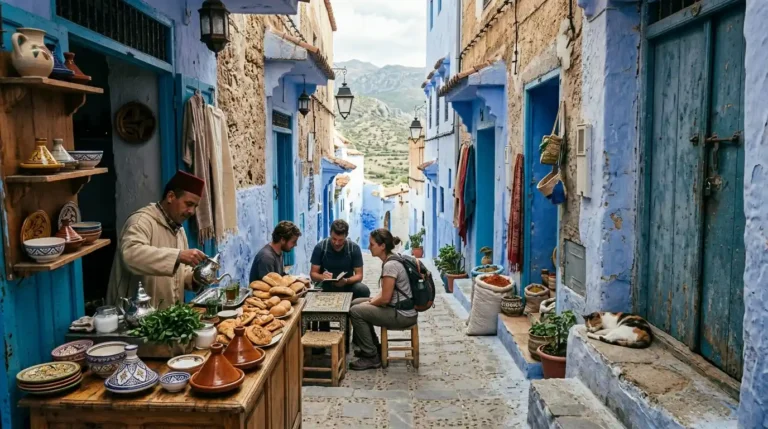
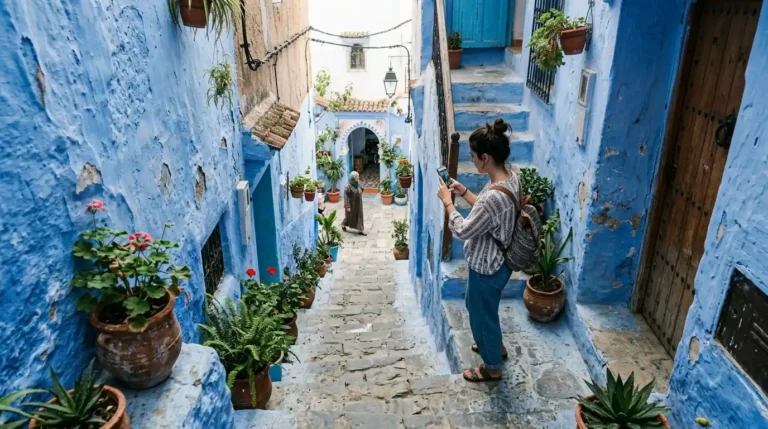
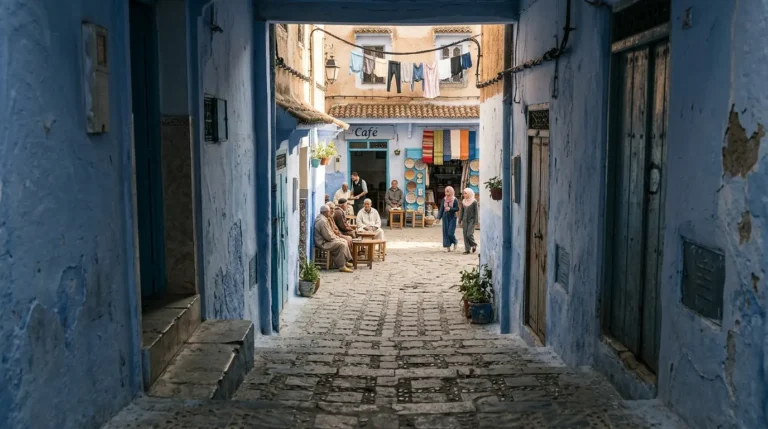
Chefchaouen feels enclosed and intimate, its steep, narrow lanes climbing a hillside surrounded by mountains rather than opening onto any horizon. The atmosphere is quiet and a little dreamlike, built around wandering rather than any single activity, with the surrounding Rif Mountains adding a genuine sense of remoteness. Even at its busiest, midday hours, Chefchaouen rarely feels overwhelming the way a larger Moroccan medina can.
Essaouira: Atlantic Air and Coastal Energy
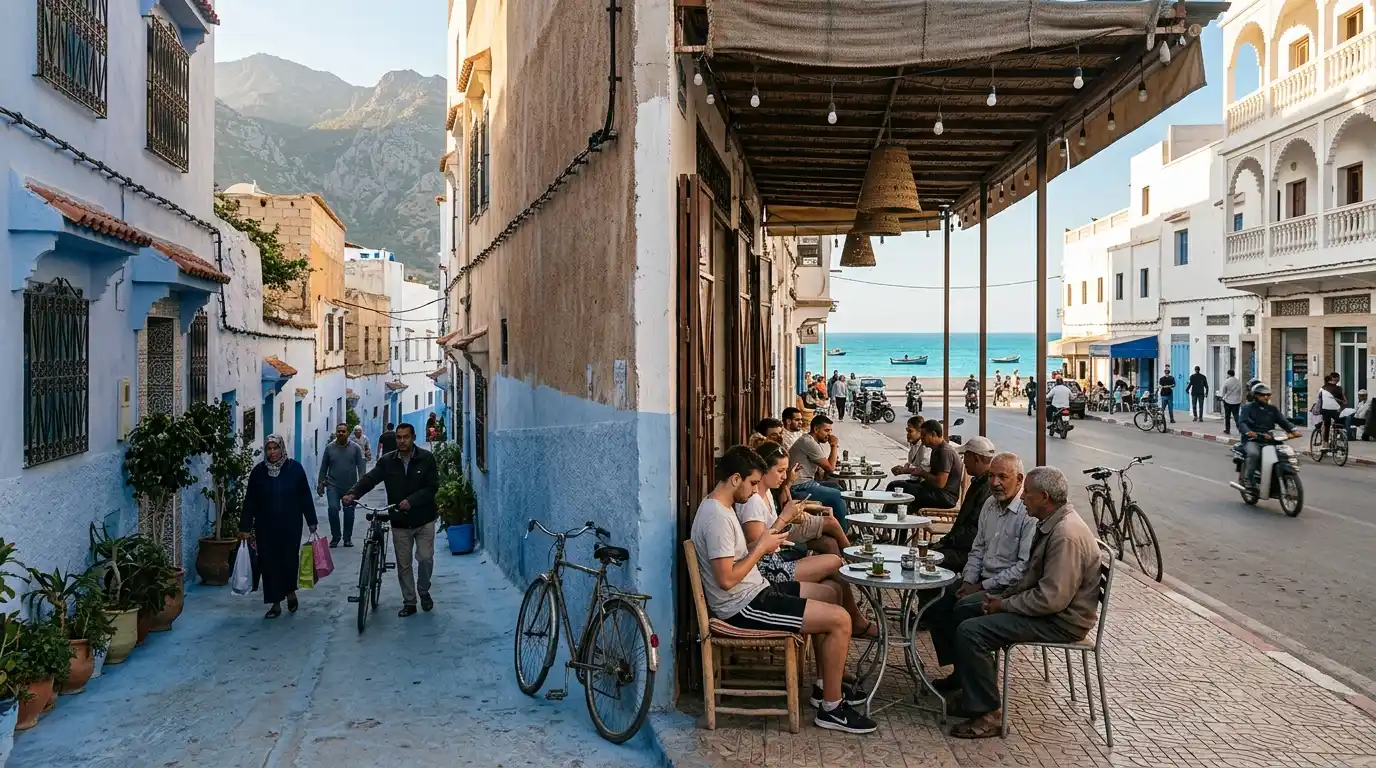
Essaouira feels open and breezy by comparison, its ramparts looking directly out over crashing Atlantic waves. The wind is a constant presence here cooling the town even in summer, filling the sails of kitesurfers along the beach, and giving Essaouira a genuinely different sensory character from anywhere inland in Morocco. Locals call the steady afternoon wind the Alizée, and it shapes the daily rhythm of the town almost as much as the tides do.
The Medina Experience
Exploring Chefchaouen’s Blue Medina
Chefchaouen’s medina is compact, hillside, and almost entirely residential in character, with flower-pot staircases and blue-washed walls that shift in tone from street to street. It rewards slow, aimless wandering more than any structured sightseeing route, and getting mildly lost within it rarely leads far from somewhere familiar given the town’s small overall footprint.
Exploring Essaouira’s Historic Medina
Essaouira’s UNESCO-listed medina, designed in the 18th century by a European engineer for Sultan Mohammed III, is flatter and more logically laid out, built around the working fishing port and the sea-facing Skala ramparts. It’s easier to navigate than either Chefchaouen or Morocco’s larger medinas, with a genuinely relaxed, unhurried souk atmosphere that many visitors find noticeably less pressured than Marrakech’s.
Mountains vs Ocean
What You Get Around Chefchaouen
Beyond the town itself, the Rif Mountains and Talassemtane National Park offer genuine hiking, most notably the Akchour waterfalls and the natural stone arch at God’s Bridge, both reachable within about an hour. The park’s mix of forested slopes and limestone cliffs gives Chefchaouen a genuine outdoor-adventure dimension beyond the medina.
What You Get Around Essaouira
Essaouira’s surroundings are built around the Atlantic: a long, sandy beach stretching south toward the Ksob River estuary, steady trade winds ideal for windsurfing and kitesurfing, and quieter nearby beaches like Sidi Kaouki for those wanting to escape the town altogether. Argan oil cooperatives along the road from Marrakech also make for an easy, worthwhile stop on the way in or out.
Things to Do in Chefchaouen vs Essaouira
What Chefchaouen Is Best For
Chefchaouen excels at photography, slow wandering, and mountain hiking, with the Spanish Mosque sunset viewpoint and the Kasbah museum as its two structured must-sees beyond the medina itself. Nearly everything else worth doing here is free and self-directed.
What Essaouira Is Best For
Essaouira excels at watersports, seafood, and a laid-back coastal pace, with the ramparts walk, the fishing port, and a windsurfing or kitesurfing lesson as its equivalent core activities. Its film history is also a minor draw for some visitors, since the ramparts stood in for Astapor in an earlier season of Game of Thrones.
Food and Local Specialties
Eating in Chefchaouen
Chefchaouen’s food leans toward mountain and Andalusian influence, with goat cheese, hearty Chaouni breakfasts, and dishes reflecting the town’s Spanish colonial history alongside standard Moroccan staples. Portions and prices both stay modest, in keeping with the town’s generally low-key character.
Eating in Essaouira
Essaouira is defined by seafood, bought fresh at the port and grilled to order sardines, sea bream, calamari, and prawns are the standard order, often eaten at simple portside stalls rather than formal restaurants. Beyond seafood, standard Moroccan dishes like tagine and harira remain widely available in the medina’s small, family-run restaurants.
Chefchaouen vs Essaouira: Which Is More Relaxing?
The Pace of Chefchaouen
Chefchaouen’s pace is set by its hills and its small scale there’s genuinely little to rush toward, and most visitors naturally slow down within a day of arriving. There’s also comparatively little to distract from that slower rhythm, since the town has no real nightlife or major attraction competing for attention.
The Pace of Essaouira
Essaouira’s pace is set by its wind and its café culture, particularly around Place Moulay Hassan, where lingering over mint tea is as much a local ritual as a tourist one. Both towns are relaxing in their own way, though Essaouira’s coastal breeze gives it a slightly more languid, beach-town energy compared to Chefchaouen’s quieter, more contemplative mountain calm.
Which Is Easier to Reach?
Getting to Chefchaouen
Chefchaouen is most easily reached from Tangier (2 to 2.5 hours) or Fes (3.5 to 4 hours) by road; there’s no train service, so travel is by bus, grand taxi, or private transfer. From Marrakech, the trip runs 7 to 9 hours, making it a genuine multi-day commitment rather than a simple detour.
Getting to Essaouira
Essaouira is most easily reached from Marrakech, a straightforward 2.5 to 3 hour drive with no train connection either, served by CTM or Supratours buses, shared grand taxis, or private transfers. Its proximity to Marrakech’s international airport makes it one of the easiest coastal add-ons in the country.
Which Is More Expensive?
Accommodation and Daily Costs
Both towns are relatively affordable by Moroccan standards, with Essaouira’s riads running roughly €40–80 for budget options and €100–180 for boutique stays, broadly comparable to or slightly above Chefchaouen’s typical range. Both stay meaningfully cheaper than equivalent accommodation in Marrakech.
Food and Activities
Essaouira’s seafood-forward dining can push costs up slightly compared to Chefchaouen’s simpler local fare, while activity costs run in opposite directions Chefchaouen’s hiking is largely free beyond a shared taxi fare, while Essaouira’s surf and kitesurf lessons add a genuine cost if you want to try them, typically starting around $25 for a beginner lesson.
How Many Days Do You Need?
How Long to Spend in Chefchaouen
Two nights is the realistic sweet spot: one day for the medina and Kasbah, a second for a half-day trip to Akchour. A single night can work if time is genuinely tight, though it leaves no room for the hike.
How Long to Spend in Essaouira
Two to four days works well: two covers the medina, port, and beach, while three to four allows time for a windsurfing lesson, a slower pace, and a visit to a nearby beach like Sidi Kaouki. Many visitors find the extra day or two genuinely changes their experience of the town, since the crowds thin out noticeably once day-trippers from Marrakech head back in the afternoon.
Which City Suits Different Travelers?
Photographers
Chefchaouen has the edge for sheer visual distinctiveness, with its blue streets offering some of the most photographed compositions in Morocco, though Essaouira’s ramparts and fishing boats offer a strong, different kind of shot.
Couples
Both suit couples well Chefchaouen for its quiet, romantic sunset walks, Essaouira for its breezy ramparts and relaxed seafood dinners. Neither town has much in the way of nightlife, so both suit couples looking for a calmer pace over a livelier scene.
Beach and Water-Sports Travelers
Essaouira is the clear choice, with genuine surf, windsurf, and kitesurf infrastructure that Chefchaouen, being landlocked, simply can’t offer.
Hikers and Nature Lovers
Chefchaouen wins here, with Akchour and the wider Rif Mountains offering real elevation and trail variety that Essaouira’s flat coastal surroundings don’t provide.
Food Travelers
Essaouira is the stronger pick for travelers specifically chasing seafood, while Chefchaouen suits those more interested in mountain and Andalusian-influenced Moroccan cooking.
Slow Travelers
Both reward an unhurried pace equally well; the choice comes down to whether you’d rather slow down in the mountains or by the ocean, since neither town offers much reason to rush.
First-Time Visitors to Morocco
Essaouira is generally the easier stop given its proximity to Marrakech and simpler layout, while Chefchaouen demands a bit more travel commitment to reach, making it a better fit for a second or third Morocco trip unless it’s already part of a northern route.
Should You Visit Chefchaouen or Essaouira?
Choose Chefchaouen If You Want Mountains, Blue Streets and Slow Exploration
Chefchaouen suits travelers prioritizing a distinctive visual identity, genuine hiking, and a quieter, more contemplative pace, particularly those already routing through northern Morocco.
Choose Essaouira If You Want the Ocean, Seafood and a Coastal Atmosphere
Essaouira suits travelers wanting an easy coastal escape from Marrakech, fresh seafood, and the option of trying watersports alongside a relaxed medina wander.
Visit Both If Your Itinerary Allows
Combining both requires real time, since they sit on opposite sides of the country’s main travel routes, but a three-week-plus Morocco itinerary can realistically include both as part of a broader loop connecting the north and the coast.
Chefchaouen vs Essaouira FAQ
Is Chefchaouen or Essaouira better for a first trip to Morocco?
Essaouira is generally the easier first stop, given its short, simple distance from Marrakech’s international airport.
Is Chefchaouen cheaper than Essaouira?
The two are broadly comparable, though Essaouira’s seafood-forward dining can push daily food costs slightly higher than Chefchaouen’s simpler fare.
Which is better for photography?
Chefchaouen is more consistently cited for photography, thanks to its uniquely photogenic blue-washed streets, though Essaouira’s ramparts and port offer strong, different compositions.
Which is better for beaches?
Essaouira, without question Chefchaouen is landlocked and offers no beach or watersports access at all.
Which has the better medina?
Both are excellent in different ways: Essaouira’s is flatter, easier to navigate, and built around a working port, while Chefchaouen’s is steeper, more residential, and visually distinctive.
How many days do you need in Chefchaouen and Essaouira?
Two nights suits Chefchaouen well, while Essaouira benefits from two to four days depending on how much time you want for watersports or a slower pace.
Can you visit Chefchaouen and Essaouira on the same Morocco trip?
Yes, though it requires a longer itinerary, generally three weeks or more, since the two sit on opposite sides of the country’s typical travel routes.