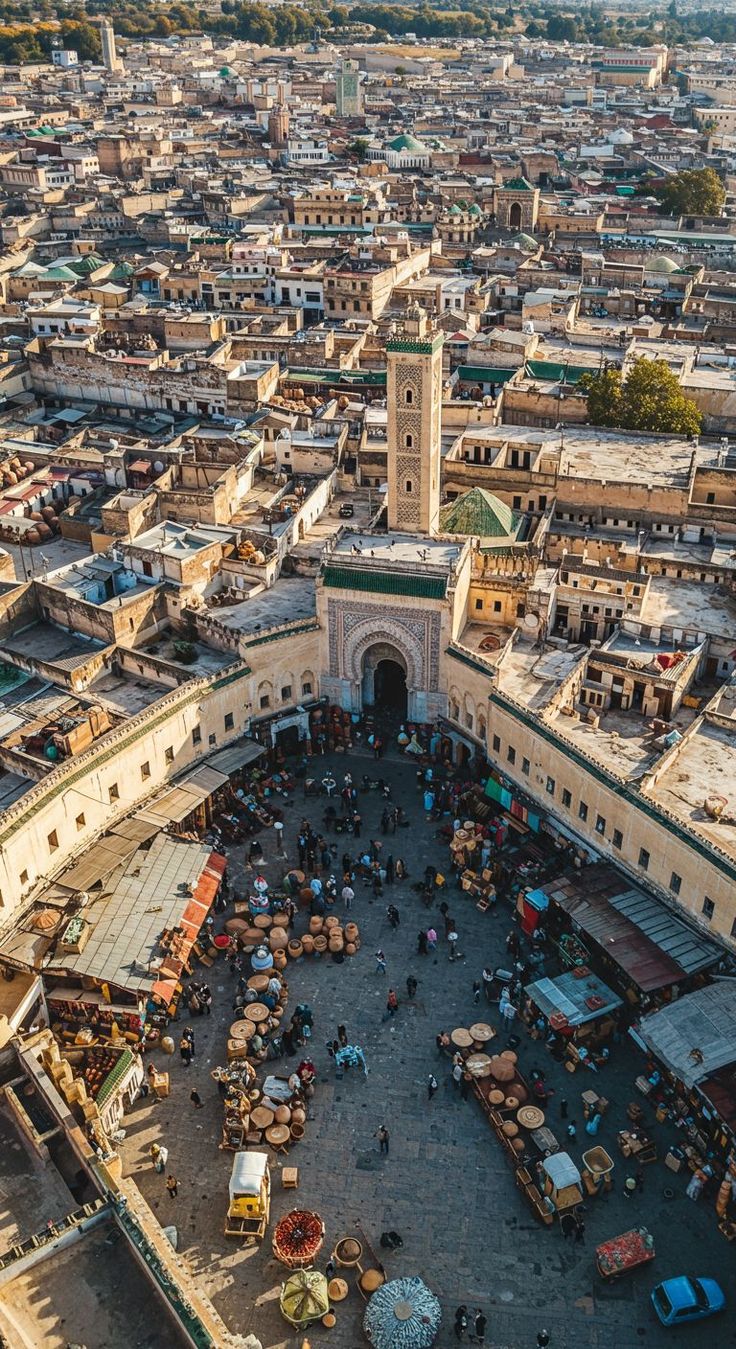
Ancient Medinas Morocco: The Ultimate Guide to the Historic Cities
Behind every ancient gate lies a world of labyrinthine alleys, buzzing souks, centuries-old mosques, hidden riads, and artisan workshops that have operated the same way for generations. Ancient Medinas Morocco are among the most fascinating urban experiences on earth—and this is the complete guide to exploring them.
Explore Morocco’s MedinasAncient Medinas Morocco at a Glance
Everything you need to know before stepping inside Ancient Medinas Morocco.
Why Ancient Medinas Morocco are unlike anything else on earth.
A medina is the ancient heart of a North African city—a walled quarter of narrow streets, courtyard homes, mosques, and souks that has existed, in many cases, for over a thousand years. In Morocco, the medinas are not ruins or open-air museums. They are living, breathing communities where hundreds of thousands of people still live, work, pray, and raise families exactly as their ancestors did centuries ago.
Ancient Medinas Morocco are among the best-preserved in the Arab world. Fes el-Bali, the old city of Fes, is the world’s largest car-free urban area—a labyrinth of 9,400 alleyways that has been continuously inhabited since the 9th century. Marrakech’s medina is a UNESCO World Heritage Site famous for its souks, palaces, and the legendary Jemaa el-Fnaa square. Rabat, Meknes, Tetouan, Chefchaouen, Essaouira—each medina has its own character, its own history, and its own particular magic.
The architecture of Morocco’s medinas is extraordinary. Elaborately carved cedarwood doors, geometric zellige tilework in blues and greens, carved stucco screens, and inner courtyards fountained with marble. These are not decorative flourishes—they are expressions of a craft tradition that has been passed from master to apprentice for centuries. The artisans of the medinas work as they always have: coppersmiths hammering trays in the fondouks of Fes, leather tanners dyeing hides in the ancient tanneries, weavers creating carpets on vertical looms in hidden workshops.
The souks are the commercial heart of every medina—part marketplace, part social institution, part living museum. In Fes, the dyers’ souk, the spice souk, the carpet souk, and the metalwork souk each occupy their own quarter. In Marrakech, the souks form a vast labyrinth where you can find everything from hand-tooled leather bags to fragrant argan oil. Shopping in the souks is an experience unto itself—an exercise in negotiation, sensory overload, and discovery.
Perhaps the most extraordinary feature of Morocco’s medinas is the riad—a traditional courtyard house built around an interior garden or fountain. Many riads have been converted into boutique hotels and guesthouses, allowing visitors to sleep inside the medina itself. Waking up to birdsong in a tiled courtyard, breakfast served on the rooftop terrace with views over a thousand minarets—this is the medina experience at its most magical.
To walk through a Moroccan medina is to step into a different rhythm of life. The alleys are too narrow for cars, so the sounds are human—the call to prayer echoing off ancient walls, the clang of a coppersmith’s hammer, the laughter of children playing in a hidden courtyard. It is easy to get lost.
That is, in many ways, the point. The medinas reward those who wander without agenda, who follow a scent of freshly baked bread down an unknown alley, who accept that the best discoveries are never planned.
Medina experiences that define Ancient Medinas Morocco.
Every medina visit offers a different encounter. These are the moments that make Ancient Medinas Morocco unforgettable.
Wandering Historic Alleys
The medina's narrow lanes twist and turn without pattern. Every corner reveals something unexpected—a carved doorway, a hidden courtyard, a shop selling objects you have never seen before.
Exploring Traditional Souks
Each souk specialises in a single craft or commodity. The carpet souk, the spice souk, the leather souk—each is its own world of colour, scent, and sound.
Visiting Artisan Workshops
Behind the souk stalls, master artisans work as their fathers and grandfathers did. Watch zellige tilework being cut by hand, leather being tanned in ancient stone vats, copper being hammered into intricate trays.
Staying in Authentic Riads
A riad is a traditional courtyard house turned boutique guesthouse. Sleeping inside the medina—waking to birdsong, breakfast on the rooftop, the call to prayer drifting over ancient tiles—is one of the great pleasures of Ancient Medinas Morocco.
Discovering Historic Architecture
Carved cedarwood doors, geometric zellige tilework, carved stucco, marble fountains. The medinas preserve some of the finest Islamic architecture in the world, much of it dating back centuries.
Street Photography
The light in a medina is extraordinary—dappled through lattice screens, reflected off colourful tiles, streaming through ancient doorways. Every alley is a potential photograph.
Local Food Experiences
From the street stalls of Jemaa el-Fnaa to the home kitchens of Fes, medina food is Morocco at its most authentic. Try msemen, harira, pastilla, and freshly squeezed orange juice from a cart.
Rooftop Views
Every riad and many cafes offer rooftop terraces with views over the medina—a sea of satellite dishes, minarets, and terracotta rooftops stretching to the mountains or the sea. Sunset from a medina rooftop is unforgettable.
Where to experience Ancient Medinas Morocco.
Each medina has its own character—from the vast labyrinth of Fes to the blue-washed walls of Chefchaouen.
Fes
The world's largest car-free urban area. Fes el-Bali, inscribed on the UNESCO World Heritage List, is a 9,400-alley labyrinth of medieval workshops, ancient tanneries, and the oldest university on earth. The most complete medina experience in Ancient Medinas Morocco.
Marrakech
Morocco's most famous medina surrounds the legendary Jemaa el-Fnaa square. Souks, palaces, mosques, and riads form a vibrant, living city-within-a-city. The sensory capital of North Africa.
Tetouan
The whitewashed medina of Tetouan is one of the finest in Morocco. A UNESCO World Heritage Site with strong Andalusian influences, repopulated by Moors expelled from Spain in the 15th century.
Chefchaouen
The famous blue city of northern Morocco. Its medina is smaller but utterly distinctive—every wall, stairway, and doorway washed in shades of blue. A photographer's paradise and a mountain retreat.
Rabat
Morocco's capital has a surprisingly elegant medina. Quieter than Fes or Marrakech, Rabat's old city offers authentic souks, the monumental Kasbah des Oudaias, and a relaxed pace that rewards slow exploration.
Essaouira
Morocco's Atlantic medina is a UNESCO World Heritage Site designed by a French architect in the 18th century. Its grid-like streets, whitewashed walls, and harbour setting make it the most accessible medina in the country.
Itineraries for Ancient Medinas Morocco.
Whether you have a day or two weeks, these itineraries give you the best of the ancient cities.
One-Day Medina Experience
A single day in Fes or Marrakech's medina, covering the essential highlights without rushing.
- Start at the main gate and hire a certified local guide
- Visit the central souks and observe artisan workshops
- Explore a historic fondouk or madrasa
- Lunch at a traditional restaurant inside the medina
- End with a rooftop terrace sunset over the ancient rooftops
3-Day Imperial Cities Journey
Three days exploring the medinas of Marrakech and Fes - Morocco's two greatest ancient cities.
- Day 1: Marrakech medina, Jemaa el-Fnaa, Bahia Palace
- Day 2: Marrakech souks, Ben Youssef Madrasa, Koutoubia Mosque
- Day 3: Fly or drive to Fes, evening in Place Seffarine
Historic Morocco Road Trip
A week-long journey through Morocco's most significant medinas and historic cities.
- Day 1-2: Rabat medina and Kasbah des Oudaias
- Day 3: Chefchaouen blue medina
- Day 4-5: Fes el-Bali exploration
- Day 6: Meknes medina and Moulay Ismail mausoleum
- Day 7: Return to Fes or onward to Marrakech
Morocco's UNESCO Heritage Route
A comprehensive route connecting all of Morocco's UNESCO-recognised medinas.
- Start: Marrakech (UNESCO medina)
- Stop 1: Essaouira (UNESCO medina and ramparts)
- Stop 2: Fes el-Bali (UNESCO medina)
- Stop 3: Meknes (UNESCO imperial city)
- Stop 4: Rabat (UNESCO modern capital and historic medina)
- End: Tetouan (UNESCO Andalusian medina)
How to navigate Ancient Medinas Morocco.
Ancient Medinas Morocco are best explored on foot - they were designed for walking, not driving. The narrow alleys, sudden dead-ends, and labyrinthine layouts can be disorienting, but that is part of their charm.
Hiring a guide is recommended for your first medina visit. A certified local guide knows the shortcuts, the best shops, the hidden courtyards, and the cultural context that transforms a walk through old streets into a meaningful experience.
Staying inside the medina in a riad is the single best way to experience these ancient cities. Riads range from budget guesthouses to ultra-luxury boutique hotels. The best ones offer rooftop terraces, courtyards with plunge pools, and breakfast served amid lemon trees and marble fountains.
Shopping etiquette is important. Bargaining is expected in the souks - it is part of the social exchange, not an adversarial process. Start at about half the asking price and negotiate respectfully. Remember: the artisans of the medinas are craftspeople, not vendors.
A seasonal guide to Ancient Medinas Morocco.
Each season offers a different medina experience - from the cool alleys of spring to the warm rooftop terraces of winter.
Spring (Mar-May)
The best season for Ancient Medinas Morocco. Temperatures are comfortable for walking, the light is golden, and the medina gardens are in bloom. Fes and Marrakech are at their most pleasant.
Summer (Jun-Aug)
Hot in Marrakech and Fes, but the narrow medina alleys provide natural shade and coolness. Early morning and late afternoon are best for exploring. Essaouira's Atlantic medina stays cool year-round.
Autumn (Sep-Nov)
Another excellent season. The summer heat fades, crowds thin, and the light turns golden. September and October are ideal for extended medina exploration in any city.
Winter (Dec-Feb)
Mild in the coastal cities and cool in Fes. A good time to visit without crowds. The medinas have a quieter, more intimate atmosphere. Warm clothing is needed for Fes and Chefchaouen.
What to know before you go.
Navigation and Comfort
- Comfortable shoes: You will walk for hours on uneven stone surfaces. Sturdy, comfortable footwear is essential.
- Navigation: Download offline maps, but accept that GPS is unreliable in narrow alleys. Ask locals for directions.
- Cash is king: Most medina shops and restaurants do not accept cards. Carry enough Moroccan dirham for the day.
- Light layers: The alleys are shaded and cool; rooftops are sunny and warm. Dress in layers you can adjust.
- Stay hydrated: Carry a water bottle. The medina alleys are dry and the walking is constant.
- Take breaks: Duck into a cafe for mint tea when you need to rest. A rooftop terrace is the perfect mid-walk pause.
Cultural Etiquette
- Dress respectfully: Cover shoulders and knees, especially near mosques. The medinas are conservative communities.
- Ask before photographing: Always ask permission before photographing people, especially women and children.
- Respect prayer times: Shops may close briefly for prayers. Be patient and do not block doorways.
- Remove shoes: When entering a mosque (where permitted), a riad, or a private home, remove your shoes.
- Avoid tourist traps: Be wary of unsolicited guides or overly aggressive shopkeepers. A firm but polite no, thank you works well.
- Support local artisans: Buy directly from workshops when possible. Your purchase supports a centuries-old craft tradition.
Ancient Medinas Morocco: Your Questions Answered.
What is a medina?
A medina is the ancient, walled quarter of a North African city. Ancient Medinas Morocco are living communities with narrow streets, souks, mosques, and courtyard homes. They predate the modern city and have been continuously inhabited for centuries.
Which Moroccan medina is the oldest?
Fes el-Bali, the old city of Fes, is generally considered the oldest and largest surviving medieval medina in the world. It was founded in the 9th century and has been continuously inhabited ever since, with over 9,400 alleyways.
Which medina is best for first-time visitors?
Marrakech is the most accessible of Ancient Medinas Morocco for first-timers - it is well-connected, has excellent riads, and the main sights are relatively easy to find. Essaouira is even easier, with a grid-like layout. Fes is the most rewarding but also the most disorienting.
Are Morocco's medinas safe?
Yes, Morocco's medinas are generally very safe for tourists. Petty crime like pickpocketing can occur in crowded areas, as in any tourist destination. Standard precautions - keeping valuables secure, being aware of your surroundings - are sufficient.
Can I get lost in a medina?
Almost certainly, yes - and that is part of the experience. The medinas were not designed with straight lines or logical grids. Even locals occasionally take wrong turns.
Embrace it. You will eventually find a familiar landmark or a helpful local.
Should I hire a guide?
For your first medina visit, a licensed local guide is highly recommended. They provide cultural context, historical knowledge, and practical navigation. In Fes especially, a guide transforms the experience from confusing to extraordinary.
How much time should I spend in a medina?
Allow at least a full day for any major medina - Fes and Marrakech each deserve two to three days. Smaller medinas like Chefchaouen and Essaouira can be experienced in a day, though overnight stays are worthwhile.
Are medinas family-friendly?
Yes. Moroccan families live in the medinas, so children are a natural part of the environment. The souks are fascinating for older children. Be mindful of pushing strollers through very narrow alleys, and keep young children close in crowded areas.
Can I stay inside a medina?
Absolutely - and you should. Riads (traditional courtyard houses converted to guesthouses) are the best accommodation option in any medina. They range from budget to ultra-luxury. Staying inside the medina means you experience its rhythm from morning to night.
What should I buy in the souks?
Leather goods from Fes, ceramics and zellige from Fes or Safi, carpets from any major medina, argan oil, spices, and traditional lanterns. Buy from workshops when possible for the best quality and to support artisans directly.
Step Into Morocco's Living History.
Behind the ancient gates, a world of wonder awaits. Ancient Medinas Morocco are not museums - they are living, breathing communities where centuries of tradition meet the energy of the present. Your journey into this extraordinary heritage begins with a single step through the gate.
Explore Destinations