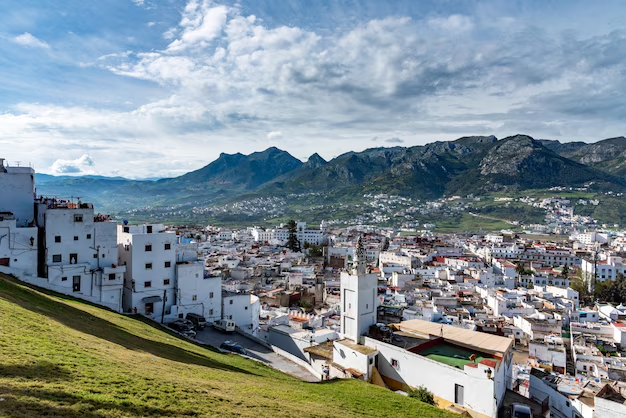
Tetouan, Morocco
Tucked between the Rif Mountains and the Mediterranean coast, Tetouan is Morocco’s most elegant “white city” — a place where Andalusian refinement, UNESCO-recognised heritage, and the unhurried rhythms of northern Moroccan life converge with rare grace.
Often called the “Diamond of the North,” the city served as the capital of the Spanish Protectorate and retains a distinctly cosmopolitan atmosphere that sets it apart from every other destination in the country.
Its medina, the best-preserved in Morocco and a UNESCO World Heritage Site, is a labyrinth of whitewashed streets, hand-painted tilework, carved cedar doors, and soaring minarets that echo centuries of Moorish craftsmanship. Outside the ancient walls, wide boulevards lined with palm trees and cafés lead to the Royal Palace, while the Rif Mountains rise dramatically to the south and the beaches of Martil and Cabo Negro stretch along the coast to the north.
Tetouan is not a city that shouts for attention. It earns it quietly — through the quality of its artisans, the beauty of its setting, and the warmth of a culture shaped by the meeting of Berber, Andalusian, and Mediterranean worlds.
Why Visit Tetouan?
A UNESCO-listed medina of extraordinary preservation, a living Andalusian heritage, dramatic Rif Mountain scenery, and a Mediterranean coastline — Tetouan offers an authentic Moroccan experience without the crowds.
UNESCO Medina
Tetouan’s medina is the best-preserved historic quarter in Morocco and a UNESCO World Heritage Site. Unlike the commercialised medinas of Marrakech and Fes, its old city retains an intimate, residential character — a living community where Andalusian artisans still work in the same workshops their families have occupied for centuries.
Andalusian Heritage
When the Moors were expelled from Spain, thousands of Andalusian families settled here, bringing with them centuries of refined craft, cuisine, and architectural tradition. This heritage is visible in every detail — from the geometric tilework and carved stucco of the medina to the city’s distinctive musical traditions and its refined, slightly formal culture.
Rif Mountain Setting
The city sits at the foot of the Rif Mountains, with peaks rising to over 2,000 metres just south. This dramatic backdrop provides opportunities for hiking, trekking, and exploring Berber villages — all within easy reach of the city centre and the Mediterranean coast.
Authentic Culture
Tetouan remains refreshingly under the tourist radar compared to Morocco’s imperial cities. This means more genuine encounters, more local character, and a city that has not been reshaped to accommodate visitor expectations. The pace is slower, the interactions are real, and the cultural depth is profound.
Artisan Crafts
The medina’s souks are renowned across Morocco for the quality of their craftsmanship. Tetouan is particularly famous for its woodwork, embroidery, silver jewellery, and leather goods. The artisans here are among the most skilled in the country, and watching them at work in their small, cluttered workshops is one of the city’s great pleasures.
Gateway to Northern Morocco
Its position in the far north makes Tetouan a natural base for exploring the Rif Mountains, the blue city of Chefchaouen, the coastal town of Asilah, and the port city of Tangier. It is also just 60 kilometres from the Spanish enclave of Ceuta, making it one of the few places in Africa where you can see Europe from the shore.
Tetouan at a Glance
The essentials for planning your visit to northern Morocco’s most refined white city.
Top Things to Do in Tetouan
Ten experiences that capture the heritage, the craft, and the coastal beauty of one of Morocco’s most underappreciated cities.
Explore the Medina
Tetouan’s UNESCO-listed medina is the best-preserved in Morocco — a dense, atmospheric maze of whitewashed walls, arched gateways, Andalusian courtyards, and small squares where children play and old men smoke in cafés shaded by fig trees. Unlike Fes or Marrakech, the medina here is still overwhelmingly residential, and the sense of stepping into a living, breathing historic quarter rather than a curated tourist attraction is immediate and powerful.
Hassan II Square
The grand central square of modern Tetouan is a wide, palm-lined expanse flanked by the Royal Palace, the Grand Mosque, and some of the city’s finest French colonial architecture. It is the social heart of the city — a place where locals gather in the evening cafés, children chase footballs across the esplanade, and the call to prayer echoes from the mosque with particular grandeur. The square is especially beautiful at dusk, when the palm trees are lit and the mountains glow behind the city.
Ethnographic Museum
Housed in the former Royal Palace adjacent to Hassan II Square, this museum contains a remarkable collection of traditional Tetouani arts and crafts: intricate embroidery, hand-woven carpets, carved woodwork, silver jewellery, and ceremonial objects that illustrate the city’s Andalusian heritage. The building itself, with its painted ceilings, tiled courtyards, and carved cedar screens, is as much an exhibit as the collection it houses.
Artisan Souks
Tetouan’s souks are famed across Morocco for the quality of their craftsmanship rather than the volume of their trade. The woodworking souk is particularly distinguished — artisans here produce some of the finest carved cedar and thuya wood objects in the country, from decorative boxes to architectural elements. The embroidery souk showcases the distinctive Tetouani style of needlework, a tradition brought by the Andalusian settlers that has been refined over five centuries.
Royal Palace Exterior
The Dar el Makhzen, the Royal Palace of the city, occupies a commanding position at the northern edge of the medina overlooking Hassan II Square. While the palace interior is not open to the public, the exterior — with its massive blue-and-white tiled gate, carved stone façade, and imposing walls — is among the most impressive examples of Alaouite palace architecture in Morocco. The surrounding gardens and the view from the square are magnificent.
Martil Beach
Just ten kilometres north of the medina, the long, sandy beach of Martil stretches along the Mediterranean coast. The water is warm, the sand is fine, and the setting — backed by low hills and framed by the Rif Mountains to the south — is beautiful without being dramatic. Martil is where Tetouan’s residents come to swim, and the beachfront restaurants serve some of the freshest seafood in the region.
Cabo Negro
The headland of Cabo Negro, twenty kilometres northeast of the city, marks the point where the Mediterranean meets the Atlantic influence and the coastline becomes wilder and more dramatic. The beach here is sheltered in a crescent-shaped bay with fine sand and clear water, and the surrounding development includes a marina, a golf course, and several beachfront restaurants. It is the most upscale coastal retreat in the Tetouan area.
Walking Tour
Tetouan’s compact size and relatively flat modern quarters make it ideal for a structured walking tour. The route from Hassan II Square through the medina, past the Ethnographic Museum, through the artisan souks, and down to the lower gates takes two to three hours and covers the city’s principal landmarks. A knowledgeable local guide will reveal the Andalusian architectural details, the social history of the different neighbourhoods, and the living traditions that make Tetouan unique.
Local Cafés
Tetouan’s café culture is distinctly Andalusian in character — more refined and leisurely than the bustling cafés of the imperial cities. The establishments around Hassan II Square and along the medina’s main arteries serve mint tea, strong Moroccan coffee, and freshly squeezed juices in settings that range from ornate tile-floored rooms to simple, sunlit terraces. The evening café ritual here is a social institution — a place to watch the city, to converse, and to savour the unhurried pace that defines Tetouan.
Day Trip to Chefchaouen
The legendary blue city of Chefchaouen lies just 65 kilometres southeast of the city, nestled in a dramatic mountain valley in the heart of the Rif. The drive takes roughly an hour and a half through some of northern Morocco’s most spectacular scenery — terraced hillsides, cedar forests, and deep valleys that shift in colour with the light. Chefchaouen’s blue-washed medina, its relaxed atmosphere, and its surrounding hiking trails make it an unmissable companion to a Tetouan visit.
The UNESCO Medina
Tetouan’s medina is one of the most remarkable historic quarters in the Islamic world — and the only medina in Morocco that has been inscribed as a UNESCO World Heritage Site in its entirety.
Unlike the sprawling, commercially saturated old cities of Marrakech and Fes, Tetouan’s medina retains an integrity and a residential authenticity that make it feel less like a museum and more like a community that has simply continued to live within walls that were built five centuries ago.
The medina was largely constructed by Andalusian refugees who arrived in the fifteenth and sixteenth centuries after the fall of Granada, and they brought with them the architectural refinement, the craft traditions, and the social sophistication of Moorish Spain.
The result is a medina of unusual elegance — whitewashed walls that gleam in the strong northern light, carved cedar doors set in ornate stone archways, hand-painted ceramic tiles in geometric patterns of startling complexity, and interior courtyards where fountains play beneath orange trees.
The streets themselves are narrower and steeper than those of Fes, climbing and descending through a network of alleys that follow the contours of the hillside on which the medina is built. The upper reaches of the old city offer views across the modern quarters to the Rif Mountains beyond — a panorama that connects the ancient and the contemporary in a single, luminous frame.
What makes Tetouan’s medina genuinely extraordinary, however, is not just its architecture but its living culture. The Andalusian families who settled here brought with them musical traditions, culinary practices, textile arts, and social customs that have been preserved with remarkable fidelity.
The medina’s embroidery workshops, in particular, are famous throughout Morocco — the distinctive Tetouani style of needlework, with its intricate geometric patterns and its subtle, muted colour palette, is considered among the finest in the country. Woodworking, silverwork, and leather crafting continue in workshops that have been family-operated for generations, and the souks, while smaller than those of the imperial cities, are notable for the quality of their goods rather than the volume of their trade.
The medina’s social structure is equally distinctive. Each of its neighbourhoods, or derbs, has its own mosque, its own hammam, its own fountain, and its own communal oven — a self-contained village within the larger city. The narrow streets serve as shared living spaces where neighbours converse, children play, and the rhythms of daily life unfold at a pace that feels centuries removed from the traffic and noise of the modern city outside the walls.
- UNESCO status — inscribed in 1997 as a “Medina that constitutes a living testimony to the Andalusian culture” — one of the most significant cultural heritage recognitions in Morocco
- Architecture — Andalusian-influenced whitewashed buildings with carved cedar doors, painted ceilings, geometric tilework, and interior courtyards with fountains
- Artisan heritage — five centuries of Andalusian craft tradition in embroidery, woodwork, silverwork, and leather; workshops still operated by the same families
- Social structure — self-contained neighbourhoods with their own mosques, hammams, fountains, and communal ovens; a living community, not a tourist exhibit
- Best time to visit — early morning (before 10am) when the medina is quiet, the light is soft, and the artisans are at work in their workshops
- Practical note — the medina is hilly and the alleys are narrow; comfortable walking shoes are essential; a local guide is strongly recommended for a first visit
Hassan II Square & Royal Palace
Where the medina whispers of centuries past, Hassan II Square speaks of Tetouan’s modern identity — a city that bridges the ancient and the contemporary with characteristic elegance.
This grand esplanade, the largest public square in northern Morocco, is the civic and social heart of the city. Flanked by the Royal Palace to the north, the Grand Mosque to the east, and a crescent of French colonial buildings and palm-lined avenues on its other sides, the square is a statement of civic pride that reflects the city’s particular history as the administrative capital of the Spanish Protectorate.
The Royal Palace, or Dar el Makhzen, dominates the northern edge of the square with its massive walls, its carved stone façade, and its magnificent blue-tiled gate — one of the most photographed architectural features in northern Morocco. The palace was built in the nineteenth century and served as the official residence of the Sultan when visiting the city; today it remains a working royal residence and is not open to the public, but its exterior alone is worth a prolonged visit.
The gate, with its intricate zellige tilework in shades of cobalt, turquoise, and white, is a masterpiece of Moroccan decorative art, and the carved stone surround, with its floral arabesques and Quranic calligraphy, represents the highest achievement of the Tetouani stonecutters’ craft.
The Grand Mosque, visible from across the square, is notable for its towering minaret — the tallest structure in the city — and its horseshoe-arched entrance decorated with geometric tilework and carved stucco. While non-Muslims cannot enter, the exterior is magnificent, particularly in the evening light when the minaret is illuminated and the call to prayer reverberates across the open expanse of the square.
The cafés that line the square are themselves institutions. The most celebrated, Café Central, occupies a corner position with a wraparound terrace that offers what is arguably the finest urban panorama in northern Morocco — the full sweep of the square, the mosque, the palace gate, and the Rif Mountains rising behind the city in a single, luminous frame.
Sitting here with a glass of mint tea as the evening unfolds is one of those Moroccan experiences that requires no explanation and no itinerary — it is simply perfect.
- Royal Palace gate — the blue-and-white zellige tilework and carved stone surround are among the finest examples of Moroccan decorative art in northern Morocco
- Grand Mosque — the tallest minaret in the city; non-Muslims cannot enter, but the exterior architecture is magnificent, particularly in evening light
- Café Central — the city’s most storied café; the corner terrace offers the definitive view of the square, the mosque, and the Rif Mountains
- Evening ritual — the square comes alive after sunset with families, couples, and friends strolling the esplanade; the cafés fill and the atmosphere is warm and convivial
- French colonial architecture — the buildings flanking the square reflect the city’s history as the capital of the Spanish Protectorate; the blend of European and Moroccan architectural styles is distinctive
- Access — the square is easily reached from the medina on foot via Bab el Okla; it is the natural starting point for exploring modern Tetouan
Rif Mountains & Nearby Coast
Tetouan’s position at the meeting point of mountain and sea gives it a geographical drama that few Moroccan cities can match. To the south, the Rif Mountains rise in a succession of forested ridges and deep valleys, their peaks reaching over 2,000 metres and their slopes cloaked in cork oak, cedar, and wild olive.
To the north and east, the Mediterranean coastline stretches from the headland of Cabo Negro to the fishing villages beyond Martil, offering sandy beaches, rocky coves, and the particular quality of light that comes from the meeting of mountains and sea.
The Rif Mountains immediately south of the city are among the most accessible mountain landscapes in northern Morocco. The road to Chefchaouen, which climbs through the heart of the range, passes through some of the most spectacular scenery in the country — terraced hillsides carved into the steep slopes, deep gorges where rivers cut through ancient rock, and cedar forests where Barbary macaques can occasionally be glimpsed in the canopy.
The Akchour waterfalls, a series of dramatic cascades in a forested gorge roughly an hour south of the city, are one of the Rif’s hidden treasures — a full day’s excursion that combines hiking, swimming, and some of the most unspoiled mountain scenery in Morocco.
The coastline to the north offers a very different landscape. Martil, the city’s principal beach, stretches for several kilometres along a gently curving bay backed by low hills and framed by the Rif Mountains to the south. The water is warm and calm, the sand is fine, and the beachfront promenade is lined with restaurants serving some of the freshest seafood in the region.
Further northeast, Cabo Negro occupies a dramatic headland where the mountains meet the Mediterranean, and its sheltered bay offers a more upscale beach experience with a marina, a golf course, and several excellent seafood restaurants perched above the water.
The drive along the coastal road from Martil to Cabo Negro, particularly in the late afternoon when the light is golden and the mountains glow behind the coast, is one of the most scenic drives in northern Morocco.
- Rif Mountains — peaks exceeding 2,000 metres; cork oak and cedar forests; dramatic gorges and valleys; accessible hiking from Tetouan’s southern edge
- Akchour waterfalls — a series of cascades in a forested gorge, roughly an hour south of the city; a full-day excursion combining hiking and swimming
- Martil Beach — ten kilometres north of the medina; long, sandy beach with warm Mediterranean water; the most popular coastal destination for Tetouan residents
- Cabo Negro — a sheltered bay on a dramatic headland northeast of the city; marina, golf course, and excellent seafood restaurants
- Coastal drive — the road from Martil to Cabo Negro offers spectacular views of the Rif Mountains meeting the Mediterranean; best in the late afternoon light
- Ceuta — the Spanish enclave of Ceuta lies just 40 kilometres northeast; one of the few places in Africa where you can see Europe from the shore
Best Time to Visit Tetouan
Tetouan’s position on the northern coast of Morocco, where the Mediterranean influence moderates the climate, gives it milder temperatures than the interior — and each season offers a distinct experience.
Spring & Autumn
- March–May — the ideal window. The Rif Mountains are carpeted in wildflowers, the temperature is warm but comfortable (18–24 degrees), and the medina’s whitewashed walls glow in the soft, angled light. The Easter period brings a modest increase in visitors, but Tetouan never approaches the crowds of Marrakech or Fes. This is the best season for hiking in the Rif and for long, unhurried explorations of the medina.
- September–November — equally rewarding. The summer heat has broken, the Mediterranean water is still warm enough for swimming, and the autumn light brings a golden quality to the mountains and the medina that photographers prize. The olive harvest begins in November, adding a cultural dimension to rural excursions.
Summer & Winter
- June–August — warm and sunny (25–35 degrees), with the beaches at their busiest and the Mediterranean at its warmest. The medina can be uncomfortably hot during the midday hours, but the coastal breezes and the mountain proximity moderate the heat compared to inland cities. Early morning and evening are the best times for medina exploration; the rest of the day belongs to the coast.
- December–February — mild by Moroccan standards (8–15 degrees), with occasional rain and the possibility of snow on the higher Rif peaks. The medina is at its most atmospheric in winter — the whitewashed walls luminous against grey skies, the cafés warm and crowded, and the mountain views dramatic with snow-capped ridges. This is the quietest season and the best for those who prefer to experience a city without any tourist presence at all.
Where to Stay in Tetouan
Tetouan’s accommodation scene reflects the city’s character — elegant without being ostentatious, traditional without being performative, and deeply rooted in the Andalusian aesthetic that defines the city.
Boutique Riads
The finest accommodation in Tetouan is found in the restored Andalusian riads of the medina, where courtyards with fountains and orange trees, hand-painted ceilings, and carved cedar screens create interiors of extraordinary beauty. These properties are small — typically five to ten rooms — and the personal service, the home-cooked breakfasts, and the rooftop terraces with mountain views are the defining pleasures.
Seafront Hotels
Along the coast at Martil and Cabo Negro, several hotels and apartment complexes offer beachfront accommodation with Mediterranean views. These are more contemporary in character than the medina riads and are particularly suited to families and those who want easy access to the beach alongside their city exploration.
Mid-Range
Comfortable hotels in the modern quarters of the city, particularly along the boulevards between the medina and the coast, offer clean rooms, air conditioning, and reasonable proximity to both the old city and the beach. Many are family-run and provide the kind of personal attention that larger properties cannot match.
Budget & Guesthouses
Simple guesthouses and budget hotels in the medina and the surrounding neighbourhoods offer affordable accommodation for travellers who want to be immersed in the city’s atmosphere without a significant financial commitment. The rooms are basic but clean, and the hospitality is invariably warm.
Food & Local Culture
Tetouan’s food culture is shaped by its Andalusian heritage, its Mediterranean setting, and the agricultural richness of the Rif Mountain hinterland — producing a cuisine that is more refined and subtle than that of the southern imperial cities.
Andalusian Cuisine
- Pastilla — the signature dish of Tetouan, and arguably the city’s greatest culinary achievement. The Tetouani pastilla is a layered pie of flaky warqa pastry filled with spiced pigeon or chicken, almonds, and eggs, dusted with cinnamon and powdered sugar. It is sweeter and more delicate than the Fassi version, and watching it being prepared in the medina’s small restaurants is a culinary education
- Seafood — Tetouan’s proximity to the Mediterranean means exceptionally fresh fish and shellfish. Grilled sardines, fried calamari, and fish tajine with chermoula are staples; the beachfront restaurants at Martil and Cabo Negro serve the finest preparations
- Mint tea — the ritual of Moroccan mint tea is observed with particular ceremony in Tetouan, reflecting the city’s Andalusian refinement. The tea is served in ornate silver teapots with elaborate glass cups, and the pouring — from a height that seems to defy gravity — is as much performance as refreshment
Local Specialties
- Tetouani tajine — the local tajine tends toward simplicity and quality: lamb with prunes and almonds, chicken with preserved lemons and olives, and the distinctive fish tajine with tomato, cumin, and chermoula that reflects the city’s coastal position
- Harcha and msemen — traditional Moroccan flatbreads, served for breakfast with butter, honey, and olive oil; the medina’s communal bakeries produce some of the finest in the north
- Local markets — the weekly souk, held outside the medina walls, is a vibrant affair where local farmers sell fresh produce, herbs, spices, and seasonal specialties; visiting on market day provides a vivid glimpse of the agricultural life that sustains the city
- Andalusian music — Tetouan is the centre of Andalusian classical music in Morocco, a tradition brought by the refugees from Moorish Spain; the intimate concerts held in riad courtyards and cultural centres are among the most refined musical experiences in the country
Getting to Tetouan
Tetouan’s position in the far north of Morocco, close to the Mediterranean coast and the Spanish border, makes it accessible from several directions — though the journey itself is part of the experience.
- From Tangier — the most common route, approximately 60 kilometres east. The drive takes around one hour via the A4 motorway, passing through rolling hills and offering occasional glimpses of the Mediterranean. The road is well-maintained and well-signed, and the approach to Tetouan, with the Rif Mountains rising ahead and the white city appearing in the valley below, is one of the great arrivals in Moroccan travel
- From Chefchaouen — approximately 65 kilometres northwest, a drive of around one and a half hours through spectacular Rif Mountain scenery. The road winds through deep valleys, past terraced hillsides, and through cedar forests, offering some of the most dramatic driving in northern Morocco
- From Fes — approximately 300 kilometres north, a drive of around 4–5 hours via the A2 motorway and the road through Ouazzane and the Rif foothills. The journey transitions from the Saiss Plain through the Middle Atlas foothills to the northern mountains — a drive that encompasses much of Morocco’s geographical diversity
- By bus — CTM and private bus companies operate regular services to Tetouan from Tangier, Chefchaouen, Fes, and Casablanca. The bus station is located outside the medina walls, and local taxis connect to the city centre and the coast
- Rental car — the most flexible way to reach and explore Tetouan, allowing you to stop at viewpoints, visit the coastal towns, and take day trips into the Rif Mountains. Roads in the region are generally well-maintained, though mountain routes require careful driving
- From Ceuta — the Spanish enclave of Ceuta lies just 40 kilometres northeast; buses and taxis cross the border regularly, making Tetouan an easy day trip or stopover for travellers entering Morocco from Spain
Getting Around Tetouan
Tetouan is a compact city that rewards exploration on foot, though its surrounding coastline and mountain scenery are best accessed by vehicle.
On Foot
- Medina — the old city is entirely pedestrianised and best explored on foot; the alleys are too narrow for vehicles, and the pleasures of the medina — the artisan workshops, the hidden courtyards, the sudden mountain views — reveal themselves only to those who walk
- Modern quarters — the boulevards between the medina and the coast are flat and pleasant for walking; the promenade along the seafront at Martil is particularly enjoyable in the evening
Vehicle & Taxis
- Grand taxis — the shared yellow taxis operate fixed routes between the medina, the modern quarters, Martil, and Cabo Negro; they are the most affordable way to cover longer distances within the city and to the coast
- Petit taxis — available for point-to-point journeys within the city; useful for trips to Hassan II Square from the coast or for returning to your accommodation after dark
- Day trips — a rental car is the best option for exploring the Rif Mountains, visiting Chefchaouen, or driving the coastal road to Cabo Negro and beyond; the mountain roads are scenic but require careful driving, particularly in winter
Suggested Itineraries
Whether you are passing through on a northern Morocco circuit or dedicating several days to the city, here is how to make the most of your time in Tetouan.
Half Day
- Morning: walk through the medina via Bab el Okla
- Visit the Ethnographic Museum
- Explore the artisan souks
- Coffee at Café Central on Hassan II Square
1 Day
- Morning: guided medina walking tour
- Midday: Hassan II Square and Royal Palace exterior
- Afternoon: drive to Martil or Cabo Negro for the beach
- Evening: dinner at a beachfront restaurant and sunset over the Rif
Tetouan + Chefchaouen
- Day 1: explore the medina, museum, and Hassan II Square
- Day 2 morning: drive to Chefchaouen through the Rif Mountains
- Day 2: explore Chefchaouen’s blue medina and the Ras el Maa waterfall
- Day 3: return via Akchour for a mountain hike
Northern Morocco Road Trip
- Day 1–2: Tangier — the medina, the Kasbah, Cap Spartel
- Day 3–4: Tetouan — medina, museum, coast, mountains
- Day 5: Chefchaouen — the blue city and Rif hiking
- Day 6: Asilah — the coastal art town and Atlantic beaches
Destinations Across Morocco
From imperial cities to desert dunes and Atlantic coast — discover more of what Morocco has to offer.
Practical Tips for Visiting
A city that blends ancient medina life with Mediterranean coastal living requires a particular kind of preparation. A few essential tips to help you make the most of your time in Tetouan.
- Clothing — Tetouan is more conservative than the imperial cities, reflecting its Andalusian and Rif Mountain heritage. Shoulders and knees should be covered when exploring the medina; lightweight, breathable fabrics in muted colours are appropriate and comfortable. Layers are useful in the mountains and in the cooler winter months
- Cash — while larger establishments accept cards, the medina’s shops, cafés, and restaurants are overwhelmingly cash-only. ATMs are available in the modern quarters outside the medina walls; bring sufficient dirhams for a day of medina exploration
- Photography — the medina is extraordinarily photogenic, but always ask permission before photographing people, particularly women. The whitewashed walls create strong contrasts in bright sunlight — morning and late afternoon light produce the most flattering conditions
- Guided vs. independent — the medina is genuinely disorienting and a local guide is strongly recommended for a first visit, particularly one who specialises in Andalusian heritage. Independent exploration is rewarding once you have the basic layout, but the deeper lanes and hidden courtyards are best revealed by someone who knows the city’s stories
- Family travel — Tetouan is excellent for families. The medina is compact and relatively safe, the beaches at Martil are calm and shallow, and the pace of life is relaxed enough to accommodate children’s rhythms. The mountain excursions are best suited to older children who can manage the walking
- Combine with — Tetouan pairs naturally with Chefchaouen (one hour southeast), Tangier (one hour northwest), and Asilah (two hours south); combining two or three of these cities creates one of the finest travel circuits in North Africa
Related Travel Guides
Practical planning resources to help you navigate Morocco with confidence.
Frequently Asked Questions
Is Tetouan worth visiting?
Absolutely. Tetouan is one of the most culturally rich and architecturally significant cities in Morocco. Its UNESCO-listed medina, its Andalusian heritage, its artisan traditions, and its setting between the Rif Mountains and the Mediterranean make it a destination that rewards every kind of traveller — and its relative obscurity compared to the imperial cities means the experience is more authentic and less crowded.
How long should I spend in Tetouan?
Two to three days is ideal for exploring the medina, visiting the museum, experiencing the coastal beaches, and taking a day trip to Chefchaouen or into the Rif Mountains. A single day allows for a thorough exploration of the medina and Hassan II Square, though you will miss the mountain and coastal experiences that complete the picture.
What is Tetouan famous for?
Tetouan is most famous for its UNESCO-listed medina — the best-preserved in Morocco — and its Andalusian heritage, which distinguishes it culturally and architecturally from every other city in the country. It is also known for its exceptional artisan crafts, particularly embroidery, woodwork, and silver jewellery, and for its position as the gateway to the Rif Mountains.
Is Tetouan safe?
Yes, Tetouan is considered one of the safest cities in Morocco. The medina, while labyrinthine, is welcoming and its residents are accustomed to visitors. Exercise normal precautions regarding personal belongings, particularly in the souks, and be aware that the medina’s steep alleys can be slippery when wet.
What is the best time to visit Tetouan?
Spring (March–May) and autumn (September–November) are the best seasons, with mild temperatures, clear skies, and comfortable conditions for both medina exploration and mountain hiking. Summer is warm and beach-oriented; winter is mild and atmospheric with the fewest visitors.
Can I visit Tetouan as a day trip from Tangier?
It is possible but not recommended. The drive takes one hour each way, and while you can see the medina and Hassan II Square in a day, you will miss the coastal and mountain experiences that make Tetouan special. An overnight stay, or ideally two to three nights, allows the city to reveal its full character.
Is Tetouan family friendly?
Very good for families. The medina is compact and safe, the beaches at Martil are calm and shallow, and the pace of life is relaxed enough to accommodate children. The mountain excursions are best suited to older children who can manage the walking, but the city itself is welcoming to visitors of all ages.
How does Tetouan compare to Chefchaouen?
The two cities are very different but complement each other perfectly. Tetouan is a larger, more cosmopolitan city with a UNESCO medina, a Royal Palace, a coastline, and a deeper cultural heritage. Chefchaouen is smaller, more relaxed, and famous for its blue-washed medina and mountain setting. Visiting both in a single trip is one of the finest combinations in northern Morocco.
Do I need a guide in Tetouan?
For a first visit, a local guide is strongly recommended. The medina is genuinely disorienting — more so than Marrakech or Fes — and the Andalusian architectural details and cultural layers that make Tetouan special are best revealed by someone who understands the city’s history. For return visits, independent exploration becomes easier once the basic layout is understood.
What should I wear in Tetouan?
Tetouan is more conservative than the imperial cities, so modest clothing is appreciated in the medina. Cover shoulders and knees; lightweight, breathable fabrics are ideal. Comfortable walking shoes are essential for the medina’s steep, uneven alleys. Bring a layer for cooler evenings, particularly in spring and autumn.
What is Tetouan’s signature dish?
The pastilla — a layered pie of flaky warqa pastry filled with spiced pigeon or chicken, almonds, and eggs, dusted with cinnamon and powdered sugar. Tetouani pastilla is considered the most refined version in Morocco, sweeter and more delicate than the famous Fassi version. It is available in the medina’s restaurants and is an essential culinary experience.
Can I see Spain from Tetouan?
Not from the city itself, but the Spanish enclave of Ceuta lies just 40 kilometres northeast along the coast. On clear days, the mountains of southern Spain are faintly visible from elevated points in the Rif. Ceuta is easily accessible by bus or taxi and makes for an interesting day trip.
Ready to Discover Tetouan?
From the UNESCO-listed Andalusian medina and the grand Royal Palace to the Rif Mountain peaks and the Mediterranean shore — Tetouan is where Morocco’s northern heritage reveals its most refined and authentic expression. Let MoroccOdyssey help you plan the rest.