Is the Sahara Desert Safe? (2026): Essential Safety Tips for Visiting Morocco’s Desert
If you are wondering is the Sahara Desert safe, the answer depends largely on where you go and how you travel. For the vast majority of visitors heading to Morocco’s main tourist desert destination around Merzouga and Erg Chebbi, a Sahara trip is a well-established tourism experience. Desert camps, local guides, 4×4 drivers and tour operators have been taking visitors into the dunes for years. That does not mean the desert is risk-free.
The biggest dangers are usually practical rather than dramatic: extreme heat, dehydration, getting disoriented, driving on unfamiliar tracks, cold nights, poor preparation and traveling too far into remote areas without local knowledge. There is also an important distinction between the tourist desert around Merzouga and much more remote areas of the Sahara, particularly regions close to international borders or parts of Western Sahara. For a normal tourist trip to the Merzouga desert with a reputable operator, sensible preparation and respect for local guidance, there is no reason to treat the experience as inherently dangerous. But the desert is an environment where small mistakes can become serious problems, so preparation matters.
The Biggest Safety Risks in the Sahara
The risks most travellers should think about are surprisingly ordinary. You are much more likely to have a problem because you became dehydrated or underestimated the cold than because you encountered some dramatic desert danger.
Extreme Heat and Dehydration
Heat is one of the most obvious risks. The desert landscape offers very little natural shade, and walking through sand requires more physical effort than walking on a normal road or pavement. You can become dehydrated without immediately realizing it. Drink water regularly rather than waiting until you feel extremely thirsty. This becomes particularly important during activities around the dunes, including long walks, quad-bike excursions and camel rides. Do not assume that because you are spending only a few hours outside, dehydration cannot become an issue.
Cold Desert Nights
The Sahara is famous for heat, but nighttime can tell a completely different story. Desert temperatures can fall considerably after sunset, particularly during winter. This is one reason why appropriate clothing matters even if the afternoon was warm. Bring a warm layer when staying overnight in the dunes. A luxury camp may provide heating in its accommodation, but you should not assume that every desert camp has identical facilities.
Sun Exposure
You can burn surprisingly quickly in the desert. Sand reflects sunlight, shade is limited and the combination of heat and physical activity can make a long afternoon outside uncomfortable. Sunglasses, sunscreen, a hat and lightweight clothing are basic desert essentials. The goal is not to cover yourself in heavy clothing. The goal is to protect exposed skin while allowing your body to stay comfortable.
Sandstorms and Strong Winds
Sandstorms are not an everyday experience for most visitors, but wind can change conditions quickly. Visibility can deteriorate, sand can become uncomfortable to breathe and navigation becomes more difficult. If your guide or driver tells you to return to camp or remain inside, follow that advice. There is little value in trying to prove that you can handle conditions that local people have already identified as unsuitable.
The Problem With Distance
The desert can make distances look much shorter than they actually are. A dune that appears to be only a few minutes away may require considerably more effort to reach. Once you walk away from camp, it can also become surprisingly difficult to identify your exact route back. This is why exploring the dunes alone is not a good idea, especially at night.
Is Merzouga Safe for Travelers?
For most travellers asking is the Sahara Desert safe, what they really mean is whether the Merzouga desert is safe. Merzouga is one of Morocco’s principal gateways to Erg Chebbi. It has a mature tourism industry, and visitors generally enter the dunes through established camps, local guides, drivers and organized excursions. That makes a huge difference. You are not arriving in an unknown wilderness with no infrastructure. At the same time, the dunes themselves remain a natural environment. The fact that there are tourist camps nearby does not mean you should ignore basic precautions.
Safety Around Erg Chebbi
Stay aware of your surroundings and follow the instructions of your camp or guide. If you want to walk around the dunes, ask where it is sensible to go. If you are staying at a large camp, do not assume that walking several kilometres away is harmless simply because you can still see the camp. Dunes change the visual landscape. Once you move behind several ridges, your original position can become difficult to identify.
Staying at a Desert Camp
A reputable desert camp is generally the easiest way to experience Erg Chebbi safely. The camp staff know the local area, understand access routes and can coordinate transportation when necessary. Your main responsibility is simply to follow the camp’s instructions. Keep valuables secure, especially when staying in shared accommodation. At night, use your phone’s flashlight or the lighting provided by the camp rather than walking blindly through the dunes.
Why You Should Not Wander Too Far Alone
This is particularly important after dark. The Sahara is not dangerous because something is waiting behind every dune. It is dangerous because navigation becomes difficult when you cannot clearly see your surroundings. A short walk can become a much longer one if you lose your sense of direction. If you want to explore beyond the immediate camp area, go with a guide or someone familiar with the surroundings.
Is It Safe to Visit the Sahara Without a Guide?
For a normal visit to Merzouga, independent travel is possible. You can drive to the region yourself and arrange accommodation, transportation and activities separately. But that is different from driving deep into the desert independently. The further you move away from established roads and tourist infrastructure, the more important local knowledge becomes.
Organized Tours
An organized desert tour is the simplest option for many first-time visitors. Transportation, accommodation and desert activities can be arranged together, reducing the number of logistical decisions you need to make. The quality of operators varies, so choose a company with a clear itinerary, established accommodation and recent reviews. Do not select an operator solely because it offers the cheapest price.
Private Drivers and Local Guides
A private driver can be particularly useful if you are combining Merzouga with Marrakech, Ouarzazate, the Dades Valley or Fes. A local driver knows the main roads and understands the conditions in the region. For excursions away from the main tourist areas, local knowledge becomes even more valuable.
Independent Travel
Driving independently to Merzouga is not the same as independent off-road exploration. The paved journey into southeastern Morocco can be part of a normal road trip. Once you leave established roads and begin using desert tracks, however, you should have a clear understanding of where you are going.
When a Guide Is Strongly Recommended
Use a local guide when:
- You are exploring remote desert areas
- You are unfamiliar with the region
- You are leaving established tourist routes
- You are planning a longer desert excursion
- Weather conditions are changing
- You are unsure about navigation
Is the Sahara Desert Safe for Solo Travelers?
Solo travel in Morocco’s tourist desert areas is possible, but the desert rewards a little more planning when you are alone.
Solo Men
For solo male travellers, the main concerns are generally the same environmental and logistical risks faced by other visitors. Avoid wandering alone into unfamiliar dunes. Use reputable transportation and accommodation. Tell someone where you are going, particularly if you are leaving the main tourist area.
Solo Women
Women can and do travel through Morocco’s desert regions independently, but normal travel precautions remain important. Choose established camps and operators. Avoid isolated areas alone, particularly after dark. Dress respectfully in line with local customs. If someone is making you uncomfortable, move toward other travellers, staff or a populated area rather than remaining isolated.
Stay Connected
Before leaving for the desert, tell someone your itinerary. Keep your phone charged and carry a power bank. You may not have the same connectivity you would have in Marrakech or Casablanca, so do not rely entirely on your phone for navigation or communication.
Is the Sahara Desert Safe for Families?
Families can have an excellent desert experience, but children require more attention to heat, hydration and physical effort.
Choosing Family-Friendly Accommodation
For families, the practical quality of the camp matters more than decorative luxury. Ask the camp about sleeping arrangements before booking.
Look for:
- Private bathrooms
- Comfortable beds
- Reliable lighting
- Suitable sleeping arrangements
- Easy vehicle access
- Good reviews from families
Camel Rides and Young Children
Camel rides can be suitable for many children, but age, height, comfort and the operator’s own rules matter. Never assume that every operator will accept very young children on a particular excursion.If your child is uncomfortable or frightened, there is no reason to continue simply because the activity was already booked. For detailed information about the activity itself, see our Camel Trek in Morocco guide.
Keep Children Close
The dunes are open and fascinating to explore, but children should not wander out of sight. The same navigation problem that affects adults affects children even more quickly. At night, keep younger children close to the accommodation area.
Is the Sahara Desert Safe at Night?
The desert after dark is one of the most memorable parts of the experience. It is also when you should be more cautious.
Walking Around Camp
Stay within the areas where the camp staff recommend walking. Use a flashlight if you need to leave your tent. Do not walk deep into the dunes simply because the sky is clear and the surroundings look peaceful.
Stargazing Safely
You do not need to climb a distant dune to see the stars. Often, the area immediately around camp offers excellent views of the night sky. If you want to walk farther away for photography or stargazing, go with another person and keep the camp clearly identifiable.
Desert Animals and Insects
Desert wildlife generally wants to avoid humans. You may encounter insects or occasionally see small reptiles, but most visitors never have a serious encounter with wildlife. Do not put your hands into holes, under rocks or into dark spaces. Shake out shoes or clothing if they have been left outside overnight. Basic precautions are enough for most travellers.
Staying Warm
Winter nights can be surprisingly cold. Bring a warm layer even if you are visiting during a period when daytime temperatures feel comfortable. If your camp offers heating, confirm how it works before settling in for the night.
Is Driving in the Sahara Desert Safe?
Driving is one area where the difference between normal travel and genuine desert travel becomes particularly important.
Driving to Merzouga
Reaching Merzouga by road is a normal part of many Morocco itineraries. The journey can be long, however, and drivers should avoid treating it like a race. Take breaks. Avoid driving when tired. Be particularly careful at night.
Desert Tracks
Driving on desert tracks is different from driving on a paved road. Tracks can be difficult to identify, change with conditions and become more complicated after weather events. If you are unfamiliar with the area, use a local driver.
Why Off-Road Driving Is Different
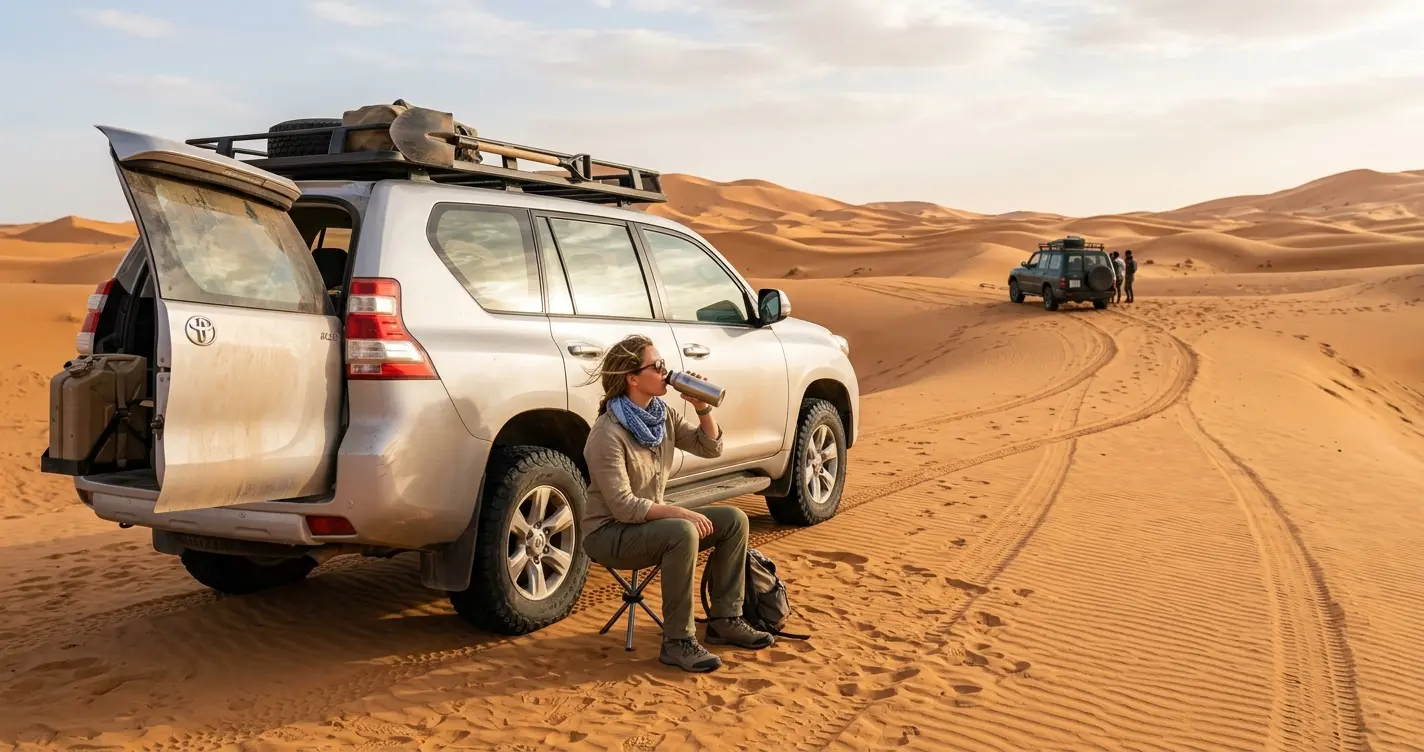
Getting stuck in sand is not merely inconvenient. In a remote environment, a vehicle problem can quickly become a serious logistical problem. Do not drive deep into the dunes simply because your vehicle appears capable of doing so. A 4×4 is not a substitute for local knowledge.
Use Experienced Local Drivers
For excursions through Erg Chebbi or surrounding desert areas, experienced local drivers know the terrain and established routes. This is one of those situations where paying for local expertise is worthwhile.
Are There Dangerous Animals in the Sahara?
This is one of the questions travellers ask most often. The answer is that dangerous animals exist in desert environments, but serious wildlife encounters are not what most tourists should be worrying about.
Scorpions
Scorpions live in desert environments, but they generally avoid humans. Do not deliberately handle them. Keep shoes and personal items off the ground where practical and check footwear before putting it on.
Snakes
Snakes are present in parts of Morocco, including desert regions. The best response is simple: Do not approach them. If you see a snake, give it space and alert your guide or camp staff if necessary.
Insects
Mosquitoes and other insects can occasionally be present, particularly around accommodation. Basic insect protection is usually sufficient.
The Bigger Wildlife Risk
The more realistic animal-related concern in some southern areas can actually be stray or aggressive dogs rather than exotic desert wildlife. Do not approach unfamiliar dogs. If you encounter an aggressive animal, create distance and seek assistance.
Crime and Security in the Sahara Desert
The desert is remote, but remote does not automatically mean crime-free. The same basic precautions you would use elsewhere in Morocco still make sense. Keep passports, cash and electronics secure. Do not leave valuables unattended. If your camp provides a secure storage option, use it. Avoid displaying large amounts of cash.
Theft at Camps
Most travellers will not experience serious theft at a desert camp, but accommodation varies. A small camp may have an informal atmosphere where guests leave belongings around communal areas. That does not mean you should do the same. Keep your phone, passport and money somewhere secure.
Scams and Unofficial Services
Use established tour operators and accommodation. Be cautious when someone offers an unusually cheap desert excursion without clearly explaining what is included. Confirm the price, transport, accommodation and activities before agreeing. A cheap package can become expensive if essential services are added later.
What Should You Do in a Desert Emergency?
The best emergency plan starts before something goes wrong.
Carry a Charged Phone
Keep your phone charged before leaving your hotel. A power bank is worth bringing even if you expect to return to camp quickly.
Tell Someone Your Plans
If you are leaving your accommodation independently, tell someone where you are going and when you expect to return. This is especially important for solo travellers.
Keep Important Information Accessible
Save your accommodation details, tour operator information and emergency contacts on your phone. Keep your travel insurance information accessible as well.
If Your Vehicle Breaks Down
Stay with the vehicle unless your driver or emergency responders instruct you otherwise. A vehicle is considerably easier to identify than a person walking across open desert. Do not attempt to walk long distances toward an uncertain destination. Follow the instructions of your driver or guide.
Areas Travelers Should Avoid
This is where it is essential not to treat the entire Sahara as one destination. The tourist experience around Merzouga is not equivalent to remote border regions.
Morocco-Algeria Border Areas
The Morocco-Algeria land and sea borders are closed, There is no reason for a normal Merzouga visitor to approach the border. Stay on established tourist routes.
Western Sahara
Western Sahara requires additional care because of its political and security situation. Areas within 40 km north and west of the Berm, including Es Semara, as well as areas south and east of the Berm. It also notes the presence of landmines and unexploded weapons in militarized areas.
If your itinerary extends south toward Western Sahara, check current official advice for the exact route before travelling.
Remote Border Regions
The further you move toward international borders and remote desert tracks, the less appropriate it becomes to travel casually without local knowledge. This is not where most visitors to Merzouga are going. If your itinerary involves remote desert crossings, border regions or Western Sahara, research the exact route rather than relying on general advice about “the Sahara.”
How to Stay Safe in the Sahara Desert
The best safety strategy is simple preparation.
Book With a Reputable Operator
Choose an established operator with clear information, recent reviews and identifiable accommodation. Do not judge a company solely by Instagram photographs.
Carry Enough Water
Always have drinking water with you when leaving camp. Do not assume that a short excursion means you do not need it.
Protect Yourself From the Sun
Use sunscreen, sunglasses, a hat and appropriate clothing.
Check the Weather
Before heading into the dunes, ask your guide about expected conditions. Strong winds and extreme heat can change the experience quickly.
Stay With Your Group
If your guide tells you where to meet, return there at the agreed time. Do not disappear into the dunes without telling anyone.
Keep Your Phone Charged
Even when you expect to spend only a few hours outside, keep your phone available.
Respect Local Instructions
Your guide may tell you not to enter a particular area or may change an activity because of weather. Take that seriously. Local knowledge is one of the most valuable safety resources you have in the desert.
Sahara Desert Safety Checklist
Before You Leave
- Check current travel advice for your destination.
- Confirm your accommodation and operator.
- Save important contact information.
- Check the weather.
- Charge your phone.
- Pack a power bank.
- Carry travel insurance information.
- Tell someone your itinerary.
During the Journey
- Drink water regularly.
- Protect yourself from the sun.
- Take breaks when necessary.
- Follow your driver’s instructions.
- Avoid unnecessary night driving.
- Stay on established routes.
At the Desert Camp
- Keep valuables secure.
- Ask staff where it is safe to walk.
- Use a flashlight after dark.
- Keep children close.
- Dress appropriately for nighttime temperatures.
Before Exploring the Dunes
- Tell someone where you are going.
- Take water.
- Take your phone.
- Do not go farther than you can safely return.
- Avoid going alone into unfamiliar areas.
- Return before conditions become difficult.
Frequently Asked Questions About Sahara Desert Safety
Is the Sahara Desert safe for tourists?
Yes, established tourist areas such as the Merzouga and Erg Chebbi region can be visited safely with sensible preparation. The main risks for ordinary visitors are environmental and logistical rather than the idea of the desert itself being inherently dangerous.
Is Merzouga safe?
Merzouga is a major tourist base for visiting Erg Chebbi and has established hotels, camps, guides and tour operators. Normal travel precautions still apply, particularly when entering isolated areas or exploring the dunes.
Is it safe to visit the Sahara independently?
You can travel independently to Merzouga, but independent off-road desert exploration is a different matter. If you are unfamiliar with the terrain, use a local guide or experienced driver rather than relying entirely on GPS.
Are there dangerous animals in the Sahara?
Snakes and scorpions exist in desert environments, but serious encounters are uncommon for ordinary tourists. Do not handle wildlife, avoid putting your hands into hidden spaces and follow local advice.
Is camel trekking safe?
Camel trekking is generally manageable when organized by a reputable operator and when travellers follow their guide’s instructions. Heat, dehydration and falls are the main practical concerns.
Is the Sahara safe for families?
Yes, families can visit the desert, but children need extra protection from heat and dehydration. Choose comfortable accommodation and keep younger children close around dunes and vehicles.
Is it safe to drive to Merzouga?
Driving to Merzouga is part of many Morocco road trips. The journey is long, however, and drivers should take breaks, avoid fatigue and exercise particular caution at night and on unfamiliar roads.
What is the biggest safety risk in the Sahara?
For ordinary tourists, environmental conditions are among the most important risks. Heat, dehydration, cold nights, getting lost and vehicle problems can all become serious if underestimated.
Final Thoughts: Is the Sahara Desert Safe
So, is the Sahara Desert safe?
For the kind of trip most visitors mean a journey to Merzouga, a night at a desert camp, a guided excursion through Erg Chebbi and a return to Morocco’s established tourist routes the answer is generally yes. You do not need to approach your Sahara trip with fear. You do need to approach it with respect.
The desert is beautiful precisely because it is different from the environments most travellers are used to. There are fewer roads, less shade, fewer services and greater distances between populated places. Merzouga and Erg Chebbi are established tourist destinations. Remote border regions and certain parts of Western Sahara are a different category altogether and are subject to specific official travel warnings. Current government guidance should always be checked if your itinerary extends beyond the normal tourist route.
The Sahara does not require you to be an experienced adventurer. It simply asks you to pay attention. And when you do, the reward is one of the most distinctive travel experiences Morocco has to offer: enormous dunes at sunset, an exceptionally clear night sky, the quiet of the desert after the camp settles down, and a landscape that feels completely removed from everyday life.