Moroccan Mint Tea: Morocco’s Timeless Symbol of Hospitality
Far more than a beverage, Moroccan mint tea is a daily ritual that reflects the country’s hospitality, traditions and way of life. This is the definitive guide to experiencing it.
Discover Moroccan Mint TeaMoroccan Mint Tea at a Glance
Essential information for experiencing one of Morocco’most cherished traditions.
Why mint tea is the heartbeat of Moroccan life.
There are many ways to understand a country: through its architecture, its music, its landscape. But in Morocco, one of the most intimate and revealing ways to understand the culture is through its Moroccan Mint Tea. Moroccan mint tea—known in Arabic as atay b’na’na—is not merely a drink. It is a ritual, a language, a daily practice that connects Moroccans to each other, to their guests and to centuries of tradition.
The story of Moroccan mint tea begins not in Morocco but in China. In the mid-19th century, Chinese green tea (specifically gunpowder tea) arrived in Morocco through trans-Saharan trade routes. The Moroccans, who had been drinking herbal infusions for centuries, discovered that when combined with fresh spearmint and generous amounts of sugar, the Chinese tea created something entirely new—a beverage that was sweet, refreshing, aromatic and deeply satisfying. This fusion of Chinese tea and Moroccan tradition became the national drink of Morocco.
This traditional preparation is recognized as part of the intangible cultural heritage safeguarded by UNESCO.
Why tea became Morocco’s national drink is a story of climate, culture and community. In a country where temperatures can soar and the sun beats down relentlessly, a sweet, mint-infused tea provides both refreshment and hydration. But more importantly, tea became the medium through which Moroccan hospitality is expressed. To offer tea to a guest is the most basic and profound expression of welcome in Moroccan culture. To refuse it is almost unthinkable.
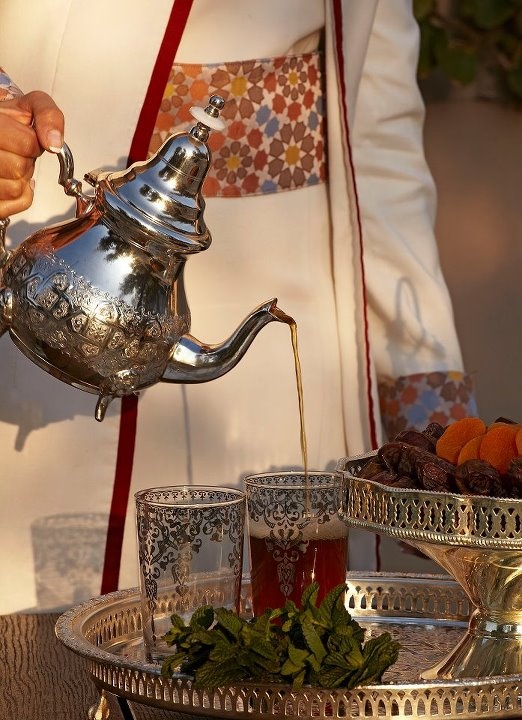
The hospitality customs surrounding tea are elaborate and deeply meaningful. The host prepares the tea with ceremony, pouring it from a height to create a frothy surface. The first glass is offered to the most honoured guest. The second glass goes to the next most valued person, and so on. The tea is served in small, ornate glasses, often on a silver tray with sugar cubes and fresh mint. This ritual is observed in homes, cafés, shops and offices across the country, multiple times a day.
In daily life, tea marks the rhythm of the day. The morning tea awakens the household. The afternoon tea pauses the day for conversation and connection. The evening tea accompanies dinner and family time. In family traditions, the preparation of tea is often the responsibility of the head of the household, and the skill with which one prepares and pours tea is a source of pride and identity.
For the traveller, experiencing an authentic Moroccan tea ceremony—whether in a family home, a traditional Fes riad or a rooftop café in Marrakech—is one of the most essential and memorable experiences Morocco has to offer. It is a moment of pure connection, simplicity and beauty that captures the soul of Moroccan culture in a single glass.
Six reasons this tea holds a unique place in Moroccan culture.
Moroccan mint tea is more than a beverage. It is a ritual, a tradition and a gesture of love.
Hospitality Tradition
Offering Moroccan Mint Tea to a guest is the most basic and profound expression of welcome in Moroccan culture. To be offered tea is to be honoured. To refuse it is almost unthinkable.
Tea Ceremony
The preparation and pouring of Moroccan Mint Tea is a ceremony. The host pours from a height to create a frothy surface, serves the most honoured guest first and ensures every glass is perfect.
Fresh Mint
Fresh spearmint is the soul of Moroccan Mint Tea. The herb is added generously, releasing its fragrant oils into the hot water. The quality and freshness of the mint define the tea’s character.
Green Tea Base
Moroccan Mint Tea provides the foundation. This tea, which arrived in Morocco through trans-Saharan trade routes, merged with local traditions to create something entirely new.
Sugar Tradition
Moroccan Mint Tea is famously sweet. Sugar is not merely a sweetener—it is an essential ingredient that balances the bitterness of the green tea and the freshness of the mint.
Social Gatherings
Tea is the centrepiece of every social gathering. Family conversations, business meetings, neighbourhood chats and celebrations all revolve around the sharing of tea.
The ultimate destinations for Moroccan tea.
Every Moroccan city offers a distinct tea experience.
Marrakech
The rooftop cafés of the medina offer the most iconic tea experience in Morocco. Sipping Moroccan Mint Tea while overlooking Jemaa el-Fnaa as the sun sets is unforgettable.
Fes
The traditional riads of Fes serve Moroccan Mint Tea with extraordinary elegance. The medina cafés are steeped in centuries of tradition, and the tea ceremony here is considered the most refined.
Chefchaouen
The Blue Pearl offers a mountain tea experience. The cafés overlooking the blue-washed streets serve Moroccan Mint Tea with a view that is as refreshing as the drink itself.
Rabat
The capital’s tea tradition is elegant and understated. The cafés near the Kasbah serve refined versions of Moroccan Mint Tea in settings that reflect the city’s sophisticated character.
Casablanca
Morocco’s largest city offers both traditional and contemporary Moroccan Mint Tea experiences. The cafés along the Corniche serve excellent tea with views of the Atlantic.
Essaouira
Coastal Essaouira offers a relaxed tea experience. The harbour cafés serve Moroccan Mint Tea with sea breezes and the sound of waves—a perfect expression of the city’s laid-back spirit.
A ritual of grace, generosity and connection.
The traditional preparation of Moroccan Mint Tea is a ceremony that unfolds with grace and precision. The host begins by rinsing the Chinese gunpowder tea with hot water, discarding the first infusion to remove bitterness. Fresh spearmint is then added—generously, often filling the entire teapot—along with a substantial amount of sugar. boiling water is poured over the mixture, and the tea is left to steep for several minutes.
The pouring is the most iconic element of the ceremony. The host lifts the teapot high above the glasses and pours in a long, steady stream, creating a frothy surface on each glass. This is not merely theatrical—the height of the pour aerates Moroccan Mint Tea, blending the flavours and creating a light, slightly foamy texture that is considered essential to the experience. The skill required to pour cleanly from a height, without spilling, is a source of great pride.
The tea glasses are themselves objects of beauty. Traditional Moroccan tea glasses are small, ornate and often decorated with gold or silver patterns. They are designed to be held in the hand, sipped slowly and savoured. The small size ensures that the tea remains hot and that each glass is fresh. In many families, the tea glasses are heirlooms, passed down through generations.
Serving etiquette is governed by rules of respect and hierarchy. The first glass is always offered to the most honoured guest—the eldest person, the most valued visitor or the host’s most respected acquaintance. The second glass goes to the next most important person, and so on. The host serves everyone before pouring a glass for themselves. This ordering reflects the Moroccan values of respect, generosity and humility.
The hospitality customs surrounding tea are elaborate. When a guest arrives, the first question is often “Do you want tea?” The answer is always “yes.” To refuse tea is to refuse hospitality, which can be perceived as a slight. The tea is served with sugar cubes on the side, allowing guests to adjust the sweetness to their preference. Pastries or sweets may accompany the tea, especially during formal visits.
The social importance of tea cannot be overstated. In Morocco, business deals are sealed over tea. Family conflicts are resolved over tea. Neighbourhood disputes are mediated over tea. The act of sharing tea creates a space for conversation, negotiation and connection. It slows time, opens hearts and builds bridges between people.
How tea traditions vary across the country.
Like every aspect of Moroccan culture, tea traditions change from region to region, reflecting local ingredients, climate and customs.
The Imperial Cities—Marrakech, Fes, Meknes and Rabat—produce the most refined tea traditions. The ceremony here is formal, the glasses ornate, and the pouring technique polished to perfection. In Fes, the tea ceremony is considered the most elegant in the country.
The Atlas Mountains offer a different tea experience. Families prepare Moroccan Mint Tea with wild mountain mint, which has a more intense, slightly peppery flavour than the spearmint used in the cities. The tea is often stronger, served in simpler glasses and drunk in more rustic settings—around a family hearth or on a mountainside terrace.
The Sahara presents unique tea traditions. In the desert, tea is prepared over open fires, using whatever water is available. The Tuareg and other desert peoples have their own tea ceremonies, which are central to nomadic social life. Desert tea is often stronger and more concentrated, reflecting the need for refreshment in extreme heat.
The Atlantic Coast brings a lighter, more relaxed approach. In Essaouira and Casablanca, tea is often served with a Mediterranean lightness—slightly less sweet, with generous Moroccan Mint Tea, enjoyed on sun-drenched terraces overlooking the ocean.
Northern Morocco—around Tangier and Chefchaouen—shows Andalusian influence in its tea culture. The cafés here are often more cosmopolitan, and the tea is sometimes served with a European touch—a nod to the region’s proximity to Spain and its multicultural heritage.
The language of welcome.
Understanding tea’s role in Moroccan hospitality helps travellers navigate cultural encounters with grace.
Welcoming Guests
When a guest arrives, the first question is always “Do you want tea?” The answer is always “yes.” Refusing tea is to refuse hospitality, which can be perceived as a slight.
Family Gatherings
Tea marks every family gathering. The afternoon tea pauses the day for conversation and connection. The evening tea accompanies dinner. These rituals define the rhythm of Moroccan family life.
Business Meetings
In Morocco, business is conducted over tea. The ceremony slows the pace, builds rapport and creates a space for negotiation. Never rush to business before the tea is served.
Daily Routines
Tea punctuates the Moroccan day. Morning tea awakens the household. Afternoon tea pauses the day. Evening tea closes it. The rhythm of tea is the rhythm of Moroccan life.
In Moroccan culture, the offering of tea is the first and most fundamental act of hospitality. When a guest enters a home, a shop or an office, the host’s first instinct is to prepare tea. This is not a casual gesture—it is a deeply meaningful ritual that communicates respect, warmth and welcome. To understand this ritual is to understand something essential about Moroccan culture.
Family gatherings revolve around tea. The afternoon tea—served between 3 and 5 pm—is a daily practice in most Moroccan households. The family gathers, the tea is prepared with ceremony, and the hours of the afternoon are spent in conversation, connection and shared enjoyment. This ritual is one of the defining rhythms of Moroccan family life, and it is a practice that travellers are often invited to share.
Business meetings in Morocco are conducted over tea. The ceremony slows the pace of interaction, builds rapport and creates a space for trust to develop. In Moroccan business culture, it is considered rude to rush to the subject of discussion before the tea has been served and enjoyed. The tea ceremony is not a preamble to business—it is an essential part of the process.
Celebrations of every kind—weddings, religious holidays, births, graduations—feature tea prominently. At weddings, tea is served alongside Pastilla and couscous. At Eid, tea flows freely alongside pastries and sweets. The tea ceremony elevates every occasion.
Cultural etiquette around tea is important for travellers to understand. Always accept tea when offered. Drink at least one glass. Compliment the host on the quality of the tea. If you prefer less sugar, it is acceptable to mention this gently, but know that the sweetness is an integral part of the tradition. The most important thing is to receive the gesture with gratitude and warmth.
Everything you need to know for the perfect tea experience.
Common questions about Moroccan Mint Tea.
Why is Moroccan mint tea so important?
Moroccan mint tea is the country’s most powerful symbol of hospitality. Offering tea is the most fundamental act of welcome, and the ceremony surrounding its preparation and serving reflects centuries of tradition, respect and community.
Is Moroccan tea always sweet?
Traditionally, yes. Moroccan tea is famously sweet, with generous amounts of sugar balancing the bitterness of the green tea. However, most cafés will accommodate requests for less sugar if you prefer.
What type of tea is used?
Moroccan mint tea is made with Chinese gunpowder green tea, which arrived in Morocco through trans-Saharan trade routes in the mid-19th century. This tea, combined with fresh spearmint and sugar, became the national drink.
Why is tea poured from a height?
The height of the pour aerates the tea, blending the flavours and creating a light, slightly foamy surface. This technique is also a display of skill and hospitality—the higher the pour, the more honoured the guest.
Should I accept tea when offered?
Absolutely. In Morocco, offering tea is an act of hospitality, and declining can be perceived as a slight. Even if you don’t usually drink tea, accept the gesture graciously and drink at least one glass.
Where can I experience an authentic tea ceremony?
Traditional cafés in the medinas of Marrakech, Fes and Chefchaouen offer excellent experiences. Riads often prepare tea for their guests with great ceremony.
Is mint tea served all day?
Yes. Moroccan tea is served throughout the day—morning, afternoon and evening. The afternoon tea ritual (between 3 and 5 pm) is the most formal and celebrated.
Can I buy Moroccan tea as a souvenir?
Yes. High-quality gunpowder green tea and dried spearmint are widely available in medina markets. They make excellent, authentic gifts that allow you to recreate the Moroccan tea experience at home.
What foods pair best with mint tea?
Moroccan pastries are the perfect accompaniment. Kaab el Ghazal, Pastilla, msemen with honey, and chebakia all pair beautifully with the sweet, fresh flavours of the tea.
Is Moroccan mint tea caffeinated?
Yes. The Chinese gunpowder green tea base contains caffeine, though the amount is generally lower than in black tea. The caffeine provides a gentle, sustained energy that complements the refreshing mint.
How is mint tea different from regular green tea?
Moroccan mint tea is distinguished by the generous use of fresh spearmint, the large quantity of sugar, and the ceremonial pouring technique. The combination creates a flavour profile that is uniquely Moroccan.
What is the proper way to drink Moroccan tea?
Sip slowly from a small glass. Drink at least one full glass. Compliment the host. The tea is meant to be savoured and shared—rushing through it misses the point of the ritual.
Experience Morocco One Cup at a Time.
Every glass of Moroccan mint tea carries the warmth of hospitality, the beauty of tradition and the simplicity of a culture that values connection above all else. From the rooftop cafés of Marrakech to the family homes of Fes, Morocco’s tea tradition invites you to slow down, connect and discover the soul of this extraordinary country. Begin your journey today.