How Much Cash To Carry in Morocco? 9 Smart Tips to Budget With Confidence
How much cash to carry in Morocco is one of the most common questions travellers ask, and the honest answer is that it depends on how you travel. A backpacker eating at street stalls and riding shared transport will spend most of the day in cash. A guest at a luxury riad may pay for nearly everything by card and use cash only for tips, taxis and the odd market. Carrying too little leaves you hunting for an ATM at a bad moment. Carrying too much makes a lost wallet far more painful.
This guide helps you estimate a sensible daily amount for your style of travel, shows what cash is actually needed for, and explains how to keep it safe. It focuses on budgeting, not on how to withdraw money or use cards, which our related guides cover separately. The figures below come from 2026 travel budget guides and are planning estimates, not fixed prices. Costs vary by city, season and how you travel, so adjust them to your own plans.
How Much Cash to Carry in Morocco Each Day?
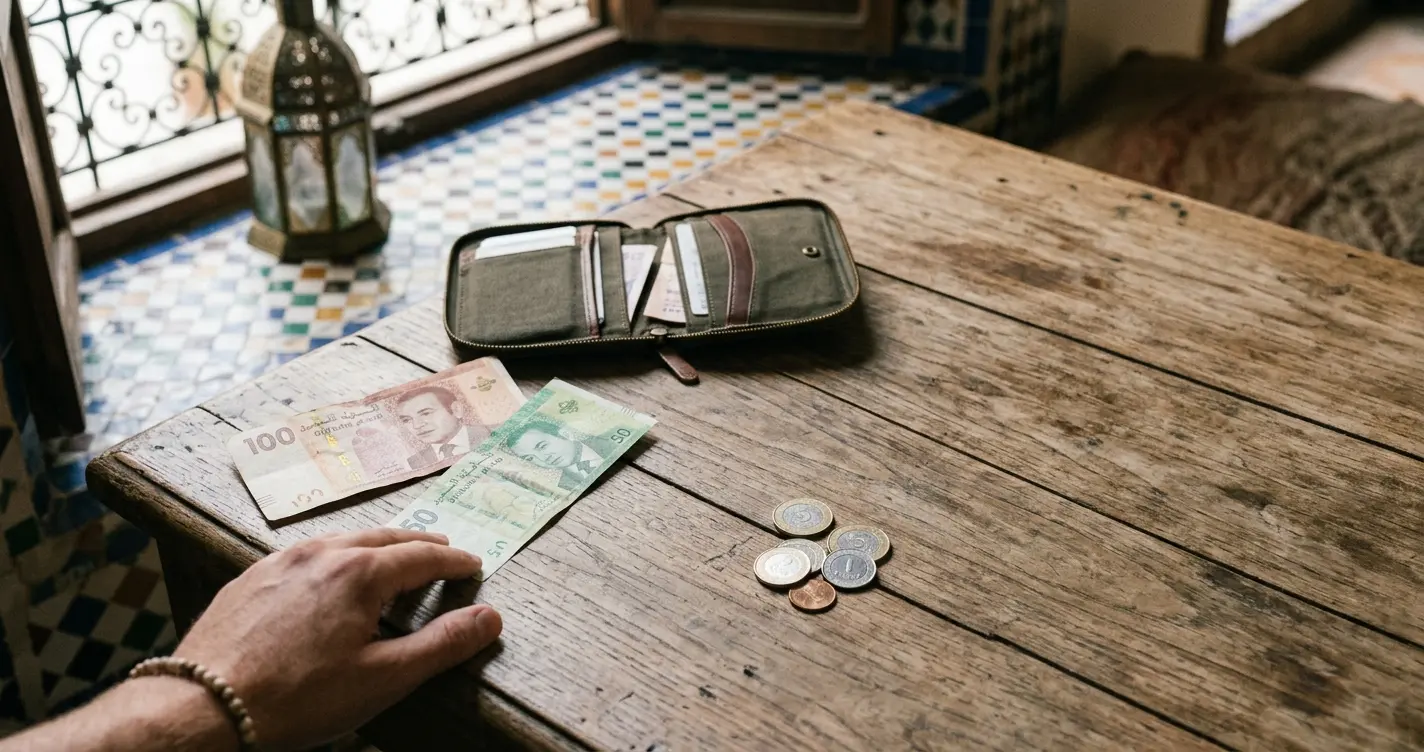
The simplest approach is to separate two kinds of spending: costs you will prepay or put on a card, such as hotels and tours, and everyday costs you will pay in cash, such as meals, taxis, entrance fees and tips. Your daily cash is the second category. Roughly ten Moroccan dirhams (MAD) equal one euro, though exchange rates change.
Cash for Budget Travelers
Travel guides published in 2026 commonly put total daily spending for budget travellers at around 300 to 500 MAD (roughly 30 to 50 US dollars), including a dorm bed, street food and local transport. If you prepay your bed, your daily cash need is lower, but most budget spending is cash-based, since street stalls and local transport do not take cards. A cash allowance in the range of 250 to 400 MAD a day is a reasonable starting point, and you should adjust it to your accommodation and eating habits.
Cash for Mid-Range Travelers
Mid-range total daily budgets in the same guides run from about 700 to 1,200 MAD, covering private riad rooms, restaurant meals, guided activities and transport. Much of that can go on a card, especially hotels and larger restaurants. A cash allowance of around 300 to 600 MAD a day often covers taxis, cafés, markets, small entry fees and tips, though this is a planning estimate rather than a published figure.
Cash for Luxury Travelers
Luxury travellers can spend several times more per day in total, but most of it goes on cards for high-end hotels, fine dining and private tours. Cash is still useful for tips, taxis, souvenirs and small purchases. A cash allowance of 500 to 1,000 MAD a day is a sensible planning range for many, though it depends on how much you plan to shop and tip.
Why Your Daily Cash Needs Depend on Your Itinerary
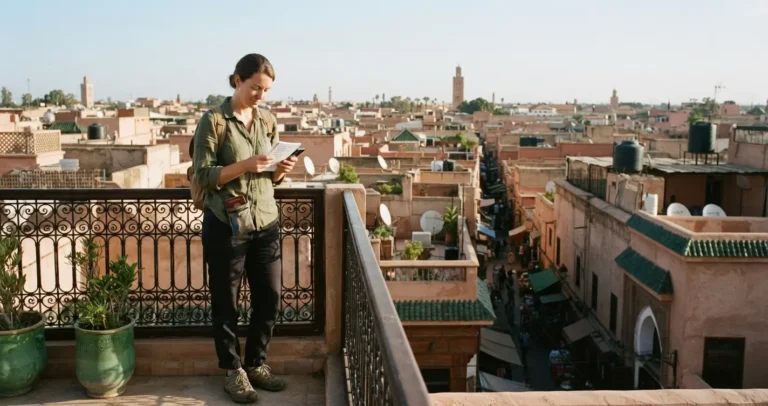
A day in the Marrakech medina with several market stops needs more cash than a day on a train between cities. A day in a rural area, where cards are less likely to work, needs more cash than a day in a modern district. Look at what each day involves, and plan the amount accordingly.
What Can You Pay for With Cash in Morocco?
Cash is the default for small, informal and remote spending.
Taxis and Local Transportation
Petit taxis are paid in cash, and drivers often have little change, so small notes help. Short city rides commonly cost somewhere in the range of 20 to 50 MAD, though fares vary and negotiated prices for tourists are often higher. Shared grand taxis and many local buses are also cash-only.
Street Food, Cafés and Small Restaurants
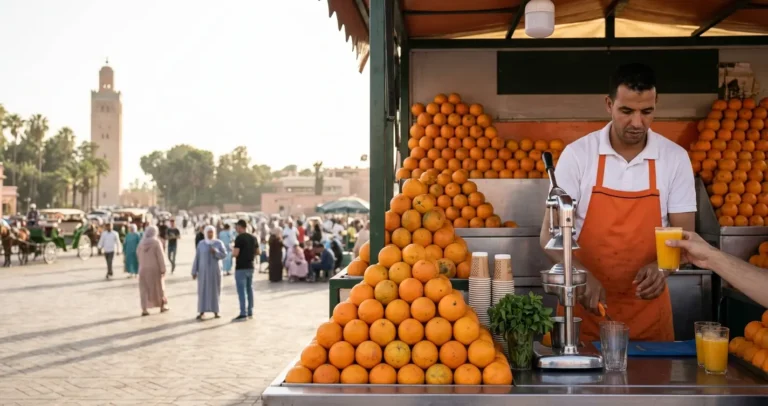
Street food, snack stalls and small local eateries almost always take cash only. Budget guides from 2026 place a simple tagine or couscous meal at a local restaurant at around 40 to 120 MAD, depending on the place, and a café stop at about 30 MAD. Prices in tourist areas can be higher.
Souks, Markets and Small Shops
Souk stalls and small independent shops prefer cash, and bargaining is part of the experience. Carry smaller notes so that you can pay the agreed price without asking for change. Keep your cash in different pockets so that you do not display a thick roll of notes.
Tips, Toilets and Small Everyday Purchases
Tips for porters, guides, drivers and restaurant staff are given in cash. around 5 to 10 percent at restaurants where service is not included, a few dirhams to 30 MAD for porters and hotel staff, and roughly 50 to 100 MAD a day for guides and drivers. Public toilets, water and small snacks also need coins and small notes.
Rural Areas and Remote Destinations
Villages, mountain areas and desert camps rely on cash. Guesthouses, local guides and small shops may have no card terminal, and mobile signal can be unreliable. Plan to carry enough cash for the whole stay.
When Can You Pay by Card Instead of Cash?
Cards reduce the cash you need to carry, which is both convenient and safer. For a full guide to card acceptance and fees, see our article on using cards in Morocco.
Hotels and Riads
Most hotels and many riads accept cards, particularly at mid-range and higher prices. Smaller guesthouses may prefer cash or add a surcharge. Confirm the payment method when you book.
Restaurants and Established Businesses
Restaurants in tourist areas and modern districts often take cards, as do established businesses. Small local eateries often do not. Ask before you order.
Supermarkets and Shopping Centres
Supermarkets, pharmacies and shopping centres in cities generally accept cards. Keep some cash for small purchases and places where the terminal is offline.
Tours, Activities and Transport Bookings
Many tour operators, activity providers and train services accept cards or online payment, but some ask for a cash deposit or balance. Check how and when you are expected to pay, particularly for desert tours and treks.
Why You Should Never Assume Card Payments Are Available
Even in places that usually take cards, terminals can fail, and connections can drop. Carry enough cash to cover a meal and a taxi, even if you plan to pay by card.
How Much Cash Should You Carry for Different Types of Morocco Trips?
These are planning guides, not rules. Adjust them to your own spending habits and how much you prepay.
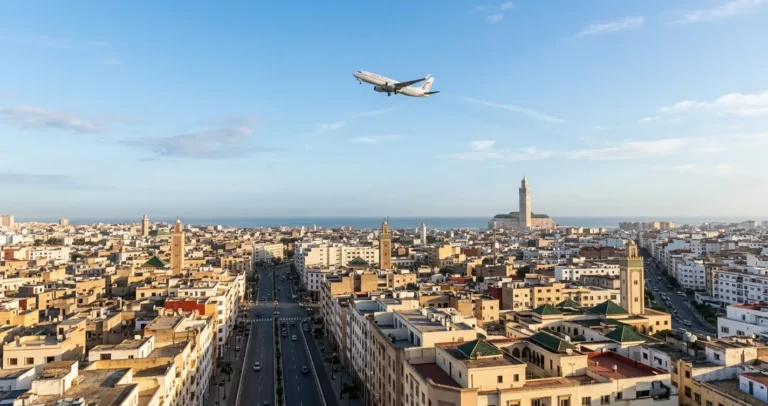
A Weekend in Marrakech or Casablanca
For a short city break, you may only need a few hundred dirhams a day for taxis, meals, entry fees and tips, with hotels and larger meals on a card. Withdraw a modest amount on arrival and top up if needed.
A One-Week Morocco Trip
For a week, think in terms of your daily allowance multiplied by the number of days, then withdraw in two or three stages rather than all at once. Keep part of it as a reserve.
A Multi-City Trip by Train or Bus
Trains and buses can be booked by card or online in many cases, but stations and bus companies vary. Carry cash for taxis between stations and hotels, and for tips at each stop. Withdraw in the larger city before you leave for smaller destinations.
A Sahara Desert Tour
Deserts have limited banking, so carry cash for the whole stay. A three-day Sahara tours span a wide price range, so confirm what your tour includes and what you pay on the day. Allow extra cash for tips, drinks, snacks and souvenirs, and for camel treks or other add-ons.
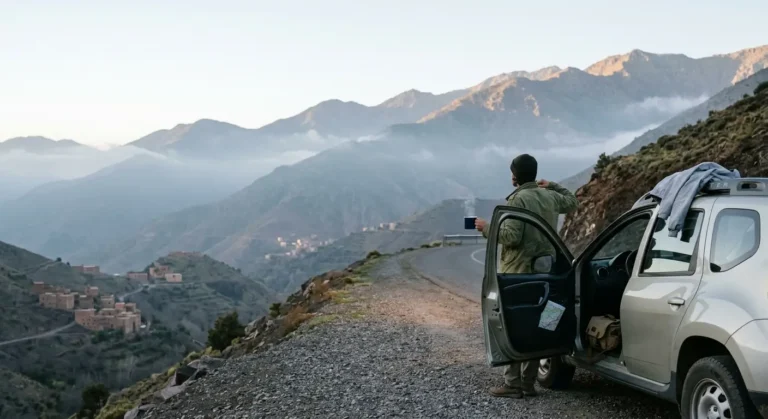
A Road Trip Through Rural Morocco
Fuel stations in cities usually accept cards, but rural stations and small guesthouses may not. Carry cash for fuel, road tolls, meals and accommodation, and keep a reserve for the unexpected. Tolls on Moroccan motorways are commonly paid at booths, so keep small notes handy.
A Family Holiday or Group Trip
Families and groups spend more in total, but costs per person are often lower. Decide whether one person carries the group’s cash, or whether each adult carries a share. Spread it across different people to reduce risk.
Should You Carry Moroccan Dirhams or Foreign Currency?
Dirhams, for almost everything. This section covers the basics. For more detail on foreign currency acceptance, see our guide to paying in euros or dollars in Morocco.
Why Moroccan Dirhams Are Best for Everyday Spending
Prices are set in dirhams, and taxis, markets, cafés and small shops expect them. Paying in dirhams avoids confusion over exchange rates and gives you the clearest view of what you are spending.
Can You Pay in Euros or US Dollars?
Some tourist-facing businesses accept euros or dollars, but the exchange rate is usually set by the seller and may not favour you. Treat foreign currency as a backup, not a plan.
Where to Exchange Money in Morocco
Use banks, licensed exchange offices and airport desks, and keep your receipts. Avoid exchanging money on the street, where fraud is a risk.
Why Paying in Foreign Currency Can Be Inconvenient
Change is often given in dirhams, the rate may be poor and prices can be rounded up. Using dirhams from the start makes budgeting simpler.
Where Should You Get Cash in Morocco?
Because the dirham is a closed currency, most travellers pick it up after arrival. Our ATM guide covers the process in depth.
Withdrawing Moroccan Dirhams From ATMs
ATMs are the most convenient way to get dirhams. Fees and limits vary by machine and bank, with a limit of around 2,000 MAD per transaction commonly reported, so check with your bank and the machine.
Exchanging Money at Banks and Licensed Exchange Offices
If you carry foreign cash, banks and licensed exchange offices can convert it. Compare the rate and any commission, and keep your receipt.
Airport Currency Exchange: When It Makes Sense
Airport exchange desks are convenient for a small first amount, such as a taxi and a meal. Rates are often less favourable than in town, so avoid exchanging your whole budget there.
How to Avoid Unnecessary Exchange and Withdrawal Fees
Withdraw larger amounts less often, within your comfort level, to reduce flat fees. Choose dirhams if a machine offers to charge in your home currency, and check your bank’s foreign fees before you travel.
How to Keep Your Cash Safe While Traveling in Morocco
Most visitors have no problems, but a few habits reduce the risk.
Divide Your Money Between Different Places
Do not keep all your cash in one place. Split it between a day wallet, a money belt or inner pocket and your hotel safe. A single loss then cannot leave you stranded.
Carry Only What You Need for the Day
Leave your reserve in the hotel safe and carry only the day’s allowance. This keeps your exposure low and your budget clear.
Protect Your Wallet in Crowded Medinas and Markets
Crowded places call for extra care. Keep your wallet in a front pocket or a zipped bag, and keep your bag in front of you. Avoid taking out a thick roll of notes at a stall.
What to Do if Your Cash Is Lost or Stolen
Report a theft to the local police if you want a record, and contact your insurer if you have cover. Use your backup cash or card to cover immediate needs. Our travel insurance guide explains what policies typically cover for stolen belongings.
How Much Emergency Cash Should You Keep?
A small reserve protects you from the most common problems.
Preparing for Card Declines and ATM Problems
Cards get declined and machines run out of cash. A reserve that covers a night’s accommodation, a meal and a taxi gives you time to solve the problem.
Keeping Cash for Unexpected Transport or Accommodation Costs
A cancelled train, a missed bus or a change of plans can mean a taxi or an extra night. Keep a reserve separate from your day wallet.
Planning Ahead for Rural and Desert Destinations
Before you leave a larger town, check your cash. If the next machine is far away, withdraw more than you think you will need, and keep a margin.
Common Cash Mistakes to Avoid in Morocco
A few habits cause most of the trouble.
Carrying Too Much Cash at Once
Large amounts of cash raise the cost of a loss. Withdraw in stages, and keep most of it in a safe place.
Relying Entirely on Cards
Cards are not accepted everywhere, and terminals can fail. Always carry some cash, even in cities.
Running Out of Cash Before Reaching an ATM
Do not wait until your last note. Withdraw in the last big town before a remote stretch, and note that machines can be out of order or empty.
Withdrawing Small Amounts Too Frequently
Flat fees per withdrawal add up. Withdraw a sensible amount each time, and avoid several tiny withdrawals.
Forgetting to Keep Smaller Banknotes and Coins
Large notes are hard to break at taxis, market stalls and small cafés. Break them at supermarkets, hotels and larger restaurants, and keep a stock of small notes and coins.
Frequently Asked Questions About Carrying Cash in Morocco
How Much Cash Should I Bring to Morocco for a Week?
It depends on your style. As a planning guide, multiply your daily cash allowance by seven, and add a reserve. A budget traveller may plan on around 250 to 400 MAD a day, a mid-range traveller around 300 to 600 MAD and a luxury traveller around 500 to 1,000 MAD, based on 2026 budget guides and planning estimates. Withdraw in stages rather than all at once.
Is 500 Moroccan Dirhams Enough for One Day?
For many budget travellers, yes, a total budget-day spending at roughly 300 to 500 MAD. For a mid-range traveller who prepays accommodation and uses cards for larger meals, it is often enough for cash needs. It will not cover a hotel night, a private tour or a luxury meal.
Should I Carry Cash Every Day in Morocco?
Yes, a modest amount. Even if you use cards for larger payments, you will want cash for taxis, small shops, tips and street food. Carry the day’s allowance, and leave the rest in a safe place.
Can I Use My Credit Card Instead of Cash?
For hotels, larger restaurants, shops and many tours, usually yes. For taxis, markets, street food, tips and rural areas, no. See our guide to using cards in Morocco for more detail.
Is It Safe to Carry Cash in Marrakech?
Generally, with sensible habits. Carry only what you need, keep your wallet in a secure pocket or bag, and take care in crowded areas. Leave your reserve in the hotel safe.
Should I Exchange Money Before Arriving in Morocco?
Not necessarily. The dirham is a closed currency, and it is easier to get it after arrival. If you want a small amount for your first taxi, you can use an airport ATM or exchange desk. Check customs rules if you plan to bring dirhams in or out, since limits on carrying them reportedly apply.
Can I Get Moroccan Dirhams at the Airport?
Yes. Major airports have ATMs and exchange desks. They are convenient for a small first amount, but rates may be less favourable than in town.
Should I Carry Cash in the Sahara Desert?
Yes. Desert areas have limited banking and card use, so carry enough cash for the whole stay, including tips, drinks and extras. Withdraw in a larger town before you travel.
What Should I Do if I Run Out of Cash in Morocco?
Find the nearest bank ATM, preferably in a busy, well-lit location. If your card is declined, try another machine or card, and contact your bank. Keep a small emergency reserve to avoid this situation.
Final Advice: Finding the Right Balance Between Cash and Cards
Knowing how much cash to carry in Morocco is about balance. Use cards for hotels, larger meals and bookings, and cash for everyday spending. These nine tips bring the advice together:
- Estimate your daily cash by separating prepaid and card spending from cash spending, and base your allowance on your travel style.
- Treat budget figures as planning estimates, and check current prices for your route and dates.
- Carry small notes and coins for taxis, markets and tips.
- Withdraw in stages, not all at once, and top up in larger towns.
- Split your money between a day wallet, a hidden pouch and the hotel safe.
- Carry only the day’s allowance when you go out, especially in crowded medinas.
- Keep an emergency reserve, separate from your main cash and your cards.
- Prepare for remote areas by withdrawing before you go and carrying a margin.
- Choose dirhams when you pay by card or withdraw cash, and avoid unnecessary conversion.
Used together, these habits keep your spending clear and your risk low. Check current prices and your bank’s terms before you travel, and adjust your cash plan to your own route.