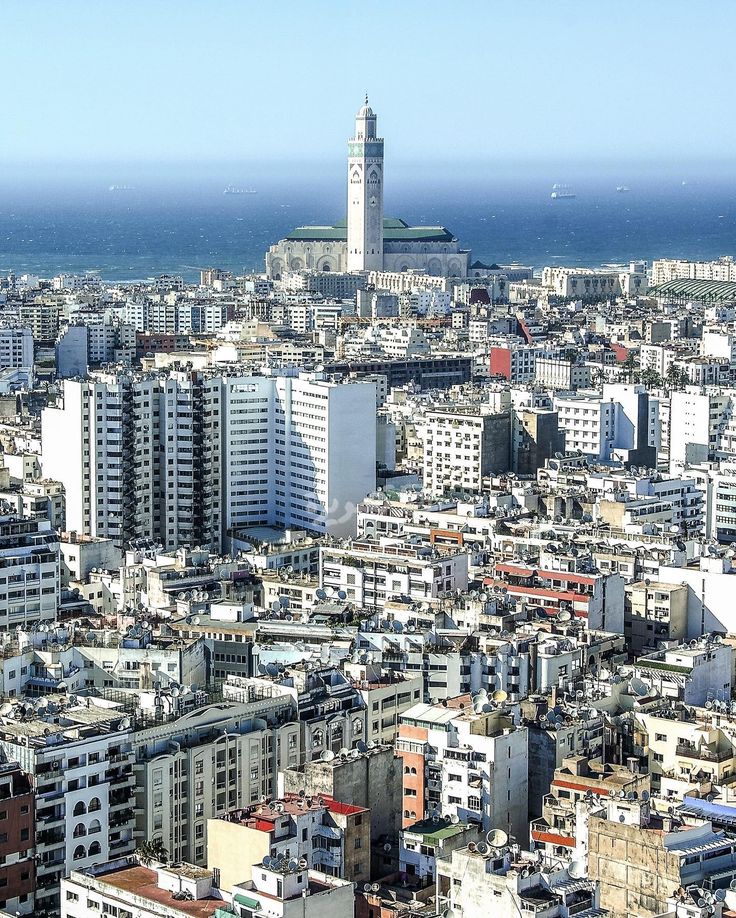
Casablanca, Morocco
Morocco's largest city and economic capital is where contemporary life meets Atlantic coastal charm — a modern gateway defined by Art Deco boulevards, oceanfront corniches and one of the world's largest mosques rising straight from the sea.
Why Visit Casablanca?
Casablanca isn't chasing the postcard version of Morocco — and that's exactly what makes it worth a stop.
Morocco's Largest City
A sprawling economic capital with an energy and scale unlike anywhere else in the country.
Atlantic Coastline
A long oceanfront corniche brings sea air and sunset views right into daily city life.
Modern Morocco
Skyscrapers, malls and a fast-moving business culture sit alongside centuries-old traditions.
French Colonial Architecture
Elegant Art Deco buildings from the 1920s and '30s line many of the city's central streets.
Vibrant Food Scene
From seafood shacks to fine dining, Casablanca's culinary range rivals any city in North Africa.
Cosmopolitan Atmosphere
A genuinely international mix of business travelers, students and long-time residents.
Casablanca at a Glance
The essentials before you dive into planning.
Top Things to Do in Casablanca
Ten stops that capture the city's mix of grandeur, history and everyday life.
Hassan II Mosque
One of the largest mosques in the world, built partly over the Atlantic with a retractable roof and a minaret over 200 meters tall.
The Corniche
Casablanca's oceanfront promenade, lined with cafés, restaurants and beach clubs facing the Atlantic.
Habous Quarter
A "new medina" built during the colonial era, blending traditional Moroccan design with an orderly, planned layout.
Mohammed V Square
The city's grand civic square, surrounded by striking Art Deco government buildings.
Sacred Heart Cathedral
A striking white Art Deco former cathedral, no longer used for services but stunning inside and out.
Rick's Café
A recreation of the iconic film's setting, now a genuinely elegant restaurant and piano bar.
Morocco Mall
One of Africa's largest shopping malls, with an aquarium and direct beach access.
Ain Diab Beach
The city's main beach strip, popular with locals for swimming, surfing and beach clubs.
Central Market
A lively covered market for fresh seafood, produce and flowers in the heart of downtown.
Arab League Park
A green, palm-lined park in the city center, a pleasant break between sights.
A Mosque Built Into the Sea
The Hassan II Mosque is Casablanca's defining landmark — and one of the few mosques in Morocco open to non-Muslim visitors. Completed in 1993, it sits partly over the Atlantic on a reclaimed platform, its minaret visible from across the city.
Inside, an intricately carved ceiling, a retractable roof and marble drawn from across Morocco make the guided tour genuinely worth the ticket, not just a photo stop from outside.
Local Experiences Worth Having
Beyond the landmarks, Casablanca rewards a bit of unstructured wandering.
- Habous Quarter — a planned "new medina" that's easier to navigate than older ones
- Traditional markets — the Central Market's seafood stalls are a genuine local scene
- Café culture — grand colonial-era cafés remain a daily ritual across the city
- Oceanfront promenades — the Corniche is where Casablanca actually relaxes
- Art Deco architecture — downtown streets hold one of Africa's best-preserved Art Deco collections
- Moroccan street food — grilled seafood and snails are local specialties worth seeking out
- Local shopping — from souks to malls, Casablanca covers the full spectrum
Best Time to Visit
Casablanca's Atlantic location keeps its climate milder and more consistent than inland cities.
Spring & Autumn
- March–May and September–November — comfortable temperatures for walking the Corniche and downtown
- Generally the most pleasant months overall
Summer & Winter
- June–August — warm but rarely extreme, tempered by the Atlantic
- December–February — mild days, cooler evenings, and occasional rain
Where to Stay
Downtown and the Corniche are the two best bases for first-time visitors, each with a distinct feel.
Luxury Hotels
International five-star properties cluster along the Corniche, many with direct beach and pool access.
Boutique Hotels
Stylish, smaller properties in the Art Deco downtown core, walkable to major sights.
Mid-Range Accommodation
Reliable, comfortable options throughout the city center at reasonable rates.
Budget Hotels
Simple, well-located options near downtown for travelers prioritizing value.
Food & Dining
As Morocco's largest city, Casablanca's dining scene is the country's most diverse.
- Seafood — fresh catch from the Atlantic is a Casablanca specialty
- Moroccan cuisine — classic tagines and couscous alongside more modern interpretations
- International restaurants — one of the widest ranges of global cuisine in the country
- Oceanfront dining — the Corniche is lined with restaurants facing the Atlantic
- Cafés & fine dining — from grand colonial cafés to acclaimed chef-driven tables
- Local specialties — grilled sardines and other Atlantic catches are worth seeking out
Getting to Casablanca
As the country's main gateway, Casablanca is easy to reach from anywhere.
- Mohammed V International Airport — Morocco's busiest airport, with direct global connections
- Al Boraq high-speed train — the fastest way to and from Tangier and Rabat, run by Morocco's national railway, the ONCF
- National rail network — ONCF trains connect to Marrakech, Fes and beyond
- Bus connections & rental cars — CTM and Supratours reach it easily; driving in is straightforward from most cities
Getting Around Casablanca
Casablanca is bigger and more spread out than Morocco's historic cities, so getting around takes a bit more planning.
- Petit taxis — the most common way to move between neighborhoods
- Trams — a modern network covers many central and outer districts
- Walking — downtown and the Corniche are each individually walkable, but not to each other
- Ride-hailing & trains — app-based rides are widely available; local trains connect outer districts
Suggested Itineraries
However much time you have, here's how to spend it well.
Half Day
- Hassan II Mosque tour
- Walk the Corniche
1 Day
- Hassan II Mosque
- Habous Quarter
- Mohammed V Square
- Corniche sunset
2 Days
- Day one as above
- Central Market
- Sacred Heart Cathedral
- Rick's Café dinner
3 Days
- Days one & two as above
- Ain Diab Beach afternoon
- Morocco Mall
- Day trip toward Rabat or El Jadida
Nearby Places to Explore
Casablanca makes a practical base for exploring the surrounding coast and cities.
Practical Travel Tips
A modern city with its own set of everyday habits worth knowing.
- Safety — generally safe; use normal city precautions, especially at night
- Dress code — more relaxed than smaller towns, though modesty is still appreciated outside beach areas
- Money — cards are widely accepted here more than almost anywhere else in Morocco
- Language — Arabic and French are most common, with English understood in business and tourist settings
- Tipping — customary in restaurants and for taxi and hotel staff
- Weather — pack a light layer; ocean breezes keep evenings cooler than you'd expect
- Photography — always ask before photographing people directly
- Business hours — many shops close midday on Fridays for prayer
Related Destinations
Related Travel Guides
Frequently Asked Questions
Is Casablanca worth visiting?
Yes — it offers a very different side of Morocco than the historic imperial cities, with striking architecture, coastline and the country's most iconic mosque.
How many days should I spend in Casablanca?
One to two days is enough to see the highlights; many travelers use it primarily as an arrival or departure point.
What is Casablanca famous for?
The Hassan II Mosque, its Art Deco architecture, its status as Morocco's economic capital, and the classic film that shares its name.
Is Casablanca safe for tourists?
Yes, generally. As Morocco's largest city, normal urban precautions apply, especially at night.
Can visitors enter the Hassan II Mosque?
Yes — it's one of the few mosques in Morocco open to non-Muslim visitors, via guided tour.
Is Casablanca expensive?
It's comparable to or slightly higher than other major Moroccan cities, particularly for hotels and international dining.
What is the best time to visit Casablanca?
Spring and autumn offer the most comfortable temperatures, though the Atlantic climate keeps the city mild year-round.
Is Casablanca family friendly?
Yes — the Corniche, beaches and Morocco Mall all work well for families.
How do I travel from Casablanca to Marrakech?
Trains run frequently and comfortably between the two cities, taking around 2.5–3 hours.
Should I stay in Casablanca at the beginning or end of my trip?
Either works well — many travelers use it as an easy arrival point given the international airport, or a relaxed final stop before departure.
Ready to Discover Casablanca?
From here, keep building your Morocco itinerary — the imperial cities, the Sahara and the Atlas Mountains are all within reach.