Rose Festival in Kalaat M’Gouna: Complete Guide for Visitors
For a few days each spring, the small Dades Valley town of Kalaat M’Gouna turns fragrant. Damask roses that grow along kilometers of hedgerow are harvested, distilled and celebrated in one of Morocco’s oldest and most distinctive agricultural festivals. This guide covers everything you need to plan a visit to the Rose Festival: when it happens, what to expect, where to stay, and how to combine it with the rest of Morocco’s south.
What Is the Rose Festival in Kalaat M’Gouna?
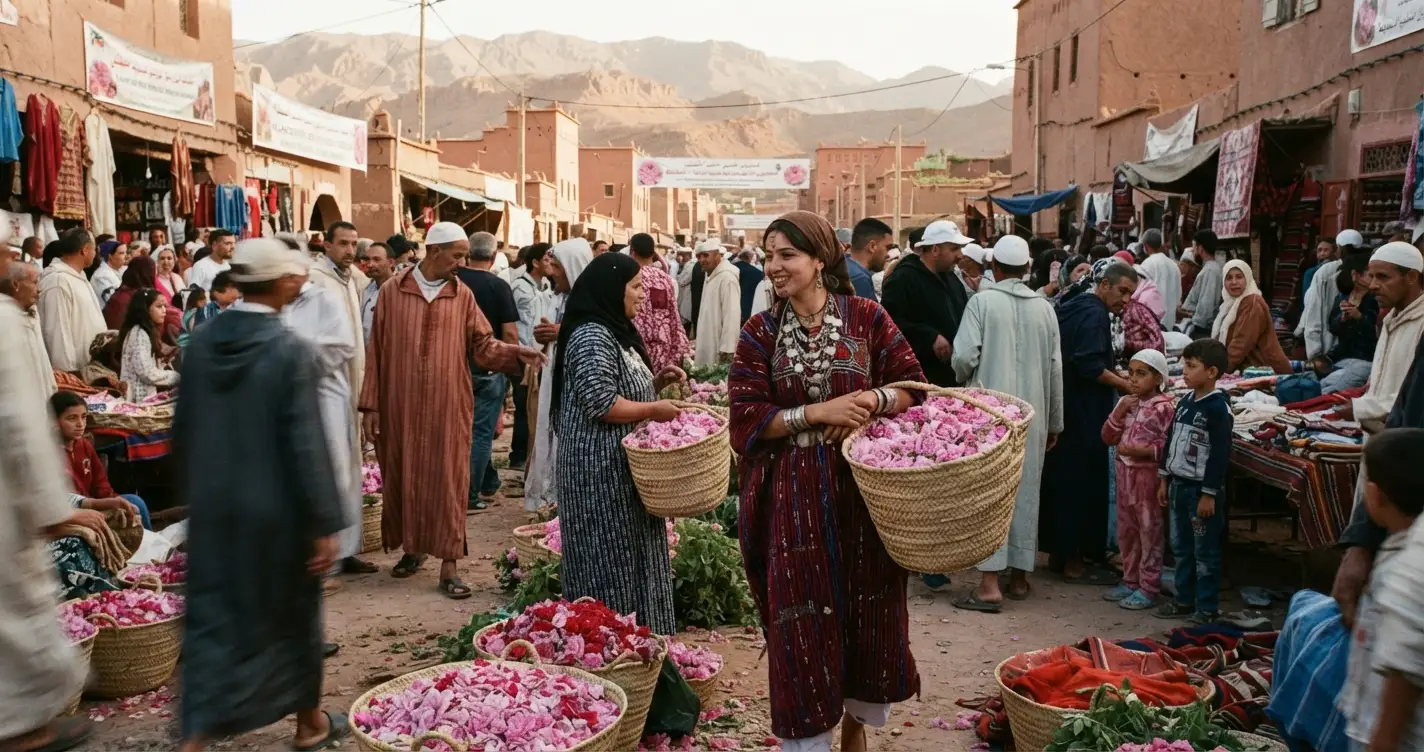
The Rose Festival, known locally as Moussem des Roses, is an annual celebration of the Damask rose harvest in Kalaat M’Gouna, a town in the Dadès Valley often called Morocco’s Valley of Roses. Held under royal patronage and organized with support from the Ministry of Agriculture, it combines a genuine agricultural harvest with a folklore carnival: parades, Amazigh music and dance performances, craft markets, and the crowning of a “Miss Rose.” It is one of Morocco’s oldest festivals still tied directly to a single local crop.
When Is the Rose Festival?
When the Festival Usually Takes Place
The festival is generally held in May, timed to the Damask rose harvest, though some past editions have started in late April. The 2026 edition, the 61st, ran May 7–10.
Why the Festival Date Changes Each Year
Because the date is set around the rose harvest rather than a fixed calendar date, and roses bloom for only a short window each spring, the festival’s exact dates shift slightly from year to year depending on that year’s growing conditions. Arriving even a week or two off the festival dates can mean missing both the event and the roses themselves.
How Long Does the Festival Last?
Recent editions have run around three to four days, though the festival has historically been described as a longer, week-long celebration in some years and by some sources. Confirming the current year’s exact schedule before traveling is worthwhile, since the format has varied between editions.
Why Kalaat M’Gouna Is Known for Roses
The Valley of Roses
Kalaat M’Gouna sits in the Dades Valley at roughly 1,700 meters altitude, carved by the Assif M’Goun River flowing down from the High Atlas. For a stretch of several kilometers around the town, rose hedgerows line fields and roadways, planted as much as agricultural fencing as for their fragrance and value.
How Roses Are Grown and Harvested
According to local legend, roses were first brought to the region by pilgrims returning from Saudi Arabia in the tenth century, and cultivation has continued in the valley for generations since. Harvesting is done by hand, typically in the cool early morning hours when the petals hold the most fragrance, before flowers are taken to local distilleries the same day.
From Rose Petals to Moroccan Products
Harvested petals are distilled into rose water and rose oil, and dried for use in cosmetics, teas and potpourri. Local cooperatives, many run by women, handle much of this processing, turning the harvest into products sold both at the festival and in shops across Morocco.
What Happens During the Rose Festival?
The Rose Harvest Celebration
At its core, the festival celebrates the completion of that year’s harvest, with farmers, cooperatives and local officials marking the occasion alongside visitors. The atmosphere blends genuine agricultural pride with festival spectacle.
Traditional Music and Performances
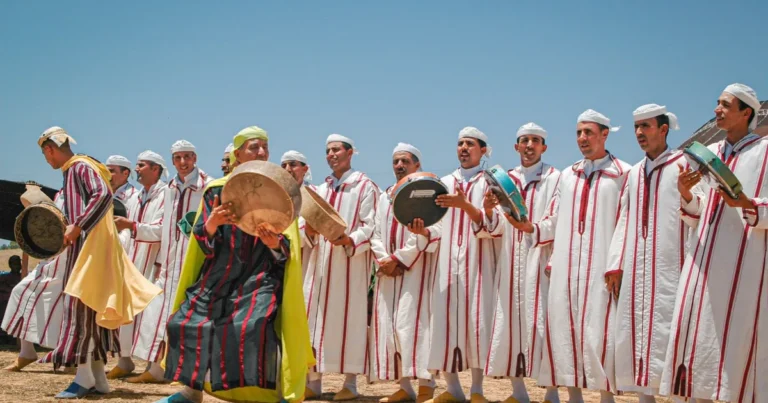
Amazigh music and dance troupes, including ahwash-style group performances, are a central part of the festival programme, reflecting the valley’s Amazigh cultural heritage.
The Festival Parade
A rose-themed carnival parade is one of the festival’s signature events, with floats decorated in roses, costumed performers and troupes from across the region processing through town.
Local Markets and Rose Products
Markets set up around town sell rose water, rose oil, dried roses and local crafts, giving visitors a direct look at, and taste of, the harvest’s output.
The Election of the Rose Queen
Each year, a “Miss Rose” is crowned as part of the festival’s celebrations, a tradition that has been part of the event for decades and remains one of its most anticipated moments.
What Can You Buy at the Rose Festival?
Rose Water
Locally distilled rose water, used in Moroccan cooking, skincare and religious rituals, is one of the festival’s signature products, typically sold both by individual cooperatives and in the town’s shops.
Rose Oil and Beauty Products
Rose oil and rose-based beauty products, including creams and soaps, are widely available, often produced by women’s cooperatives that process the harvest locally.
Dried Roses and Potpourri
Dried rose petals and rose-based potpourri are popular, lightweight souvenirs, easy to pack for the journey home.
Local Crafts and Souvenirs
Beyond rose products, festival markets also sell regional crafts and textiles, giving visitors a broader taste of Dades Valley craftsmanship alongside the rose harvest itself.
Where Is Kalaat M’Gouna?
Kalaat M’Gouna and the Dades Valley
Kalaat M’Gouna sits in the Dades Valley on the N10 highway, between Ouarzazate and the Dades Gorge, roughly 40 km west of Boumalne Dadès. The town is relatively small and is usually visited as part of a wider southern Morocco route rather than as a standalone destination.
Distance From Ouarzazate
Kalaat M’Gouna is approximately 85–90 km east of Ouarzazate, a drive of about 1.5 hours along the N10.
Distance From Marrakech
From Marrakech, Kalaat M’Gouna is just under 300 km away, a drive of roughly 5 to 6 hours over the dramatic Tizi n’Tichka pass through the High Atlas, usually broken up with a stop in Ouarzazate.
How to Get to the Rose Festival
From Ouarzazate
Kalaat M’Gouna makes an easy day trip or short onward journey from Ouarzazate, about 1.5 hours by road, and is often the first stop travelers make heading toward the Dades and Todra Gorges.
From Marrakech
Direct travel from Marrakech takes about 5 to 6 hours by road over the Tizi n’Tichka pass; many travelers break the journey with an overnight stop in Ouarzazate rather than driving straight through.
By Car
The N10 highway between Ouarzazate and Kalaat M’Gouna is well maintained, with dramatic High Atlas and valley scenery throughout, making a private car or driver the most flexible option, especially if you want to stop at rose distilleries or villages along the way.
By Bus and Shared Taxi
CTM and Supratours operate bus services along the Marrakech–Ouarzazate–Kalaat M’Gouna route, with the journey from Marrakech taking roughly 6 to 7 hours. Local shared taxis (grands taxis) also connect Ouarzazate and Kalaat M’Gouna, though schedules can be infrequent.
Where to Stay for the Rose Festival
Staying in Kalaat M’Gouna
Staying in town puts you closest to the festival’s parade route and markets, though accommodation options are more limited and simpler than in larger tourist centers.
Staying in the Dades Valley
Guesthouses and kasbah-style hotels along the Dades Valley, including near the Dades Gorge, offer a quieter base with striking scenery, a reasonable drive from the festival itself.
Staying in Ouarzazate
Ouarzazate offers the widest range of accommodation and services in the region, making it a practical base for a day trip to the festival, especially if you’re also visiting Aït Benhaddou or planning to continue toward Marrakech.
What Else to See Around Kalaat M’Gouna
The Valley of Roses
Beyond the festival itself, a scenic 30 km paved road runs north from Kalaat M’Gouna through the heart of the Valley of Roses, past rose fields, small villages and distilleries, and is worth exploring outside festival days too.
Dades Gorge
East of Kalaat M’Gouna, the Dadès Gorge cuts through dramatic red rock formations, with a winding road, kasbah-style hotels and hiking opportunities that make it one of southern Morocco’s most photogenic detours.
Skoura Oasis
West toward Ouarzazate, the Skoura palm oasis offers a lush, bird-filled counterpoint to the surrounding desert landscape, with atmospheric kasbah accommodation that many travelers prefer over staying in Ouarzazate itself.
Boumalne Dades
Roughly 40 km east of Kalaat M’Gouna, Boumalne Dadès serves as a practical gateway town to the Dadès Gorge, with its own smaller markets and services.
Tips for Visiting the Rose Festival
Book Accommodation Early
Kalaat M’Gouna’s accommodation options are limited compared to larger Moroccan cities, and rooms in town or nearby fill up during festival dates, so book as early as possible.
Check the Festival Programme Before Traveling
Since dates shift with the harvest and the festival’s length has varied between editions, confirm the current year’s schedule with local tourism sources before finalizing your trip.
Expect Busy Streets During the Main Celebrations
Parade days and market hours draw large local crowds into what is normally a quiet town, so expect busy streets and plan extra time to move around during peak festival moments.
Bring Cash for Local Markets
Smaller vendors selling rose products and crafts at festival markets are unlikely to accept cards, so carry Moroccan dirhams in a range of denominations.
Respect Local Traditions
The festival blends genuine agricultural and cultural tradition with tourism; dress modestly, ask before photographing people, and consider buying directly from local cooperatives to support the community behind the harvest.
Is the Rose Festival Worth Visiting?
For travelers with an interest in Morocco’s agricultural traditions, Amazigh culture, or simply an appetite for something outside the country’s more famous imperial cities, the Rose Festival offers a genuinely distinctive, small-scale event: a real harvest celebration rather than a purely tourist-facing spectacle. It requires more effort to reach than Marrakech or Fes festivals, and its accommodation and infrastructure are modest, but that same remoteness is part of what makes it feel authentic. Pairing it with the Dades Gorge, Skoura oasis and a stop in Ouarzazate turns a single festival visit into a well-rounded southern Morocco route.
Frequently Asked Questions About the Rose Festival
When is the Rose Festival in Kalaat M’Gouna?
The Rose Festival is generally held in May, timed to the Damask rose harvest, though exact dates shift each year depending on growing conditions; some editions have started in late April. The 2026 edition ran May 7–10. Because the festival follows the harvest rather than a fixed calendar date, confirm current dates with local tourism sources before booking your trip.
Where is the Rose Festival held?
The festival takes place in Kalaat M’Gouna, a small town in the Dades Valley of southern Morocco, roughly 85–90 km east of Ouarzazate. The surrounding area, often called the Valley of Roses, is where most of the region’s Damask roses are grown, making the town a natural, fitting host for the celebration. Festival activities center on the town itself, with the parade route and markets as the main draws for visitors.
How do I get to Kalaat M’Gouna from Marrakech?
From Marrakech, Kalaat M’Gouna is just under 300 km away, roughly a 5 to 6 hour drive over the Tizi n’Tichka pass through the High Atlas Mountains. Many travelers break the journey with an overnight stop in Ouarzazate, about 1.5 hours short of Kalaat M’Gouna. CTM and Supratours buses also run this route, though the journey takes around 6 to 7 hours by bus.
How long should I stay in Kalaat M’Gouna?
A day trip from Ouarzazate is enough to experience the festival’s main events, given the roughly 85 km, 1.5-hour distance between the two towns. If you want to also explore the wider Valley of Roses, visit distilleries, or combine your trip with the nearby Dadès Gorge or Skoura oasis, an overnight stay or two gives a fuller picture of the region.
What is Kalaat M’Gouna famous for?
Kalaat M’Gouna is best known as Morocco’s Valley of Roses, home to extensive Damask rose cultivation that, according to local legend, dates back to pilgrims who brought roses from Saudi Arabia in the tenth century. The town’s identity is built almost entirely around this single crop, from the rose water and oil produced by local cooperatives to the annual Rose Festival that celebrates the harvest each spring.
Can I buy Moroccan rose products at the festival?
Yes, festival markets are one of the best places to buy locally produced rose water, rose oil, dried roses and rose-based beauty products directly from the cooperatives and artisans who make them. Buying from these markets, rather than from resellers elsewhere in Morocco, generally means fresher products and more of your money reaching the local producers.
Is the Rose Festival suitable for families?
Yes, the festival’s parade, markets and music performances are generally family-friendly and welcoming to visitors of all ages. That said, the festival draws large local crowds during peak days, and Kalaat M’Gouna’s infrastructure is modest compared to bigger Moroccan cities, so plan accordingly if traveling with young children.
What should I wear to the Rose Festival?
Modest, comfortable clothing suits both the festival’s cultural character and the practicalities of a busy, sometimes warm spring day in southern Morocco. Comfortable walking shoes are worth prioritizing, since much of the festival experience involves moving through crowded streets and markets on foot.
What other places can I visit near Kalaat M’Gouna?
The Dadès Gorge to the east offers dramatic rock formations and kasbah-style accommodation, while the Skoura palm oasis to the west provides a lush, quieter contrast on the way toward Ouarzazate. Boumalne Dadès, about 40 km east, serves as a practical gateway to the gorge, and the scenic 30 km road north from Kalaat M’Gouna through the Valley of Roses itself is worth exploring outside festival days too.
Final Thoughts on the Rose Festival in Kalaat M’Gouna
The Rose Festival rewards travelers willing to venture beyond Morocco’s better-known circuits, offering a rare chance to see an entire town organized around a single, fragrant harvest. Time your visit carefully around the shifting spring bloom, book accommodation early given the town’s modest options, and use the trip as an anchor for exploring the wider Dadès Valley, from the gorge to the east to the Skoura oasis to the west, rather than a rushed single stop.