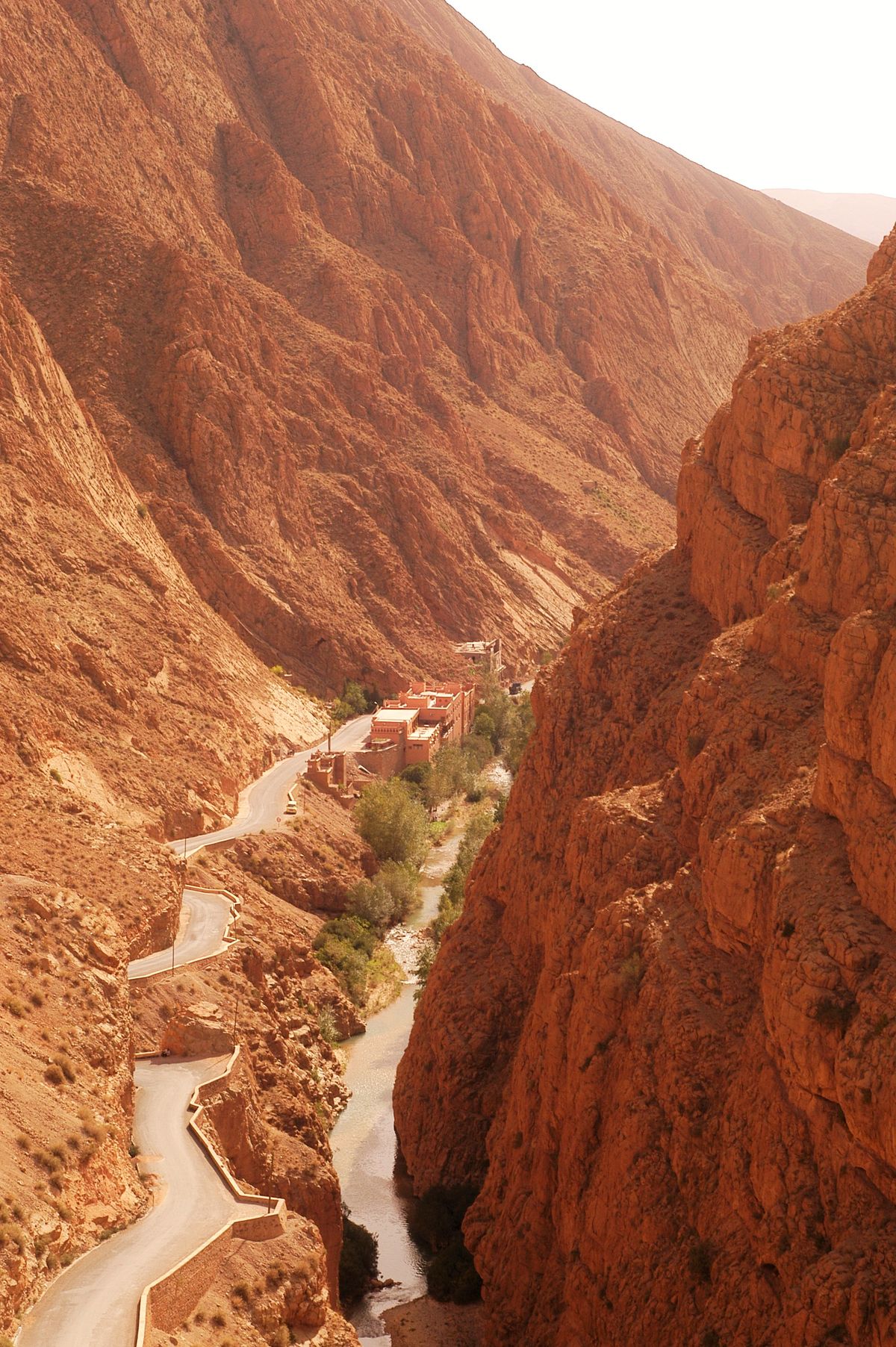
Dades Valley, Morocco
Winding through the High Atlas and Anti-Atlas ranges, the Dades Valley is one of Morocco's most spectacular mountain landscapes — a dramatic corridor of sculpted red canyons, towering pinnacles, and ancient Berber villages clinging to terraced hillsides. Famous for its serpentine hairpin road, the otherworldly Monkey Fingers rock formation, and the fragrant Rose Valley at its eastern gateway, the Dades Valley is an essential stop on the Marrakech–Sahara route and a destination that rewards those who slow down to explore its winding depths.
Why Visit Dades Valley?
A corridor of canyons, rock towers, and Berber villages — the Dades Valley is where Morocco's mountain geography reveals its most dramatic and photogenic character.
Dramatic Scenery
Sheer canyon walls rise hundreds of metres above the valley floor, sculpted over millennia by wind and water into extraordinary formations of red, ochre, and grey stone that shift colour with every hour of daylight.
Famous Hairpin Road
The Dades Gorge road is one of the most photographed stretches of tarmac in North Africa — a series of tight switchbacks that corkscrew through the canyon in a sequence that has become an icon of Moroccan road-trip culture.
Monkey Fingers
A surreal cluster of eroded rock pinnacles rising from the valley floor like a forest of stone fingers, shaped by millions of years of wind erosion into one of Morocco's most unusual geological formations.
Rose Valley
At the valley's eastern approach, the Vallée des Roses bursts into pink bloom each spring — producing the Damask roses used in Morocco's famous rosewater, rose oil, and the annual Rose Festival in Kelaat M'Gouna.
Berber Heritage
The valley has been home to Berber communities for centuries, and its villages preserve traditional architecture, agricultural terraces, and a pace of life shaped by the rhythms of the mountain seasons.
Road Trip Paradise
Connecting Ouarzazate to Tinghir and the Todra Gorge, the Dades Valley road is a centrepiece of Morocco's greatest driving route — the road from Marrakech to the Sahara through the heart of the Atlas.
Dades Valley at a Glance
The essentials before you head into the canyon.
Top Things to Do in Dades Valley
Ten experiences that capture the essence of Morocco's great mountain canyon — from vertiginous roads to hidden Berber villages.
Drive the Hairpin Road
The legendary series of switchbacks ascending through the Dades Gorge is one of the most thrilling drives in Morocco. Each bend reveals a new panorama of red canyon walls, river terraces, and distant peaks.
Explore Monkey Fingers
Walk among the towering rock pinnacles of the Monkey Fingers formation, where millennia of erosion have carved the sandstone into surreal, finger-like towers that stretch toward the sky in dense clusters.
Dades Gorge Hike
A well-marked trail follows the river through the narrowest section of the gorge, passing beneath towering rock walls and through tunnels blasted into the cliff face. The deeper you go, the more dramatic the canyon becomes.
Visit Berber Villages
The valley's terraced hillsides are dotted with traditional Berber villages built from local stone and pisé. Villages like Ait Ouzine and Imider offer a glimpse of mountain communities that have farmed these slopes for generations.
Rose Valley in Spring
Between late April and early May, the Vallée des Roses erupts in pink and white blossoms. The harvest season fills the air with the scent of Damask roses, and the annual Rose Festival celebrates the valley's fragrant heritage.
Todra Gorge Day Trip
The Todra Gorge sits just 45 minutes east of the Dades Valley — a spectacular canyon with 300-metre vertical walls narrowing to a mere 10 metres at their tightest point. An essential pairing with the Dades.
Valley Viewpoints
Scattered along the road are informal lookout points offering sweeping views across the canyon, the terraced valley, and the distant snowcapped peaks of the High Atlas. Each one is worth a pause.
Kasbah Visits
Scattered through the valley and its approaches are restored and unrestored kasbahs — earthen fortresses that once guarded the trade routes between the Atlas and the Sahara. Each tells a story of the Berber clans that controlled this strategic corridor.
Local Souks
The small market towns along the valley — particularly Boumalne Dades and Kelaat M'Gouna — host weekly souks where Berber farmers, traders, and artisans gather with spices, textiles, silver jewellery, and locally produced rose products.
Sunset Photography
The Dades Valley's red canyon walls ignite in the last hour of daylight, shifting from ochre to deep crimson as the sun drops behind the Anti-Atlas. The hairpin road viewpoint at dusk is a photographer's dream.
Monkey Fingers Rock Formation
Rising from the valley floor like a forest of stone sentinels, the Monkey Fingers — known locally as Les Doigts du Singe — are one of Morocco's most striking geological curiosities. Located on the western approach to the Dades Gorge near the village of Ait Ouzine, this cluster of eroded sandstone pinnacles has been sculpted over millions of years by the relentless forces of wind, water, and thermal expansion.
- Formation — the pillars were carved from thick layers of Mesozoic sandstone deposited when this region lay beneath an ancient sea, then uplifted and exposed by tectonic forces as the Atlas Mountains rose
- Erosion patterns — vertical fractures in the rock allowed water to seep in and freeze, gradually widening cracks until entire columns separated from the cliff face and stood isolated on the valley floor
- Best viewpoints — a short walk from the roadside parking area leads to the base of the formation, where you can walk between the pillars and appreciate their scale up close
- Photography — the warm afternoon light strikes the western faces of the pillars, creating deep shadows between the columns that emphasise their three-dimensional form. Early morning offers softer, more even illumination
- Scale — the tallest pillars reach approximately 20 metres, though their visual impact comes less from height than from their density and the surreal way they crowd together across the valley floor
- Access — the formation is free to visit with no entrance fee, and the short walk from the road makes it accessible to visitors of most fitness levels
Scenic Dades Gorge Drive
There are few drives in North Africa more thrilling than the ascent into the Dades Gorge. Beginning at the valley floor near Boumalne Dades, the road climbs through a sequence of tight hairpin turns that corkscrew through the canyon in an almost theatrical display of civil engineering and natural grandeur. Each switchback reveals a new layer of the gorge — red rock walls, green river terraces, and distant mountain peaks framed against an impossibly blue sky.
- The road — the N10 and local access roads through the Dades Gorge are paved and well-maintained, though narrow in places. A confident driver is more essential than a 4x4
- Driving tips — take the drive slowly. There are no guardrails on many sections, and the hairpin bends require full attention. Pull over at designated viewpoints rather than attempting to photograph while driving
- Best stops — the Monkey Fingers formation, the village of Ait Ouzine, the river terraces at the gorge entrance, and the final lookout before the road reaches its highest point within the canyon
- From Ouarzazate — the drive from Ouarzazate takes approximately 2.5 hours via the N10 through Skoura and Boumalne Dades, passing through some of southern Morocco's most varied landscapes
- Best time of day — morning light illuminates the eastern canyon walls while afternoon sun warms the western faces. Both offer excellent conditions, but the late afternoon drive is particularly dramatic as the canyon deepens in shadow
- The journey — the drive is the destination. Allocate a full morning or afternoon and resist the urge to rush — the Dades Gorge rewards those who let the landscape unfold at its own pace
Kasbahs & Valley Landscapes
The Dades Valley is not merely a scenic corridor — it is a living landscape where Berber architecture and mountain agriculture have coexisted for centuries. Its network of oases and heavily terraced gardens is protected within the Oasis du Sud Marocain UNESCO Biosphere Reserve. Earthen kasbahs rise from the valley floor like natural extensions of the terrain, their rammed-earth walls blending seamlessly with the surrounding rock. The terraced fields of apricot, almond, and walnut trees cling to steep hillsides, irrigated by channels that have fed these communities since long before recorded history.
- Kasbah architecture — the valley's kasbahs were built by local Berber clans as fortified family residences, granary stores, and defensive strongholds controlling the mountain passes between the High Atlas and the pre-Saharan lowlands
- Berber villages — stone and pisé settlements cling to the valley's terraced slopes, their flat-roofed homes stacked in organic layers that follow the contours of the hillside
- Rose Valley — the eastern approach to the Dades passes through the Vallée des Roses, where Damask roses have been cultivated for centuries to produce the rosewater, rose oil, and rose-based cosmetics that are the region's most famous export
- Skoura — the lush palm grove of Skoura marks the western entrance to the valley corridor, its 30,000 hectares of date palms sheltering dozens of historic kasbahs including the celebrated Kasbah Amridil
- Valley panoramas — from the higher elevations, the Dades Valley unfolds as a winding ribbon of green and brown flanked by towering canyon walls — a landscape that shifts from arid rock to lush terrace within the span of a single river bend
Best Time to Visit
The Dades Valley sits between 1,400 and 2,000 metres in the High Atlas — altitude moderates the summer heat, but winter brings snow and cold nights. Each season offers something distinct.
Spring & Autumn
- March–May — the ideal window. Temperatures are comfortable (18–25 degrees), the Rose Valley blooms in late April, almond and apricot trees flower across the valley, and the light is golden and clear for photography
- September–November — equally pleasant temperatures, fewer visitors, and the autumn harvest brings a rich palette of colour to the terraced hillsides. The canyon light takes on a deeper, warmer tone as the year moves toward winter
Summer & Winter
- June–August — the altitude keeps temperatures manageable (25–35 degrees) compared to the lowland desert, but midday heat can still be intense on exposed canyon walks. Start early and seek shade by midday
- December–February — cold nights that can drop below freezing and occasional snow at higher elevations. Daytime temperatures are cool but pleasant (10–15 degrees), and the clear winter skies create excellent conditions for canyon photography
Where to Stay
From restored earthen kasbahs perched above the canyon to simple village guesthouses — the Dades Valley offers accommodation that places you inside the landscape rather than merely observing it.
Luxury Kasbahs
Restored fortresses converted into boutique hotels with panoramic terraces, plunge pools, and interiors of carved plaster and painted cedar. The finest kasbah hotels blend 21st-century comfort with centuries-old Berber architecture.
Boutique Hotels
Small, design-conscious properties in the valley and along the gorge road offering individually styled rooms, valley views, and the kind of intimate atmosphere that larger hotels cannot replicate.
Mid-Range Hotels
Comfortable, well-maintained options in Boumalne Dades and along the valley road with air conditioning, terraces, and easy access to both the Dades and Todra gorges.
Budget Guesthouses
Family-run guesthouses and village dars offering clean rooms, home-cooked meals, and an authentic glimpse into Berber mountain hospitality at modest prices.
Food & Local Culture
Mountain Berber cuisine is hearty, seasonal, and shaped by the valley's agriculture — a diet of root vegetables, dried fruits, fresh herbs, and slow-cooked meats prepared with the patience that highland life demands.
- Berber cuisine — slow-cooked lamb or goat tagine with preserved lemons and olives, hand-rolled couscous with seasonal vegetables, and tanjia prepared in traditional clay vessels buried in hot embers
- Local restaurants — family-run establishments in Boumalne Dades and the valley villages serve generous portions of traditional dishes at modest prices; the best kitchens are those filled with local families at mealtimes
- Mint tea ceremony — freshly brewed with generous amounts of sugar and fresh mint, poured from a height in the traditional Berber fashion — offered as a gesture of welcome in every home and guesthouse in the valley
- Valley specialties — dried fruits from the valley orchards, argan oil pressed in local cooperatives, and rosewater produced in the Vallée des Roses appear in everything from tagines to pastries and traditional remedies
- Street food — freshly baked msemen, grilled kefta from roadside stalls, and seasonal fruit from valley farms offer an affordable and delicious way to eat like a local between canyon explorations
- Weekly souks — the market towns of Boumalne Dades and Kelaat M'Gouna host lively weekly souks where Berber farmers sell spices, olives, fresh produce, and traditional breads baked in communal clay ovens
Getting to Dades Valley
Straddling the road between Ouarzazate and Tinghir, the Dades Valley is accessible from multiple directions — though the journey is as spectacular as the destination.
- From Ouarzazate — the drive east along the N10 through Skoura and Boumalne Dades takes approximately 2.5 hours (180 km), passing through the Skoura palm grove and along the valley's western approach
- From Marrakech — the drive takes approximately 5–6 hours (350 km) via the Tizi n'Tichka pass and Ouarzazate, or via the N10 through the valley itself — one of Morocco's most rewarding road trips
- From Tinghir — the eastern gateway is just 45 minutes west, making the Dades Valley an easy extension of a Todra Gorge visit
- Rental car — the most flexible and rewarding way to explore the valley. The road is paved and well-maintained, though a confident driver is essential for the hairpin sections
- Bus — CTM and Supratours operate services along the Ouarzazate–Tinghir route with stops in Boumalne Dades, though infrequent schedules make independent travel less convenient
- Guided tours — multi-day tours from Marrakech combine the Dades Valley with Ouarzazate, the Todra Gorge, and the Sahara — ideal for travellers who prefer a curated experience through southern Morocco
Getting Around
The Dades Valley is best explored by car or on foot — the road through the canyon is the spine, and the hiking trails and village paths are the veins that reveal its true character.
- Rental car — essential for exploring the valley at your own pace, stopping at viewpoints, visiting villages, and making the drive into the gorge without being tied to tour schedules
- Walking — the valley floor and the gorge trail are ideal for walking, with marked paths following the river through the narrowest sections of the canyon and connecting nearby Berber villages
- Guided tours — local guides in Boumalne Dades and the valley villages offer walking tours, canyon hikes, and cultural visits that reveal details you would miss travelling independently
- Day trips — the Todra Gorge, Rose Valley, and Skoura Oasis are all within easy driving distance and pair naturally with the Dades Valley for a comprehensive southern Morocco itinerary
Suggested Itineraries
Whether you are passing through on the road to the Sahara or lingering in the canyon, here is how to make the most of your time in the Dades Valley.
Half Day
- Drive the hairpin road to the gorge
- Stop at the Monkey Fingers formation
- Walk the lower gorge trail
- Sunset viewpoint on the return
1 Day
- Morning: drive into the Dades Gorge
- Monkey Fingers and valley viewpoints
- Lunch in a valley guesthouse
- Afternoon: Berber village walk
- Sunset photography at the hairpin road
Dades + Todra
- Day 1: Dades Gorge, Monkey Fingers & valley walk
- Day 1 evening: overnight in a canyon kasbah
- Day 2: drive to Todra Gorge via the valley road
- Day 2 afternoon: Todra canyon walk
Marrakech to Sahara
- Day 1: Marrakech to Ouarzazate via Tizi n'Tichka
- Day 2: Ouarzazate to Dades Valley via Skoura
- Day 3: Dades Gorge & Todra Gorge
- Day 4: Merzouga & Sahara dunes
- Day 5: Return via the Draa Valley
Destinations Across Morocco
From imperial cities to desert dunes and Atlantic coast — discover more of what Morocco has to offer.
Practical Tips for Visiting
Mountain canyon travel demands preparation. A few essential tips to help you explore the Dades Valley and the surrounding Atlas landscape with confidence and comfort.
- Clothing — lightweight, breathable layers for daytime; a warm jacket for canyon evenings when temperatures drop quickly once the sun disappears behind the canyon walls
- Sun protection — the altitude intensifies UV exposure. SPF 50+, a wide-brimmed hat, and sunglasses are essential even on overcast days — the canyon reflects light from multiple angles
- Cash — larger hotels accept cards, but most valley guesthouses, restaurants, and souks are cash-only. Withdraw dirhams in Ouarzazate or Boumalne Dades before heading into the canyon
- Photography — the best light is in the first and last two hours of daylight. Midday sun flattens the canyon walls and washes the rich red tones to a pale, featureless beige
- Driving tips — take the hairpin road slowly with windows down for ventilation. Pull over at designated viewpoints rather than attempting to photograph while navigating the bends
- Guided vs independent — the gorge road and main viewpoints are easy to navigate alone, but hiking into the upper canyon and visiting remote Berber villages benefit greatly from a local guide
- Family travel — the valley is well-suited for families. The scenic drive, river walks, and Monkey Fingers formation are engaging for children of all ages, though the upper gorge trail requires supervision
Related Travel Guides
Practical planning resources to help you navigate Morocco with confidence.
Frequently Asked Questions
Is Dades Valley worth visiting?
Absolutely. The Dades Valley is one of Morocco's most dramatic landscapes — a place where towering canyon walls, ancient Berber villages, and some of the country's most thrilling driving roads converge. Whether you are a road-tripper, a hiker, or simply a traveller drawn to extraordinary scenery, the valley delivers an experience unlike anywhere else in the Atlas.
How many days should I spend in the Dades Valley?
1–2 days is ideal. A single day covers the hairpin road, Monkey Fingers, and a gorge walk. Two days allow you to explore the valley's Berber villages, combine with the Todra Gorge, and spend a night in a canyon kasbah for the full experience.
What is the Dades Valley famous for?
Its dramatic canyon scenery, the legendary hairpin road through the Dades Gorge, the surreal Monkey Fingers rock formation, and its position on the road between Marrakech and the Sahara. The valley is also known for the Rose Valley at its eastern approach, which produces Morocco's famous Damask roses.
Is the Dades Valley safe?
Yes. The Dades Valley is one of southern Morocco's most popular tourist routes and very safe for visitors. Exercise normal precautions — carry water, protect yourself from the sun, and drive carefully on the hairpin road sections.
What is the best time to visit the Dades Valley?
Spring (March–May) is the best season, coinciding with the Rose Valley bloom and comfortable walking temperatures. Autumn (September–November) is equally pleasant with fewer visitors. Summer is warm but manageable at altitude; winter brings cold nights and occasional snow.
Do I need a 4x4 for the Dades Gorge road?
No. The road through the Dades Gorge is paved and well-maintained. A standard car is sufficient, though a confident driver is essential — the hairpin bends are tight, there are no guardrails on many sections, and the road demands full attention.
Can I visit the Dades Valley as a day trip from Marrakech?
Technically yes, though the 5–6 hour drive each way makes it impractical. A 3-day itinerary combining the drive over the Tizi n'Tichka pass, Ouarzazate, the Dades Valley, and the Todra Gorge is far more rewarding and allows you to enjoy the journey.
Is the Dades Valley family friendly?
Yes. The scenic drive, Monkey Fingers formation, and lower gorge walk are engaging for children of all ages. The valley's guesthouses are welcoming to families, and the pace of travel is naturally relaxed.
What are the Monkey Fingers?
The Monkey Fingers are a cluster of eroded sandstone pinnacles rising from the valley floor near the village of Ait Ouzine. Millions of years of wind and water erosion have carved the rock into tall, finger-like columns that create a surreal landscape of stone towers.
Can I combine the Dades Valley with the Sahara?
Perfectly. The Dades Valley sits on the classic Marrakech-to-Sahara route. Most itineraries combine it with Ouarzazate, the Todra Gorge, and the drive onward to Merzouga and the Erg Chebbi dunes — one of Morocco's greatest road trips.
Do I need a rental car in the Dades Valley?
Highly recommended. The valley road, Monkey Fingers, gorge viewpoints, and nearby Berber villages are best explored independently. A rental car gives you the freedom to stop at every viewpoint and travel at your own pace through the canyon.
What is the altitude of the Dades Valley?
The valley floor sits between 1,400 and 2,000 metres above sea level, depending on where you are along the gorge. The altitude keeps temperatures cooler than the pre-Saharan lowlands but intensifies UV exposure — sun protection is essential regardless of the season.
Ready to Discover Dades Valley?
From the famous hairpin road and Monkey Fingers rock formation to the fragrant Rose Valley and ancient Berber villages — the Dades Valley is Morocco's great mountain canyon, waiting to be explored. Let MoroccOdyssey help you plan the rest.