Morocco Festivals Calendar: Best Festivals for All 12 Months
Morocco doesn’t really have an off-season for culture. Somewhere in the country, almost every month, a town is getting ready for its moussem, its harvest fair or its music festival. This Morocco festivals calendar walks through the year month by month, then groups the country’s biggest events, its traditional moussems, and its best picks by interest, before closing with practical advice on planning a trip around one. Dates for religious and lunar-calendar events shift every year, and even fixed cultural festivals sometimes move by a few weeks, so treat every date here as a strong guide rather than a guarantee, and check with the organizer close to your travel dates.
Morocco Festivals Calendar at a Glance
| Month | Festival Type | Location | Usual Time of Year |
|---|---|---|---|
| January | Amazigh New Year | Atlas Mountains, nationwide | Mid-January |
| February | Harvest and folklore | Tafraoute (Ameln Valley) | Second half of February |
| March | Desert and nomadic culture | M’Hamid El Ghizlane | Late March to early April |
| April | Desert music | Merzouga (Erg Chebbi) | Spring |
| May | Harvest festivals | Kelaat M’Gouna, Sefrou area | May |
| June | Music (sacred, world, pop) | Fes, Essaouira, Rabat, Marrakech | Early to late June |
| July | Music and folk arts | Marrakech, Agadir, Asilah | Early to late July |
| August | Traditional moussems | Setti Fatma, El Jadida | Mid-August |
| September | Jazz and urban culture | Tangier, Casablanca | Mid to late September |
| October | Sufi culture, harvest | Fes, Errachidia region | October |
| November | Cinema, heritage moussems | Marrakech, Tan-Tan | Late November |
| December | Winter cultural events | Various cities | Throughout the month |
Treat this table as a starting point. Exact dates depend on harvests, the lunar calendar and organizers’ announcements, so always confirm before booking.
January Festivals in Morocco
Yennayer — Amazigh New Year
Yennayer marks the start of the Amazigh agricultural calendar, usually around January 12–14. The year count reached 2976 in January 2026. It became an official paid public holiday in Morocco in 2023, and families mark it with a shared meal that varies by region, from couscous with seven vegetables to a rooster tagine. Celebrations are strongest in Amazigh-majority areas of the Atlas Mountains and the south, and are quieter or absent elsewhere.
Other January Cultural Celebrations
January is otherwise a quiet month for festivals, which makes it a good time to visit popular sites without festival crowds. Smaller local moussems tied to the Islamic calendar can also fall in January, since their dates shift each year. Checking a local events listing shortly before your trip is the most reliable way to catch these.
February Festivals in Morocco
Winter Cultural Events
February brings Morocco’s Almond Blossom Festival, usually held in the second half of the month in the Ameln Valley near Tafraoute. As almond trees bloom pink and white across the valley, villages hold folklore performances with Amazigh music, dance and market stalls selling almond products such as amlou. Exact dates depend on the harvest and can shift into early March.
Regional Celebrations and Moussems
Smaller regional moussems, tied to local saints and the Islamic calendar, also take place in February in various towns. These are typically low-key, community-facing events rather than major visitor destinations, so ask locally if you want to see one.
March Festivals in Morocco
International Nomads Festival
Held in M’Hamid El Ghizlane, south of Zagora, this festival celebrates the culture of Morocco’s nomadic and semi-nomadic communities. It typically runs in late March or occasionally slips into early April; the 2026 edition ran April 3–5. Expect music from Morocco, the Sahel and beyond, poetry, storytelling and a nomadic camp set up in the dunes outside town, reachable only by 4×4.
Spring Cultural Events
Spring is also when smaller regional moussems begin picking up after the quieter winter months, particularly in the south and the Atlas foothills. It’s a comfortable season for travel generally, with mild temperatures across most of the country.
April Festivals in Morocco
Merzouga International Music Festival
Near the dunes of Erg Chebbi, this festival brings Berber drumming, Gnawa rhythms and international performers to the desert, usually in spring, though sources place it anywhere from late March through May, so confirm dates before planning around it. It’s a smaller, atmospheric event rather than a mass-market festival, and pairs naturally with an overnight desert camp near Merzouga.
Spring Festivals and Regional Celebrations
April is also when many High Atlas and Anti-Atlas villages hold smaller seasonal moussems tied to planting, saints’ days or local agricultural cycles. These rarely have fixed international listings, so a local guide or guesthouse host is often the best source of current dates.
May Festivals in Morocco
Rose Festival in Kelaat M’Gouna
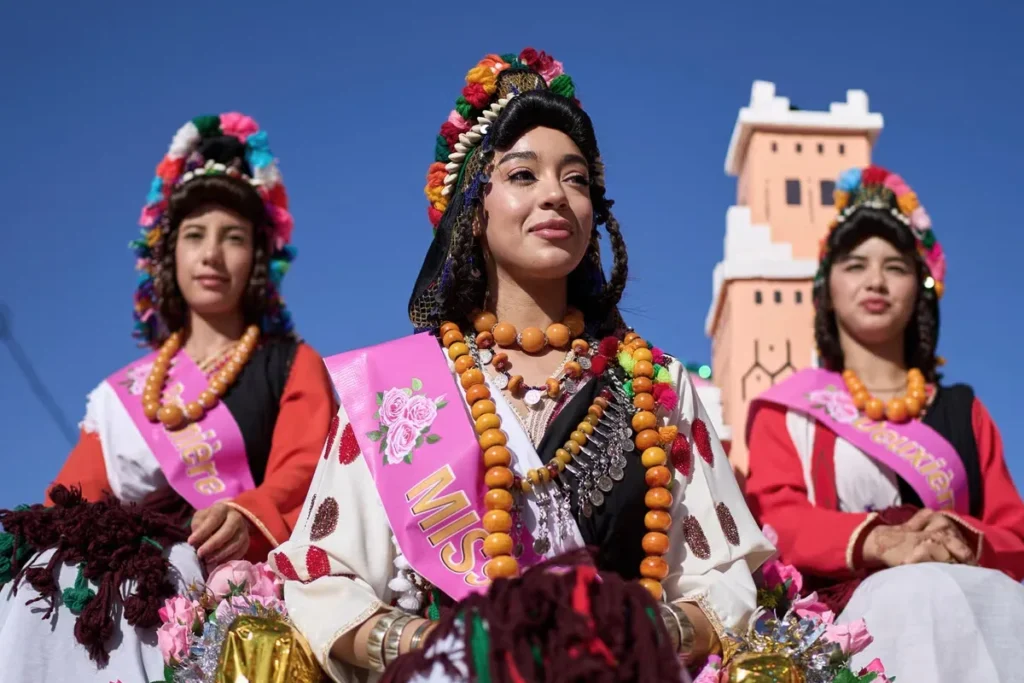
Morocco’s Rose Festival celebrates the Damascena rose harvest in the Dades Valley. The 2026 edition, its 61st, ran May 7–10, with a rose-themed carnival parade, folklore performances and a Miss Rose crown, though past editions have run in late April. Held under royal patronage and organized with the Ministry of Agriculture, it draws farmers, cooperatives and tens of thousands of visitors to a town most of the year defined by quiet rose fields.
Cherry Festival in Sefrou
One of Morocco’s oldest festivals, dating to 1919, Sefrou’s Cherry Festival usually runs in June rather than May in recent years — the 2026 edition took place in June. It crowns a “Cherry Queen,” fills the town with music and heritage performances, and is recognized by UNESCO as intangible cultural heritage. Given this shift, it’s worth double-checking current dates if timing your trip around it.
Other Spring Harvest Festivals
Smaller agricultural festivals, tied to local crops such as saffron, olives or dates, occur in various towns throughout spring. They’re worth asking about if you’re traveling through smaller towns in the Atlas or the south.
June Festivals in Morocco
June is Morocco’s busiest festival month, with several major events overlapping in a single window.
Fes Festival of World Sacred Music
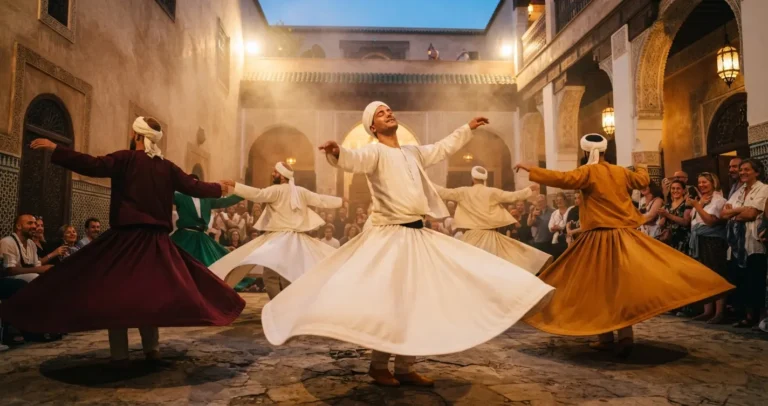
Founded in 1994, this festival brings spiritual and world music to historic Fes venues such as Bab Makina. The 2026 edition runs June 4–7, with a shortened four-day program focused on artisans and traditional craftsmanship, under the theme “Fes and the Maâlems, guardians of craft and heritage.” It features around 160 artists and 18 performances across multiple venues.
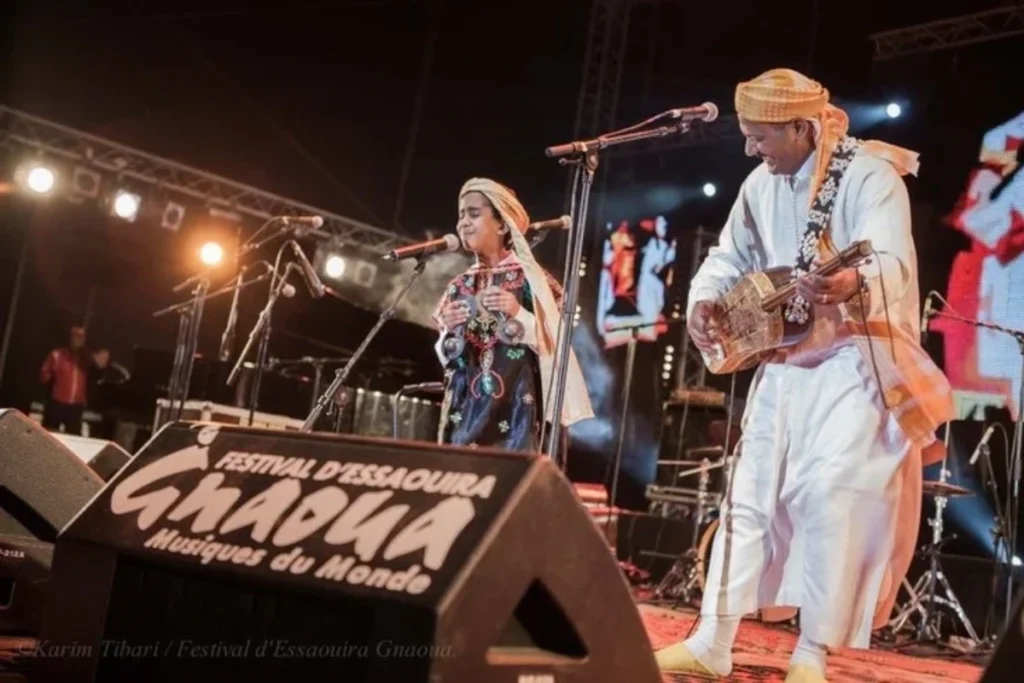
Gnaoua World Music Festival in Essaouira
Essaouira transforms into a global music hub for the Gnaoua and World Music Festival, hosting more than 400 musicians and 42 maâlems in a celebration of Gnaoua heritage and world fusion music, with the 2026 edition running June 25–27. It’s one of Morocco’s most atmospheric festivals, staged in the walled coastal medina.
Mawazine in Rabat
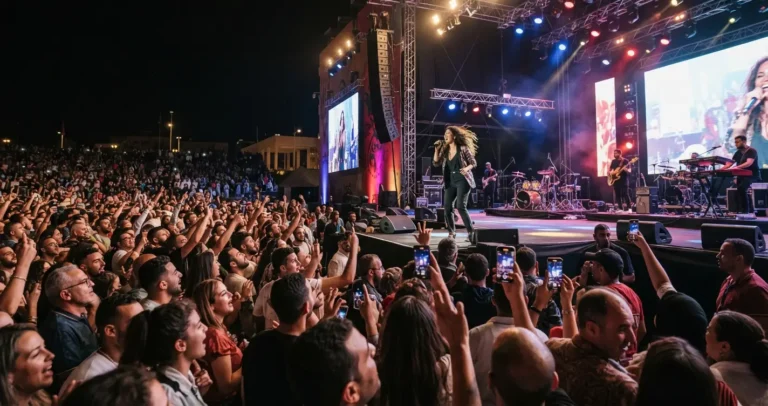
Mawazine, Morocco’s biggest music festival, returns to Rabat for its 21st edition, running June 19–27, 2026, with nine days of performances across multiple stages featuring major international and Arab artists. Most concerts are free and open-air, drawing enormous crowds.
National Festival of Popular Arts in Marrakech
This long-running festival showcases Morocco’s regional folk traditions: Atlas dances, Gnaoua rhythms, Saharan performances and costumed troupes from across the country, alongside international guest groups. The 2026 edition, its 55th, runs into early July (see below), and performances spill from former palaces onto Jemaa el-Fna itself.
Tan-Tan Moussem
Though usually associated with autumn, the Tan-Tan Moussem’s schedule has shifted across editions; see November below for the confirmed 2026 dates.
July Festivals in Morocco
Timitar Festival in Agadir
Timitar Signes et Cultures is one of Morocco’s leading music festivals, organized under royal patronage, built around the signature “Amazigh artists welcome world music.” The 2026 edition, its 21st, runs July 23–25 across two free, open-air stages, Place Al Amal and the Théâtre de Verdure, with close to 30 Moroccan and international artists blending Amazigh, Chaabi, Gnaoua and African music.
Asilah Cultural Festival
The International Cultural Moussem of Asilah is a long-running arts and ideas festival in this small northern coastal town, known for its whitewashed medina and murals painted for the event. It typically runs across summer, with additional autumn sessions bringing conferences and colloquiums; check current-year dates before planning around it, since its sessions have moved between summer and autumn in past editions.
Summer Music and Arts Festivals
Early July also wraps up the National Festival of Popular Arts in Marrakech, and various smaller regional festivals mark early summer across the country.
August Festivals in Morocco
Traditional Moussems and Regional Celebrations
August is a month for religious and community moussems rather than large ticketed festivals. The Setti Fatma Moussem, held over several days in mid-August in the Ourika Valley, honors a local saint and draws pilgrims and visitors for a lively mix of religious observance and open-air celebration; it makes an easy day trip from Marrakech. Non-Muslim visitors are typically not permitted into the shrine itself but are welcome at the surrounding festivities.
Summer Cultural Events
Coastal cities such as El Jadida and Essaouira also host smaller cultural and religious moussems through August, alongside a general uptick in domestic tourism as Moroccan families travel during the summer holidays.
September Festivals in Morocco
Tanjazz in Tangier
Tangier’s jazz festival returned after skipping 2025; the 23rd edition runs September 18–20, 2026, with outdoor concerts and intimate performances across the city, historically including a free brass-band parade through the medina.
Autumn Cultural Festivals
Casablanca’s L’Boulevard festival, a major platform for Moroccan urban and alternative music, holds its 24th edition September 17–20, 2026. September is also roughly when the Imilchil “marriage festival” is traditionally associated in popular accounts, though its exact nature is debated; some residents and researchers describe it less as a mass-wedding event and more as an annual gathering where the Ait Haddidou people finalize marriage paperwork and trade livestock and goods, alongside music and Amazigh cultural display. If this interests you, read up on both versions of the story before you go.
October Festivals in Morocco
Fes Festival of Sufi Culture
The Festival de Fès de la Culture Soufie et des Sagesses du Monde belongs here rather than in spring: its 18th edition runs October 17–24, 2026, under the theme “mystical poetry, an elixir of healing,” combining spiritual concerts, conferences, roundtables and exhibitions across venues including Jnan Sbil garden and Bab El Makina. It’s a more contemplative, intellectually oriented festival than Fes’s summer sacred music event, with a strong focus on Sufi orders, poetry and interfaith dialogue.
Regional Harvest Celebrations
October is also date-harvest season in the southeast, with festivals in Erfoud and Rissani celebrating the palm groves that define the region, alongside cultural events and local markets. These are smaller and more local than the big-name festivals above, but worthwhile if you’re already touring the Tafilalet oases.
November Festivals in Morocco
Marrakech International Film Festival
Africa’s most glamorous film festival returns to Marrakech from November 20 to 28, 2026, for its 23rd edition, with galas and competition screenings centered on the Palais des Congrès and free open-air screenings on Jemaa el-Fnaa square every evening. International first and second features compete for the festival’s Grand Prize, the Étoile d’Or.
Autumn Cultural Events
The Moussem of Tan-Tan, a UNESCO-recognized gathering of Sahrawi heritage, has confirmed new dates for its 19th edition: October 30 to November 3, 2026, under the theme “The Moussem of Tan-Tan, human heritage and bridge of cultural exchange,” under royal patronage. It brings together around thirty nomadic tribes to showcase music, dance, crafts and traditional rites, with camel races and equestrian fantasia among its highlights. Because its dates have moved in recent years, confirm the current schedule before booking a trip around it.
December Festivals in Morocco
Winter Cultural Events
December is generally quiet for major festivals, following the close of the Marrakech Film Festival in late November. Smaller local moussems and holiday markets appear in various cities, particularly around the New Year, but nothing on the scale of the summer festival season.
Year-End Events in Morocco
Riad hotels and restaurants in Marrakech, Fes and Essaouira often organize their own New Year’s Eve events, and some cities host public concerts or fireworks. These aren’t traditional Amazigh or Moroccan festivals, but they’re worth knowing about if you’re visiting over the holidays.
Morocco’s Biggest Festivals
If you only have room for one or two festivals on your itinerary, these are Morocco’s most internationally recognized:
Fes Festival of World Sacred Music
Founded in 1994 and held each June, this is Morocco’s best-known cultural festival abroad, drawing spiritual and world musicians to Fes’s historic venues.
Gnaoua World Music Festival
Essaouira’s late-June festival is arguably Morocco’s most beloved music event among younger, international audiences, blending Gnaoua trance music with jazz, funk and fusion acts.
Mawazine
Rabat’s nine-day festival in June is Morocco’s largest by attendance, with major international headliners and free access to most stages.
Timitar Festival
Agadir’s July festival centers Amazigh music while welcoming Chaabi, Gnaoua and international acts, all free and open-air.
Marrakech International Film Festival
Morocco’s premier cinema event, held each November, combines red-carpet glamour with free public screenings.
Rose Festival
Kelaat M’Gouna’s May festival is one of Morocco’s oldest, rooted in agriculture rather than performance, and offers a very different, more rural atmosphere than the big city festivals.
Tan-Tan Moussem
A UNESCO-listed gathering of Sahrawi nomadic heritage, unlike anything else on this list in scale of tradition and setting.
Traditional Festivals and Moussems in Morocco
What a Moussem Is
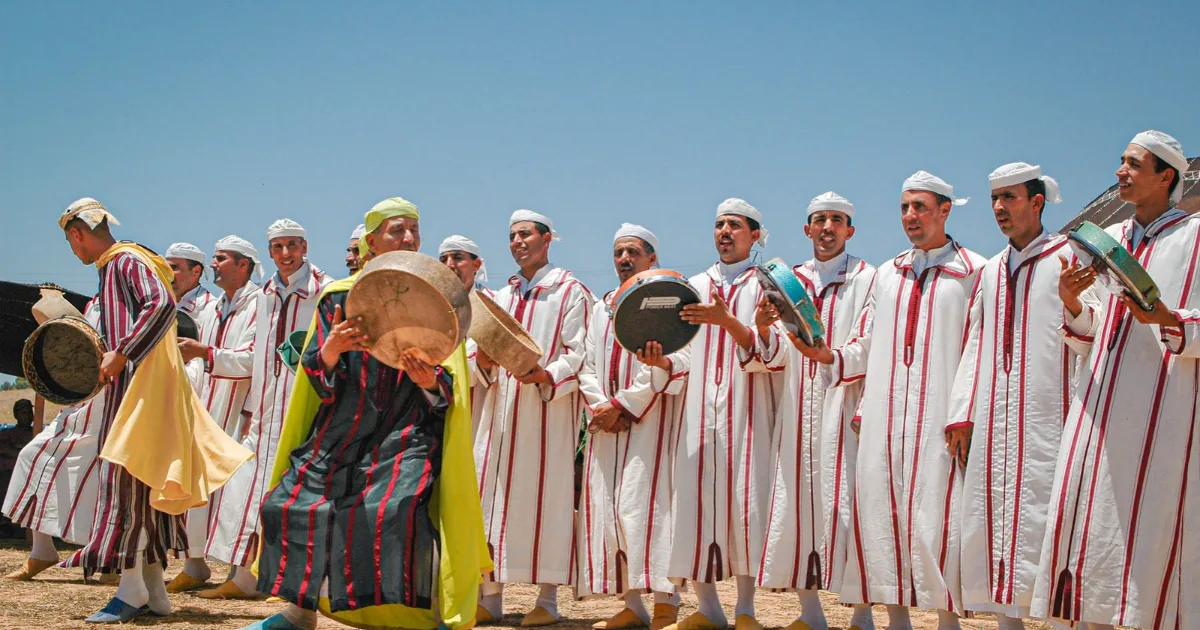
A moussem is a traditional gathering, usually tied to a local saint (marabout) and the Islamic calendar, that blends religious pilgrimage with market trading, music and social gathering. Moussems have existed in Morocco for centuries, long predating the modern, internationally marketed music festival.
How Traditional Moussems Differ from Modern Festivals
Modern festivals like Mawazine or Gnaoua are organized top-down, with fixed dates, paid or sponsored programming and international marketing. Moussems are older, more community-rooted, and often follow the lunar calendar or a saint’s commemoration date, which can shift from year to year. Some, like Tan-Tan, have grown into UNESCO-recognized cultural events while keeping their traditional core.
Regional and Religious Significance
Moussems matter most to the communities that hold them. They’re occasions for trade, for marriages and business to be arranged, and for tribes or families who live scattered across a region to reconnect once a year. Religious observance, usually centered on a local saint’s shrine, remains central even where tourism has grown around the edges.
What Travelers Should Expect
Expect a market atmosphere as much as a performance one: livestock, textiles, food stalls and craftspeople alongside music and dance. Dress modestly, and if a saint’s shrine (koubba) is involved, expect that non-Muslims may not be permitted to enter it, even though the surrounding festivities are open to all.
Amazigh Festivals and Celebrations
Yennayer
As covered above, Yennayer is the clearest fixed point on the Amazigh festival calendar, celebrated each January with family meals and, since 2023, official public holiday status.
Amazigh Cultural Celebrations
Beyond Yennayer, Amazigh culture runs through many of the festivals in this calendar rather than standing entirely apart from them: Timitar in Agadir, the ahwach and ahidous performances woven into the Rose Festival and Cherry Festival, and the traditions on display at moussems across the Atlas and the south.
Regional Differences in Amazigh Traditions
Music, dress and ritual at these events differ by region, following the same Rif–Atlas–Souss–Sahara divisions covered in our Berber culture guide. A festival’s Amazigh content in the Souss will look and sound different from one in the Middle Atlas.
What Are the Best Moroccan Festivals for Travelers?
Best Festivals for Music Lovers
Mawazine, Gnaoua World Music Festival and Tanjazz cover pop, fusion and jazz respectively, all with strong international lineups.
Best Festivals for Traditional Culture
The National Festival of Popular Arts in Marrakech and the Rose Festival in Kelaat M’Gouna offer a more rooted, less commercialized experience of Moroccan folk tradition.
Best Festivals for Amazigh Culture
Timitar in Agadir is the clearest single destination, alongside Yennayer celebrations in Amazigh-majority towns in January.
Best Festivals for Arts and Film
The Marrakech International Film Festival is the obvious choice, alongside the more contemplative Fes Festival of Sufi Culture for those interested in poetry, spirituality and cross-cultural dialogue.
Best Festivals for Food and Regional Traditions
The Cherry Festival in Sefrou and the date festivals around Erfoud and Rissani both center a single local product and the culture built around it.
How to Plan a Trip Around a Moroccan Festival
Check the Festival Dates Before Booking
Many festival dates, especially moussems tied to the lunar calendar, are only confirmed a few months or even weeks in advance. Confirm current dates directly with the festival’s organizers or official pages shortly before booking flights.
Book Accommodation Early
Riads and hotels in festival host cities fill up fast, sometimes months ahead for major events like Mawazine, Gnaoua or the Marrakech Film Festival. Book as soon as your dates are confirmed.
Plan Transportation in Advance
Trains and intercity buses can sell out around major festivals, and taxi prices often rise. If you’re driving yourself, expect heavier traffic and limited parking in host city centers during festival dates.
Expect Crowds During Major Festivals
Morocco’s biggest festivals draw enormous crowds, particularly for free open-air stages. If you prefer a quieter experience, look at smaller regional moussems instead, or plan to arrive early for headline performances.
Respect Local Customs and Festival Etiquette
Dress modestly, especially at religious moussems, and ask before photographing people. If a shrine or koubba is part of the event, respect any restrictions on who may enter.
Frequently Asked Questions About Festivals in Morocco
What is the biggest festival in Morocco?
Mawazine, held each June in Rabat, is generally considered Morocco’s biggest festival by attendance, with nine days of largely free performances across multiple stages and major international headliners. The Marrakech International Film Festival is the country’s most internationally prestigious cultural event, drawing global media attention each November. The Gnaoua World Music Festival in Essaouira, meanwhile, has the strongest international fan following among music travelers specifically. Which one counts as “biggest” really depends on whether you’re measuring by attendance, prestige or global recognition.
What month has the most festivals in Morocco?
June is Morocco’s busiest festival month, hosting the Fes Festival of World Sacred Music, Mawazine in Rabat, the Gnaoua World Music Festival in Essaouira and the start of the National Festival of Popular Arts in Marrakech, often within the same two- to three-week window. July follows closely with Timitar in Agadir and various summer cultural events. If you want to see several major festivals in one trip, June offers the most overlap, though it also means the most competition for flights and hotel rooms.
What are the best festivals to attend in Morocco?
The best festival for you depends on your interests. Music lovers gravitate toward Mawazine, Gnaoua or Timitar; those interested in traditional culture prefer the Rose Festival or the National Festival of Popular Arts; and film and arts travelers plan around the Marrakech International Film Festival. For a deeper, less touristy experience, a smaller regional moussem, timed with local help, often leaves a stronger impression than a major international festival.
Are Moroccan festivals held all year round?
Yes, though the density and scale vary by season. Summer, especially June and July, is the peak season for large, internationally marketed music festivals. Spring and autumn bring desert and nomadic culture festivals along with harvest celebrations, while winter is quieter overall, aside from Yennayer in January. Religious moussems occur throughout the year, following the lunar Islamic calendar rather than a fixed monthly pattern.
What is the best time of year to experience Moroccan festivals?
Late spring through summer, roughly May to July, offers the widest concentration of major festivals alongside generally good travel weather, though July and August can bring intense heat, especially inland and in the south. Autumn, particularly September and October, offers jazz, urban music and Sufi culture events with more comfortable temperatures. If you want to avoid festival crowds entirely, winter (excluding Yennayer season) is the quietest stretch.
What is a moussem in Morocco?
A moussem is a traditional Moroccan gathering, usually centered on a local saint’s shrine, that combines religious pilgrimage, seasonal trade and cultural celebration. Moussems predate Morocco’s modern festival industry by centuries and follow the lunar Islamic calendar or a saint’s specific commemoration date, so their dates shift from year to year. Some, like the Tan-Tan Moussem, have gained UNESCO recognition and international visibility while others remain small, local events known mainly to nearby communities.
Are Moroccan festival dates the same every year?
No, not entirely. Religious moussems follow the lunar Islamic calendar, so their dates shift by roughly 10–11 days earlier each Gregorian year. Modern cultural festivals with fixed organizing bodies, like Mawazine or Gnaoua, tend to fall in a similar window each year but still set new specific dates annually, and can shift for logistical reasons, as the Tan-Tan Moussem has in recent editions. Always confirm current-year dates rather than assuming last year’s schedule will repeat.
Can tourists attend traditional Moroccan festivals?
Yes, most traditional festivals and moussems welcome visitors and are often glad to have them, since tourism supports local economies around these events. Some elements, particularly access to a saint’s shrine itself, may be restricted to Muslims, but the surrounding market, music and celebrations are generally open to everyone. Being respectful, dressing modestly and asking before taking photos goes a long way toward a warm reception.
What should I wear to a festival in Morocco?
Modest, comfortable clothing works best at most festivals, particularly traditional moussems in rural areas: covered shoulders and knees are a safe default for both men and women. Music festivals in cities like Rabat or Essaouira are more relaxed, though modesty is still appreciated outside beach areas. For desert festivals like the one near Merzouga, bring layers, since Saharan nights turn cold even after warm days, and comfortable shoes for sand.
Should I book accommodation early for Moroccan festivals?
Yes, especially for major festivals in Marrakech, Rabat, Essaouira and Fes, where riads and hotels can book out months in advance and prices rise sharply close to festival dates. Smaller regional moussems in less-visited towns are more forgiving, but options may still be limited, since many towns have only a handful of guesthouses. Booking as soon as you’ve confirmed festival dates is the safest approach.
Final Thoughts on the Morocco Festivals Calendar
Morocco’s festival calendar rewards curiosity as much as planning. The big names, Mawazine, Gnaoua, the Marrakech Film Festival, are worth building a trip around, but some of the most memorable moments happen at smaller moussems that barely make it onto an English-language calendar at all. Confirm your dates close to travel, since lunar and harvest-linked events shift every year, and build in a day or two of flexibility so a festival can become the centerpiece of your trip rather than a rushed stop between destinations.