Fes Festival of World Sacred Music: The Ultimate Guide for Visitors
For a few nights each June, the ancient walls of Bab Al Makina in Fes fill with music that has nothing to do with genre and everything to do with devotion. Sufi ensembles from Morocco share a stage, over the course of a festival, with gospel choirs, Hindustani singers, flamenco guitarists and Andalusian orchestras. This is the Fes Festival of World Sacred Music, one of the world’s most respected spiritual music events, and this guide covers everything you need to plan a visit: when it happens, what it costs, where to stay, and how to build a trip to Fes around it.
What Is the Fes Festival of World Sacred Music?
The Fes Festival of World Sacred Music is an annual event held in the imperial city of Fes, bringing together musicians from many faiths and traditions to perform sacred, spiritual and devotional music on the same stages. It is not a religious festival in the sense of belonging to one faith; Sufi Moroccan ensembles might share a program with a Bulgarian Orthodox choir, a Qawwali group from Pakistan or a Hindustani classical singer. The festival pairs its evening concerts with daytime forums, the Rencontres de Fes, where writers, academics and religious leaders discuss questions of dialogue and coexistence, so the event is as much about ideas as it is about performance.
When Is the Fes Festival of World Sacred Music?
When the Festival Usually Takes Place
The festival is typically held in late May or June, though exact dates shift each year. The 2026 edition, the 29th, runs June 4–7, with a theme centered on Morocco’s traditional artisans and craftsmanship, “Anima Ex Materia.” Recent editions have run anywhere from early May to mid-June, so June is a reasonable planning target, but not a fixed rule.
How Festival Dates Change Each Year
Dates depend on the festival’s own planning cycle and venue availability rather than a lunar or religious calendar, which is why they move somewhat from year to year. The festival has also varied in length: some editions have run nine days, while the 2026 edition is a shorter, denser four-day program, so don’t assume a past year’s structure will repeat exactly.
How to Check the Official Festival Dates and Programme
The festival’s official website, publishes each year’s dates and full programme, usually a few months ahead of the event, along with ticket information. Its social media accounts and the Fondation Esprit de Fes, which organizes the festival, are also reliable sources. Always confirm current-year dates there before booking flights.
The History of the Fes Festival of World Sacred Music
How the Festival Began
The festival was founded in 1994 by Moroccan anthropologist and scholar Faouzi Skali, with the aim of using music as a bridge between faiths and cultures at a time of rising global tension. Its first editions established the core idea that still defines it: sacred and spiritual music from different traditions, performed side by side rather than kept separate.
From a Fes Cultural Event to an International Festival
Over three decades, the festival has grown from a Fes-based cultural initiative into an internationally recognized event, drawing artists from more than 80 countries and tens of thousands of visitors, researchers and musicians. It has hosted major names across genres, from Björk to Joan Baez, alongside masters of Sufi, Qawwali, gospel and Andalusian music.
The Festival’s Role in Cultural Dialogue
Beyond the concerts, the festival is often described as the first festival in the world dedicated specifically to sacred music, and it has been recognized internationally for its role in cultural diplomacy, including Italy’s Mercurio Alato prize for cultural dialogue. The Rencontres de Fes forum, running alongside the concerts, keeps that mission of dialogue built into the festival’s structure rather than treating it as a marketing message.
What to Expect at the Fes Festival
Sacred Music From Around the World
Expect a genuinely global lineup: in a single edition, you might hear Cambodian temple music, Central Asian steppe traditions, Indian subcontinent devotional singing and Moroccan Sufi chant, often within the same festival week. The programming deliberately avoids treating any one tradition as the centerpiece.
Sufi Music and Moroccan Spiritual Traditions
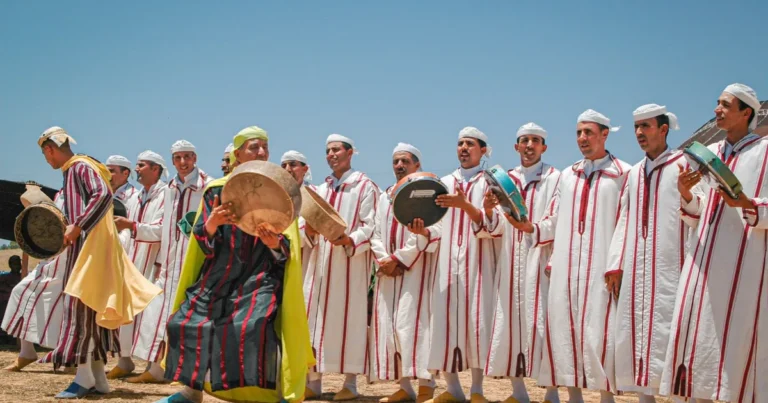
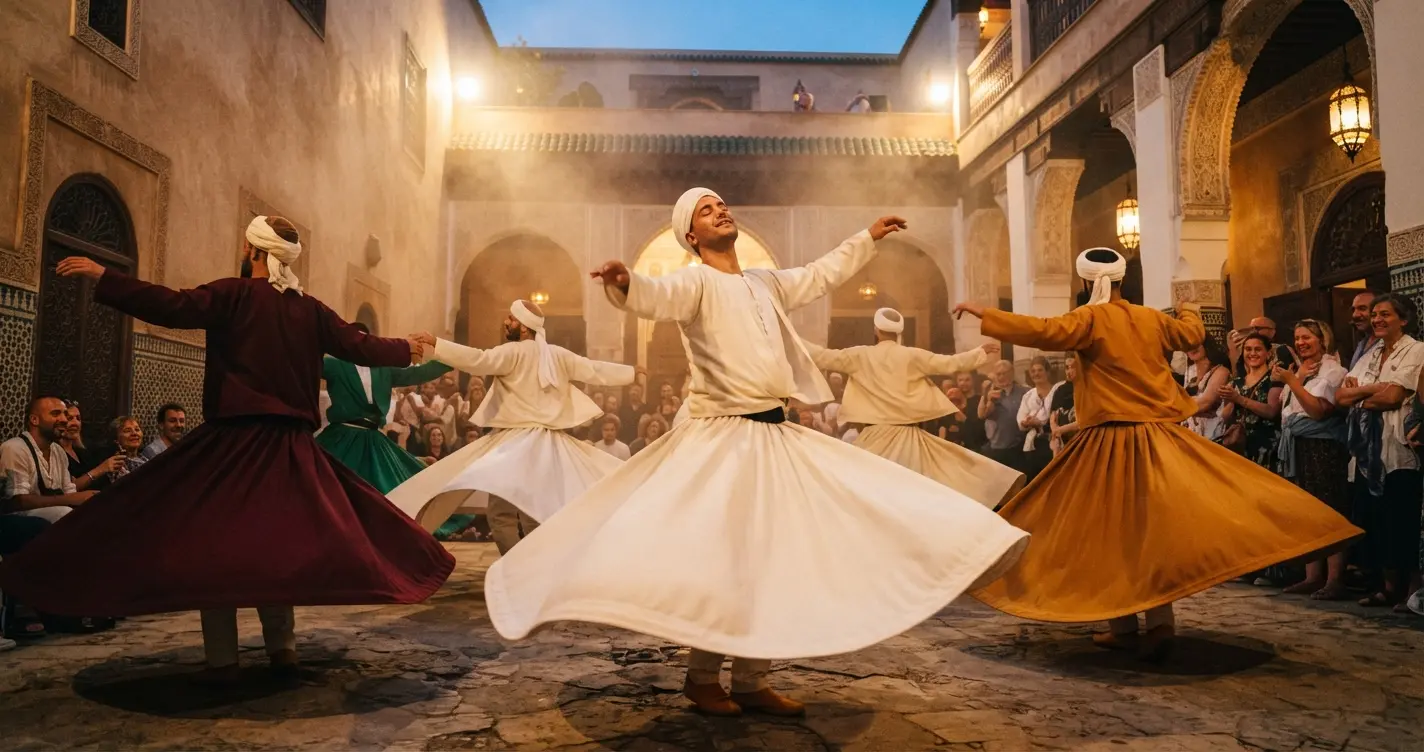
Moroccan Sufi brotherhoods have long been part of the festival’s core, with late-night ritual concerts historically held in intimate garden settings within the medina. These “Sufi nights” tend to be more contemplative and ritual in character than the main evening concerts at Bab Al Makina.
Concerts and Performances
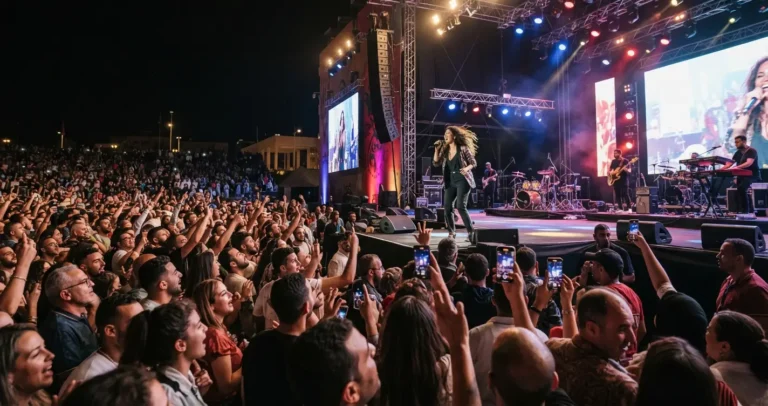
Most editions combine grand evening concerts, more intimate afternoon performances, and free public concerts spread through the city. The atmosphere shifts noticeably between a large orchestral spectacle at Bab Al Makina and a small afternoon recital in a riad courtyard, so plan to sample more than one type of setting.
The Festival Atmosphere
Fes itself becomes part of the experience: the medina, already dense with history, fills with visitors, musicians and impromptu gatherings for the length of the festival. Evenings at Bab Al Makina under open sky, with centuries-old walls as a backdrop, are often described as the festival’s signature moment.
Where Does the Fes Festival Take Place?
Bab Al Makina
Bab Al Makina, a grand former royal ceremonial square, is the festival’s main stage and hosts the largest evening concerts, including the opening and closing shows. Its scale and historic setting make it one of the most striking festival venues anywhere in Morocco.
Dar Batha and Other Festival Venues
The Dar Batha Museum, with its Andalusian gardens, has traditionally hosted more intimate afternoon concerts. Riads within the medina, such as Dar Adiyel, a former governor’s residence, have also been used for smaller performances and gatherings in various editions.
Performances in and Around the Medina
Beyond the ticketed venues, the festival often runs a free “festival in the city” strand, with concerts in public squares such as Bab Boujloud, bringing music to people who might not attend the paid evening shows.
Main Concerts vs. Free Events
The main evening concerts at Bab Al Makina are ticketed, while the “festival in the city” performances are free and open-air. Afternoon concerts at venues like Dar Batha typically sit between the two, with lower ticket prices than the main stage.
What Kind of Music Can You Hear at the Festival?
Moroccan Sacred and Traditional Music
Moroccan ensembles, including Sufi brotherhoods and traditional Andalusian orchestras, are a constant presence, grounding the international programme in local tradition.
Sufi Music
Beyond Morocco, Sufi music from across the Muslim world appears regularly, from ritual chant to more contemporary Sufi-inspired artists blending the tradition with modern arrangements.
Andalusian and Arab Musical Traditions
Arab-Andalusian music, tracing its roots to medieval Iberia and North Africa, is a recurring theme, sometimes given an entire edition’s focus, as in the 27th edition’s tribute to the legendary musician Zyriab.
African Musical Traditions
Music from across the African continent, including West African and gospel traditions, has featured in past editions, reflecting the festival’s broader African identity alongside its Mediterranean and Middle Eastern focus.
International Musical Traditions
Beyond Africa and the Middle East, the festival has hosted Hindustani classical musicians, Bulgarian Orthodox choirs, Pakistani Qawwali singers, and Western artists such as Björk and Joan Baez, all under the same sacred-music umbrella.
The Festival’s Main Events
Opening Concert
The festival traditionally opens with a large-scale production at Bab Al Makina, often built around a specific artistic theme for that year. The 2026 opening, on June 4, centered on the poetic theme “Anima Ex Materia — From Heaven to Earth,” honoring Morocco’s traditional artisans.
Main Evening Concerts
The core of the festival is its run of evening concerts at Bab Al Makina, each typically built around a different artist, ensemble or cultural theme, running across the festival’s main days.
Closing Concert
Editions typically end with another major production at Bab Al Makina, often bringing together multiple traditions for a final, large-scale performance.
Free Concerts and Public Performances
Alongside the ticketed programme, free concerts in public squares bring the festival to a wider local and visiting audience, with a more informal, communal atmosphere.
Conferences and Cultural Programmes
The Rencontres de Fes forum runs during the festival, with academics, writers and religious figures discussing themes tied to that year’s programme, alongside film screenings, art exhibitions and poetry readings at venues such as Dar Batha.
How Much Does the Fes Festival Cost?
Concert Ticket Prices
Evening concert tickets at Bab Al Makina have historically ranged roughly from 400 to 600 MAD (about $40–60) for standard tickets, with premium acts sometimes priced higher, in the range of 300–650 MAD depending on the performer and seating. Prices vary by year and by performer, so treat these as a general guide rather than a current quote.
Free Events
The festival’s “festival in the city” concerts in public squares are free, offering a way to experience the event without buying tickets, though the big-name evening shows are not part of this free programme.
Accommodation and Food Costs
Accommodation prices rise noticeably during the festival, particularly for riads inside or near the medina. Food in Fes remains generally affordable by international standards, whether you’re eating at a mid-range restaurant or a medina street stall, though festival-week prices at venues close to Bab Al Makina may run slightly higher than elsewhere in the city.
How Much to Budget for a Festival Weekend
For a few days built around two or three evening concerts, plus meals, transport and mid-range riad accommodation, budget for a noticeably higher daily spend than an off-season Fes visit, mainly driven by accommodation demand. Booking early, both for tickets and rooms, is the most effective way to control costs.
How to Buy Fes Festival Tickets
Where to Buy Tickets
Tickets are sold through the official festival website, and in past editions through a dedicated festival mobile app. Buying through official channels avoids the risk of inflated resale prices.
Booking Tickets in Advance
Popular evening concerts, especially those featuring well-known international artists, can sell out well before the festival begins. Booking as soon as the programme and ticket sales open gives you the widest choice of performances and seating.
Choosing the Right Performances
Since the lineup spans very different styles, from meditative Sufi ritual to large-scale orchestral spectacle, it’s worth reading each evening’s description rather than assuming all concerts will feel similar. If you only have time for one or two shows, the opening and closing concerts are usually the most ambitious productions.
What to Check Before Buying
Confirm the venue, start time and any seating category before buying, since Bab Al Makina tickets can vary by seating zone. Check the festival’s refund and exchange policy too, particularly if your travel plans aren’t fully confirmed yet.
Where to Stay for the Fes Festival
Staying Inside the Fes Medina
A riad inside the Fes el-Bali medina puts you within walking distance of much of the festival’s atmosphere, though navigating the medina’s narrow lanes at night takes some getting used to on your first visit.
Staying Near the Festival Venues
Riads and hotels closer to Bab Al Makina or the medina’s main gates cut down on evening travel time after concerts, which matters most on nights with late Sufi performances.
Riads and Hotels for Different Budgets
Fes offers everything from simple guesthouses to high-end restored riads, but rooms in popular areas book out early during festival week regardless of budget category. Reserve as soon as your dates are confirmed, ideally as soon as the festival announces its programme.
How to Get Around Fes During the Festival
Walking Through the Medina
Fes el-Bali is largely pedestrian, and walking is the only way to reach many riads and smaller venues. Comfortable shoes matter more here than almost anywhere else in Morocco, given the medina’s uneven stone lanes.
Petit Taxis
Petit taxis are useful for reaching the medina’s edges or newer parts of the city, such as the Ville Nouvelle, but they cannot enter most of the old medina itself, so expect to walk the final stretch to your riad.
Getting to the Festival Venues
Bab Al Makina sits at the edge of the medina and is reachable by taxi or on foot from most central accommodation. Dar Batha and other medina venues are best reached on foot once you’re inside the old city.
Getting Back After Evening Concerts
After late concerts, taxis cluster near Bab Al Makina, but demand is high right after a show ends, so allow extra time or agree on a pickup arrangement with your riad in advance if you’re staying further away.
How Many Days Do You Need for the Fes Festival?
One Day
A single day lets you attend one evening concert and explore a small part of the medina, but it’s a rushed way to experience either the festival or the city properly.
A Weekend
A weekend gives room for two or three concerts across different venues, plus a proper first look at Fes el-Bali’s major sites, making it a reasonable minimum for a satisfying visit.
Three to Five Days
Three to five days allows a fuller festival experience, including afternoon concerts, the Rencontres de Fès talks, and enough time to explore Fes beyond the festival crowds during the day.
Combining the Festival With a Fes Itinerary
Since the festival runs alongside normal city life, it pairs naturally with a broader Fes itinerary or as one stop on a longer Morocco trip; see our guide to planning a Morocco itinerary for how to combine it with other cities.
Best Things to Do in Fes During the Festival
Explore Fes el-Bali
Fes el-Bali, the old medina, is one of the largest car-free urban areas in the world and rewards slow, unhurried wandering between festival events.
Visit Al Quaraouiyine
Founded in the ninth century, the University of Al Quaraouiyine and its mosque are central to Fes’s identity as a spiritual and intellectual capital, a fitting daytime visit alongside an evening of sacred music. Non-Muslims cannot enter the mosque itself, but the surrounding architecture and gates are still worth seeing.
See the Bou Inania Madrasa
This fourteenth-century religious school is known for its detailed zellige tilework, carved cedar and marble courtyard, and remains one of the medina’s most striking examples of Marinid-era architecture.
Explore the Souks and Tanneries
Fes’s souks, organized historically by craft, and its famous tanneries offer a direct look at the traditional artisan trades that inspired the 2026 festival’s own theme. Expect insistent offers to view the tanneries from a leather shop terrace; a small tip is customary if you accept.
Discover Fes’ Food Scene
Fassi cuisine is considered among Morocco’s most refined, and festival week is a good excuse to try dishes like pastilla or a slow-cooked tagine at a proper sit-down restaurant, alongside the more casual street food of the medina.
Tips for Attending the Fes Festival
Book Accommodation Early
Riads fill up fast during festival week, sometimes months in advance for the best-located options. This is the single most important thing to arrange early.
Check the Programme Before Booking Tickets
Since each evening’s concert can differ enormously in style, read the artist and theme descriptions on the official site before choosing which shows to attend.
Arrive Early for Popular Performances
For well-known artists or the opening and closing concerts, arrive with time to find seating and settle in before the show starts.
Dress Respectfully
Modest, comfortable clothing is appropriate both for evening concerts and for daytime exploration of religious and historic sites in the medina.
Plan Your Transportation
Decide in advance how you’ll get to and from Bab Al Makina, especially for late-night concerts, since taxi availability can be tight right after a show ends.
Carry Cash and Essential Items
Smaller vendors and some venues may not accept cards, so carry Moroccan dirhams for tickets, food stalls and taxis. A light layer for cool evening air at open-air venues is also worth packing.
Is the Fes Festival of World Sacred Music Worth Attending?
For travelers interested in music, spirituality or Morocco’s cultural life beyond its usual tourist sites, the festival is genuinely distinctive: few events anywhere put Sufi ritual, gospel, Hindustani classical and Andalusian orchestral music on programmes within the same week, in a setting as atmospheric as Bab Al Makina. It asks more of visitors than a typical pop festival, since much of the music is contemplative rather than upbeat, and the city itself demands patient exploration. For travelers drawn to Fes’s history and culture already, the festival adds a rare layer on top of an already rewarding destination.
Frequently Asked Questions About the Fes Festival
When is the Fes Festival of World Sacred Music held?
The festival usually takes place in late May or June, though exact dates shift from year to year. The 2026 edition runs June 4–7. Because dates aren’t fixed to a specific week each year, always check the official festival website before booking flights or accommodation, ideally as soon as the new year’s dates are announced.
Where is the Fes Festival held?
The festival takes place across Fes, Morocco, with its main evening concerts at Bab Al Makina, a historic ceremonial square at the edge of the old medina. Additional venues include the Dar Batha Museum for afternoon concerts, various riads within Fes el-Bali, and public squares such as Bab Boujloud for free performances. This spread of venues means the festival touches many parts of the medina rather than staying confined to a single site.
How much are tickets for the Fes Festival?
Evening concerts at Bab Al Makina have historically cost roughly 400 to 600 MAD (about $40–60), with prices varying by performer, seating and year. Afternoon concerts at smaller venues like Dar Batha have typically been priced lower, and some public performances are free. Since prices change each edition, check the official festival website for current-year ticket costs before budgeting your trip.
Can you attend the Fes Festival for free?
Yes, partially. The festival’s “festival in the city” strand offers free, open-air concerts in public squares such as Bab Boujloud, giving visitors a taste of the event without buying tickets. The main evening concerts at Bab Al Makina, however, are ticketed and are usually the festival’s biggest productions. A mixed approach, attending a free public concert alongside one or two ticketed evening shows, is a reasonable way to experience both sides of the festival.
What kind of music is performed at the Fes Festival?
The programme spans Moroccan Sufi and Andalusian traditions, gospel, Hindustani classical music, Qawwali, Bulgarian Orthodox choral music, and contemporary artists working within a spiritual or world-music idiom, among many others. Each edition organizes its lineup loosely around a yearly theme, so the exact mix of traditions shifts from year to year. What stays consistent is the idea of placing different sacred and spiritual traditions on the same stage rather than in separate, siloed programmes.
How many days should I spend in Fes for the festival?
A weekend is a reasonable minimum, giving time for two or three concerts and a solid first look at Fes el-Bali’s major sites. Three to five days allows for a fuller experience, including afternoon concerts, the Rencontres de Fès talks, and unhurried time exploring the medina outside festival hours. If you’re combining the festival with a broader Morocco trip, Fes also works well as one stop on a longer itinerary.
Where should I stay during the Fes Festival?
Staying in a riad inside or near the Fes el-Bali medina puts you closest to the festival’s atmosphere and cuts down on travel time to evening concerts. Rooms across all budget categories book out quickly during festival week, so reserve as early as possible, ideally as soon as that year’s festival dates are confirmed. If medina accommodation is full or outside your budget, hotels in the Ville Nouvelle are a reasonable alternative, with taxis covering the distance to Bab Al Makina.
Do I need to book Fes Festival tickets in advance?
Yes, particularly for evening concerts featuring well-known artists or for the opening and closing shows, which can sell out ahead of the festival. Tickets are sold through the official festival website and, in past editions, through a dedicated festival app. Booking as soon as the year’s programme is released gives you the best choice of performances and seating.
Is the Fes Festival suitable for first-time visitors to Morocco?
Yes, though it rewards visitors with some interest in music, spirituality or cultural history more than those purely looking for a lively party atmosphere. Fes itself is a demanding but rewarding city to navigate for a first trip, with a dense historic medina that takes some adjustment. Pairing the festival with a few extra days for general sightseeing helps first-time visitors get more out of both the city and the event.
What should I wear to the Fes Festival?
Modest, comfortable clothing suits both the evening concerts and daytime exploration of Fes’s religious and historic sites. Evenings at open-air venues like Bab Al Makina can turn cool, even after a warm day, so a light jacket or shawl is worth carrying. Comfortable walking shoes matter throughout, given the uneven stone lanes of the medina.
Final Thoughts on the Fes Festival of World Sacred Music
The Fes Festival of World Sacred Music asks visitors to slow down, in a country and a city that already reward patience. A few evenings of music under the stars at Bab Al Makina, paired with days spent getting lost in Fes el-Bali’s lanes, souks and madrasas, make for one of Morocco’s most rewarding cultural trips. Confirm the year’s exact dates and secure your riad early, then leave the rest of your schedule loose enough to follow the festival’s rhythm rather than fight it.