Is Fes Safe? (2026): 12 Scams, Risks & Safety Tips You Need to Know
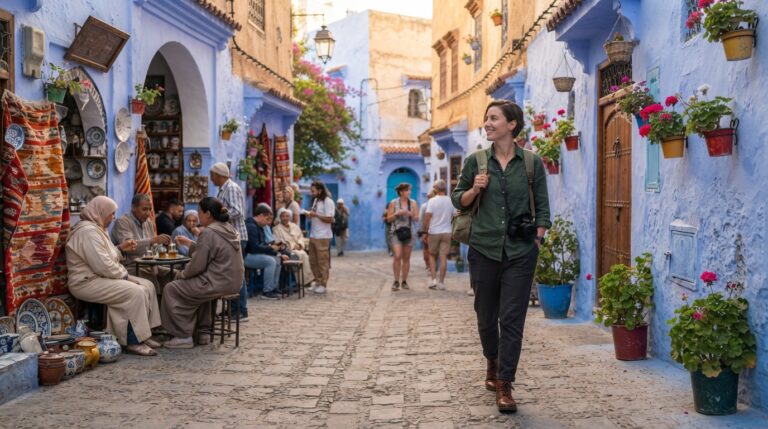
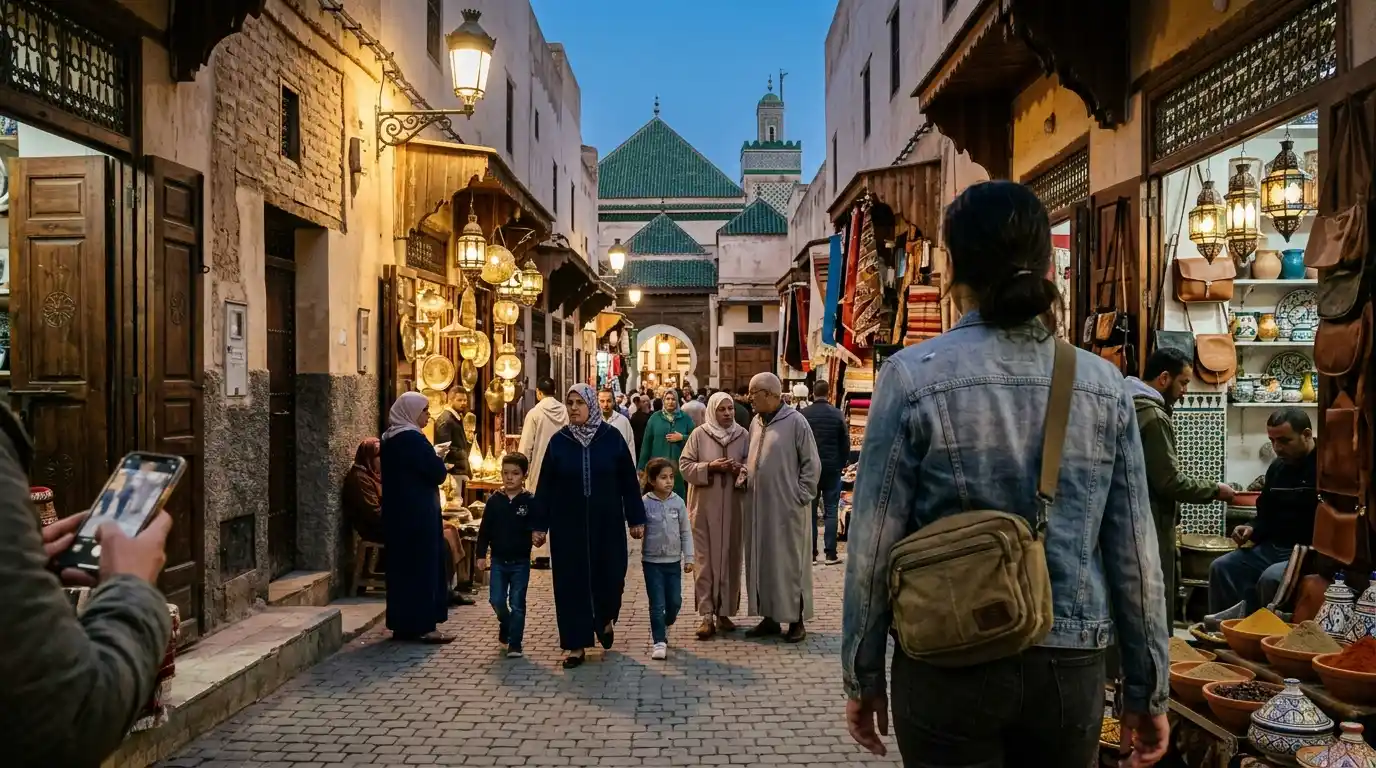
Fes el-Bali is often described as the most disorienting urban environment most travelers will ever navigate over 9,000 alleys, many nearly identical, winding through a medieval medina with no logical grid. That navigational difficulty is at the heart of nearly every safety concern in Fes: not violent crime, which remains rare, but a well-developed ecosystem of scams built specifically around tourists who are visibly lost.
This guide walks through what’s actually risky in Fes, what isn’t, and how to move through the city with confidence rather than anxiety the goal is a realistic picture, not reassurance for its own sake or unnecessary alarm.
Is Fes Safe for Tourists?
Broadly, yes. Violent crime against tourists is genuinely rare, and both the US State Department and the UK Foreign, Commonwealth & Development Office rate Morocco at a caution level comparable to much of Western Europe, with no advisory against travel to Fes specifically. The realistic risks for most visitors are financial rather than physical persistent unofficial guides, minor scams, and the general disorientation of navigating one of the world’s largest car-free medieval cities.
The 12 Biggest Safety Risks in Fes
Pickpocketing in Crowded Areas
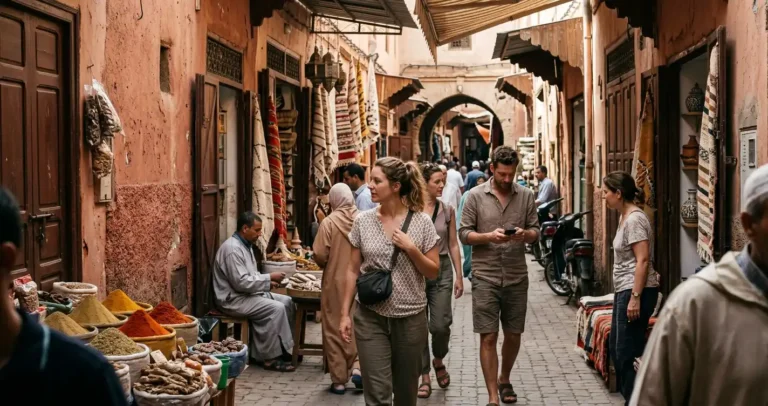
Pickpocketing is a real but modest risk in Fes’s busiest souk stretches and around major gates, comparable in scale to what you’d encounter in any dense European tourist city. A crossbody bag, zipped pockets, and basic awareness in crowds cover most of the risk.
Unofficial Guides and Fake Helpers
This is the single most common complaint travelers report in Fes. A friendly stranger offers directions or an escort to a site, insists no payment is expected, and then demands 100–500 MAD once you’ve arrived. The navigational difficulty of Fes el-Bali makes this scam unusually effective here compared to other Moroccan cities, since genuinely lost tourists are easy to spot and approach, and the “helper” often is genuinely capable of getting you where you’re going, which is part of what makes the scam persuasive.
Fake Directions in the Medina
A close cousin of the unofficial guide scam: someone tells you a site is “closed today” or that a street is blocked, then offers to lead you somewhere else, often toward a shop paying them commission. The site in question is almost never actually closed, and checking opening hours with your riad before setting out, or simply walking to the entrance to verify, defuses this one immediately.
Tannery and Leather-Shop Pressure
The Chouara Tanneries are Fes’s most photographed site and also the most consistently reported location for pressure selling, with staff or nearby touts offering a “free” rooftop view that comes with strong expectations of a leather purchase afterward. There’s no real obligation to buy, though a polite, firm decline is sometimes needed more than once to end the pitch.
Taxi Overcharging
Petit taxi drivers occasionally claim the meter is “broken” or quote a flat rate several times the standard fare, particularly for tourists arriving at the train station or unfamiliar with typical costs. It’s an annoyance rather than a safety risk, and easily avoided by insisting on the meter or agreeing a price in advance, ideally after checking a rough benchmark fare with your riad beforehand.
Motorcycle and Moped Traffic
Motorbikes weave through even the narrowest medina alleys, and staying alert to approaching engine noise is a genuinely useful habit, particularly in the busier souk stretches where pedestrians, carts, and bikes all share the same tight space. Keeping to the side of a lane rather than its center reduces the need for a sudden step aside.
Bag Snatching
Less common than in Marrakech but still occasionally reported, bag snatching tends to happen in the same narrow alleys where motorbikes pass close to pedestrians. Carrying bags on the side away from passing traffic reduces the risk.
Tourist Scams and Aggressive Touting
Beyond fake guides, expect the general repertoire of medina sales pressure persistent shop invitations, inflated “final offers,” and the occasional overly theatrical bargaining performance. None of this typically escalates beyond a firm decline and continuing to walk, and most vendors respond to a clear, polite “no” without pushing further.
ATM and Money-Related Scams
Standalone ATMs in high-traffic tourist areas carry a slightly higher risk of card skimming than bank-branch machines. Using ATMs attached to a bank building, particularly in Ville Nouvelle, is a reasonable precaution.
Restaurant and Shop Price Disputes
Menus without clearly posted prices, or a final bill that doesn’t match what was discussed, are an occasional source of friction, particularly at restaurants clustered around the busiest tourist routes. Confirming prices before ordering avoids most disputes.
Walking Alone at Night
Fes el-Bali’s main routes stay reasonably active into the evening, but its smaller side alleys empty out quickly after dark and can feel genuinely isolating. This is more a navigation and comfort issue than a specific danger, though it’s sensible to stick to known, better-lit routes late at night, particularly if you’re not yet confident finding your way back to your riad.
Isolated Streets and Areas
Beyond the medina’s core tourist routes, some quieter residential alleys offer little foot traffic and few visible landmarks. Getting turned around here isn’t dangerous in itself, but it can make the general disorientation of Fes el-Bali feel more stressful than in a smaller, simpler medina.
Is Fes Medina Safe?
Yes, in terms of violent crime, which remains rare even in the medina’s busiest and most disorienting stretches. The real challenge is navigational rather than criminal Fes el-Bali’s sheer scale and lack of a logical grid make it genuinely easy to feel lost, which is precisely the condition scammers look for. Staying oriented, ideally with an offline map and a general sense of which gate you entered through, resolves most of the practical difficulty.
Is Fes Safe at Night?
Generally yes along the medina’s main arteries and in Ville Nouvelle, both of which stay reasonably active into the evening. Smaller side alleys inside the medina, however, empty out quickly after dark, so sticking to known routes or taking a taxi back to your riad late at night is a sensible default rather than excessive caution.
Is Fes Safe for Solo Travelers?
Yes solo travel in Fes is common and generally trouble-free, provided you apply the same awareness you would in any unfamiliar city: staying alert in crowds, avoiding unnecessary detours into unfamiliar alleys after dark, and declining unsolicited offers of help.
Is Fes Safe for Solo Female Travelers?
Generally yes, though solo female travelers report more frequent unwanted attention comments, persistent conversation attempts than solo male travelers typically experience. It rarely escalates beyond verbal persistence, and dressing modestly, walking with purpose, and declining to engage with unwanted attention tend to reduce it considerably.
Is Fes Safe for Families?
Yes, and Fes is a manageable family destination, with the medina’s scams and pressure-selling posing more of a hassle than a genuine danger to children. Keeping a close hand on kids in the busiest souk stretches, where motorbikes and crowds both move quickly, is the main practical precaution.
Are Taxis in Fes Safe?
Yes, physically; the main issue is overcharging rather than danger. Insisting on the meter for petit taxis, or agreeing a fare in advance, resolves the vast majority of disputes, and drivers recommended directly by your riad tend to be more consistently reliable than ones hailed at random near the train station.
Which Areas of Fes Should Tourists Be More Careful In?
Fes el-Bali
The historic medina sees the highest concentration of both tourists and tourist-facing scams, simply because that’s where the crowds are. Its scale and layout also make it the area where getting disoriented is most likely.
Fes el-Jdid and Mellah
Generally calmer than the deeper medina, though its quieter streets mean fewer other people around if you do need directions or assistance, making a guide or clear route plan more valuable here than in the busiest medina stretches.
Ville Nouvelle
The modern city center is straightforward and low-hassle by comparison, with wide streets, clear signage, and far less tourist-facing scam activity than the medina.
Around the Train Station
A common spot for taxi overcharging and unofficial “help” with luggage, given the steady flow of arriving travelers who don’t yet know standard local prices.
How to Avoid Scams in Fes
Decline unsolicited offers of directions or guidance, even when politely made, since genuine local kindness rarely comes with an unprompted approach on the street. Verify claims that a site is “closed” by checking with your riad or walking to the entrance yourself. Agree on prices before any service, from a taxi ride to a tannery viewing. And hire guides only through official channels your riad, a licensed agency rather than accepting an offer from someone who approaches you directly.
How to Stay Safe While Exploring Fes Medina
Carry an offline map and keep track of which gate you entered through, since this remains the most reliable way to reorient yourself if you get turned around. Stick to busier, more populated routes, particularly later in the day. And treat a wrong turn as a normal part of exploring Fes rather than a crisis, since even guided groups occasionally double back.
What to Do If You Get Lost in Fes
Ask a shopkeeper, rather than a stranger idling in the street, for directions back to a specific landmark or gate shopkeepers have a fixed location and reputation to protect, making them a more reliable source of help than someone who approached you unprompted. Most medina residents are genuinely happy to point a lost visitor in the right direction without expecting anything in return.
What to Do If Something Goes Wrong
Report theft or a persistent scam to the tourist police if possible, since they’re accustomed to handling visitor complaints and often speak English or French. Request an official police report if you’ll need one for an insurance claim. For anything more serious, contact your embassy or consulate as soon as practical.
Emergency Numbers and Useful Contacts
Police: 19 in cities, or 177 for the Gendarmerie on highways and rural areas. Fire and ambulance: 15. From a mobile phone, 112 also reaches emergency services. Saving these numbers, along with your riad’s address and your embassy’s contact details, before you arrive is worth the few minutes it takes.
Fes Safety Tips for First-Time Visitors
Book a licensed guide through your riad for at least your first day, since the upfront cost is genuinely worth it given how much time and hassle it saves navigating the medina independently. Carry small cash denominations, dress modestly, and keep valuables in your riad’s safe rather than carrying everything with you. None of this requires special vigilance beyond ordinary big-city common sense.
Is Fes Safe Compared With Marrakech?
Both cities see a broadly similar volume and style of tourist-facing scams unofficial guides, tannery pressure, taxi overcharging though Fes el-Bali’s more confusing layout makes the “lost tourist” version of these scams somewhat more effective there than in Marrakech’s comparatively simpler medina. Marrakech sees a higher overall volume of reported incidents, largely a function of receiving more visitors overall rather than being meaningfully more dangerous per capita.
Is Fes Safe? What Travelers Should Know Before Their Trip
The honest picture is that Fes is safe in every sense that matters most: violent crime against visitors is rare, and the city’s real challenges are financial friction and navigational confusion rather than genuine danger. Most travelers who prepare for ordinary scam-awareness and accept that getting occasionally lost is part of the experience come away with an entirely positive impression of the city.
Is Fes Safe? FAQs
Is Fes safe for tourists in 2026?
Yes violent crime against tourists remains rare, and the main realistic risks are scams and general disorientation, both manageable with standard precautions.
Is Fes Medina safe?
Yes in terms of violent crime, though its scale and confusing layout make navigational difficulty the more common practical challenge for visitors.
Is Fes safe at night?
Generally yes along main routes and in Ville Nouvelle, though smaller medina side alleys empty out quickly after dark, so sticking to known, busier paths is sensible.
Is Fes safe for solo travelers?
Yes, and solo travel here is common, provided you apply the same awareness you would in any unfamiliar city.
Is Fes safe for solo female travelers?
Generally yes, though unwanted attention is more commonly reported than genuine danger; confident, modest dress and declining unwanted conversation tend to reduce it.
Is Fes safe for families?
Yes, with the medina’s scams posing more hassle than danger; keeping track of children in the busiest, motorbike-heavy souk stretches is the main practical precaution.
What are the most common scams in Fes?
Unofficial guides who demand payment after claiming none was expected, fake “closed” site claims, and tannery pressure selling are the most frequently reported.
Are unofficial guides a problem in Fes?
Yes this is the single most common tourist complaint in the city, made especially effective by how genuinely easy it is to get lost in Fes el-Bali.
Are taxis safe in Fes?
Yes physically; the main issue is overcharging, resolved by insisting on the meter or agreeing a fare before the ride.
Is it safe to walk around Fes Medina alone?
Yes, particularly during the day and along the medina’s main routes; the same street-smart habits that apply in any major city apply here too.
What should tourists avoid in Fes?
Accepting unsolicited offers of directions or guidance, agreeing to pay for a service after the fact rather than before, and wandering unfamiliar side alleys late at night.
What should I do if I get lost in Fes Medina?
Ask a shopkeeper rather than a stranger on the street for directions back to a known landmark or gate, and keep an offline map on hand as a backup.
What emergency number should tourists use in Fes?
Police is 19 in cities, fire and ambulance is 15, and 112 also reaches emergency services from a mobile phone.