Best Things to Do in Chefchaouen (2026): 15 Magical Places, Mountain Adventures & Local Secrets
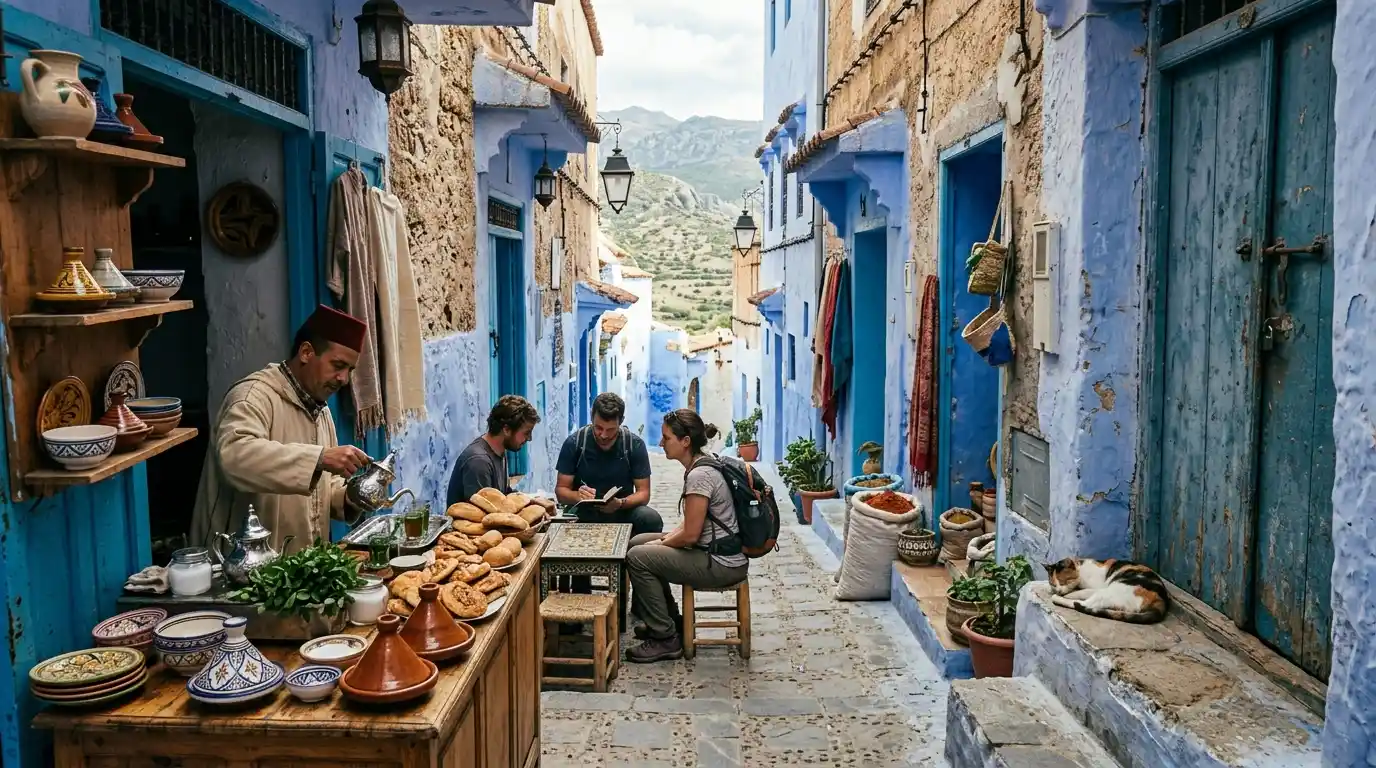
Chefchaouen rewards slow wandering more than almost anywhere else in Morocco. Its medina, washed in every imaginable shade of blue, was never built with tourism in mind, and that’s exactly why it still feels genuine cats dozing on doorsteps, locals carrying bread to the communal oven, mint tea served on a step rather than a terrace.
This guide covers the best things to do in Chefchaouen, from the medina’s essential landmarks to the mountain hikes just beyond it, along with practical advice on timing and getting around. Whether you have one night or three, the sites below cover the full range of what makes this small mountain town worth the detour from Morocco’s larger cities.
Best Things to Do in Chefchaouen
Wander Through the Blue Medina
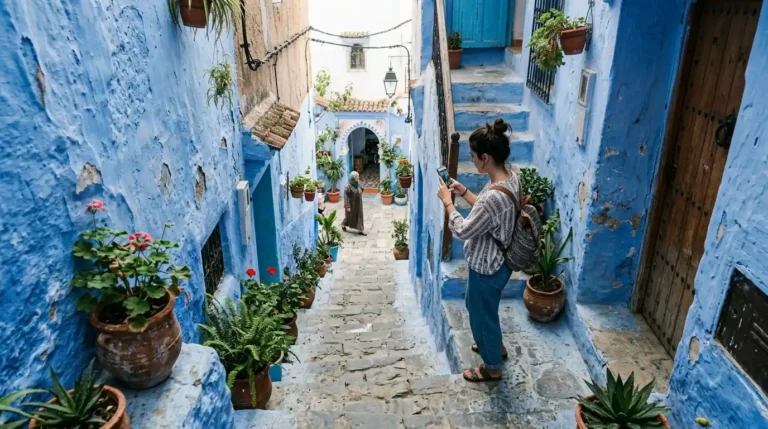
Simply walking without a fixed destination is arguably the single best thing to do in Chefchaouen. The blue-washed walls, said to have been painted by Jewish refugees in the 1930s and maintained by residents ever since, shift in tone from street to street and hour to hour, and getting mildly lost here is part of the appeal rather than a problem to solve. Unlike the sprawling medinas of Fes or Marrakech, Chefchaouen’s compact scale means a wrong turn rarely leads far from somewhere familiar.
Visit the Kasbah Museum and Andalusian Gardens
Built in 1471 as the city’s original fortress, the Kasbah sits right on Plaza Uta el-Hammam and houses a small ethnographic museum covering local Andalusian and Berber heritage, traditional dress, and regional crafts. The quieter draw is the interior Andalusian garden and the views from the Portuguese Tower’s ramparts over the medina’s rooftops, worth the modest entrance fee even for visitors who skip the museum rooms themselves. A full visit takes around 30 minutes to an hour, making it an easy addition to a morning already spent wandering the surrounding streets.
Explore Place Uta el-Hammam
The medina’s central square, named for the hammams that once ringed it, is where daily life in Chefchaouen actually plays out cafés, the Kasbah, and the Grand Mosque all face onto it, and it’s the natural place to sit with a mint tea and watch the town go by. It grows noticeably livelier after dark, when the Kasbah is illuminated and street life spills out from the surrounding cafés, and the call to prayer echoing off the surrounding hills adds a genuinely atmospheric layer to sitting here at any time of day.
Watch Sunset from the Spanish Mosque
Built by Spanish colonial authorities in the 1920s but never actually used as a functioning mosque, this white building on a hillside about a 20-minute uphill walk from the medina has become Chefchaouen’s classic sunset viewpoint, looking back over the blue rooftops toward the Rif Mountains. The walk up, past small stalls selling fresh orange juice, is straightforward enough for most fitness levels, and a low wall just in front of the building makes a natural place to sit and watch the light change. The viewpoint gets genuinely crowded at peak sunset, with both tourists and locals gathering for what feels like a communal evening ritual rather than a purely touristic stop.
Discover Ras El Maa Spring
At the medina’s eastern edge, fresh mountain water flows down through a series of small cascades where locals still wash clothes and cool off on hot days. It’s one of the more peaceful corners of the city, ringed by small cafés, and best visited in the morning or late afternoon when the light is softest. The contrast between the rushing water and the surrounding quiet stone lanes makes it a natural stop between the medina and the walk up toward the Spanish Mosque.
Hike to Akchour Waterfalls
About 40–55 minutes from Chefchaouen by taxi, Akchour offers two distinct hiking routes through Talassemtane National Park: a roughly two-hour trail each way to the 100-metre Grand Cascade, and a shorter, more accessible 40-minute walk to the natural pools beneath God’s Bridge. It’s widely considered one of the best accessible day hikes in northern Morocco, with a river gorge that stays cool even in summer, and simple riverside cafés selling tagine and mint tea line much of the trail for anyone wanting a break partway through.
See the Pont de Dieu (God’s Bridge)
A massive natural stone arch spanning the river gorge at Akchour, God’s Bridge is reached via a moderate trail with a steep final climb to the viewpoint above it. The turquoise pools beneath the bridge are a popular swimming spot on warm days, and the hike here is shorter and less demanding than the walk to the Grand Cascade, making it the better choice for travelers with limited time or energy. Sturdy shoes are worth wearing regardless of season, since the rocks near the water stay slippery even outside the rainy months.
Explore Talassemtane National Park
Home to over 1,300 plant species, including around 50 found nowhere else in Morocco, Talassemtane National Park surrounds the Akchour trails with genuinely dramatic Rif Mountain scenery forested slopes, limestone cliffs, and the endemic Moroccan fir. Hiring a local guide is worth it for anyone wanting to explore beyond the two main marked trails, since the park’s less-traveled routes are considerably harder to navigate independently.
Shop for Rif Mountain Crafts and Wool Textiles
Chefchaouen’s medina is known for handwoven wool blankets and rugs, produced by Rif Mountain communities using techniques distinct from the leatherwork and metalwork more associated with Marrakech and Fes. Just outside Bab El Okla sits one of the best artisan centers in northern Morocco, where visitors can watch masters teaching apprentices traditional crafts firsthand, offering a more genuine sense of the region’s textile heritage than a typical souvenir shop.
Photograph Chefchaouen’s Most Beautiful Blue Streets
Beyond the well-known postcard corners, wandering the steeper residential lanes above Plaza Uta el-Hammam turns up quieter, equally striking blue doorways and stairwells with far fewer other photographers around. Early morning offers the softest light and the emptiest streets for anyone serious about photography, and asking before photographing a resident’s doorway, since many of these lanes are still lived-in streets rather than purely decorative ones, is both respectful and generally well received.
Visit the Grand Mosque from Outside
Built in the 15th century by the son of the city’s founder, the Grand Mosque’s unusual octagonal minaret rises directly over Plaza Uta el-Hammam. Like most mosques in Morocco, it isn’t open to non-Muslim visitors, but its distinctive silhouette is very much part of the square’s character.
Enjoy a Rooftop Café in the Medina
Several small rooftop cafés scattered through the medina offer a break with sweeping views over the blue rooftops and surrounding hills, a good option for resting between longer walks or simply watching the changing light over the city.
Taste Chefchaouen’s Local Cuisine
A traditional Chaouni breakfast of eggs, olive oil, olives, cheese, and tomatoes is a simple, inexpensive way to start the day, while the restaurants ringing Plaza Uta el-Hammam serve both Moroccan classics and dishes reflecting the region’s historic Spanish and Andalusian influence. Goat cheese, in particular, is a genuine local specialty worth seeking out, along with the region’s honey, often sold fresh by small producers throughout the medina.
Experience a Traditional Moroccan Hammam
Several hammams in and around the medina offer the classic steam-and-scrub ritual, a good way to recover after a long day of walking the medina’s steep lanes or hiking at Akchour. Options range from simple, inexpensive local hammams to more polished spa-style versions attached to boutique riads.
Explore the Medina After Dark
Chefchaouen takes on a different character once the sun sets the Kasbah lit up, lanterns glowing against the blue walls, and Plaza Uta el-Hammam filling with both residents and visitors settling in for the evening. It’s generally calmer and safer to explore after dark here than in Morocco’s larger medinas, given the town’s small scale and steady foot traffic along the main routes, and the illuminated Kasbah against the night sky is one of the more memorable sights in the city.
Best Things to Do in Chefchaouen for First-Time Visitors
A first day built around wandering the medina, visiting the Kasbah, sitting in Plaza Uta el-Hammam, and walking to Ras El Maa gives newcomers a solid overview without overplanning, leaving the Spanish Mosque sunset walk as a natural way to close out the evening. This pace also leaves room for the inevitable detours a first visit to the medina tends to produce.
Best Things to Do in Chefchaouen for Couples
The Spanish Mosque at sunset, a quiet morning at Ras El Maa spring, and a shared hammam experience all suit a romantic pace, offering the kind of unhurried, scenic moments that Chefchaouen’s small scale makes easy to build a day around. Several riads also arrange rooftop dinners with medina views for couples celebrating a special occasion.
Best Things to Do in Chefchaouen for Nature Lovers
Akchour’s two hiking trails and the wider expanse of Talassemtane National Park are the clear highlights, offering genuine mountain scenery and biodiversity within less than an hour of the medina.
Best Free Things to Do in Chefchaouen
Wandering the blue medina, sitting in Plaza Uta el-Hammam, walking to Ras El Maa spring, and hiking up to the Spanish Mosque for sunset all cost nothing beyond the effort of walking, making Chefchaouen a genuinely rewarding destination even on a tight budget.
Best Things to Do Around Chefchaouen
Beyond Akchour, the wider Rif Mountains offer additional hiking and small rural villages worth exploring with a local guide, while day trips toward Tangier or the smaller town of Tetouan, with its own well-preserved medina, are both realistic options for travelers with extra time.
How Many Days Do You Need in Chefchaouen?
Two nights is the sweet spot for most travelers: one full day to properly cover the medina, the Kasbah, and the Spanish Mosque, and a second day for a half-day trip to Akchour. A single night can work on a tight itinerary focused purely on the blue medina experience, while three days suits travelers who want real flexibility for hiking and exploring the surrounding countryside, or who simply want to slow down and enjoy the town’s unhurried pace rather than rushing through a checklist.
Best Time of Day to Explore Chefchaouen
Early morning, before 8am, and after 5pm both offer the medina at its calmest, largely populated by people actually staying overnight rather than the midday wave of day-trippers arriving from Tangier and Fes. Midday remains fine for shopping and café stops, just noticeably busier in the most photogenic corners.
How to Get Around Chefchaouen
The medina itself is entirely walkable and best explored on foot, since its steep, narrow lanes aren’t accessible by car in any case. Blue-painted petit taxis handle trips to the edge of town or to the Akchour trailhead, and bicycles are available to rent for those wanting to cover more ground outside the medina walls.
Tips for Exploring Chefchaouen
Wear comfortable, grippy shoes, since the medina’s cobbled lanes are steep and can be slippery, especially after rain. Carry cash, as smaller cafés and artisan shops rarely accept cards. Respect the request not to photograph residents’ doorways or private homes without asking first, since many of the most photogenic spots are still someone’s front step. And budget more time than you think you’ll need, since Chefchaouen’s charm tends to slow visitors down rather than speed them up, with a “quick look” at one blue alley often turning into an hour of unplanned wandering.
Best Things to Do in Chefchaouen FAQs
What is Chefchaouen best known for?
Chefchaouen is best known for its blue-washed medina, one of the most distinctive and photographed old towns in Morocco, along with its relaxed pace and proximity to the Rif Mountains and Akchour waterfalls.
Is Chefchaouen worth visiting?
Yes its combination of striking architecture, mountain scenery, and a noticeably calmer atmosphere than Morocco’s larger cities makes it a consistent highlight for travelers in the country’s north, and it rarely disappoints even against high expectations from photos.
How many days do you need in Chefchaouen?
Two nights covers the medina and a half-day trip to Akchour comfortably, with a third day useful for travelers who want more time for hiking or simply a slower pace.
What should you not miss in Chefchaouen?
The blue medina itself, the Kasbah and its Andalusian garden, Plaza Uta el-Hammam, sunset from the Spanish Mosque, and a day trip to Akchour are the most consistently recommended highlights.
Can you visit Chefchaouen in one day?
Yes, though it’s a tight itinerary a single day is enough to see the medina’s main landmarks but leaves little time for Akchour or a slower, unhurried pace through the back streets that many visitors come to appreciate most.
Is Akchour Waterfalls worth visiting from Chefchaouen?
Yes, it’s widely considered one of the best day trips from the city, offering genuine mountain scenery and hiking within less than an hour’s drive and a welcome contrast to the medina’s stone lanes.
How do you get to the Spanish Mosque in Chefchaouen?
On foot via a roughly 20-minute uphill walk from the medina, following a clear path past small stalls selling orange juice and snacks, with no need for a guide on this particular route.
What is the best view of Chefchaouen?
The Spanish Mosque offers the classic panoramic view over the blue medina and surrounding Rif Mountains, particularly striking at golden hour before sunset when the light turns the rooftops a deeper blue.
Is Chefchaouen easy to explore on foot?
Yes, and it’s genuinely the best way to experience it, since the medina’s narrow, steep lanes aren’t accessible by car and reward slow, unhurried wandering over any faster alternative.
What can you do in Chefchaouen besides taking photos?
Hiking at Akchour, shopping for handwoven wool crafts, experiencing a traditional hammam, and simply sitting in Plaza Uta el-Hammam with a mint tea all offer a fuller sense of the city beyond its famous blue walls.