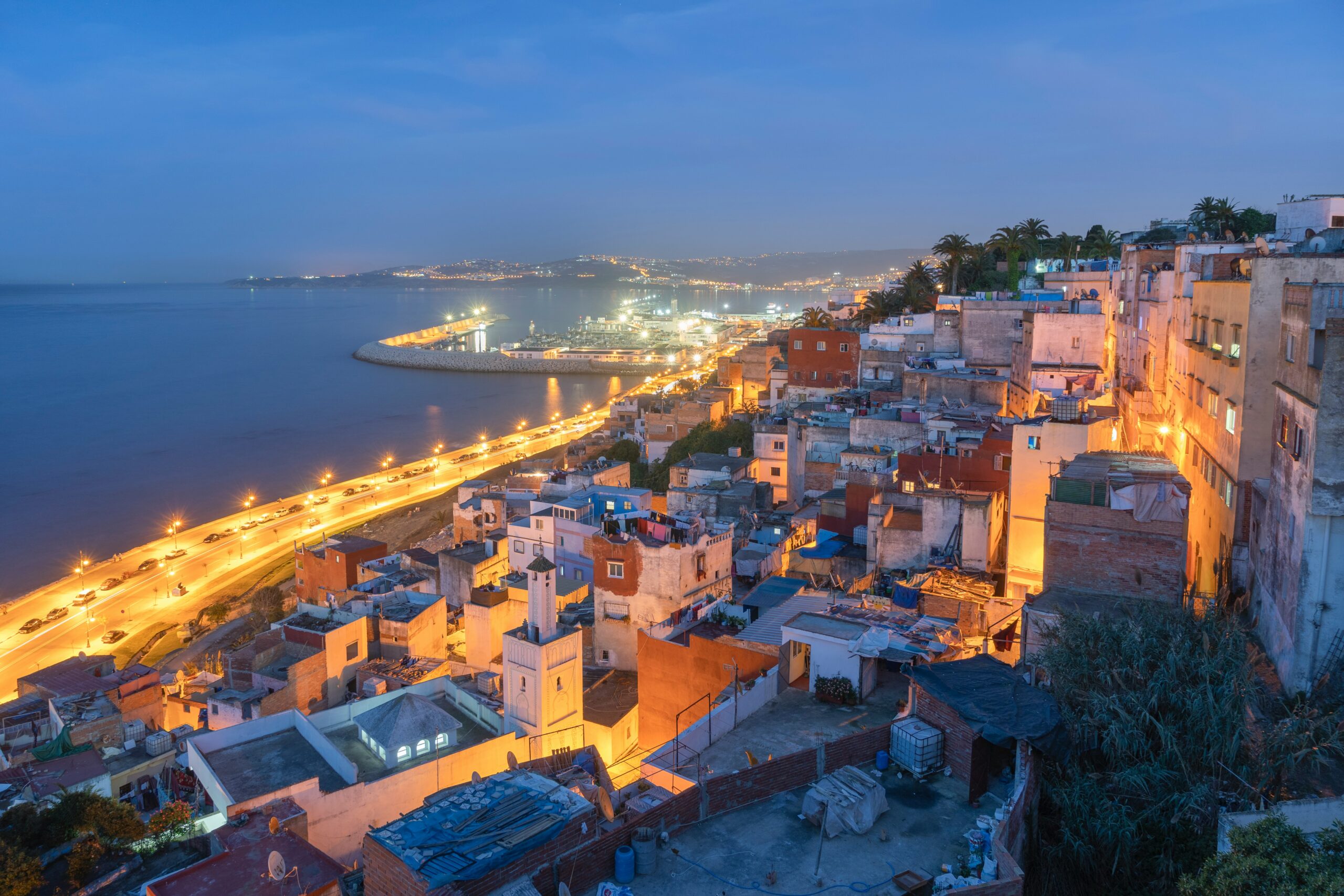
Tangier, Morocco
Where the Mediterranean meets the Atlantic, Tangier stands as Morocco's legendary gateway between Europe and Africa. A city of literary ghosts, whitewashed alleys, international flair, and sweeping coastal views — Tangier is unlike anywhere else in the country.
Why Visit Tangier?
Perched on the northern tip of Morocco where the Mediterranean spills into the Atlantic, the city has captivated writers, artists, and travelers for centuries — and it still does.
Gateway Between Continents
Just 14 kilometers from Spain, it sits at the crossroads of Europe and Africa with ferries crossing the Strait of Gibraltar daily.
Literary Heritage
Paul Bowles made it his home. The Beat Generation wrote here. Henri Matisse painted its light. The creative spirit endures.
Atlantic Coastline
From the dramatic cliffs of Cape Spartel to the windswept beaches along the Corniche, the city offers spectacular coastal scenery.
Atmospheric Medina
Whitewashed walls, blue shutters, spice-scented alleys, and hidden riads — less overwhelming than Fes or Marrakech, but equally atmospheric.
Mediterranean Elegance
Sea breezes, terraced cafés, and European-influenced architecture give the city a refined charm distinct from the imperial cities.
Relaxed Pace
Compared to Morocco's busier cities, the city moves at a gentler pace — a place to linger over mint tea and watch the harbor.
Tangier at a Glance
The essentials before you dive into planning.
Top Things to Do in Tangier
Ten stops that capture what makes this city unlike anywhere else in Morocco.
Kasbah Museum
Perched at the highest point of the medina, this 17th-century palace houses the Musée de Tangier with stunning tiled courtyards and panoramic views over the Strait of Gibraltar.
The Medina
Wander the whitewashed alleys where Moroccan, Andalusian, and Mediterranean influences blend into something entirely unique. Less intense than the medinas of Fes or Marrakech.
Grand Socco
The city's main square and the gateway between the medina and the modern ville nouvelle. A beautiful mosaic fountain sits at its center, surrounded by cafés and daily local life.
Petit Socco
This tiny, charming square was once the beating heart of the city's international era — where Paul Bowles held court and Burroughs wrote. Today it's lined with cafés and golden afternoon light.
Cape Spartel
The northwestern tip of Africa, where the Atlantic meets the Mediterranean. The lighthouse stands on dramatic cliffs above churning waters, and the coastal drive to reach it is spectacular.
Hercules Cave
Just south of Cape Spartel, these sea caves feature a famous opening shaped like an inverted map of Africa. According to legend, this is where the mythical Hercules rested.
The Corniche
An elegant waterfront promenade stretching along the coast with views of the Strait of Gibraltar. Lined with cafés, restaurants, and beaches — perfect for a long seaside walk.
American Legation Museum
The first American public property outside the United States, gifted by Sultan Mohammed III in 1777. Today it houses art, historical exhibits, and a library dedicated to Paul Bowles.
Café Hafa
This iconic clifftop café has been serving mint tea since 1921. Built on terraces cascading toward the strait, it's where the Beats once gathered and where you can still watch ships cross between continents.
The Marina
A modern waterfront development with yachts, restaurants, and shops overlooking the harbor. A pleasant contrast to the medina and a good spot for an evening stroll or waterfront dinner.
Centuries of History at Every Turn
The city's history stretches back over 2,500 years. Phoenicians, Romans, Arabs, Portuguese, Spanish, British, and French have all left their mark on this strategically vital city. The result is a cultural palimpsest unlike anywhere else in Morocco.
The Kasbah, perched above the medina, was the seat of power for centuries. Below it, the narrow lanes of the old city still follow patterns laid down in medieval times. And just outside the walls, European-style boulevards tell the story of the city's international zone era.
Local Experiences Worth Having
The best way to experience the city is to slow down. Sit in a medina café for an hour. Watch the fishermen at the port. Let the city come to you.
- Medina wandering — get lost in the whitewashed alleyways at your own pace
- Café Hafa at sunset — mint tea on the clifftop terraces overlooking the strait
- Souk shopping — handcrafted leather goods, ceramics, and woven textiles
- Grand Socco café culture — watch the afternoon bustle from a terrace table
- Blue-and-white architecture — photograph the distinctive Casbah quarter
- Gnawa music — attend a traditional performance in a medina venue
- Fresh seafood — grilled sardines and shrimp at the Corniche or port restaurants
Best Time to Visit
The city enjoys a Mediterranean climate — warm, dry summers and mild, wetter winters. The coastal position keeps temperatures moderate year-round.
Spring & Autumn
- March–May — arguably the best time. Wildflowers carpet the hillsides, temperatures hover around 18–22°C, and the city feels fresh and alive
- September–November — warm weather with fewer crowds and golden light, excellent for walking the medina and day trips
Summer & Winter
- June–August — warm temperatures of 25–32°C and peak tourist season. The Corniche buzzes with activity; book ahead
- December–February — mild at 12–16°C with occasional rain. Quiet streets and cozy café afternoons; pack layers
Where to Stay
From sea-view luxury hotels to intimate riads hidden in the medina, the city offers accommodation for every style and budget.
Luxury Hotels
Grand waterfront hotels with strait views, infinity pools, and world-class dining. The Intercontinental and Le Savoy are top choices for five-star comfort.
Boutique Riads
Restored traditional houses with interior courtyards, rooftop terraces, and personal service. Many feature ocean views and are steps from the Kasbah.
Mid-Range Hotels
Comfortable options in both the medina and ville nouvelle with modern amenities and good locations at reasonable rates.
Budget Stays
Clean hostels and guesthouses throughout the city. the city is one of Morocco's most affordable destinations for budget travelers.
Food & Dining
The city's culinary scene reflects its position between continents — fresh seafood, Moroccan classics, Mediterranean flavors, and French-inspired pastries.
- Fresh seafood — exceptionally fresh fish and shellfish from the Atlantic; grilled sardines and shrimp kebabs are staples
- Moroccan classics — couscous, pastilla, tanjia, and harira soup at family-run medina restaurants
- Mediterranean influences — Spanish and French traditions run deep; look for paella, tapas, and crêpes alongside Moroccan dishes
- Café culture — from the iconic Café Hafa to hidden gems in the medina, café afternoons with mint tea are a quintessential local experience
- Mint tea ritual — the tradition is performed with particular elegance here; watch the long pour from height
- Local pastries — cornes de gazelle, chebakia, and French-influenced croissants at neighborhood bakeries
Getting to Tangier
the city is one of Morocco's most accessible cities, with multiple arrival options from both within Morocco and across the Mediterranean.
- Air — Tangier Ibn Battouta Airport (TNG) receives direct flights from London, Paris, Madrid, Amsterdam, and Istanbul
- Ferry from Spain — daily ferries cross the Strait from Tarifa (1 hour), Algeciras (1.5 hours), and Gibraltar; one of the most scenic arrivals in travel
- High-speed train — the Al Boraq connects Tangier to Casablanca in just over 2 hours; fast, modern, and affordable
- Bus or car — CTM and Supratours connect to Fes, Marrakech, and other cities; rental cars offer flexibility for the northern coast
Getting Around Tangier
The medina and Kasbah are best explored on foot. Everything else fills in around them.
- Walking — the best way to explore the medina and Kasbah. The old city is compact, though the hills and steps can be demanding
- Petit taxis — abundant and affordable for trips between the medina, ville nouvelle, and Corniche. Confirm the meter is running
- Ride-hailing — apps like Careem operate in the city with fixed pricing, a convenient alternative to taxis
- Local buses — connect the main areas of the city; the cheapest option but can be confusing for visitors
Suggested Itineraries
However much time you have, here's how to spend it well.
Half Day
- Grand Socco & Petit Socco
- Medina walk & Kasbah Museum
- Lunch in a medina café
- Café Hafa for sunset tea
1 Day
- Full medina exploration
- American Legation Museum
- Corniche walk & lunch
- Cape Spartel for sunset
- Dinner at the Marina
2 Days
- Day 1: Medina, Kasbah, cafés
- Day 2: Cape Spartel & Hercules Cave
- Corniche beaches & Marina
- Souk shopping & seafood dinner
- Café Hafa at golden hour
3 Days
- Days 1 & 2 as above
- Day trip to Chefchaouen
- Or: day trip to Rabat
- Ferry day trip to Tarifa, Spain
- Relaxed medina evening
Practical Tips for Visiting Tangier
A few essential tips to help you navigate the city with confidence, from safety and etiquette to money and photography.
- Safety — generally safe for tourists. Watch for pickpockets in crowded areas, avoid unlicensed guides
- Currency — the Moroccan Dirham (MAD). ATMs are widely available; carry cash for the medina
- Tipping — 10–15% at restaurants; round up taxi fares; small tips for helpful locals
- Dress code — relatively relaxed, but cover shoulders and knees in the medina and mosques
- Etiquette — always ask before photographing people; accept tea when offered
- Weather — pack layers even in summer; coastal breezes can be cool. Sunscreen and a hat year-round
- Ferry tips — book in advance during summer; arrive 1 hour before departure
Destinations Across Morocco
From imperial cities to desert dunes and Atlantic coast — discover more of what Morocco has to offer.
Frequently Asked Questions
Is Tangier worth visiting?
Absolutely. The city offers a unique blend of Mediterranean and Moroccan culture, stunning coastal scenery, a rich literary and artistic heritage, and one of the most atmospheric medinas in the country.
How many days should I spend in Tangier?
2–3 days is ideal for most travelers. This gives you time to explore the medina, visit Cape Spartel and Hercules Cave, enjoy the cafés and Corniche, and take a day trip to Chefchaouen.
What is Tangier famous for?
Its strategic position at the Strait of Gibraltar, literary history (Paul Bowles, the Beat Generation), the Kasbah Museum, Café Hafa, Hercules Cave, Cape Spartel, and its unique blend of European and Moroccan influences.
Is Tangier safe?
Yes, the city is generally safe for tourists. Exercise normal precautions — be aware of pickpockets in crowded areas, avoid unlicensed guides, and stick to well-lit streets at night.
What is the best time to visit Tangier?
Spring (March–May) and autumn (September–November) are the best times, with mild temperatures and fewer crowds. Summer is warm and lively but busier. Winter is mild and quiet.
Can I take a ferry from Spain to Tangier?
Yes. Daily ferries operate from Tarifa (1 hour), Algeciras (1.5 hours), and Gibraltar. The crossing offers spectacular views of both continents. Book in advance during peak season.
Is Tangier walkable?
Yes, especially the medina and Kasbah areas. The ville nouvelle and Corniche are also walkable. For longer distances, petit taxis and ride-hailing services are affordable and readily available.
What are the best things to do in Tangier?
Exploring the medina and Kasbah Museum, visiting Cape Spartel and Hercules Cave, having tea at Café Hafa, walking the Corniche, visiting the American Legation Museum, and watching sunset from the Grand Socco.
Should I visit Tangier or Chefchaouen?
Visit both if you can — they're only 2.5 hours apart. The city offers coastal scenery and international history. Chefchaouen is a quieter mountain town famous for its blue-painted medina. Many travelers combine them.
Is Tangier family friendly?
Yes. The city offers beaches, caves, open spaces, and a relaxed atmosphere that works well for families. The medina is less intense than Marrakech or Fes, with plenty of outdoor activities.
How do I get from Tangier to Chefchaouen?
Chefchaouen is approximately 2.5 hours by car or shared taxi. CTM buses also operate the route. Many travelers hire a private driver for a day trip or combine both in a multi-day itinerary.
What is the food like in Tangier?
The city's food scene reflects its cross-cultural identity. Expect exceptional fresh seafood, traditional Moroccan dishes, Mediterranean-influenced cuisine, French pastries, and mint tea.
Ready to Discover Tangier?
From its clifftop cafés and ancient medina to the edge of the continent at Cape Spartel, Tangier is a city that stays with you long after you leave. Let MoroccOdyssey help you plan the rest.