Moroccan Breakfast Guide : 10 Delicious Foods You Need to Try
A Moroccan breakfast is simpler and slower than most travelers expect, built around warm bread, pancakes, olive oil and glasses of mint tea rather than a single signature dish. It’s less about one iconic plate and more about a spread of small, shared items eaten at an easy pace, often stretched out over conversation rather than rushed through before heading out the door. This guide walks through the ten foods that define a Moroccan breakfast, how they’re served across different regions, and where to find them as a traveler.
What Is a Traditional Moroccan Breakfast Like?
A traditional Moroccan breakfast leans toward bread and pancakes over eggs or cereal, built for sharing rather than individual plates. It’s a meal meant to ease into the day rather than fuel it quickly, with plenty of room for a second cup of tea before anyone gets up from the table.
Breakfast Is Usually Simple and Shared
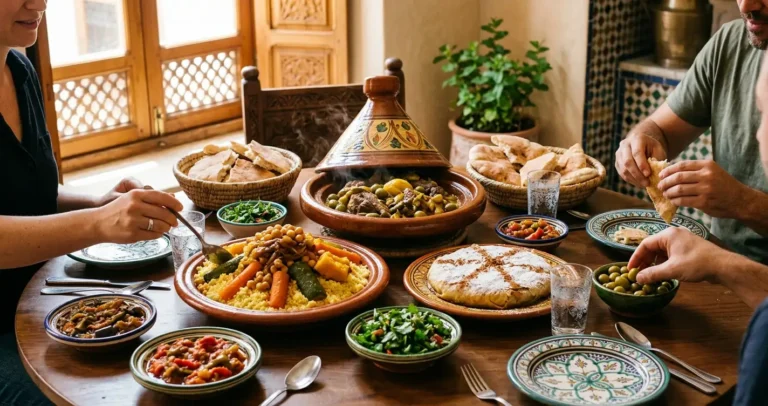
Most Moroccan breakfasts are laid out on the table together, with everyone reaching for the same plates of bread, pancakes and accompaniments rather than ordering separate dishes.
Bread, Pancakes, Olive Oil and Tea
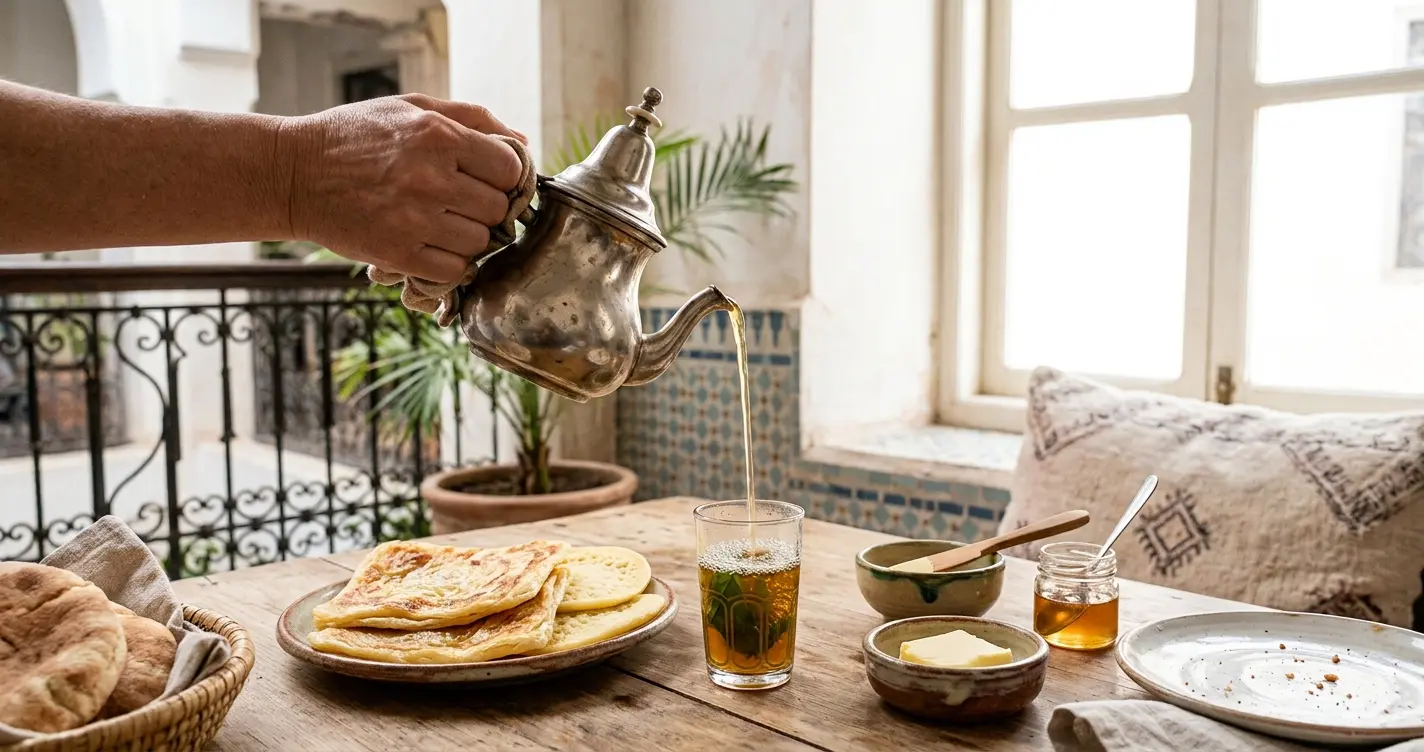
A typical spread includes khobz or msemen, olive oil, honey or amlou, and always a pot of mint tea or coffee to accompany it.
How Breakfast Changes Across Morocco
While the core items stay similar nationwide, regional touches like argan oil in the south or seafood-adjacent cafés on the coast shift the details from city to city. Even the way tea is poured or bread is baked can vary slightly depending on local custom.
Msemen
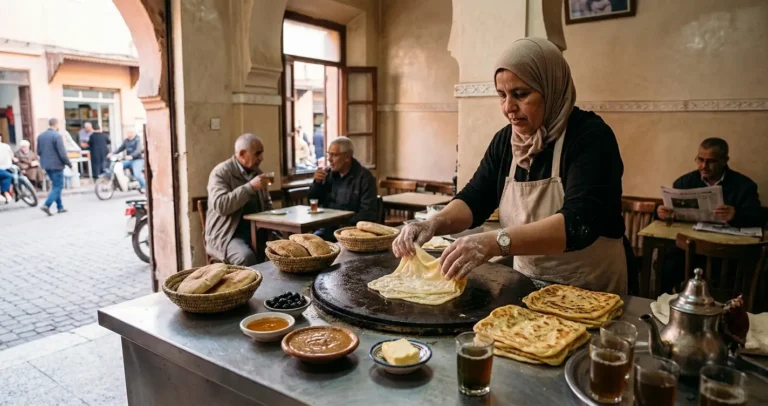
Msemen is one of the most common items on a Moroccan breakfast table, found in homes and cafés alike, and often the first thing offered to a guest.
What Is Msemen?
Msemen is a square, layered flatbread, pan-fried until crisp outside and soft within, usually prepared fresh in the morning.
How Msemen Is Served at Breakfast
It’s typically torn by hand and dipped in honey, amlou or olive oil, eaten alongside tea rather than as a standalone dish.
Sweet vs Savory Msemen
While honey and sugar are the most common toppings at breakfast, a savory version with a spiced filling is sometimes served as a heartier option, particularly among households that treat breakfast as a more substantial meal.
Baghrir
Known for its distinctive spongy texture, baghrir is a Moroccan breakfast staple loved by both children and adults.
What Is Baghrir?
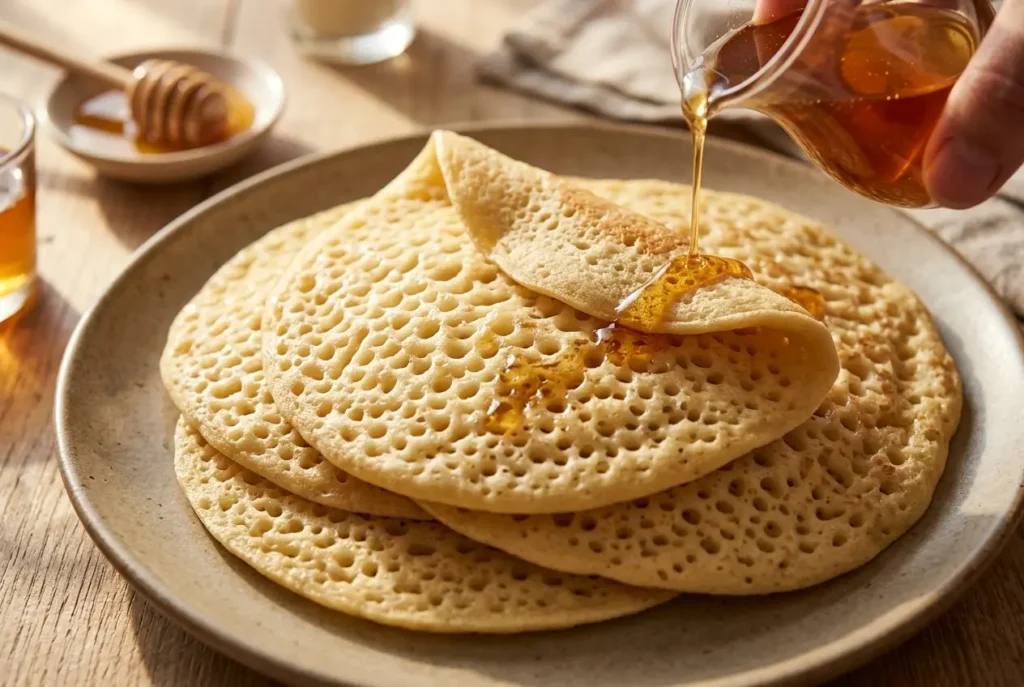
Baghrir is a soft, semolina-based pancake, cooked on one side only, giving it a smooth top and a textured underside.
The Famous “Thousand-Hole” Pancake
Baghrir is often nicknamed the “thousand-hole pancake” for the tiny bubbles that form across its surface as it cooks.
How Moroccans Serve Baghrir
It’s usually served warm, drizzled generously with honey and melted butter, making it one of the sweeter options at the breakfast table. Some households add a touch of orange blossom water to the batter for extra fragrance.
Sfenj
Sfenj brings a fried, doughnut-like option into the Moroccan breakfast rotation, popular with both children and adults heading out for the day.
What Is Sfenj?
Sfenj is a ring-shaped, deep-fried dough, light and airy, typically sold plain or lightly sugared.
Why It Is Popular in the Morning
Its low cost and simple preparation make sfenj a common grab-and-go breakfast, especially for those heading to work or school.
Where to Find Fresh Sfenj
Street vendors frying continuously, rather than reheating earlier batches, are the best sign of a fresh, properly crisp sfenj. Buying it still warm, wrapped in paper, is the most common way locals pick it up on their way to work.
Harcha
Harcha adds a denser, semolina-based option to the range of Moroccan breakfast breads, appealing to those who want something a bit more filling.
What Is Harcha?
Harcha is a pan-fried semolina bread with a slightly gritty texture, closer to a thick griddle cake than a traditional loaf.
How It Is Traditionally Served
It’s usually sliced and served warm, often alongside the same honey, butter or cheese used with other breakfast breads.
Harcha With Honey, Butter or Cheese
Its slightly savory, buttery flavor pairs particularly well with soft cheese, making it a popular alternative for those who prefer breakfast less sweet. Some cafés also serve it with a drizzle of honey for a middle ground between sweet and savory.
Moroccan Bread
Bread underpins nearly every Moroccan breakfast, whether as a base for toppings or eaten plain with tea, and it’s rarely absent from the table.
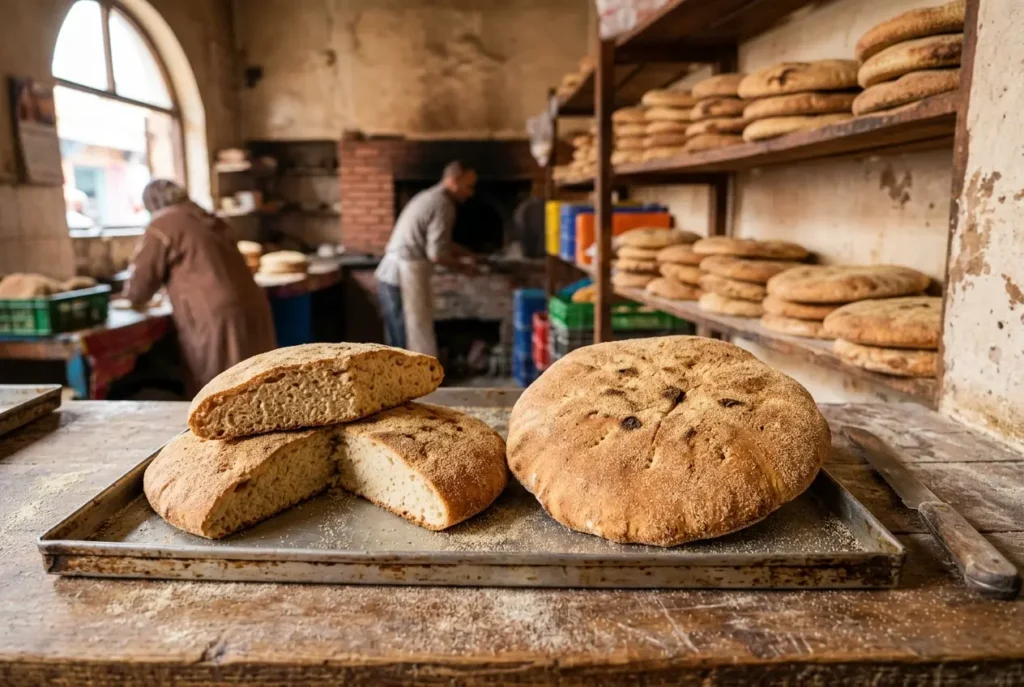
Khobz
Khobz is the everyday round Moroccan bread, found at nearly every meal and central to breakfast as well, usually baked fresh each morning at a neighborhood oven.
Batbout
Batbout is a soft, pocketed flatbread, cooked on a griddle rather than baked, often split open for fillings like cheese or honey.
Bread With Olive Oil and Other Accompaniments
Bread is frequently dipped simply in olive oil, or paired with honey, cheese or amlou depending on the household. It’s rarely eaten entirely plain, since some form of topping is almost always on the table.
Amlou
Amlou is a distinctly Moroccan spread that sets the country’s breakfast apart from its neighbors, and travelers who try it once often seek it out again for the rest of their trip.
What Is Amlou?
Amlou is a thick paste made from roasted almonds, argan oil and honey, with a nutty, slightly sweet flavor.
Almonds, Argan Oil and Honey
The combination of ground almonds, pressed argan oil and honey gives amlou its dense, spreadable texture and rich taste, closer in consistency to a thick nut butter than a runny spread.
How Moroccans Eat Amlou for Breakfast
Amlou is typically spread on bread or used as a dip for msemen, making it one of the more indulgent breakfast options. A small jar is often kept on the table specifically for this purpose.
Moroccan Olive Oil, Olives and Cheese
Beyond bread and pancakes, a Moroccan breakfast often includes a handful of simple savory accompaniments, adding balance to the sweeter items on the table.
Moroccan Olive Oil
High-quality olive oil is a breakfast staple, often drizzled directly over bread rather than saved only for cooking, and many families take pride in sourcing it from a trusted local press.
Olives at the Breakfast Table
Olives sometimes appear alongside bread and oil, adding a briny contrast to the sweeter items on the table, particularly in households that lean more savory in the morning.
Fresh Cheese and Other Simple Accompaniments
Soft, mild cheese is a common addition, particularly paired with harcha or plain bread for a more savory breakfast. Fresh fruit sometimes rounds out the table as well, especially in warmer months.
Moroccan Mint Tea
Mint tea is as central to Moroccan breakfast as the food itself, present at nearly every table regardless of region or household.
Why Mint Tea Is Part of Breakfast
Mint tea accompanies almost every Moroccan meal, and breakfast is no exception, often served before and throughout the meal rather than only at the end.
How Moroccan Tea Is Prepared
The tea combines green tea, fresh mint and sugar, poured from height to create a light foam on top, a small flourish that’s often part of the appeal.
Tea With Bread and Moroccan Pancakes
Tea is typically sipped alongside bread or pancakes rather than as a separate course, tying the whole breakfast together. Refills are common, and it’s normal for a single pot to be poured several times over the course of the meal.
Eggs in a Moroccan Breakfast
Eggs appear at breakfast in Morocco, though less centrally than bread or pancakes, and are more often treated as an addition than the main event.
Fried and Scrambled Eggs
Simple fried or scrambled eggs are common, particularly at cafés and among younger Moroccans looking for a heartier option, often paired with a side of olives or bread.
Eggs With Khobz and Olive Oil
Eggs are often eaten with khobz and a drizzle of olive oil rather than on their own, turning a simple fried egg into a more filling plate.
Simple Breakfasts in Local Cafés
Local cafés frequently offer a fried egg alongside bread and tea as a quick, affordable breakfast option for regulars. It’s a common sight to see workers stopping in for exactly this combination before starting their day.
What Do Moroccans Actually Eat for Breakfast?
Beyond the individual dishes, it helps to picture how a real Moroccan breakfast comes together day to day, since the theory and the daily reality don’t always match perfectly.
A Typical Home Breakfast
At home, breakfast usually means fresh bread or msemen, olive oil, honey or amlou, and a pot of tea shared around the table.
Breakfast at a Moroccan Café
Cafés typically offer a similar spread, sometimes with the addition of eggs or a simple pastry alongside coffee.
What You Might Find at a Riad
Riads often present a more elaborate version, combining several breads, pancakes, jams, fruit and both tea and coffee. Some also add a small pastry or seasonal fruit plate to round things out further.
How Breakfast Changes From City to City
While the essentials stay consistent, local specialties and available ingredients shift the details slightly depending on the region.
Moroccan Breakfast in Different Regions
A Moroccan breakfast can look a little different depending on where in the country you are, shaped by local ingredients and long-standing regional habits.
Marrakech
Marrakech’s cafés often lean toward a fuller spread, with msemen, baghrir and eggs commonly offered together, reflecting the city’s busy tourism scene and demand for heartier morning options.
Fes
Fes tends toward more traditional, refined breakfasts, often featuring homemade bread and pastries alongside tea, in keeping with the city’s broader reputation for careful, time-honored cooking.
Casablanca
As Morocco’s largest city, Casablanca offers a mix of traditional breakfasts and more modern café-style options, catering to both longtime residents and a growing international crowd.
Northern Morocco
Northern cities show a touch of Spanish influence, with bread and pastries sometimes echoing nearby Mediterranean tastes, a reminder of the region’s close historic ties across the strait.
Southern Morocco and the Draa Region
In the south, argan oil and amlou feature more heavily, reflecting the region’s proximity to argan-producing areas and the local tradition of pairing bread with these rich, nutty spreads.
The Best Moroccan Breakfast Foods for Travelers
With so many options, it helps to know where to start based on what you’re in the mood for on a given morning.
For a Sweet Breakfast
Baghrir with honey and butter is the clearest choice for a sweeter Moroccan breakfast, especially if you enjoy the contrast between the pancake’s spongy texture and a generous drizzle of honey.
For a Savory Breakfast
Harcha with cheese, or bread with olive oil and olives, makes for a more savory start to the day, a good option if you’d rather skip the sweeter pancakes altogether.
For a Quick Breakfast
Sfenj or msemen from a street stall offers a fast, affordable option for travelers on the move, ideal for mornings when you’re heading straight out to sightsee.
For a Traditional Moroccan Breakfast Experience
A full spread at a riad, combining several breads, amlou and tea, gives the fullest sense of a traditional Moroccan breakfast, particularly if it’s your first time trying most of these dishes together.
Where to Eat Breakfast in Morocco
Breakfast is easy to find across Morocco, from simple cafés to full riad spreads, whether you’re in a big city or a smaller town.
Local Cafés
Neighborhood cafés are the most common option, typically serving bread, tea and sometimes eggs at an affordable price, and often doubling as a gathering spot for regulars each morning.
Medina Bakeries and Food Stalls
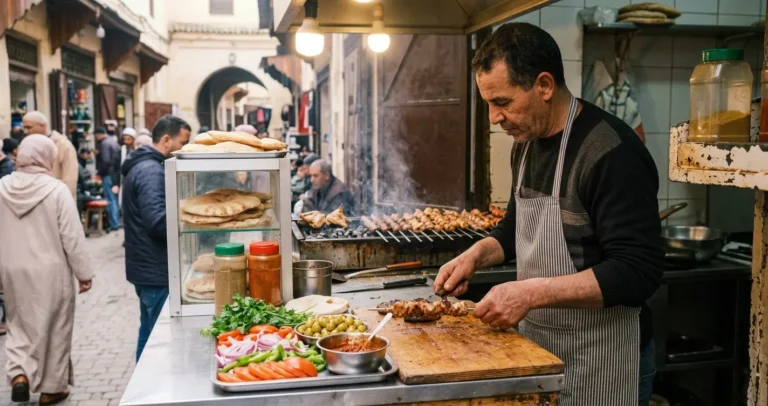
Bakeries and stalls within the medina often sell fresh msemen, sfenj and bread early in the morning, and many locals stop by on foot rather than sitting down at a café.
Riads and Guesthouses
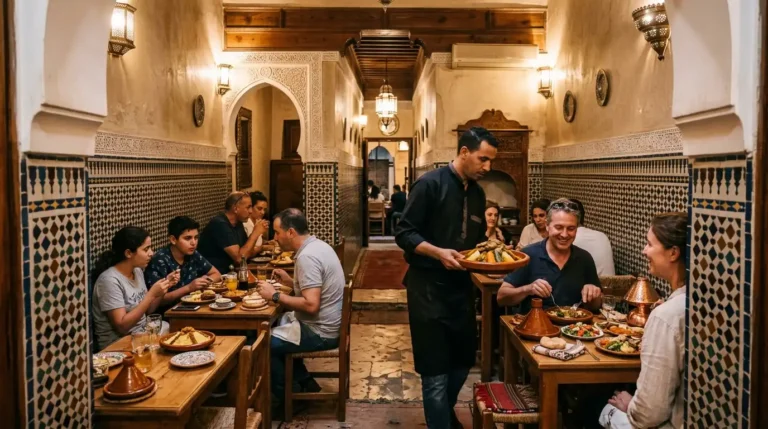
Riads frequently include breakfast with a stay, often presenting a more generous spread than a typical café.
Breakfast Markets and Neighborhood Spots
Some neighborhoods have dedicated morning markets where several vendors sell different breakfast items side by side, making it easy to piece together a full spread from more than one stall.
How Much Does Breakfast Cost in Morocco?
Breakfast remains one of the more affordable meals throughout a Morocco trip, whether you’re eating at a local café or picking something up from a street stall.
Local Café Breakfasts
A simple breakfast of bread, tea and perhaps an egg at a local café is typically inexpensive, making it an easy daily habit rather than an occasional treat.
Riad and Hotel Breakfasts
Riad and hotel breakfasts cost more, but are often included in the room rate rather than charged separately, which can make them better value than they first appear.
Street Breakfasts
Buying msemen or sfenj directly from a street vendor is usually the cheapest way to eat breakfast in Morocco, often costing barely more than a cup of coffee back home.
Moroccan Breakfast Etiquette
A few etiquette points make sharing a Moroccan breakfast easier as a guest, particularly if you’re eating with a local family for the first time.
Eating Bread With Your Hands
Bread is generally torn and eaten by hand rather than cut with a knife, and it’s normal to see everyone at the table doing the same.
Sharing Food
Breakfast dishes are typically shared from the same plate rather than divided into individual portions, so it’s worth waiting to see how others at the table approach it first.
Using Bread Instead of Cutlery
Bread often doubles as a utensil, used to scoop honey, amlou or oil rather than a spoon, which is part of why it’s kept within easy reach throughout the meal.
Moroccan Tea Etiquette
Accepting a cup of tea when offered is considered polite, even if you only take a small sip, since declining outright can come across as impolite in a hospitality-driven culture.
Frequently Asked Questions About Moroccan Breakfast
What is a traditional Moroccan breakfast?
A traditional Moroccan breakfast typically includes bread or msemen, olive oil, honey or amlou, and mint tea, all shared from the same table. It’s a simpler, slower meal than lunch or dinner, built around a handful of staple items rather than a single signature dish. Depending on the household, baghrir, harcha or eggs may also appear, but bread and tea remain the constants across nearly every Moroccan breakfast table. Even in households that eat differently the rest of the day, this basic structure tends to stay remarkably consistent.
What do Moroccans eat for breakfast?
Moroccans commonly eat bread, msemen or baghrir, paired with olive oil, honey, amlou or cheese, alongside mint tea or coffee. Breakfast is generally lighter than the midday meal, with more substantial eating saved for lunch. Cafés often add a fried egg for those wanting something heartier, but the base of a Moroccan breakfast stays largely bread- and pancake-focused across the country. Weekends and holidays sometimes bring a slightly larger spread, with an extra pastry or two added to the table.
Is Moroccan breakfast sweet or savory?
Moroccan breakfast includes both sweet and savory elements, often served side by side on the same table. Baghrir and sfenj lean sweet, typically served with honey, while harcha with cheese or bread with olive oil and olives offer a more savory option. Most people mix both, rather than choosing strictly one style, making Moroccan breakfast fairly balanced overall.
What is the most popular Moroccan breakfast?
Msemen is among the most popular items in a Moroccan breakfast, found in homes, cafés and street stalls nationwide. Baghrir is a close second, particularly popular for its distinctive texture and sweet honey topping. Together with bread, olive oil and mint tea, these items form the core of what most people picture as a typical Moroccan breakfast.
What are Moroccan pancakes called?
Moroccan pancakes are most commonly known as baghrir, recognizable by the small holes across their surface, earning it the nickname “thousand-hole pancake.” Msemen is sometimes loosely grouped with pancakes as well, though it’s technically a layered flatbread rather than a batter-based pancake. Both are common at breakfast, usually served warm with honey or butter.
Is Moroccan breakfast vegetarian?
Moroccan breakfast is largely vegetarian by default, built around bread, pancakes, olive oil, honey and amlou rather than meat. Eggs, which some vegetarians eat and others avoid, are the main animal product commonly found at breakfast. Overall, vegetarian travelers should have little difficulty finding suitable options at a typical Moroccan breakfast table.
What should I order for breakfast in Morocco?
For a well-rounded first Moroccan breakfast, ordering msemen or baghrir alongside mint tea gives a solid introduction to the meal. Adding amlou or a fried egg rounds things out for a heartier option. At a café, simply asking for “the Moroccan breakfast” often prompts a small assorted platter covering several of these staples at once, which is usually the easiest way to sample more than one item without having to order everything separately.
Is breakfast included at Moroccan riads?
Breakfast is commonly included in the room rate at most Moroccan riads, though it’s worth confirming at booking since this varies by property. Riad breakfasts tend to be more generous than a typical café, often including several breads, pancakes, jams and both tea and coffee. It’s one of the more reliable ways to sample a full Moroccan breakfast spread in one sitting, and many riads take particular pride in presenting it well.
Final Thoughts: Start Your Day the Moroccan Way
A Moroccan breakfast rewards travelers who slow down and share the table rather than rushing through a single dish. Between warm msemen, honey-soaked baghrir and a properly poured glass of mint tea, it’s a meal built for lingering rather than speed. Trying a few different items across your trip, from a simple café bread and tea to a fuller riad spread, gives the clearest sense of how Moroccans actually start their day. By the end of your trip, you may find yourself missing that first glass of mint tea more than any single dish on the table.