10 Delicious Moroccan Dishes (2026): A Food Lover’s Guide
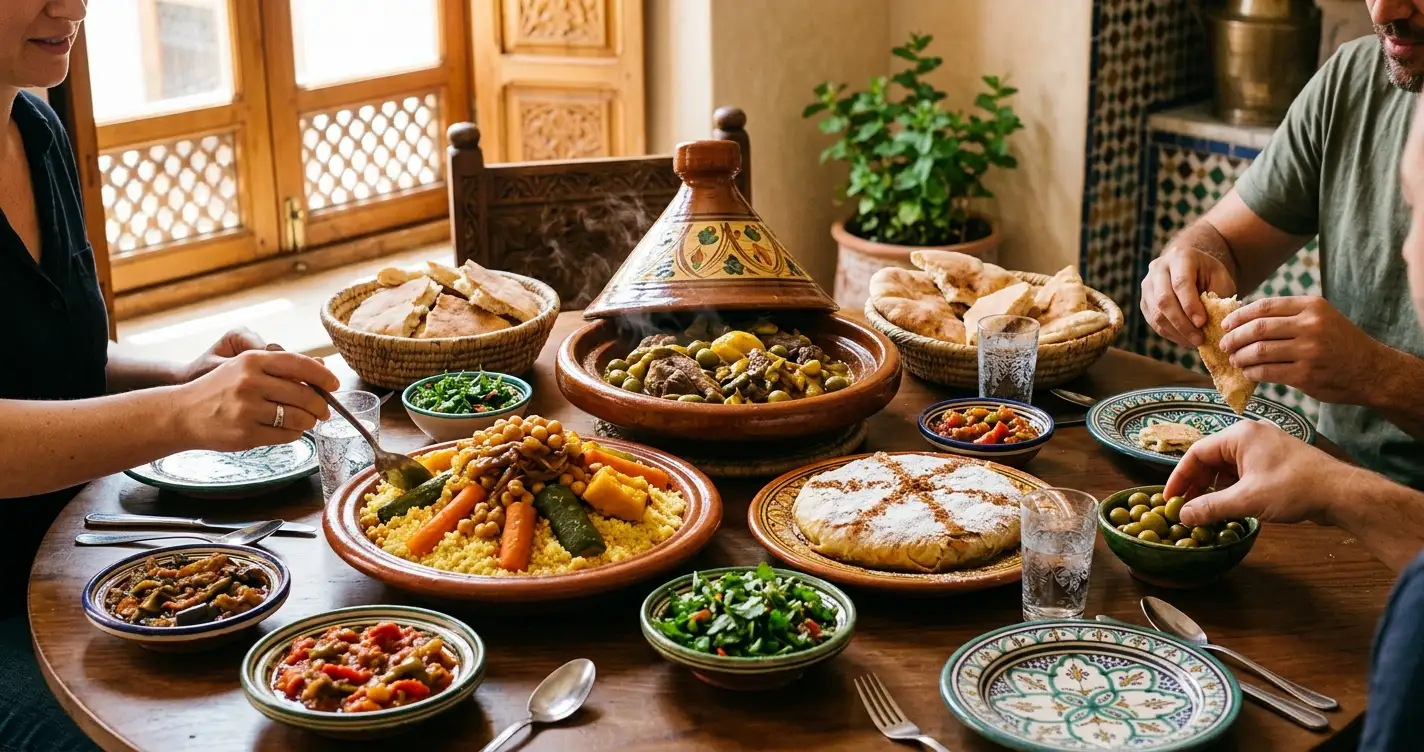
Morocco’s cuisine is one of the most rewarding parts of any trip through the country, shaped by centuries of trade, migration and regional tradition. From slow-simmered tagines to sweet, syrup-soaked pastries, these Moroccan dishes tell the story of the country as clearly as its architecture or landscapes. Meals here are rarely rushed, built instead around shared platters, layered spice work and recipes passed down through generations of home cooks. This guide walks through the ten Moroccan dishes every traveler should try, along with the regional specialties, street food and etiquette that round out the experience, so you can eat with more confidence from your first meal to your last.
Moroccan Food: What Makes It So Distinctive?
Moroccan dishes draw on a layered culinary history that few other cuisines can match, blending influence, technique and geography into something unmistakably its own.
The Influence of Arab, Amazigh, Andalusian and Jewish Traditions
Moroccan cuisine developed through centuries of exchange between Amazigh (Berber) foundations, Arab spice trade, Andalusian refinement and Jewish culinary traditions, each leaving a lasting mark on the country’s dishes.
Spices, Preserved Ingredients and Slow Cooking
Warm spices like cumin, cinnamon and saffron, along with preserved ingredients such as salted lemons, define much of Moroccan cooking, which favors slow simmering over quick preparation.
Why Moroccan Food Changes From Region to Region
Coastal cities lean on seafood, mountain regions favor hearty stews, and desert areas rely on preserved and slow-cooked ingredients, so Moroccan dishes shift noticeably depending on where you’re eating. Even a familiar dish like tagine can taste different from one city to the next, shaped by local spice blends, available produce and family recipes handed down over generations.
1. Tagine
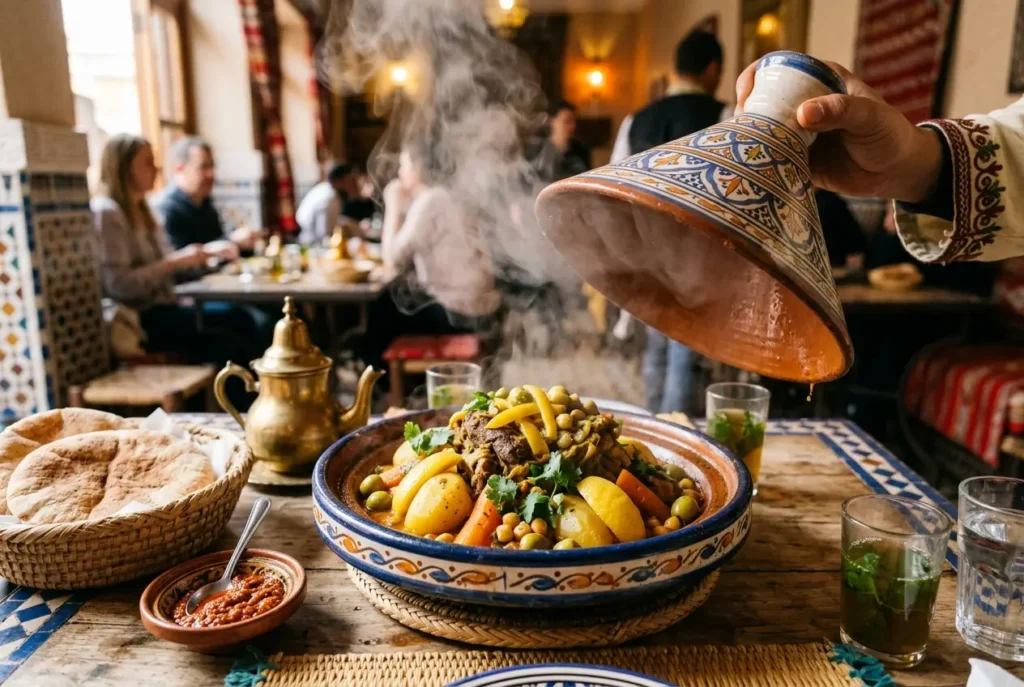
Tagine is the dish most associated with Morocco, named after the cone-shaped clay pot it’s cooked and served in.
What Is Moroccan Tagine?
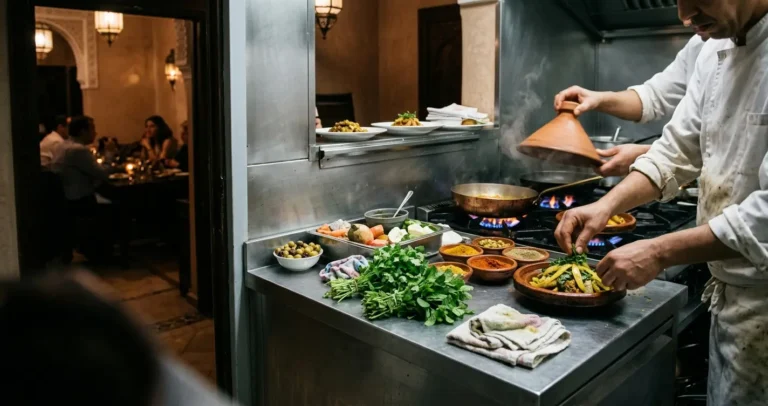
A tagine is a slow-cooked stew of meat, vegetables and spices, prepared in the pot of the same name, which traps steam and keeps the ingredients tender.
The Most Popular Tagine Varieties
Chicken, lamb, beef and vegetable tagines are the most common, each built around a distinct combination of spices, fruit or preserved ingredients.
Chicken With Preserved Lemon and Olives
This classic combination pairs tender chicken with the sharp, salty flavor of preserved lemon and briny olives, one of the most requested tagines among travelers.
Lamb, Prunes and Moroccan Spices
Lamb tagine with prunes, almonds and warm spices like cinnamon balances savory and sweet, a pairing especially popular during celebrations.
Where Travelers Should Try It
Tagine is served everywhere from riads to street stalls, but a family-run restaurant or home-cooked meal usually delivers the most authentic version. Restaurants aimed mainly at tour groups tend to simplify the spicing, so asking a guide or host for a local recommendation often leads to a more memorable plate.
2. Couscous
Couscous holds a special place in Moroccan households, far beyond its international reputation as a simple side dish.
Why Couscous Is Central to Moroccan Cuisine
Steamed semolina couscous, topped with vegetables and meat, is considered a cornerstone of Moroccan cuisine and a mark of hospitality when served to guests.
Traditional Friday Couscous
Friday couscous is a weekly tradition in many Moroccan homes, often prepared after midday prayers and shared among family.
Vegetable, Chicken and Meat Couscous
Couscous can be topped with seven vegetables, chicken, lamb or beef, with the vegetable version being the most widely available for vegetarian travelers.
How Couscous Is Traditionally Served
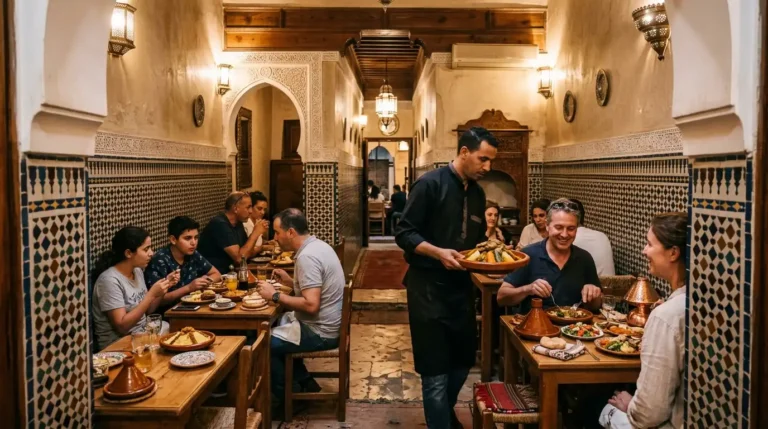
It’s typically served on a large communal platter, with the grain mounded in the center and vegetables and meat arranged on top. Diners eat from the shared dish rather than individual plates, a format that reflects the dish’s role as a gesture of hospitality as much as a meal.
3. Pastilla
Pastilla is one of Morocco’s most distinctive dishes, blending savory and sweet in a single pastry.
What Is Pastilla?
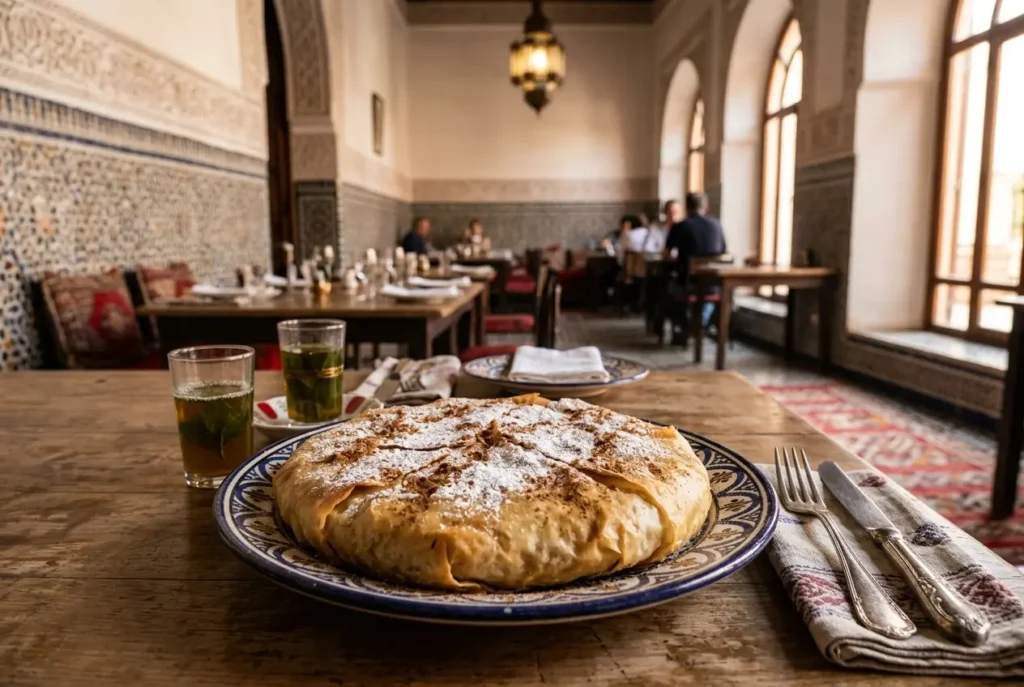
Pastilla is a thin, flaky pastry traditionally filled with pigeon or chicken, almonds and warm spices, then dusted with sugar and cinnamon.
Traditional Chicken Pastilla
Chicken pastilla is the most common version travelers will find today, replacing the traditional pigeon filling while keeping the same spiced, layered preparation.
Sweet and Savory Flavors
The combination of savory meat filling with a sugar-dusted, cinnamon-topped crust surprises many first-time visitors, but it’s a defining feature of Moroccan cuisine.
Where to Find Good Pastilla
Pastilla is often reserved for special occasions, so it’s worth seeking out at a dedicated restaurant or ordering ahead at a riad. Fes is generally regarded as the dish’s spiritual home, and restaurants there tend to prepare it with the most care and the thinnest, crispest layers.
4. Harira
Harira is Morocco’s most iconic soup, tied closely to Ramadan but enjoyed throughout the year.
What Is Harira?
Harira is a hearty tomato-based soup made with lentils, chickpeas, and often small pieces of lamb or beef, thickened with flour or eggs.
The Role of Harira During Ramadan
Harira is traditionally the first dish eaten to break the fast during Ramadan, valued for its nutrition and warmth after a full day without food.
What Goes Into a Traditional Bowl
A traditional bowl combines lentils, chickpeas, tomatoes, herbs and warm spices, often finished with a squeeze of lemon and served with dates or bread.
Harira as an Everyday Moroccan Food
Outside of Ramadan, harira remains a popular everyday soup, widely available at restaurants and street stalls across the country.
5. Rfissa
Rfissa is a comforting, less internationally known dish that holds deep significance in Moroccan home cooking.
What Makes Rfissa Different?
Rfissa combines shredded flatbread with a spiced chicken and lentil sauce, built around fenugreek, giving it a distinctive earthy flavor.
Msemen, Lentils, Chicken and Fenugreek
The dish layers torn msemen or trid bread with lentils and slow-cooked chicken, the fenugreek adding both flavor and, traditionally, nutritional value for new mothers.
Why It Is Especially Important in Moroccan Home Cooking
Rfissa is traditionally prepared for new mothers and during family celebrations, making it a dish tied closely to Moroccan domestic life rather than restaurant menus.
Where Travelers Can Try Rfissa
Because it’s less common on tourist menus, rfissa is best sought out through a home-cooking experience or a restaurant specializing in traditional Moroccan dishes.
6. Mechoui
Mechoui is Morocco’s celebratory answer to slow-roasted meat, often reserved for special gatherings.
What Is Moroccan Mechoui?
Mechoui is whole roasted lamb, seasoned simply with salt, cumin and butter, then cooked slowly until the meat falls off the bone.
Slow-Roasted Lamb
The lamb is traditionally roasted in an underground pit or clay oven for several hours, producing tender meat with a distinctive smoky flavor.
How It Is Traditionally Served
Mechoui is usually served whole or in large pieces, pulled apart by hand and eaten with bread, cumin and salt on the side.
Where to Look for Mechoui
Certain neighborhoods and specialty stalls, particularly in Marrakech, are known specifically for mechoui, making it worth seeking out rather than expecting on a general menu. Vendors typically sell it by weight, so it’s easy to order a smaller portion to try alongside other dishes.
7. Moroccan Mint Tea
No list of Moroccan dishes is complete without mint tea, a drink woven into daily life and hospitality.
Why Mint Tea Is More Than a Drink
Mint tea in Morocco functions as a gesture of welcome, commonly offered to guests, customers and visitors as a sign of hospitality.
Green Tea, Fresh Mint and Sugar
The tea combines green tea, fresh mint leaves and a notable amount of sugar, poured from height to create a light foam on top.
The Moroccan Tea Ritual
Preparing and pouring the tea is often treated as a small ritual, with the host taking pride in getting the balance of tea, mint and sugar right.
How to Order and Enjoy It
Travelers can request less sugar if preferred, and tea is typically offered multiple times throughout a visit, whether in a shop, riad or private home.
8. Moroccan Street Food
Morocco’s street food scene offers some of the most affordable and flavorful ways to sample local dishes.
Msemen
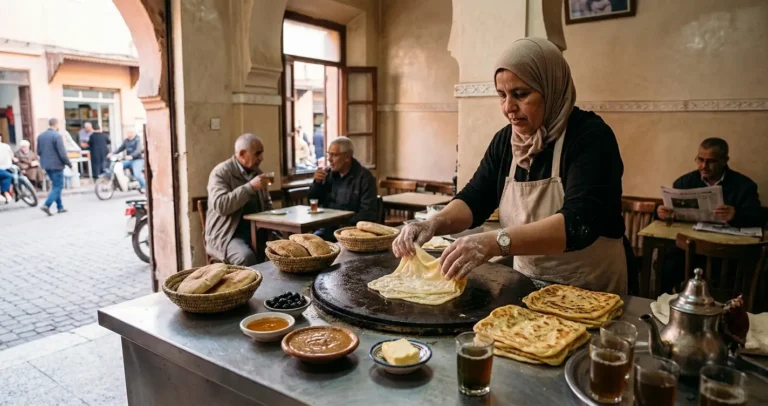
Msemen is a square, layered flatbread, often eaten plain, with honey, or alongside savory fillings, and widely available from street vendors.
Maakouda
Maakouda are fried potato cakes, sometimes spiced or stuffed, commonly sold as a snack or tucked into a sandwich with bread and harissa.
Brochettes
Grilled meat skewers, known as brochettes, are a street food staple, typically seasoned simply and grilled over charcoal.
Snail Soup
Snail soup, seasoned with a blend of aromatic spices, is a popular late-night street food, particularly in Marrakech’s Jemaa el-Fnaa square.
What to Look for When Choosing a Street Food Stall
Look for stalls with steady turnover and visible demand from locals, a reliable sign of freshness and quality. Food cooked to order in front of you, rather than sitting pre-made, is generally the safer and tastier option.
9. Zaalouk and Moroccan Salads
Moroccan meals typically open with a selection of small cooked salads, and zaalouk is the most well known.
What Is Zaalouk?
Zaalouk is a cooked salad of eggplant and tomatoes, blended with garlic, olive oil and spices into a smoky, soft texture.
Cooked Moroccan Salads
Unlike raw salads found elsewhere, most Moroccan salads are cooked, softening the vegetables and deepening their flavor with spice.
Taktouka and Other Popular Varieties
Taktouka, made from grilled peppers and tomatoes, is another common salad served alongside zaalouk and other small vegetable dishes.
Why Moroccan Salads Are Usually Served First
These salads are traditionally served at the start of a meal alongside bread, meant to be shared before the main tagine or couscous arrives.
10. Chebakia and Moroccan Pastries
Moroccan sweets round out the meal, ranging from syrup-soaked pastries to delicate almond-filled treats.
Chebakia
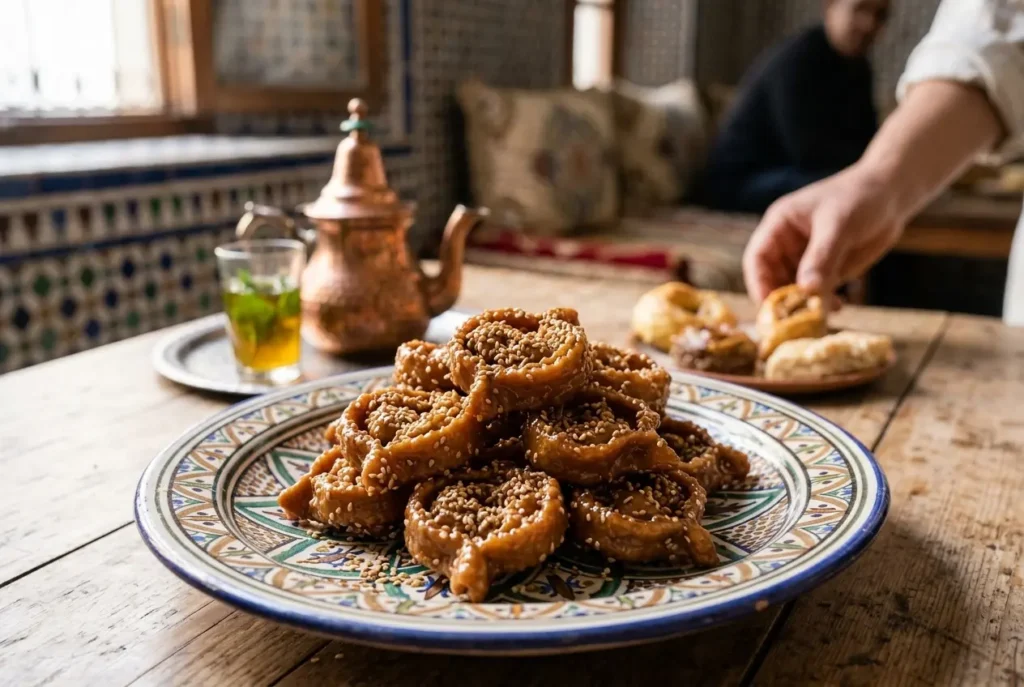
Chebakia is a sesame-flower-shaped pastry, fried and coated in honey, traditionally associated with Ramadan but enjoyed throughout the year.
Kaab el Ghazal
Kaab el Ghazal, meaning “gazelle horns,” is a crescent-shaped pastry filled with almond paste and lightly scented with orange blossom water.
Briouat and Other Sweet Pastries
Briouat are small filled pastries, either sweet with almond paste and honey or savory with meat or cheese, depending on the preparation.
Moroccan Sweets With Mint Tea
Moroccan pastries are almost always paired with mint tea, the sweetness of the tea complementing rather than competing with the desserts.
Regional Moroccan Dishes Worth Seeking Out
Moroccan dishes shift noticeably by region, and travelers moving between cities will notice real differences in flavor and specialty.
Fes and Its Refined Cuisine
Fes is often considered the culinary capital of Morocco, known for refined dishes like pastilla and elaborate, slow-cooked tagines. Many recipes served elsewhere in the country trace their roots back to Fassi households, where techniques were historically passed down with particular precision.
Marrakech and Its Street Food
Marrakech is best known for its street food scene, particularly around Jemaa el-Fnaa, along with mechoui and grilled specialties.
Essaouira and Seafood
As a coastal city, Essaouira specializes in fresh grilled and fried seafood, a contrast to the meat-heavy dishes found further inland.
Tangier and Northern Moroccan Influences
Tangier’s proximity to Spain brings subtle Mediterranean and Andalusian influences into its seafood and vegetable dishes.
The Sahara and Southern Moroccan Cuisine
Southern and desert regions rely more heavily on preserved ingredients, dates and simple, hearty stews suited to the climate and travel routes.
How to Order Moroccan Food as a Traveler
Ordering confidently makes it easier to explore Moroccan dishes beyond the most familiar options.
What to Order at a Traditional Restaurant
At a traditional restaurant, starting with a small salad or harira, followed by a tagine or couscous, gives a well-rounded sense of Moroccan home cooking.
Eating at a Moroccan Riad
Many riads offer home-style meals prepared by household cooks, often the most reliable place to try dishes like rfissa or pastilla.
Ordering Food in the Medina
In medinas, smaller family-run spots often serve more traditional dishes than restaurants geared toward tourists, though menus may be limited to what’s fresh that day.
Asking About Ingredients and Spice Levels
Moroccan food is rarely extremely spicy, but it’s reasonable to ask about ingredients, particularly with dishes involving offal, preserved lemon or unfamiliar spices.
Moroccan Food Etiquette for Travelers
A few simple etiquette points help travelers navigate shared meals with more confidence.
Eating With Bread
Bread is used to scoop food rather than eaten separately, and it’s common practice to tear off pieces rather than cut it with a knife.
Sharing Food
Many Moroccan dishes, particularly tagine and couscous, are served on a shared communal platter rather than individual plates. Diners generally eat from the section of the dish directly in front of them, rather than reaching across to other areas of the platter.
Eating With Your Hands
In more traditional settings, eating with the right hand is common practice, especially with bread-based dishes, though cutlery is generally available if preferred.
Moroccan Tea Etiquette
Accepting a cup of offered tea is considered polite, and declining outright can come across as impolite in a hospitality-driven culture.
What Moroccan Dishes Should You Try First?
With so many options, narrowing down where to start can help make the most of a short trip.
For First-Time Visitors
First-time visitors should prioritize chicken tagine with preserved lemon, couscous, and mint tea, the three dishes most representative of everyday Moroccan cuisine.
For Meat Lovers
Meat lovers should seek out mechoui and lamb tagine with prunes, two dishes that showcase Morocco’s slow-cooking traditions.
For Vegetarians
Vegetarians can enjoy vegetable couscous, zaalouk and other cooked salads, though it’s worth confirming that meat broth wasn’t used in preparation.
For Travelers Who Love Street Food
Street food fans should try msemen, maakouda and brochettes, all widely available and inexpensive across most Moroccan cities.
For Travelers Who Want Traditional Home Cooking
Travelers seeking traditional home cooking should look for rfissa and harira, dishes more closely tied to family kitchens than restaurant menus.
Frequently Asked Questions About Moroccan Food
What is the most famous Moroccan dish?
Tagine is widely considered the most famous Moroccan dish, named after the clay pot it’s cooked and served in. Its slow-cooked combination of meat, vegetables and spices has become internationally recognized as representative of Moroccan cuisine. Chicken tagine with preserved lemon and olives, along with lamb tagine with prunes, are among the most popular variations travelers encounter. While couscous holds equal cultural importance domestically, tagine remains the dish most closely associated with Morocco abroad.
What Moroccan food should I try first?
For a first taste of Moroccan cuisine, chicken tagine, couscous and mint tea offer a solid, representative introduction. These three cover the country’s approach to slow cooking, shared meals and hospitality in one sitting. From there, harira and Moroccan salads like zaalouk make good next steps, since they’re widely available and give a fuller sense of everyday Moroccan food without requiring advance planning or a special-occasion restaurant.
Is Moroccan food very spicy?
Moroccan food is generally not very spicy in the way chili-based cuisines are, relying instead on warm, aromatic spices like cumin, cinnamon and ginger rather than heat. Some dishes include harissa on the side, which travelers can add to taste. Spice levels vary by household and region, so it’s reasonable to ask if a dish is spicy before ordering, particularly at smaller, family-run restaurants.
What do Moroccans eat for breakfast?
A typical Moroccan breakfast includes bread, msemen or baghrir, along with olive oil, honey, cheese and mint tea or coffee. Amlou, a paste made from almonds, argan oil and honey, is also a common accompaniment. Breakfast tends to be lighter than lunch or dinner, with the main meal of the day usually served around midday, especially on Fridays with traditional couscous.
Is Moroccan food suitable for vegetarians?
Moroccan food offers a reasonable range of options for vegetarians, including vegetable couscous, cooked salads like zaalouk and taktouka, and various bread-based dishes. That said, meat and poultry are central to much of the cuisine, so vegetarian travelers should confirm ingredients directly, as vegetable dishes are sometimes prepared with meat broth. Requesting dishes without meat broth in advance generally isn’t a problem at most restaurants.
What should I eat in Morocco besides tagine?
Beyond tagine, couscous, pastilla, harira and rfissa all offer distinct introductions to Moroccan cuisine. Street food such as msemen, maakouda and brochettes provides an affordable, casual alternative, while mechoui suits travelers looking for a celebratory, meat-focused dish. Rounding out a meal with Moroccan salads and mint tea gives a fuller picture of the cuisine beyond its most famous export.
What Moroccan food is popular during Ramadan?
Harira is the dish most closely tied to Ramadan, traditionally eaten to break the daily fast due to its nutritional value and warmth. Dates, hard-boiled eggs and chebakia, a honey-coated sesame pastry, are also commonly served alongside it. Rfissa and other hearty, slow-cooked dishes are popular during the evening meals that follow throughout the month.
What Moroccan desserts should travelers try?
Chebakia, kaab el ghazal and briouat are among the most popular Moroccan desserts for travelers to try. Chebakia offers a honey-soaked, sesame-flavored bite, while kaab el ghazal provides a lighter, almond-based alternative. Briouat can be sweet or savory depending on preparation. All three are traditionally paired with mint tea, which balances their sweetness.
Final Thoughts: Eating Your Way Through Morocco
Trying these Moroccan dishes offers a direct way into the country’s history and daily life, from the communal ritual of shared couscous to the hospitality behind a simple glass of mint tea. Each region adds its own variations, so the same dish can taste noticeably different in Fes, Marrakech or Essaouira, and part of the pleasure of traveling through Morocco is tasting those small differences for yourself. Food here is rarely just fuel between stops; it’s often the clearest window into local life you’ll get on the trip. Before your trip, pick two or three dishes from this list you’re most curious about, and let local recommendations fill in the rest once you’re there.