Desert Adventures Morocco: The Ultimate Guide to the Sahara Experience
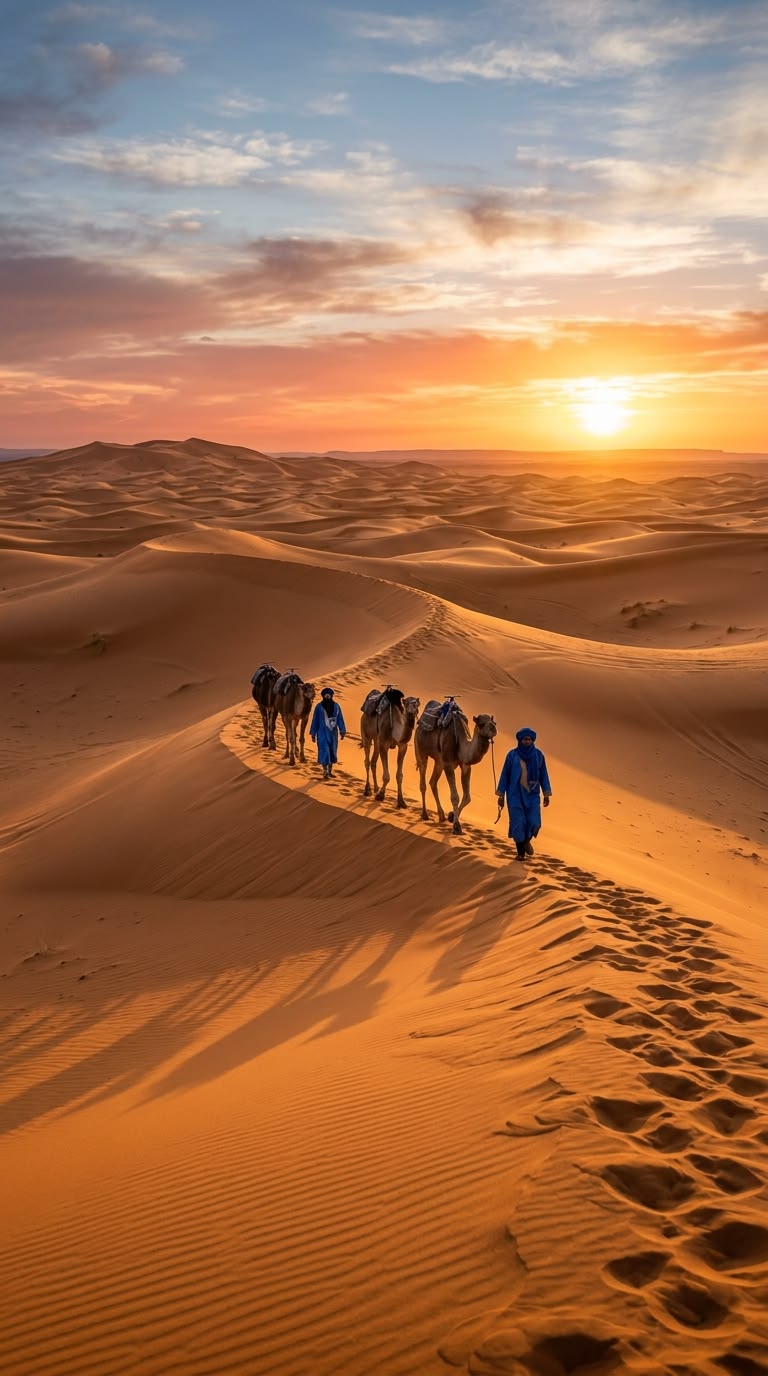
From camel caravans crossing endless dunes to luxury camps beneath a canopy of stars, Morocco's Sahara is one of the last great wild landscapes on earth. Desert Adventures Morocco offers golden light, ancient traditions and extraordinary silence like nowhere else.
Start Your Desert JourneyDesert Adventures Morocco at a Glance
The key details to help you plan your Desert Adventures Morocco experience.
Why Desert Adventures Morocco are unlike anywhere else on earth.
There are deserts on every continent, but none of them feel quite like the Sahara. In Morocco, the desert is not simply a landscape you pass through—it is a place that changes you. The silence is absolute. The light is unlike anything you have seen before. And the scale of it—wave upon wave of dunes stretching to the horizon in every direction—rewires your sense of what is possible.
Morocco's share of the Sahara is concentrated in the southeast, where the Atlas Mountains give way to an arid plateau that eventually rises into some of the tallest sand dunes in the world. The most famous of these are the Erg Chebbi dunes near Merzouga, where golden towers of sand reach heights of 150 metres and shift colour with every hour of daylight—from pale gold at noon to deep amber at sunset to a dusky rose in the twilight.
But the Sahara is not only sand. Much of Morocco's desert is reg—flat, rocky plateaus that stretch for hundreds of kilometres, dotted with acacia trees and criss-crossed by ancient caravan routes. The contrast between the rocky desert and the erg is part of what makes a Sahara journey so compelling: you move through landscapes that are constantly changing, each one more dramatic than the last.
What truly sets the Moroccan Sahara apart, however, is the human story. The desert has been home to Berber and nomadic communities for thousands of years. These are the people who built the kasbahs of the Draa Valley, who carved irrigation channels through impossible terrain, and who developed the traditions of hospitality that still define desert culture today. To share mint tea with a desert family, to sleep in a camp maintained by people whose ancestors walked these routes for centuries—this is not tourism. It is connection.
The Sahara also offers something that few destinations can match: genuine stillness. In a world that never stops moving, the desert demands that you slow down. There are no signals, no distractions, no urgency. Just the sound of wind over sand, the crackle of a campfire, and a sky so dense with stars that it feels within reach. It is, for many travellers, the most peaceful place they have ever been.
Every Morocco itinerary should include the desert—not because it is famous, but because it is transformative. Whether you choose a short overnight expedition or a multi-day crossing, the Sahara will give you something that stays with you long after you return home.
Desert experiences that define Desert Adventures Morocco.
The Sahara offers more than sightseeing. These are the moments that stay with you—the encounters, the light, the silence that makes Desert Adventures Morocco unlike anywhere else.
Camel Trekking
Trace the ancient caravan routes on camelback, swaying gently through the dunes as the desert light shifts around you. The classic Sahara experience.
Luxury Desert Camps
Berber tents with real beds, private bathrooms, and gourmet dinners under the stars. The desert in comfort without sacrificing authenticity.
Sunrise over the Dunes
Wake before dawn, climb a dune, and watch the Sahara ignite. Gold, amber, rose, violet—the colour show lasts barely twenty minutes and never repeats.
Sunset Photography
The golden hour in the Sahara is the finest natural light show on earth. Shadows stretch across the dunes and every grain of sand glows.
Stargazing
With zero light pollution, the Sahara sky reveals itself in full. The Milky Way stretches overhead, and shooting stars are not rare—they are constant.
Traditional Berber Music
Evenings in the desert often include drums, song, and stories around the fire. A living tradition passed down through generations of desert communities.
Sandboarding
Slide down towering dunes on a board. Exhilarating, surprisingly physical, and available at most desert camps near Merzouga and Zagora.
4×4 Desert Excursions
Explore the reg, hidden oases, and remote kasbahs by off-road vehicle. Cover more ground and reach landscapes most visitors never see.
Where to experience Desert Adventures Morocco.
Each desert destination offers a different character—from the towering dunes of Merzouga to the wild silence of Erg Chigaga—and guides which corners of Desert Adventures Morocco will suit you best.
Merzouga
The gateway to the Erg Chebbi dunes and Morocco's most accessible Sahara experience. Golden sand towers up to 150 metres, with luxury and traditional camps at their foot.
Erg Chebbi
The iconic dune sea near Merzouga—the closest thing to the deep Sahara most travellers will experience. Otherworldly at sunrise, unforgettable at sunset.
Zagora
A smaller, quieter desert destination with easy access from Marrakech. Ideal for overnight trips and those seeking a less crowded Sahara experience.
Erg Chigaga
Wild, remote, and rarely visited—the antidote to tourist-heavy routes. True desert solitude with dunes that rival Erg Chebbi in scale.
Desert itineraries for Desert Adventures Morocco.
Whether you have two days or two weeks, there is a desert itinerary that fits your journey.
2-Day Sahara Escape
A quick but unforgettable introduction to the desert. Drive from Marrakech through the Todra Gorge, ride camels into the dunes, sleep in a desert camp, and watch the sunrise before returning.
- Day 1: Marrakech → Ouarzazate → Todra Gorge → Merzouga
- Day 2: Sunrise → Camel trek → Return to Marrakech
3-Day Desert Adventure
The ideal balance of driving, exploring and stillness. Includes the Dades Valley, a night in a luxury camp, and time to simply be in the desert.
- Day 1: Marrakech → Ait Ben Haddou → Ouarzazate
- Day 2: Ouarzazate → Dades Valley → Merzouga
- Day 3: Desert camp → Sunrise → Return or onward to Fes
Sahara from Marrakech
The classic southern loop. A full circuit through the Atlas Mountains, the Draa Valley, the Sahara, and back—or continuing to Fes via the Ziz Valley.
- Day 1–2: Marrakech → Atlas → Ait Ben Haddou → Ouarzazate
- Day 3: Dades Valley → Todra Gorge → Merzouga
- Day 4: Desert camp → Sunrise → Onward
Sahara from Fes
A north-to-south crossing through the Middle Atlas, the cedar forests of Ifrane, and the Ziz Valley before reaching the dunes. One of Morocco's most scenic drives.
- Day 1: Fes → Ifrane → Midelt → Errachidia
- Day 2: Ziz Valley → Merzouga → Desert camp
- Day 3: Sunrise → Return to Fes or onward to Marrakech
How to plan Desert Adventures Morocco.
How many days should you stay? The minimum is an overnight—one night in a camp, sunrise the next morning. But two to three nights in the desert allow you to slow down, explore beyond the main dunes, and experience the Sahara properly rather than rushing through it.
Camel trekking vs 4×4? Both. The camel trek is the quintessential desert experience—slow, meditative, and utterly unique. The 4×4 lets you cover more ground, reach remote areas, and see the rocky desert landscape that most visitors miss. The best trips combine both.
Luxury camp vs traditional camp? Luxury camps offer real beds, private bathrooms, and fine dining. Traditional camps are simpler—shared tents, basic facilities, but an equally powerful experience. Both are run by local Berber communities. The choice depends on your comfort preferences, not the quality of the experience.
Is the Sahara suitable for children? Yes, for children aged six and older. The camel ride, the camp, the stargazing—children love the desert. Younger children may find the long drives and extreme temperatures challenging. Always check with your operator about family-specific trips.
How physically demanding is it? Not very. Camel trekking requires no fitness. Walking on sand is tiring but optional. The main challenge is the heat in summer and the early mornings for sunrise—neither of which is a physical barrier for most travellers.
Seasonal guide to Desert Adventures Morocco.
The desert is a year-round destination, but the experience of Desert Adventures Morocco changes dramatically with the seasons. For up-to-date conditions and forecasts on the road to the dunes, check the Moroccan Meteorological Service (Maroc Météo).
Spring
March–May — The ideal window for Desert Adventures Morocco. Warm days, cool nights, wildflowers in the oasis, and comfortable temperatures for camel trekking. The dunes glow gold at sunset and the desert is alive with colour.
Summer
June–August — Hot. Daytime temperatures can exceed 45°C. Early mornings and evenings are best. Summer camps operate at higher altitudes or in shaded locations. Fewer visitors, lower prices.
Autumn
September–November — The second golden window. Temperatures drop from the summer peak, the light is extraordinary, and the desert feels quiet and intimate. Perfect for photography.
Winter
December–February — Cold nights (sometimes below freezing) but warm, clear days. The starriest skies of the year. Dress warmly and you will have the desert largely to yourself.
Travel tips for Desert Adventures Morocco.
A few things we have learned from years of sending travellers into the desert.
What to Bring
- Clothing — Loose, lightweight layers for daytime; warm jacket for evening. Long sleeves protect against sun and sand.
- Footwear — Sandals for the camp, sturdy shoes for dune walking. Flip-flops are not enough.
- Hydration — Bring at least 2 litres per person for any desert excursion. Dehydration sneaks up fast in dry heat.
- Sun protection — High-SPF sunscreen, sunglasses, and a hat are non-negotiable. The desert sun is relentless.
- Photography — Bring extra batteries. Cold nights drain them quickly. A tripod is essential for astrophotography.
Before You Go
- Choose the right camp — Research whether you want luxury or traditional. Both are valid; the wrong choice can sour the experience.
- Book through local operators — The best desert camps are run by Berber families, not international agencies.
- Electronics — Most camps have no signal and no Wi-Fi. Embrace it. Bring a power bank for your phone.
- Respect communities — Ask before photographing people. The desert is their home, not a backdrop.
- Safety — Never enter the desert alone. Always travel with an experienced guide and a licensed operator.
Frequently asked questions about Desert Adventures Morocco.
Is the Sahara worth visiting?
Absolutely. The Sahara is consistently rated as the single most memorable experience travellers have in Morocco. The silence, the light, the scale of the landscape—nothing else on earth compares.
How many days do I need for a desert trip?
The minimum is an overnight trip (one night in a camp, sunrise the next morning). Two to three nights allow you to explore more deeply and experience the desert at a slower pace.
Can families with children visit the Sahara?
Yes. Children aged six and older typically love the experience—the camel ride, the campfire, the stars. Younger children may struggle with long drives and temperature extremes. Many operators offer family-specific itineraries.
Is camel trekking difficult?
No. The camels do the work. You sit and sway gently through the dunes. The ride typically lasts one to two hours and requires no fitness or experience. Most people find Desert Adventures Morocco surprisingly comfortable.
What should I pack for the desert?
Loose layers, a warm jacket for evening, sunscreen, sunglasses, a hat, and sturdy sandals or shoes. Bring a power bank for electronics and extra camera batteries. The camp provides bedding and most amenities.
Is the Sahara safe?
Yes, when visited through licensed operators with experienced guides. The desert routes are well established and the local Berber communities are welcoming. Never enter the desert alone.
Are luxury desert camps worth it?
For most travellers, yes. You get real beds, private bathrooms, and fine dining while still having an authentic desert experience. Traditional camps are simpler but equally valid. The choice depends on your comfort preferences.
Can I visit the Sahara year-round?
Yes. The best months are March to May and September to November. Summer is very hot but camps still operate. Winter is cold at night but offers clear skies and fewer visitors.
Do I need a guide for the desert?
Yes. The Sahara is a wilderness and should never be explored alone. Licensed guides know the terrain, the weather patterns, and the local communities. They are essential for both safety and the quality of Desert Adventures Morocco.
What is the difference between Merzouga and Zagora?
Merzouga offers the Erg Chebbi dunes—the tallest and most dramatic in Morocco. Zagora has smaller dunes but is closer to Marrakech and less crowded. Merzouga is the classic choice for Desert Adventures Morocco; Zagora suits shorter itineraries.
Begin Your Sahara Adventure
The desert is waiting—its dunes, its silence, its extraordinary light. Whether you are drawn to the Sahara for the first time or returning for more, Morocco will give you a journey that stays with you forever.
Explore Morocco