Imilchil Marriage Festival Guide: A Complete Guide for Visitors
High in Morocco’s Central High Atlas, near two small lakes named for a legend of doomed love, the Ait Haddidou people gather each September for one of the country’s most talked-about moussems. The Imilchil Marriage Festival draws visitors from around the world, though what it actually is turns out to be more layered than its popular nickname suggests. This guide covers the legend, the reality, and everything you need to plan a visit.
What Is the Imilchil Marriage Festival?
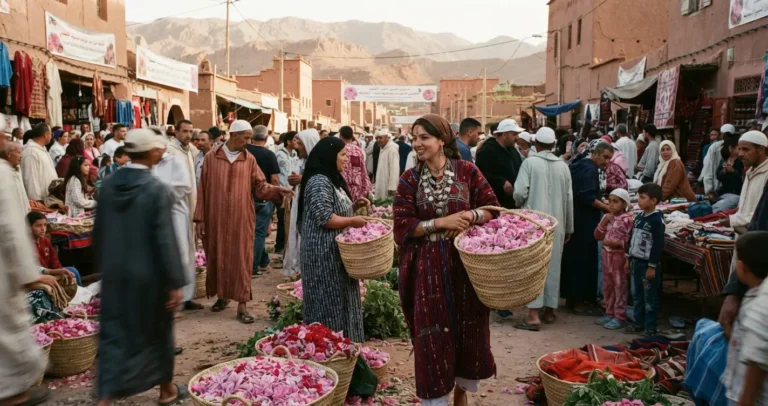
The Imilchil Marriage Festival, known locally as the Moussem des Fiançailles (Engagement Moussem), is an annual gathering of the Ait Haddidou and neighboring Amazigh tribes near the village of Imilchil in the Central High Atlas. It combines a traditional pre-winter souk, where tribes stock up on supplies before the mountains close in for winter, with music, traditional dress, and opportunities for young people and their families to arrange engagements. Its international fame rests on a romantic legend and a popular, somewhat simplified image of mass open-air weddings, though the event’s actual role in the community is more about matchmaking, trade and cultural gathering than a single day of spontaneous marriages.
The Story Behind the Imilchil Marriage Festival
The Legend of Isli and Tislit
According to local legend, a young man from the Ait Ibrahim tribe and a young woman from the Ait Yaaza tribe fell in love, but their families, torn apart by rivalry between the two tribes, forbade the match. Heartbroken, the two are said to have wept until their tears formed two lakes, Isli (“bridegroom”) and Tislit (“bride”), which still sit near Imilchil today. In some versions of the story, the lovers drown in their grief; in others, their families’ remorse leads them to establish an annual day when young people of the tribes are free to choose their own partners.
From a Local Tradition to a Cultural Festival
The moussem itself is organized around the shrine of a local saint, Sidi Mhamed Oulmaghni, and has functioned for generations as one of the last major gathering points for regional tribes before winter isolates mountain communities. Its international reputation as a “marriage festival” grew significantly as tourism expanded, layering a romantic, media-friendly narrative onto a gathering whose core purpose was always broader: trade, social contact between dispersed communities, and the beginning of matches that would often be formalized later.
Why Marriage Is Central to the Celebration
Marriage remains symbolically and practically central to the moussem, even if the popular image of open-air, on-the-spot weddings overstates what happens on any single day. Families use the gathering to meet, assess potential matches for their children, and in some cases reach informal agreements or engagements; the actual marriage contract, when it follows, is typically completed later through religious notaries (adouls) rather than during the festival crowd itself.
When Is the Imilchil Marriage Festival?
When the Festival Usually Takes Place
The festival is generally held in September, though the specific dates shift each year; some editions have started in late August. Recent editions have run for around three days, typically in the second half of September.
Why the Date Changes Each Year
The moussem’s timing is tied to the end of the summer grazing season and the approach of winter in the High Atlas, rather than a fixed calendar date, which is part of why the exact dates move somewhat from year to year.
How to Check the Current Festival Dates
Local tourism offices in the Errachidia and Midelt region, along with Moroccan cultural news sources, typically confirm each year’s dates a few weeks to a couple of months ahead of the event. Given the remoteness of Imilchil, confirming current dates before setting out is especially important here.
Where Is the Imilchil Marriage Festival Held?
Imilchil and the Central High Atlas
Imilchil is a small village in Morocco’s Central High Atlas, in Errachidia province, sitting at an altitude of roughly 2,000 to 2,200 meters. It’s a remote, sparsely populated region, reachable mainly by mountain roads.
The Moussem Grounds
The moussem itself is traditionally held not in the village center but at a dedicated gathering site around 20 km from Imilchil, where a large traditional souk is set up, one of the last major supply gatherings for regional tribes before winter.
Lakes Isli and Tislit
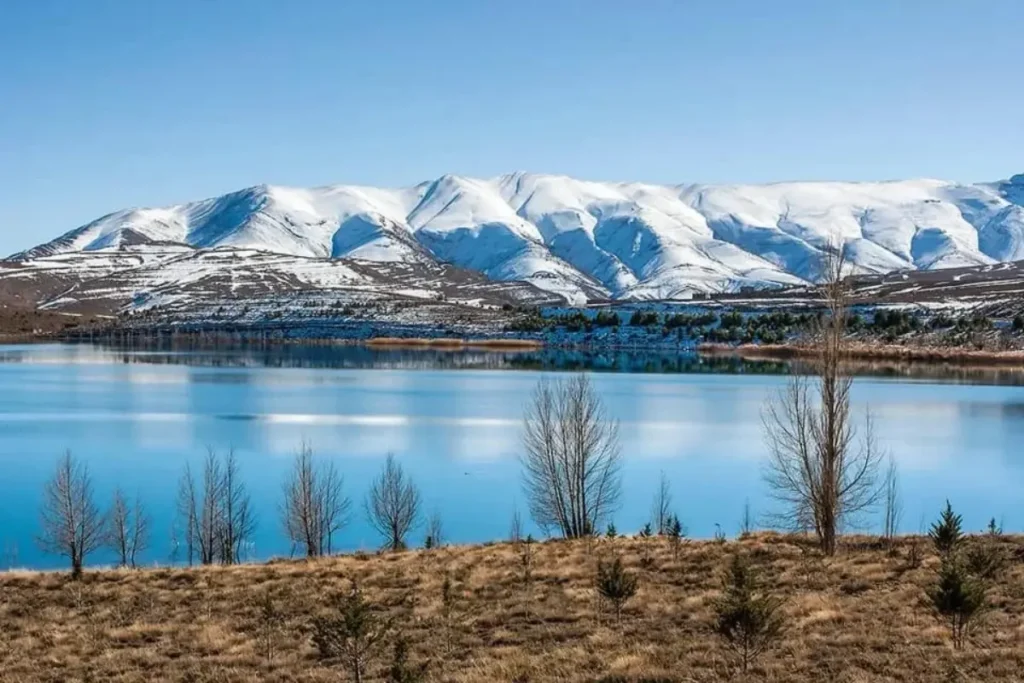
The twin lakes at the heart of the legend, Isli and Tislit, sit near Imilchil and are popular sites to visit alongside the festival, offering dramatic high-altitude scenery framed by the surrounding peaks.
What Happens During the Festival?
Traditional Marriage Ceremonies
Formal marriage contracts, when they happen around the festival period, are typically completed by religious notaries (adouls) rather than staged publicly as festival entertainment; the festival itself is better understood as the social and matchmaking occasion that can lead toward marriage, rather than a mass wedding ceremony performed for spectators.
Music, Dance and Local Celebrations
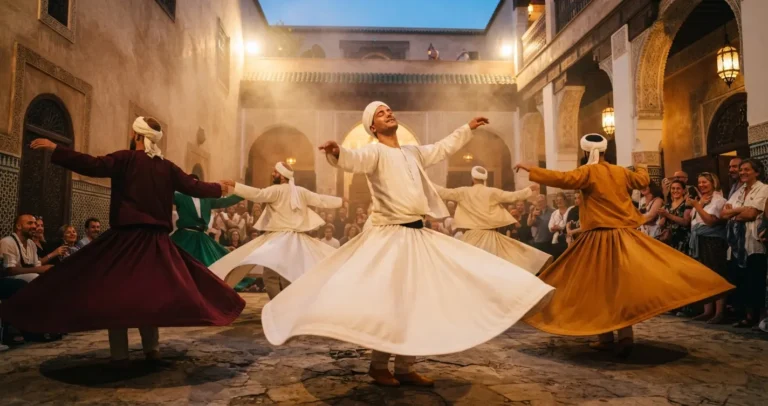
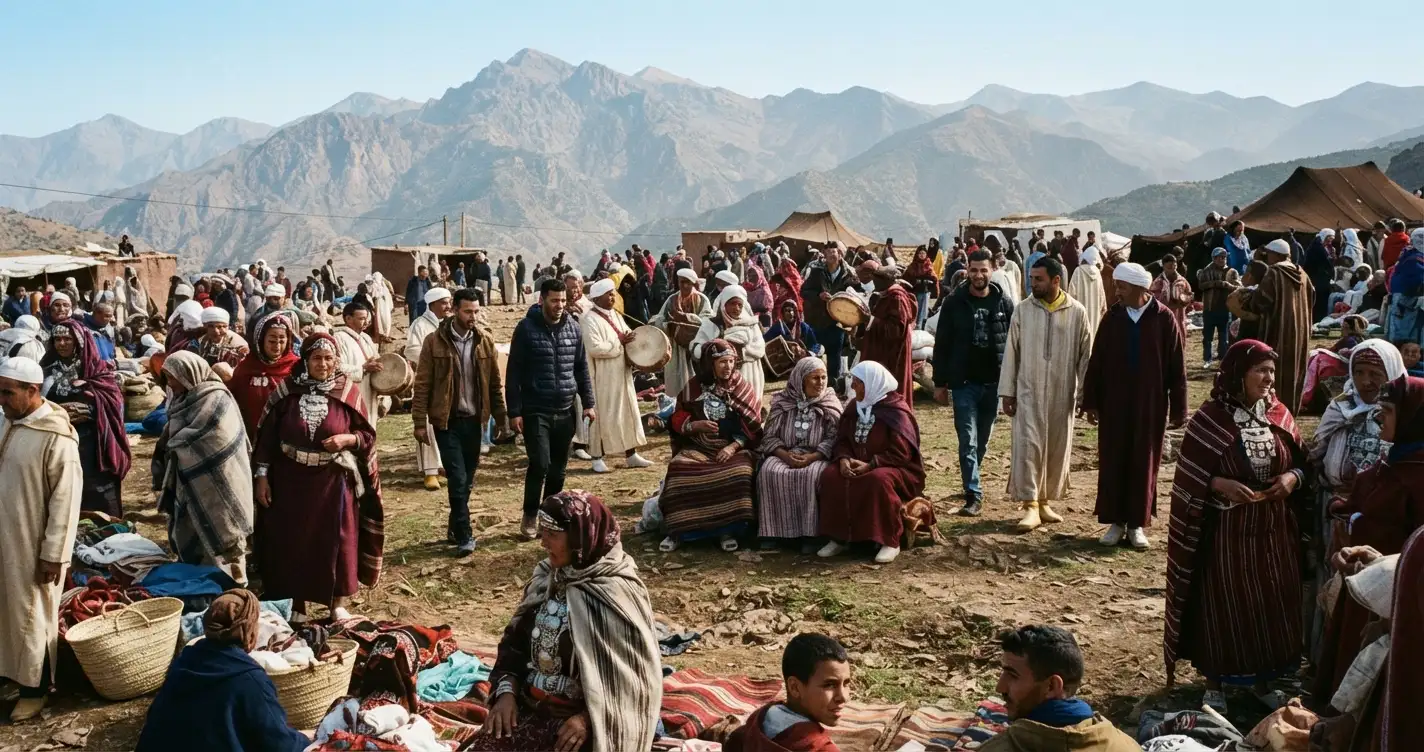
Amazigh music and group dance, including ahidous-style performances, are central to the festival atmosphere, with different tribes and villages bringing their own styles and songs to the gathering.
Traditional Clothing and Jewelry
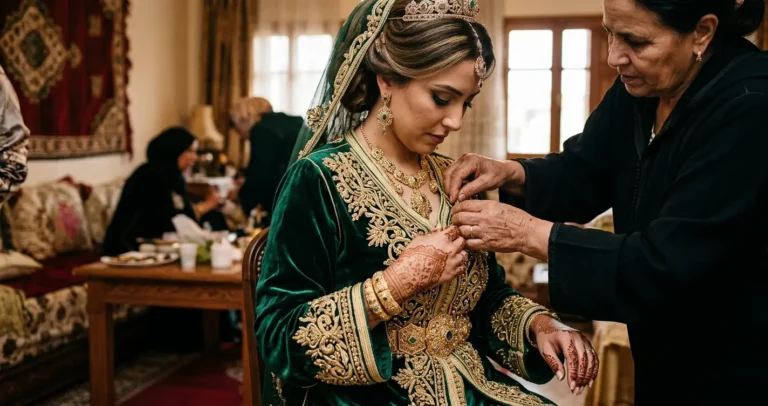
Unmarried men and women traditionally dress distinctively for the occasion, men often in white djellabas and turbans, women in elaborate traditional dress and jewelry signaling their status and region, making the crowd itself one of the festival’s visual highlights.
Markets and Local Crafts
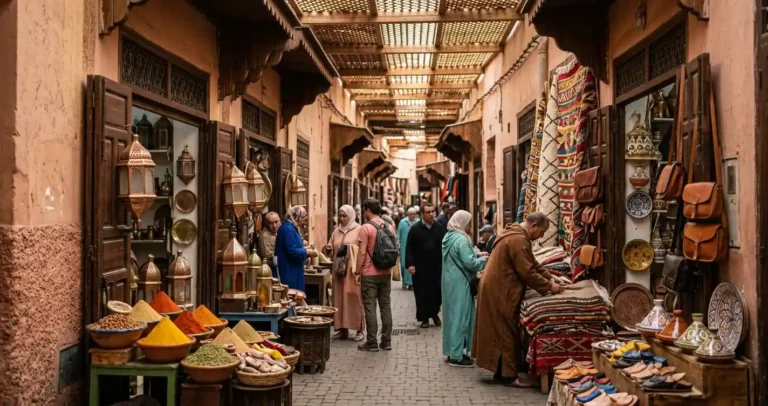
The souk that gives the moussem its practical foundation includes livestock trading, textiles, crafts and supplies for the coming winter, alongside goods aimed more directly at visitors.
The Moussem Atmosphere
Expect a blend of genuine rural commerce, family social occasion and, increasingly, tourism, with visitors and photographers now a visible part of an event that was historically a private, community-focused gathering.
Amazigh Marriage Traditions at Imilchil
Community and Family in Marriage
Marriage decisions in Ait Haddidou tradition have historically involved extended family, with parents and relatives playing an active role in identifying and approving matches, reflecting broader Amazigh family structures described in our Berber culture guide.
Traditional Courtship and Marriage Customs
The moussem gives young people and families a rare, concentrated opportunity to meet others from across a widely dispersed mountain region, a practical function that predates and underlies its romantic reputation.
The Changing Role of the Festival Today
As the festival has become known internationally and increasingly visited by tourists, some of its more private or formal marriage-related elements have moved out of public view, even as the broader celebration, music and market continue much as before.
The Amazigh Culture of the Imilchil Region
This section connects to our full Berber Culture in Morocco guide rather than repeating it in full.
Local Languages and Identity
The Ait Haddidou, like much of the Central High Atlas, are Tamazight speakers, part of the broader Amazigh linguistic landscape covered in our Berber culture guide.
Traditional Clothing
Distinctive dress, including the white attire worn by unmarried men at the festival and elaborate women’s garments and headpieces, reflects Central Atlas Amazigh style rather than the styles found in the Souss or the Rif.
Silver Jewelry and Craftsmanship
Heavy silver jewelry, often passed down through families, is a significant part of women’s festival dress here, tied to the broader Amazigh jewelry traditions covered in our culture guide.
Music and Dance
Ahidous group singing and dance, performed in rows or circles to frame drums, is central to Central Atlas Amazigh celebration and forms a major part of the festival’s atmosphere.
How to Get to Imilchil
From Marrakech
From Marrakech, reaching Imilchil typically involves a long mountain drive via Azilal and the Ait Bouguemez valley, or via Errachidia further east; either route takes the better part of a full day given the terrain.
From Ouarzazate
From Ouarzazate, Imilchil is reachable via mountain roads heading north, though this is a long, winding drive rather than a quick connection.
From Errachidia
Errachidia, the nearest larger town with more transport connections, sits roughly 100 km from Imilchil by mountain road, making it a common staging point for the final leg of the journey.
Traveling by Car
A private car or driver is the most practical way to reach Imilchil, given the region’s limited public transport options and the mountain driving involved.
Road Conditions and Mountain Travel
Roads into the Imilchil region wind through high mountain passes and can be affected by weather, especially as the festival falls right at the edge of the region’s shift toward winter conditions; a vehicle suited to mountain roads and a driver familiar with the route are worth prioritizing.
Where to Stay During the Imilchil Festival
Accommodation in Imilchil
Imilchil itself offers only basic accommodation options, reflecting its small size and remote location, so expectations should be set accordingly.
Guesthouses and Local Stays
Small guesthouses in and around Imilchil provide the most authentic, if modest, base for the festival, often run by local families.
Camping During the Festival
Camping is a common option during the festival, given how limited formal accommodation is in the area, though it requires suitable gear for cold mountain nights.
Staying in Nearby Towns
Larger towns such as Errachidia or Midelt, though a significant drive from Imilchil itself, offer more accommodation options and can work as a base for those unwilling to camp or stay in very basic village guesthouses.
What Else to See Around Imilchil
Lake Isli
Isli, the larger of the two legendary lakes, offers striking high-altitude scenery and is a popular stop for visitors combining the festival with broader sightseeing.
Lake Tislit
Tislit, the second lake in the legend, sits near Isli and is similarly worth a visit for the dramatic mountain and lake scenery central to the region’s appeal.
The High Atlas Landscapes
The wider Central High Atlas around Imilchil offers some of Morocco’s most remote and dramatic mountain scenery, appealing to travelers interested in trekking and rural life well beyond the festival dates.
Villages and Mountain Valleys
Smaller villages scattered through the surrounding valleys offer a glimpse of daily Amazigh mountain life, largely untouched by the tourism the festival itself attracts.
Practical Tips for Visiting the Imilchil Marriage Festival
Book Accommodation Early
Given how limited formal accommodation is in and around Imilchil, securing a guesthouse room or arranging camping logistics well ahead of the festival matters more here than almost anywhere else in Morocco.
Bring Cash and Essential Supplies
Imilchil’s remote location means limited services, so carry sufficient Moroccan dirhams and any essential supplies, since options to restock are minimal once you’re in the area.
Prepare for Mountain Weather
At over 2,000 meters altitude in September, expect cold nights even if daytime temperatures are mild; pack warm layers regardless of the season elsewhere in Morocco.
Dress Respectfully
Modest, respectful dress is appropriate given the festival’s strong community and religious character, centered as it is on a local saint’s shrine and traditional family customs.
Ask Before Photographing People
Always ask before photographing individuals, particularly given the festival’s history as a private community gathering that has only recently opened more to outside visitors; a respectful request is far better received than an unannounced photo.
Respect Wedding and Community Ceremonies
Any marriage-related ceremonies that do take place are typically private family and religious matters rather than public spectacle; treat them, and the broader moussem, with the same respect you’d extend to a wedding or religious event anywhere.
Is the Imilchil Marriage Festival Worth Visiting?
For travelers drawn to remote, less-visited parts of Morocco and genuine Amazigh cultural tradition, Imilchil offers something few other festivals can match: a high-altitude gathering rooted in real tribal and community practice, set against dramatic mountain lake scenery. Visitors expecting a choreographed mass-wedding spectacle, as some popular coverage suggests, may find the reality quieter and more understated, but arguably more interesting for it. The journey is long and accommodation basic, so this suits travelers prioritizing authenticity and adventure over comfort and convenience.
Frequently Asked Questions About the Imilchil Marriage Festival
When is the Imilchil Marriage Festival held?
The festival is generally held in September, though exact dates shift each year and some editions have started in late August. Recent editions have run for around three days. Because the timing follows the end of the summer grazing season rather than a fixed date, confirm current-year dates with local tourism sources before planning travel to this remote region.
Where is the Imilchil Marriage Festival?
The festival takes place near Imilchil, a small village in Morocco’s Central High Atlas, in Errachidia province, at an altitude of roughly 2,000 to 2,200 meters. The main moussem grounds sit about 20 km from the village itself, at a traditional gathering site used for the pre-winter tribal souk. The nearby twin lakes of Isli and Tislit, central to the festival’s founding legend, are a short distance away.
Is the Imilchil Marriage Festival still held today?
Yes, the moussem continues to be held annually, though its character has evolved as tourism has grown around it. The traditional souk, music, dance and community gathering remain central, while some of the more private matchmaking and marriage-related customs have become less publicly visible than popular accounts of the festival sometimes suggest.
Can tourists attend the Imilchil Marriage Festival?
Yes, the festival has become increasingly open to visitors in recent years as its international reputation has grown, though it remains, at its core, a community and family gathering rather than a tourist production. Visitors are generally welcome at the public market and music and dance performances, while more private family and religious matters, including any marriage arrangements, are not staged for onlookers.
What happens at the Imilchil Marriage Festival?
The festival combines a large traditional souk, where regional tribes trade livestock, textiles and supplies before winter, with music, group dance performances, traditional dress, and social gathering across dispersed mountain communities. Families use the occasion to meet and consider potential matches for their children, though formal marriage contracts, when they follow, are typically completed separately through religious notaries rather than performed publicly during the festival itself.
What is the story of Isli and Tislit?
According to legend, two young people from rival Ait Ibrahim and Ait Yaaza tribes fell in love but were forbidden to marry because of the feud between their families. Grief-stricken, they are said to have wept until their tears formed two lakes, now named Isli (“bridegroom”) and Tislit (“bride”), which still sit near Imilchil today. Versions of the story differ on the exact ending, with some describing the lovers’ deaths and others describing their families’ eventual remorse and the founding of an annual day when young people could choose their own partners, which the moussem is popularly said to commemorate.
How do I get to Imilchil?
Imilchil is reachable by mountain road from Marrakech (via Azilal or Errachidia), Ouarzazate, or Errachidia, with the latter, roughly 100 km away, serving as the most common staging point for the final leg of the journey. A private car or driver is strongly recommended given the limited public transport and demanding mountain roads in the region. Plan for a significant driving day regardless of your starting point, given Imilchil’s remote location.
Where should I stay during the Imilchil Festival?
Imilchil itself offers only basic guesthouse accommodation, and camping is a common alternative given how limited formal lodging is in the area. Larger towns such as Errachidia or Midelt offer more accommodation options but require a substantial additional drive to reach the festival. Whichever option you choose, book or plan well ahead, since options are genuinely limited this close to festival dates.
Can visitors photograph the festival?
Yes, generally, though always ask individuals before photographing them directly, given the festival’s roots as a private community and family gathering that has only recently opened more broadly to visitors. The market, music and dance performances are typically fine to photograph respectfully, while any private family or religious ceremonies should be treated with more caution and restraint.
What should I wear to the Imilchil Marriage Festival?
Modest, respectful clothing suits the festival’s strong community and religious character. Given the high altitude and September timing, pack warm layers for cold nights even if daytime temperatures are comfortable. Sturdy, comfortable footwear is also worth prioritizing, given the rugged mountain terrain around the festival grounds.
Final Thoughts on the Imilchil Marriage Festival
The Imilchil Marriage Festival rewards travelers who arrive curious rather than expecting a scripted spectacle. Its real character, a remote mountain community’s pre-winter gathering, wrapped in one of Morocco’s most enduring love legends, is arguably more compelling than the simplified “mass wedding” version often told about it. Confirm current dates carefully, plan for a long and demanding journey, and treat the moussem’s marriage and family customs with the same quiet respect you’d bring to any community’s most personal traditions.