Moroccan Wedding Traditions Explained (2026): Inside a Celebration That Can Last for Days
Moroccan wedding traditions turn a single ceremony into a multi-day event built around family, ritual and elaborate celebration, often stretching across an entire week in more traditional families. From the henna night to the bride’s several outfit changes, each stage carries its own symbolism and set of customs passed down through generations. Rather than one defining moment, a Moroccan wedding unfolds as a sequence of smaller rituals, each with its own guests, mood and meaning. This guide walks through the key rituals behind Moroccan wedding traditions, how they vary across the country, and what guests can expect if invited to one.
What Are Moroccan Wedding Traditions?
Moroccan wedding traditions describe the customs, ceremonies and rituals surrounding marriage celebrations across the country, shaped by centuries of Amazigh, Arab and Andalusian influence.
A Celebration Rooted in Family and Community
A Moroccan wedding is rarely just about the couple; it typically involves both extended families closely, with elders playing an active role in planning and blessing the union throughout the process. Neighbors and close family friends are often drawn into the preparations as well, particularly in smaller towns.
Why Moroccan Weddings Often Span Several Days
Traditional celebrations can extend across several days, each dedicated to a different ritual, from the henna night to the bridal hammam and finally the main reception itself. This pacing allows different circles of family and friends to take part at different stages rather than all at once.
How Traditions Vary Across Morocco
While certain elements appear nationwide, Moroccan wedding traditions differ meaningfully between urban and rural areas, and between Arab and Amazigh communities, so no single description fits every family exactly. Even within the same city, two weddings can look noticeably different depending on family background and personal preference.
Before the Wedding: Engagement and Preparation
Formal preparation typically begins well before the wedding celebrations themselves, often months in advance.
The Khotba (Asking for the Hand)
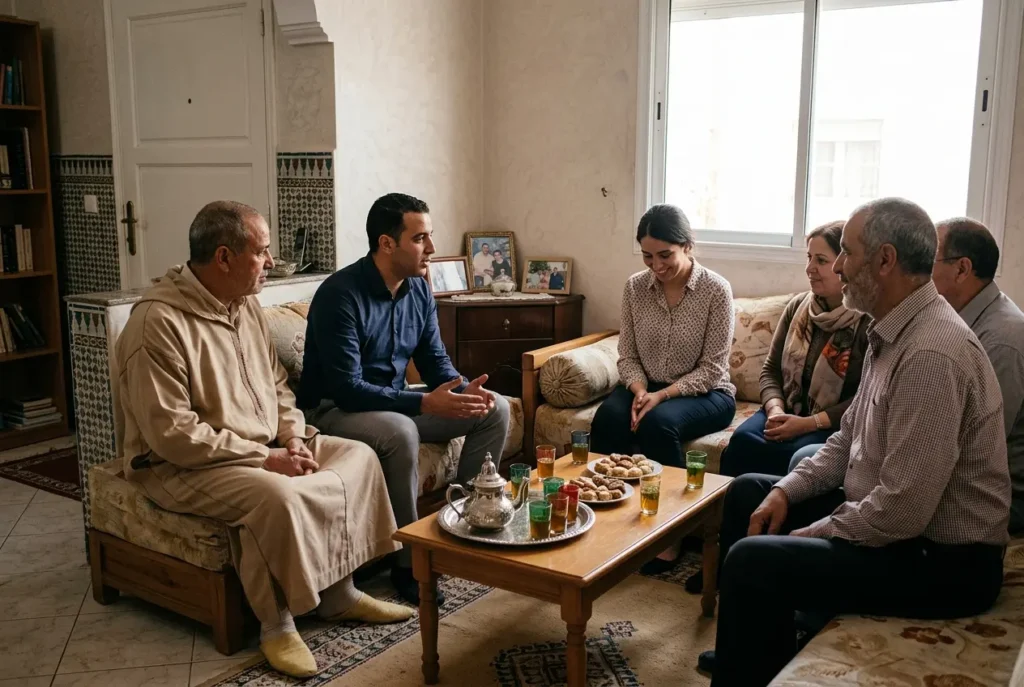
The khotba is a formal visit in which the groom’s family asks for the bride’s hand, traditionally marking the first official step toward marriage between the two families. It’s usually a small, respectful gathering rather than a large event, focused on formally starting the process.
Setting the Marriage Contract
Families typically discuss and agree on terms of the marriage contract during this period, a process that varies depending on regional custom and family preference. These early conversations often lay the groundwork for how the rest of the wedding will be organized.
Preparing the Trousseau and Household Items
In the lead-up to the wedding, the bride’s family often prepares a trousseau of household items and clothing, sometimes displayed publicly as part of the celebrations. This display, where practiced, is treated as a small celebration of its own within the broader lead-up to the wedding.
The Henna Night
The henna night is one of the most recognizable rituals within Moroccan wedding traditions, typically held a day or two before the main ceremony.
What Happens During the Henna Ceremony
A professional henna artist, or naqasha, applies intricate henna patterns to the bride’s hands and feet, often surrounded by female family members and close friends. The designs can take hours to complete, turning the evening into an extended, sociable occasion in its own right.
The Symbolism of Henna
Henna is widely associated with protection, fertility and good fortune, and its reddish stain is meant to bring blessings to the bride as she begins married life. The depth of the color is sometimes considered a small, playful indicator of good luck within the marriage ahead.
Who Attends the Henna Night
The event is traditionally a women’s gathering, filled with music, food and celebration, though customs around who attends can vary by family and region. Close female relatives from both families are often present, strengthening bonds between them before the main event.
The Hammam and Beauty Rituals
Alongside the henna night, beauty rituals form an important part of the bride’s preparation.
The Traditional Bridal Hammam
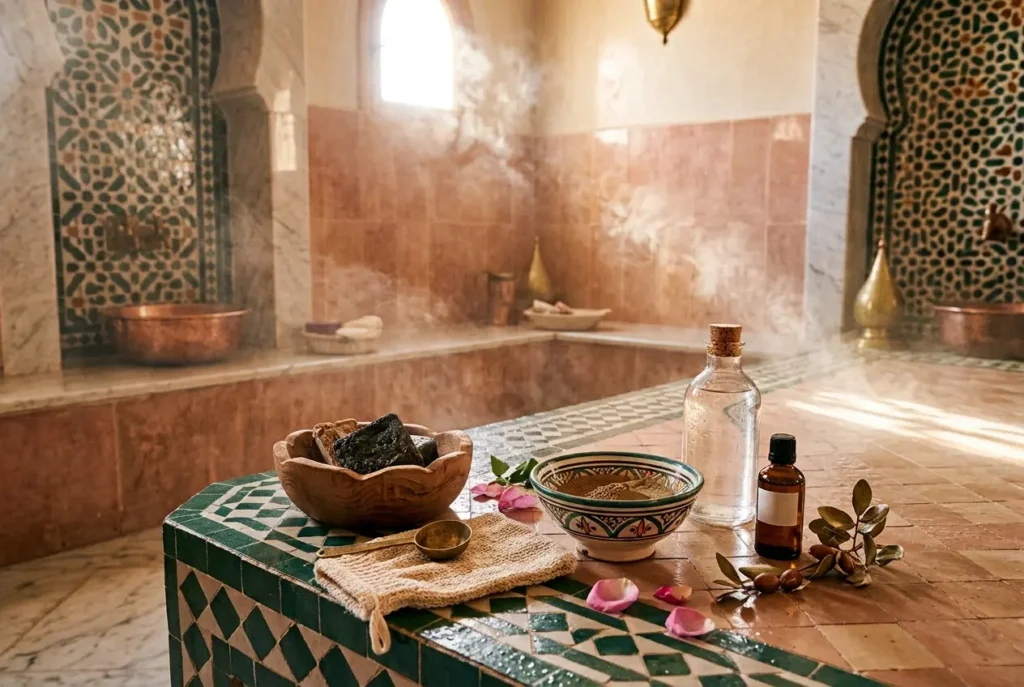
Many brides visit a hammam, either public or private, in the days before the wedding as part of a ritual cleansing and beautification process shared with close female relatives. The visit is often treated as a relaxed, celebratory outing rather than a purely practical errand.
Preparing the Bride’s Skin and Hair
Traditional treatments, including black soap, rose water and argan oil, are commonly used to prepare the bride’s skin and hair ahead of the celebrations. These products are widely used in everyday Moroccan beauty routines as well, but take on extra significance in this context.
Rituals Shared With Female Family Members
These preparations are often treated as bonding moments between the bride and the women in her family, rather than purely practical grooming steps. Mothers, sisters and aunts frequently take an active hand in helping throughout the process.
Moroccan Wedding Attire
Clothing plays a particularly visible role in Moroccan wedding traditions, especially for the bride.
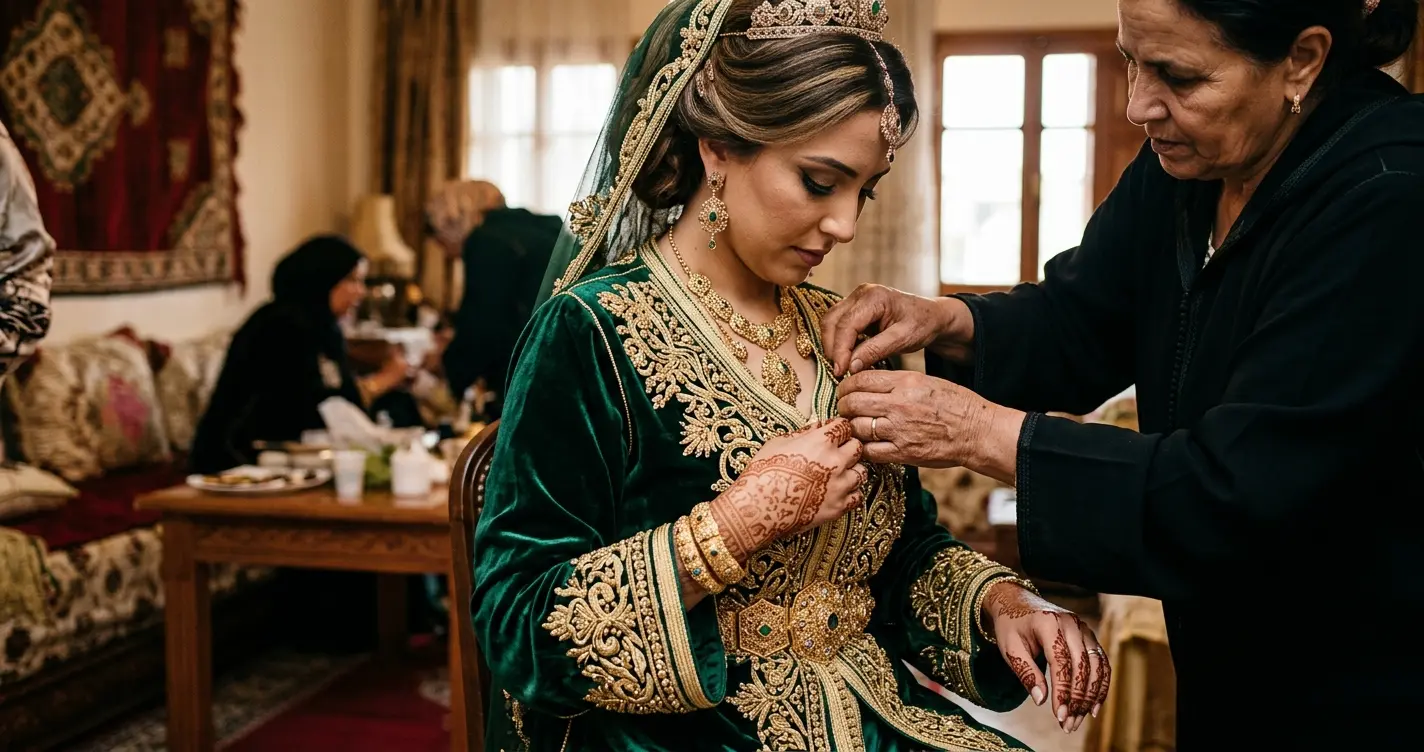
The Bride’s Multiple Outfit Changes
Brides traditionally change outfits several times throughout the celebration, each representing a different regional style, from Fassi to Amazigh dress, showcasing Morocco’s cultural diversity within a single event. Some celebrations include seven or more outfit changes, each accompanied by its own jewelry and headpiece.
The Amaria and Being Carried on a Traditional Chair
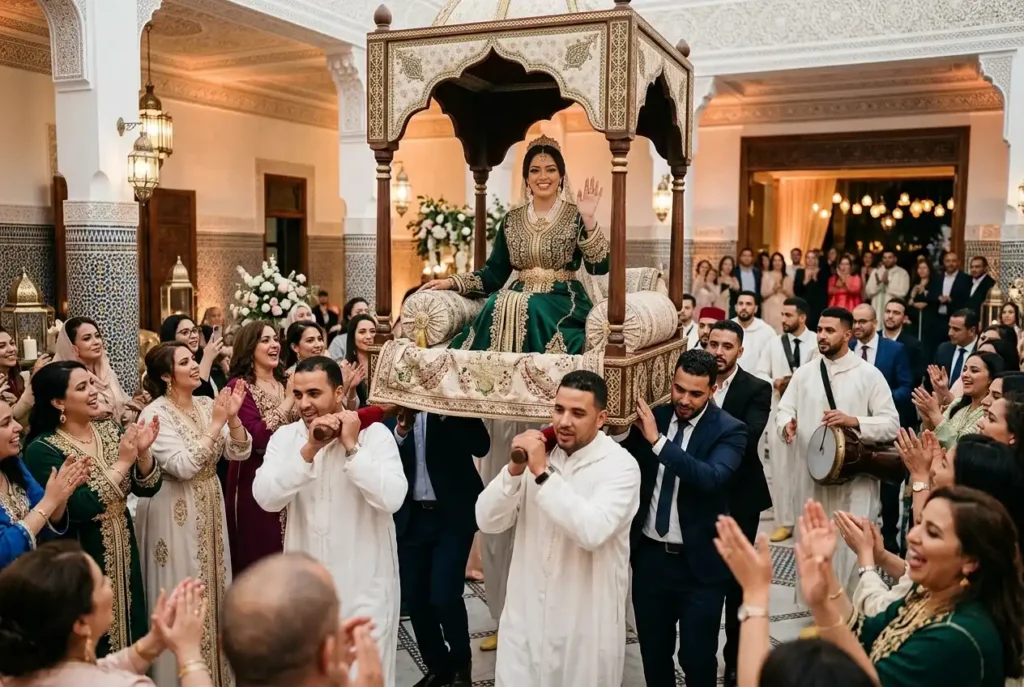
At some point during the celebration, the bride is often carried above the crowd on a decorated chair or platform known as an amaria, accompanied by music and celebratory dancing. This moment is typically one of the most photographed and anticipated parts of the entire evening.
Traditional Groom’s Attire
The groom typically wears a traditional djellaba or formal Moroccan outfit for at least part of the celebration, sometimes paired with a red fez depending on the region. Many grooms also change into a more Western-style suit for later parts of the reception.
The Wedding Day Ceremony
The core ceremony itself is comparatively brief compared to the surrounding celebrations.
Signing the Marriage Contract
The marriage becomes official when both parties sign the marriage contract, typically witnessed by family members and formalized according to Moroccan family law. This step is often handled with relatively little fanfare compared to the celebrations that follow it.
The Role of the Adoul
An adoul, a notary authorized to handle marriage contracts, is generally present to oversee the legal aspects of the union alongside the families. Their involvement ensures the marriage is properly documented according to Moroccan legal requirements.
Religious Elements of the Ceremony
For many Moroccan families, religious elements are woven into the ceremony, though the specific practices and level of formality can vary depending on personal and regional custom. Some families keep this part brief and private, while others incorporate it more visibly into the day’s events.
The Wedding Reception and Celebration
The reception is usually the most elaborate and widely attended part of Moroccan wedding traditions.
The Grand Entrance
The couple’s entrance, often accompanied by musicians and sometimes the amaria procession, marks a highlight of the evening for many guests. Applause, song and sometimes ululation from female guests typically greet the couple as they arrive.
Traditional Moroccan Wedding Food
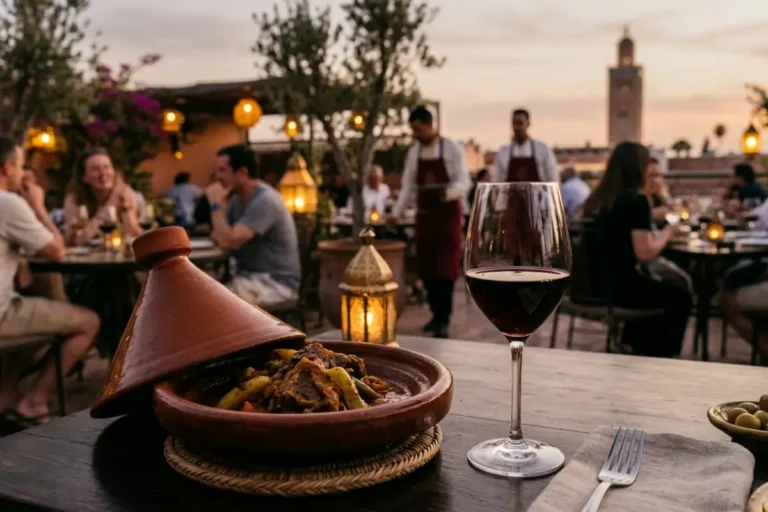
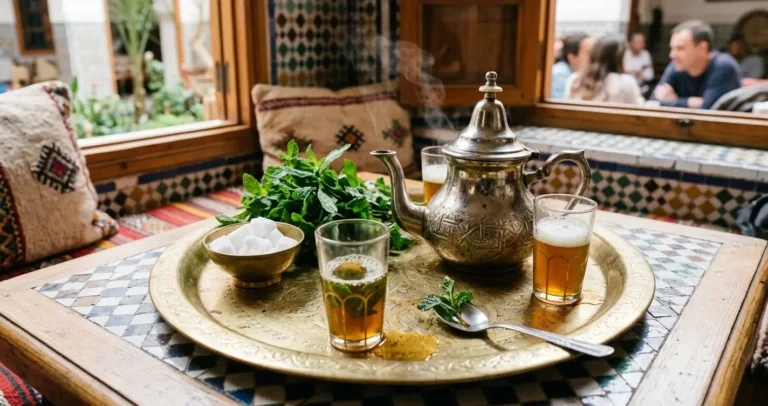
Receptions typically feature an extensive spread, including dishes like tagine, couscous and pastilla, along with pastries and mint tea served throughout the night. The sheer scale of the food is often treated as a visible expression of the families’ hospitality toward their guests.
Live Music and Dancing
Live music, often performed by traditional ensembles, accompanies most of the celebration, with dancing continuing well into the night in many families. Guests are frequently encouraged to join in rather than simply watch from the sidelines.
Moroccan Wedding Traditions and Regional Differences
Moroccan wedding traditions shift noticeably depending on the region and community involved.
Amazigh (Berber) Wedding Customs
Amazigh weddings often include distinct musical styles, dress and rituals specific to particular regions, reflecting a long, separate cultural tradition alongside broader Moroccan customs. Some mountain communities are known for multi-day communal wedding festivals involving several couples at once.
Urban Weddings in Marrakech, Fes and Casablanca
Weddings in larger cities tend toward more elaborate, professionally organized celebrations, often held in dedicated event venues rather than family homes. Wedding planners and specialized vendors have become increasingly common in these settings.
Rural and Mountain Wedding Traditions
In rural and mountain communities, weddings often remain closely tied to local customs, sometimes involving community-wide participation rather than a strictly private family affair. Neighboring villages may be invited to take part in certain shared celebrations.
The Role of Family in Moroccan Weddings
Family involvement extends well beyond attendance, shaping much of how a Moroccan wedding unfolds.
Family Involvement in Planning
Both families are typically involved in planning logistics, costs and guest lists, reflecting the broader view of marriage as a union between families rather than only individuals. Decisions are frequently made collectively rather than left solely to the couple.
The Importance of Elders’ Blessing
Receiving the blessing of elders is considered meaningful in many families, seen as a mark of respect and continuity within the family structure. This blessing is sometimes given quietly in private, and other times marked with a small, specific gesture during the celebrations.
Shared Financial Responsibility
Wedding costs are often shared between families to varying degrees, though specific arrangements differ widely depending on regional custom and family circumstances. These arrangements are typically discussed and agreed upon well before the celebrations begin.
Gifts and Symbolic Objects
Certain gifts and symbolic items appear consistently throughout Moroccan wedding traditions.
The Dowry and Its Modern Meaning
A traditional dowry, or sadaq, remains part of many marriage contracts, though its modern form and significance vary considerably between families and regions. In many cases today, it functions more as a symbolic gesture than a significant financial transaction.
Gifts Exchanged Between Families
Gifts, including clothing, jewelry and household items, are commonly exchanged between families in the lead-up to the wedding as gestures of goodwill. These exchanges often continue a pattern of mutual generosity that began during the engagement period.
Symbolic Items Used During the Ceremony
Items such as sugar cones, milk and dates sometimes appear during certain rituals, each carrying symbolic meaning tied to sweetness, purity or good fortune. Their exact use and meaning can differ from one family or region to another.
Moroccan Wedding Music and Entertainment
Music and performance are central to how Moroccan wedding traditions are experienced by guests.
Traditional Musicians and Instruments
Traditional ensembles often play instruments such as the bendir and oud, providing the soundtrack for much of the celebration and procession. Certain songs are closely associated with specific moments, such as the bride’s entrance or the amaria procession.
The Role of the Negafa
A negafa, a specialist in wedding preparation and traditional dress, typically helps the bride change outfits and manages many of the ceremonial details throughout the event. Larger weddings sometimes involve a small team working together under her direction.
Modern Additions to Wedding Entertainment
Many contemporary weddings now include DJs or modern bands alongside traditional musicians, blending older customs with more current entertainment preferences. This mix allows celebrations to appeal to guests across different generations.
How Moroccan Wedding Traditions Are Changing
Like many cultural traditions, Moroccan weddings continue to evolve alongside broader social change.
Shorter, More Modern Celebrations
Some couples now opt for shorter celebrations condensed into a day or two, particularly in busier urban areas where lengthy multi-day events are less practical. Work schedules and travel logistics for guests are often cited as reasons behind this shift.
Blending Traditional and Western Elements
It’s increasingly common to see traditional rituals like the henna night combined with more Western elements, such as a white wedding dress for part of the reception. Couples often present this blend as a way of honoring both heritage and personal taste.
What Remains Unchanged
Despite these shifts, core elements like family involvement, the henna ceremony and communal celebration remain widely preserved across most Moroccan weddings today. Even heavily modernized celebrations tend to keep at least a few of these traditional touchpoints intact.
Attending a Moroccan Wedding as a Guest
Being invited to a Moroccan wedding is a meaningful gesture, and a few basics help guests navigate the occasion.
What to Wear
Formal, modest attire is generally appropriate, and many guests choose a traditional kaftan or a smart formal outfit suited to a festive occasion. Bright colors and elegant fabrics are common choices among both local and visiting guests.
Gift-Giving Etiquette
Bringing a gift or contributing money is common practice, though expectations vary, so asking a local friend or contact beforehand is generally a safe approach. When in doubt, a modest, thoughtful gift is usually well received.
What to Expect During the Celebration
Guests should expect a long evening with multiple courses, extended music and dancing, and several distinct ceremonial moments throughout the night. Arriving with some flexibility around timing is generally a good idea, since schedules often run later than planned.
Frequently Asked Questions About Moroccan Wedding Traditions
What are the main Moroccan wedding traditions?
The main Moroccan wedding traditions include the khotba engagement visit, the henna night, a traditional bridal hammam, multiple outfit changes for the bride, and a large reception featuring music, dancing and an extensive food spread. Together, these rituals reflect the importance placed on family, symbolism and community celebration. While specific customs vary by region and family, this general structure appears across much of the country in some form, whether condensed into a shorter modern event or spread across several traditional days. Guests attending for the first time often find the sheer number of distinct moments the most memorable part of the experience.
How long do Moroccan weddings last?
Traditional Moroccan weddings can extend across several days, often including separate events for the henna night, hammam preparations and the main reception itself. Many modern couples, particularly in larger cities, now opt for shorter celebrations condensed into a single day or evening. The exact length depends heavily on family preference, budget and regional custom, so it’s difficult to generalize a single standard length across the entire country. Guests invited to a multi-day celebration should expect to attend more than one distinct event rather than a single evening.
What is the henna ceremony in a Moroccan wedding?
The henna ceremony is a pre-wedding ritual in which intricate henna patterns are applied to the bride’s hands and feet, typically by a professional henna artist. It’s usually held among close female family members and friends, accompanied by music and food in a celebratory, intimate setting. Henna itself is widely associated with protection, fertility and good fortune, making the ceremony a symbolically important step before the main wedding day. The patterns themselves can vary considerably in style depending on the artist and regional tradition.
What does the bride wear at a Moroccan wedding?
A Moroccan bride traditionally changes outfits several times throughout the celebration, often representing different regional styles from across the country. At some point, she may be carried above the guests on a decorated chair known as an amaria as part of the festivities. These outfit changes are typically managed by a negafa, a specialist who oversees the bride’s traditional dress and preparation throughout the event. Each outfit is usually paired with specific jewelry chosen to match its regional origin.
What is the role of the negafa?
A negafa is a specialist responsible for preparing the bride and managing many ceremonial details throughout a Moroccan wedding, including her multiple outfit changes. This role requires deep familiarity with traditional dress, jewelry and customs specific to different regions of Morocco. Families often hire a negafa well in advance, given the specialized knowledge and coordination the role requires throughout a multi-day celebration. Some negafas become well known locally and are booked many months ahead of a wedding date.
Can foreigners attend a Moroccan wedding?
Foreigners can attend a Moroccan wedding if invited, and doing so generally offers a memorable, immersive introduction to Moroccan wedding traditions. Guests are typically expected to dress modestly and formally, and it’s worth asking a local host about specific etiquette beforehand. Being invited to a Moroccan wedding is generally considered an honor, and guests are usually warmly welcomed into the celebration alongside family members. Language barriers are rarely an obstacle, since the shared meal and music tend to carry much of the evening.
What is Moroccan wedding food like?
Moroccan wedding food typically includes an extensive spread of traditional dishes such as tagine, couscous and pastilla, often served across multiple courses throughout the reception. Pastries and mint tea are commonly offered as well, particularly toward the later part of the evening. The scale and variety of the food often reflects the importance placed on hospitality throughout Moroccan wedding traditions more broadly, with second and third helpings frequently encouraged.
Final Thoughts on Moroccan Wedding Traditions
Moroccan wedding traditions turn a marriage into a shared celebration for two entire families rather than a single private event, layering ritual, symbolism and hospitality across several days. From the intimacy of the henna night to the spectacle of the amaria procession, each stage reflects a different facet of Moroccan culture brought together for one occasion. If you’re ever invited to one, arrive ready for a long evening, and don’t be surprised if the celebration outlasts your own energy well before it winds down.