Do You Need a Visa for Morocco? Your Easy 2026 Guide
Morocco’s border rules are simpler than most first-time visitors expect and more particular than the average travel forum thread suggests. Whether you land in Marrakech with nothing but a passport or need to file paperwork weeks in advance depends entirely on which country issued that passport.
So, do you need a visa for Morocco? For most nationalities the short answer is no. But policy shifts more often than travelers assume: Morocco has expanded its eVisa list several times since the system launched in 2022, added new nationalities to the visa-free list in 2026, and adjusted its electronic travel authorization requirements for parts of Africa within the same year. This guide walks through exactly where you stand, nationality by nationality, and what to prepare before you fly.
Do You Need a Visa for Morocco?
For most travelers, the answer to “do you need a visa for Morocco” is no. Morocco maintains one of the more open entry policies in North Africa, and citizens of roughly 70 countries — including the United States, the United Kingdom, Canada, Australia, and every European Union member state — can enter for tourism or business with nothing more than a valid passport. No application, no fee, no advance approval.
That said, “most travelers” is not “all travelers.” A significant number of nationalities, largely across Asia, Africa, and Latin America, need either a traditional visa issued by a Moroccan embassy or consulate, or an electronic visa (eVisa) applied for online in advance.
A smaller group citizens of a handful of countries that are otherwise visa-exempt — must also register a free Electronic Travel Authorization (AEVM) before departure. Knowing which category applies to you is the first thing to sort out once you’ve booked a flight.
Who Can Visit Morocco Without a Visa?
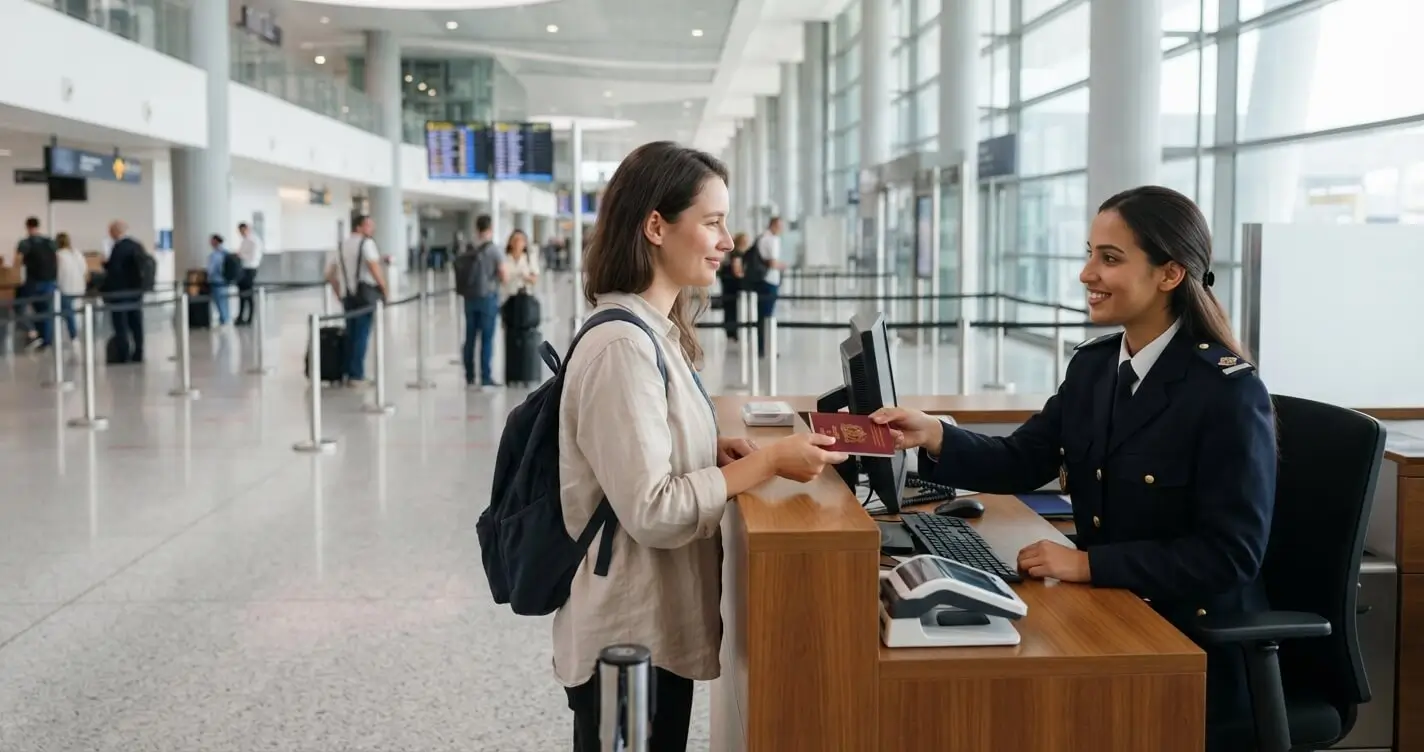
Visa-exempt travelers can walk off the plane, present their passport at border control, and receive an entry stamp granting a stay of up to 90 days. This applies to nationals of the EU and EEA, the UK, the US, Canada, Australia, New Zealand, Japan, most Gulf states, and a long list of countries across Latin America, the Caribbean, and Africa. Russia, Andorra, Monaco, San Marino, and Vatican City are also on the visa-free list.
The 90-day allowance starts on the date stamped in your passport, not on your booking date, and it applies per entry rather than per calendar year. There’s no visa-on-arrival fee to pay and no separate form to fill in beyond the standard arrival card handed out on the plane or at the border.
Which Travelers Need a Visa for Morocco?
Outside the visa-exempt list, Morocco splits everyone else into two tracks. The first is the eVisa: an online application through the government’s official portal that suits nationalities with straightforward tourism profiles.
The second is the traditional visa, applied for in person at a Moroccan embassy or consulate. This applies to nationalities that either aren’t eVisa-eligible or need additional government clearance before a visa can be issued. That second, more restrictive track currently includes travelers from Afghanistan, Iran, Iraq, Pakistan, Syria, and several other countries, where applications require sign-off from Morocco’s Ministry of Interior and take longer than a standard embassy visa.
There’s no visa-on-arrival option in Morocco for nationalities that require a visa. If your country isn’t on the visa-free list, the paperwork needs to be sorted before you board your flight.
There’s also a third, less-discussed category worth knowing about: the Electronic Travel Authorization, or AEVM. This applies to a small number of nationalities that are technically visa-exempt but still need to pre-register online before departure.
Morocco temporarily extended the AEVM requirement to several additional African nationalities during the 2025 Africa Cup of Nations, a measure that has since been lifted for most of those countries. As of 2026, the AEVM still applies to travelers from the Republic of the Congo, Ghana, Guinea, and Ecuador — visa-exempt in the sense that no traditional visa is needed, but still required to register at acces-maroc.ma at least 96 hours before departure with a passport valid for at least 90 days and a passport-style photo. The AEVM doesn’t change the standard 90-day stay allowance; it simply pre-clears the traveler with Moroccan authorities before they board.
Visa-Free Countries for Morocco
Countries Eligible for 90-Day Visa-Free Entry
The visa-free list covers all EU and EEA member states, the UK, the US, Canada, Australia, New Zealand, Japan, South Korea, and China, along with Bahrain, Kuwait, Oman, Qatar, Saudi Arabia, the UAE, and Turkey. Much of Latin America is included too Mexico, Brazil, Argentina, Chile, Peru, and Colombia among them — as is a substantial share of Africa, including Tunisia, Senegal, Côte d’Ivoire, Mali, and several others under Morocco’s African Union and Arab League ties. A few destinations get a shorter window: Hong Kong, Singapore, and the Maldives are capped at 30 days, and the Dominican Republic at 60.
Because this list is updated periodically Morocco added several nationalities to visa-free status in 2026, always cross-check your specific nationality against the official portal, acces-maroc.ma, before booking non-refundable travel.
Passport Requirements for Visa-Free Travelers
Visa exemption doesn’t mean an empty checklist. Even without a visa, you’ll need:
- A passport valid for at least six months beyond your entry date (the widely enforced standard, even where the strict legal minimum is shorter)
- At least one blank page for the entry stamp
- A passport in reasonable physical condition , water damage or torn pages can cause problems at the border
- A completed arrival card, typically distributed on the plane or available at the border
National ID cards are not accepted in place of a passport, including for EU citizens.
How to Apply for a Morocco Visa
Documents Needed for a Morocco Visa
A standard Moroccan visa application typically requires:
- A valid passport with at least six months’ validity and blank pages
- A recent passport-style photograph
- A completed application form
- Proof of accommodation (hotel booking or invitation letter)
- A return or onward flight ticket
- Proof of sufficient funds for the length of the stay
- Travel insurance, in some cases
Requirements vary slightly by nationality and by the Moroccan consulate handling your application, so it’s worth confirming the exact list with your nearest consulate before submitting.
Where to Submit Your Morocco Visa Application
Traditional visa applications go through the Moroccan embassy or consulate with jurisdiction over your place of residence, not necessarily the nearest one geographically, since consular jurisdiction is usually defined by region or state. Some nationalities can use an authorized visa service provider that submits the application on their behalf, which can simplify the process but adds a service fee on top of the visa cost.
Morocco Visa Processing Time
Processing times differ by visa type and nationality. A standard tourist visa submitted directly through a consulate generally takes seven to ten working days. Where the eVisa track is available, standard processing runs one to three business days, with an express option in some cases completing in about 24 hours. Nationalities that require Ministry of Interior clearance should expect a longer, less predictable timeline and should apply well ahead of their travel dates.
Morocco eVisa: Do You Need a Visa for Morocco Online?
Morocco launched its eVisa system in July 2022 through the official Accès Maroc portal, and by 2026 it has become the primary route for a meaningful share of visa-required travelers. The eVisa is a single-entry authorization valid for a stay of up to 30 days, with the authorization itself remaining valid for 180 days from issue, meaning you have a six-month window to use it once approved, but each visit is capped at 30 days.
Who Can Apply for a Morocco eVisa?
Eligibility falls into a few categories. A small group of nationalities — including India, Israel, Thailand, Azerbaijan, Guatemala, and Jordan ,can apply directly with just a passport and photo, no supporting documents about prior travel history required.
A larger group, which includes many Asian, African, and Latin American nationalities, can apply for the eVisa only if they already hold a valid Schengen, US, UK, or Canadian visa, or a residence permit in one of those places, the logic being that a valid visa elsewhere serves as a form of vetting. If neither condition applies to you, the traditional embassy visa remains the only route.
The safest way to check where you fall is the eligibility tool on acces-maroc.ma, which asks for your nationality and returns your exact status: visa-exempt, eVisa-eligible, AEVM-required, or visa-required.
How the Morocco eVisa Process Works
The application is entirely online. You’ll create an account on the Accès Maroc portal, fill in passport and trip details, upload a passport photo and the relevant supporting documents, and pay the processing fee. Approved eVisas arrive by email as a PDF, which you should print or save to your phone, border officers will ask to see it alongside your passport. Processing runs 24 to 72 hours for standard applications, faster for the express option where offered.
Entry Requirements Beyond the Visa
Passport Validity Requirements
Regardless of your visa status, keep your passport valid for at least six months past your planned entry date, with at least one blank page free. Airlines routinely enforce this six-month rule at check-in even where the legal minimum is lower, so it’s the standard worth planning around.
Return Ticket and Proof of Accommodation
Border officers can ask for proof of onward travel and confirmed accommodation, though in practice this is checked far more often during visa applications than at the airport itself for visa-exempt travelers. It’s still worth having a printed or digital copy of your return flight and your first few nights’ booking on hand, particularly if you’re arriving on a one-way ticket.
Proof of Sufficient Funds
Visa applications, in particular, often ask for evidence that you can cover your stay ,bank statements or equivalent proof of funds are commonly requested documents. Visa-exempt travelers are rarely asked for this at the border, but consulates reviewing visa or eVisa applications treat it as standard due diligence.
Currency Rules on Arrival
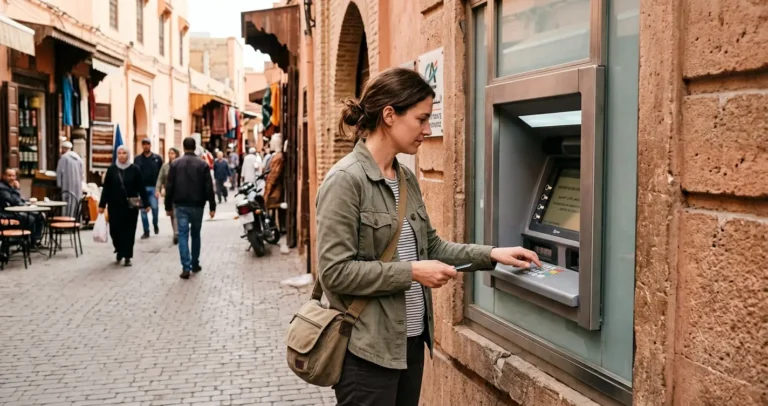
Morocco operates a closed currency, meaning the dirham (MAD) can’t be bought or sold outside the country , you exchange money after arrival and again before departing. If you’re carrying the equivalent of 15,000 MAD (roughly $1,500) or more in foreign currency, it needs to be declared on arrival. Cash amounts above 50,000 MAD require formal documentation if you intend to legally take that sum back out of the country. Neither rule affects the average traveler carrying normal spending money, but it’s worth knowing if you’re arriving with a larger sum for a property purchase, a long stay, or a business transaction.
Dual Citizenship, Children, and Transit
If you hold two passports, you can enter Morocco on whichever one gives you the more favorable status, an Indian and US dual citizen, for example, can travel visa-free on the US passport rather than applying for the Indian eVisa. Eligibility is based strictly on the passport you present, not on your country of residence, so holding a residence permit in a visa-exempt country doesn’t itself grant visa-free entry if your citizenship doesn’t.
Children and minors need their own travel authorization, a separate eVisa application with an individual passport and photo, rather than being added to a parent’s application. And if you’re only passing through Casablanca on a connecting flight without clearing immigration, most nationalities don’t need a Moroccan visa at all for that layover, though it’s worth confirming with your airline if your connection involves a long layover or a terminal change that requires an exit through passport control.
A previous Israeli entry or exit stamp in your passport rarely causes complications at the Moroccan border, though it’s occasionally noted by officials. Visa-exempt travelers can also use their standard 90-day entry to visit the Moroccan-administered parts of Western Sahara, including Laayoune and Dakhla, without any separate authorization.
Do You Need a Visa for Morocco If You’re Traveling From…
The United States
US passport holders are visa-exempt for stays of up to 90 days. No advance paperwork is required, just a passport valid at least six months beyond entry and a completed arrival card.
The United Kingdom
UK citizens enjoy the same visa-free 90-day entry as US travelers. The UK Foreign, Commonwealth & Development Office recommends the standard six-month passport validity buffer, even though Morocco’s own minimum requirement is shorter.
Canada
Canadian passport holders are visa-exempt for tourism and business stays of up to 90 days, with the same passport and documentation standards as other visa-free nationalities.
Australia
Australian citizens can enter Morocco visa-free for up to 90 days. As with other visa-exempt travelers, a passport with six months’ remaining validity is the practical standard to plan around.
European Union Countries
All EU and EEA member states are on Morocco’s visa-free list for stays of up to 90 days. A passport is required for entry ,national ID cards have not been accepted since 2015, a detail that occasionally catches EU travelers used to ID-only travel within the bloc.
India
Indian citizens are not visa-exempt, but India is one of the nationalities eligible to apply for the Morocco eVisa directly, without needing an existing Schengen, US, or UK visa. The eVisa allows a single-entry stay of up to 30 days, with the authorization valid for 180 days from issue, and standard processing runs one to three business days through acces-maroc.ma.
Pakistan
Pakistani nationals require a visa, and Pakistan sits in the more restrictive category that needs additional clearance from Morocco’s Ministry of Interior before a visa or eVisa can be issued. This extends processing time well beyond the standard consular timeline, so applications should be submitted as early as possible and well ahead of any non-refundable bookings.
Nigeria
Nigerian passport holders can apply for the Morocco eVisa, submitting supporting documents such as proof of accommodation, a return ticket, and evidence of sufficient funds alongside the standard passport and photo. As with all eVisa applicants, confirming current eligibility on acces-maroc.ma before applying is the safest first step.
South Africa
South African citizens’ eligibility depends on the purpose and duration of travel and should be confirmed directly through the official acces-maroc.ma eligibility checker, since requirements for this nationality are reviewed on a case-by-case basis rather than falling under a single fixed category. Travelers connecting through a third country on the way to Morocco should double-check that country’s own transit visa rules as a separate matter from Moroccan entry requirements.
Whichever of these categories applies to you, the underlying pattern holds across all nine: strong-passport nationalities from North America, Western Europe, and Oceania walk in with no formality beyond a passport check, while most of Asia, Africa, and Latin America route through the eVisa system with varying degrees of documentation, and a small number of nationalities require the more involved embassy process with government clearance.
Can You Extend Your Stay in Morocco?
Yes, though it isn’t automatic. If you want to stay beyond your initial 90-day visa-free allowance, or beyond the validity of your visa or eVisa, you need to formally request an extension before your authorized stay expires.
How to Request a Visa Extension
Extensions are handled in person at the local police station or immigration office (Service des Étrangers) covering your place of residence in Morocco ,not at the airport, and not online. You’ll need to provide a valid reason for the extension, such as a medical issue, a travel delay, or a genuine wish to continue your trip, along with your passport and any supporting documents. Approval isn’t guaranteed simply because you ask, and extensions are typically granted only once per stay, so it’s worth applying with a clear, well-documented reason rather than waiting until the last few days.
An alternative some travelers use is leaving the country briefly, a short trip to Spain or elsewhere, and re-entering to reset the clock. This isn’t an official extension mechanism, and border officers retain discretion to question or refuse re-entry if they judge it to be an attempt to circumvent the stay limit, so it carries more risk than a formal extension request.
What Happens If You Overstay?
Overstaying in Morocco is handled administratively rather than through immediate criminal proceedings, but it isn’t a minor formality either. If you remain beyond your authorized 90 days without an approved extension, you’ll typically need to report to the police before departing, and in most cases appear before a judge, who assesses a fine based on the length of the overstay.
Once the fine is paid, authorities issue a laissez-passer ,an exit document you present at the airport or border alongside your passport, and you should build in extra time at the airport for this process, since you generally can’t simply check in and leave without it. A short overstay is unlikely to result in a permanent ban, but repeated or lengthy overstays can affect future entry into Morocco.
Do You Need a Visa for Morocco? Frequently Asked Questions
How Long Can Tourists Stay in Morocco?
Visa-exempt tourists can stay up to 90 days per entry. eVisa holders are generally limited to 30 days per visit, even though the eVisa authorization itself stays valid for use within a 180-day window.
Can I Enter Morocco More Than Once?
Visa-free entry can generally be used on multiple separate trips, each capped at 90 days, though immigration officers can question travelers who appear to be cycling in and out to extend their effective time in the country. Most eVisas, by contrast, are single-entry ,re-entering on the same eVisa after leaving isn’t typically permitted, so a new application is required for a separate trip.
Can I Work in Morocco With a Tourist Visa?
No. Tourist visas and visa-free entry cover tourism and short business activities such as meetings or conferences, not paid employment. Working in Morocco requires a separate work authorization and residence process arranged in advance, typically sponsored by a Moroccan employer.
Is Travel Insurance Required?
Travel insurance isn’t a universal entry requirement for visa-exempt travelers, but it’s requested as part of some visa and eVisa applications, and it’s a sensible precaution regardless of your visa status, particularly given Morocco’s out-of-pocket healthcare costs for visitors without coverage.
Do I Need Any Vaccinations to Enter Morocco?
No vaccinations are mandatory for standard tourist travel to Morocco. A yellow fever vaccination certificate can be requested for travelers arriving from a country with a risk of yellow fever transmission, but this applies to your travel history rather than your nationality, and it isn’t a routine requirement for most visitors arriving directly from Europe, North America, or elsewhere without that risk profile.
What If My Nationality Isn’t Listed Here?
This guide covers the nationalities travelers ask about most often, but Morocco’s visa policy spans close to 200 countries and territories, each with its own combination of visa-free status, eVisa eligibility, and AEVM requirements. If your country isn’t mentioned above, the fastest way to get a definitive answer is the eligibility checker on acces-maroc.ma, which returns your exact status in a couple of minutes rather than relying on a general regional assumption.
Final Thoughts: Do You Need a Visa for Morocco?
For the majority of travelers ,Americans, Britons, Canadians, Australians, and citizens of the EU among them ,Morocco is refreshingly uncomplicated to enter: a valid passport and a stamp at the border, no paperwork required. For everyone else, the system has become considerably more structured since the 2022 launch of the eVisa, with clear (if sometimes nationality-specific) paths for India, Nigeria, and dozens of other countries, and a more involved process for a smaller group that still requires embassy visits and additional clearance.
So, do you need a visa for Morocco? The one constant across every category is that policy shifts periodically, sometimes with little advance notice. Before locking in flights, run your specific nationality through the official Accès Maroc eligibility checker ,it takes a few minutes and removes any doubt about which of these categories applies to you.