Gnaoua Festival Essaouira: The Ultimate Guide to an amazing Experience
The Gnaoua Festival Essaouira turns a small Atlantic port into one of Africa’s most important music destinations for three nights each June, pairing the hypnotic clang of iron castanets and the deep, droning pulse of a three-stringed lute with jazz, blues and artists from around the world. Centuries-old spiritual tradition meets open-air spectacle across the medina, the beach and intimate venues tucked behind its ramparts. This guide covers everything you need to plan a visit.
What Is the Gnaoua Festival in Essaouira?
The Gnaoua Festival Essaouira, officially the Gnaoua World Music Festival (Festival Gnaoua et Musiques du Monde), is an annual music festival built around Gnaoua music, a spiritual tradition rooted in the heritage of sub-Saharan communities brought to Morocco as enslaved people. Each edition pairs Gnaoua maâlems, master musicians and spiritual leaders of the tradition, with jazz, blues, rock and world music artists for a mix of large open-air concerts, intimate ritual-style performances and street processions across the medina. It has grown from a small local gathering into one of the most internationally recognized cultural events on the African continent.
The History of the Gnaoua Festival
How the Festival Began
The festival was founded in 1998 by Moroccan producer Neila Tazi and her event-organizing company, A3 Communications, with the stated aim of restoring recognition and dignity to Gnaoua culture, a tradition historically marginalized in Morocco despite its deep roots in the country’s musical heritage. Early editions were modest, built around the ideas of freedom, conviviality, universality and fraternity that Tazi has described as the festival’s founding spirit, with much of the first edition’s audience sleeping on Essaouira’s beach under the stars rather than in hotels, giving the young event an improvised, grassroots character that organizers still reference decades later.
From a Local Cultural Event to an International Festival
Over nearly three decades, the festival has grown from that small local gathering into an internationally recognized event drawing hundreds of thousands of visitors and hundreds of artists from dozens of countries each year; the 25th anniversary edition alone drew more than 400,000 attendees, and the 2026 edition, its 27th, continued that trajectory with a renewed emphasis on African musical dialogue.
In 2009, the festival’s team founded the Yerma Gnaoua association specifically to safeguard and promote Gnaoua heritage beyond the festival’s three annual days, reflecting how the event’s ambitions expanded well past simply staging concerts. Major international names, alongside generations of Moroccan maâlems, have shared its stages, giving the festival a reputation among music journalists and cultural institutions as a serious platform for cross-cultural collaboration rather than a tourist spectacle.
Why Essaouira Was Chosen as Its Home
Essaouira has long been home to an active Gnaoua community, and the festival’s founders chose the city partly to help revive a town that had faded from its earlier prominence. The relationship has become mutually reinforcing: the Gnaoua Festival Essaouira put the city on the international cultural map, while Essaouira’s compact, walkable medina and laid-back Atlantic character shape much of the festival’s distinctive atmosphere, something organizers and longtime attendees frequently cite as central to why the event feels different from larger, more commercial festivals elsewhere in Morocco.
What Is Gnaoua Music?
The Origins of Gnaoua Music
Gnaoua music traces its origins to communities descended from enslaved people brought to Morocco from sub-Saharan West Africa and the Sudanic region, historically organized into spiritual brotherhoods. Over centuries, the tradition absorbed Arab-Muslim and Amazigh influences, becoming a distinctly Moroccan musical and spiritual practice rather than a direct import, with no single written history; it has instead been passed down orally from maâlem to apprentice across generations.
The Gimbri, Krakebs and Rhythmic Tradition
The music centers on two core instruments: the gimbri (also called hajhouj), a three-stringed bass lute with a skin-covered wooden body, and krakebs (or qraqeb), large iron castanets that drive the music’s hypnotic, percussive rhythm. A maâlem, the tradition’s master musician, typically leads on gimbri and vocals, while a group of musicians respond with krakebs and call-and-response singing.
Gnaoua Music and Spiritual Heritage
In its traditional form, Gnaoua music is performed during a lila, an all-night ritual ceremony intended to induce trance states, connected to healing and spiritual practice within Gnaoua brotherhoods. This ritual core is part of why Gnaoua music carries weight as more than entertainment, and why some of the festival’s smaller, more intimate venues aim to echo that atmosphere rather than replicate a concert setting.
Gnaoua Fusion and Contemporary Collaborations
Alongside its ritual form, Gnaoua music has become a foundation for fusion with jazz, blues, rock and global music styles, a direction the festival has championed since its founding by pairing maâlems with international artists on the same stage.
When Is the Gnaoua Festival?
When the Festival Usually Takes Place
The festival is typically held in June, usually running for three days. The 2026 edition, the 27th, ran June 25–27.
How Festival Dates Change Each Year
Exact dates shift somewhat from year to year within that June window, and the festival’s length has occasionally varied slightly between editions, so a specific date range should always be confirmed for the current year rather than assumed from a previous edition.
How to Check the Official Programme
The festival’s official website and social media channels, along with Moroccan cultural news outlets, announce each year’s dates and artist lineup in the weeks and months leading up to the event. Checking closer to your travel dates is the most reliable way to confirm the current year’s schedule.
What Happens at the Gnaoua Festival?
Traditional Gnaoua Performances
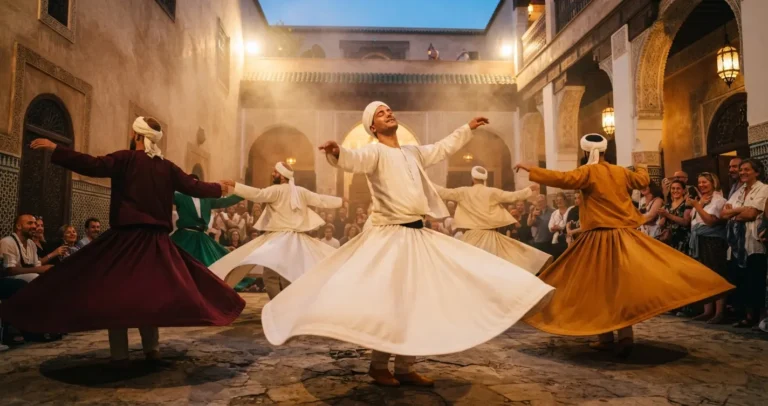
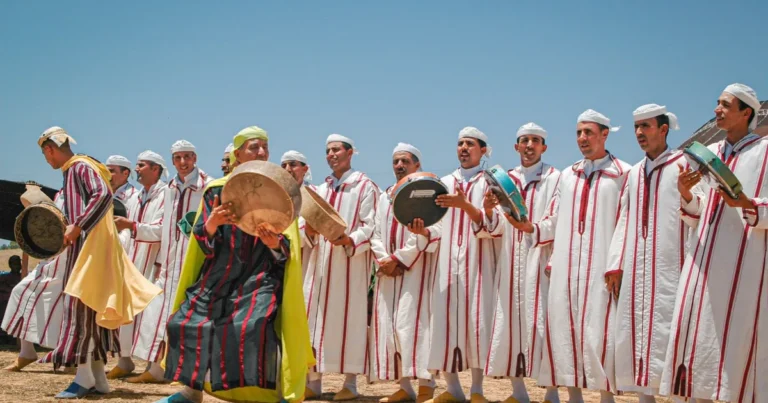
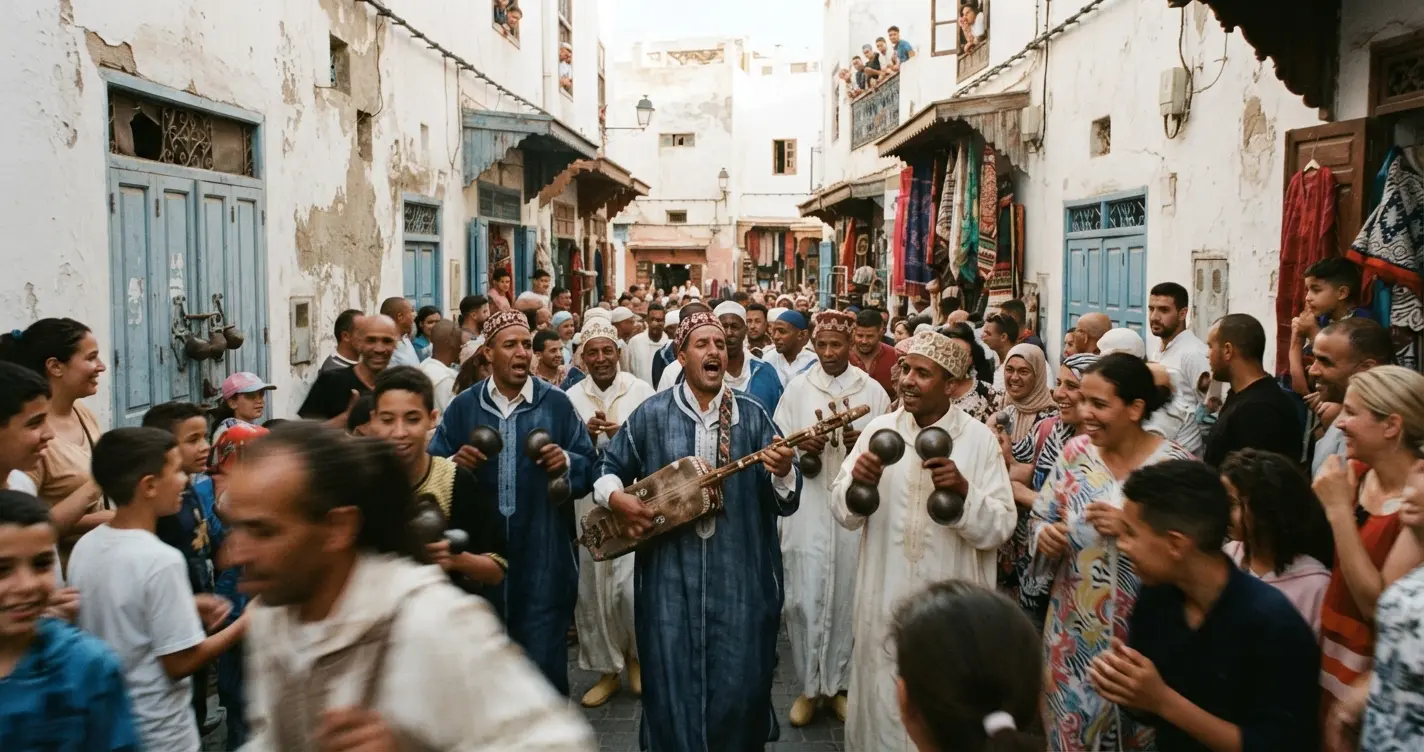
Each edition of the Gnaoua Festival Essaouira opens with a traditional procession of Gnaoua brotherhoods in their distinctive bright robes and tasseled caps, marching through the medina toward the main stage, one of the festival’s most photographed and anticipated moments. Locals lean from balconies and children join the procession as it winds through the narrow streets, turning the opening march into a citywide event rather than a staged photo opportunity.
Gnaoua Maâlems and Their Ensembles
Master musicians, or maâlems, lead the festival’s core programming, performing both in their traditional form and in collaborative fusion sets with visiting international artists across the festival’s various stages. Each edition typically introduces a handful of younger maâlems from Casablanca, Marrakech and Essaouira alongside established names, reflecting the festival’s stated commitment to passing the tradition to a new generation.
International Musical Collaborations
A defining feature of the festival is its fusion concerts, where maâlems share a stage with jazz, blues, Afrobeat or other world music artists, creating one-off collaborations that are often specific to that year’s edition and rarely repeated afterward, which is part of why many longtime attendees return annually.
Street Performances and Public Celebrations
Beyond the official stages, musicians and smaller groups perform informally through the medina’s streets and alleys throughout the festival, adding to the citywide, immersive atmosphere that extends well beyond the ticketed or scheduled programme.
The Festival Atmosphere in Essaouira
With its compact medina, Atlantic sea breeze and relatively small permanent population, Essaouira takes on a distinctly different character during the festival: streets filled with visitors, musicians and spontaneous gatherings from afternoon into the early hours of the morning.
Where Does the Gnaoua Festival Take Place?
Moulay Hassan Square
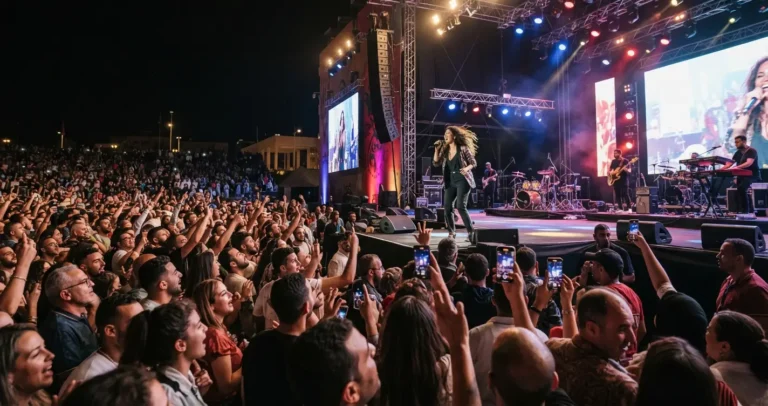
Place Moulay Hassan, near the entrance to the medina by the port, is the main stage of the Gnaoua Festival Essaouira and has historically hosted the festival’s largest concerts, with capacity for tens of thousands of attendees on its biggest nights.
Essaouira’s Medina
Beyond Moulay Hassan, the UNESCO-listed medina itself becomes a festival space, hosting the opening parade and smaller, informal performances through its narrow lanes, with cafés and shopfronts staying open late to accommodate the crowds moving between venues.
The Beach and Outdoor Venues
Essaouira’s beach has also served as a major open-air venue in various editions, offering a different, more expansive setting than the medina’s dense streets, and giving the festival room to grow as attendance has increased over the years.
Smaller Venues Around the City
Intimate venues such as Dar Souiri and various zaouias (Gnaoua brotherhood houses, including the Zaouia Issaoua) host smaller-scale performances that aim to recreate something closer to the ritual atmosphere of a traditional lila, alongside occasional use of sites such as Borj Bab Marrakech.
How to Experience Gnaoua Music at the Festival
Watch a Traditional Maâlem Performance
For the clearest sense of Gnaoua music’s traditional form, seek out performances explicitly billed as traditional or ritual-style sets, often at smaller venues rather than the large fusion-heavy main stage shows.
Experience Gnaoua Music in the Streets
The opening procession and informal street performances through the medina offer some of the most unfiltered, close-up encounters with Gnaoua music’s performative, communal character.
Listen Beyond the Main Stages
Smaller venues and daytime performances often showcase emerging maâlems and lesser-known ensembles, rewarding visitors willing to look beyond the headline evening concerts at Moulay Hassan.
Understanding the Role of Rhythm and Repetition
Gnaoua music’s power lies partly in its use of repetitive, cyclical rhythm, traditionally intended to build toward trance; approaching a performance with that context in mind changes how the music lands, even at a large, festival-style concert.
Gnaoua Festival Essaouira Tickets and Entry
Are Festival Performances Free?
Yes, largely. The main stages of the Gnaoua Festival Essaouira, including Moulay Hassan and the beach, have historically been free and open to the public, a defining feature of the event since its founding.
Which Events Require Tickets?
Smaller, more intimate performances at venues such as zaouias or Dar Souiri have historically had limited capacity and, in some editions, required tickets or involved an entry fee, given the smaller spaces involved.
Where to Find the Official Programme and Tickets
The festival’s official website is the most reliable source for the current year’s venue list, programme and any ticketing details for smaller or limited-capacity performances.
Booking for Popular Performances
Because free stages have no capacity cap but can become extremely crowded, and smaller ticketed or limited-capacity venues fill quickly, checking the programme and arriving early for anything you don’t want to miss matters more at this festival than buying tickets in advance.
Where to Stay During the Gnaoua Festival
Staying Inside Essaouira Medina
A riad inside the medina puts you within walking distance of Moulay Hassan and most festival activity, which matters given how central and walkable the festival experience is.
Staying Near Moulay Hassan Square
Accommodation close to the main square offers the shortest routes to and from evening concerts, though it also means more noise and crowd activity nearby during festival nights.
Hotels, Riads and Guesthouses
Essaouira offers everything from simple guesthouses to well-regarded riads, but rooms across all categories book out quickly during festival week given the scale of attendance the event draws.
Booking Accommodation During Festival Weekend
Given the festival’s large and growing attendance, booking as early as possible, ideally as soon as dates are confirmed, is the most important single step in planning a comfortable visit.
How to Get to Essaouira for the Gnaoua Festival
From Marrakech
Essaouira is roughly 175–180 km from Marrakech, a drive of about 2.5 to 3 hours along a well-maintained road, making it the most common and straightforward route for most visitors.
From Casablanca
From Casablanca, Essaouira is about 350–370 km away, roughly 4 to 4.5 hours by car via the A1 highway; buses cover the route too, but take considerably longer.
From Agadir
Essaouira sits roughly 175 km from Agadir, about 3 to 3.5 hours by road along a scenic coastal route, with regular buses also available.
By Bus or Car
Essaouira’s own small airport (Essaouira-Mogador) has limited connections, so most visitors arrive by road from Marrakech, Agadir or Casablanca, whether by private car, rental car or bus.
Getting Around Essaouira During the Festival
Walking Through the Medina
Essaouira’s medina is compact and largely pedestrian, making walking the easiest and often only practical way to move between festival venues inside the old city.
Reaching the Main Festival Venues
Moulay Hassan Square sits right at the edge of the medina near the port, making it easily reachable on foot from most medina accommodation.
What to Expect From Festival Crowds
Main stage areas, especially Moulay Hassan in the evening, draw dense crowds during headline performances; arriving earlier in the evening gives more breathing room than trying to join a packed square once a major set has started.
What Else to Do in Essaouira During the Festival
Explore the Medina and Skala
Essaouira’s UNESCO-listed medina, with its blue-and-white buildings and the sea-facing Skala ramparts lined with old cannons, rewards unhurried daytime exploration between festival nights.
Visit the Port
Essaouira’s working fishing port, with its blue boats and daily catch sold right at the quay, offers an authentic look at the city’s maritime life just steps from Moulay Hassan.
Walk Along Essaouira Beach
The long beach south of the medina, often windswept thanks to the Atlantic trade winds that also make Essaouira a windsurfing destination, is a good daytime counterpoint to festival-night crowds.
Discover the City’s Seafood
Freshly grilled fish and seafood, often sold directly at port-side stalls, are one of Essaouira’s culinary highlights and a natural way to refuel between concerts.
Explore Essaouira’s Art and Craft Shops
The medina is known for thuya wood carving, a craft specific to the Essaouira region, along with galleries and craft shops reflecting the city’s long-standing artist community.
Tips for Attending the Gnaoua Festival
Book Accommodation Early
Given the festival’s scale, securing a room well ahead of your travel dates is the single most important piece of planning, particularly for anything inside the medina.
Plan Around the Programme
Since the festival spans multiple stages with different styles, from large fusion concerts to intimate traditional sets, checking the official programme ahead of time helps you prioritize what matters most to you.
Arrive Early for Popular Performances
Free stages have no capacity limit but can become extremely crowded for headline sets, so arriving well before a performance you don’t want to miss is worth the wait.
Bring a Light Layer for Essaouira’s Wind
Essaouira is known for strong Atlantic trade winds, and evenings can turn cool even after a warm day, so a light jacket is worth packing regardless of the season.
Keep Your Belongings Secure in Crowded Areas
Dense festival crowds, particularly around Moulay Hassan during headline sets, are worth extra attention regarding pickpocketing and personal belongings.
Respect Performers and Local Traditions
Gnaoua music carries real spiritual and cultural weight beyond its festival-concert presentation; approaching performances, especially smaller, more ritual-style sets, with attentiveness and respect is appreciated.
Is the Gnaoua Festival Worth Attending?
For travelers interested in music with genuine spiritual and historical depth, rather than a purely commercial festival experience, the Gnaoua Festival Essaouira offers something distinctive: a tradition rooted in Morocco’s African heritage, presented both in its traditional ritual form and in constantly evolving collaboration with global music. Essaouira’s manageable size and laid-back character make it an easier festival city to navigate than some of Morocco’s larger events, even as attendance has grown substantially over the festival’s history. For visitors drawn to Essaouira’s coastal charm already, the festival adds a rare cultural layer well worth building a trip around.
Frequently Asked Questions About the Gnaoua Festival
When is the Gnaoua Festival in Essaouira?
The Gnaoua Festival Essaouira is typically held in June, usually over three days. The 2026 edition, the 27th, ran June 25–27. Exact dates shift somewhat from year to year within that general window, so confirm current-year dates on the official festival website before booking travel, since the event has occasionally adjusted its length as well as its exact dates between editions.
Is the Gnaoua Festival free?
Largely, yes. The festival’s major stages, including Moulay Hassan Square and the beach, have historically been free and open to the public, which is central to the event’s identity and accessibility. Smaller, more intimate performances at venues like zaouias have, in some editions, involved limited capacity or an entry fee, given the much smaller spaces involved.
Where is the Gnaoua Festival held?
The festival takes place across Essaouira, Morocco, with its main stage at Place Moulay Hassan near the medina entrance and the port, plus additional performances on the beach and at smaller venues including Dar Souiri and various zaouias through the medina. The opening parade typically winds through the medina’s streets before arriving at the main stage.
What is Gnaoua music?
Gnaoua music is a spiritual musical tradition rooted in the heritage of communities descended from enslaved sub-Saharan Africans brought to Morocco, blended over centuries with Arab-Muslim and Amazigh influences. It centers on the gimbri, a three-stringed bass lute, and krakebs, iron castanets, and is traditionally performed during all-night ritual ceremonies called lilas. UNESCO inscribed Gnaoua music on its Representative List of the Intangible Cultural Heritage of Humanity in 2019, following a campaign led in part by the festival’s own founder.
Who performs at the Gnaoua Festival?
The festival features Gnaoua maâlems, master musicians who lead the tradition, alongside visiting international artists spanning jazz, blues, Afrobeat and other world music genres, often paired together in one-off fusion collaborations specific to that year’s edition. Lineups change each year and are announced on the official festival site ahead of the event, with each edition typically introducing newer maâlems alongside established names.
How do I get to Essaouira for the festival?
Essaouira is most commonly reached by road from Marrakech (about 175–180 km, 2.5–3 hours), Agadir (about 175 km, 3–3.5 hours) or Casablanca (about 350–370 km, 4–4.5 hours), by private car, rental car or bus. The city’s small local airport has limited flight connections, so most visitors arrive overland from one of these larger cities.
Where should I stay during the Gnaoua Festival?
Staying inside Essaouira’s medina, ideally within walking distance of Place Moulay Hassan, puts you closest to the festival’s main stage and overall atmosphere. Rooms across all accommodation categories fill quickly given the festival’s scale, so book as early as possible once your travel dates are set.
How many days should I spend in Essaouira?
The festival itself runs about three days, and a visit of three to five days allows time to experience multiple stages and performances while also exploring the medina, port and beach during the day. If you’re combining the trip with other parts of Morocco, Essaouira also works well as a two- or three-day add-on to a Marrakech-based itinerary.
Is the Gnaoua Festival suitable for first-time visitors to Morocco?
Yes, Essaouira’s compact, walkable medina and relatively relaxed pace make it an approachable festival city even for travelers new to Morocco. The festival’s mostly free, open-air format also makes it easy to dip in and out of without needing advance tickets for most of the programming.
What should I wear to the Gnaoua Festival?
Comfortable, breathable clothing suits Essaouira’s warm June days, with a light jacket or layer for the city’s characteristic Atlantic wind and cooler evenings. Comfortable walking shoes are worth prioritizing, given how much of the festival experience involves moving through the medina on foot and standing at outdoor concerts.
Final Thoughts on the Gnaoua Festival in Essaouira
The Gnaoua Festival Essaouira offers a rare combination: a living spiritual tradition, carried by musicians whose craft has been passed down for generations, presented alongside the kind of global musical collaboration that keeps it evolving. Book your accommodation early, balance the big Moulay Hassan concerts with a smaller, more traditional performance if you can find one, and leave time to enjoy Essaouira’s medina, port and beach in the quieter hours between sets.