Moroccan Cuisine: The Ultimate Guide to Morocco’s Rich Culinary Traditions
From the slow-simmered tagines of Marrakech to the fresh seafood of Essaouira, from mountain bread baked in communal ovens to the intricate pastilla of Fes, Moroccan Cuisine is one of the most celebrated culinary traditions on earth. This is the complete guide to tasting, understanding, and falling in love with Morocco’s food.
Discover Moroccan FlavorsMoroccan Cuisine at a Glance
The key details for food lovers visiting Morocco.
Why Moroccan Cuisine is considered one of the world’s finest.
Moroccan Cuisine is the product of thousands of years of cultural exchange at the crossroads of Africa, Europe, and the Middle East. Amazigh (Berber) cooking traditions form the foundation—hearty tagines, couscous, preserved lemons, and argan oil—layered with Arab spice traditions, Andalusian refinement from Moorish Spain, Mediterranean freshness, and Sub-Saharan African influences. The result is a cuisine of extraordinary depth and complexity.
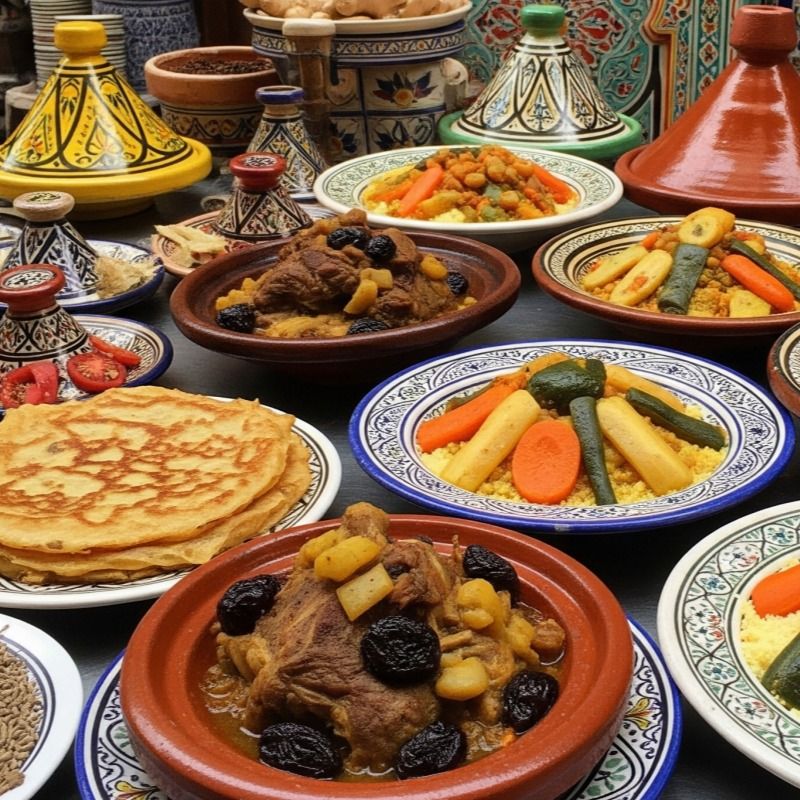
The tagine is the emblem of Moroccan cooking—not just a dish but a method. Named after the conical clay pot in which it is cooked, the tagine slow-simmers meat, vegetables, dried fruits, and spices into something deeply aromatic and tender. A lamb tagine with prunes and almonds, a chicken tagine with preserved lemons and olives, a vegetable tagine with pumpkin and chickpeas—each is a study in the Moroccan genius for balancing sweet, savoury, and spice.
Couscous, the other pillar of Moroccan Cuisine, is traditionally served on Fridays after midday prayers. Inscribed on the UNESCO Intangible Cultural Heritage List in 2020, it is hand-rolled semolina steamed in a couscoussier, topped with a stew of meat and vegetables—it is the communal dish of Morocco, shared among family and friends. The act of eating couscous from a shared platter, using only the right hand, is one of the most enduring social rituals in Moroccan life.
The spice markets of Morocco are legendary. In Marrakech’s Rahba Kedima square and Fes’s spice souk, pyramids of cumin, saffron, ras el hanout, cinnamon, turmeric, and paprika create a sensory spectacle. Moroccan cooks use spices with a refined hand—not to create heat, but to build layers of flavour. Ras el hanout, the iconic Moroccan spice blend, can contain over thirty ingredients, each chosen for its contribution to a complex, fragrant whole.
The tea ceremony is Morocco’s most famous culinary ritual. Mint tea—Chinese gunpowder green tea steeped with fresh spearmint and sugar—is poured from a height into small decorated glasses, creating a frothy top. It is offered as a gesture of welcome, shared in every home, every shop, every encounter. To refuse tea is to refuse hospitality itself.
Regional diversity is one of Morocco’s greatest culinary strengths. Fes is the gastronomic capital, famous for its refined pastilla, its complex tagines, and its ancient fondouk restaurants. Marrakech offers the street food theatre of Jemaa el-Fnaa.
Essaouira serves the freshest seafood on the Atlantic coast. Casablanca blends traditional and modern dining. The Atlas Mountains offer heartyBerber cooking, while the Sahara and southern oases have their own desert cuisine traditions.
Moroccan food is also a story of hospitality. In every home, guests are welcomed with plates of msemen (flatbread), bowls of olives, and glasses of tea. Meals are shared from communal platters.
The act of feeding a guest is a profound expression of generosity. To eat in Morocco is to participate in a culture where food is love, and sharing is a way of life.
Signature experiences that define Moroccan Cuisine.
Every meal in Morocco tells a story. These are the experiences that define the country’s extraordinary food culture.
Traditional Tagine
The slow-cooked stew that defines Moroccan Cuisine. Meat, vegetables, dried fruits, and spices simmered for hours in a conical clay pot until the flavours meld into something extraordinary.
Friday Couscous
The communal dish of Morocco. Hand-rolled semolina steamed to perfection, topped with a rich stew of meat and vegetables. Eaten from a shared platter with family and friends after Friday prayers.
Moroccan Mint Tea
More than a drink—a ceremony. Chinese gunpowder tea steeped with fresh spearmint and sugar, poured from a height into decorated glasses. The gesture of welcome in every Moroccan home.
Street Food Adventures
From the sizzling stalls of Jemaa el-Fnaa to the fish grills of Essaouira, Morocco’s street food is among the best in the world. Freshly made msemen, harira soup, and grilled kebabs.
Seafood on the Atlantic
Morocco’s Atlantic coast delivers some of the freshest seafood in North Africa. Grilled sardines, seafood tagines, and fish chermoula served in harbourside restaurants.
Local Bakeries
Every neighbourhood has its own bakery (fernatchi), where fresh bread is baked throughout the day in wood-fired ovens. Khobz, msemen, baghrir—Moroccan bread is a daily pleasure.
Spice Markets
Pyramids of cumin, saffron, cinnamon, and ras el hanout fill the air with extraordinary fragrance. The spice souk is Morocco’s most intoxicating sensory experience.
Cooking Classes
Learn to make tagine, couscous, and pastilla from local chefs. Cooking classes in Marrakech and Fes combine market visits, hands-on preparation, and a feast at the end.
Where to eat in Morocco.
Each city has its own culinary identity—from the refined kitchens of Fes to the street stalls of Marrakech.
Marrakech
The street food capital of Moroccan Cuisine. Jemaa el-Fnaa comes alive at dusk with dozens of food stalls serving harira, grilled meats, snail soup, and fresh orange juice. A sensory spectacle.
Fes
Morocco’s gastronomic capital and the spiritual heart of Moroccan Cuisine. The medina hides some of the country’s finest restaurants, where ancient recipes are prepared with the same care and technique as centuries ago. Famous for pastilla.
Essaouira
Morocco’s seafood paradise. The harbour delivers the morning’s catch to restaurants where grilled sardines, fish chermoula, and seafood tagine are prepared simply and served with Atlantic views.
Casablanca
Morocco’s most cosmopolitan city offers everything from traditional Moroccan fine dining to international fusion. Rick’s Café aside, the Art Deco quarter hides some excellent local restaurants.
Rabat
The capital’s food scene blends traditional Moroccan cooking with a refined, modern sensibility. The medina restaurants and the corniche seafood grills are particular highlights.
Tangier
At the meeting point of the Mediterranean and the Atlantic, Tangier’s cuisine reflects centuries of international influence. Fresh seafood, Rif mountain ingredients, and a cosmopolitan dining scene.
How Moroccan Cuisine changes across Morocco.
Every region of Morocco has its own ingredients, traditions, and signature dishes—shaped by geography, climate, and centuries of cultural exchange.
Imperial Cities (Fes & Marrakech)
The most refined and complex Moroccan Cuisine. Fes is the gastronomic heart—home to pastilla, complex tagines, and ancient recipes preserved in family kitchens for generations. Marrakech adds the theatrical street food of Jemaa el-Fnaa and the sophisticated dining of palatial riads.
- Pastilla (sweet-savoury pigeon or chicken pie)
- Harira (tomato-lentil soup)
- Lamb tagine with prunes and almonds
- Msemen and baghrir (traditional flatbreads)
Atlantic Coast (Essaouira, Casablanca, Tangier)
Fresh seafood dominates. Morocco’s Atlantic and Mediterranean coasts provide some of the finest fish and shellfish in North Africa, prepared simply with chermoula marinade, grilled over charcoal, or simmered into rich seafood tagines.
- Grilled sardines with chermoula
- Seafood tagine with saffron
- Fish pastilla
- Coastal bread and olive combinations
Sahara and Southern Oases
Desert cuisine is hearty and resourceful. Dates from the palm groves, goat meat slow-cooked in clay pots, bread baked in sand ovens, and the extraordinary fresh juices of the Draa Valley. The ksars (fortified villages) of the south have their own distinct culinary traditions.
- Date-based desserts and preserves
- Goat tagine with desert herbs
- Desert bread baked in sand
- Fresh date juice from the palm groves
Atlas Mountains
Berber mountain cooking is simple, hearty, and deeply satisfying. Fresh vegetables from terraced gardens, mountain herbs, communal bread ovens, and tagines made with local lamb. The mountain villages offer an authentic taste of Morocco’s oldest food traditions.
- Berber bread from communal ovens
- Mountain lamb tagine with seasonal herbs
- Amlou (argan oil and almond paste)
- Fresh goat cheese and honey
How to eat your way through Morocco.
Morocco is one of the world’s great food destinations—affordable, diverse, and endlessly rewarding. Here is how to make the most of Moroccan Cuisine and its extraordinary culinary landscape.
Choosing where to eat is part of the adventure. In Marrakech, the food stalls of Jemaa el-Fnaa offer an authentic street food experience—follow the crowds to find the best vendors. In Fes, the medina hides some of the country’s finest restaurants in converted palaces and fondouks. For fine dining, Riad Yasmine and La Maison Arabe in Marrakech, and Palais Amani in Fes, are outstanding.
Cooking classes are one of the best ways to understand Moroccan food. Most classes begin with a guided market visit, teaching you to select spices, vegetables, and meats. You then prepare a full meal—typically a tagine, couscous, and Moroccan salad—before sitting down to enjoy what you have cooked. Classes are available in Marrakech, Fes, Essaouira, and many smaller towns.
Dietary needs are well catered for. Moroccan Cuisine is naturally rich in vegetarian options—vegetable tagines, couscous with seven vegetables, lentil soups, and fresh salads are staples. Vegans may need to communicate clearly about butter and honey, which are used frequently. Most restaurants are happy to accommodate dietary requirements when asked.
Moroccan Cuisine by season.
Every season brings different ingredients, different flavours, and different culinary experiences.
Spring (Mar-May)
Spring brings the freshest produce—artichokes, broad beans, and the first strawberries. The almond trees bloom, and the countryside fills with wild herbs. Ramadan often falls in spring, transforming the evening meal into a spectacular communal feast.
Summer (Jun-Aug)
Peak season for fresh fruit—watermelon, peaches, figs, and grapes flood the markets. The Atlantic coast offers the best seafood. Summer is hot, so dining shifts to rooftop terraces and breezy courtyards. refreshing fruit juices are essential.
Autumn (Sep-Nov)
Harvest season brings olives, pomegranates, and the first pressing of argan oil. Couscous festivals celebrate the national dish of Moroccan Cuisine. The weather cools, making it ideal for long, leisurely meals in medina restaurants.
Winter (Dec-Feb)
Winter is citrus season—oranges, tangerines, and lemons fill the markets. Hearty tagines and steaming bowls of harira are at their most comforting. The almond harvest brings fresh almonds to every street vendor.
What to know before you eat.
Dining and Drinking
- Drink bottled water: Tap water is not recommended for visitors. Bottled water is inexpensive and widely available.
- Use your right hand: Moroccan food is traditionally eaten with the right hand, especially when sharing from a communal platter.
- Try the street food: Morocco’s street food is safe and extraordinary. Follow the locals to find the best stalls.
- Expect to share: In many restaurants, dishes are served on a shared platter. This is the Moroccan way—embrace it.
- Tipping: 10-15% is standard in restaurants. In casual eateries, round up the bill.
- Ask for the bill: In Morocco, you must ask for the check (l’addition). It will not arrive until you request it.
Shopping and Etiquette
- Bargain for spices: In the souks, bargaining is expected. Start at about half the asking price and negotiate respectfully.
- Buy from the source: For the best saffron, argan oil, and ras el hanout, buy from reputable shops or cooperatives.
- Bring food home: Sealed packages of spices, preserved lemons, argan oil, and dried fruits make excellent souvenirs.
- Respect Ramadan: During Ramadan, avoid eating, drinking, or smoking in public during daylight hours out of respect.
- Food allergies: Communicate clearly. Many Moroccan dishes contain nuts, eggs, and dairy. Learn key phrases in French or Darija.
- Cooking classes: Book through your riad or a reputable operator. The experience is worth every dirham.
Moroccan Cuisine: Your Questions Answered.
What food is Morocco famous for?
Morocco is most famous for its tagines (slow-cooked stews), couscous (served on Fridays), pastilla (sweet-savoury pie), harira (tomato-lentil soup), and mint tea. The spice blends, especially ras el hanout, are also world-renowned.
Is Moroccan food spicy?
Moroccan food is flavourful but not typically very hot. The emphasis is on aromatic spice blends rather than chilli heat. Cumin, saffron, ginger, cinnamon, and turmeric create complex flavours. You can always request extra harissa if you like more heat.
What dishes should I try first?
Start with a lamb tagine with prunes and almonds, followed by a bowl of harira soup. Try msemen (flatbread) for breakfast and mint tea throughout the day. If you visit Fes, pastilla is unmissable. On the coast, grilled sardines with chermoula.
Is street food safe in Morocco?
Generally, yes. Morocco’s street food is well-prepared and fresh. Follow the crowds—busy stalls mean high turnover and fresh food.
Look for vendors who cook to order and maintain clean stalls. The food stalls of Jemaa el-Fnaa are particularly well-regulated.
Can vegetarians eat well in Morocco?
Excellent. Moroccan Cuisine is rich in vegetarian options. Vegetable tagines, couscous with seven vegetables, lentil soups, fresh salads, and msemen with honey and cheese are all staples. Most restaurants offer dedicated vegetarian menus.
What is a tagine?
A tagine is both the conical clay cooking vessel and the slow-cooked dish prepared in it. The unique lid traps steam, returning condensation to the dish and creating tender, aromatic stews. Tagines come in dozens of varieties—meat, vegetable, fish, and sweet-savoury combinations.
What is the national dish of Morocco?
Couscous is considered the national dish of Moroccan Cuisine. Traditionally served on Fridays after midday prayers, it consists of hand-rolled semolina steamed to perfection and topped with a rich stew of meat and vegetables. It is eaten communally from a shared platter.
Is tap water safe to drink?
Tap water is generally safe in major cities, but most visitors prefer bottled water as a precaution. Bottled water is inexpensive and available everywhere. Ice in restaurants is typically made from purified water.
Should I tip in restaurants?
Yes. 10-15% is standard in mid-range and upscale restaurants. In casual eateries, rounding up the bill is appreciated. For cooking class instructors and food tour guides, a tip of 50-100 dirham is appropriate.
Are cooking classes worth it?
Absolutely. A Moroccan cooking class typically includes a guided market visit, hands-on preparation of a full meal, and the feast itself. It is one of the most memorable and educational ways to experience Moroccan Cuisine. Classes are available in most major cities.
Taste the Heart of Morocco.
Morocco’s Cuisine is a journey in itself—an invitation to understand a culture through its flavours, its traditions, and its extraordinary hospitality. Every tagine, every glass of mint tea, every shared meal tells a story of centuries of craft and care. Moroccan Cuisine rewards anyone who arrives hungry. Let MoroccOdyssey guide you to the table.
Explore Destinations