3 Days in Marrakech (2026): The Ultimate First-Time Itinerary for an Unforgettable Trip
Marrakech is one of those rare cities that manages to overwhelm and captivate visitors from the moment they arrive. The scent of spices drifts through centuries-old alleyways, the call to prayer echoes across rooftops, artisans shape leather and brass using techniques passed down for generations, and the famous Jemaa el-Fnaa square transforms every evening into one of the liveliest public spaces in the world. With so much to experience, many first-time visitors ask the same question: are 3 days in Marrakech enough?
The answer is yes, provided you explore the city at the right pace.
One of the biggest mistakes travelers make is trying to squeeze every museum, palace, garden, and market into a single whirlwind itinerary. Marrakech simply isn’t that kind of destination. The city rewards those who slow down, pause for mint tea on a rooftop terrace, wander through the medina without constantly checking Google Maps, and leave enough room for unexpected discoveries. Three well-planned days allow you to experience the city’s most famous landmarks while still finding time to enjoy the atmosphere that makes Marrakech unforgettable.
This itinerary has been designed specifically for first-time visitors. It combines the city’s iconic attractions with practical travel advice, realistic walking times, and opportunities to experience authentic local life without feeling rushed. Whether you’re visiting Morocco as part of a longer trip or spending a long weekend in the Red City, this guide will help you make the most of every hour.
3 Days in Marrakech: Is It Enough?
For most travelers, three days is the ideal introduction to Marrakech. It provides enough time to explore the historic medina, visit the city’s most important monuments, experience its gardens and traditional architecture, enjoy Moroccan cuisine, and even include a relaxing hammam or a short excursion outside the city. While you certainly won’t see everything, you’ll leave with a genuine understanding of what makes Marrakech one of North Africa’s most fascinating destinations.
Trying to shorten your visit to one or two days often means rushing between attractions without appreciating the city’s atmosphere. On the other hand, spending four or five days is worthwhile only if you plan to include day trips to places such as the Atlas Mountains, the Agafay Desert, or Essaouira. For travelers whose main goal is to experience Marrakech itself, three days strikes an excellent balance between sightseeing and relaxation.
Why Three Days Is the Perfect Length
Unlike many European capitals where attractions are spread across large distances, Marrakech’s main highlights are concentrated within a relatively compact area. The medina, Bahia Palace, Ben Youssef Madrasa, the souks, and Jemaa el-Fnaa can all be reached on foot, allowing you to spend more time exploring and less time commuting.
The city’s rhythm also favors a three-day itinerary. Mornings are generally cooler and better suited for visiting monuments, while afternoons invite a slower pace in gardens, cafés, or your riad courtyard before the medina comes alive again after sunset. Organizing your visit around this natural rhythm makes the experience far more enjoyable than trying to sightsee continuously from morning until night.
Who This Itinerary Is For
This itinerary is designed primarily for first-time visitors who want to experience Marrakech beyond its Instagram-famous landmarks. It suits couples, solo travelers, families with older children, and anyone interested in Moroccan culture, architecture, food, and history.
The schedule assumes moderate walking each day, with plenty of opportunities to stop for refreshments or simply enjoy the surroundings. If you’re looking for nightlife, luxury shopping, or adventure sports, you can easily adapt the evenings or replace the third day with activities that better match your interests.
Before You Start Your 3 Days in Marrakech
Good planning makes an enormous difference in Marrakech. Knowing where to stay, how to get around, and when to visit major attractions will save time, reduce unnecessary stress, and allow you to experience the city much more comfortably.
Where to Stay During Your 3 Days in Marrakech
For first-time visitors, staying inside or just outside the historic medina offers the most authentic experience. Traditional riads place you within walking distance of the city’s main attractions, allowing you to explore early in the morning before the streets become busy and return easily for an afternoon break if temperatures rise.
If you prefer modern hotels, wider streets, and international restaurants, neighborhoods such as Gueliz and Hivernage provide excellent alternatives. They offer a quieter atmosphere while remaining only a short taxi ride from the medina. However, many travelers feel that spending at least a few nights in a traditional riad is one of the highlights of visiting Marrakech, thanks to their peaceful courtyards, rooftop terraces, and warm Moroccan hospitality.
Getting Around Marrakech
Most of this itinerary can be completed on foot. The medina’s narrow streets are inaccessible to cars in many places, making walking not only the easiest option but also the most rewarding. Comfortable shoes are essential, as you’ll spend several hours each day exploring uneven stone streets and lively markets.
For longer journeys, petit taxis are inexpensive and widely available. Always ask the driver to use the meter or agree on the fare before starting the journey. If you’re traveling between modern neighborhoods such as Gueliz and the medina, taxi rides are usually quick and affordable.
Downloading an offline map before arriving is also highly recommended. The medina’s maze-like streets can be confusing at first, but that’s part of its charm. Rather than worrying about getting slightly lost, allow yourself time to wander, some of Marrakech’s most memorable discoveries happen unexpectedly.
Money-Saving Tips Before You Begin
Although Marrakech caters to luxury travelers, it’s surprisingly affordable for those who plan carefully. Purchasing tickets online in advance for attractions such as Jardin Majorelle can save time during busy seasons, while visiting popular monuments early in the morning often means shorter queues and cooler temperatures.
Avoid making large souvenir purchases on your first day. Spend some time browsing different sections of the souks before negotiating prices. You’ll quickly develop a better understanding of what’s available and how much items typically cost.
It’s also worth carrying a mixture of cash and cards. Many restaurants, hotels, and larger shops accept card payments, but smaller cafés, market stalls, and taxis often prefer cash.
3 Days in Marrakech: Day 1 – Discover the Historic Medina
Your first day is all about experiencing the heart of Marrakech. Rather than trying to visit every monument immediately, today introduces you to the city’s history, architecture, and atmosphere while allowing enough flexibility to enjoy unexpected discoveries along the way.
The route has been planned to avoid the busiest crowds and hottest hours, making your introduction to Marrakech both enjoyable and realistic.
Start Your Morning with Breakfast in a Traditional Riad
Few experiences feel more distinctly Moroccan than beginning the day on a riad rooftop while the city slowly wakes beneath you. Traditional breakfasts typically include fresh msemen, homemade bread, olive oil, local honey, fruit, yogurt, and freshly squeezed orange juice accompanied by mint tea or coffee.
Morning is also one of the quietest times inside the medina. Shopkeepers prepare their stalls, delivery carts move through the narrow streets, and the city’s famous energy builds gradually rather than all at once. Spending a relaxed hour over breakfast provides the perfect introduction before diving into the day’s sightseeing.
Start Your Morning with Breakfast in a Traditional Riad
Few experiences feel more distinctly Moroccan than beginning the day on a riad rooftop while the city slowly wakes beneath you. Traditional breakfasts typically include fresh msemen, homemade bread, olive oil, local honey, fruit, yogurt, and freshly squeezed orange juice accompanied by mint tea or coffee.
Morning is also one of the quietest times inside the medina. Shopkeepers prepare their stalls, delivery carts move through the narrow streets, and the city’s famous energy builds gradually rather than all at once. Spending a relaxed hour over breakfast provides the perfect introduction before diving into the day’s sightseeing.
Visit the Koutoubia Mosque
Your first stop should be the Koutoubia Mosque, Marrakech’s most recognizable landmark. Although non-Muslims cannot enter the mosque itself, the surrounding gardens offer beautiful views of its elegant 12th-century minaret, which has dominated the city’s skyline for centuries.
Visiting early allows you to appreciate the peaceful atmosphere before tour groups begin arriving. Palm trees provide welcome shade, birds fill the gardens with song, and the soft morning light makes this one of the best times for photography. The mosque also serves as an excellent orientation point, helping you understand the layout of the city before entering the winding streets of the medina.
Explore Jemaa el-Fnaa Before the Crowds Arrive
From the Koutoubia Mosque, it’s only a short walk to Jemaa el-Fnaa. Visiting the square during the morning reveals a completely different side of Marrakech compared with the lively evenings for which it’s famous.
Instead of packed food stalls and performers, you’ll find fruit vendors setting up, locals crossing the square on their way to work, and cafés gradually opening for the day. This quieter atmosphere makes it easier to appreciate the square’s importance as the social and commercial heart of Marrakech before returning later in the evening to witness its famous transformation.
Continue Exploring Jemaa el-Fnaa
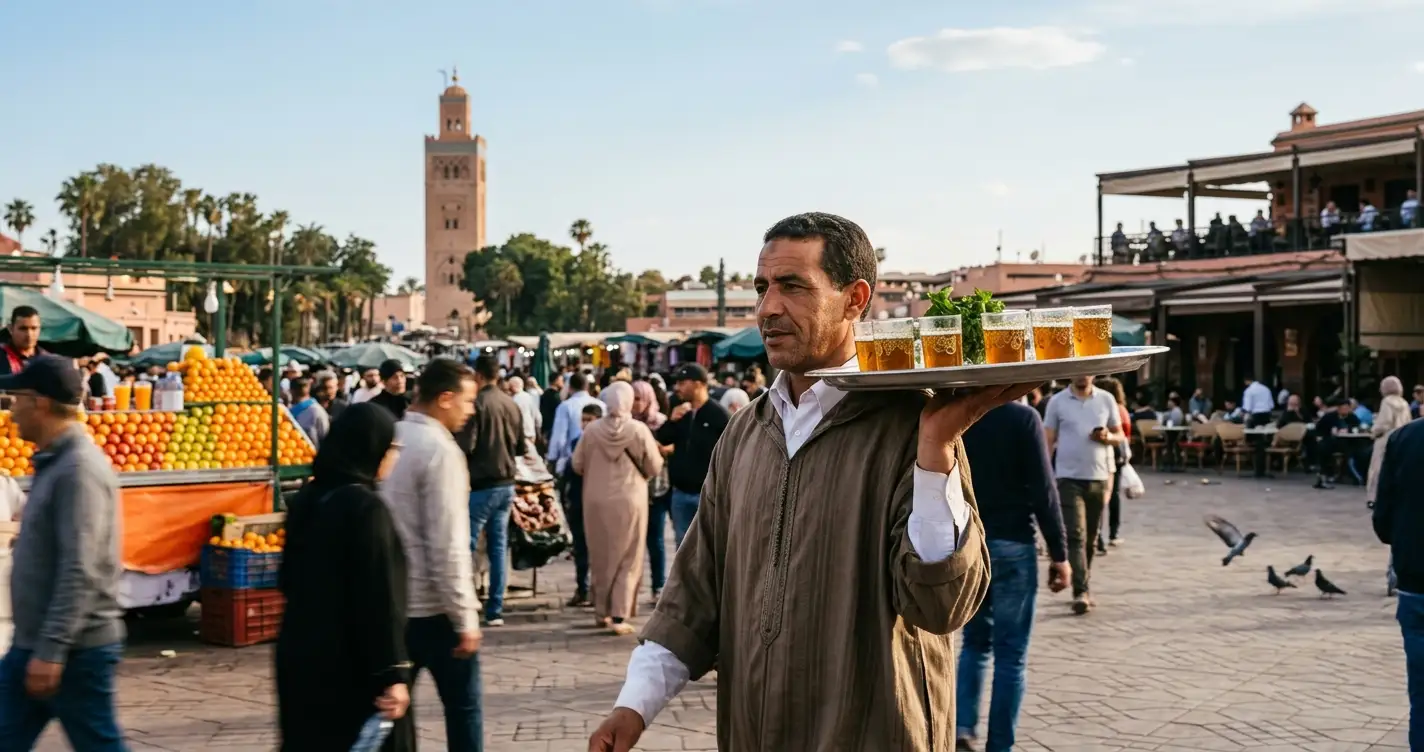
Although Jemaa el-Fnaa is quieter during the morning, it’s worth taking time to observe how the square gradually comes to life. Fresh orange juice vendors prepare their stalls, horse-drawn carriages wait for passengers, and local residents stop briefly before continuing their daily routines. Without the evening crowds, it’s easier to appreciate the square’s scale and understand why it has served as Marrakech’s main gathering place for centuries.
Rather than lingering too long, treat this as an introduction. You’ll return after sunset when the atmosphere changes completely, making it feel like an entirely different place. Experiencing both versions of Jemaa el-Fnaa is one of the highlights of spending three days in Marrakech.
Wander Through the Souks
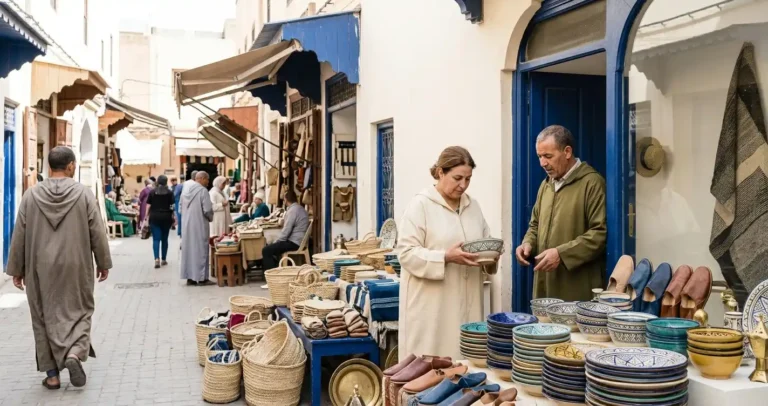
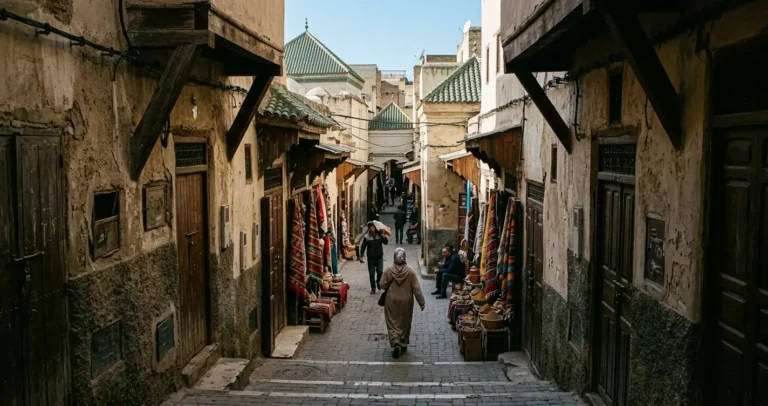
From Jemaa el-Fnaa, step directly into Marrakech’s famous souks, where narrow alleyways lead through one of the largest traditional marketplaces in North Africa. Instead of following the busiest streets, take your time exploring the smaller lanes branching away from the main routes. These quieter passages often reveal family workshops where artisans continue producing leather goods, ceramics, lanterns, carpets, and woodwork using traditional techniques.
One of the greatest pleasures of wandering through the souks is that no two walks are ever the same. You may turn one corner and discover a spice merchant carefully arranging colorful pyramids of saffron, cumin, and paprika, then find yourself moments later watching a craftsman hand-tooling leather slippers destined for shops throughout Morocco. The market rewards curiosity far more than speed, so resist the temptation to rush from one section to another.
If you plan to buy souvenirs later in your trip, use this first visit to compare prices and identify shops you may wish to return to. Vendors expect friendly negotiation, but there is no obligation to purchase anything simply because you’ve started a conversation.
Visit Bahia Palace
By late morning, make your way to Bahia Palace, one of Marrakech’s finest architectural masterpieces. Built during the nineteenth century as the residence of a powerful grand vizier, the palace remains a stunning showcase of traditional Moroccan craftsmanship. Intricate cedar ceilings, hand-carved stucco, colorful zellige tilework, peaceful courtyards, and fragrant gardens combine to create one of the city’s most beautiful historic landmarks.
Unlike many European palaces filled with furniture and artwork, Bahia Palace impresses through its architecture. Every courtyard demonstrates extraordinary attention to detail, while the play of sunlight across marble floors and mosaic walls creates constantly changing patterns throughout the day. Walking slowly through its interconnected rooms offers an opportunity to appreciate the elegance of traditional Moroccan design while escaping the busy streets outside.
Plan to spend at least an hour here. Although the palace is one of Marrakech’s most popular attractions, arriving before midday usually means a more relaxed experience than visiting later in the afternoon.
Stop for a Traditional Moroccan Lunch
After a busy morning exploring the medina, slow the pace with a leisurely Moroccan lunch. The streets surrounding Bahia Palace and the southern medina are home to numerous riads and restaurants serving classic dishes prepared using family recipes. A fragrant chicken tagine with preserved lemons and olives, slow-cooked lamb with prunes, or a traditional vegetable couscous all make excellent introductions to Moroccan cuisine.
Rather than choosing the first restaurant beside a major tourist attraction, consider walking a few streets away from the busiest areas. Smaller establishments often provide a quieter atmosphere, better value, and a more authentic dining experience. Finish your meal with a glass of freshly brewed mint tea before continuing your afternoon.
Explore the Mellah
The afternoon is an ideal time to explore the Mellah, Marrakech’s historic Jewish Quarter. Established during the sixteenth century, this neighborhood tells an important chapter of the city’s multicultural history while offering a noticeably calmer atmosphere than the bustling central souks.
Walking through the Mellah reveals wider streets, traditional balconies overlooking the road, local produce markets, spice shops, and bakeries serving neighborhood residents. The district encourages slower exploration, allowing visitors to appreciate another side of Marrakech beyond its famous monuments. Even those with little prior knowledge of Moroccan Jewish history often find this area particularly rewarding because it highlights the diverse cultural influences that have shaped the city over the centuries.
If time allows, pause in one of the local cafés for fresh orange juice or Moroccan pastries before continuing your walk back toward the medina.
Return to Your Riad for a Short Break
One mistake many first-time visitors make is attempting to sightsee continuously throughout the day. Marrakech’s warm climate, combined with several hours of walking through the medina, can quickly become exhausting, particularly during spring and summer.
Returning to your riad for an hour or two during the late afternoon provides an opportunity to recharge before the city’s most exciting evening begins. Relax beside the courtyard fountain, enjoy the peaceful atmosphere that traditional riads are famous for, or simply rest in your room while temperatures become more comfortable.
This short pause often makes the difference between ending the day tired and rushing back to your accommodation or having enough energy to fully enjoy Marrakech after dark.
Watch Sunset from a Rooftop Terrace
As the afternoon fades into evening, head to one of Marrakech’s rooftop cafés overlooking the medina. Watching the sun set across the city’s terracotta rooftops is an experience that consistently ranks among visitors’ favorite memories. The changing light gradually transforms the famous red walls into warm shades of gold and orange, while the Atlas Mountains occasionally appear on the horizon if conditions are clear.
Order a pot of traditional mint tea and take your time. Rooftop terraces provide a welcome escape from the busy streets below while offering spectacular panoramic views across the old city. As the call to prayer echoes from the Koutoubia Mosque, Marrakech briefly slows before preparing for another lively evening.
Experience Jemaa el-Fnaa After Dark
Your first day should end where it began, but the experience couldn’t be more different. By nightfall, Jemaa el-Fnaa has transformed into a vibrant open-air theatre. Dozens of food stalls fill the square, musicians perform traditional rhythms, storytellers gather crowds of attentive listeners, and the scent of grilled meats and Moroccan spices drifts through the evening air.
Take your time wandering between the stalls before choosing a place for dinner. Whether you decide to sample freshly grilled kebabs, steaming bowls of harira soup, seafood, or traditional tagines, eating in the square is as much about the atmosphere as the food itself.
After dinner, spend a final few minutes simply observing the energy around you. It’s the perfect conclusion to your first day and a reminder that Marrakech is a city best experienced not only through its monuments but through its vibrant daily life.
3 Days in Marrakech: Day 2 – Gardens, History, and Local Culture
After immersing yourself in the energy of the medina on your first day, Day 2 introduces a different side of Marrakech. Today combines peaceful gardens, remarkable architecture, centuries of history, and one of Morocco’s most relaxing traditions. The pace is intentionally slower, giving you time to appreciate the city’s artistic heritage while escaping the busiest crowds for part of the day.
Begin Your Morning at Jardin Majorelle
Start your second day at Jardin Majorelle, one of the most famous attractions in Morocco. Arriving shortly after opening is highly recommended, as visitor numbers increase significantly by mid-morning.
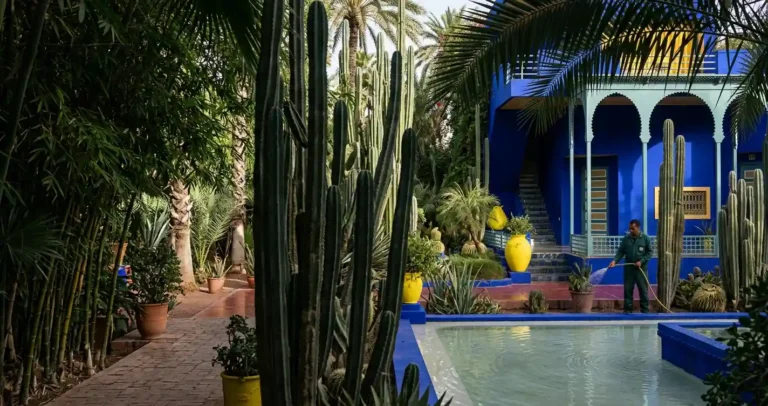
Created by French painter Jacques Majorelle during the 1920s and later restored by fashion designer Yves Saint Laurent and Pierre Bergé, the garden is unlike anywhere else in Marrakech. Exotic plants from five continents surround vibrant cobalt-blue buildings, tranquil ponds reflect towering bamboo and palm trees, and shaded pathways invite visitors to slow down and simply enjoy the peaceful surroundings.
Despite its relatively compact size, Jardin Majorelle feels surprisingly secluded from the noise of the city. The carefully designed landscaping creates countless quiet corners where you can appreciate the colors, textures, and sounds that have inspired artists for decades. For many travelers, it provides the perfect contrast to the intensity of the medina.
Booking tickets online before your visit is strongly recommended, particularly during spring and autumn when demand is highest.
Visit the Yves Saint Laurent Museum (Optional)
Located immediately beside Jardin Majorelle, the Yves Saint Laurent Museum is an excellent addition for visitors interested in fashion, design, or contemporary art. The museum explores the legendary designer’s connection with Marrakech and showcases rotating exhibitions featuring original garments, sketches, photography, and artistic installations.
Even if fashion isn’t your primary interest, the building itself deserves attention. Its elegant architecture blends modern design with traditional Moroccan influences, creating one of the city’s finest contemporary cultural spaces.
If you’d rather spend more time outdoors, you can comfortably skip the museum and continue directly toward the medina. The remainder of today’s itinerary remains unchanged.
Explore Le Jardin Secret
Returning toward the historic center, your next stop is Le Jardin Secret, a beautifully restored palace garden hidden behind the busy streets of the medina. Unlike Jardin Majorelle, which reflects twentieth-century artistic vision, Le Jardin Secret offers insight into the traditional design principles that shaped Moroccan palaces for centuries.
Two separate gardens surround elegant pavilions and peaceful courtyards. One follows the geometric symmetry of Islamic garden design, while the other features more exotic botanical collections introduced from around the world. Water channels, intricate tilework, carved cedar ceilings, and decorative fountains demonstrate the extraordinary craftsmanship that defined Morocco’s wealthy households.
Because many visitors focus on Bahia Palace and Ben Youssef Madrasa, Le Jardin Secret often feels noticeably quieter. It’s an excellent place to pause, escape the midday heat, and appreciate Marrakech’s architectural heritage without feeling rushed.
Visit Ben Youssef Madrasa
A short walk away stands Ben Youssef Madrasa, one of Morocco’s most extraordinary historical monuments. Founded during the fourteenth century and later expanded under the Saadian dynasty, it once served as the country’s largest Islamic college, educating hundreds of students in theology, law, and science.
Today, visitors come to admire what is widely considered one of the finest examples of Moroccan-Andalusian architecture. Every surface appears carefully decorated, from the colorful zellige mosaics covering the lower walls to the intricately carved plasterwork and magnificent cedar wood ceilings above. The central courtyard, with its reflective pool surrounded by elaborate arches, remains one of Marrakech’s most photographed locations.
Take your time here. The beauty of Ben Youssef Madrasa lies in its details rather than its size. Looking closely reveals subtle geometric patterns and calligraphy that demonstrate the remarkable skill of Moroccan craftsmen.
Enjoy Lunch in the Medina
After a morning filled with sightseeing, choose one of the medina’s quieter riad restaurants for lunch. Rooftop terraces are particularly enjoyable during the cooler months, offering panoramic views across Marrakech while providing a welcome break from the busy streets below.
This is an excellent opportunity to sample dishes you may not have tried on your first day. Tangia, a specialty unique to Marrakech, is slow-cooked for several hours inside a traditional clay pot and offers one of the city’s most authentic culinary experiences. Alternatively, fresh seasonal salads, grilled meats, or seafood provide lighter options before the afternoon’s activities.
Experience a Traditional Moroccan Hammam
No visit to Marrakech feels complete without experiencing a traditional Moroccan hammam. For centuries, public bathhouses have played an important role in daily life, serving not only as places of relaxation but also as social gathering spaces where locals unwind and care for their well-being.
Visitors can choose between authentic neighborhood hammams or luxurious spa experiences found in many riads and boutique hotels. While traditional hammams provide a fascinating cultural experience, first-time visitors often feel more comfortable choosing a professionally managed spa that explains each step of the process.
A typical session begins with time in a warm steam room before an exfoliating scrub using black soap and a kessa glove removes dead skin. The treatment usually finishes with a relaxing massage using fragrant argan or orange blossom oil.
After several hours of walking through Marrakech, few experiences feel more refreshing.
Spend the Evening Exploring at Your Own Pace
Rather than filling every minute with scheduled sightseeing, leave your second evening flexible. Return to areas you particularly enjoyed on Day 1, explore streets you didn’t have time to visit, or simply relax at a rooftop café while watching the city transition into night.
Many travelers enjoy revisiting the souks after becoming more familiar with their layout. Others choose this evening to purchase souvenirs, now that they’ve had time to compare prices and identify quality craftsmanship.
If you’re interested in Moroccan cuisine, consider reserving dinner at one of Marrakech’s renowned riad restaurants, where beautifully restored historic homes provide elegant settings for traditional meals accompanied by live music.
3 Days in Marrakech: Day 3 – Choose Your Adventure
Your final day offers flexibility depending on your interests. Some visitors prefer leaving the city to experience Morocco’s spectacular landscapes, while others choose a slower day exploring neighborhoods they may have missed. Both approaches make excellent endings to a three-day visit.
Option 1: Take a Day Trip to the Atlas Mountains
The Atlas Mountains provide one of the most rewarding excursions from Marrakech. Less than two hours from the city, you’ll discover traditional Amazigh villages, dramatic valleys, waterfalls, terraced farmland, and breathtaking mountain scenery that feels completely different from the medina.
Many organized tours include visits to local homes where families serve traditional mint tea and homemade bread, offering insight into rural Moroccan life that most visitors would otherwise never experience.
For travelers who enjoy hiking, photography, or simply escaping the city, this is arguably the best day trip available.
Option 2: Visit the Agafay Desert
If you’ve always wanted to experience a Moroccan desert but don’t have time to travel to the Sahara, the Agafay Desert offers an excellent alternative. Located approximately forty-five minutes from Marrakech, this rocky desert landscape features rolling hills, spectacular sunsets, camel rides, quad biking, and luxury desert camps.
Although it lacks the towering sand dunes of Merzouga, Agafay provides a memorable desert atmosphere within easy reach of the city, making it ideal for shorter itineraries.
Option 3: Enjoy a Relaxing Final Day in Marrakech
If you prefer staying in the city, use your final day to explore at a slower pace. Visit neighborhoods such as Gueliz and Hivernage, enjoy a leisurely breakfast at a café, browse local boutiques, or return to your favorite parts of the medina without feeling pressured to follow a schedule.
This slower approach often becomes one of the most enjoyable days of the trip because you’re no longer focused on checking landmarks off a list.
Buy Your Last Souvenirs
Before leaving Marrakech, spend some time choosing souvenirs that genuinely reflect your experience. Handwoven baskets, argan oil, ceramics, leather goods, spices, and handcrafted lanterns remain among the city’s most popular purchases.
Since you’ve already explored the souks over the previous two days, you’ll be in a much better position to recognize quality products and negotiate fair prices confidently.
How Much Does 3 Days in Marrakech Cost?
Your budget depends largely on your travel style, but Marrakech offers excellent value across every price range. Budget travelers can comfortably enjoy three days for relatively little by staying in hostels or affordable riads, eating at local restaurants, and walking between attractions. Mid-range visitors generally find Marrakech particularly attractive, with stylish riads, excellent dining, and guided experiences available at prices considerably lower than many European cities. Luxury travelers can enjoy world-class hotels, fine dining, private guides, and exclusive spa experiences while still finding Morocco more affordable than many comparable destinations.
Best Time for 3 Days in Marrakech
Spring (March to May) and autumn (September to November) remain the best seasons to visit Marrakech. Pleasant daytime temperatures make walking comfortable, gardens are particularly beautiful, and evenings are ideal for rooftop dining.
Summer can become extremely hot, especially during July and August, making early starts and afternoon breaks essential. Winter, meanwhile, offers sunny days, cooler evenings, fewer crowds, and excellent conditions for sightseeing.
Common Mistakes During 3 Days in Marrakech
One of the biggest mistakes visitors make is trying to pack too many attractions into each day. Marrakech rewards slower exploration far more than constant rushing between landmarks.
Another common error is visiting popular sites during the busiest hours. Arriving early at attractions such as Jardin Majorelle and Bahia Palace results in shorter queues, cooler temperatures, and better photographs.
Many travelers also underestimate how enjoyable simply wandering the medina can be. Some of Marrakech’s most memorable moments happen unexpectedly rather than appearing on any itinerary.
Finally, don’t rely entirely on taxis. Many of the city’s highlights are within walking distance, and exploring on foot reveals hidden streets, local cafés, and artisan workshops that would otherwise remain undiscovered.
3 Days in Marrakech: Frequently Asked Questions
Is 3 days enough for Marrakech?
Yes. Three days provide enough time to experience the city’s major attractions while still enjoying its atmosphere without feeling rushed.
Can you walk everywhere?
Most attractions within the medina are easily reached on foot. Taxis are useful for destinations such as Jardin Majorelle or modern neighborhoods like Gueliz.
Is Marrakech safe for tourists?
Marrakech is generally considered safe for visitors. Like any busy tourist destination, staying aware of your surroundings, agreeing on taxi fares beforehand, and avoiding unofficial guides helps ensure a smooth trip.
Should you stay in a riad?
Absolutely. Staying in a traditional riad offers a far more authentic experience than an international hotel and places you close to the city’s most important attractions.
Is a day trip worth it?
If this isn’t your first visit to Marrakech or you enjoy nature, a day trip to either the Atlas Mountains or the Agafay Desert is an excellent way to experience another side of Morocco.