Best Restaurants in Marrakech (2026): 25 Incredible Places You Need to Try
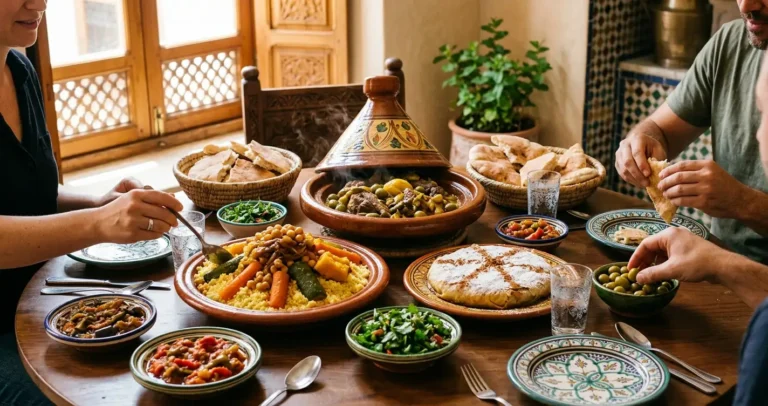
Finding the best restaurants in Marrakech is less about hunting down a single “top” address and more about matching the right table to the right night of your trip. This city eats in layers a mint tea and a bowl of harira on a plastic stool, a candlelit feast under carved cedar ceilings, a rooftop plate of hummus as the call to prayer drifts over the medina. The best restaurants in Marrakech span all of it, and the ones that last decades tend to have one thing in common: they know exactly what they are and never try to be something else.
This guide walks through 25 places worth your appetite in 2026, organized by what you’re actually looking for traditional Moroccan cooking, rooftop views, fine dining, street food, budget eats, romantic settings, and vegetarian options plus the practical details that make eating out here easier.
Best Restaurants in Marrakech: The Short Answer
If you only have a handful of meals to spend in the city, start here. For the most authentic sit-down Moroccan meal, Al Fassia in Guéliz is the local favorite, run entirely by women since 1985. For spectacle and atmosphere, Dar Yacout’s candlelit riad and rooftop terrace are hard to beat.
For a sunset with a view, Nomad’s double terrace over the spice square remains one of the most requested tables in the medina. Street food purists should head straight to Mechoui Alley for slow-roasted lamb, and vegetarians will find their best options at Earth Café or Ayaso Concept Store. Everything else in this guide fills in the gaps between those anchor experiences.
Where Should You Eat in Marrakech?
Marrakech’s dining scene splits geographically in a useful way. The medina the old walled city is where you’ll find theatrical riad restaurants like Dar Yacout and Dar Zellij, along with the street food of Jemaa el-Fnaa and the rooftop cafés clustered around the spice market (Rahba Kedima). This is the city’s most photogenic, most tourist-facing dining, and it’s genuinely wonderful, if occasionally overpriced for what’s on the plate.
Guéliz, the modern “ville nouvelle” across town, is where locals actually eat Al Fassia is here, along with a growing scene of contemporary cafés and Lebanese and international spots. Hivernage, a quieter residential district, holds dinner-show restaurants like Comptoir Darna. And a short drive outside the city, toward the Palmeraie or the Ourika road, you’ll find destination restaurants like Bô & Zin, set in gardens rather than alleyways. None of these areas is objectively “better”; they simply serve different kinds of evenings.
Are Restaurants in Marrakech Expensive?
Marrakech dining covers an unusually wide price range, often within the same afternoon. A full plate of tangia or mechoui from a Mechoui Alley stall, with bread, can run well under 100 MAD (roughly $10). A traditional set-menu evening at a grand riad restaurant like Dar Yacout, with its live music and multi-course diffa, sits at the opposite end, often exceeding 700–800 MAD per person once drinks are included. Fine dining spots inside five-star hotels, such as Sesamo at the Royal Mansour, price closer to European tasting-menu levels.
The middle ground rooftop restaurants like Nomad or Kabana, or traditional spots like Al Fassia typically lands between 150 and 350 MAD per person for a full meal with a drink. As a rule of thumb, the closer a restaurant sits to Jemaa el-Fnaa or inside a luxury riad, the more you’re paying for setting and service on top of the food itself, which isn’t a bad trade if the atmosphere is genuinely part of what you came for.
What Makes Marrakech One of Morocco’s Best Food Cities?
Few cities in Morocco pack as much culinary range into as small a footprint as Marrakech. Within a twenty-minute walk you can move between centuries-old Fassi recipes, Michelin-trained fine dining, and a street stall that’s slow-roasted the same lamb since 1965 each drawing its own kind of devoted local crowd.
Traditional Moroccan Cuisine
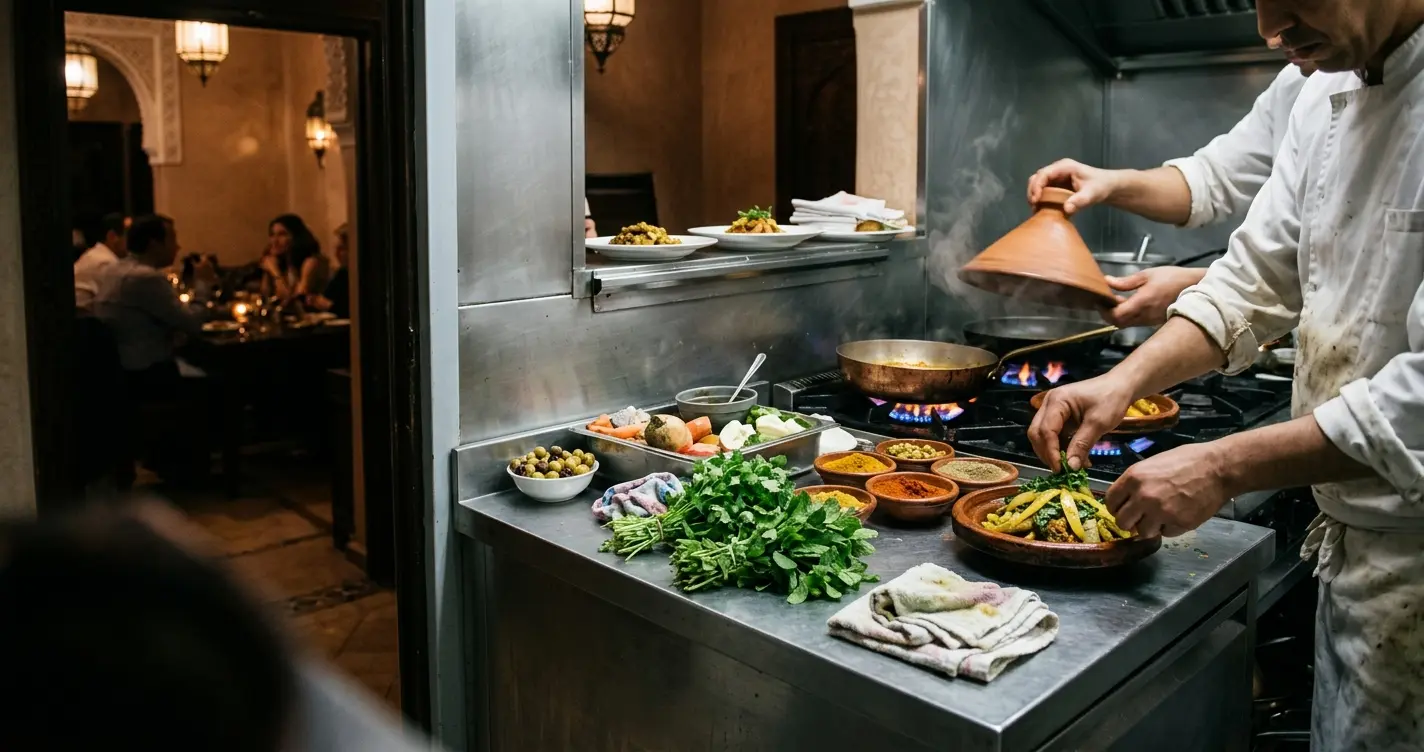
At its core, Marrakech’s food identity is built on tagine, couscous, pastilla, and mechoui dishes that reward patience rather than speed. What distinguishes the city’s best traditional kitchens, particularly women-run institutions like Al Fassia, is a refusal to simplify these recipes for a tourist palate. The spicing stays layered, the cooking times stay long, and the results taste noticeably different from the quick tourist-menu tagine served on a main square terrace.
International Fine Dining
Marrakech’s five-star hotels have imported serious culinary talent over the last two decades Michelin-starred chefs from Paris and Milan now run kitchens inside the Royal Mansour and the Mandarin Oriental. The result is a fine-dining scene that blends European technique with Moroccan and Silk Road ingredients, giving the city a genuine gastronomic tier above its traditional restaurants.
Rooftop Restaurants
Marrakech’s low-rise medina skyline, uninterrupted by tall buildings, makes nearly every rooftop a panorama of the Koutoubia minaret, the Atlas Mountains, and a sea of terracotta roofs. Restaurants like Nomad and Kabana built entire identities around this view, turning a sunset drink into one of the city’s defining rituals.
Hidden Local Gems
Behind the restaurants built for visitors sits a quieter network of family-run stalls, Guéliz cafés, and neighborhood kitchens that locals actually frequent daily. These places rarely advertise and often lack English menus, but they’re where you’ll find the most honest version of everyday Marrakchi cooking.
Best Restaurants in Marrakech for Traditional Moroccan Food
Al Fassia
Al Fassia, in the Guéliz district, is run entirely by women in the kitchen and front of house and has been since it opened in 1985. It’s one of the few restaurants in the city that consistently draws a local crowd rather than a purely tourist one, a strong signal of the quality behind its Fassi recipes. The lamb shoulder and pigeon pastilla are the dishes regulars order first, and the restaurant’s extensive Moroccan wine list is worth exploring alongside them. Reservations are strongly recommended, especially for dinner.
Dar Yacout
Tucked behind an unmarked door in the Bab Doukkala quarter of the medina, Dar Yacout occupies an 18th-century riad and is one of the oldest table d’hôtes in the city, having welcomed guests for more than four decades. The evening follows a set ritual: drinks on the panoramic rooftop terrace as the sun drops behind the Koutoubia and the Atlas Mountains, followed by a descent through candlelit corridors to a courtyard or salon for a fixed traditional diffa salads, pastilla, lamb and chicken tagines, couscous, and honeyed pastries, accompanied by live Gnawa and Andalusian musicians.
Le Foundouk
Housed in a former medieval caravanserai near the Souk Hal Fassi, Le Foundouk spreads its dining across a patio, a bar, and a library-like lounge, with a rooftop bar open for sunset drinks. The kitchen leans toward creative, cross-cultural Moroccan cooking rather than strict tradition, and the restaurant runs continuous service from breakfast through dinner, making it a flexible option if your schedule doesn’t align with typical Moroccan dinner hours.
Dar Zellij
Set inside a 17th-century riad in the northern medina down a lane too narrow for taxis, so be prepared for a short walk Dar Zellij has been ranked among the best Moroccan tables in the world by international critics. The tagines and couscous are interpreted with unusual lightness and restraint for the genre, and the chocolate mille-feuille dessert draws particular praise. Reservations are essential, and an evening visit is the better choice for the full atmospheric effect.
La Maison Arabe
One of Marrakech’s original gastronomic restaurants, La Maison Arabe has operated continuously since 1946, when its regulars reportedly included Winston Churchill. The dining rooms are set around a pool, under stone arches, or in a small garden, decorated with Berber carpets and hand-painted ceilings. Alongside the traditional Moroccan menu chicken tagine with lemon and olives, seven-vegetable couscous the hotel also runs cooking workshops for guests who want to learn the recipes themselves.
Best Rooftop Restaurants in Marrakech
Nomad
Opened in 2014 inside a converted 1960s carpet store overlooking the Rahba Kedima spice square, Nomad has become one of the most requested tables in the medina. Spread across four floors with two terrace levels, it serves what’s often described as “modern Moroccan” cooking revisions of local classics alongside dishes built for vegetarians and pescetarians. No alcohol is served, so it works best for lunch or an early evening visit rather than a late dinner with wine.
Kabana
A short walk from the Koutoubia Mosque, Kabana’s rooftop draws a cosmopolitan late-night crowd once the sun goes down. The kitchen leans Mediterranean with Latin and Asian detours sharing plates, a dedicated sushi chef, and truffle-parmesan fries that have become a signature order while a full-time mixologist runs the cocktail program. After dark, the terrace shifts register with curated DJ sets and live music rotating through jazz, salsa, and electronic acts.
Café des Épices
Sitting directly above the spice market it’s named for, Café des Épices offers one of the most immersive rooftop views in the medina a direct look down into the daily choreography of vendors, shoppers, and stacked spice pyramids below. The vibe is deliberately low-key: strong coffee, Moroccan pastries, and light bites rather than a full dinner production, making it a good midday stop between souk wandering.
El Fenn Rooftop
Part of the boutique hotel El Fenn, this rooftop bar operates from a sprawling terrace anchored by a long marble bar, with sweeping views over the old city walls and surrounding medina rooftops. The cocktail list stays focused rather than extensive, in keeping with the same curated sensibility that defines the hotel’s art collection. It fills quickly at golden hour, so arriving early for a first-come seat is worth planning around.
L’Mida
Just steps from Nomad and easy to find via signs in the souk, L’Mida occupies a converted Marrakchi house with a green, boho-leaning rooftop terrace often described as a hanging garden above the medina. The kitchen blends tradition and modernity with fresh, seasonal ingredients, and the hummus in particular draws repeat visitors. Like Nomad, no alcohol is served, so expect fresh juices and mocktails instead.
Best Fine Dining Restaurants in Marrakech
Bo-Zin
Set in gardens along the Ourika road at the edge of the city, Bô & Zin combines Mediterranean fusion cooking with a festive, unhurried lounge atmosphere. It’s a destination restaurant in the literal sense you go for the evening, not just the meal often paired with live music.
Comptoir Darna
A Hivernage institution since 1999, Comptoir Darna blends Moroccan and Mediterranean cooking with a nightly dinner show featuring belly dancers, live Gnaoua music, and resident DJs. It’s as much a cultural performance as a restaurant, and reservations well in advance are essential given how consistently booked the venue runs.
Shirvan Café Métisse
Originally opened in Paris by Michelin-starred chef Akrame Benallal, Shirvan Café Métisse now operates inside the Mandarin Oriental Marrakech, serving a menu inspired by the historic Silk Road Persian, Arab, and Indian influences fused into spice-forward, shareable plates. Many of the vegetables come directly from the hotel’s organic kitchen garden, and the setting blends Berber and Arab-Andalusian design with panoramic Atlas Mountain views.
Sesamo
Inside the Royal Mansour, Sesamo is the Marrakech outpost of multi-starred Italian chef Massimiliano Alajmo, offering handmade pasta, truffle risotto, and seafood built around his vision of Italian gastronomy. It’s among the most formal dining experiences in the city and a strong choice for a celebration dinner.
Best Restaurants for Local Street Food
Jemaa el-Fnaa Food Stalls
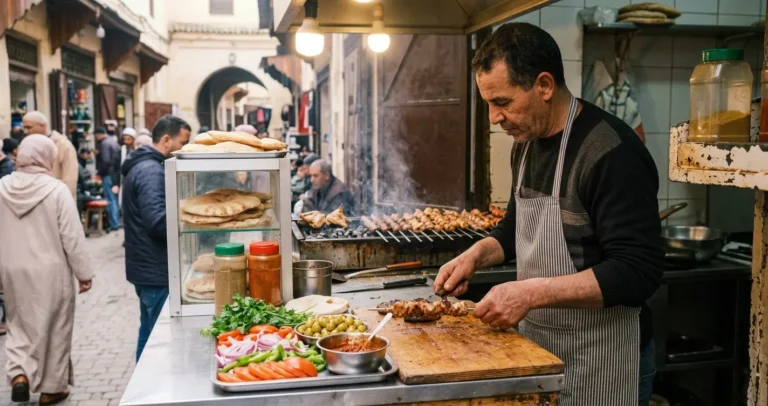
From roughly 5pm onward, Marrakech’s main square transforms into an enormous open-air kitchen, with dozens of numbered stalls serving merguez sausages, harira soup, snails, grilled meats, and bread stuffed with kefta. The best approach is to follow the crowd of locals rather than the vendor calling loudest for your attention, and to confirm prices including for bread, which is sometimes charged separately before you order anything.
Mechoui Alley
Tucked behind the square’s northern edge, Mechoui Alley is the city’s single best address for slow-roasted lamb, with underground stalls specializing exclusively in mechoui whole lambs roasted for hours until the meat falls from the bone. Chez Lamine Hadj Mustapha, open since 1965, is the original stall around which the rest of the alley gradually formed, and remains the most prominent address at its entrance. Mechoui Alley runs on a lunch schedule; stalls typically sell out by early-to-mid afternoon, so an evening visit often means missing the best cuts.
Local Grill Restaurants
Beyond the square and its alleys, small neighborhood grill spots serve brochettes, kefta, and grilled chicken well below tourist prices. The reliable way to spot a good one is the clientele: a room full of Moroccan diners, with prices posted rather than negotiated, signals quality and fair pricing.
Best Budget Restaurants in Marrakech
Amal Women’s Training Center
Founded in 2012 by Nora Belahcen Fitzgerald, Amal is both a nonprofit training program for disadvantaged women and a genuinely excellent lunch restaurant, open daily from noon to 4pm. The menu moves beyond standard tagine-and-couscous into dishes like tride au poulet (chicken with puff pastry) and a wide range of salads and desserts, all at gentle prices, with vegetarian, vegan, and gluten-free options clearly marked.
Chez Lamine
Beyond its signature mechoui, Chez Lamine also serves tangia marrakchia meat slow-cooked in a clay urn buried in the ashes of a hammam furnace all day, making it a reliable stop even outside the lunch-only mechoui window. The multi-floor building includes a rooftop terrace with views over the surrounding souks, and a second, more modern branch operates in Guéliz for those staying outside the medina.
Snack Toubkal
Perched right on the edge of Jemaa el-Fnaa, Snack Toubkal serves generous portions of tagine, couscous, and grilled meats at prices well below what the square’s location might suggest, and it’s known locally for being a genuine value rather than a tourist trap. The upper terrace offers a good vantage point over the square, particularly around sunset, and the restaurant operates around the clock.
Café Clock
Best known for its cultural programming storytelling nights, an oud music school, and hands-on cooking classes Café Clock also serves an approachable, moderately priced menu of Moroccan and international dishes, along with its famously good ginger lemonade. The Marrakech branch is one of three the café operates across Morocco, alongside Fez and Chefchaouen.
Best Restaurants for Romantic Dinners
Dar Yacout
The same candlelit riad and rooftop sunset that make Dar Yacout a showcase of traditional cooking also make it one of the city’s most romantic settings, particularly with its live Gnawa and Andalusian music and rose-petal-set tables in the courtyard.
Le Jardin
Inside the Royal Mansour, Le Jardin sits within a lush garden setting and serves Mediterranean- and Asian-influenced sharing plates designed around creativity and surprise. The open-air arrangement, framed by greenery rather than city views, gives it a softer, more intimate feel than the medina’s rooftop restaurants.
El Fenn
Beyond its rooftop bar, El Fenn’s dining spaces carry the same art-filled, boutique-hotel intimacy that defines the property as a whole, making it a strong choice for a slower, drinks-first evening before dinner.
Kabana
While Kabana’s later hours lean toward a livelier social scene, its early sunset seating over the Koutoubia remains one of the most romantic hours available in the medina, particularly if you arrive before the DJ sets and evening crowd build.
Vegetarian and Vegan Restaurants in Marrakech
Earth Café
Marrakech’s original vegetarian and vegan restaurant, tucked down the narrow Derb Zawak lane in the medina, Earth Café built its menu around organic, farm-grown ingredients, including produce from its own farm outside the city. Expect filo pastries, warm salads, vegburgers, and a range of fresh vitamin-rich juices. Given some reports of temporary closures at various Earth Café locations over the years, it’s worth confirming current opening status before making a special trip.
Ayaso Concept Store & Café
Located in Guéliz, Ayaso pairs a vegan and vegetarian café with a concept store selling natural cosmetics and organic pantry goods. The kitchen puts a plant-based spin on traditional Moroccan dishes using fair-trade, organic, and locally sourced ingredients, and the space doubles as a venue for wellness workshops.
Naranj
A Lebanese restaurant in the medina rather than a strictly Moroccan one, Naranj offers a naturally vegetarian-friendly Mediterranean menu of mezze, alongside homemade fresh mocktails, in a cheerful, plant-and-tile-filled setting near Riad Zitoun el Jdid.
Tips for Eating Out in Marrakech
Do You Need Reservations?
For the medina’s showcase riad restaurants Dar Yacout, Dar Zellij, Le Foundouk reservations are essential, often a day or more in advance, since these venues run set seatings rather than casual walk-in service. Rooftop spots like Nomad and Kabana get similarly booked around sunset. Street stalls, grill restaurants, and budget spots like Snack Toubkal or Chez Lamine generally don’t require reservations at all.
How Much Should You Tip?
In sit-down restaurants, a tip of around 10–15% of the bill is standard practice, and it’s best given in cash since card tips don’t always reach the server directly. In casual cafés, rounding up the bill or leaving a few dirhams per drink is customary. Some upscale restaurants already include a service charge, so it’s worth checking the bill before adding extra. Street food vendors don’t expect a tip, though rounding up is appreciated.
Can You Drink Alcohol?
Alcohol is legal in Morocco and widely available in licensed restaurants, hotel bars, and many tourist-oriented establishments, though it’s not served at more traditional or family-run spots Nomad and L’Mida, for instance, serve none at all. Drinking in the street or in unlicensed public settings is legally discouraged, so it’s best kept to restaurants, bars, and private spaces.
Is Tap Water Served?
Marrakech’s tap water is treated and meets official safety standards, and many residents drink it daily, but most visitors’ stomachs aren’t accustomed to the local mineral and microbial composition, so bottled or filtered water is the safer choice throughout a trip. In upscale restaurants and hotels, ice is generally made from filtered water and considered safe; at street level, it’s reasonable to ask for drinks without ice if you’d rather be cautious.
Best Food Experiences Beyond Restaurants
Moroccan Cooking Classes
A hands-on cooking class typically begins with a guided visit to a local souk to shop for ingredients including choosing produce and sometimes a live chicken before moving to a riad kitchen to prepare a multi-course meal under the direction of a local chef. Several schools operate around the medina, and some, including those connected to Amal Women’s Training Center, tie the experience directly to supporting local women’s economic training.
Street Food Tours
Guided food tours typically begin in Jemaa el-Fnaa at twilight, when the stalls are firing up, and move through the surrounding alleys for a series of tastings often ten to fifteen stops covering savory snacks, traditional sweets, and fresh juices led by a local guide who can navigate the square’s more overwhelming moments and point out which stalls are worth the stop.
Food Markets
Beyond Jemaa el-Fnaa, Marrakech’s spice markets, vegetable souks, and specialty vendors selling olives, preserved lemons, and argan oil are worth a wander even without a specific dish in mind. Visiting in the morning, between roughly 9 and 11am, tends to offer the freshest produce and the least crowded aisles, before the midday heat and tourist traffic both pick up.
Best Restaurants in Marrakech: Frequently Asked Questions
What Is the Best Restaurant in Marrakech?
There’s no single definitive answer, since so much depends on what kind of evening you’re after. For the most authentic traditional Moroccan cooking, Al Fassia is consistently the local favorite. For atmosphere and spectacle, Dar Yacout’s centuries-old riad setting is hard to match. If you’re looking for one restaurant that balances food quality, setting, and reputation, these two names come up most often among both residents and repeat visitors to the city.
Is Fine Dining Expensive?
Yes, relative to the rest of Marrakech’s dining scene. Restaurants inside five-star hotels like the Royal Mansour or Mandarin Oriental Sesamo, Shirvan Café Métisse price closer to European tasting-menu levels, often several times what a traditional riad dinner or rooftop meal would cost. That said, these restaurants also deliver a different tier of technique and ingredient sourcing, so the price reflects a genuinely different experience rather than simply a markup on familiar food.
Is Street Food Safe?
Generally yes, provided you follow a few basic precautions: choose stalls with a steady stream of local customers, favor food that’s cooked hot and to order rather than sitting out, and confirm prices before you order. Busy stalls turn over their ingredients quickly, which is itself a reasonable hygiene indicator, while quieter or empty stalls warrant more caution.
Can Vegetarians Eat Well?
Yes Moroccan cuisine naturally includes plenty of vegetarian dishes, from vegetable tagines and zaalouk to lentil-based harira and an array of cooked salads, and dedicated vegetarian and vegan restaurants like Earth Café and Ayaso have expanded the options further in recent years. Strict veganism requires a bit more vigilance, since meat stock sometimes appears in dishes that otherwise look plant-based, so it’s worth learning the phrase “bla lhem” (without meat) for ordering.
Which Rooftop Restaurant Has the Best View?
Café des Épices offers the most immersive view, looking straight down into the daily activity of the spice market it sits above, while Nomad and El Fenn’s rooftop bar both deliver wider panoramas that take in the Koutoubia minaret and, on clear days, the Atlas Mountains in the distance. The “best” view ultimately depends on whether you want an intimate look at street life below or a sweeping skyline behind your sunset drink.
Final Thoughts on the Best Restaurants in Marrakech
The best restaurants in Marrakech reward a bit of intentional planning: one showcase riad dinner for the theater of it, a rooftop sunset or two, a proper street food evening in and around Jemaa el-Fnaa, and at least one unhurried lunch somewhere that has nothing to prove. Spread across a few days, that mix will tell you more about how the city actually eats than any single “best” restaurant ever could.
Whichever names you end up choosing from this list, book your medina dinners a day or two ahead, keep small dirham notes on hand for tipping and street stalls, and save room Marrakech has a way of putting one more dish in front of you just when you thought the meal was finished.