Mawazine Festival Guide: Everything You Need to Know
Every June, Rabat becomes home to the largest music festival in the world by attendance, drawing millions of people to free, open-air stages across the city. The Mawazine Festival mixes Ninho, Tiësto and Bebe Rexha with Moroccan chaabi legends, Arab tarab singers and African stars, spread across venues on both sides of the Bouregreg River. This guide covers everything you need to plan a visit: when it happens, what it costs, where the stages are, and how to build a trip to Rabat around it.
When Is the Mawazine Festival?
When Mawazine Usually Takes Place
Mawazine is typically held in June, running for around nine days. The 2026 edition, the 21st, ran June 19–27, marking a return to what organizers described as a classic summer schedule after a period of uncertainty about the festival’s future.
How Festival Dates Change Each Year
Exact dates shift somewhat from year to year and have occasionally been affected by wider circumstances; the 2026 edition was only confirmed in late April, after months of speculation about whether it would happen at all that year. Past editions have started anywhere from mid-May to late June, so treat June as a strong planning window rather than a fixed date.
How to Check the Official Programme and Dates
The festival’s official website, and its social media channels announce dates and artist lineups in stages, often with several announcements over the weeks leading up to the event. Checking there close to your planned travel dates is the most reliable way to confirm the current year’s schedule.
The History of Mawazine
How Mawazine Began
Mawazine was created in 2001 by Maroc Cultures, a non-profit association, with the aim of making high-level cultural and artistic programming accessible to the public in the Rabat region. From its first editions, the festival built its identity around combining major national and international names with free, open-air access for most of its audience.
How the Festival Became an International Event
Over more than two decades, Mawazine has hosted an extraordinary range of global stars, from Whitney Houston, Shakira and Stevie Wonder in earlier editions to Ninho, Tiësto, Tyla and Bebe Rexha in 2026. It has grown to become, by most attendance measures, the largest music festival in the world, drawing crowds in the millions across a single edition.
Mawazine and Rabat’s Cultural Scene
Mawazine is organized by Maroc Cultures and operates without public funding, relying instead on ticket sales and private sponsorship. Beyond the music, it functions as a major economic driver for Rabat and Salé, generating thousands of temporary jobs and near-full hotel occupancy during festival week, and is widely positioned as a showcase for Morocco’s cultural openness on the world stage.
What to Expect at Mawazine
International Artists
Mawazine has hosted an enormous range of global names over the years, including Jennifer Lopez, Justin Timberlake, Rihanna, Stevie Wonder and, in the 2026 edition, Ninho, Major Lazer, Tyla, ITZY, Rema, Tiësto, Ty Dolla $ign and Bebe Rexha, mostly on the OLM Souissi stage.
Moroccan and Arab Artists
Alongside international headliners, Mawazine devotes major programming to Moroccan and Arab artists. The 2026 Salé stage, dedicated entirely to Moroccan performers, featured names including Abdelaziz Stati and Hamid Serghini, while the Nahda stage hosted major Arab voices such as Wael Kfoury, Tamer Hosny and Majid Al Mohandes.
Different Musical Genres
The festival spans pop, hip-hop, electronic, reggaeton, Arab tarab, Moroccan chaabi, African music and more, often within a single evening across different stages. This range is part of what distinguishes Mawazine from festivals built around a single genre.
The Atmosphere and Festival Experience
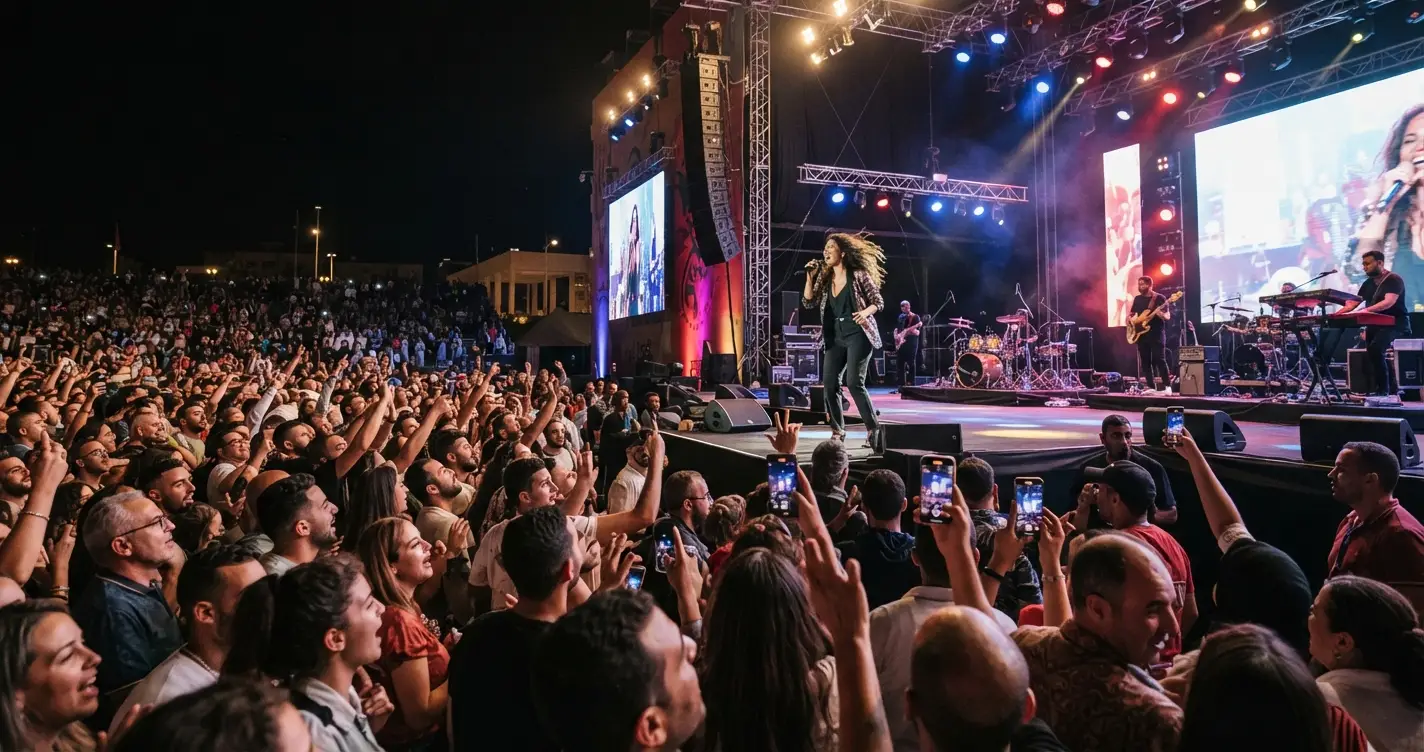
With free access to roughly 90% of its programming, Mawazine draws an enormous, largely local crowd alongside international visitors, creating an atmosphere organizers and attendees often describe as a citywide celebration rather than a ticketed event experienced by a smaller, self-selected audience. Expect large, energetic crowds, especially at OLM Souissi’s biggest international shows.
Where Is Mawazine Held?
OLM Souissi
OLM Souissi is Mawazine’s main international stage, hosting the festival’s biggest global pop, hip-hop and electronic acts, and typically drawing the largest nightly crowds of any venue.
Nahda Stage
The Nahda stage is dedicated primarily to Arab music, hosting major names from Egypt, Lebanon and across the Arab world, with a more intimate, tarab-focused atmosphere than OLM Souissi.
Bouregreg Stage
The Bouregreg stage focuses on African music, showcasing artists from across the continent alongside Moroccan and international acts working in African-rooted genres.
Chellah and Other Venues
Beyond the main stages, Mawazine has historically used additional venues around Rabat for smaller or more specialized performances; the 2026 edition added the Complexe Sportif Prince Moulay Abdellah as a new stage, showing how the festival’s venue lineup can shift between editions.
Getting Between Festival Venues
Because Mawazine’s stages are spread across Rabat and neighboring Salé, moving between venues on the same night takes planning; most festivalgoers pick one stage per evening rather than trying to hop between several.
The Main Mawazine Stages
OLM Souissi Stage
OLM Souissi is where the festival’s headline international acts perform, and it’s the venue most associated with Mawazine’s reputation as a major global festival stop.
Nahda Stage
Nahda draws a slightly different crowd than OLM Souissi, built around the deep local following for Arab pop and tarab, with performers who often close their sets to loud singalongs from an audience that knows every word.
Bouregreg Stage
The Bouregreg stage has become known for introducing Moroccan audiences to major African artists, alongside performers already well known in Morocco.
Free and Paid Performances
Around 90% of Mawazine’s programming is free and open to the public, a defining feature of the festival’s identity; a smaller share of performances, typically the highest-demand international shows, require paid tickets.
What Kind of Music Can You Hear at Mawazine?
International Pop and Rock
Mawazine has hosted global pop and rock names across its history, from Stevie Wonder to Bebe Rexha, concentrated mainly at OLM Souissi.
Moroccan Music
Moroccan music, from chaabi to contemporary pop, gets major stage time, particularly on the dedicated Salé stage, reflecting the festival’s stated mission to support the national music scene.
Arabic Music
Arab pop and tarab, performed by major stars from Egypt, Lebanon and across the region, are a central part of the Nahda stage’s programming each year.
African Music
African artists, spanning genres from Afrobeats to highlife and traditional styles, have a dedicated home at the Bouregreg stage.
Electronic and Contemporary Music
Electronic and dance acts, including major international DJs, have become a growing part of OLM Souissi’s lineup in recent editions, alongside hip-hop and reggaeton.
Mawazine Festival Tickets
Are Mawazine Concerts Free?
Yes, largely. Roughly 90% of Mawazine’s performances are free and open to the public, which is one of the festival’s defining characteristics and a major reason for its enormous attendance figures.
Which Performances Require Tickets?
A smaller portion of shows, generally the highest-demand international headline performances, require paid tickets, often for premium or seated areas near the main stage.
Where to Buy Mawazine Tickets
Tickets, where required, are typically sold through the official festival website and authorized outlets announced closer to the event. Buying through official channels is the safest way to avoid inflated resale prices.
How Early Should You Buy Tickets?
For any paid, high-demand performance, buying as soon as tickets go on sale is advisable, since Mawazine’s biggest names can draw enormous demand across a city and region known for very high festival attendance.
What to Know Before Attending a Concert
Even free stages can involve serious crowds and long queues for entry, so arriving early, especially for a headline act, matters more at Mawazine than at many smaller festivals.
How Much Does Mawazine Cost?
Ticket Prices
Historically, paid tickets at Mawazine have ranged roughly from 100 to 500 MAD (about $15–70), depending on the performance and seating category; prices vary by year and by artist, so treat this as a general guide rather than a current quote.
Food and Drinks
Food and drink prices at festival venues and around Rabat generally remain affordable by international standards, though prices near the busiest festival areas can run somewhat higher during the event.
Transport
Local transport, including the tramway and petit taxis, is inexpensive by international standards, though taxi demand rises sharply around venues right after major shows end.
Accommodation
Accommodation prices in Rabat rise during festival week, particularly for hotels close to the main venues, reflecting the near-full occupancy the festival generates across the city.
Estimated Festival Budget
Since most Mawazine performances are free, the festival itself can be relatively low-cost to attend; the main variable in your budget is accommodation, which rises with demand, plus any paid tickets for headline international shows.
Where to Stay for Mawazine
Staying in Central Rabat
Central Rabat offers the widest range of hotels and easiest access to the tramway network, making it a practical base for reaching multiple festival venues across the week.
Staying Near Agdal
Agdal is a well-connected, modern district with hotels and restaurants, reasonably close to several festival areas and popular with visitors who want a more residential, less touristy base.
Staying in Hassan
The Hassan district, near landmarks like the Hassan Tower, offers central accommodation with good access to both the medina and the tramway.
Staying in Salé
Salé, across the Bouregreg from Rabat, hosts its own dedicated festival stage and can be a practical base if you plan to spend most evenings at Moroccan-artist performances there.
Hotels, Riads and Budget Options
Rabat offers everything from budget hotels to upscale riads, but rooms across all categories fill quickly during festival week given the near-total hotel occupancy Mawazine typically generates, so book as early as your dates allow.
How to Get Around Rabat During Mawazine
Rabat Tramway
The Rabat-Salé tramway connects much of central Rabat with Salé and is one of the most efficient ways to move between festival areas on both sides of the river.
Petit Taxis
Petit taxis are widely available for shorter trips within Rabat, though demand and wait times increase significantly around festival venues, especially after evening shows end.
Walking Between Central Areas
Central Rabat is reasonably walkable, and many visitors cover the distance between accommodation and nearby venues on foot, particularly during the day.
Getting to the Festival Stages
OLM Souissi, Nahda and Bouregreg are spread across different parts of the city, so plan your route by tram or taxi in advance rather than assuming you can walk between them.
Getting Back After Late Concerts
After major evening shows, especially at OLM Souissi, expect large crowds leaving at once and correspondingly high demand for taxis; allow extra time or arrange transport in advance if possible.
Best Things to Do in Rabat During Mawazine
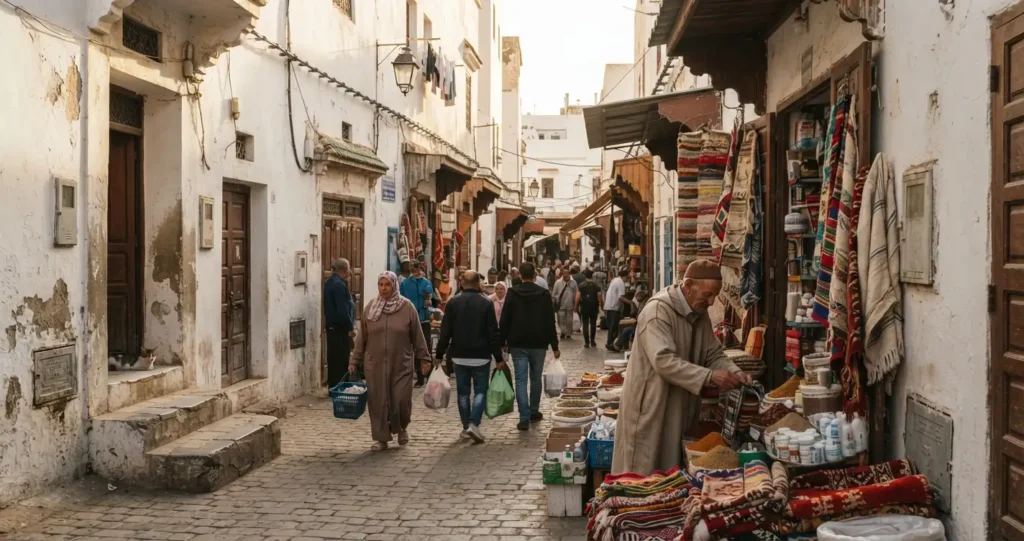
Explore the Kasbah of the Udayas
This fortified, whitewashed kasbah overlooking the Bouregreg estuary is one of Rabat’s most photogenic sites, with narrow lanes, blue-and-white buildings and Andalusian gardens worth a slow daytime visit.
Visit Hassan Tower and the Mausoleum of Mohammed V
The unfinished twelfth-century Hassan Tower and the elaborately decorated mausoleum beside it form one of Rabat’s most significant historic and royal sites, easily combined into a single visit.
Walk Along the Bouregreg
The riverfront promenade along the Bouregreg, especially near the marina and the new cultural developments on both banks, offers an easy, scenic walk between festival evenings.
Explore Rabat’s Medina
Smaller and calmer than Fes or Marrakech’s medinas, Rabat’s old town is an easy, manageable place to shop for crafts and eat well without the intensity of Morocco’s larger historic cities.
Visit Chellah
The Chellah necropolis, a walled complex of Roman ruins and a later Merinid necropolis set among gardens and storks’ nests, is one of Rabat’s most atmospheric historic sites and a good counterpoint to the festival’s modern energy.
Tips for Attending Mawazine
Arrive Early
For any headline performance, arriving well before the scheduled start gives you a better position and avoids the worst of the entry crowds.
Check the Stage and Venue Before Leaving
With several stages spread across Rabat and Salé, confirm exactly which venue your chosen performance is at before you set out, since the festival has occasionally added or shifted stages between editions.
Expect Large Crowds
As the world’s largest music festival by attendance, Mawazine draws genuinely enormous crowds, especially at OLM Souissi; if you’re uncomfortable in dense crowds, consider the smaller Nahda or Bouregreg stages instead.
Keep Your Phone and Belongings Secure
Large, dense crowds are a natural draw for pickpocketing; keep valuables secure and be extra attentive in the busiest moments, such as right before a headline act takes the stage.
Dress Comfortably
Comfortable shoes and light, breathable clothing suit Rabat’s warm June evenings and the amount of standing and walking a festival night typically involves.
Plan Your Journey Home
Decide in advance how you’ll get back to your accommodation after a show, given the surge in demand for taxis right as major concerts end.
Is Mawazine Worth Attending?
For travelers interested in live music, Mawazine offers a scale and range that few festivals anywhere can match: major international pop and electronic acts, beloved Arab stars, and deep Moroccan and African programming, almost entirely free to attend. The trade-off is crowd size, particularly at OLM Souissi’s biggest shows, and the accommodation squeeze across Rabat during festival week. For visitors who enjoy big, high-energy crowds and want to experience Morocco’s cultural life at its most public and celebratory, Mawazine is one of the country’s standout annual events.
Frequently Asked Questions About Mawazine
When is the Mawazine Festival held?
Mawazine is typically held in June, running for around nine days. The 2026 edition ran June 19–27. Because dates aren’t fixed to an identical week every year, and have occasionally shifted due to wider circumstances, check the official festival website for confirmed dates before booking travel.
Where is Mawazine held?
Mawazine takes place across Rabat and neighboring Salé, Morocco, with its main stages at OLM Souissi (international acts), Nahda (Arab music), Bouregreg (African music), and a dedicated Salé stage for Moroccan artists. The 2026 edition added the Complexe Sportif Prince Moulay Abdellah as an additional venue, showing that the festival’s exact venue lineup can vary between editions.
Is Mawazine Festival free?
Largely, yes. Around 90% of Mawazine’s performances are free and open to the public, which is central to the festival’s identity and a major reason for its enormous attendance. A smaller share of the highest-demand international shows require paid tickets, usually for premium seating areas.
How much do Mawazine tickets cost?
Where tickets are required, prices have historically ranged roughly from 100 to 500 MAD (about $15–70), depending on the artist and seating category. Prices vary by year and performance, so check the official festival site for current pricing on any specific show you want to attend. Most of the festival’s programming, however, costs nothing to attend at all.
Where can I buy Mawazine tickets?
Tickets, when required, are typically sold through the official Mawazine website and authorized outlets announced ahead of the festival. Buying through official channels is the safest way to avoid overpaying on resale tickets for high-demand shows.
Who performs at Mawazine?
Mawazine has hosted an extraordinary range of artists over more than two decades, from Whitney Houston and Stevie Wonder in earlier editions to Ninho, Tiësto, Tyla and Bebe Rexha in 2026, alongside major Moroccan and Arab stars like Abdelaziz Stati, Wael Kfoury and Tamer Hosny. Lineups are announced in stages over the weeks before the festival, so checking the official site closer to the event gives the fullest picture of who’s performing.
What are the main Mawazine stages?
The festival’s core stages are OLM Souissi (international pop, hip-hop and electronic acts), Nahda (Arab music), Bouregreg (African music), and a Salé stage dedicated to Moroccan artists. Additional venues have been used in various editions, including the Complexe Sportif Prince Moulay Abdellah added in 2026, so it’s worth checking the current year’s venue list before planning your nights.
Where should I stay during Mawazine?
Central Rabat, Agdal and Hassan all offer good access to the tramway and multiple festival venues, while Salé is a practical option if you plan to focus on the Moroccan-artist stage there. Hotels across all budget categories fill quickly during festival week given the near-full occupancy Mawazine generates citywide, so book as early as possible.
How do I get around Rabat during the festival?
The Rabat-Salé tramway is one of the most efficient ways to move between festival areas on both sides of the Bouregreg, while petit taxis cover shorter trips, though demand rises sharply right after evening shows end. Central Rabat is walkable for daytime activities, but plan tram or taxi routes in advance for reaching the spread-out festival stages at night.
Is Mawazine suitable for tourists visiting Morocco for the first time?
Yes, though it suits travelers comfortable with large, high-energy crowds more than those seeking a quiet cultural experience. Rabat itself is a manageable, relatively easy-to-navigate introduction to Morocco compared to denser cities like Fes or Marrakech, which makes combining sightseeing with festival nights straightforward for a first visit.
Final Thoughts on the Mawazine Festival
Mawazine is less a music festival than a citywide phenomenon, one where a Moroccan chaabi legend, an Arab tarab star and a global pop headliner can all be performing free, open-air shows within walking distance of each other on the same night. Book your accommodation early, pick your stages by musical taste rather than trying to see everything, and pair your festival evenings with Rabat’s quieter daytime sites, the Kasbah of the Udayas, Chellah and Hassan Tower, for a fuller picture of the capital beyond the crowds.