How to Plan a Morocco Route: 9 Smart Ways to Save Time
Knowing how to plan a Morocco route is the difference between a trip that flows and one that feels like a series of long transfers. The country’s best-known places are spread over hundreds of kilometres, and the order you visit them in matters more than which ones you choose. Arrange them well and each day moves you forward. Arrange them badly and you pay for it in hours on the road.
This guide is about sequencing: grouping destinations by region, choosing start and end points, matching transport to each leg and comparing routes before you book. It includes example routes with their assumptions and demands. It does not repeat the list of common planning errors, which you can find in our guide to Morocco travel itinerary mistakes. Journey times below are approximate, based on published estimates, and they vary with traffic, weather and season.
Why Knowing How to Plan a Morocco Route Matters When Traveling Around the Country
A good route saves time in three ways: it keeps distances short, it avoids retracing your steps and it spends your travel hours where the journey itself is worth it.
Why Short Distances on a Map Can Be Misleading
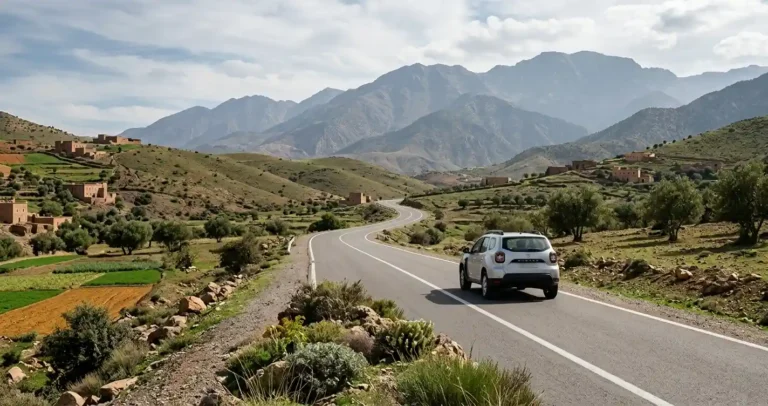
Morocco’s roads climb mountains, cross valleys and pass through towns. Marrakech to Ouarzazate is about 195 km but takes roughly four to four and a half hours, because of the Tizi n’Tichka pass. Kilometres tell you little. Hours tell you more.
The Hidden Cost of Changing Cities Too Often
Each move costs more than the journey. Add packing, checking out, getting to the station, waiting, arriving and finding your accommodation, and a three-hour trip can take half a day. Fewer bases means more time in the places themselves.
Balancing Travel Time With Time to Explore
A useful target is for travel to take up no more than about a quarter to a third of your waking days, though that is a rule of thumb, not a standard. If your draft route exceeds it, cut a stop.
1. How to Plan a Morocco Route: Start With the Number of Days You Have
Your available days set the scale of the whole trip. Count your nights, not your days, since arrival and departure days are partly lost to travel.
What You Can Realistically See in 5–7 Days
In five to seven days, aim for one or two bases. A comfortable plan is Marrakech with a day trip to the Atlas or the coast, or Marrakech plus Essaouira. Two cities connected by a short journey, such as Casablanca and Marrakech or Tangier and Chefchaouen, also work.
Planning a 10-Day Morocco Route
Ten days allows three or four bases, and it is the shortest time in which the desert becomes practical alongside a city or two. You can link the imperial cities and the north, or Marrakech, the south and Fes, if you accept some long travel days.
Building a More Relaxed 14-Day Itinerary
Two weeks lets you add the Atlantic coast, extra nights in each place and rest days. It is the best length for a full circuit with the desert, since you can slow down between the long legs.
2. Group Destinations by Region
Morocco’s destinations fall into four natural clusters. Keep each visit within a region before moving to the next.
Northern Morocco: Tangier, Chefchaouen and Fes
Tangier to Chefchaouen is about two to two and a half hours by road, and Fes to Chefchaouen is roughly four. Tangier connects to Rabat and Casablanca by the high-speed Al Boraq line. This cluster suits a slow, culture-led trip.
Central Morocco: Casablanca, Rabat and Marrakech
Casablanca to Rabat is about an hour by train, and Casablanca to Marrakech about three. These cities sit on the main rail corridor, which makes them the easiest to link without a car.
Southern Morocco: Ouarzazate, the Atlas Mountains and the Sahara
The south is the slowest to cross. Marrakech to Ouarzazate takes roughly four to four and a half hours, and Ouarzazate to Merzouga another six to seven. There is no railway, so you rely on a car, a private driver, a bus or an organised tour.
Atlantic Coast: Essaouira, Agadir and Nearby Stops
Marrakech to Essaouira takes about three hours, and Marrakech to Agadir about three. Essaouira and Agadir are roughly three hours apart, which makes the coast a natural second cluster that links easily to Marrakech.
3. Choose a Logical Starting Point and Ending Point
Your arrival and departure cities set the direction of the route. Our airport guides cover the gateways in detail, and our guide to open-jaw flights to Morocco covers the ticket choice.
When to Start in Casablanca
Start in Casablanca if your flight connects there, or if you want to travel north by train through Rabat to Tangier or inland to Fes. The airport has its own railway station, which makes the first leg easy.
When Marrakech Makes a Better Starting Point
Marrakech suits trips that focus on the south, the Atlas, the coast or the desert, and it has many direct European flights. It is also the natural start for a route that ends in the north.
When to Begin or End in Tangier, Fes or Agadir
Tangier is the natural start or end for a northern route, Fes for an imperial-cities route and Agadir for a coastal one. Choose them when your route finishes in that region.
How Open-Jaw Flights Can Reduce Backtracking
If your route runs in a line, such as Marrakech to Fes or Tangier to Marrakech, flying into one end and out of the other can save a full day. If it forms a loop, a return ticket is simpler.
4. Check Actual Journey Times Before Choosing Your Stops
Journey time is the number that decides whether a stop belongs on your route.
Compare Driving, Train and Bus Travel
For the same leg, the options can differ widely. Marrakech to Fes takes roughly six to seven hours by road, about seven by train via Casablanca, and about an hour by flight. Check each option, not just the first one you find.
Account for Mountain Roads and Desert Journeys
Published driving times assume smooth progress. Mountain passes, village traffic and road conditions can add to them. Marrakech to Merzouga is around 550 km and typically nine to ten hours of driving.
Include Transfers, Station Access and Waiting Time
A “three-hour train” is a four-hour journey once you add the taxi, the wait and the walk. Calculate door to door, not station to station.
Leave a Buffer for Delays and Rest Stops
Add a margin to each leg, especially on days with onward connections. A buffer of an hour or more on long journeys is sensible.
5. Choose the Right Transport for Each Leg
No single mode suits the whole country, so match the transport to each leg. Our guide to travelling between Morocco’s major cities compares them in detail.
When Trains Are the Most Practical Option
Trains work best along the northern and central corridor: Tangier, Rabat, Casablanca, Marrakech and Fes. They are comfortable, they have luggage space and the high-speed Al Boraq service takes about two hours between Tangier and Casablanca.
When Buses Make More Sense
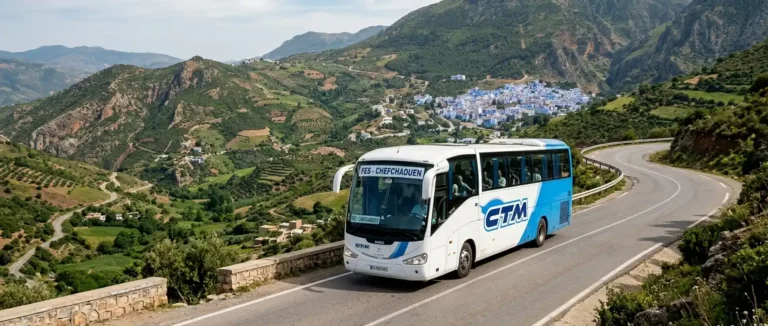
Buses reach places trains do not, such as Chefchaouen, Essaouira and many southern towns. CTM and Supratours are the main long-distance operators. Fares are low, and journeys are often longer than the train.
When Renting a Car Saves Time
A car suits the south, where public transport is limited, and any route with several rural stops. It also adds flexibility. Check one-way fees, mountain driving conditions and parking.
When a Private Transfer or Organized Tour Is Worth Considering
For the desert and the Atlas, a private driver or an organised tour removes the logistics and lets you enjoy the scenery. It costs more, but it can make an otherwise impractical leg possible.
6. Avoid Backtracking and Unnecessary Overnight Stops
A route that moves in one direction wastes the least time.
Build a Route That Moves in One Direction
Arrange your stops along a line from one end of the country to the other. Each night should end closer to your departure city than the last.
Know When Returning to the Same City Is Practical
Sometimes a loop is the right choice, for example when you are basing yourself in Marrakech and taking day trips. If you return to a city, do it because it is useful, not because the route forced you.
Avoid Adding a Destination Just Because It Is Nearby
A place that looks close on the map can still cost half a day. Add it only if the journey and the stay are worth it.
Use Overnight Stops Only When They Improve the Journey
An overnight stop is useful if it breaks a long drive, such as the Dades or Todra valleys on the way to Merzouga. A stop that only adds a hotel change does not help.
7. Plan Sahara Desert Trips Around the Route
The desert is the hardest part to fit into a route, so plan it first and build around it.
Why Merzouga Requires More Travel Time
Merzouga is about 550 km from Marrakech and roughly 460 to 590 km from Fes, depending on the road, with drives of around seven to ten hours. It needs a day to reach, a night in the dunes and a day to leave.
Where Ouarzazate Fits Into a Southern Morocco Route
Ouarzazate is a natural overnight stop between Marrakech and the desert, roughly four to four and a half hours from Marrakech, with Ait Benhaddou nearby. It breaks the long journey and adds a place worth seeing.
When Zagora May Suit a Different Itinerary
Zagora is closer to Marrakech, at roughly six hours, and suits a shorter trip. Many travellers find Merzouga’s Erg Chebbi dunes more spectacular, but they need more time.
Avoid Underestimating the Return Journey
The trip back is as long as the trip out. Plan your route so you continue onward, such as from the desert to Fes, instead of returning the way you came.
8. Keep Your Daily Schedule Realistic
A good route can still be spoiled by a day that is too full.
Avoid Combining Long Journeys With Too Many Activities
On a long travel day, plan one or two stops at most. A six-hour drive with three sightseeing stops becomes a ten-hour day.
Allow Time for Check-In, Meals and Exploring
After you arrive, you still need to check in, eat and orient yourself. Allow time for this, particularly in medinas where finding your riad takes a while.
Decide Which Stops Deserve an Overnight Stay
Some places reward a night and some a quick visit. Fes and Marrakech deserve several nights, while a place you pass through may need only a few hours.
Leave Space for Unexpected Changes
Keep at least one flexible day or half-day. It lets you absorb a delay or stay longer somewhere you love.
9. Compare Two Routes Before Booking
Comparing two versions of your route is the quickest way to find the better one.
Example of an Inefficient Morocco Route
Land in Casablanca, take the train to Marrakech, go to Merzouga and back to Marrakech, then return to Casablanca for the flight home. Roughly 18 to 20 hours of the trip are spent driving to and from the desert, and the route retraces its steps twice.
A More Efficient Alternative
Land in Casablanca, continue to Marrakech, cross the south to Merzouga and carry on to Fes, then fly home from Fes. The same places, but each leg moves you forward, and nothing is repeated.
Compare Total Travel Hours, Not Just Distance
Add up the hours of travel for each version. A route with fewer kilometres can still take longer if it includes mountain roads or changes of transport.
Decide Whether the Extra Destination Is Worth the Time
For each stop, ask what it costs in hours and what you would do with those hours instead. If a place needs half a day of travel for two hours of sightseeing, it may not earn its place.
How to Plan a Morocco Route: Example Routes That Minimize Travel Time
These routes show the principles in practice. Each one states its assumptions and demands, and none suits every traveller. Times are approximate.
A Practical 7-Day Route for First-Time Visitors
Assumptions: Relaxed pace, no car, a flight that lands before midday and a return flight from the same airport. Route: Marrakech (3 nights, including a day trip to the Atlas or the Agafay desert), Essaouira (3 nights, about three hours by bus or transfer), then back to Marrakech for the flight home. Travel demands: about six to seven hours of road travel in total. Best for: first-timers who prefer fewer moves.
A Balanced 10-Day Route With Cities and the Desert
Assumptions: Open-jaw flights into Marrakech and out of Tangier, a private driver or rental car for the south, and trains and buses in the north. Route: Marrakech (2 nights), Dades or Todra valley (1 night, via Ait Benhaddou and Ouarzazate), Merzouga (1 night), Fes (2 nights, about seven hours from Merzouga), Chefchaouen (2 nights, about four hours from Fes), Tangier (1 night, about two to two and a half hours from Chefchaouen). Travel demands: high. There are five travel days with several long drives, so it suits travellers comfortable with long journeys. Best for: visitors who want the desert and several cities and accept a fast pace.
A 14-Day Route Covering More of Morocco
Assumptions: Open-jaw flights, a mix of transport and a willingness to take two rest days. Route: Casablanca (1 night), Rabat (1 night), Fes (3 nights, with a day trip to Meknes and Volubilis), Merzouga (2 nights, via an overnight stop), Ouarzazate area (1 night), Marrakech (3 nights), Essaouira (2 nights), then fly home from Marrakech or Agadir. Travel demands: moderate to high, with the desert legs as the longest. Best for: travellers who want a full circuit and have the time to do it slowly.
A Route Focused on Northern Morocco
Assumptions: No car, an open-jaw ticket into Tangier and out of Casablanca or Fes. Route: Tangier (2 nights), Chefchaouen (2 nights), Fes (3 nights, with a day trip to Meknes), Rabat (1 night), then Casablanca. Travel demands: low to moderate, with mostly short legs and good rail links on the southern half. Best for: culture-focused travellers and those who prefer shorter journeys.
A Route Focused on the Atlantic Coast
Assumptions: Relaxed pace, bus or transfer between towns, flights into Marrakech and out of Agadir. Route: Marrakech (2 nights), Essaouira (3 nights, about three hours from Marrakech), Taghazout or Agadir (3 nights, roughly three hours from Essaouira). Travel demands: low. Best for: beach and surf-oriented trips with a city at the start.
Tools to Help You Plan a Morocco Route
A few tools make the comparison quicker and the numbers more reliable.
Use Maps to Compare Routes and Distances
Online maps and route planners give driving distances and typical times. Use them to compare alternatives, and remember that they assume ideal conditions.
Check Official Train and Bus Schedules
The ONCF website lists train timetables, and CTM and Supratours publish their bus schedules. Check them for the days you plan to travel, since services vary.
Confirm Desert Tour Pick-Up and Drop-Off Arrangements
If you book a tour, confirm where it starts and ends, and what is included. This affects which cities you can use as bases. See our Sahara travel tips for what to ask.
Recheck Journey Times Before Departure
Before you leave, check your timetables again, as services and road conditions change. Our trip planning checklist covers what else to confirm.
Frequently Asked Questions About How to Plan a Morocco Route
What Is the Best Route for a First Trip to Morocco?
A simple route is the best one. Marrakech with a day trip and a few nights in Essaouira, or Marrakech and Fes linked by a short flight or a train, gives you a good introduction with little travel. Add the desert only if you have at least ten days.
How Many Cities Should I Visit in One Week?
Two or three bases is a comfortable limit. Each extra city adds travel time and a hotel change, so a week in two places is usually more enjoyable than a week in five.
How Do I Travel Around Morocco Without a Car?
Use trains for the main corridor between Tangier, Rabat, Casablanca, Marrakech and Fes, and buses for places the rail network does not reach, such as Chefchaouen and Essaouira. For the desert, book an organised tour or a private transfer.
Is It Better to Start in Casablanca or Marrakech?
It depends on your route and flights. Casablanca suits trips that head north by train or connect through its hub, while Marrakech suits trips that focus on the south, the coast or the desert. Choose the airport nearest your first base with the best flights from home.
Can I Visit Marrakech and the Sahara Desert in One Week?
Yes, but it is demanding. Marrakech to Merzouga is roughly nine to ten hours by road each way, so allow at least three days for the desert and do not plan a return the same way. Consider Zagora for a shorter option, or continue to Fes instead of returning.
Should I Visit Northern and Southern Morocco on the Same Trip?
You can, with enough time. Ten days is the shortest practical length, and an open-jaw ticket helps. With less time, choose one region and enjoy it fully.
Is It Better to Travel Around Morocco by Train or Car?
Trains are best between the major northern and central cities, and a car or driver suits the Atlas and the desert. Many travellers combine both, using the train where it exists and a driver where it does not.
How Can I Avoid Backtracking on a Morocco Itinerary?
Arrange your stops in a line, and fly into one end and out of the other. Group places by region, and compare two versions of your route by total travel hours before you book.
Final Tips: How to Plan a Morocco Route That Works
The best route is the one that fits your days, not the one that fits the most places. Start with the number of nights you have, group your stops by region and choose airports that match the direction of travel. Check real journey times, match the transport to each leg and plan the desert first. Compare two versions of your route, and keep your days realistic.
Prioritize the Places That Matter Most
Decide the two or three experiences you would regret missing, and build the route around them. Treat everything else as a bonus.
Check Travel Time Before Adding Another Stop
Before you add a destination, look up the journey time and ask whether the stop is worth the hours. If not, leave it for another trip.
Choose a Route That Leaves Time to Experience Morocco
Morocco rewards time spent in a place more than ground covered. A route with space to wander, linger and rest will leave you with better memories than one that ticks off every name.