Fes to Chefchaouen (2026): The Complete Travel Guide by Bus, Car & Taxi
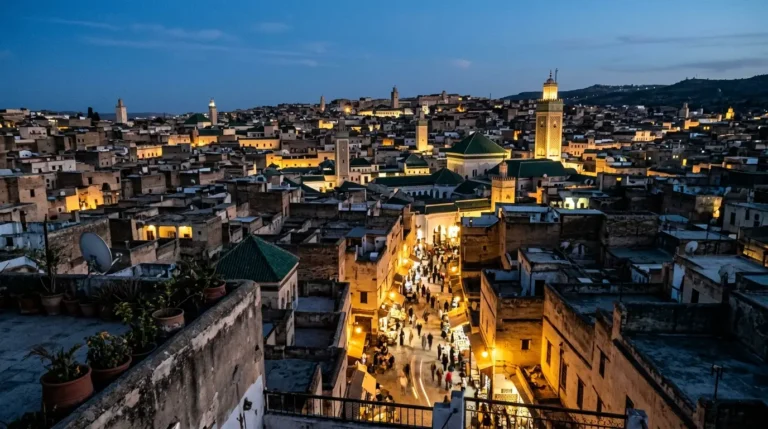
Fes and Chefchaouen are two of the most natural stops to combine on a northern Morocco itinerary. One gives you one of the country’s richest historic medinas; the other trades that intensity for blue-painted streets, Rif Mountain scenery and a much slower pace. The journey between them is straightforward, but the best way to travel depends on what matters most to you.
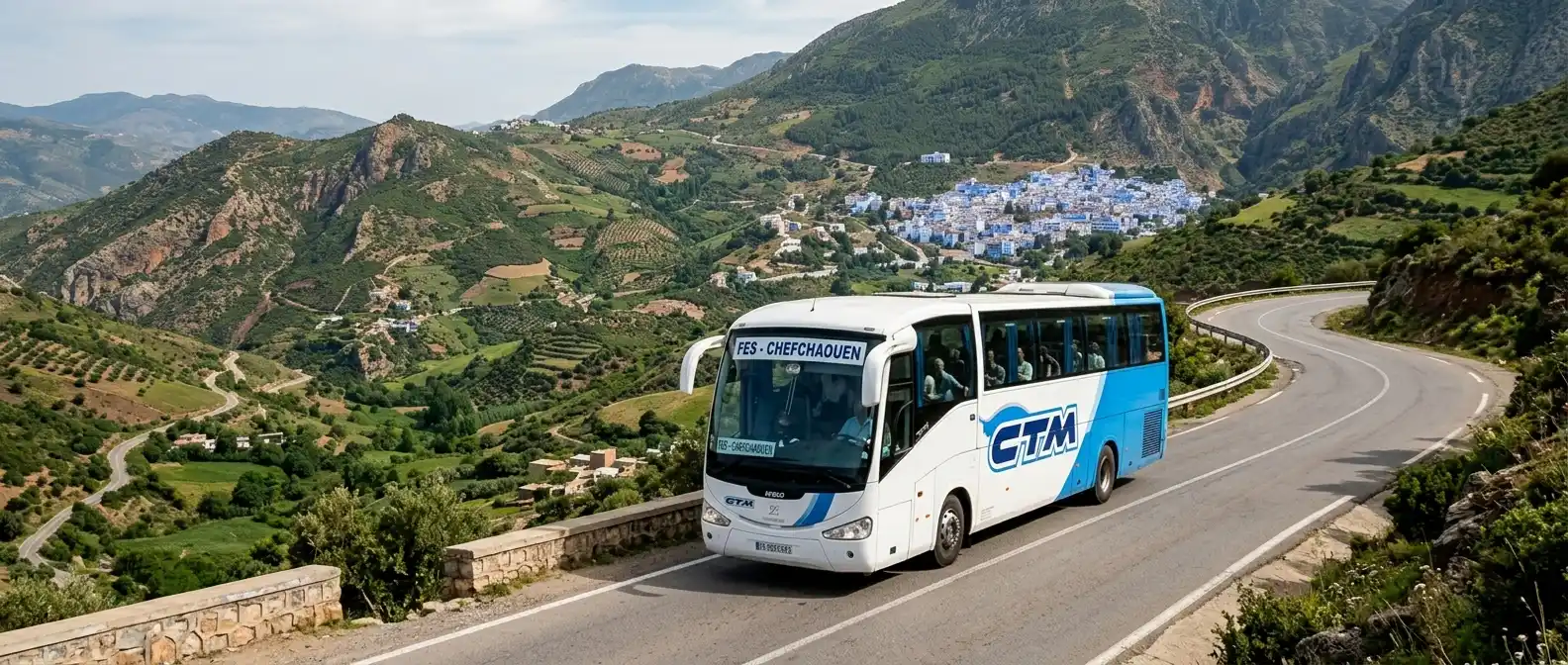
For most independent travelers, the direct CTM bus is the simplest option. Driving gives you more flexibility and makes sense if you want to stop along the way, while a private transfer removes the hassle of stations and luggage altogether. The distance is roughly 195–200 km by road. Driving generally takes around four hours depending on traffic and road conditions, while direct buses take roughly four to five hours depending on the departure. Current CTM listings show direct services at around 145 MAD, although schedules and fares can change, so check your actual travel date before booking. CTM
This guide covers the practical details of getting from Fes to Chefchaouen by bus, car, shared taxi or private transfer, then explains what to do once you arrive and how many nights make sense for your itinerary.
Fes to Chefchaouen at a Glance
Distance and Typical Travel Time
Fes and Chefchaouen are separated by roughly 195–200 km by road. By car, expect around four hours in normal conditions. Route calculations vary slightly depending on the exact starting point and destination, with current estimates ranging from about 3½ to four hours.
The bus takes longer because of stops and the nature of the road. Current CTM schedules show direct journeys generally taking around 4h10 to 5h. That difference is important when planning your day. If you leave Fes in the morning, you can still have a useful afternoon in Chefchaouen. If you choose a later bus, however, most of your first day will be spent traveling.
The Main Transport Options
There is no direct train to Chefchaouen. The town is not connected to Morocco’s railway network, so traveling by train means adding another mode of transport and usually going through a different city.
For a direct journey, your practical choices are:
- CTM bus : straightforward and relatively inexpensive
- Rental car : flexible and useful for road-trip itineraries
- Grand taxi : potentially economical when shared, but less predictable
- Private transfer : convenient and door-to-door
For most travelers, the decision comes down to whether you value price, flexibility or convenience.
How Much Does Fes to Chefchaouen Cost?
- Current CTM listings show direct fares from around 145 MAD per person on the route.
- A rental car costs considerably more once you include the daily rental, fuel and any parking.
- A private transfer costs much more than the bus, but the price is for the vehicle rather than a single seat, making it more practical for couples, families or groups.
- Shared grand taxis can be competitive on price, but they work differently from a scheduled bus: you may need to wait until enough passengers are available, and luggage space is less predictable.
Fes to Chefchaouen by Bus
CTM Direct Bus
For many travelers, CTM is the easiest option. Current schedules show direct Fes–Chefchaouen services several times per day, with journeys generally taking between roughly four hours and five hours. Current September 2026 listings show direct departures including an early morning service, with later departures throughout the day. The important point is not to memorize a timetable from a travel article. Check CTM for your actual travel date. Bus schedules can change, and the difference between catching an early departure and a later one can completely change how much time you have in Chefchaouen. If you want a full afternoon in the Blue City, choose a morning departure.
How Long Does the Bus Take?
Plan on approximately 4½ to 5 hours, even though some departures are faster. Current CTM listings show journeys as short as about 4h10 and others closer to five hours. This is why it is better to plan around the upper end of the range rather than assuming the fastest advertised journey. If you have a riad reservation, airport connection or other time-sensitive plan after arriving, leave yourself a buffer.
Where Do You Catch the Bus in Fes?
This is one of the details worth confirming before you leave. Fes has more than one bus terminal, and travelers can easily become confused about which station they need. Your ticket should tell you the departure location. Do not simply tell your taxi driver “the bus station” and assume you will end up at the right place. The safest approach is to check the exact departure point shown on your CTM booking before leaving your riad. If you are staying inside Fes el-Bali, allow additional time for getting from the medina to the station. A taxi is generally much easier than trying to manage luggage through the medina and then figure out transport at the last minute.
How to Buy Your Ticket
The simplest option is to book directly through CTM’s booking system when your travel date is available. This is particularly useful during busy periods because the number of direct departures is limited. If you prefer buying your ticket in person, go to the station with enough time before departure.
What Is the Bus Journey Like?
The journey is mostly through northern Moroccan countryside, with the landscape becoming increasingly hilly as you approach the Rif. The bus is a good opportunity to simply sit back and watch the landscape change. Bring water and a small snack, particularly if you are traveling with children or prefer not to rely on stops along the route. And keep your important belongings with you rather than placing everything in the luggage compartment.
Fes to Chefchaouen by Car
Driving Time and Distance
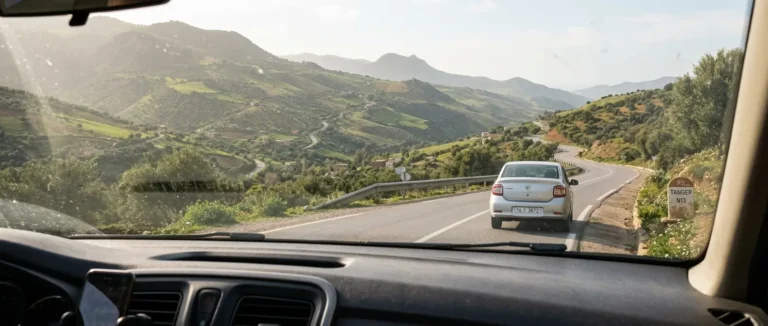
The drive is roughly 195–200 km and generally takes around four hours, depending on your starting point, traffic and road conditions. Do not plan your route around the shortest possible navigation estimate. Moroccan road conditions, traffic leaving Fes and stops along the way can all affect the actual journey. If you are driving, a four-hour planning window is much more realistic than assuming you will arrive in exactly three hours and twenty minutes.
Is Renting a Car Worth It?
A rental car makes the most sense when the Fes–Chefchaouen journey is part of a larger road trip. For example, if you are traveling:
Fes → Chefchaouen → Tangier
or
Fes → Chefchaouen → Akchour → Tangier
having your own vehicle gives you considerably more flexibility. It is less compelling if this is simply a single transfer between two cities. For one traveler, a bus is generally simpler. For a couple or group, compare the total rental cost with the price of individual bus tickets and private transfers before deciding.
The Road and Scenery
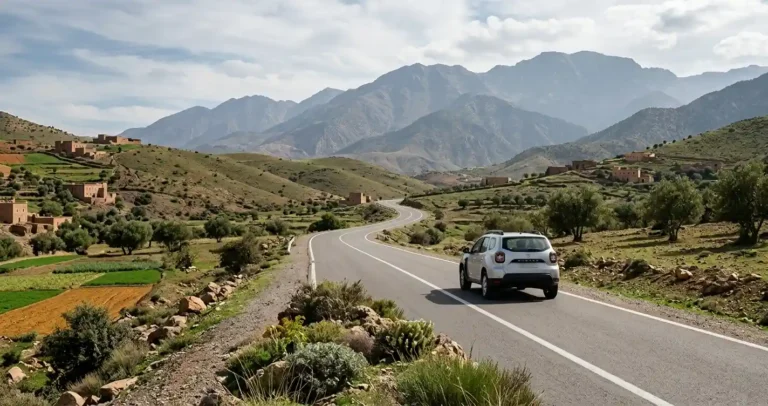
The journey is more interesting than the distance suggests. You leave Fes behind and gradually move into the landscapes around the Rif, passing through rural areas and the wider region around Ouazzane. If you are driving, this is where having your own car has a real advantage: you can stop when you find a safe and appropriate place rather than watching the landscape disappear through a bus window. Do not turn every roadside viewpoint into a planned stop, however. The journey is long enough already, and stopping repeatedly can turn a four-hour drive into a full-day transfer.
Parking in Chefchaouen
You cannot drive through the heart of Chefchaouen’s blue medina. The historic streets are pedestrian-oriented, so you need to leave the car outside and continue on foot. Before driving to Chefchaouen, ask your accommodation about parking. This is particularly important if you are staying in a riad inside the medina. Your accommodation may have a recommended parking area and instructions for reaching the nearest accessible point. Do not assume that the hotel entrance shown on a booking website is somewhere your car can actually reach.
Driving Back to Fes
The return journey follows essentially the same route. If you have a rental car and are continuing toward Fes, you can potentially incorporate another stop into the wider itinerary, but do not assume every attraction lies conveniently on the direct route.
If Volubilis and Moulay Idriss are part of your plans, it is usually better to structure them deliberately as part of your Morocco route rather than treating them as a casual roadside stop.
Fes to Chefchaouen by Grand Taxi
How Does a Grand Taxi Work?
A shared grand taxi is another possibility for travelers who want something cheaper than a private transfer. The system is different from a bus. You are generally buying a seat rather than hiring the entire vehicle, and the taxi may not depart immediately because it can wait until enough passengers are available. That can make the journey less predictable.
When Does a Grand Taxi Make Sense?
A shared taxi can make sense for budget travelers who are comfortable with less space and less predictable departure times. It can also be useful if the bus schedule does not fit your itinerary. But if you have a large suitcase, children or a fixed arrival time, the bus is usually easier to plan around.
What About a Private Grand Taxi?
If you hire the entire vehicle, you are essentially paying for a private transfer. That can be convenient for a group, especially if the driver collects you directly from your accommodation. Always agree on the total price before leaving.
Fes to Chefchaouen by Private Transfer
When a Private Transfer Makes Sense
A private transfer is the most straightforward option when convenience matters more than price. The driver can collect you from your Fes accommodation and take you directly to your Chefchaouen accommodation or the nearest accessible point. There is no bus station. No luggage transfer. No waiting for other passengers. And no need to navigate the route yourself. For a family or group of friends, the difference in convenience can be significant.
Expected Cost
Private transfer prices vary considerably by vehicle, season, pickup location and operator. Current 2026 route estimates put a private sedan transfer at roughly 1,250 MAD per vehicle, with larger vehicles costing more. These are indicative figures rather than a fixed market tariff. That sounds expensive next to a 145 MAD bus ticket. But divide the cost between three or four travelers and the calculation changes. Always confirm the price directly with the operator before booking.
Advantages and Drawbacks
The advantage is simple: door-to-door convenience.
The disadvantage is equally simple: price.
A private transfer is difficult to justify for a solo budget traveler who is comfortable taking the bus. For a family carrying several bags, however, avoiding two station transfers may be worth paying for.
What to Confirm Before Leaving
Ask the driver or company:
- Is the quoted price for the entire vehicle?
- Are fuel and tolls included?
- Is luggage included?
- Where exactly will you be collected?
- Where exactly can the driver drop you in Chefchaouen?
- Can you make a short stop along the route?
Get the total price agreed before departure.
Which Way Should You Travel From Fes to Chefchaouen?
Bus : For a Simple, Budget-Friendly Journey
The CTM bus is the most straightforward choice if you want to keep costs down and do not need flexibility. Current direct fares are around 145 MAD on the dates checked, with journeys taking roughly four to five hours. It is particularly practical for solo travelers and couples.
Car : For Flexibility
Choose a rental car if the journey is part of a larger road trip. You control the departure time, can stop along the way and do not have to work around the bus timetable.
Private Transfer : For Door-to-Door Convenience
A private transfer makes the most sense if you want the least complicated journey or are splitting the cost between several travelers. There is no single correct transport option for everyone.
What to Do Before Leaving Fes
Where to Have Breakfast
Keep breakfast simple. If your riad includes breakfast, there is little reason to cross the city looking for another option before a four-hour journey. The more important thing is to leave with enough time to reach your departure point without rushing.
How Early Should You Leave?
For a bus, aim to arrive at the departure station 30–45 minutes early. That gives you time to find the correct platform, confirm the bus and deal with luggage. If you are using a private driver, confirm the pickup time the evening before. Do not schedule your morning around the assumption that Fes traffic will always cooperate.
What to Do With Your Luggage
If you are checking out of your Fes accommodation before traveling, ask whether they can hold your luggage until departure. Keep valuables, passports, medication and electronics in your personal bag rather than your stored luggage.
Getting to the Bus Station
Give yourself more time if you are staying inside Fes el-Bali. Getting out of the medina, finding your taxi and then reaching the correct station is much easier when you are not working against the clock. Most importantly, check your ticket for the exact departure location before leaving.
Arriving in Chefchaouen
What to Expect at the Bus Station
Do not expect the famous blue streets immediately outside the bus. You arrive in a more ordinary part of town, below the historic centre. This is normal. The dramatic transformation happens as you climb toward the medina.
Getting From the Station to the Medina
If you have luggage, take a petit taxi. Current route information puts the station below the medina, with the walk involving a noticeable uphill climb. A short taxi ride can save you from starting your Chefchaouen visit exhausted. If your accommodation offers pickup, even better. Confirm exactly where the driver will meet you, particularly if your riad is inside the pedestrianized medina.
Where to Leave Your Luggage
Contact your riad before arriving. Many properties can store bags before check-in, but do not assume that every small guesthouse operates exactly like a large hotel. Having this arranged makes your first afternoon much easier.
Your First Walk Through the Blue City
Once your bags are sorted, do not immediately start following a checklist. Walk.
Chefchaouen is compact enough that the first experience is simply seeing the blue-painted streets change as you move uphill and deeper into the medina. This is one destination where wandering is part of the itinerary.
How Many Days Should You Spend in Chefchaouen?
One Night and One Full Day
If you arrive from Fes in the morning and stay one night, you can comfortably experience the main medina, Kasbah, Ras El Maa and Spanish Mosque. That is enough for a first visit.
Two Nights for a Slower Visit
Two nights gives you a much more relaxed experience. You can spend one day exploring Chefchaouen itself and use another half-day for the Akchour area if hiking and nature are priorities. This also gives you more flexibility if weather affects your plans.
When to Continue to Tangier or Northern Morocco
Chefchaouen works naturally as part of a northern Morocco route. A common progression is:
Fes → Chefchaouen → Tangier
That route lets you move from the cultural intensity of Fes into the Rif before continuing toward the Atlantic and Mediterranean coast. The reverse works just as well. Your flights and overall route should determine the direction rather than trying to force one sequence.
Fes to Chefchaouen Travel Tips
Book the Bus in Advance
Because direct departures are limited, booking ahead is sensible. Current route information shows around four CTM departures per day, so missing one can mean waiting several hours for the next service.
Keep Water and Snacks With You
The journey takes several hours. Carry water and a small snack so you are not dependent on finding exactly what you want during the journey.
Wear Comfortable Shoes
This matters twice. You will be walking to and from transport points, and Chefchaouen itself is built around slopes, stairs and uneven streets. Your arrival is much more pleasant if you are not doing it with unsuitable shoes and a heavy suitcase.
Check Your Arrival Time Before Booking Accommodation
If you choose a late bus, you may arrive in Chefchaouen after dark. That is not necessarily a problem, but it is something your accommodation needs to know. A small riad may have a different check-in arrangement from a large hotel.
Do Not Build a Packed Arrival Afternoon
Transport in Morocco does not need to go wrong for a journey to take longer than expected. Traffic, delays, station confusion and luggage all take time. Leave room in your itinerary. The Blue City will be much more enjoyable if you arrive with enough energy to explore rather than feeling that you are already late for your next reservation.
Should You Travel From Fes to Chefchaouen or the Other Way Around?
Fes First, Then Chefchaouen
This works particularly well if your Morocco itinerary begins in Fes or you are arriving through Fes. It also creates a natural change of pace. You experience the intensity and history of Fes first, then move toward a smaller mountain town.
Chefchaouen First, Then Fes
The reverse is particularly convenient for travelers coming from Tangier. You can start with Chefchaouen and then continue to Fes. This also means you experience the smaller destination before arriving at the much larger and more complex Fes medina.
Fes to Chefchaouen: Frequently Asked Questions
How far is Fes from Chefchaouen?
The road distance is approximately 195–200 km, depending on the exact route and starting point.
How long is the bus from Fes to Chefchaouen?
Direct CTM journeys currently take roughly 4h10 to 5 hours, depending on the departure.
Is there a direct bus from Fes to Chefchaouen?
Yes. CTM operates direct services between the two cities, with current schedules showing several departures per day. Check the CTM booking system for your exact date because departure times can change.
How much is the bus from Fes to Chefchaouen?
Current CTM listings show fares from around 145 MAD on the dates checked. Older travel guides may quote substantially lower prices, so verify the fare for your travel date rather than relying on an old figure.
Is it better to drive or take the bus?
Driving gives you more flexibility and can make sense for a road trip or group. The bus is simpler if you are traveling independently and do not need to stop along the way.
Can you visit Chefchaouen as a day trip from Fes?
Technically yes, but it is not a comfortable way to experience the town. With roughly four to five hours each way by bus, a same-day return can consume most of your available time. If your schedule allows it, stay at least one night.
Where should you stay in Chefchaouen after arriving from Fes?
Staying inside or close to the medina makes the most sense for a short visit. That puts you close to Uta el-Hammam, the blue streets and the main walking routes. If you are arriving by bus, ask your accommodation about luggage pickup or the easiest route from the station.
How long should you spend in Chefchaouen?
One full day is enough for the main sights and atmosphere of the town. Two nights gives you more breathing room and makes it possible to consider an excursion toward Akchour without turning the visit into a rush. If Chefchaouen is one of several stops on a northern Morocco itinerary, one to two nights is a practical range for most travelers.
Is Fes to Chefchaouen a difficult journey?
No. The journey is longer than the distance on a map might suggest, but there are straightforward direct transport options. The main thing to get right is timing: book the appropriate departure, confirm the station, allow time to reach it and do not schedule your first afternoon in Chefchaouen too tightly. Once you arrive, the hard part is over. The blue streets begin just uphill from there.