ATMs in Morocco: 9 Essential Tips to Avoid Fees and Withdraw Cash Safely
ATMs in Morocco are the easiest way to get Moroccan dirhams, and in most cities and tourist areas they work smoothly with foreign bank cards. They are also where small mistakes get expensive: an unnecessary currency conversion, a stack of withdrawal fees, or a card that stops working at the wrong moment. A little preparation before you land makes the difference between a smooth trip and a frustrating hunt for cash.
This guide explains where to find cash machines, which ones to use, how to withdraw, what the fees look like and what to do when something goes wrong. Fees, limits and card acceptance change, so treat the figures here as typical examples and check the current details with your bank.
Can You Use ATMs in Morocco?
Yes. Foreign Visa and Mastercard debit and credit cards generally work at Moroccan cash machines, and withdrawing dirhams from an ATM is the standard way for visitors to get local cash. The dirham is a closed currency, so you normally pick it up in Morocco rather than before you leave home.
Are ATMs Easy to Find in Moroccan Cities?
In large cities such as Marrakech, Casablanca, Rabat, Fes and Tangier, ATMs are easy to find. You will see them outside bank branches, in shopping areas, near train stations and at the airports. In busy tourist districts, there is usually more than one within a short walk.
Can Foreign Bank Cards Be Used at Moroccan ATMs?
Foreign cards are widely accepted, as long as they carry a major network logo and your bank has enabled international withdrawals. You will usually need a four-digit PIN. If your PIN has more than four digits, ask your bank how to set up a compatible one before you travel.
Which Cards Are Commonly Accepted?
Visa and Mastercard are the safest bets. Other networks may work at some machines, but acceptance is less predictable. Check the logos on the ATM and compare them with those on your card. Carry more than one card from different networks, if you can.
Can You Withdraw Moroccan Dirhams at the Airport?
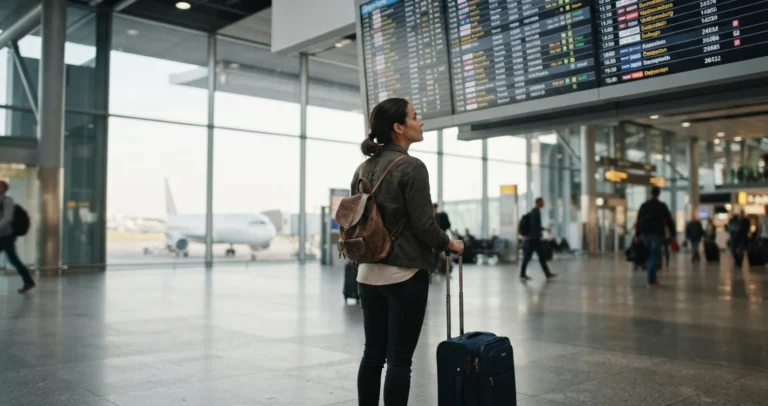
Yes. Major airports have ATMs in arrivals, and they are a convenient way to get a small amount of cash for your first taxi or transfer. Airport machines can be busy, and exchange desks nearby may offer different rates, so use the airport for a modest first withdrawal rather than your entire budget.
Where to Find ATMs in Morocco
Cash machines are plentiful in cities and sparse in the countryside, so plan your withdrawals around your route.
ATMs at Airports and Major Transport Hubs
Airports and large train stations usually have several ATMs, often inside the terminal or station. They are convenient on arrival or departure, and they are usually in well-lit, staffed areas. Use them for your first cash, then restock in town.
ATMs in City Centres and Modern Commercial Areas
The newer districts of Moroccan cities, such as Gueliz in Marrakech or Ville Nouvelle in Fes, have bank branches and cash machines on most main streets. These are often the best places to withdraw, because they are busy, well lit and attached to full branches.
Finding ATMs Near Medinas and Tourist Attractions
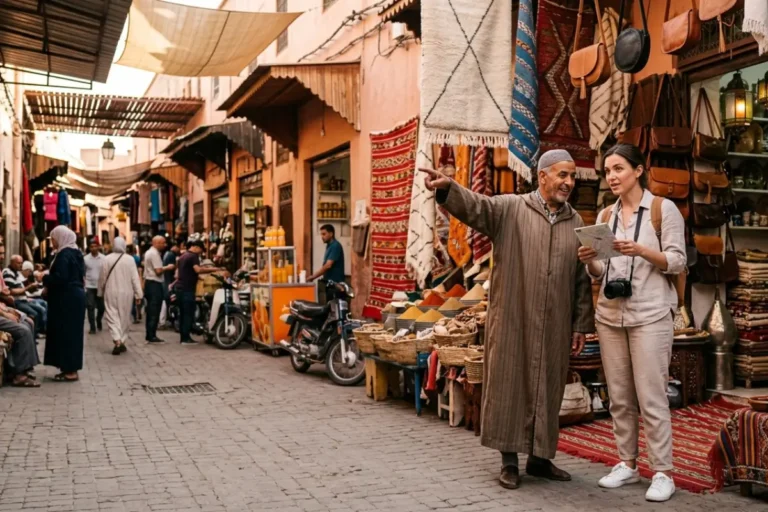
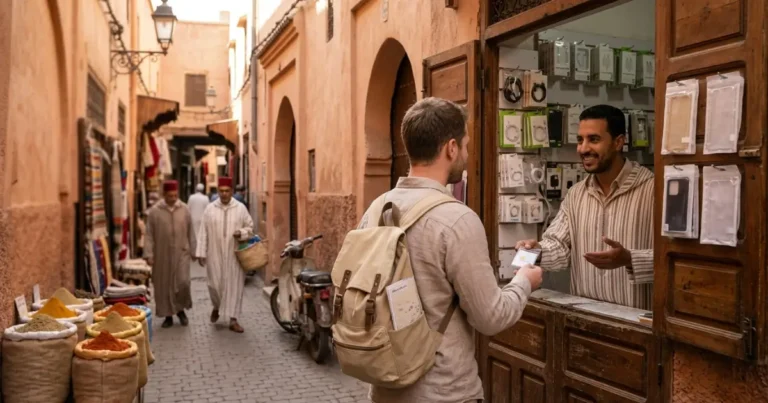
Medinas themselves have few ATMs inside the walls, since the alleys are narrow and many are pedestrian-only. Look just outside the main gates or around the main squares. Before you head into the medina for the day, withdraw enough cash to cover market purchases, tips and small meals.
Access to ATMs in Small Towns and Rural Areas
Smaller towns often have at least one bank machine, but it may be out of service or out of cash, particularly at weekends and during holidays. Do not assume that a village on your route has a working ATM.
Why You Should Not Wait Until You Reach the Desert to Withdraw Cash
Desert destinations such as Merzouga have limited banking services. Withdraw what you need in the last large town before you leave, and carry enough for tips, guides, meals and any unexpected costs. Running out of cash far from a machine is one of the most avoidable problems of the trip.
Which Moroccan ATMs Should You Use?
Not every machine is equal. A few habits improve both safety and cost.
Bank-Operated ATMs vs. Independent Cash Machines
Where possible, use ATMs operated by banks and located at their branches. Independent or standalone machines can have different fee structures, and they are sometimes less secure. Bank machines are also easier to deal with if something goes wrong, because there is a branch to contact.
Choosing an ATM in a Well-Lit, Busy Location
Choose a machine in a busy, well-lit area, ideally inside a bank lobby or a staffed building. Avoid isolated machines, especially at night. If a machine is in an enclosed lobby that requires a card to enter, use the normal entry procedure and do not let strangers follow you in.
Checking the Machine Before Inserting Your Card
Look at the card slot and keypad before you use the machine. Loose parts, unusual attachments, a camera pointing at the keypad or a slot that looks different from the rest of the machine are warning signs. If anything looks wrong, walk away and use another machine.
Why You Should Use Official Bank Locations When Possible
Using a machine at an official branch gives you the chance to go inside if the card is retained or the cash does not come out. It also reduces the risk of tampering. If you must use a machine that is not at a branch, choose a busy public location.
How to Withdraw Cash From an ATM in Morocco
The process is similar to withdrawing at home. The details below help you avoid common errors.
Step-by-Step Instructions for Foreign Bank Cards
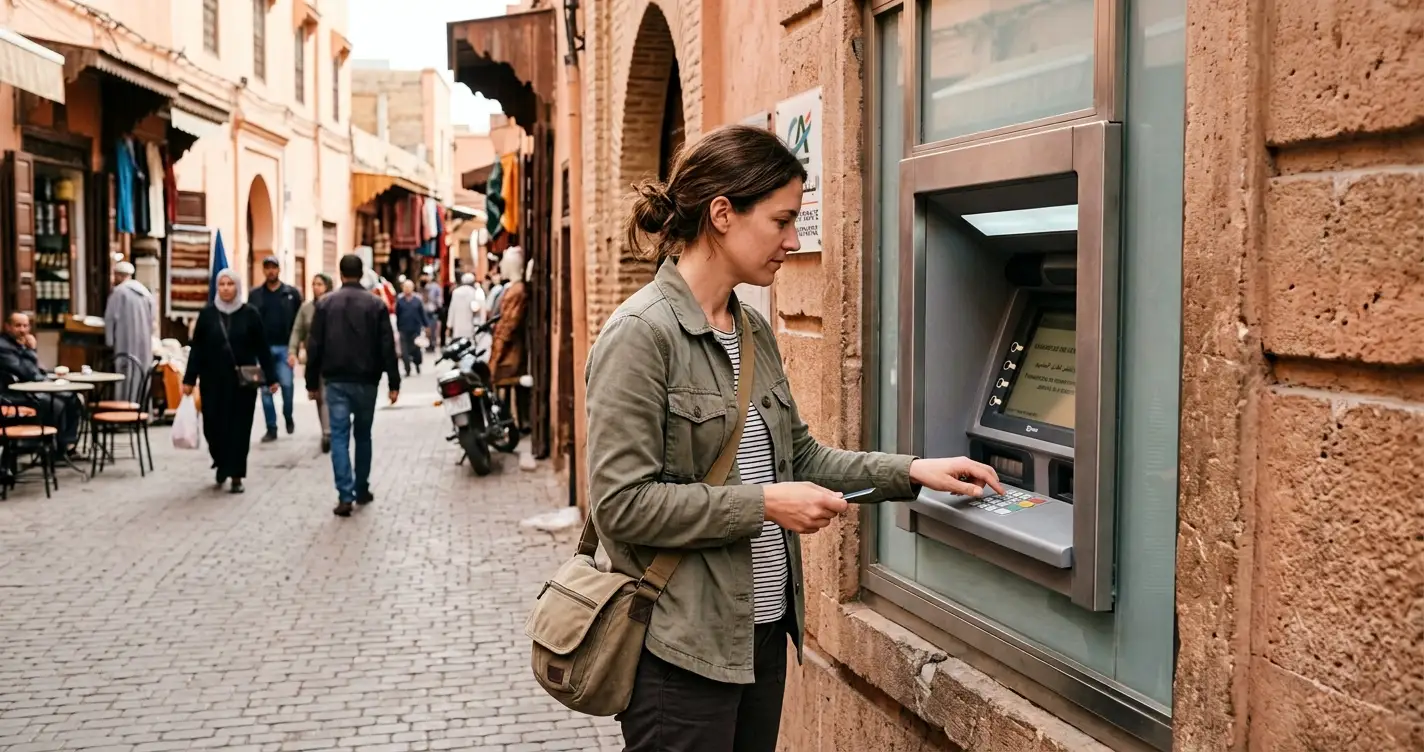
Insert your card, choose your language, enter your PIN and select the withdrawal option. Choose the account type if the machine asks. Enter the amount in dirhams, review any fee screen, confirm and wait for the card, the cash and the receipt.
Choosing Your Language and Entering Your PIN
Most machines offer Arabic and French, and many offer English. Choose the language you are most comfortable with so you can read every screen. Shield the keypad with your hand when you enter your PIN, even if no one seems to be watching.
Selecting the Withdrawal Amount in Moroccan Dirhams
Many machines offer preset amounts and an option to enter a custom amount. Choose the dirham option. Per-transaction limits vary by bank and machine; a figure of around 2,000 MAD is commonly reported, and some banks allow more. Your own bank’s daily limit also applies.
Taking Your Card, Cash and Receipt
Take your card first, then your cash, then your receipt, and count the notes before you leave the machine. Some machines return the card before dispensing cash, and some after. Do not walk away until you have all three. The receipt is useful if there is a dispute.
What to Do If the ATM Retains Your Card
If the machine keeps your card, do not leave the area. If the machine is at a bank, go inside and ask for help. Otherwise, note the machine’s location and any visible bank name, then call your card issuer to block the card. Keep any receipt.
ATM Fees in Morocco: What Will You Pay?
Fees come from two sides: the Moroccan bank and your own bank. Together, they can add up.
Fees Charged by the Moroccan ATM
Many Moroccan banks charge foreign cards a flat fee per withdrawal. Travel guides commonly report amounts of around 30 to 35 dirhams, but the exact figure depends on the operator and can change. The machine should display the fee before you confirm, and you can usually cancel without paying.
Fees Charged by Your Home Bank
Your own bank may charge a foreign ATM fee, a percentage fee on the amount or both. Some banks and card providers waive these fees, or allow a limited amount of fee-free withdrawals each month. Check your account terms, and ask your bank before you travel.
Foreign Transaction and Currency Conversion Fees
If your account is not in dirhams, there is a currency conversion at some point. Your bank or card provider may add a foreign transaction fee on top of the exchange rate. Some travel-focused accounts and cards do not charge this fee, so compare options if you travel often.
How to Reduce the Cost of Multiple Withdrawals
Because flat fees apply per withdrawal, several small withdrawals cost more than one larger one. Withdraw a larger amount less often, within the machine’s limit and what you are comfortable carrying. If one machine has a higher limit than another, use that one.
Why You Should Check the Fee Screen Before Confirming
Read the screen before you confirm. If the machine shows a fee you are not happy with, cancel and try another one. Make sure you read the amount, the currency and any message about conversion before pressing the final button.
Should You Accept the ATM’s Currency Conversion?
Almost always, no. This is one of the most useful tips to remember.
What Dynamic Currency Conversion Means
Dynamic currency conversion, or DCC, is when the machine offers to charge you in your home currency instead of dirhams. It sounds convenient, but the exchange rate is set by the machine’s operator and is usually less favourable than the one your own bank would apply.
Choosing Moroccan Dirhams Instead of Your Home Currency
When the machine asks whether you want to be charged in your home currency or in dirhams, choose dirhams. The conversion is then handled by your card network and your bank, which generally gives a better result. The same rule applies to card payments in shops and restaurants.
When Your Bank’s Exchange Rate May Be Better
Your bank or card provider’s rate is usually the better choice, since it is based on the network rate with a known margin. If you are unsure, compare the amount you were charged with the day’s market rate afterwards. If the difference seems large, review your statement and adjust your habits.
How Much Cash Should You Withdraw in Morocco?
The right amount depends on your plans. This article covers the withdrawal side. For a fuller look at how much cash to carry overall, see our separate guide.
Choosing a Withdrawal Amount for Everyday Expenses
Think in terms of a few days at a time. A withdrawal that covers meals, transport, tips and small purchases for several days means fewer fees without leaving you with a lot of cash. Withdraw again when you reach the next big city.
Cash for Taxis, Markets and Small Local Businesses
Small taxis, market stalls, cafes and small shops often prefer cash. Carry small notes and coins, because change can be hard to find. When you withdraw, you may get large notes, so break them at a bigger shop or hotel when you can.
Cash for Rural Destinations and Desert Trips
If you are heading to the mountains, the coast or the desert, withdraw before you go and take a reserve. Guides, drivers and small guesthouses may only accept cash, and the nearest machine can be hours away.
Balancing ATM Fees Against Carrying Too Much Cash
A larger withdrawal saves on fees, but it also means carrying more cash. Find a balance that suits your comfort level. Keep cash in more than one place, such as a money belt, a hotel safe and a day wallet, so a loss does not leave you stranded.
Are ATMs in Morocco Safe?
Used with care, ATMs in Morocco are as safe as cash machines in most countries. A few habits cover most of the risk.
Protecting Your PIN and Bank Card
Cover the keypad when you type your PIN. Do not share your PIN with anyone, and do not write it down with your card. Use contactless or chip payments where you can, and keep your card in view during transactions.
Avoiding Distractions and Unsolicited Assistance
If someone offers to help you with the machine, decline politely. Do not let anyone stand close enough to see your PIN or screen. If you feel uncomfortable, cancel the transaction, take your card and leave.
What to Do if Your Card Is Swallowed
Do not leave immediately. If the machine is at a bank, speak to staff. If not, contact your card issuer to block the card. Note the time, place and any machine details, and keep the receipt if you have one.
What to Do if Money Is Deducted but No Cash Appears
If your account is charged but the machine did not dispense cash, keep the receipt and contact the bank that operates the machine, if you can. Also contact your own bank and report the transaction. Resolving these cases can take time, so keep your records.
What to Do if You Suspect Card Skimming or Fraud
If you notice unfamiliar transactions or suspect tampering, contact your bank straight away and block the card. Ask for a replacement and review your recent activity. Many banks have a 24-hour number for card problems, so save it before you travel.
What If Your Bank Card Does Not Work?
Declined cards are usually fixable. Work through the likely causes in order.
Check Whether International Withdrawals Are Enabled
Some banks disable international withdrawals by default. Check your app or call your bank before you leave to confirm that foreign ATM use is enabled and that your daily limit suits your plans.
Try Another ATM or a Different Card Network
If one machine does not work, try another, preferably at a different bank. A machine may be out of service, out of cash or not compatible with your card. If you carry a second card on a different network, try that one.
Contact Your Bank if Your Transaction Is Declined
Your bank’s fraud systems may block a withdrawal in an unfamiliar country. Tell your bank your travel dates before you leave, and keep a contact number handy. Many banks let you confirm a transaction through an app or a text message.
What to Do if You Lose Access to All Your Cards
If your cards are lost or stolen, block them immediately and ask about emergency replacement and emergency cash. Keep a backup source of money, such as a second account or some cash in a different place. Carry a photocopy or photo of your passport.
Can You Rely on ATMs Throughout Morocco?
In cities, usually yes. Elsewhere, plan ahead.
Marrakech, Casablanca, Fes and Other Major Cities
Large cities have plenty of machines in central areas. Withdraw here, and stock up before you travel on to quieter regions. Use machines at bank branches in busy areas for the best mix of convenience and security.
Smaller Towns in the Atlas Mountains
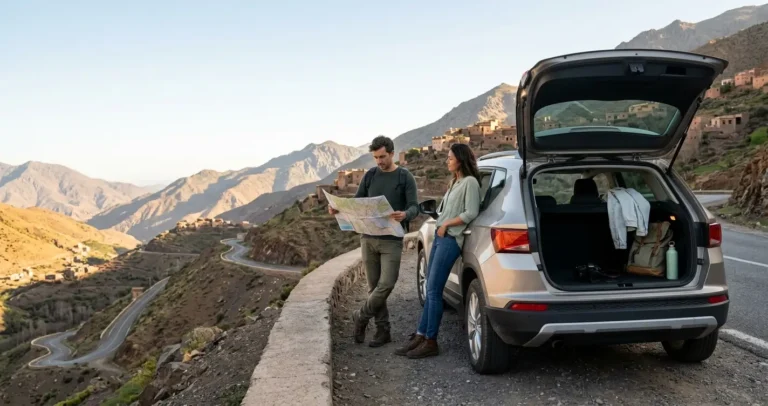
Atlas towns may have a machine or two, but supplies and reliability vary. Withdraw before you head into the mountains, and carry enough for several days of food, guides and accommodation.
Merzouga and Other Sahara Desert Destinations
Desert destinations have very limited banking. Withdraw in a larger town before you travel, and carry cash for the whole stay, including tips and extras.
Coastal Villages and Remote Travel Routes
Coastal villages and remote routes may have limited or no ATMs. Check your route in advance, and carry a reserve for fuel, meals and accommodation.
Why Carrying a Backup Cash Reserve Matters
Even in cities, a machine can be out of order or out of cash. A modest reserve, kept separately from your main wallet, protects you from a problem at a bad moment.
ATMs vs. Currency Exchange Offices in Morocco
Both can get you dirhams. The best choice depends on what you carry and where you are.
Which Option Is More Convenient?
ATMs are convenient because they work at any hour in most cities and need no foreign cash. Exchange offices are useful if you carry euros, pounds or dollars, and they can be helpful when an ATM is not available.
Comparing Exchange Rates and Fees
ATMs charge a fee per withdrawal and use the card network’s rate, while exchange offices build their margin into the rate and sometimes add a commission. Compare the final amount of dirhams you would receive for the same sum, not just the headline rate.
When to Withdraw Cash and When to Exchange Money
Use an ATM for your main supply of dirhams and exchange a modest amount of foreign cash if you carry it. Avoid exchanging money on the street. Use banks and licensed exchange offices, and keep your receipts. If you are leaving, note that dirhams cannot easily be exchanged outside Morocco, so avoid withdrawing far more than you need.
Frequently Asked Questions About ATMs in Morocco
Are ATMs Widely Available in Morocco?
In cities and tourist areas, yes. They are plentiful in places such as Marrakech, Casablanca, Fes, Rabat and Tangier. In small towns and rural areas, availability is more limited, and machines may be out of order or out of cash. Plan to withdraw before you leave larger towns.
Can I Use My Visa or Mastercard at Moroccan ATMs?
Usually, yes. Visa and Mastercard are the most widely accepted networks. Check that your bank has enabled international withdrawals and that your PIN works abroad. Carry a second card from a different network in case one fails.
How Much Can I Withdraw From an ATM in Morocco?
It depends on the machine and your bank. A figure of around 2,000 dirhams per transaction is commonly reported, with higher limits at some banks, and your own bank’s daily limit also applies. Check the limits with your bank and the machine instead of relying on one figure.
Do Moroccan ATMs Charge Foreign Cards a Fee?
Often, yes. Many Moroccan banks charge a flat fee per withdrawal, commonly reported at around 30 to 35 dirhams, and your home bank may add its own charges. The machine should show the fee before you confirm. Amounts can change, so check the screen.
Should I Withdraw Euros or Moroccan Dirhams?
Withdraw Moroccan dirhams. You pay for most things in dirhams, and the ATM will normally dispense dirhams only. If you are offered a choice of currency for the charge to your account, choose dirhams and decline the conversion.
Is It Safe to Use ATMs in Marrakech?
Generally, yes, if you take normal precautions. Use machines in busy, well-lit locations or inside bank branches, cover your PIN and decline help from strangers. Avoid isolated machines at night, and check the machine before you insert your card.
Can I Find ATMs in the Moroccan Sahara?
Some larger desert gateway towns have machines, but they are not reliable, and remote camps have none. Withdraw enough cash before you set off and carry a reserve.
What Should I Do if a Moroccan ATM Keeps My Card?
Stay at the machine, and if it belongs to a bank, go inside and ask for help. Otherwise, contact your card issuer to block the card. Note the machine’s location and the time, keep any receipt and ask your bank about a replacement.
Is It Better to Withdraw Cash or Exchange Money in Morocco?
For most visitors, ATMs are simpler and often give a good rate once fees are included. Exchange offices are useful if you carry foreign cash or if machines are not available. Compare the final amount of dirhams you would receive, and avoid street exchange.
Final Tips for Using ATMs in Morocco
ATMs in Morocco are reliable in cities and unpredictable elsewhere, so the best strategy is preparation. These nine tips cover the essentials:
- Tell your bank before you travel and confirm that international withdrawals are enabled and your PIN works abroad.
- Carry two cards on different networks, and keep them in separate places.
- Use bank-operated machines in busy, well-lit locations, ideally at a branch.
- Inspect the machine before you insert your card, and walk away if anything looks wrong.
- Always choose dirhams if the machine offers to convert the charge to your home currency.
- Read the fee screen before you confirm, and cancel if the fee seems too high.
- Withdraw larger amounts less often, within your comfort level, to reduce flat fees.
- Stock up before remote areas, such as the Atlas, the coast and the desert, and carry a backup cash reserve.
- Protect your PIN and your belongings, decline unsolicited help and keep your receipts.
With these habits, using ATMs in Morocco becomes a routine part of your trip rather than a worry. Check the current limits and fees with your bank, plan your cash around your route and you can spend your time on the parts of Morocco worth the journey.
One Comment
Comments are closed.