Merzouga to Marrakech: 9 Essential Tips for a Stress-Free Journey
Getting from Merzouga to Marrakech is the part of a Sahara trip that many travelers plan last, and it is often the hardest part of the whole itinerary. After a night in a desert camp, you face a journey of roughly 550 kilometres across the Tafilalt plains, the Dades and Todra valleys, the Draa-Tafilalet region and the High Atlas. There is no railway to Merzouga, and the road does not allow shortcuts.
This guide covers the transport options, journey length, costs and the sightseeing stops that make sense along the way. The most useful habit is to plan around realistic travel times rather than distance alone. A map may say nine hours, but the day you actually experience is longer once you add the camp transfer, meal breaks, mountain driving and traffic near Marrakech.
Exact schedules, fares and durations change with the operator and the season, so confirm every detail before you commit. If you want broader context on the country’s transport network, our Getting Around Morocco guide covers the main options.
1. Pick the Right Way to Travel Back to Marrakech
Three options cover nearly every traveler. They differ in comfort, cost, convenience and practical limits, so the right choice depends on your group, your budget and your schedule.
Bus for Budget-Conscious Travelers
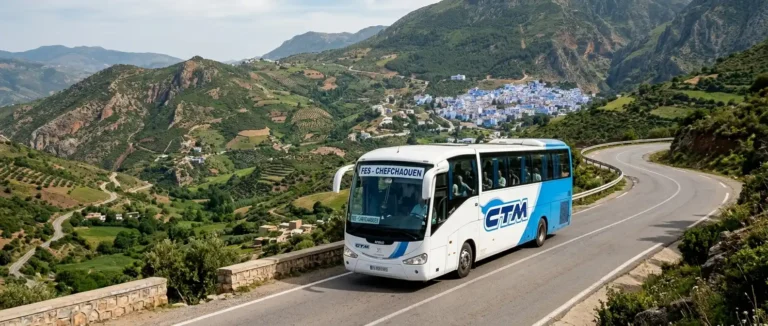
Buses are the cheapest option, but they are also the least straightforward for this route. Booking aggregators have not listed a direct bus from Merzouga to Marrakech, and they show journeys that rely on connections through other cities and take well over half a day. That may change, so check CTM and Supratours directly before you rule it in or out.
A bus suits travelers with flexible schedules who are comfortable with long connections and do not mind arriving at an unfamiliar station. Do not describe a route as direct or fixed until the operator confirms it.
Private Transfer for Flexibility
A private transfer collects you from your camp or accommodation and drives you to Marrakech on your timetable. You can agree on stops, a lunch break and a sightseeing detour in advance, and the driver deals with the mountain roads.
The price is per vehicle, so the option works well for couples, families and small groups. Solo travelers will find it expensive. Many camps and local operators can arrange this directly, and it is the simplest option if you want to combine the journey with a stop.
Rental Car for an Independent Road Trip
A rental car gives you the most freedom. You can leave when you want, visit a kasbah on impulse and change plans if the weather turns. The route is a rewarding drive for confident motorists.
The practical limits are fatigue, fuel, insurance and the mountain crossing near Marrakech. One-way rentals between Merzouga and Marrakech may carry extra fees, so ask before you book. If you are not used to winding roads, think carefully before choosing this option.
2. Prepare for a Long Day on the Road from Merzouga to Marrakech
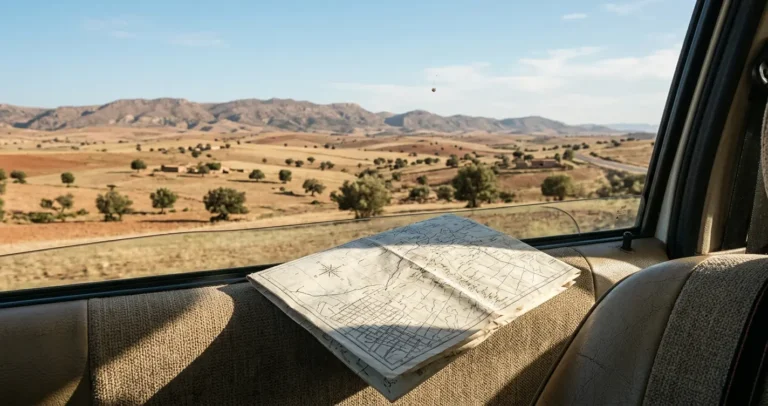
The road distance from Merzouga to Marrakech is about 550 kilometres. Map apps and aggregators typically estimate the drive at roughly eight and a half to nine and a half hours without stops. The route runs west through Rissani or Erfoud, Tinejdad, Tinghir, Boumalne Dades, Skoura and Ouarzazate, then climbs over the High Atlas via the Tizi n’Tichka pass before descending to Marrakech.
Those figures are driving time only. The journey you actually experience is longer, for several reasons:
- Meals and rest breaks, which can easily add an hour or two
- Slow sections through village crossings and roadworks
- Mountain driving on the Tizi n’Tichka, where trucks, fog or winter snow can slow traffic
- Heavy traffic on the approach to Marrakech, particularly in the late afternoon
- The transfer from your camp to the departure point at the start of the day
Advertised driving times do not include any of these, and they are not door-to-door times. Treat the estimate as a minimum, and plan for a full day on the road. If you need to be somewhere specific in Marrakech by a set hour, build in a generous margin.
3. Check Merzouga to Marrakech Bus Routes and Connections Before Booking
If you plan to use public transport, do your research before you leave the camp. A single bus listing on a booking website tells you very little about the complete journey. You need to confirm every leg, every connection and every arrival point.
Confirm the Departure Point Near Merzouga
Merzouga is a spread of villages and auberges, not a single station town. Ask the operator exactly where your bus leaves from, and whether it is in Merzouga itself or in a nearby town such as Rissani. Some operators have their own offices away from the main bus stations, so confirm the address and the boarding time.
Check Whether a Transfer Is Required
If the route involves a change of bus or a switch to another mode of transport, find out where it happens, how long the wait is and whether tickets for the second leg are included. A tight connection on a long-distance route can fail without warning, and you may be left waiting for the next service.
Verify Arrival Times and Ticket Conditions
Look up the scheduled arrival time and the drop-off location in Marrakech. Late-evening arrivals mean finding a taxi or onward transport in the dark. Check luggage rules, whether you can change or refund a ticket, and whether you must buy in person or can book online.
Ask the operator for the whole itinerary from start to finish, and confirm it with your camp host as well. CTM and Supratours both publish information on their websites, but timetables change, so a short phone call or message can save a stressful day.
4. Compare the Real Cost of Each Merzouga to Marrakech Option
The cheapest ticket is not always the cheapest journey. Add up the full cost of each option before you decide.
Bus. The fare is the main cost, plus any connecting transport, the transfer from your camp to the departure point, and meals on the way. If the schedule forces an extra night in a transit town, include that accommodation.
Rental car. Add the daily rate, insurance, fuel, motorway tolls near Marrakech and parking. A one-way rental may include a drop-off fee, so ask for the total price.
Private transfer. The price is set per vehicle. Ask what is included, such as waiting time at stops, luggage and tolls.
Splitting the journey. An overnight stop adds accommodation and meals, but it can also reduce fatigue and make the trip more enjoyable.
Group size changes the calculation. One traveler pays the whole fare for a private transfer. Four travelers share it, and the cost per person may be close to what several bus tickets and transfers would cost, with far more comfort. For a wider view of costs across the country, see our Morocco Budget Guide.
5. Decide Whether to Stop Overnight Along the Way
A direct return is possible, but it makes for a long day. A slower road trip with an overnight stop turns the journey into part of the holiday. Which works better depends on your route, your transport arrangement and how much time you have.
Ouarzazate for a Cultural Stop
Ouarzazate sits roughly two-thirds of the way along the route and makes a natural place to break the journey. The town is known for its kasbah heritage, including the Taourirt Kasbah, and it has plenty of hotels and restaurants. Stopping here also leaves you a shorter, more manageable drive over the Atlas the next morning.
The Dades Valley or Tinghir for Gorge Scenery
The Dades Valley and the area around Tinghir offer some of the best scenery on the route, with dramatic gorges, palm groves and mud-brick villages. An overnight stop here suits travelers who want to hike, take photographs or simply enjoy the landscape without rushing. It also splits the journey into two comfortable days.
Compare the two approaches honestly. A direct return saves time and suits travelers with a flight or tight schedule in Marrakech. A slower trip costs more and takes longer, but it gives you the valleys, gorges and kasbahs that most visitors say they wish they had seen. Whether you can stop depends on your transport, since a bus does not allow detours, whereas a private transfer or rental car does.
6. Make the Most of the Route’s Best Stops
The road from Merzouga to Marrakech passes some of Morocco’s best-known sights. You will not be able to see them all, so choose according to your timing and your transport.
Aït Ben Haddou. This fortified village is a UNESCO World Heritage site and lies a short detour off the main road near Ouarzazate, roughly 30 kilometres away. Allow at least two hours for the detour and visit, and ask your driver whether it fits into the day.
Ouarzazate and its kasbah heritage. A visit to the Taourirt Kasbah is easy to combine with a lunch stop, and it gives you a sense of the region’s history.
The Dades Valley or Todra Gorge. Both are possible on a suitable detour, but each adds significant time. Pick one and give it a proper visit.
Tizi n’Tichka. The pass itself is part of the scenery, with sweeping views as the road climbs and descends the High Atlas. Stop at a safe viewpoint rather than on the road.
Bus passengers may not have the freedom to stop at every attraction, because schedules and routes are fixed. If sightseeing matters, a private transfer or rental car is a better fit. Our 10-Day Morocco Itinerary shows how these stops can fit into a longer trip.
7. Plan Your Departure Around the Desert Camp
Your departure from the dunes is where many plans go wrong, so settle the details with your camp before you leave.
- Confirm the transfer. Ask how you get from the desert camp to Merzouga or the departure point, whether by 4×4, camel and vehicle, or another way, and how long it takes.
- Coordinate sunrise activities. A sunrise camel trek, breakfast and luggage collection can take several hours. Leave a gap before your bus or driver pickup.
- Leave enough time. Add a buffer for the transfer, since tracks across sand are slower than the main road.
- Keep essentials accessible. Carry water, snacks, medication, your passport and phone charger in a small bag, not in the luggage hold or the back of the vehicle.
On travel days, consider skipping the sunrise trek or choosing a later departure. A rushed morning at the end of a desert stay makes the whole day harder. For more on camp logistics, our Merzouga destination guide covers what to expect on the ground.
8. Avoid the Mistakes That Make the Return Harder
Most problems on this journey come from assumptions rather than the road. These are the mistakes that catch travelers out most often.
- Assuming the fastest driving estimate includes breaks. It does not, and a real journey is longer.
- Booking a connecting service with too little transfer time. A late bus can mean missing the next one.
- Underestimating fatigue after desert activities. A late night, an early start and a long day make a tiring combination.
- Driving long distances when tired or unfamiliar with mountain roads. The Tizi n’Tichka demands attention, particularly in poor weather or after dark.
- Scheduling a flight, tour or important appointment immediately after the estimated arrival. Leave a generous buffer, and avoid tight same-day plans in Marrakech.
Check the weather forecast before you set off, especially in winter, when snow or fog can affect the pass. The UK Foreign Office travel advice for Morocco also lists any current road or regional notices.
9. Match Your Route to the Rest of Your Morocco Trip
There is no single best way to return to Marrakech. The right route depends on your priorities and the rest of your itinerary.
Short on time: Prioritize a reliable transport connection and a realistic arrival estimate. A private transfer or a confirmed direct service is the safest choice.
On a tight budget: Compare complete bus itineraries, including transfers, before you decide. Add up the real cost, not just the headline fare.
Want to explore more: Consider a road trip with an overnight stop in Ouarzazate, the Dades Valley or Tinghir.
Traveling onward to another city: Compare whether returning to Marrakech is necessary at all. If your next destination is Fes, a different route may suit the itinerary better, as our Merzouga to Fes guide explains. If you are planning the leg in the other direction as part of a loop, see Ouarzazate to Merzouga: 9 Tips for Planning Your Sahara Journey.
Frequently Asked Questions
How do you get from Merzouga to Marrakech?
You can go by bus with connections, by private transfer or by rental car. There is no railway to Merzouga, so the journey is always by road at some point. A private transfer collects you from your camp and drives straight through, and a rental car lets you set your own pace. Public transport is possible, but it usually involves changes and a long total journey time. Whichever option you choose, confirm the departure point, the schedule and the arrival location in advance, because services in the south change. Your camp host can often arrange a transfer or advise on current options.
Is there a direct bus from Merzouga to Marrakech?
Booking aggregators have not listed a direct bus between Merzouga and Marrakech. They show journeys that rely on connections through other cities, with total times of well over half a day. Services can change, so do not rely on a blog or a booking site alone. Check CTM and Supratours directly for the current situation on your travel date, and ask about the departure point near Merzouga and the arrival point in Marrakech. If no direct service exists, a private transfer or rental car is usually a simpler way to cover the distance.
How long does it take to travel from Merzouga to Marrakech?
By car or private transfer, driving takes roughly eight and a half to nine and a half hours without stops. Once you add meals, fuel, rest breaks and the mountain crossing, plan for a full day, often ten to twelve hours door to door. Public transport takes considerably longer, because connections and waiting times add up. Road conditions, weather on the Tizi n’Tichka and traffic near Marrakech all affect the total. Leave early, avoid driving after dark and do not schedule anything important on the same evening as your arrival.
How much does the journey cost?
Costs depend on the option. A bus is usually cheapest, but connections, transfers from the camp and meals add to the total. A private transfer is priced per vehicle, so the cost per person falls as the group grows. A rental car adds the daily rate, fuel, insurance, tolls and possible one-way fees. Prices change with the season and the operator, so ask for current quotes and a written list of inclusions. Add any extra night of accommodation if you split the journey. Our Morocco Budget Guide gives wider context on transport costs across the country.
Is it better to take a bus or hire a private driver?
It depends on your budget, group size and priorities. A bus is cheaper, but the route may involve connections, fixed timings and a long total journey. A private driver is more comfortable and flexible, allows stops along the way and handles the mountain roads for you. For couples, families and small groups, the cost per person may be closer than expected. For solo travelers on a tight budget, public transport may still make sense. Whichever you choose, confirm what the price includes and where you will be picked up and dropped off.
Can you drive from Merzouga to Marrakech in one day?
Yes, it is possible with an early start, but it is a long day. Plan to leave in the morning, keep breaks short and aim to arrive before dark, particularly if you are crossing the Tizi n’Tichka. Fatigue is the main risk, especially after a night in the desert, so consider sharing the driving or hiring a driver. Weather, roadworks and traffic near Marrakech can all add time. If your schedule allows, an overnight stop in Ouarzazate, the Dades Valley or Tinghir makes the journey safer and more enjoyable.
Which places are worth visiting along the way?
The best stops depend on your route and timing. Aït Ben Haddou, a UNESCO-listed fortified village near Ouarzazate, is the best known and needs a short detour. Ouarzazate itself offers the Taourirt Kasbah and a good place to break the journey. The Dades Valley and Todra Gorge, near Tinghir, are the best choices for dramatic scenery, though each adds time. The Tizi n’Tichka pass is a highlight in its own right. Choose one or two stops rather than trying to see everything, since the distance leaves little room for extras.
The trip from Merzouga to Marrakech comes down to a trade-off between budget, flexibility and travel time. A bus, where available, is cheapest but offers the least control. A private transfer costs more, but it takes the stress out of the journey and allows stops. A rental car gives independence, and it demands energy for a long mountain drive.
Whichever route you choose, verify current schedules and transfer arrangements before you commit, and leave enough time to travel safely and comfortably. The most useful practical step is to ask your camp to confirm your pickup time and meeting point in writing the day before you leave, so the journey starts calmly instead of in a rush.